A hummingbird is one of the few subjects where the drawing matters more than the tattoo. Get the wing angle wrong on paper and no amount of shading in the chair will save it.
I have watched three separate artists redraw the same hummingbird stencil because the tail read as a leaf instead of a fan. That is the whole problem in one sentence: this bird is mostly motion, and motion is hard to freeze.
So this guide is built around the drawing stage. Which line weights survive on skin, which poses read from across a room, and which pretty sketches quietly fall apart after a few years of healing.
If you are pairing your bird with blooms, it is worth skimming floral tattoo drawings alongside this, because the flower usually decides the composition more than the bird does.
Which Hummingbird Tattoo Style Is Right for You?
Style choice is really a choice about maintenance. Here is how the common approaches compare on the things that actually bite people later.
| Style | Best Minimum Size | Ages Like | Typical Sitting |
|---|---|---|---|
| Fine line | 3–4 inches | Softens fastest; expect a touch-up in a few years | 1–2 hours |
| Watercolor | 4–6 inches | Colour spreads; holds best over a line skeleton | 2–4 hours |
| Neo-traditional | 4–5 inches | Very well — bold outlines do the work | 3–5 hours |
| Blackwork / dotwork | 3–5 inches | Excellent, if the dots are not packed too tight | 2–4 hours |
| Black-and-grey realism | 5–7 inches | Good in skilled hands; fine gradients flatten | 4–6 hours |
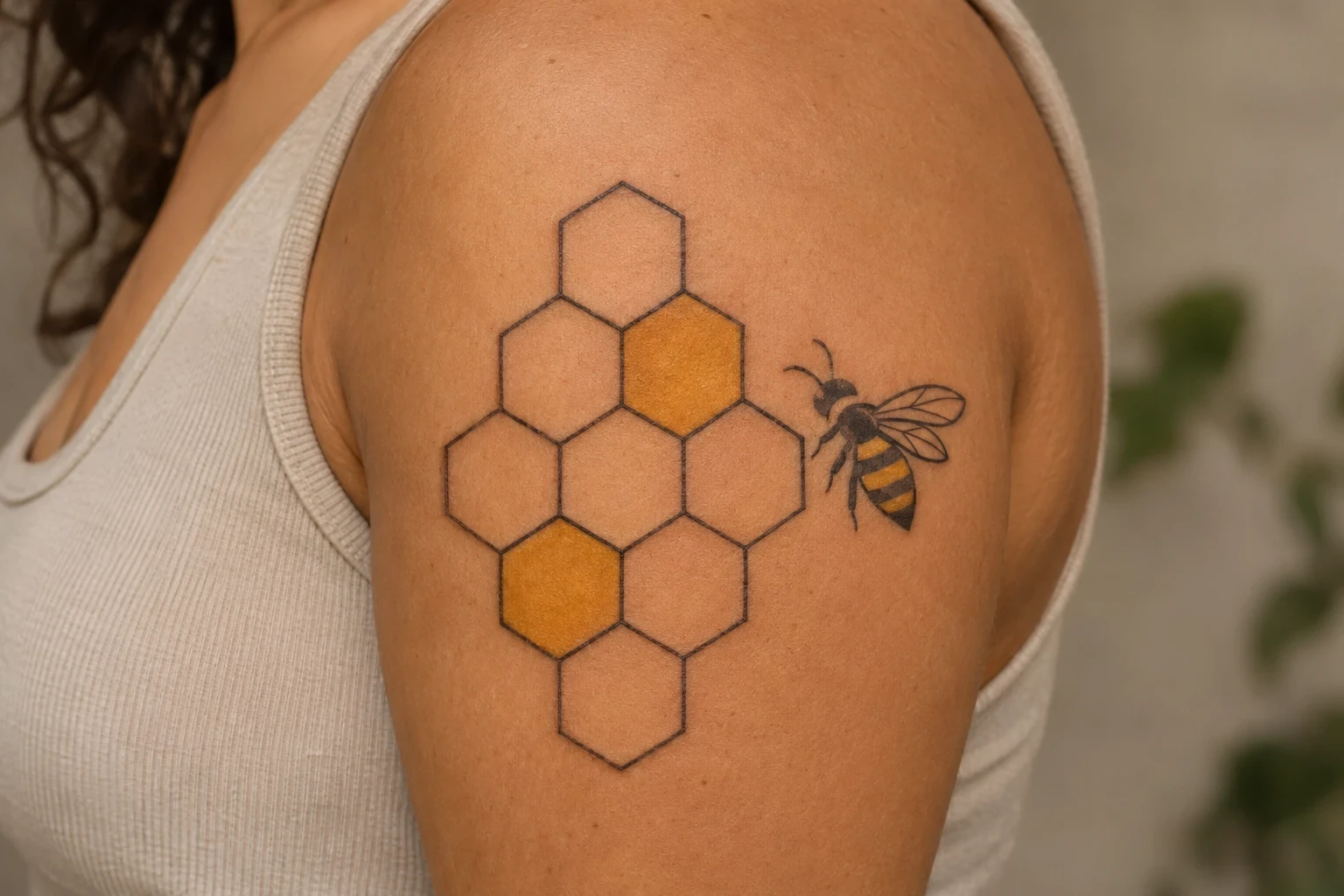
| Geometric | 4–6 inches | Strong, but crooked lines never stop showing | 2–4 hours |
Treat the size column as a floor, not a target. Every artist I have asked has said the same thing: shrinking a hummingbird below its comfortable size is the single most common regret with this design.
Why Hummingbird Drawings Are Harder Than They Look
Most tattoo subjects have one dominant silhouette. A rose is a spiral, a skull is an oval, a snake is a line.
A hummingbird has three competing shapes fighting for attention: the blurred wings, the compact body, and the fanned tail. The drawing has to decide which one wins.
There is also a speed problem. The Cornell Lab of Ornithology notes that the ruby-throated hummingbird beats its wings about 53 times a second, which is why photographs of them look like a body with two smudges attached.
A drawing that copies the blur literally almost always tattoos badly. Ink does not do transparency, so a soft grey wing smear reads as a bruise once it settles.
The fix that has worked every time I have seen it: draw the wings as structured feather groups, then imply the motion with placement and negative space rather than with fading. The Audubon field guide reference photos are useful here precisely because they show the feather layout the blur hides.
Hummingbird Tattoo Drawing Styles That Hold Up
These are the six approaches I keep seeing survive past the five-year mark, roughly in order of how forgiving they are.
Fine Line Hummingbird Drawings
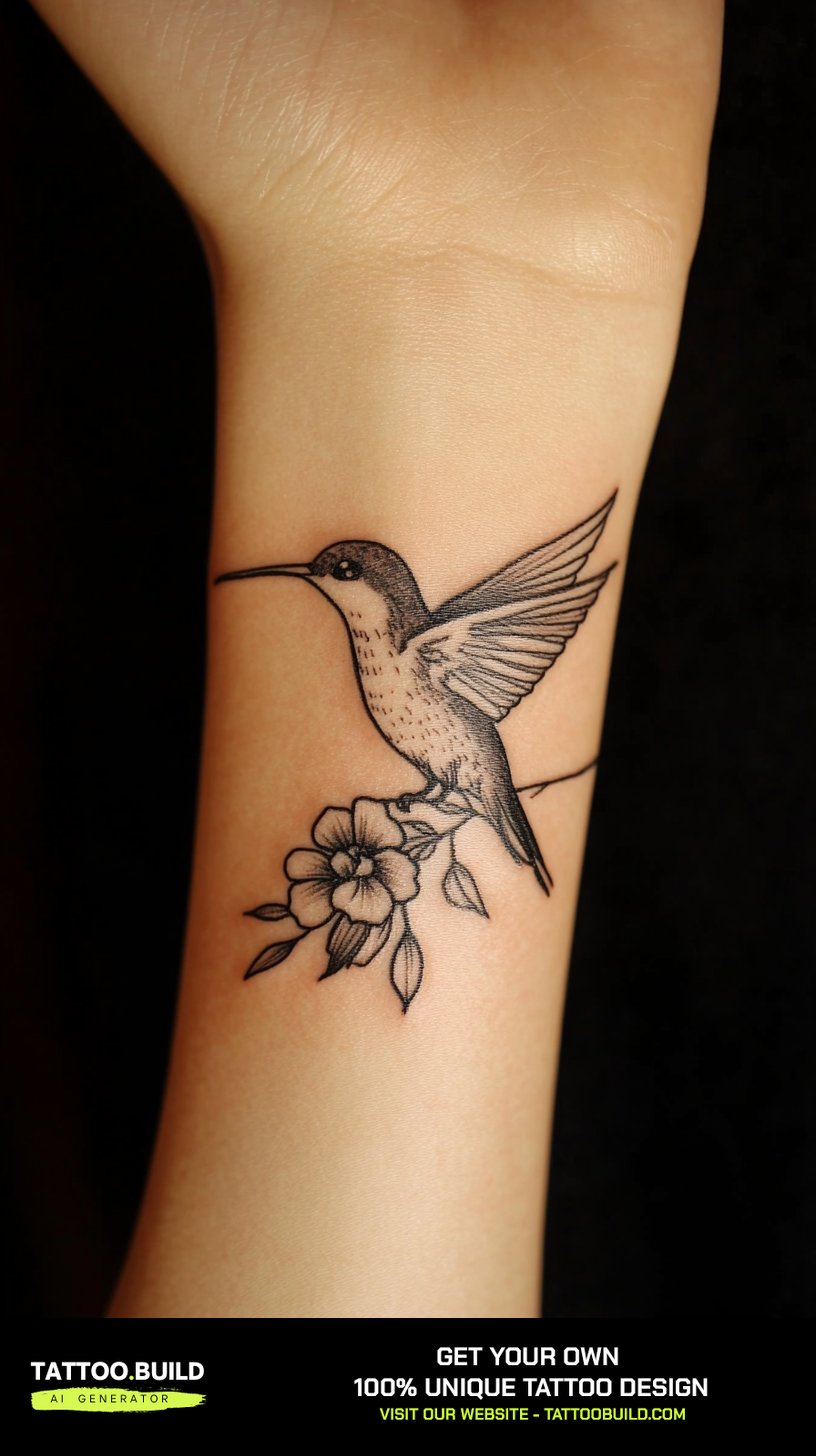
Fine line is the most requested version and the most misunderstood. A single-weight outline looks elegant on paper and slightly weak on skin.
The drawings that work vary the weight deliberately: heavier along the back and the leading edge of the wing, lighter on the tail tips and the beak.
I have seen the best results when the artist leaves the wing partly open rather than closing every feather line. The gaps let the eye finish the shape, and they give the tattoo somewhere to blur into as it ages.
Keep the beak thick enough to read. A hairline beak is the first detail that disappears, and a hummingbird without a beak just looks like a small confused finch. More style context sits in fine line tattoo ideas.
Watercolor Hummingbird Drawings
Watercolor suits this bird better than almost any other subject, because iridescence and colour bleed are describing the same thing.
The versions that last are built on a hidden line drawing. Pure colour with no structure underneath turns into a soft blob within a few years.
Ask to see healed photos, not fresh ones. Fresh watercolor always looks incredible; the honest test is what it looks like at year three.
Green, magenta and teal are the natural palette here, and they are also mid-range pigments that tend to hold reasonably well. Pale yellows and soft pastels are the ones that fade first. There is more on the technique in watercolor tattoo ideas.
Traditional and Neo-Traditional
If you want the version that will still read clearly in twenty years, this is it. Bold outline, limited palette, solid black in the shadows.
Neo-traditional gives you a little more feather detail and richer colour without giving up the outline that holds everything together.
In my experience this is also the friendliest style for a first tattoo, because the healing is predictable and small mistakes are hidden by the line weight.
The classic composition pairs the bird with a single large bloom — trumpet flower, fuchsia or hibiscus — so the two shapes lock together instead of floating.
Blackwork and Dotwork
Dotwork handles iridescence in a way colour cannot: you build the shimmer with density instead of hue.
The trap is over-packing. Dots placed too close together merge into a solid grey patch as the skin settles, and the whole gradient collapses.
I have found the drawings that translate best leave obvious breathing room in the mid-tones, so there is somewhere for the ink to spread into.
Blackwork also ages well on people who spend a lot of time outdoors, since there is no colour to bleach out.
Black-and-Grey Realism
Realism is the highest-risk option and the one most worth paying properly for. Every feather is a separate value decision.
Give it room. Below roughly five inches the fine gradients that make realism convincing simply merge together, and you end up with an expensive grey smudge.
A good realism drawing usually simplifies more than you would expect — it keeps three or four clear value zones rather than trying to render every barb.
Hummingbird and Flower Compositions
Nine out of ten hummingbird tattoos I see include a flower, and the flower usually does more compositional work than the bird.
The bloom gives the bird a reason to be there, fills the awkward space under the tail, and gives the design a stable base so it does not look like it is falling off the arm.
Trumpet-shaped flowers make the most biological sense, and they also happen to be easy to draw at a scale that balances the bird.
Birth flowers are a common personalisation here. Just check the shape works — a wide flat bloom can swallow the bird entirely.
Geometric and Ornamental
Geometric hummingbirds split the bird into facets, or set it inside a frame of circles and lines.
This style is unforgiving in a specific way: a wobbly straight line never stops looking wobbly, while a wobbly organic line just looks hand-drawn.
When I have asked artists about it, the advice is consistent — look at their healed geometric work before booking, not their fresh work.
Variations Worth Considering
If the standard side-profile bird feels overdone, these are the departures that still read clearly.
Silhouette Only
A solid black hummingbird with no interior detail. It is the most durable version of this design by a wide margin, and it works down to about two inches, which puts it in the same territory as other minimalist tattoo ideas.
Two Birds
Facing pairs work well on the spine, sternum and shoulder blades. Ask for the drawing to be mirrored deliberately rather than traced twice, or the asymmetry becomes distracting.
Hummingbird Skeleton
An unusual but striking option — the skeletal frame with feathered wings. It needs a confident line artist and enough space to avoid turning into a scribble.
Winged Alternatives
If you like the movement but not the bird, the same compositional logic applies to butterflies and moths. Rose and butterfly tattoo ideas covers the flower-plus-wings pairing in more depth.
Placement, Sizing and Aftercare
Forearm and outer upper arm are the easiest placements to live with: flat enough for detail, visible enough to enjoy, and not brutal to sit through.
The wrist is popular but tight. If you want a wrist hummingbird, go silhouette or simplified outline rather than realism — there is more on the constraints in wrist tattoo ideas for women.
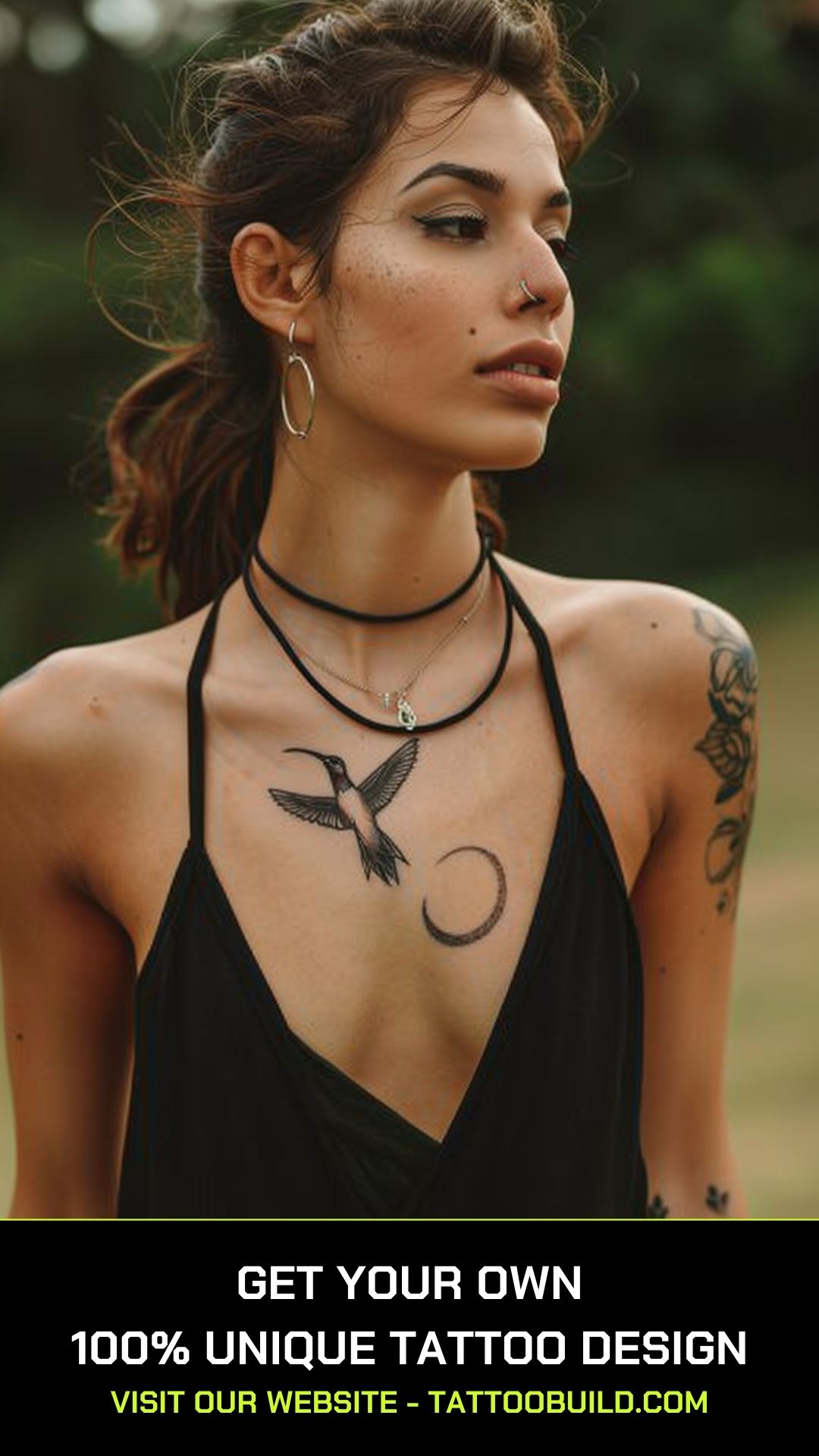
The shoulder and shoulder blade give a hummingbird the diagonal it wants, and the skin there tends to hold detail well over time. Small shoulder tattoo ideas has more on that placement.
On aftercare, follow whatever your artist tells you first — they know what they put in your skin. The American Academy of Dermatology has sensible general guidance on keeping new tattoos clean and protected, and anything that looks infected, stays swollen, or spreads is a doctor visit, not a forum question.
Sunscreen is the single biggest factor in how a colour hummingbird looks at year ten. That is true of all colour work, but it hits the greens and pinks in this design hardest.
Common Mistakes and How to Avoid Them
The first is scale. Bringing in a detailed reference drawing and asking for it at three inches puts the artist in an impossible position.
The second is copying a photograph directly. Photos flatten the wings into a blur, and blur does not translate to ink — you need a drawing, not a print.
The third is treating the tail as an afterthought. The tail is a large part of the silhouette, and a vague tail is what makes a hummingbird read as a generic bird.
The fourth is booking on price. If your shortlist is based on cost rather than portfolio, how to find a tattoo artist is worth reading before you deposit.
And if nerves are the sticking point, the tattoo pain chart gives a realistic sense of which placements are genuinely rough. A hummingbird on the forearm sits at the manageable end for most people.
One more, less obvious: do not over-plan. Bring three or four references and a clear sense of mood, then let the artist draw. The best hummingbirds I have seen were drawn by the artist, not brought in finished.
Frequently Asked Questions
How small can a hummingbird tattoo be?
In practice, about two to three inches for a silhouette or simplified outline, and four inches or more for anything with feather detail. The limiting factor is the beak and tail, which are the first elements to blur together at small sizes. If you want something genuinely tiny, ask for a stripped-back version rather than a shrunken detailed one. A good artist will usually tell you honestly when a drawing will not survive at the size you want.
What does a hummingbird tattoo mean?
Common readings include resilience, joy, freedom and the memory of someone who has passed, and in several Indigenous traditions of the Americas the bird carries its own distinct cultural meanings. There is no single fixed symbolism, which is part of why the design is so widely chosen. Most people I have spoken to attach a personal meaning rather than a traditional one. If a specific cultural meaning matters to you, it is worth researching that tradition properly rather than relying on a generic list.
Do hummingbird tattoos hurt more than other designs?
The design does not change the pain much — placement does. A forearm or outer arm hummingbird is manageable for most people, while ribs, sternum, ankle and inner wrist are considerably sharper. Colour packing and long shading passes tend to feel more tiring than outlining, so a large watercolor piece can be a longer, duller ache rather than a sharper one. Sessions are usually broken up if the piece runs past a few hours.
Should I get colour or black and grey?
Colour captures the iridescence that makes hummingbirds distinctive, but it needs more sun protection and is more likely to want a touch-up. Black and grey or blackwork ages more predictably and suits people who spend a lot of time outdoors. In my experience the honest deciding question is whether you will actually use sunscreen on it. If not, black and grey is the lower-maintenance choice.
How long does a hummingbird tattoo take to heal?
The surface usually looks settled within two to three weeks, while the deeper layers generally take a few months to fully settle, which is when the final colour becomes clear. Do not judge a watercolor or fine line piece before that point, because both look patchy mid-heal. Follow your artist’s aftercare instructions rather than general advice from the internet. Anything with spreading redness, increasing pain or discharge should be looked at by a doctor rather than waited out.
Quick Summary
- The drawing decides the tattoo — settle the wing angle and tail shape on paper before you book.
- Do not copy the wing blur from a photograph; ask for structured feather groups instead.
- Give the design room: four inches or more for detail, five or more for realism.
- Neo-traditional and blackwork age the most predictably; fine line and watercolor need touch-ups.
- Build watercolor over a hidden line drawing so it has structure to fall back on.
- Pair the bird with a trumpet-shaped bloom to fill the space under the tail.
- Forearm, outer arm and shoulder are the most forgiving placements.
- Sunscreen, then sunscreen — it is the main variable in how colour work looks a decade later.