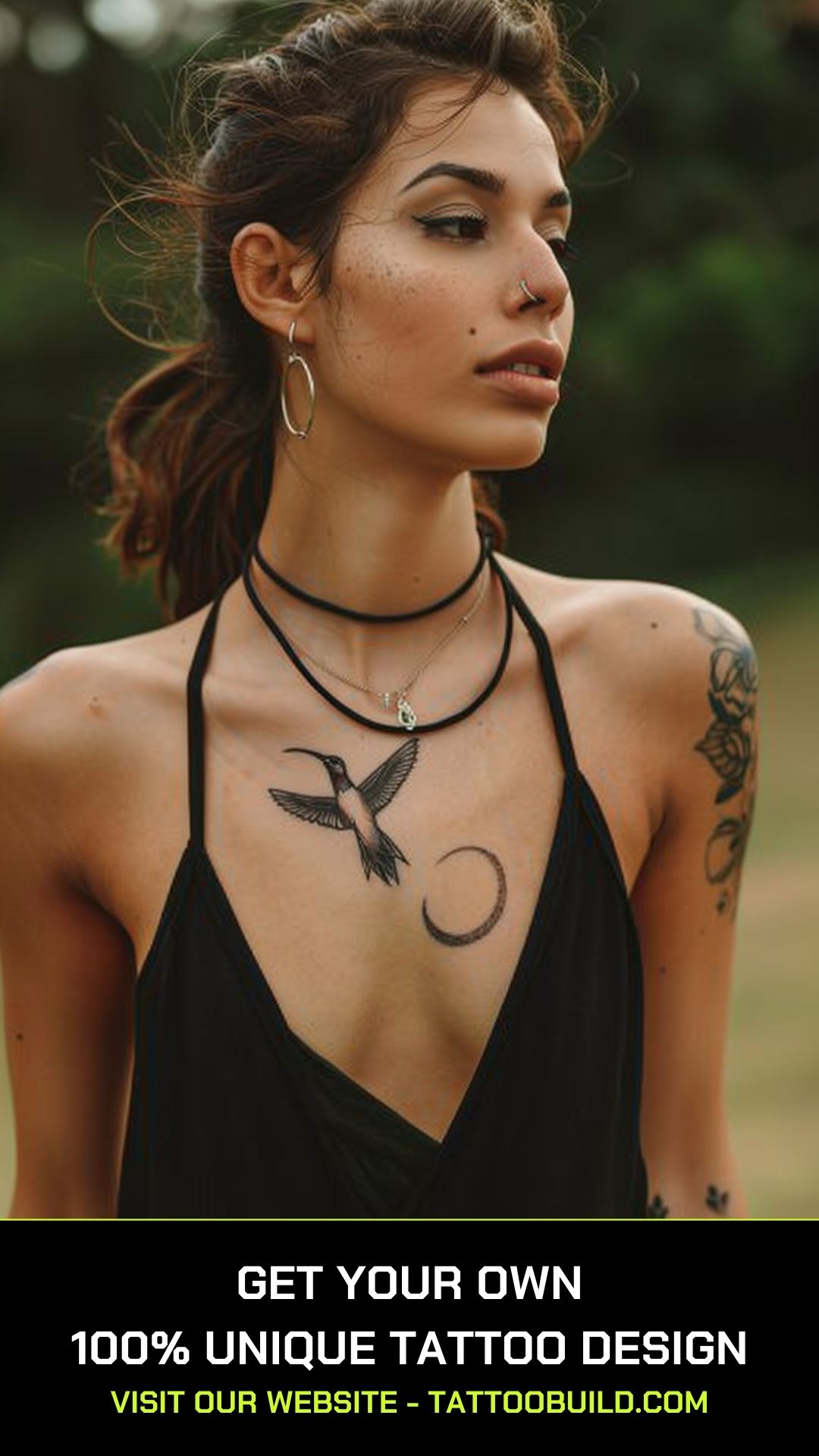
A hummingbird tattoo is one of the few small designs that still looks like something a year later, because the shape carries itself even when the fine detail softens. That is the honest reason it keeps showing up on women’s wrists, shoulders and ribs year after year.
I have been collecting and comparing these designs for a long time, and the pattern is consistent: the ones that age best are the ones that commit to a single readable silhouette instead of cramming in every feather.
Below are 31 hummingbird tattoos for women, sorted by style and then by placement, with what I would actually ask an artist before booking each one. If you want to sketch your own first, the hummingbird tattoo drawing guide is a good place to start.
Nothing here is a rule. It is what I have seen work, and where I have seen people end up disappointed.
Which Hummingbird Tattoo Style Is Right for You?
Style matters more than size for how a hummingbird tattoo holds up. This is the comparison I keep coming back to when someone asks me where to start.
| Style | Best size | How it ages | Choose it if |
|---|---|---|---|
| Fine line | 2 to 4 inches | Lines soften and spread; may want a touch-up in a few years | You want something quiet that reads as jewellery, not artwork |
| Black and grey realism | 4 to 8 inches | Very well, because the contrast does the work | You want the bird to look like a bird from across a room |
| Colour / watercolour-leaning | 4 inches and up | Depends heavily on sun exposure and pigment choice | The iridescent throat is the whole point for you |
| Dotwork and geometric | 3 to 6 inches | Stipple can blur into grey; heavier dots hold longer | You like ornamental framing more than realism |
| Minimalist / micro | Under 2 inches | The least forgiving of all; detail closes up first | You want something almost private |
What Actually Affects How a Hummingbird Tattoo Ages
The single biggest factor is how much space you give the thinnest part of the design, usually the beak and the wing tips.
Ink spreads slightly in the skin over years. Two lines that sit close together on the stencil can become one line later, which is how a delicate wing turns into a grey smudge.
Placement matters almost as much. Hands, fingers and feet turn over skin quickly and fade faster, while the outer arm, shoulder blade and thigh tend to hold detail longest in my experience.
Sun is the other half of the story. Colour work on a forearm that is outside every summer will not look like colour work on a back piece that lives under a shirt.
None of this means small or delicate is a mistake. It means a small piece is a maintenance commitment, and it is fairer to know that going in than to be surprised in year four. Hummingbirds themselves are worth reading about too, and the Cornell Lab’s Ruby-throated Hummingbird profile is where I send people who want the real anatomy for reference.
Hummingbird Tattoo Ideas for Women, by Style
Seven directions, each with three real examples. Look at the composition first and the subject second, because that is what an artist will actually be working from.
1. Fine Line and Single-Needle Hummingbirds
Fine line work suits the hummingbird better than almost any other animal, because the bird’s own outline is already thin and angular.
The trade-off is honest: these are the pieces most likely to need a refresh. Every artist I have asked about single-needle work has said the same thing, that they build in slightly wider gaps than the drawing suggests so the piece has somewhere to spread into.
Keep the wing to a suggestion rather than a full feather map. A fine line wing that tries to show individual primaries almost always closes up first.
If this is the direction you like, the wider fine line tattoo ideas collection shows how the same technique behaves on other subjects.
2. Black and Grey Realism
This is the version that ages best, and it is not close.
Realism uses contrast rather than line weight, so as the ink softens the shape stays legible. When I have looked at ten-year-old work side by side, the black and grey birds are the ones still reading clearly.
It costs more and it takes longer. A palm-sized realistic hummingbird is usually a multi-hour sitting, and rushing it is the fastest way to end up with flat, muddy feathers.
Ask to see healed photos, not fresh ones. Fresh realism always looks good; healed realism is the actual test of the artist.
3. Hummingbird and Flower Pairings
Pairing the bird with a flower solves a real compositional problem: a hummingbird alone can look like it is floating with nothing to do.
A flower gives it a destination and gives the tattoo a base, which matters on curved placements like the shoulder or thigh.
Mixing weights works well here. A shaded bird over a line work flower keeps the bird as the subject instead of two elements fighting for attention.
Birth flowers are a common choice because the meaning is already personal, and the birth flower tattoo guide covers which bloom belongs to which month.
4. Colour and Iridescent Throats
The reason to go colour is the gorget, the iridescent throat patch that makes a hummingbird look lit from inside.
Good colour work fakes that with a narrow band of saturated pigment against darker feathers. It is a small area doing a lot of work, which is why colour hummingbirds usually need to be a bit larger.
Colour asks more of you afterwards. Daily sunscreen on an exposed placement is not optional if you want it bright in ten years.
If you like softer blended edges rather than solid saturation, the watercolour tattoo ideas page shows how that technique holds up.
5. Hummingbirds with Butterflies, Dragonflies and Other Birds
Adding a second creature is usually about people rather than aesthetics: a parent, a sibling, someone gone.
It works best when the two subjects share a visual language. Dragonfly wings and hummingbird wings both read as thin and translucent, so they sit together naturally.
Where I have seen it go wrong is scale. Two subjects at identical size read as a pattern rather than a scene, and one of them should usually be clearly smaller or further back.
Butterfly combinations follow the same logic, and there are more of them in the rose and butterfly tattoo ideas collection.
6. Geometric, Dotwork and Framed Designs
Framing a hummingbird inside a circle, a sun or a compass turns it from a wildlife tattoo into an ornamental one.
The frame does something practical as well: it gives the piece a defined edge, so it looks intentional on an open area like the upper back where a floating bird can look stranded.
Dotwork backgrounds are the most technique-dependent thing on this page. Fine stipple can grey out over time, while slightly heavier, more spaced dots hold their texture longer.
Ask specifically whether your artist does dotwork regularly. It is a different muscle from line work, and not everyone who offers it practises it often.
7. Minimalist and Micro Hummingbirds
A one-inch hummingbird is a genuine skill test. There is no room for correction and no room for shading.
The ones I have seen survive are the ones that gave up on detail entirely and kept only the profile: beak, body, one swept wing.
Expect to touch it up. That is not a failure of the tattoo, it is the cost of working at that scale, and most artists will say so if you ask directly.
For more work at this size, the tiny wrist tattoo ideas page is a useful reality check on what actually stays readable.
Placement Variations Worth Considering
Style decides how it ages. Placement decides how it lives with you.
Arm, Shoulder and Collarbone
The outer upper arm and shoulder blade are the placements I recommend most often, because they are flat enough for a clean stencil and easy to cover when you need to.
The collarbone is a good shelf for a horizontal composition, but it sits on bone, and most people find it sharper than the arm.
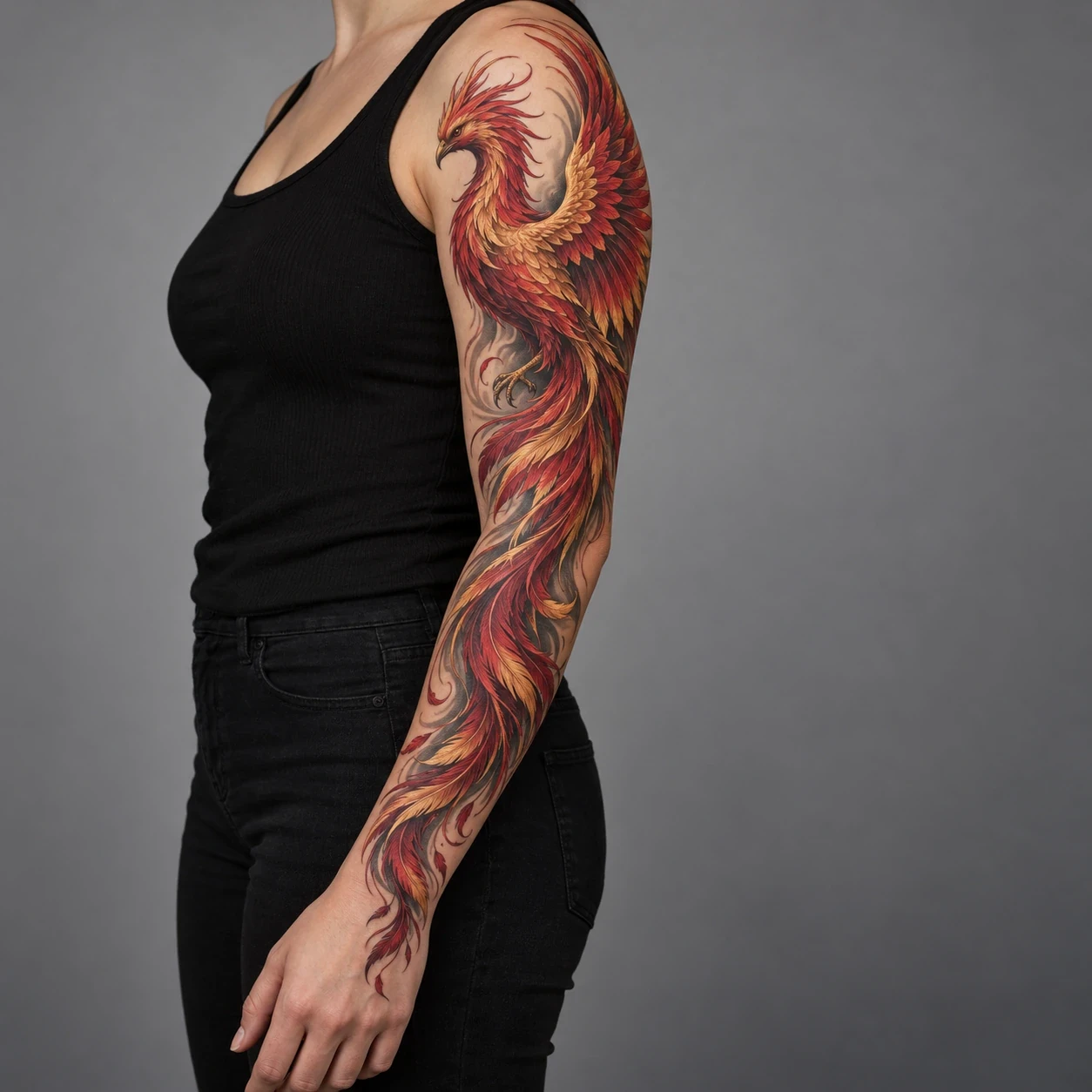
Half sleeve work is a different commitment entirely, usually planned across several sessions with the bird as the focal point rather than an afterthought. There are more options in the small shoulder tattoo ideas roundup.
Back, Nape and Spine
The upper back is the most forgiving canvas on the body: flat, low sun exposure, and enough room that the bird does not have to be shrunk.
The nape is the compromise placement. You can show it or hide it with your hair, which is why it comes up so often for a first larger piece.
Spine and centre-back work follows the vertical line of the body, and it hurts more than the shoulder blade for most people. The spine tattoo ideas page has a fuller look at how those compositions are laid out.
Ribs, Hip, Waist and Thigh
The ribs give you the body’s natural curve, which suits a diving or banking bird better than any flat surface.
They are also, by most accounts, among the more painful placements, with thin skin directly over bone.
The hip, waist and thigh are the quieter alternative: similar curve, considerably more padding, and almost no sun exposure, which is why colour tends to stay bright there.
Healing and Aftercare, Realistically
Most fresh tattoos are through the uncomfortable stage within about two weeks, though the deeper skin keeps settling for a couple of months after it looks finished.
Follow the aftercare your artist gives you over anything you read online, including this page, because they know what they put in your skin and how they wrapped it.
Keep it clean, keep it out of the sun, and do not pick the flaking. Picking is the most common way I have seen fine line work end up patchy.
Some redness and swelling in the first days is normal. Spreading redness, heat, pus, a fever, or a rash that appears weeks or months later is not, and that is a doctor’s question rather than a tattoo forum’s. The American Academy of Dermatology’s guidance on caring for tattooed skin is a reasonable starting point, and Mayo Clinic’s overview of tattoo risks covers the reactions worth knowing about. Nothing on this page is medical advice.
Common Mistakes, and What to Do Instead
The mistake I see most is shrinking a design to fit a placement instead of choosing a design that suits it.
A composition drawn for a shoulder blade does not simply scale down to a wrist; the detail that made it good is the first thing lost.
The second is booking on price. A cheaper hummingbird that needs covering later is the most expensive version of this tattoo.
The third is picking an artist by their overall following rather than by whether they have done this kind of work. A brilliant traditional artist is not automatically the right person for single-needle detail.
Still not sure where to land? If this would be your first piece, first tattoo ideas for women covers the practical decisions in order, and minimalist tattoo ideas is worth a look if you are leaning small.
Frequently Asked Questions
What does a hummingbird tattoo mean?
There is no single fixed meaning, and anyone who tells you otherwise is selling something. Common associations include resilience, joy, and remembrance of someone who has died, and in several cultures hummingbirds carry their own distinct symbolism. In practice most people I have spoken to chose it for a personal reason rather than a traditional one. Your reason is the one that counts.
How much does a hummingbird tattoo cost?
It depends far more on the artist and the style than on the bird. A small fine line piece is often a shop minimum job, while a detailed black and grey or colour piece is priced by the hour and can run across several hours. Rates vary widely by city and by artist demand, so the only reliable answer comes from a consultation. Ask for a total estimate including any touch-up policy.
Where does a hummingbird tattoo hurt the least?
Pain is individual, but the outer upper arm, outer thigh and shoulder blade are generally reported as easier, since there is more padding between needle and bone. Ribs, spine, sternum, hands and feet are generally reported as sharper. A smaller piece also simply takes less time, which matters more than most people expect. Eat properly beforehand and tell your artist if you need a break.
How small can a hummingbird tattoo be?
You can go under an inch, but the design has to change to survive it. At that scale you keep the silhouette and drop the feather detail entirely, because fine internal lines will close up as the ink settles. Most artists will tell you honestly what their own lower limit is for a given design. If someone agrees to any size without comment, that is worth noticing.
Does a hummingbird tattoo need touch-ups?
Fine line and micro work usually will at some point, often within a few years, and that is normal rather than a sign of bad work. Larger black and grey pieces tend to need much less. Many artists include one free touch-up within a set window after healing, so ask before you book. Sun protection does more to delay a touch-up than any aftercare product.
Quick Summary
- Black and grey realism ages best; fine line and micro work age fastest.
- Give the thinnest parts of the design more space than the drawing suggests.
- Pair the bird with a flower or branch so the composition has a base.
- Colour needs a larger canvas and consistent sun protection to stay bright.
- Outer arm, shoulder blade, upper back and thigh hold detail longest.
- Ribs and spine give the best curve but are generally the sharper placements.
- Judge an artist on healed photos of this specific style, not on follower count.
- Treat a touch-up as part of the plan for anything under two inches.