I have been collecting and sketching floral tattoo drawings for years, and the single thing I wish someone had told me earlier is this: the flower you pick matters far less than how the drawing is built.
A rose drawn with three tonal values and open negative space will still read as a rose in fifteen years. The same rose crammed with twenty tiny details will be a grey smudge.
That is the lens I use for everything below. I have pulled together the design directions that actually hold up on skin, from single fine line stems to full botanical sleeves, along with what each one costs you in healing time, touch-ups and artist skill.
If you are still narrowing down the flower itself rather than the style, the birth flower guide is a good place to start before you read on.
Which Floral Tattoo Style Is Right for You?
Every artist I have asked draws the same distinction: some floral styles are forgiving, and some demand a specialist. This is roughly how they sort out.
| Style | Best for | Typical sitting | Ages well? |
|---|---|---|---|
| Fine line botanical | Small, discreet placements | 1–2 hours | Needs the most care; thin lines soften |
| Traditional / American | Bold, high-visibility pieces | 2–4 hours | Excellent — built for it |
| Black and grey realism | Large single blooms | 4–8 hours, often multiple | Good with a strong shader |
| Japanese peony | Sleeves and back pieces | Multi-session project | Excellent — heavy outlines |
| Watercolour | Soft, painterly effects | 2–4 hours | Variable; better with line structure |
| Geometric floral | Modern, graphic looks | 2–5 hours | Good, if the linework is clean |
Sitting times above are the ranges I have seen quoted by studios for mid-sized work. Your artist’s estimate for your specific drawing is the one that counts.
What Actually Makes a Floral Tattoo Drawing Work
There is a reason a shop’s flash sheet looks different from a botanical illustration. Skin is not paper.
Ink spreads slightly over decades, so every gap in a drawing needs to be wider than it looks like it needs to be. Two lines a millimetre apart will eventually be one line.
Petal overlap is the second thing to watch. A drawing where petals cross at shallow angles gives the artist almost nothing to shade, and shallow overlaps are the first place a floral piece goes muddy.
Scale is the third. In my experience a rose smaller than about two inches across simply cannot hold internal petal detail, no matter how good the artist is — the design has to be simplified instead.
And finally, placement. Fingers, feet and the inside of the wrist see the most friction and sun, and usually fade fastest. That is not a reason to avoid them, just a reason to expect touch-ups.
Floral Tattoo Drawings by Flower and Style
These are the eight directions I keep returning to, with what each one is actually good at.
Rose Tattoo Drawings
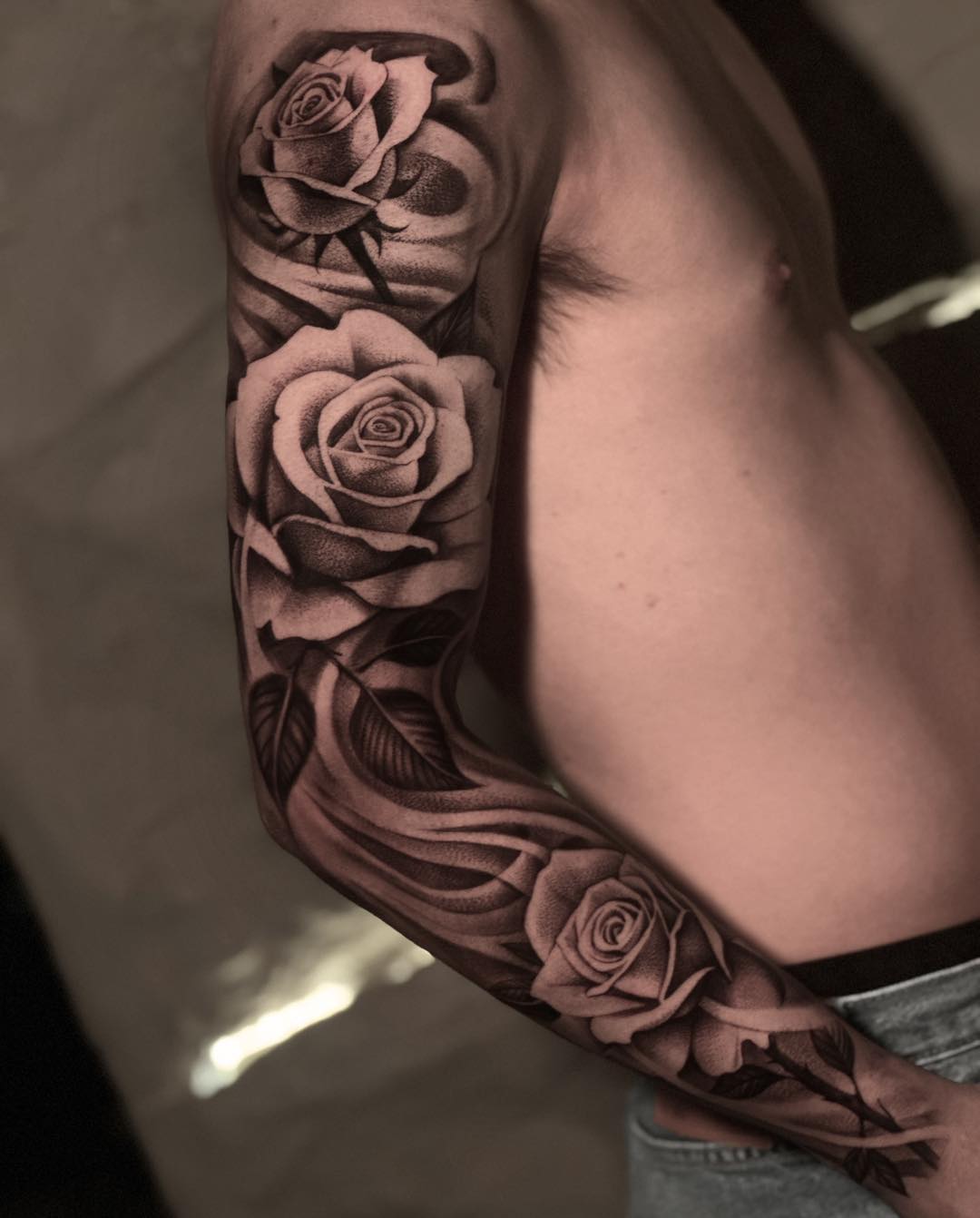
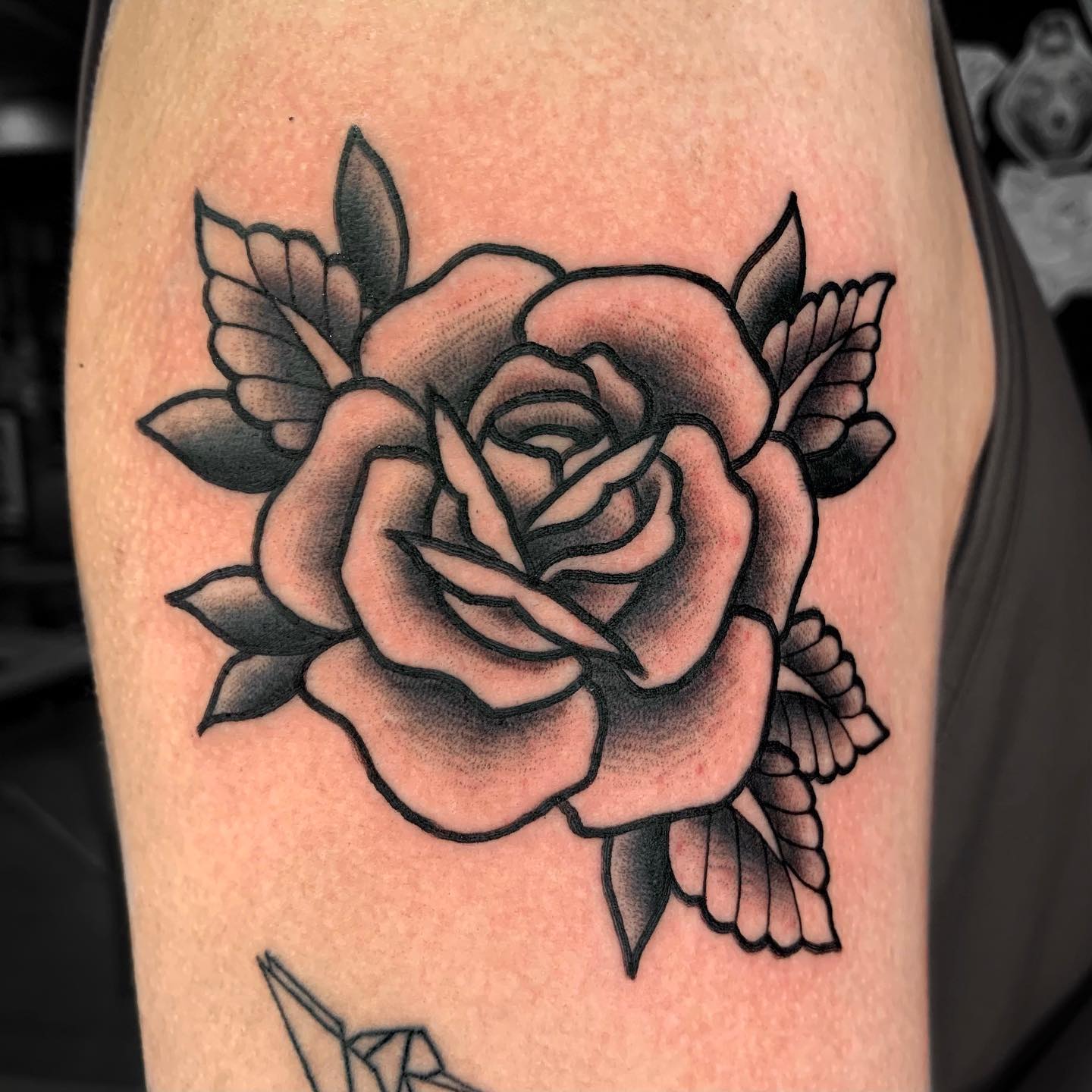
Roses are the most-requested floral tattoo drawing and, conveniently, one of the most forgiving. Their spiral petal structure creates natural light and shadow zones that an artist can lean on.
The spiral centre is the make-or-break element. If the innermost petals do not wrap convincingly, the whole bloom reads flat, and no amount of shading rescues it.
I would push anyone toward a slightly larger rose than they first plan. Going from two inches to three roughly doubles the detail the artist can safely include.
For placement-specific takes, the rose ideas collection covers arm, thigh and rib variations.
Delicate Wildflower Designs
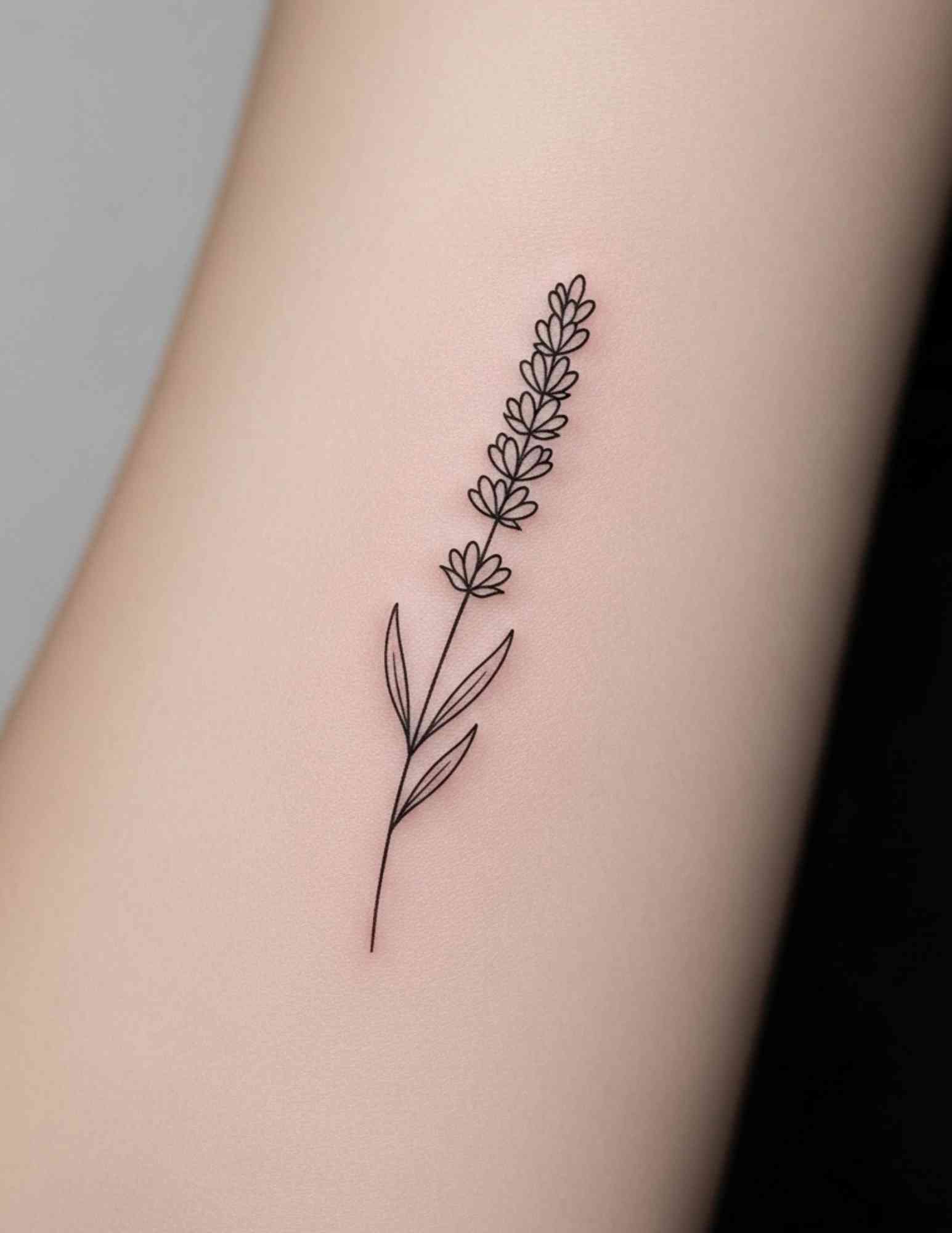
Wildflower drawings trade drama for charm. Daisies, poppies, lavender, cornflowers and forget-me-nots all have simple silhouettes that survive at small scale.
The catch is stem density. When I have seen wildflower pieces go wrong, it is almost always because six thin stems were packed into a two-inch strip and blurred together within a few years.
Give the stems room, or reduce the number of blooms. Three well-spaced flowers beat seven crowded ones every single time.
Browse the full wildflower gallery for arrangement ideas that keep the spacing honest.
Peony and Botanical Statement Pieces
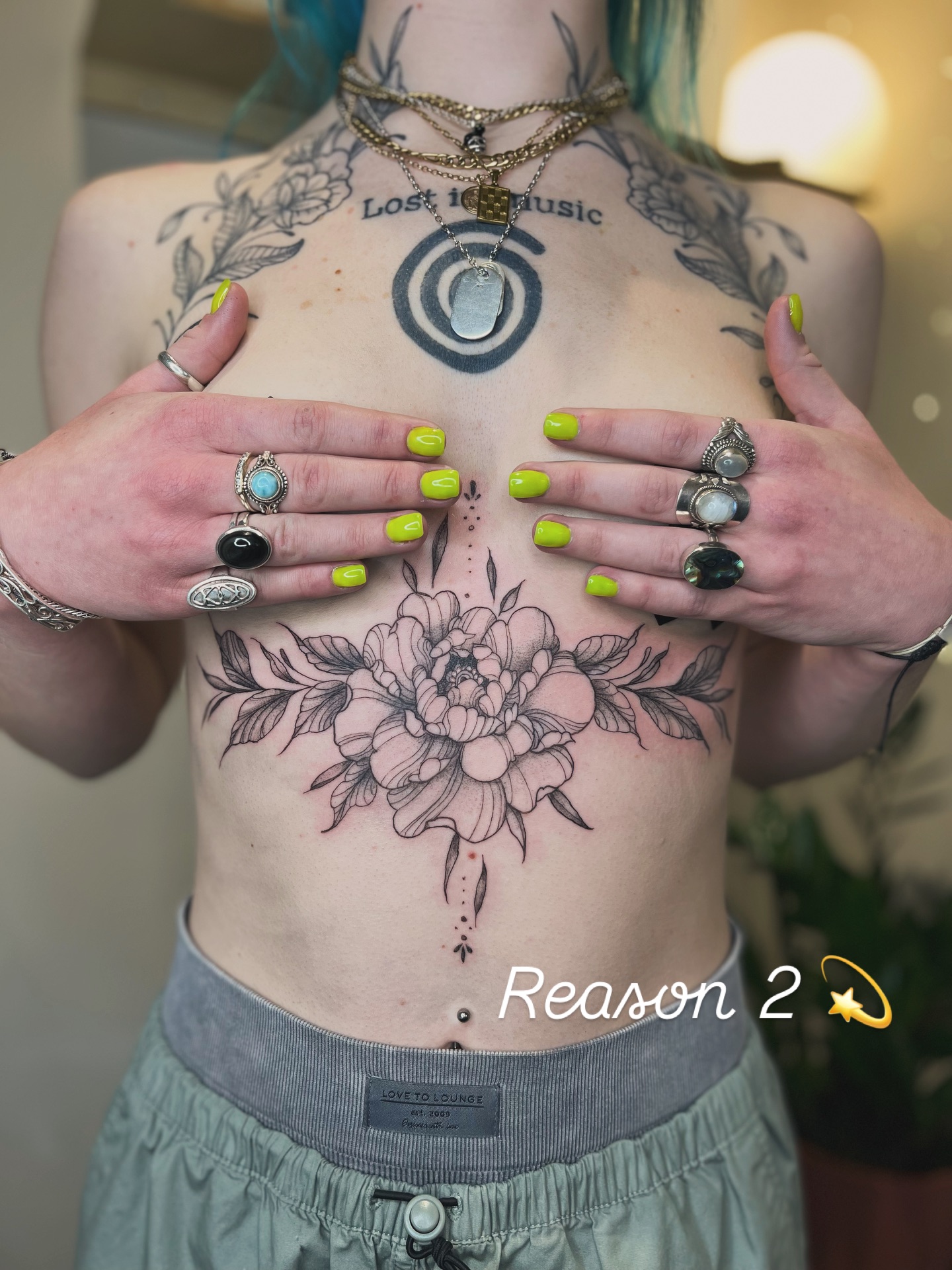
Peonies are the workhorse of Japanese traditional tattooing, and they earn it. Their ruffled, layered petals fill large areas without looking repetitive.
They also carry meaning — prosperity, honour and good fortune in Chinese and Japanese tradition, where the peony is often called the king of flowers.
A peony wants space. Below about four inches the ruffles start competing with each other, which is why you rarely see convincing tiny peonies.
If you want the scale without the sleeve commitment, a single shoulder or thigh peony works. The peony design ideas page has both approaches.
Floral designs and the prompts behind them
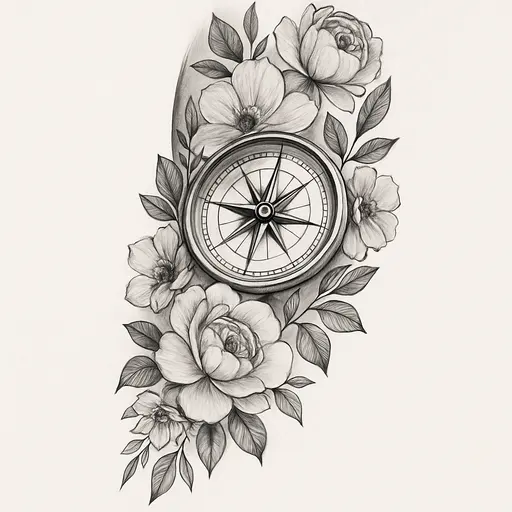
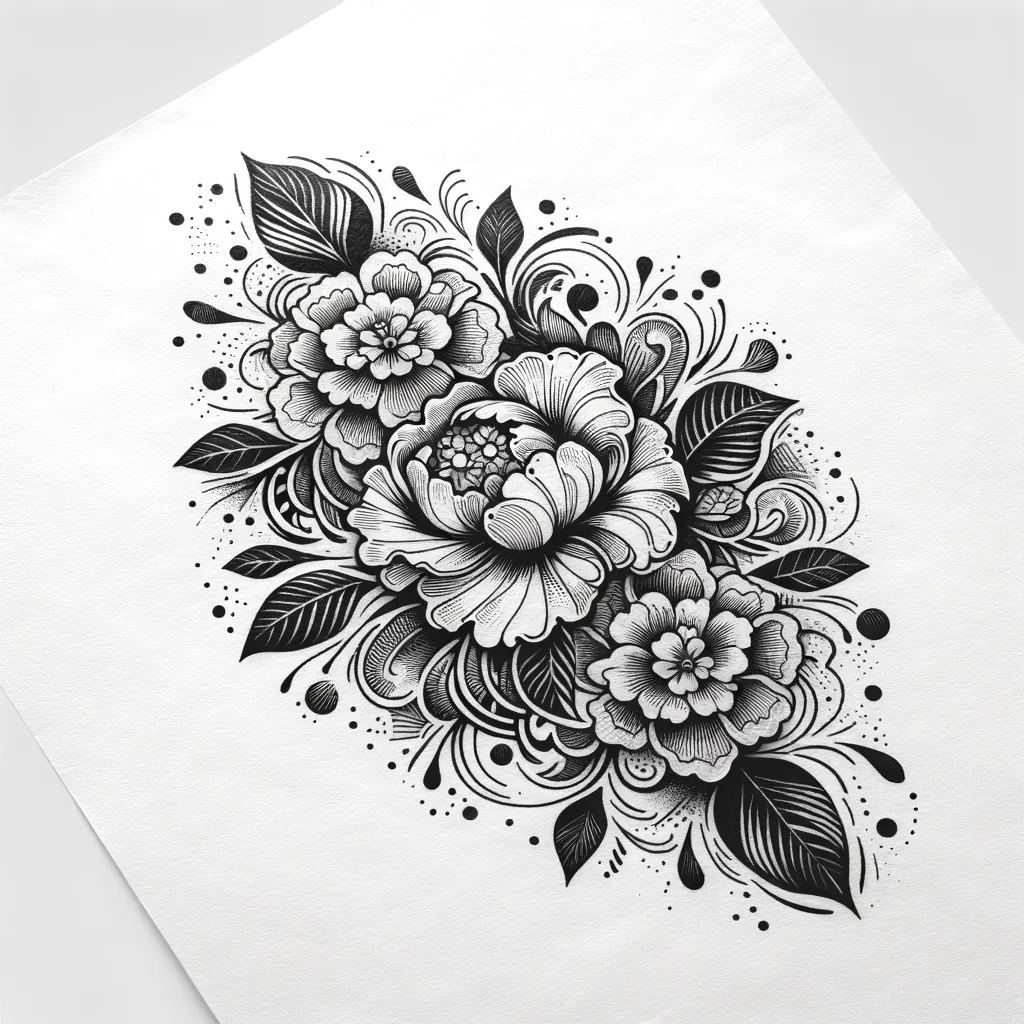
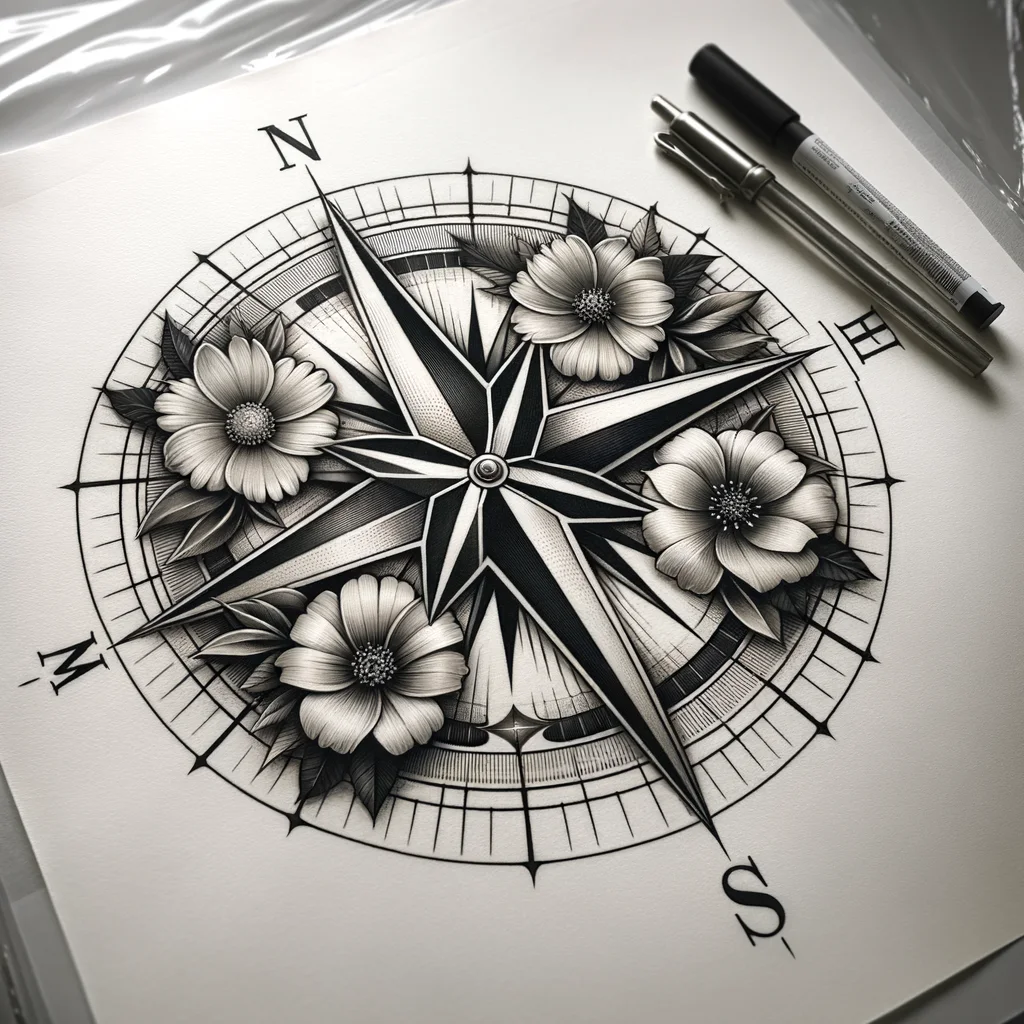
Floral arm sleeve with a compass tattoo design on a bright-white paper background, modern, realistic
Use this idea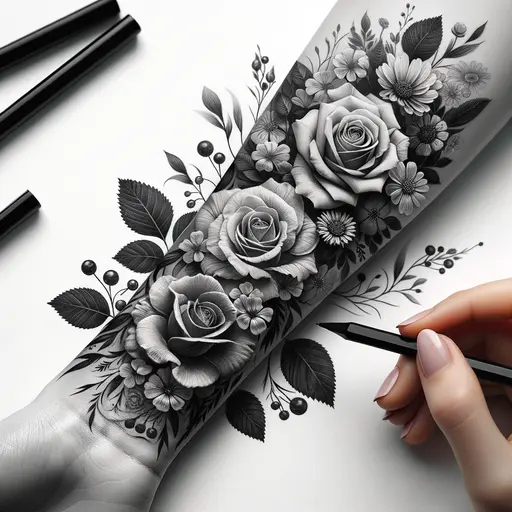
floral arm tattoo lightly shaded
Use this idea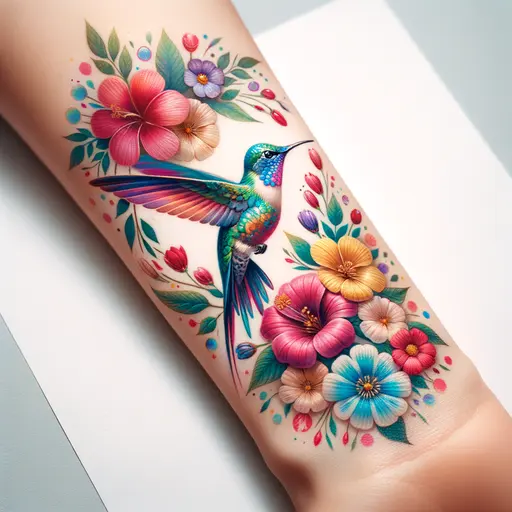
Wrist tattoo humming bird floral
Use this idea
Lotus Flower Drawings
The lotus carries genuine weight in Buddhist and Hindu symbolism, where a flower rising clean out of muddy water stands for spiritual growth.
Visually, the lotus is the most symmetrical flower on this list, and that is both its appeal and its difficulty. Any asymmetry is immediately obvious.
Ask to see the stencil on your skin from a few feet away before committing. Symmetry that looks fine at arm’s length can be visibly off in a mirror.
Mandala work pairs naturally with it — see the lotus design collection for those combinations.
Floral Sleeve and Half-Sleeve Compositions
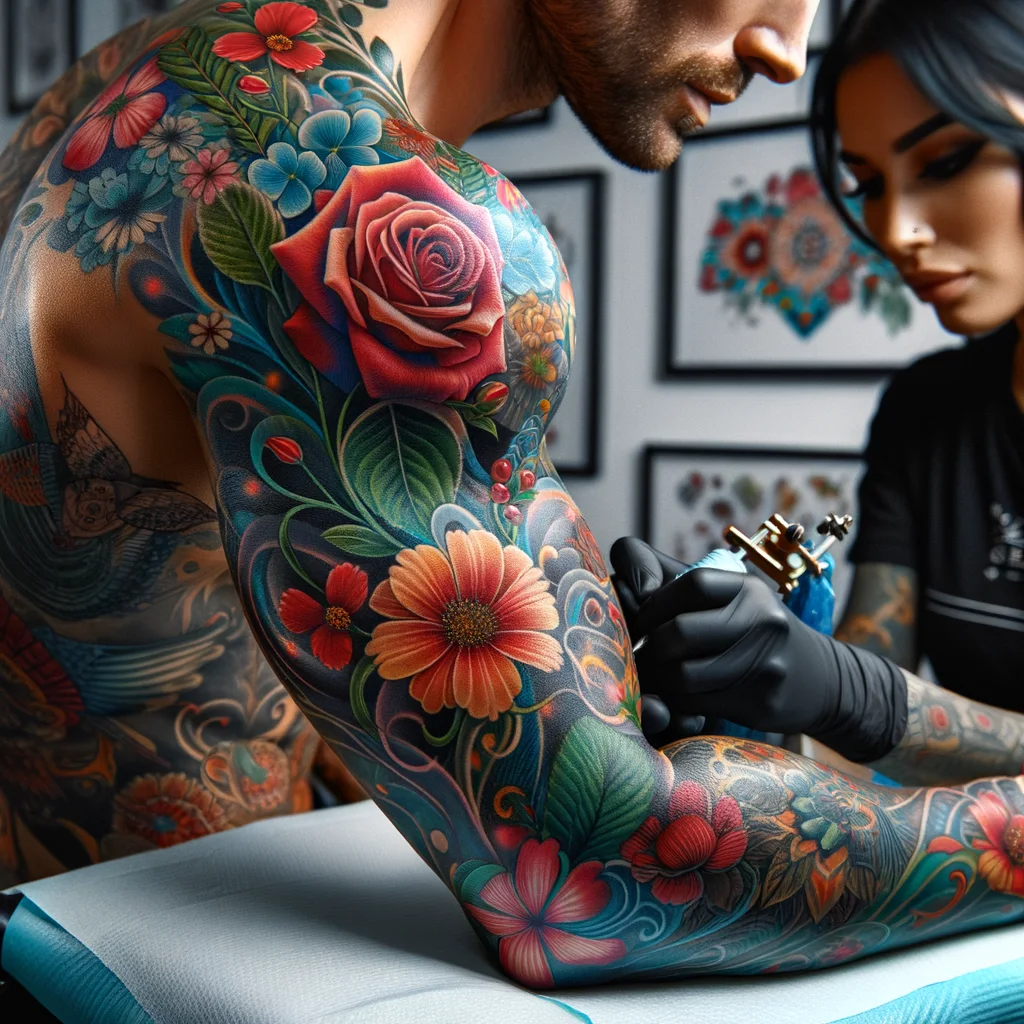
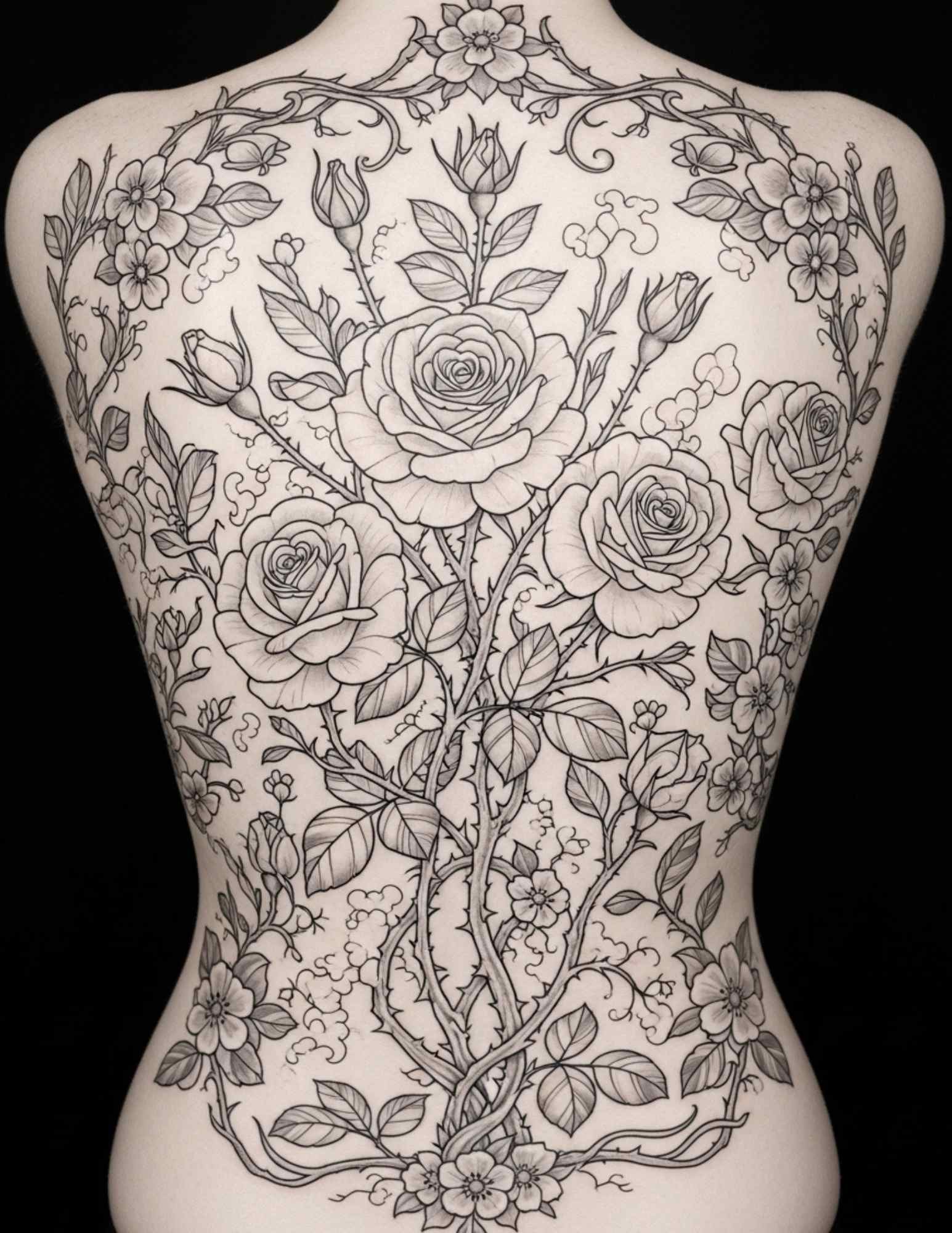
A floral sleeve is a composition problem before it is a drawing problem. The individual flowers are the easy part.
What makes a sleeve read as one artwork is the connective tissue: vines, leaves, shading fields and negative space that carry the eye around the limb.
Every artist I have talked to about sleeves says the same thing — the flowers should sit on a spiral that wraps the arm, not stack vertically like a stripe.
Plan the whole sleeve before the first session, even if you will build it over a year. Retrofitting a composition around existing pieces is the most common regret I hear.
The floral half sleeve guide breaks down how a half sleeve can be designed to extend later.
Geometric Floral Designs
Geometric florals set organic petals against hard shapes — hexagons, arcs, triangles, dotwork frames. The contrast is the point.
These live or die on linework. A wobbly hexagon next to a soft bloom looks like a mistake, whereas a wobbly petal just looks natural.
Ask to see healed photos of the artist’s straight lines specifically, not just their florals. It is a different skill.
Dotwork shading inside the geometry is a common and durable choice, because dots space themselves out as skin ages rather than blurring together.
Black and Grey Florals
Strip the colour out and a floral drawing has nowhere to hide. Every bit of depth has to come from the shading gradient.
This is the style where artist selection matters most. Smooth, even grey wash is genuinely hard, and patchy shading shows up within a couple of years.
Black and grey usually needs fewer touch-ups than colour over the long run, because black pigment tends to be the most stable on skin.
The black and grey floral gallery is worth a look for shading references to bring to a consultation.
Colourful Botanical Tattoos
Colour is where floral tattoos get to actually look like flowers. It is also where the maintenance conversation starts.
Bold traditional palettes — solid reds, greens and yellows inside heavy outlines — are far more durable than soft pastel blends.
Watercolour effects can be beautiful, but in my experience the ones that still look intentional after five years almost always had a line structure underneath.
Sun exposure is the main enemy of colour. Daily sunscreen on a healed colour piece makes a visible difference over a decade.
Variations Worth Considering
If none of the eight above is quite right, these adjacent directions often are.
Flowers Combined With Another Subject
Roses with snakes, skulls, daggers or butterflies are traditional pairings for a reason — the organic curve of petals contrasts well with a hard-edged subject.
Birth Flowers and Personal Meaning
Assigning a flower per month gives a piece built-in personal significance, and it scales neatly: one bloom per family member on a forearm, for example.
Micro Florals and Single Stems
A single fine line stem on the inner arm or behind the ear is the lowest-commitment entry point. Expect it to need a touch-up sooner than a larger piece.
The fine line ideas collection covers what does and does not survive at that scale.
Negative Space Florals
Instead of drawing the flower, the artist shades around it, leaving the bloom as bare skin. Striking, and it ages unusually well because there is no fine internal detail to blur.
Getting a Floral Tattoo: Practical Advice
Bring three to five reference images, not thirty. A focused brief gets you a better custom drawing than an overwhelming mood board.
Ask specifically for healed photos of the artist’s floral work. Fresh tattoo photos flatter everyone; healed photos are the honest test, and any artist worth booking will have them.
On aftercare, follow the instructions your artist gives you rather than anything you read online, including this page. Their advice is tailored to the ink, technique and your skin.
Do keep an eye on healing. Spreading redness, swelling that worsens after the first few days, pus, or fever are signs to contact a doctor rather than wait it out — the American Academy of Dermatology has clear guidance on what normal healing looks like.
It is also worth knowing that tattoo inks are not pre-approved for skin injection in the US, and allergic reactions to specific pigments (red is the most commonly reported) do happen. The FDA’s tattoo fact sheet is the plain-language source on that. If you have reacted to a pigment before, tell your artist before the stencil goes on.
Still Not Sure? Common Mistakes to Avoid
Going too small is the mistake I see most often. People pick a size for how discreet it is, then are disappointed the detail did not survive.
Booking the first available artist rather than the right one is a close second. A three-month wait for a floral specialist is a good trade for something permanent.
Committing to a full sleeve one flower at a time, with no plan, is the third. It rarely comes together as a single piece.
And copying another person’s tattoo exactly — most artists will happily use it as a reference but will want to draw your version, which is usually the better outcome anyway.
Still exploring? The watercolour tattoo ideas and floral back tattoo ideas pages both cover ground this article does not.
Frequently Asked Questions
How much does a floral tattoo cost?
It depends almost entirely on size, detail and your artist’s hourly rate, which varies enormously by city and reputation. Most studios quote small fine line pieces as a flat shop minimum and larger work by the hour or by the session. The only reliable number is the one your chosen artist gives you at a consultation. Ask whether the quote includes a touch-up, since policies differ.
Do floral tattoos hurt more than other designs?
The design itself does not change the pain much; placement does. Areas over bone or with thin skin — ribs, sternum, feet, inner arm — are generally reported as more uncomfortable than the outer thigh or forearm. Long shading passes on a large peony feel different from short line work on a small stem, but neither is inherently worse. Eat beforehand and tell your artist if you need a break.
How long do fine line floral tattoos last?
They last permanently, but they soften. Thin lines spread slightly as skin ages, so a delicate wildflower piece will typically look less crisp after several years than a bold traditional one. Many people are perfectly happy with that softened look, and a touch-up can sharpen it. Sun protection makes more difference than almost anything else.
Which flower is best for a first tattoo?
A single rose, daisy or small stem on the forearm or outer upper arm is a sensible starting point — a manageable sitting, a forgiving placement, and a design that reads well at modest size. Avoid starting with fingers, feet or the ribs if you can. Beyond that, pick the flower that actually means something to you rather than the one that is easiest.
Can a floral tattoo cover an old tattoo?
Often yes, and florals are one of the most common cover-up subjects because their organic shapes disguise straight lines underneath. Success depends on how dark and how large the original is, and a cover-up usually needs to be noticeably bigger and darker than what it replaces. Some cases need a few laser sessions first to lighten the old ink. A consultation with an artist who specialises in cover-ups will tell you quickly what is realistic.
Quick Summary
- Build, not bloom. How the drawing is constructed matters more than which flower you choose.
- Leave gaps wider than you think. Ink spreads over decades and closes tight spaces.
- Size up. Going from two inches to three roughly doubles the detail that can safely be included.
- Match style to tolerance. Traditional and Japanese peony age most reliably; fine line and watercolour need more upkeep.
- Plan sleeves whole. Map the full composition before the first session, even if you build it over a year.
- Judge artists on healed photos, and on straight lines specifically if you want geometric work.
- Protect from sun. It is the single biggest factor in how colour holds up.
- Watch healing properly. Follow your artist’s aftercare, and see a doctor for spreading redness, worsening swelling, pus or fever.