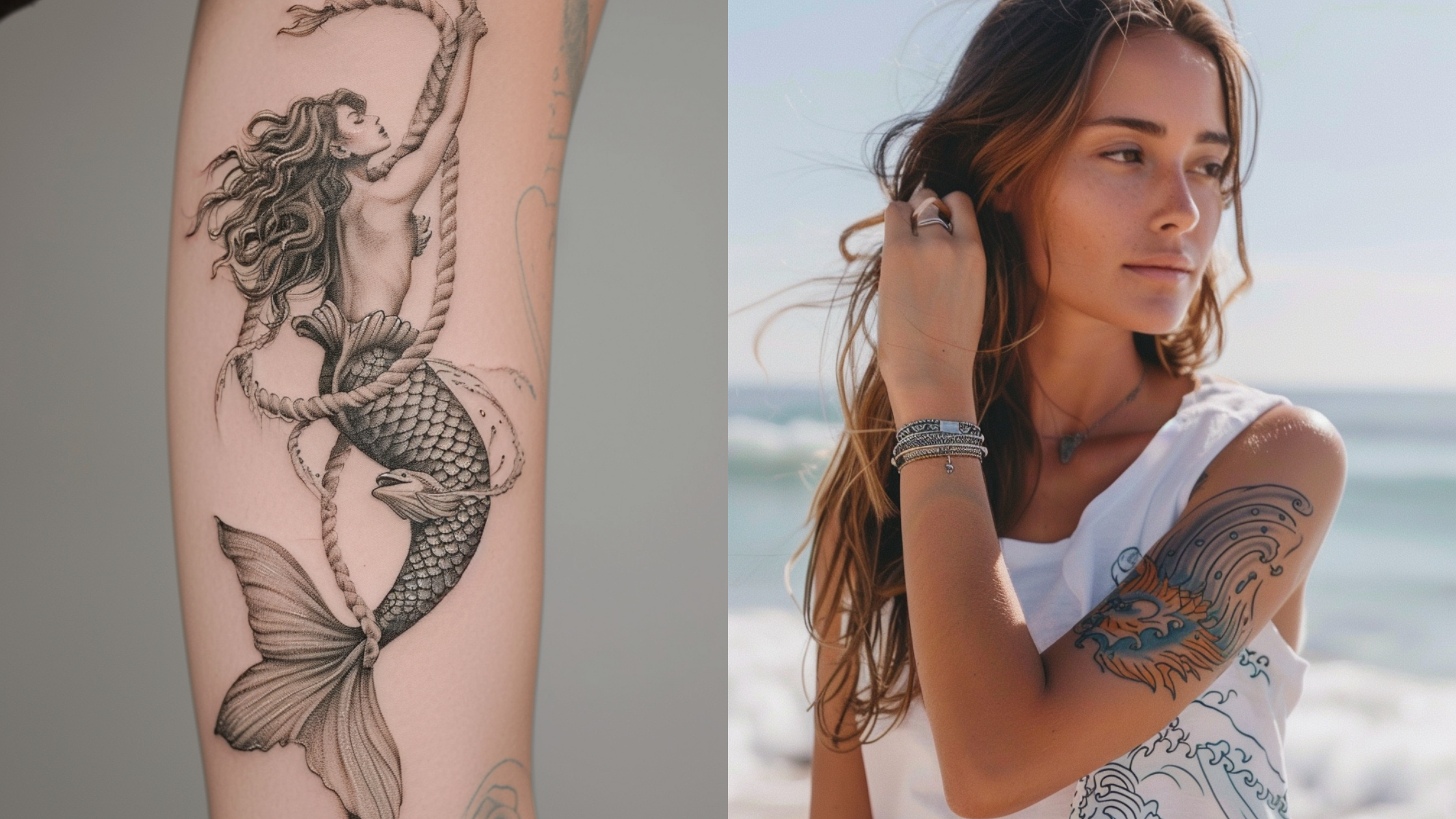
I have been drawing and photographing ocean tattoos for years, and the same thing happens every time someone brings me a reference photo of the sea. An ocean tattoo is less about picking a sea creature and more about picking how much movement you want living on your skin.
A wave, a jellyfish and a full reef scene all read as “ocean,” but they age completely differently, sit differently on the body, and cost wildly different amounts of chair time.
In my experience the people who end up happiest are the ones who decided on scale and style first, then chose the subject. If you already know you want motion and symbolism rather than a literal animal, the meaning behind wave and moon designs is a good place to start reading.
Below are the ocean tattoo ideas I keep coming back to, with honest notes on what holds up over ten years and what does not.
Which Ocean Tattoo Style Is Right for You?
This is the table I sketch out for people who are stuck between styles. Times are typical single-session estimates for a forearm-sized piece and will vary by artist.
| Style | Best For | Typical Session | How It Ages |
|---|---|---|---|
| Fine line | Small waves, single jellyfish, minimal seascapes | 1–2 hours | Softens fastest; expect a touch-up within 5–8 years |
| American traditional | Ships, anchors, mermaids, classic waves | 2–4 hours | The most reliable; bold outlines stay readable for decades |
| Black and grey realism | Octopus, breaking waves, storm scenes | 4–8 hours, often multiple sittings | Good, if the artist leaves real contrast between values |
| Watercolor | Reefs, splashes, abstract sea colour | 3–5 hours | Weakest without an underlying line or dark anchor |
| Neo traditional | Octopus, sea turtles, decorative marine panels | 4–7 hours | Very well; heavy line plus saturated colour is a durable combination |
What Actually Makes an Ocean Tattoo Age Well
Water is the hardest thing in tattooing to draw convincingly, because water has no fixed shape. The artist has to invent the edges.
That is why so many ocean tattoos look muddy after a decade. Water rendered entirely in mid-tones has nothing for the eye to grab once the ink softens.
When I look at a healed ocean piece that still reads well, it almost always has three things: a genuinely black darkest value, an area of untouched skin left as the brightest highlight, and a silhouette you could recognise from across a room.
Skin also keeps moving. Ink spreads slightly into the dermis over the years, so gaps between lines close up. In practice that means detail smaller than a grain of rice tends to disappear, and a reef packed with tiny polyps turns into a grey mass.
None of this means fine detail is off the table. It means you should ask your artist directly how they expect the piece to look at year ten, and take their answer seriously.
Ocean Tattoo Ideas Worth Considering
These are grouped by subject rather than style, since that is how most people arrive at the shop.
1. Waves — the most forgiving place to start
A single wave is the ocean tattoo I recommend most often for a first piece. It has a clear silhouette, it can be sized anywhere from two inches to a full back, and it wraps around limbs without fighting the anatomy.
The Great Wave off Kanagawa has been reinterpreted so many times that a good artist will usually want to push you somewhere more personal. In my experience the versions that look best are the ones where the curl reads clearly at arm’s length.
Ask for a bold outline on the curl even if the rest is soft — that one line is what will still be holding the shape together in fifteen years.
Placement-wise, waves suit the forearm, the outer calf and the ribs, because all three give the design a long axis to travel along.
2. Jellyfish — movement without a hard outline
Jellyfish are the one ocean subject where a soft, drifting look actually works, because the animal itself has no firm edges.
The bell gives you a solid shape at the top and the tentacles let the tattoo trail down an arm or a spine as far as you want. That flexibility is why I see so many of them on the back of the upper arm.
Every artist I have asked about jellyfish says the same thing: keep the tentacles varied in weight. Ten identical thin lines read as a mop; five weights of line reads as movement.
If this is the direction you are leaning, there are far more layouts worth studying in this collection of jellyfish tattoo ideas.
3. Coral reefs — the highest risk, highest reward option
A reef is the most beautiful ocean tattoo you can get and the most likely to disappoint you at year twelve.
The problem is density. Real coral is thousands of small repeating shapes, and repeating small shapes are exactly what blurs first.
When I tested this against healed work in a studio portfolio, the reefs that survived all had deliberate empty space cut through them — negative space channels of bare skin where the artist simply left the reef out.
If you want a reef, budget for size. A reef the size of a playing card is a gamble; the same design across a thigh has room to breathe.
4. Mermaids — the classic that never actually left
Mermaids are one of the oldest subjects in Western tattooing and they still work, largely because they solve a composition problem: a figure gives the ocean a focal point.
Traditional mermaids with heavy black outline and a limited palette are, in my experience, the safest bet on the whole list. Sailor-era designs from the 1940s are still legible on people in their eighties.
Realistic portrait mermaids are a different commitment. Faces are unforgiving, and a face rendered in soft grey wash will shift over time in ways a stylised face will not.
There is a much wider range of poses and framing in these mermaid tattoo ideas if you want to compare approaches before committing.
5. Lighthouses — the ocean tattoo with a story attached
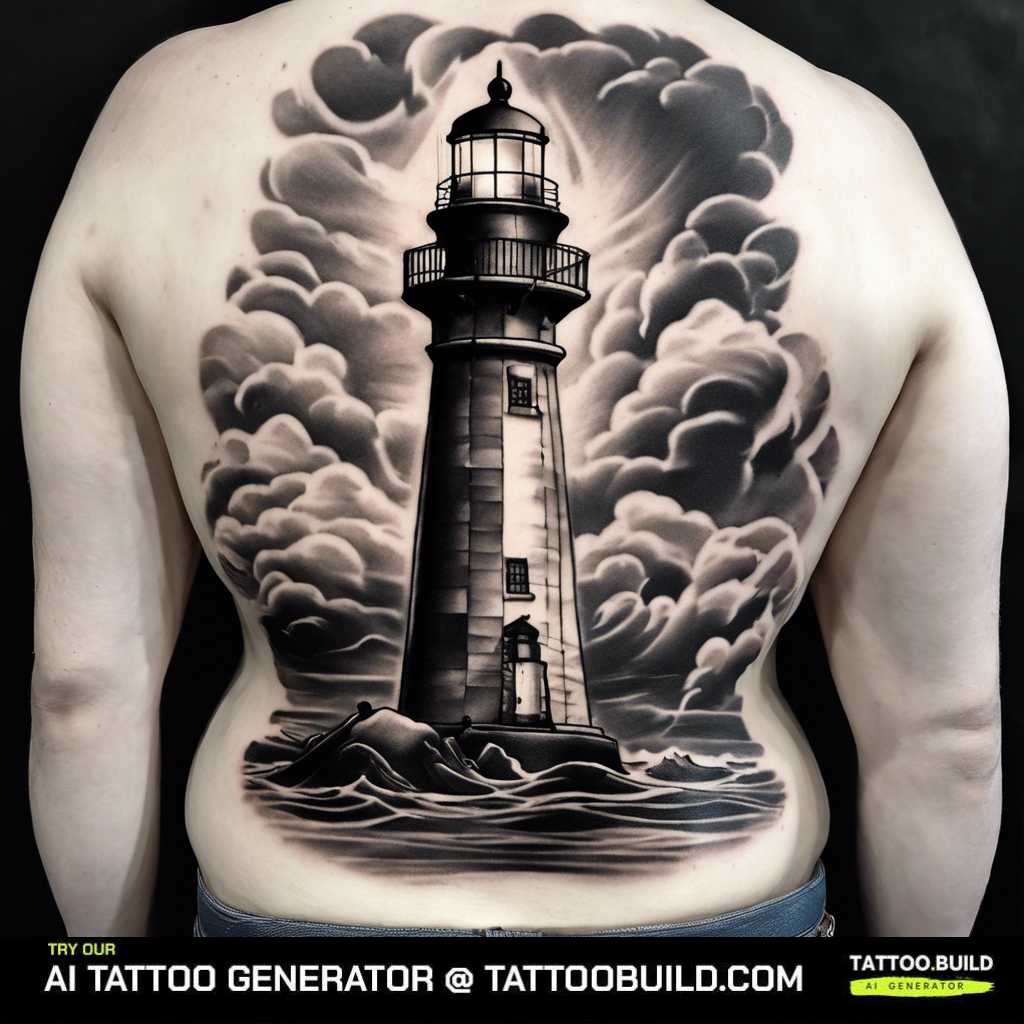
A lighthouse is rarely just scenery. Almost everyone I have spoken to who has one attaches it to guidance, a person, or a period they came through.
Structurally it is also a gift: a tall vertical object with a strong silhouette, sitting against water that can be as simple or as detailed as you like.
The mistake I see most often is a lighthouse floating with no base. Rocks, spray or even a simple dark shape at the foot grounds the whole design.
Vertical placements suit it best — the outer forearm, the calf, the spine. There is a good spread of compositions in this set of lighthouse tattoo ideas.
6. Octopus — the best use of a large curved surface
An octopus is the single best ocean subject for wrapping a shoulder, a thigh or a full sleeve, because the arms are designed to follow curves.
It is also the one that most rewards planning. The tentacles should be drawn onto the body, not onto flat paper, or they will fight the muscle underneath.
When I tested reference layouts on a shoulder, the difference between a stencil designed on the round and one adapted from a flat drawing was immediately obvious in how the arms flowed.
Expect several sittings for anything larger than a palm. If you want to see how far the subject can be pushed, look through these octopus tattoo designs.
7. Full seascapes and horizon lines
A horizon line with nothing else on it is one of the quietest tattoos you can get, and one of the hardest to place well.
It needs a straight, stable run of skin — the inner forearm, the collarbone, the outer bicep. On a curved surface a horizon stops reading as a horizon.
Full seascapes with sky, water and a shoreline are essentially landscape paintings, and they need the same amount of space a landscape painting needs. Under about six inches they collapse.
8. Sea creatures beyond the obvious
Not everything has to be a wave. Sea turtles, whales, sharks and rays all carry ocean symbolism with a cleaner silhouette than a reef.
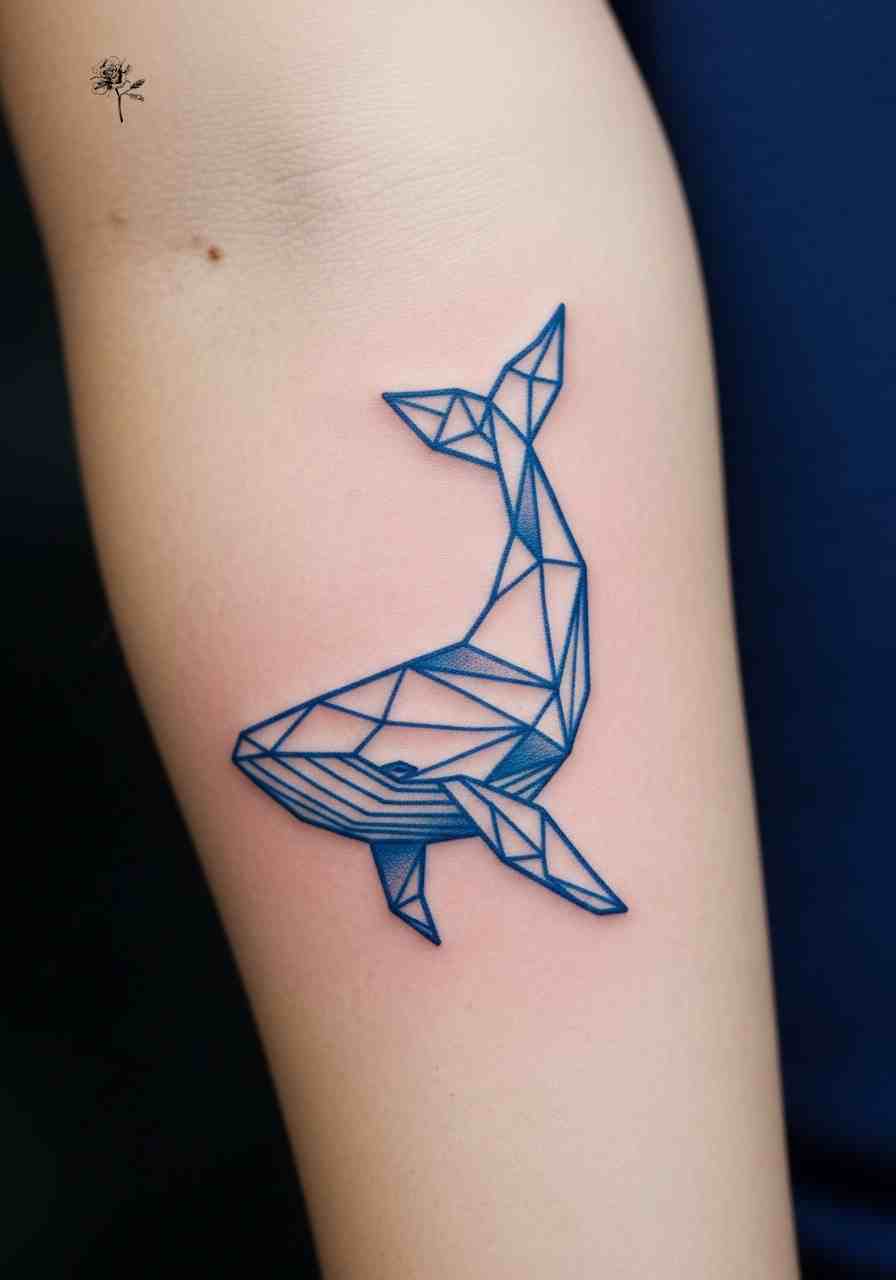
Turtles in particular suit ornamental and Polynesian-influenced work because the shell is a natural frame — worth browsing these turtle tattoo ideas. Whales, meanwhile, give you an enormous smooth shape that shading can actually live on, which is why so many whale tattoo designs hold up so well.
The rule I apply is simple: the simpler the animal’s outline, the smaller you can safely go.
Variations Worth Considering Before You Book
Ocean plus celestial
Pairing waves with a moon or sun is the most common combination I see, and it works because the circle gives an otherwise formless design a fixed anchor point.
It also lets you keep the water abstract without the tattoo reading as unfinished.
Nautical rather than natural
Anchors, ships and compasses carry the sea without depicting it. If the meaning matters more to you than the imagery, read what an anchor tattoo symbolises before you settle.
These designs also tend to be the cheapest of the group, because the shapes are geometric and the linework is fast.
Coastline and place-specific pieces
A literal outline of a coastline you have a connection to is a quiet alternative to a generic wave.
It pairs well with beach imagery — palms, dunes, footprints — and there are workable layouts among these beach tattoo ideas.
Negative space water
Instead of tattooing the water, some artists tattoo everything around it and leave the wave as bare skin.
It is a striking effect and it ages unusually well, since bare skin does not blur. It only works on people whose skin tone gives enough contrast with the surrounding black.
Aftercare and Practical Advice
Ocean tattoos come with an obvious irony: the thing they depict is the thing you have to stay out of while they heal.
Do not swim in the sea, a pool, a lake or a hot tub until the tattoo is fully closed — most artists will tell you two to four weeks, and submerging fresh work is a genuine infection risk, not a superstition. The American Academy of Dermatology publishes general aftercare guidance that is worth reading before your appointment.
Sun is the slower problem. Ultraviolet light breaks down pigment, and blue and green inks — exactly what an ocean piece is full of — fade noticeably on people who spend summers outdoors. Once healed, a high-SPF sunscreen over the tattoo is the single most effective thing you can do for it.
If you develop swelling, spreading redness, heat, pus or a rash weeks or months after healing, see a doctor rather than asking the shop. Delayed allergic reactions to tattoo pigment are uncommon but real; the US FDA keeps a plain-language summary of tattoo ink safety risks. Nothing in this article is medical advice, and no home remedy is a substitute for a professional opinion.
Still Not Sure? Common Mistakes to Avoid
The most expensive mistake is picking the subject before the size. A reef, a full seascape and a realistic octopus all have a minimum viable size, and going under it does not save money — it just moves the cost to a cover-up later.
The second is bringing a single reference image and asking for a copy. Good artists will adapt it to your body; the ones who trace it exactly are usually the ones whose healed work looks worst.
The third is underestimating placement. Ribs, feet and inner arms all hurt more and hold ink less predictably than the outer forearm or the outer thigh.
And the fourth is booking on a deadline. A holiday two weeks out is the worst possible reason to get an ocean tattoo, because you will not be able to swim on that holiday anyway.
Frequently Asked Questions
How much does an ocean tattoo cost?
It depends almost entirely on size and style rather than the subject. A small fine line wave is often a shop minimum piece, while a half sleeve octopus can run into multiple full-day sessions. Rates vary enormously by city and by artist experience, so the only reliable number is the quote you get from the artist you actually want. In my experience it is worth asking for a total estimate across all sittings rather than an hourly rate.
Do ocean tattoos fade faster than other tattoos?
Not because they are ocean tattoos, but the styles people choose for them often do. Blue and green pigments are more vulnerable to ultraviolet light than black, and soft watercolour work has no strong line holding it together. A bold outline and consistent sunscreen make far more difference than the subject matter. Any tattoo on a sun-exposed limb will need more protection than one on your back.
Where is the best placement for an ocean tattoo?
The outer forearm and the outer calf are the two placements I recommend most, because they take ink well, heal predictably and give a design a long axis to travel along. Waves and lighthouses suit vertical space; octopus designs suit shoulders and thighs where they can wrap. Ribs and feet look striking but hurt more and often need touch-ups. Talk placement through with your artist before the stencil goes on.
How long until I can swim after getting one?
Most artists say two to four weeks, and you should follow the specific instructions your artist gives you rather than a number from an article. The tattoo needs to be fully closed before it goes underwater, since pools, lakes and the ocean all carry bacteria. Submerging a healing tattoo also risks pulling pigment out and leaving patchy areas. If anything looks infected, contact a doctor rather than waiting it out.
Can a faded ocean tattoo be fixed?
Often, yes. A skilled artist can re-line a blurred wave, deepen the darkest values and restore contrast, and the result is usually far better than people expect. Heavily blurred fine line work sometimes needs to be redesigned rather than simply retraced. Bring the piece to an artist who does a lot of reworking, not just new work, and ask to see healed examples of their touch-ups.
Quick Summary
- Choose your size and style before you choose your sea creature — the subject is the easy part.
- Waves are the most forgiving ocean tattoo idea for a first piece, especially on the forearm or calf.
- Jellyfish work in soft styles because the animal genuinely has no hard edges.
- Coral reefs are the highest risk: give them real size and insist on negative space.
- American traditional mermaids and nautical designs age more reliably than anything else on this list.
- Octopus designs need a stencil drawn on the round, not adapted from a flat sketch.
- Stay out of water for two to four weeks, then use sunscreen for the rest of the tattoo’s life.
- See a doctor, not the shop, for any reaction that appears weeks or months after healing.