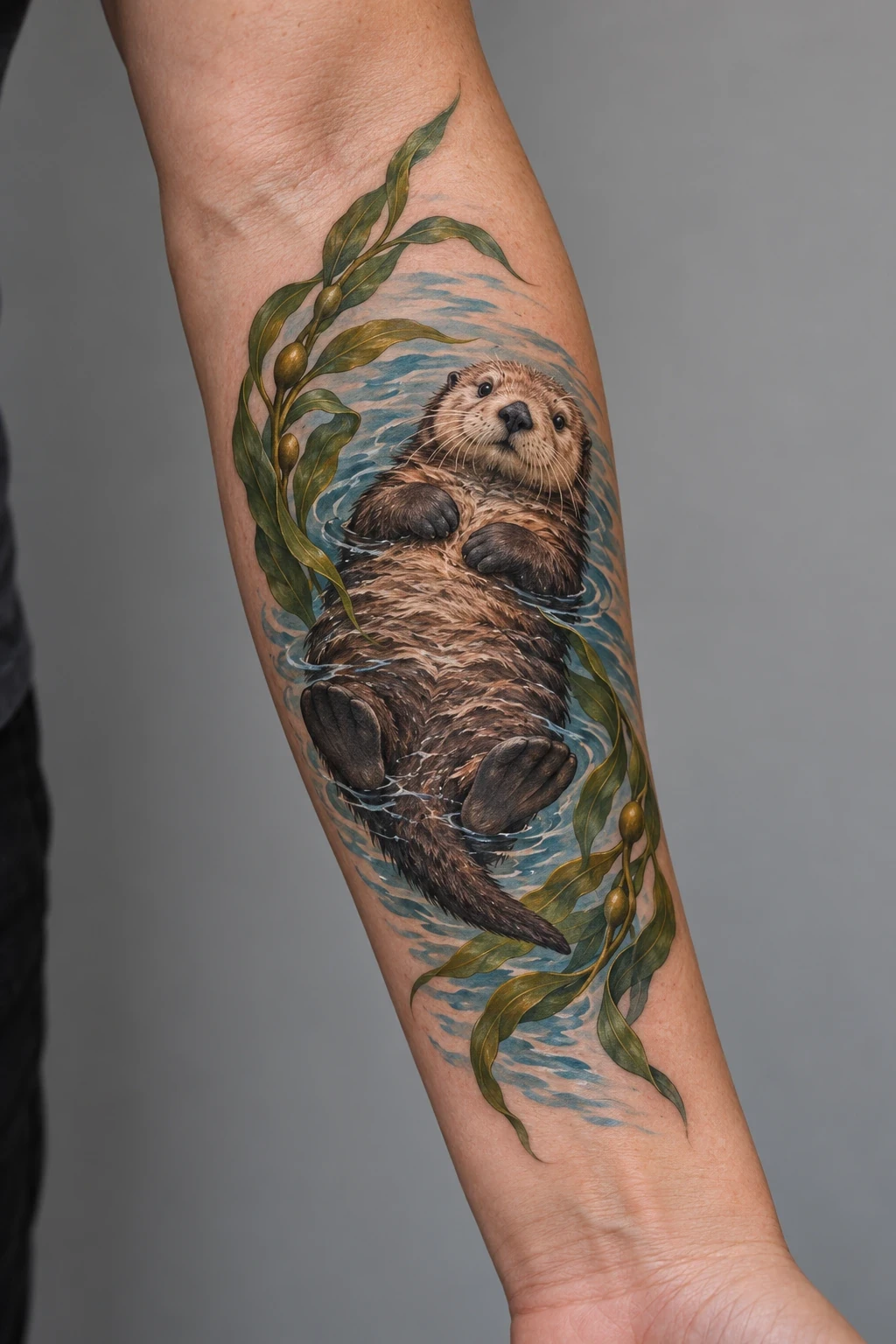
An otter tattoo can be a small, clean animal outline or a detailed scene with shells, reeds and flowing water. Start with the pose: a floating sea otter makes a compact vertical composition, while a long-tailed river otter lends itself to a horizontal line or a swimming curve. These 16 otter tattoo ideas explore both, with different levels of detail and color.
All 17 images in this article are AI-generated concepts: 16 distinct designs plus a separate placement mockup. They are not photographs of real tattoos or healed client work. Use them as starting points for an artist’s original drawing, not as evidence of achievable detail at every size.
Choose the animal and the meaning first
You might choose an otter for a love of rivers, an ocean memory, a playful personality or a connection with another person. Those are possible personal meanings, not a universal symbolic code. A shell, flower or boat can make the story more specific without needing a caption.
For a recognizable animal, use species references. The Smithsonian’s North American river otter profile describes a long, streamlined body, short legs, small ears and a muscular tail. The Monterey Bay Aquarium’s sea otter profile shows back-floating poses and explains that sea otters may use rocks to open hard-shelled prey. These details help distinguish a riverbank silhouette from a floating ocean character. Sources checked October 26, 2026.
Pick the pose you like, then decide whether you want natural-history accuracy or an intentionally imaginative treatment. A moon cradle or paper boat belongs in the second category. Neither needs a made-up legend to make it meaningful.
1. Minimal river otter outline
The long body and tapering tail carry this design, so the animal stays recognizable without a field of fur marks. The small ear and whiskered muzzle matter more than extra water lines. It is a useful starting point if you prefer quiet black linework.
Try the shape along the outer forearm or above the ankle, letting the tail follow the limb. Ask your artist to keep breathing room between the legs and underside; shrinking every gap can turn a clean outline into a cramped one.
2. Floating sea otter with a shell
A pale shell gives the forepaws something clear to hold, while the blue ripples establish the floating pose. The cream muzzle breaks up the brown fur and keeps the face from disappearing into the body. This is a relaxed ocean motif rather than an action scene.
A vertical forearm or calf layout gives the head and flippers room. Keep the shell simple enough to read as one object. You can swap the blue for grey if you want the whole piece in black and grey.
3. Black-and-grey otter portrait
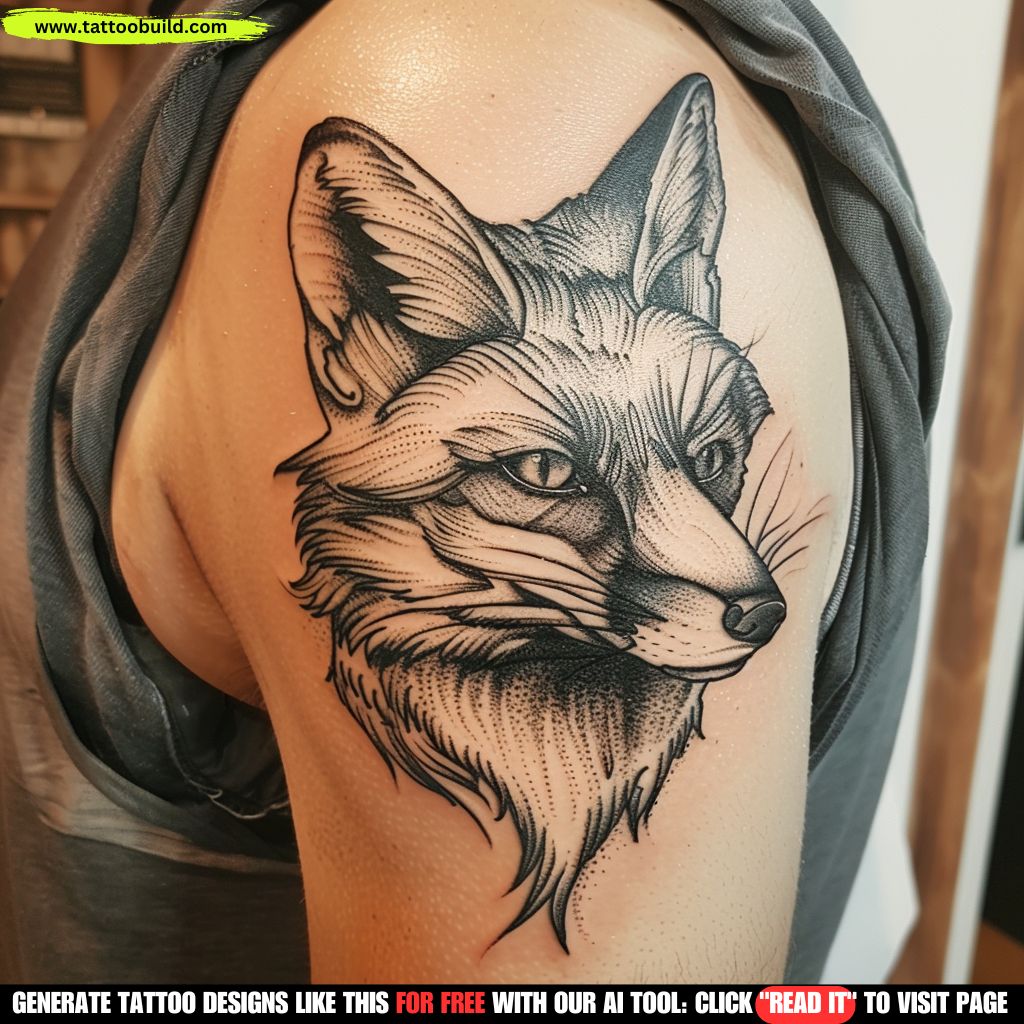
Choose a portrait when the whiskers, nose and expression are the main attraction. The soft edge around the neck gives the artist a way to finish the image without a hard badge border. This option concentrates the detail in one face instead of spreading it across a miniature animal.
Bring clear photographs of the species you want, including the ear and muzzle shape. An upper arm or calf offers more room for fur texture than a narrow finger placement. Discuss which details to simplify at the final size.
4. Bold otter and orange shell
Heavy contours, a warm shell and a short blue wave make this a graphic take on the animal. It borrows a traditional tattoo vocabulary without claiming to be a historic otter motif. The contrast between the pale face and dark body does much of the work.
Keep the palette small if you like this version’s clarity: brown, orange, blue and skin breaks are enough. It can stand alone on an upper arm or sit among other bold animal pieces. Match its outline weight to the surrounding tattoos.
5. Watercolor swimming curl
The C-shaped body makes a flowing composition, while turquoise and lavender add movement around it. The underlying otter outline remains important: the washes should support the animal rather than replace its structure. Choose this if you want color to feel loose and airy.
Follow the curve of a shoulder, thigh or outer calf rather than forcing the design into a straight strip. Ask the artist to show the animal without the color wash first. For more approaches to the effect, explore our watercolor tattoo ideas.
6. Geometric river otter
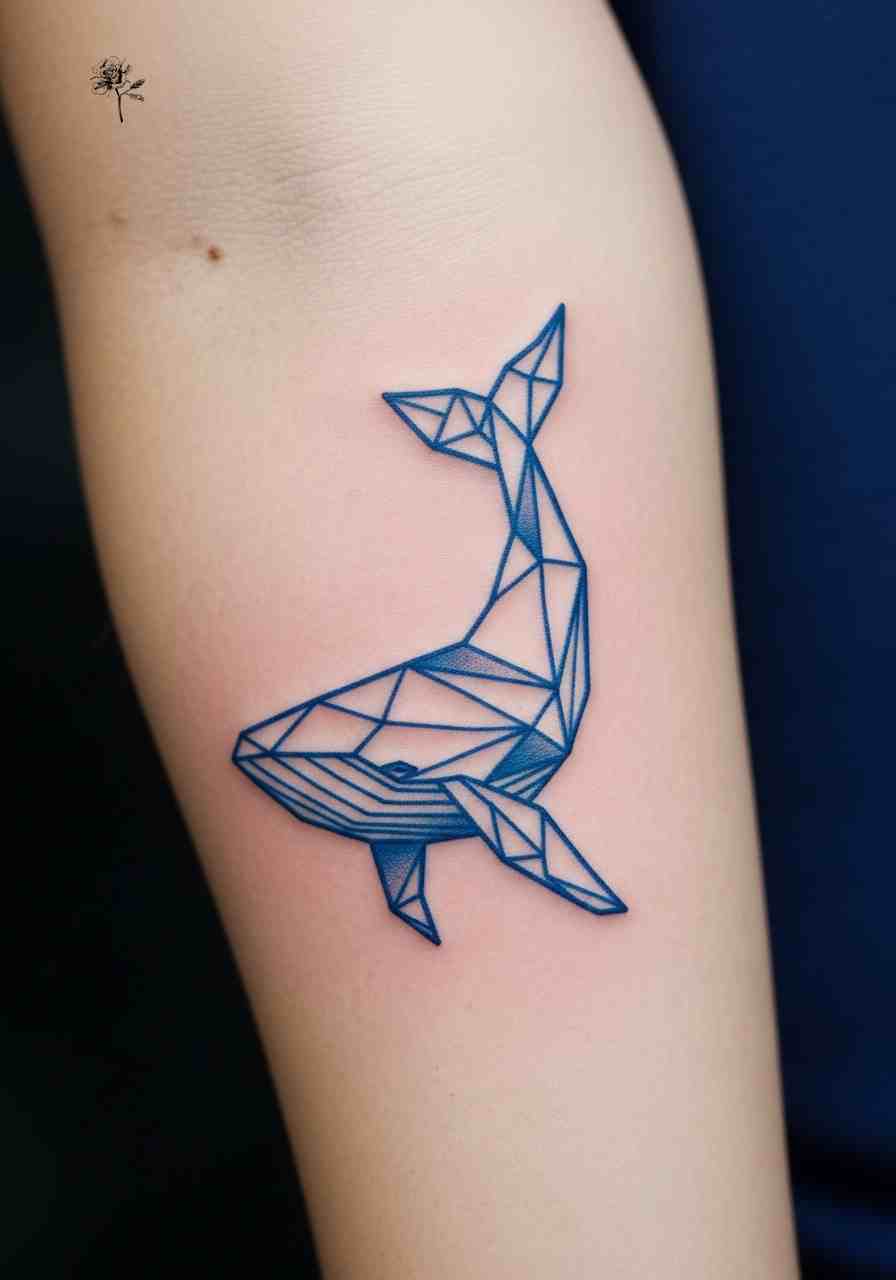
Facets divide the long body into angular sections while the rounded ear and muzzle preserve the otter’s identity. This works best when the silhouette reads before you notice the triangles. Random polygons outside the animal would add noise without helping the subject.
Ask for a few larger facets instead of dozens of tiny cells if you prefer a smaller piece. The tail can point toward the wrist or down the calf. Keep the strongest black areas spaced apart so the torso still has a visible shape.
7. Two otters touching paws
Two complete bodies and one point of contact make a clear relationship design. It can stand for a partner, sibling or close friend if that is your intention; there is no single meaning everyone must attach to it. The blue ripples keep the pair visually connected.
Leave a visible gap between the bodies so the paws do not merge into one central knot. If you split the concept into matching tattoos, have the artist redraw each otter as a complete standalone design. Our love tattoo ideas offer other ways to represent a connection.
8. Sea otter and pup
The smaller animal resting on the adult’s belly gives this composition a protective, family-focused feeling. The contrast in scale does more than extra hearts or lettering would. This is an original illustrative arrangement, not a photograph of a specific pair of animals.
Give both faces enough room to remain distinct. A larger forearm, upper arm or thigh placement makes the overlapping bodies easier to resolve. If you want initials or a date, consider a separate line below rather than squeezing lettering across the pup.
9. Riverbank otter and reeds
A stone and a few reeds place the animal beside a river without building an entire landscape. The horizontal stance shows off the long tail, and the narrow stems add height behind it. This is a good option for someone who wants a habitat detail as well as an animal.
Choose a river plant that matters to you if the tattoo recalls a particular place. Keep the reeds behind the body rather than crossing the muzzle. A forearm panel or the outside of a calf can accommodate both the low animal and taller stems.
10. Diving otter in black and grey
A diagonal pose changes the energy of the design. The head leads, the long tail trails, and a small bubble detail suggests water without enclosing the animal in a blue shape. The movement comes from the body line rather than a crowded background.
Try the stencil in both directions before choosing its angle on your arm or leg. Keep each paw separate from the tail and belly. A fine stipple treatment can add depth while leaving the outer silhouette easy to see.
11. Sleeping otter in a crescent moon
This deliberately imaginative design uses the moon as a cradle for a curled otter. The closed eye and tucked paws give it a quieter mood than the swimming concepts. It is a personal fantasy motif, not a claim about traditional otter or lunar symbolism.
Make the crescent large enough that the animal does not become a tiny brown mark inside it. Muted gold is a color choice in the artwork, not metallic ink or a promised reflective finish. You could also use a black crescent with open skin inside.
12. Otter framed by daisies
The daisies soften a compact seated pose and provide a frame without a solid border. Their pale petals contrast with the brown animal, while the green stems echo the tail’s curve. This design feels more like a small botanical illustration than an underwater scene.
Choose a different flower if it has a stronger personal connection, but ask the artist to preserve the clear gap around the face. A few larger blossoms will read differently from many tiny ones. Keep the otter as the focal point when adjusting the balance.
13. Swimming otter under stars
A sparse arc of stars creates a night-sky accent without a full cosmic background. The horizontal otter balances the curve above it, and the small blue circle adds a second color without taking over. This combines an animal with a celestial mood rather than depicting its habitat literally.
Place the star arc with the body as one unit so it does not look like unrelated filler. If you already have nearby stars, match their size and point style. Reduce the number of accents before reducing the animal’s recognizable features.
14. Sea otter holding a pebble
A single smooth stone gives this floating otter a different story from the shell version. It can suggest resourcefulness if that meaning suits you, but the association is a personal interpretation. The grey pebble also offers a simple contrast against shaded brown fur.
Ask for a clear boundary between each paw and the stone. The pebble should look held, not like a hole in the chest. A plain oval keeps the object readable; elaborate mineral patterns may compete with the face in a small tattoo.
15. Otter in a paper boat
The folded boat makes this the most storybook-like concept in the set. It can recall a childhood craft, a journey or simply a fondness for unlikely little scenes. The pale paper creates a broad open area beneath the brown otter, with only two waves needed to set it afloat.
Check that the boat’s folds make sense before adding more texture. Let the animal’s paws rest clearly on the rim, and keep the tail separate from the paper edges. This composition benefits from enough width for both the boat and the otter to read.
16. Woodcut otter on a fallen log
Controlled hatching and a dark log give this design an engraved, outdoorsy character. A stream and conifers turn the background into a miniature landscape, with the fern adding a foreground accent. It is an original woodcut-style interpretation, not a reproduction of a historical print.
A larger calf or upper-arm placement gives the hatching room. Ask your artist which dark areas to simplify so the animal does not disappear against the log. If the piece will join a nature sleeve, repeat the same hatch direction and contrast in nearby elements.
Match the placement to the shape
- Forearm or calf: useful for a vertical floating otter, with room between the face, paws and flippers.
- Upper arm or thigh: consider these for two animals, a portrait or a scene with flowers and a log.
- Above the ankle: a simple side profile can work as a compact idea; discuss how much tail and leg detail to retain.
- Shoulder: a swimming curve can follow the rounded area without needing a square frame.
There is no single correct size for an otter tattoo. Ask the artist to print or draw the stencil at the proposed size, then look at it from normal viewing distance. The face, tail and paw positions should still make sense before fur marks and background accents are added.
Details to check in the artist’s drawing
Look for one clear tail per animal, a readable muzzle, small rounded ears and paws that connect naturally to the body. In a paired design, trace each animal separately so the central contact does not hide an extra limb. With a shell or stone, check that the paws actually hold the object.
Choose one focal point. If the expression matters most, simplify the water and flowers. If the long swimming silhouette is the reason you like the design, avoid burying it in a dense background. For another way to simplify an animal motif, compare our minimalist tattoo ideas; for a different aquatic creature, see the axolotl tattoo concepts.
Prepare a clear artist brief
Bring your chosen concept, a few species photographs, the intended body area and the details you care about most. Tell the artist which elements are flexible. For example: “Keep the floating pose and shell, but simplify the fur and remove the water.” That gives them a clearer task than asking for every feature of several different designs at once.
Ask your artist for aftercare instructions for the finished tattoo. These generated references do not show how a tattoo will heal, and they cannot establish which line weight or color treatment is appropriate for your skin and placement.
Otter tattoo questions
What does an otter tattoo mean?
It can represent a personal love of wildlife, a place or a relationship. Playfulness and companionship are interpretations you can choose; they are not mandatory meanings shared by every otter design.
What is the simplest otter tattoo idea?
A side-profile outline with a long tail is a clear starting point. Keep the small ear and muzzle, then ask your artist which leg and whisker details to retain at your chosen size.
Should I choose a sea otter or river otter?
Choose the species connected to your interest or memory. Use the floating concepts for an ocean mood, or the long-tail and riverbank designs for a streamside composition. Bring species photographs if accuracy is important to you.
Can the two-otter idea become matching tattoos?
Yes, as an artist-led adaptation. Each animal should form a complete tattoo on its own; matching scale, water lines or a small shared accent can connect them without needing the two bodies to be physically side by side.