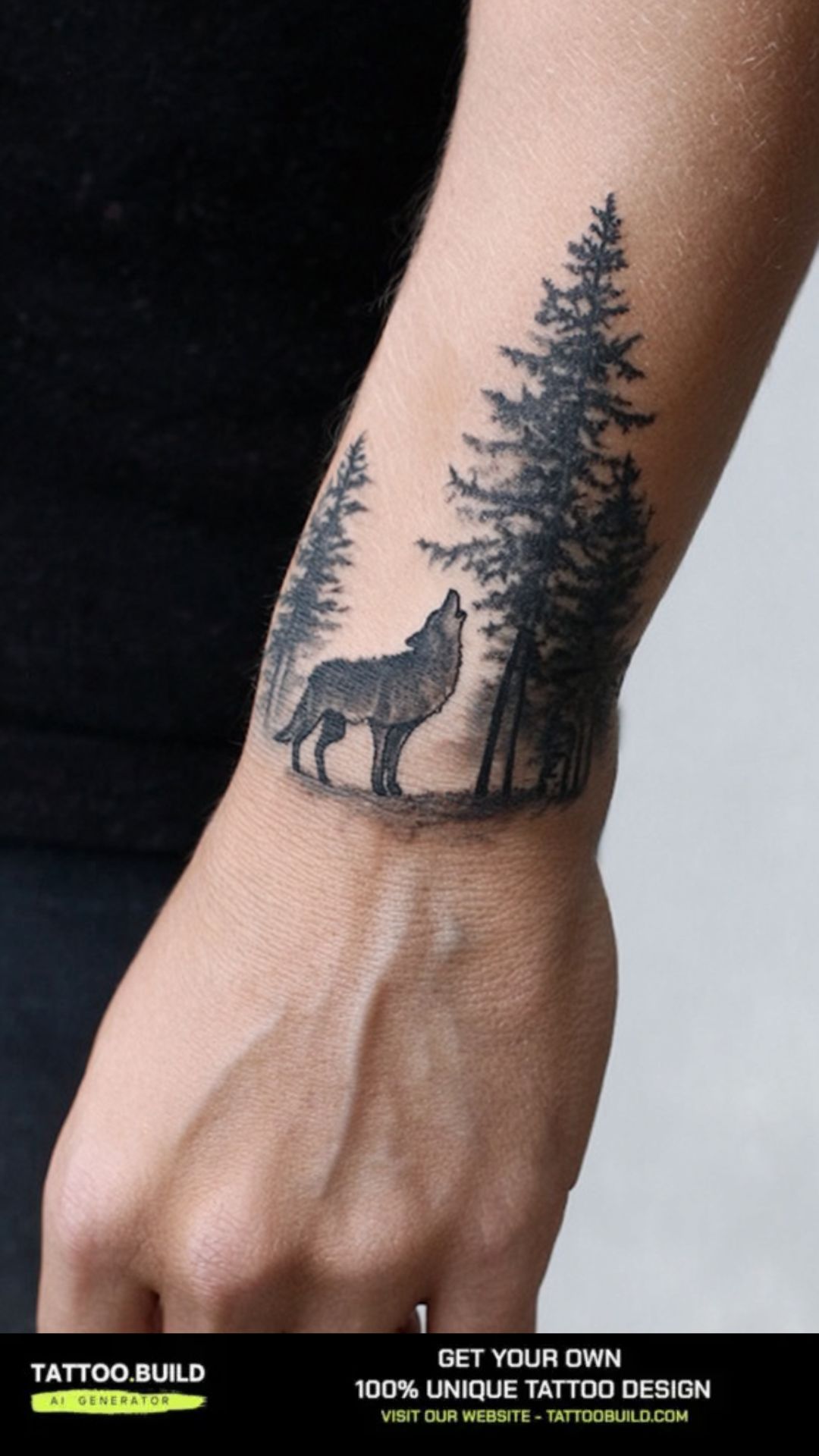
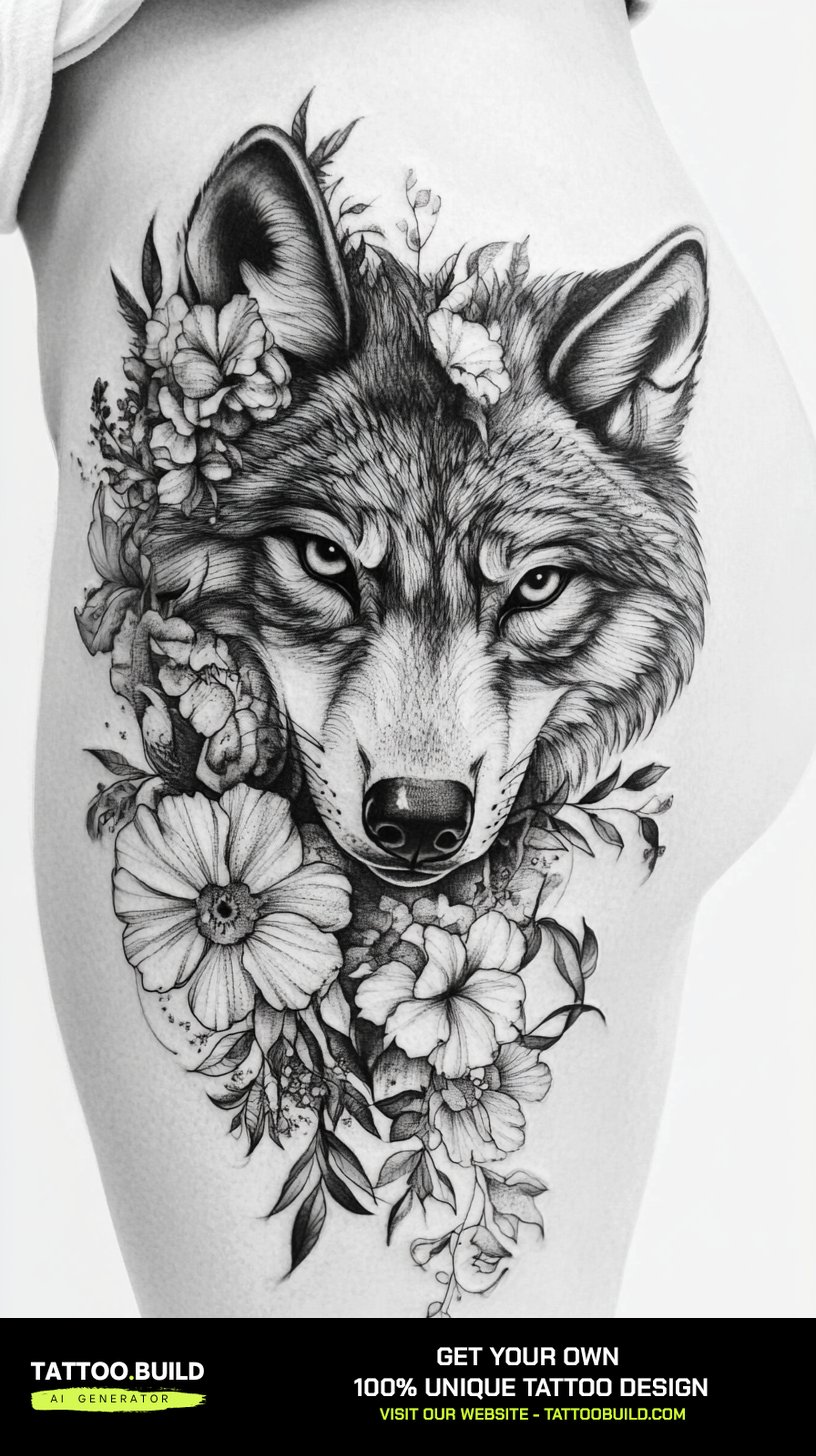
A wolf dagger tattoo puts two of the heaviest symbols in body art on the same piece of skin — the wolf’s instinct and the blade’s edge — and the result almost always reads as a story about surviving something. I have lost count of the people who have described this exact combination to me, and hardly any two of them wanted it for the same reason.
Some want a tribute to a person they would stand in front of without thinking. Others want a private reminder that something came at them hard and they are still here. In my experience that range is the entire appeal: the wolf and the dagger say plenty without locking you into one fixed explanation.
Over the last several years I have watched this design shift from a niche request into one of the most asked-about pieces in the whole predator-and-blade family, sitting a step away from broader wolf tattoo design ideas.
What follows is what I wish every client knew before booking: what the two symbols really do together, which styles hold up, where the design sits best on the body, and the mistakes that send people looking for a cover-up.
Which Wolf Dagger Style Is Right for You?
Before you fall for a particular drawing, it helps to know how differently each style carries the same subject. A wolf and blade in bold traditional linework and the same subject in soft fine line are, practically speaking, two different tattoos.
Here is the comparison I end up sketching for almost every client who is torn. Use it to narrow the field, then bring a shortlist to your artist rather than a finished idea.
| Style | How It Reads | Best Placement | How It Ages | Typical Sitting |
|---|---|---|---|---|
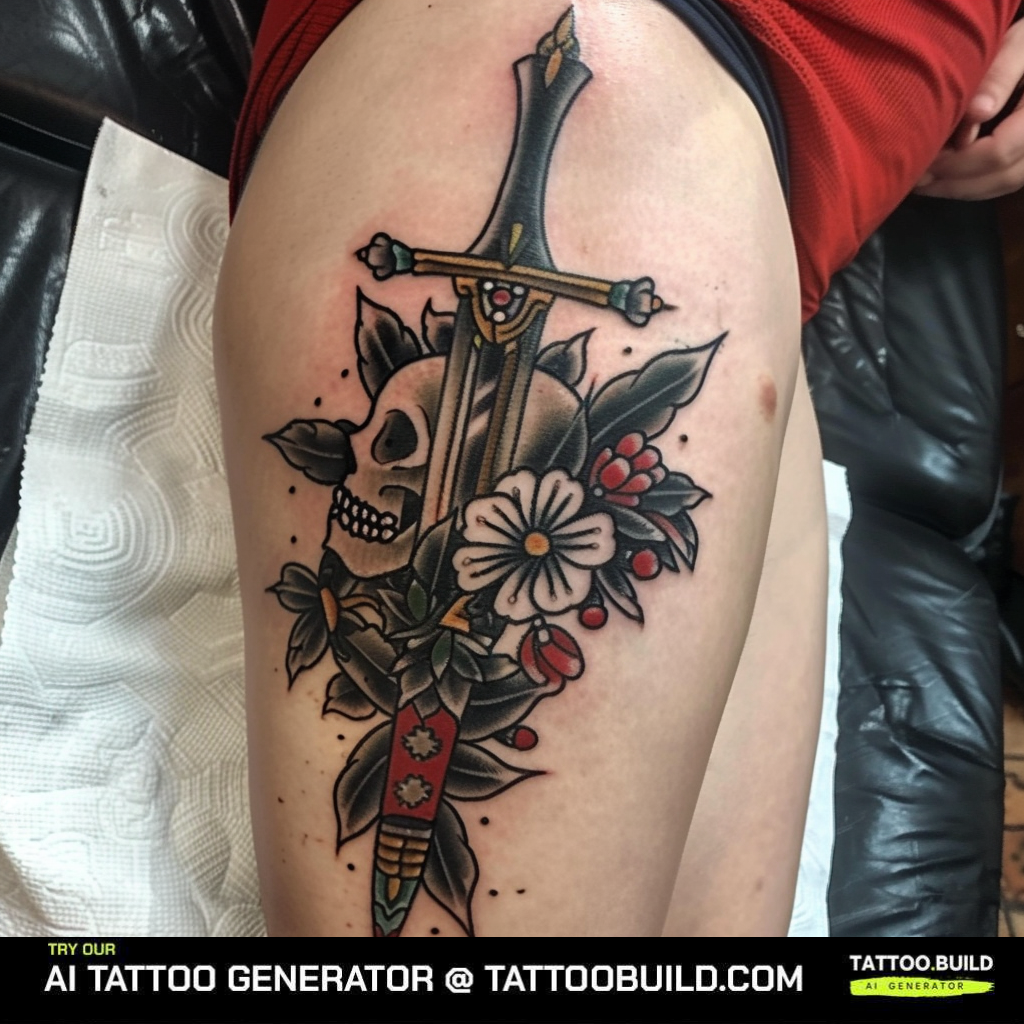
| American traditional | Loud, graphic, unmistakable from across a room | Outer forearm, calf, upper arm | Excellent — heavy line and solid fill hold shape for decades | 2–4 hours |
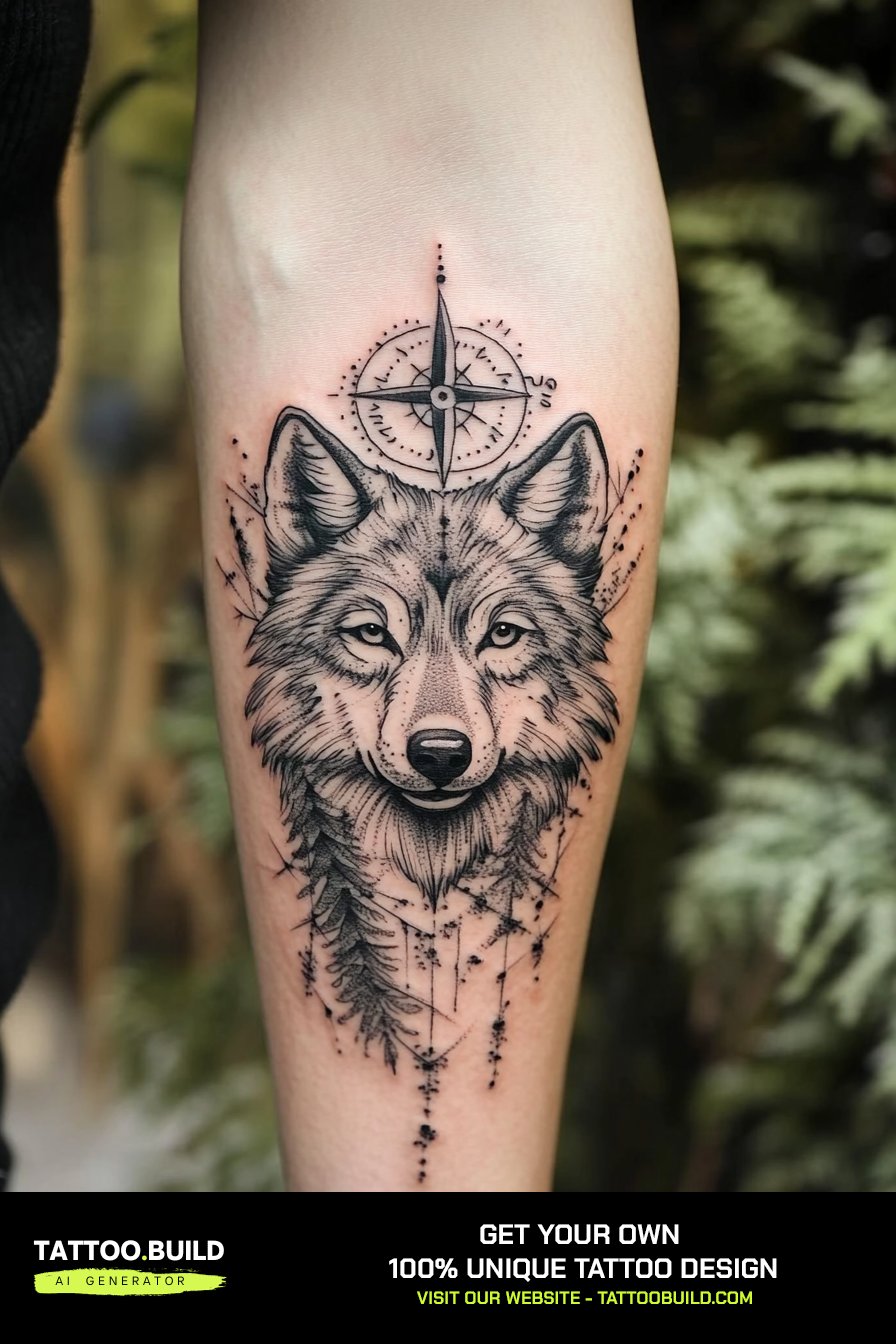
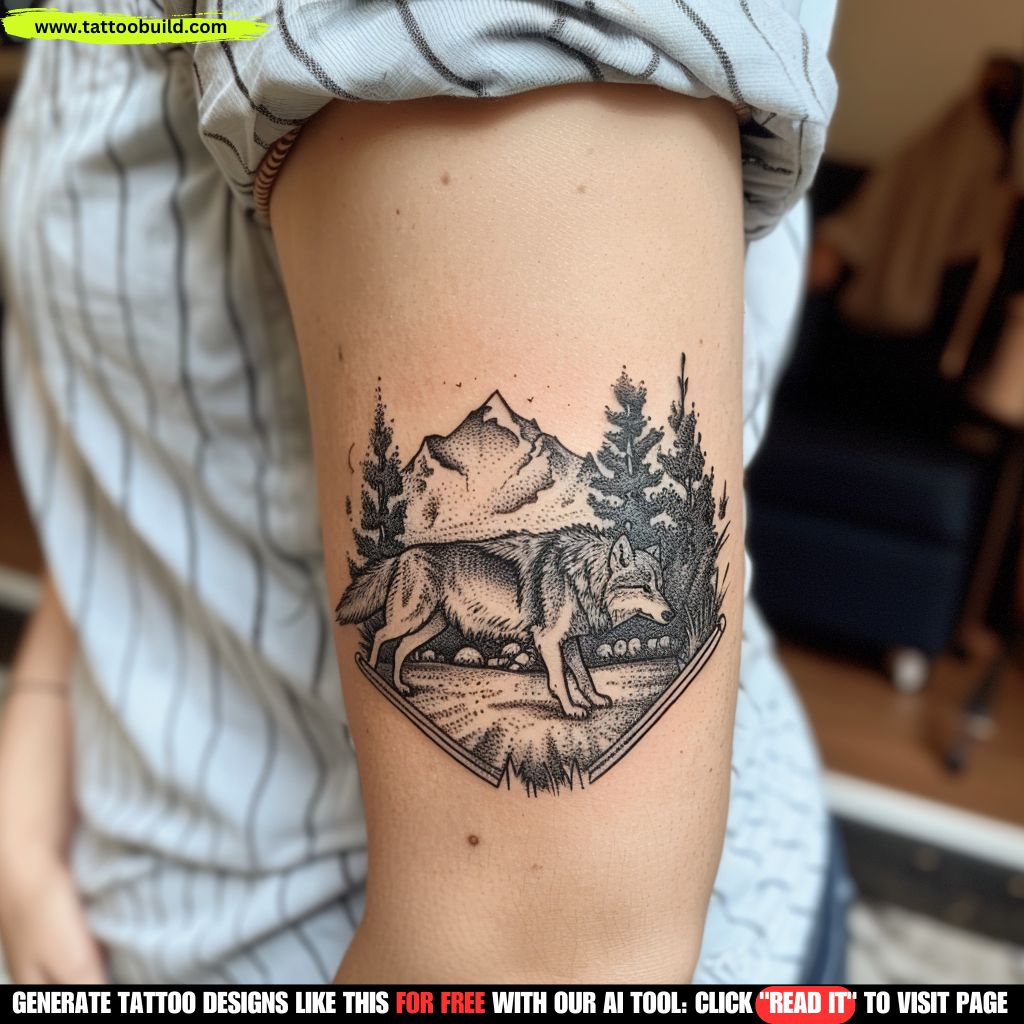
| Black and gray realism | Cinematic, detailed, emotionally serious | Inner or outer forearm, thigh, upper back | Good with a skilled artist, but soft gradients blur over time | 5–9 hours, often split |
| Fine line | Quiet, modern, closer to an illustration | Inner arm, spine, ribs, ankle | The weakest of the group — thin line spreads and fades soonest | 1–3 hours |
| Blackwork | Stark, heavy, slightly ritual | Back, chest, full forearm panel | Very strong, though large solid black needs careful healing | 4–8 hours |
| Neo-traditional | Decorative and illustrative, room for colour | Upper arm, thigh, chest panel | Strong — keeps bold line but adds depth | 4–7 hours |
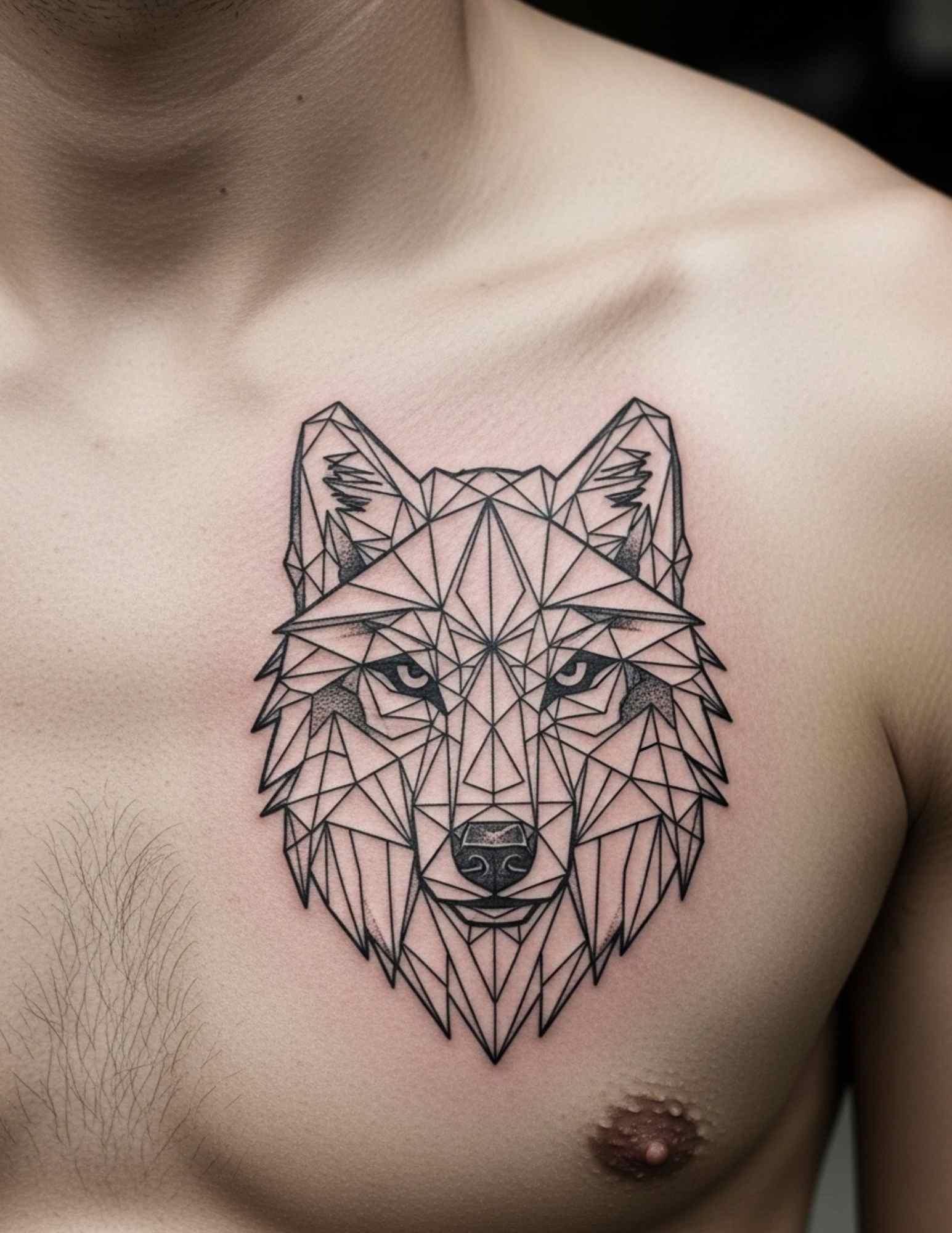
| Geometric | Controlled, symmetrical, abstract | Forearm, shoulder cap, sternum | Good, but crooked lines become obvious — artist choice matters most here | 3–6 hours |
What the Wolf and the Dagger Actually Say Together
Taken alone, each symbol is well worn. The wolf has carried ideas of family, instinct and wildness across a huge number of cultures, helped along by the fact that real wolves live and hunt in tightly bonded family groups, as Britannica’s overview of the species describes.
The dagger is older still in tattooing. In traditional flash it usually meant a willingness to defend yourself, and it often appeared piercing something — a heart, a rose, a skull — to mark a loss or a betrayal. That history is worth reading properly before you commit, and the broader blade tattoo meaning is a useful starting point.
Put them together and the meaning shifts from “I am wild” to “I have had to protect something.” The wolf supplies the instinct; the blade supplies the decision. That pairing is why the design lands so often with people coming out of a difficult stretch.
How you arrange them changes the tone sharply. A dagger held behind or beside the wolf reads as guarded and defensive. A dagger passing through the wolf reads as sacrifice, or as something the animal survived.
I always ask clients which of those two sentences they actually mean, because the composition locks it in permanently and there is no subtle way to change it afterwards.
Meanings Behind the Wolf Dagger Tattoo
These are the six readings that come up most in consultations. Most people land on two or three at once, which is fine — the design is broad enough to hold them.
Strength That Was Tested, Not Claimed
This is the most common reason people give me, and the distinction matters. A wolf with a blade is rarely about being tough in general; it is about a specific thing someone came through.
When I have tattooed this on people recovering from an illness, a divorce or a long stretch of grief, the wolf is almost always calm rather than snarling. That choice says more than bared teeth ever does.
If strength is your core reason, ask your artist for a composed, forward-facing wolf and let the dagger carry the tension. It is a quieter piece and it dates far better. Plenty of related directions show up among tattoos that mean strength and courage if you want to compare approaches before drawing anything.
Loyalty and the People You Would Stand For
Wolves are a shorthand for family because of how they actually live, and clients lean on that constantly. A pack tattoo does not need more than one wolf to say it.
I have inked versions where the dagger’s handle carries initials, a date, or a small pattern taken from a grandparent’s jewellery. Those details do the emotional work without anyone else needing to read them.
If loyalty is your reason, put the meaning in the blade rather than the animal. The wolf stays the image; the dagger becomes the personal part. The wider family of tattoos meaning loyalty follows the same logic.
Duality — Instinct Held Under Control
A wolf is pure instinct. A dagger is a deliberate object, made and picked up on purpose. Putting them in one frame is a statement about keeping those two things in balance.
This reading appeals especially to people whose temper or drive has cost them something. In my experience they usually want the blade drawn sheathed, lowered, or held rather than raised.
It is a subtle thing, but the angle of the dagger changes the sentence completely. Raised means threat; lowered means restraint.
Protection and Boundaries
A good number of the wolf daggers I have done are, in plain terms, boundary tattoos. The person is marking the point where they stopped letting something continue.
Those pieces tend to be placed where the wearer can see them — inner forearm, inner bicep, along the ribs — rather than on display for other people.
If that is your reason, be honest with your artist about it. It changes placement more than it changes the drawing.
Transformation and Cutting Something Loose
The blade can be read as the thing that ended a chapter rather than a weapon. Clients often add a broken chain, a snapped branch or cut cord to make that explicit.
I like this version because it gives the dagger a job. A blade with nothing to do in the composition usually looks like decoration; a blade that has clearly done something reads as narrative.
Moon phases and falling petals show up in these designs regularly for the same reason — they mark time passing rather than force.
Independence Without Isolation
The lone wolf idea is well used, and I will be straight about it: it is the meaning that ages worst, because most people do not feel like a lone wolf forever.
When someone wants this, I steer them toward a composition that could also read as self-reliance — a wolf mid-stride rather than one howling alone on a cliff.
Symbols you can grow into age far better than symbols that pin you to one season of your life. That is the single most useful rule I know for meaningful tattoos.
Wolf Dagger Variations Worth Considering
If the plain wolf-and-blade feels too familiar, these four directions come up most often and all of them still read clearly at a glance.
Wolf, Rose and Dagger
Adding a rose is the classic way to soften the piece without cancelling what the blade means. In traditional flash the rose usually stands for love or memory, so the three together read as devotion with a cost attached.
This is the version I most often recommend to people who want the design to feel like a tribute rather than a warning. It also fills space well on a back or thigh.
Norse and Viking Wolf Dagger
Norse-leaning versions swap realism for knotwork, runes and a heavier blade shape. The wolf in Norse myth is not a protector figure — Fenrir, as Britannica explains, is a monstrous wolf bound by the gods.
That is worth knowing before you commit, because the symbolism is closer to restrained destruction than to loyalty. Several clients have changed direction once they read the actual story, and a browse through Norse mythology tattoo ideas usually settles it either way.
Geometric Wolf Dagger
Here the wolf is broken into facets and the dagger becomes a clean axis running through them. It is the most modern-looking option and it suits people who want the symbol without the drama.
Be picky about the artist for this one. Wobbling lines and imperfect symmetry are obvious in geometric work in a way they never are in realism, and the best examples in geometric wolf tattoo ideas are all about line control.
Wolf Skull and Dagger
Replacing the living wolf with a skull pushes the piece toward mortality and memory. It is the darkest version and the one people most often regret rushing into.
If you are drawn to it, look through skull with dagger tattoo meaning first so you know what the combination already says to other people who have tattoos.
Placement, Pain and Healing
The dagger is a long vertical shape, so the design wants a long vertical space. Forearm, outer calf, spine and the side of the thigh all suit it naturally, which is why you see it there so often.
Ribs, sternum and spine are considerably more uncomfortable than an outer arm, and a long blade in those spots means a long session on thin skin. If it is your first tattoo, the outer forearm is a far kinder place to start — the general ranking in this guide to the most painful tattoo spots matches what I see in the chair.
Healing is where most wolf daggers are won or lost, because heavy black and fine detail both punish neglect. Keep it clean, keep it lightly moisturised, keep it out of the sun and do not pick at flaking. Follow your artist’s instructions over anything you read online, including this article, and the basics in this tattoo aftercare rundown are a reasonable baseline.
If you see spreading redness, swelling that worsens after the first few days, pus, or a fever, contact a doctor rather than your artist. The American Academy of Dermatology’s tattoo safety guidance covers the warning signs and the reaction risks worth knowing about in advance. Nothing here is medical advice.
Still Not Sure? The Mistakes I See Most Often
The first is cramming too much detail into too small a space. A wolf face with individual fur strands at 8 cm will be a grey smudge in fifteen years, and no artist can fully prevent that.
The second is bringing in a reference photo and asking for it exactly. Most of those images are fresh tattoos photographed under studio light, and many are digital renders that were never on skin at all.
The third is choosing the meaning after choosing the drawing. Decide what you want it to say, then let the composition follow — not the reverse.
The fourth is picking an artist by price rather than portfolio. If you want to compare blade styles before you commit, dagger tattoo ideas is a good place to see what strong linework looks like next to weak.
Frequently Asked Questions
What does a wolf dagger tattoo mean?
Most often it means protection earned through difficulty rather than aggression. The wolf brings instinct, family and loyalty; the dagger brings defence and the decision to act. Together they usually read as someone who has had to guard something important. The exact meaning depends heavily on composition — a dagger passing through the wolf reads as sacrifice, while a dagger beside it reads as readiness.
Where is the best place to get a wolf dagger tattoo?
The forearm is the most practical choice because the blade’s vertical shape fits the limb naturally and the skin there takes detail well. Calves, thighs and the spine also suit the proportions. Ribs and sternum work visually but hurt considerably more and take longer to settle. If you want to see it yourself day to day, the inner forearm is the usual answer.
Does a wolf dagger tattoo have to mean aggression?
No, and in my experience it usually does not. A calm, forward-facing wolf with a lowered or sheathed blade reads as restraint rather than threat. Aggression comes from bared teeth, a raised blade and blood detail — all of which are choices you can simply decline. Tell your artist the tone you want before the drawing stage, because it is difficult to soften later.
How much does a wolf dagger tattoo cost?
It depends on size, style and your artist’s rate, so treat any number as a rough guide only. A simple linework forearm piece is typically a single short session, while a detailed black and gray sleeve panel is usually several full days of work booked across weeks. Ask for a written quote and a session estimate up front. Shop rates vary widely by city, so check locally rather than trusting an online average.
Is a wolf dagger tattoo suitable for a first tattoo?
It can be, provided you keep it simple and place it somewhere forgiving like the outer forearm. A bold, clean version with strong outlines is a good first piece and heals predictably. What I would avoid as a first tattoo is a large realistic panel on the ribs, which means a long painful sitting before you know how your skin reacts. Starting smaller also leaves room to extend the design later.
Quick Summary
- A wolf dagger tattoo usually reads as protection earned the hard way, not aggression.
- The wolf carries instinct, family and loyalty; the dagger carries defence and decision.
- Composition sets the tone — a blade through the wolf means sacrifice, a blade beside it means readiness.
- Bold traditional and blackwork age best; fine line looks beautiful early but fades soonest.
- The design’s vertical shape suits forearms, calves, thighs and the spine.
- Keep detail proportional to size, or fine fur and shading will blur within years.
- Decide the meaning first, then let your artist build the drawing around it.
- Follow your artist’s aftercare, and see a doctor for signs of infection or reaction.