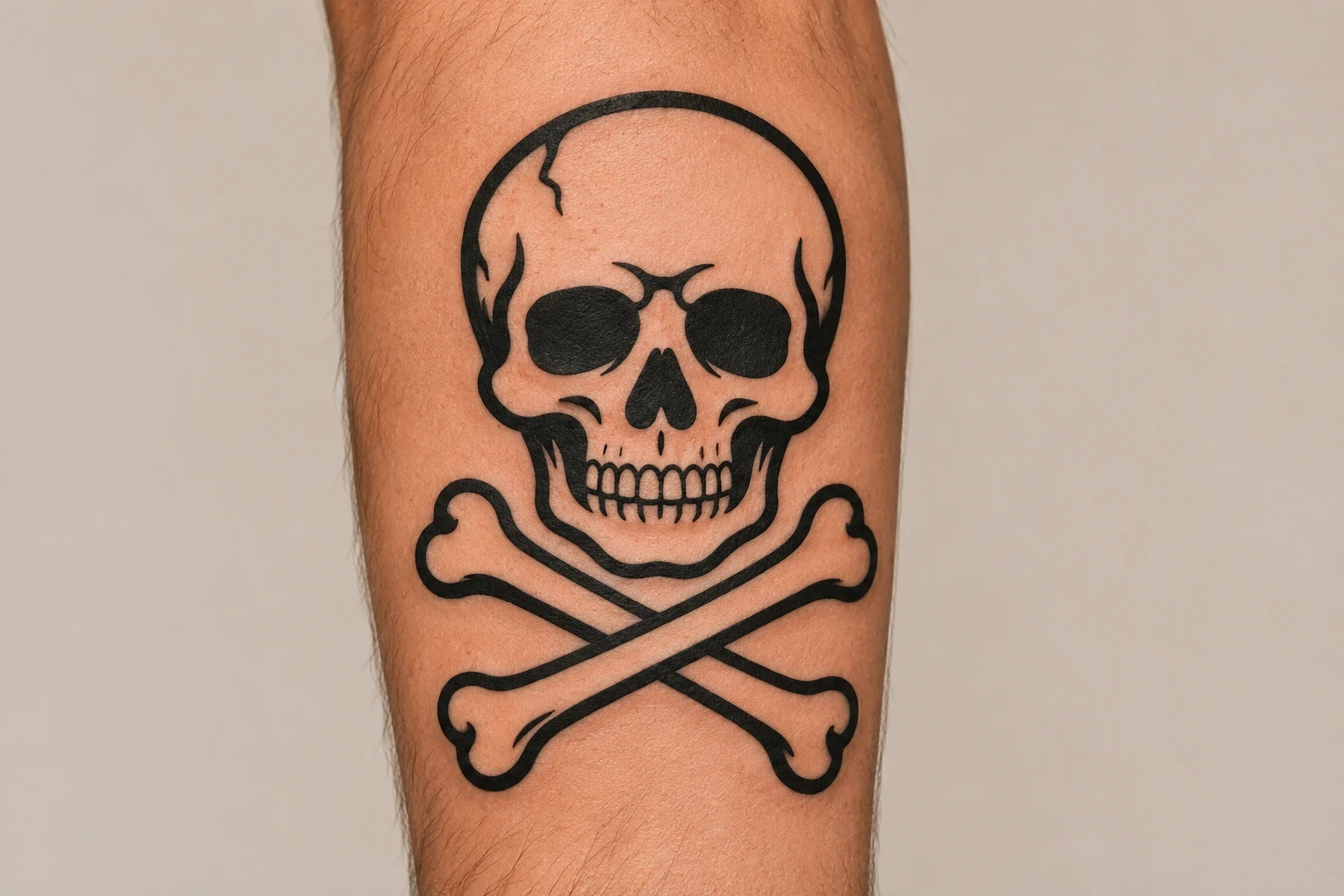
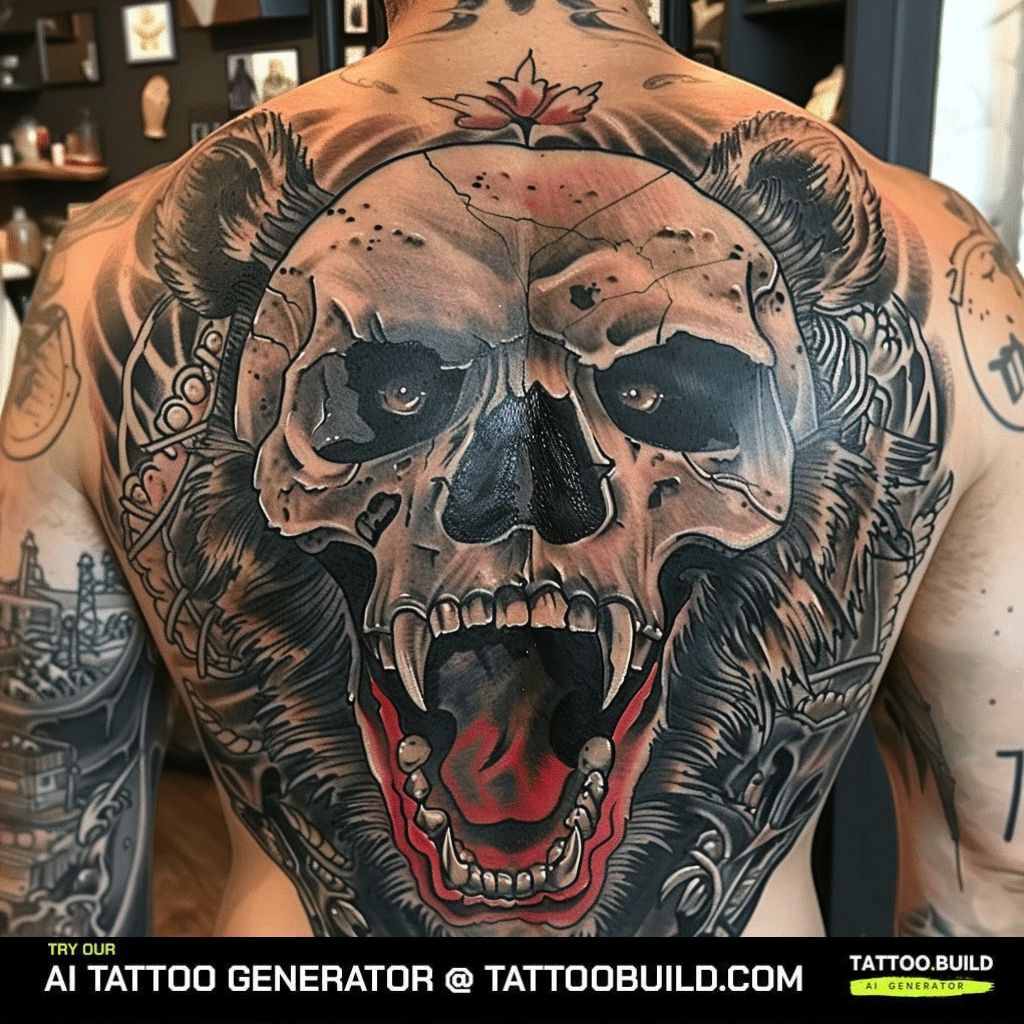
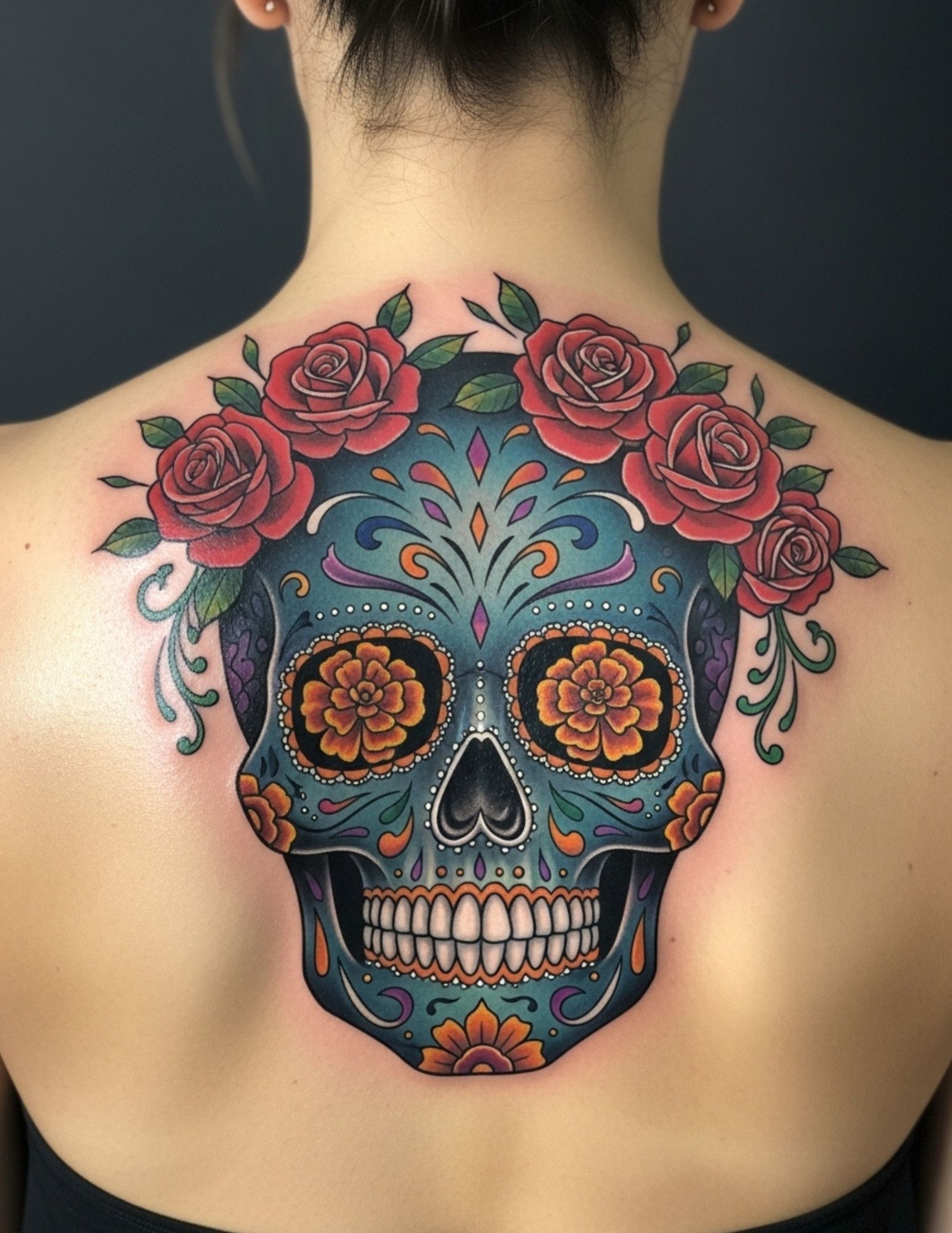
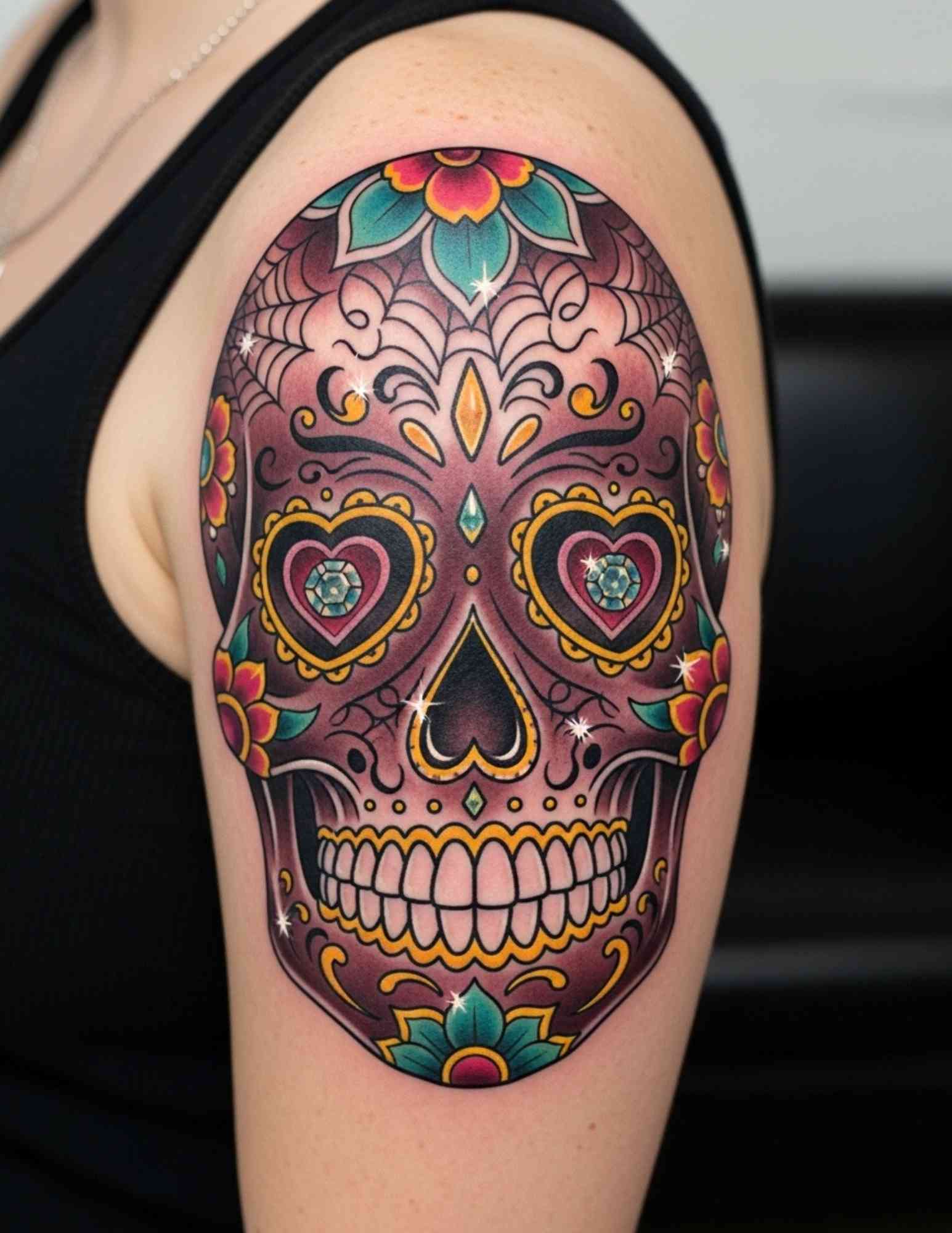
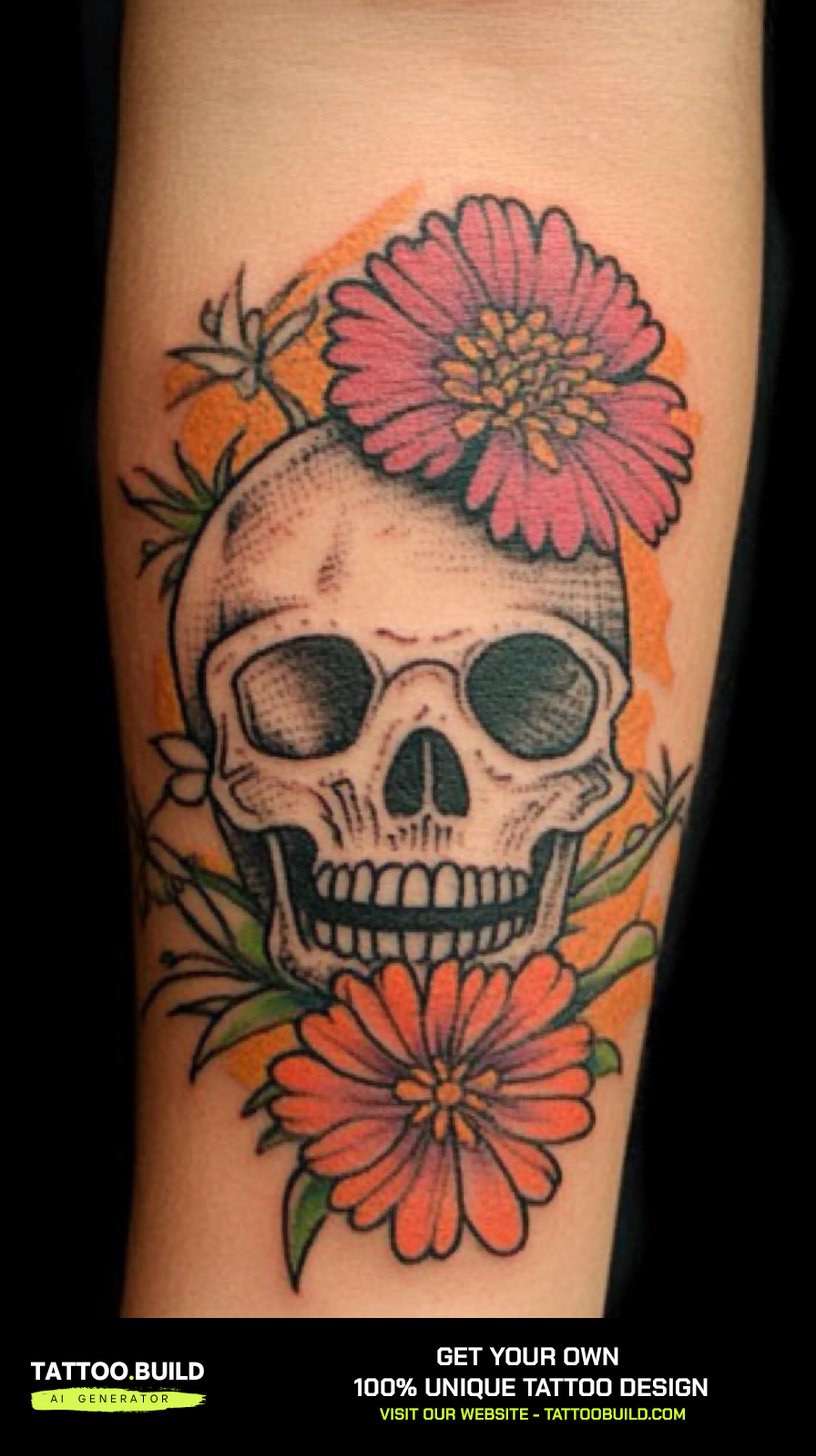
A skull with a dagger tattoo is almost always about confronting death rather than fearing it — the skull is the end we all meet, and the dagger is the choice to meet it standing up.
I have been writing about traditional tattoo symbolism for years, and this is the design people most often get wrong before they sit down. They assume it reads as violent. In practice, most of the artists I have asked describe it as one of the more philosophical pieces in the flash canon.
The meaning shifts depending on how the two elements interact. A dagger driven through a skull says something different from a dagger resting beside one, and I will break both down below.
If you are still weighing the blade itself rather than the whole composition, it is worth reading about dagger tattoo ideas first, because the dagger carries most of the emotional weight here.
Which Skull With Dagger Style Is Right for You?
Style changes the tone of the tattoo more than the subject does. Here is how the five most common approaches compare in practice.
| Style | Tone It Sends | Typical Size | How It Ages |
|---|---|---|---|
| American Traditional | Defiant, old-school, sailor-and-soldier lineage | 4–6 inches | Excellent — thick outlines hold for decades |
| Black and Gray Realism | Sombre, reflective, memorial-leaning | 6–10 inches | Good, but fine shading softens over time |
| Neo-Traditional | Ornate and decorative without losing the edge | 5–8 inches | Very good — bold lines with richer colour |
| Blackwork | Stark, graphic, almost woodcut | Any | Excellent if the solid fill is packed properly |
| Fine Line | Quiet, modern, understated | 2–4 inches | Weakest — expect a touch-up sooner |
If you like the graphic, high-contrast end of that table, the wider blackwork tattoo designs approach is worth a look before you commit to a style.
Why the Skull and Dagger Pairing Carries So Much Weight
Neither symbol is neutral on its own. Put them together and they argue with each other, which is exactly why the design has lasted.
The skull is one of the oldest images in Western art. It appears in memento mori painting and in vanitas still lifes as a plain reminder that time is finite.
The dagger arrives from a different tradition entirely. In old sailor flash it stood for a fight taken willingly — a blade you carry rather than one carried against you.
Stacked together, they stop being a warning and become a statement of intent. Death is coming, and the wearer is not going to spend their life flinching about it.
That is also why I usually push back when someone tells me they want it because it “looks scary”. The design reads far better when the person can say what it means to them, because that answer is what shapes the composition.
What a Skull With Dagger Tattoo Really Means
There is no single official meaning. There are, in my experience, about six that come up again and again.
Mortality and Acceptance
This is the reading I hear most. The tattoo is a daily reminder that the clock is running, worn somewhere the person will actually see it.
The dagger is the active half of that thought. A skull alone can read as passive, even fatalistic — the blade turns it into a decision.
When I have asked people with this piece what it means to them, the answer usually lands somewhere near “stop wasting time”. It is closer to a motivational tattoo than most people expect from something this dark.
Artists often reinforce that by angling the dagger downward through the crown of the skull, which gives the composition a decisive, finished feel rather than a threatening one.
Protection and Courage
A second common reading treats the dagger as a guard rather than a threat.
In this version the skull represents danger already faced, and the blade is what the wearer carries forward from it. Think of it as armour rather than a weapon.
People coming out of military service, emergency work, or a long illness often gravitate toward this interpretation. The tattoo marks something survived.
Compositionally, protective versions usually place the dagger in front of the skull rather than through it, sometimes with the hilt toward the viewer. It is a small difference that changes the whole tone.
Defiance and Fearlessness
The old-school reading is the loudest one: I am not afraid of what is coming.
This is the version that lives most naturally in American traditional flash — heavy black outlines, limited colour, no wasted detail.
Bold and simple almost always beats detailed and delicate for this particular design. Every artist I have asked says the same thing: the silhouette has to read from across a room, or the meaning gets lost in the shading.
If that is the direction you want, look at the broader family of traditional skull work before you settle on a single sheet of reference.
Sacrifice and Loyalty
A less obvious but very old meaning ties the blade to a promise.
Historically, daggers appear in oath and pledge imagery — the weapon as proof that the speaker has something at stake.
Paired with a skull, it becomes a commitment carried to the end: a person, a cause, a code the wearer does not intend to walk away from.
I usually suggest adding a banner to this variation, because a name or short phrase makes the loyalty concrete instead of leaving viewers to guess.
Rebellion and Independence
Skulls have signalled outsider status for a long time, from pirate flags to punk and biker iconography.
Add a dagger and the message sharpens: not just standing apart, but prepared to defend that position.
This reading tends to attract larger placements — chest, back, outer forearm — because it is meant to be seen rather than discovered.
It also pairs well with other independence-coded imagery. A grim reaper tattoo sitting alongside it pushes the composition further toward the mortality end of the spectrum.
Honouring Someone Who Has Died
Memorial versions are more common than the design’s reputation suggests.
Here the skull is not the wearer — it stands for the person lost, and the dagger for the grief or the fight that came with losing them.
These pieces are usually softer in execution: black and gray shading, a date or initials, sometimes a single flower worked into the composition.
If a tattoo is doing memorial work, I would always spend the extra money on a custom design rather than picking flash. It is the one case where the details genuinely need to be yours.
Popular Skull With Dagger Variations
Most people end up adding a third element. Each one pulls the meaning in a specific direction.
Skull, Dagger, and Snake
The snake adds transformation and renewal, which softens the finality of the skull considerably.
It is also a practical addition — a coiled body fills awkward negative space around the skull and gives the piece a natural flow down a limb. The broader snake tattoo meaning is worth reading if you want the symbolism to line up deliberately rather than by accident.
Skull, Dagger, and Rose
The classic counterweight. The rose brings love, beauty, and impermanence against the skull’s finality.
This is the version I most often recommend to people who want the design to feel balanced rather than grim. If it appeals, the dedicated guide to rose and skull tattoo ideas covers the layout options in more depth.
Skull, Dagger, and Banner
A ribbon across the composition carrying a name, a date, or a short motto.
My one piece of advice here is to keep the text short. Long phrases in small lettering are the first thing to blur, and a banner that becomes unreadable in ten years undermines the whole piece.
Skull, Dagger, and Wings or Moth
Wings, moths, and butterflies push the design toward the soul and its departure rather than the body’s end.
The butterfly skull tattoo meaning overlaps heavily here, and many artists will happily blend the two ideas into one piece.
Skull, Dagger, and Second Blade
Two crossed daggers behind a skull read as conflict, or as a balance between opposing forces.
It is closer in spirit to heraldic imagery than to flash, and sits naturally next to designs like a sword and shield tattoo if you are building a larger themed piece.
Where a Skull With Dagger Tattoo Works Best
The dagger is a long vertical shape, and that single fact decides most placement questions.
Anywhere the body already runs long — forearm, outer calf, spine, the side of the ribcage — lets the blade sit naturally. Placing it across a wide, flat area like the upper chest usually means angling the dagger, which weakens the composition.
The forearm is the most requested spot I come across, and for good reason: it is visible, it takes detail well, and the skin there tends to hold ink reliably over time.
Hands, fingers, feet, and the inside of the wrist are the areas where fine detail fades fastest, so most artists will steer you toward a simplified version if you ask for one of those.
Caring for Your Skull With Dagger Tattoo
Heavy black work asks a little more of the healing process than light linework does, mostly because more ink means more trauma to the skin.
Follow whatever aftercare instructions your artist gives you, since those are tailored to their technique and your skin. General guidance from the American Academy of Dermatology is a reasonable cross-check if anything is unclear.
The surface usually feels healed within a couple of weeks, but the deeper layers take longer, and solid black areas often look patchy before they settle. Resist the urge to judge the tattoo too early.
Sun is the main long-term enemy of black and gray work. Sunscreen once the tattoo is fully healed will do more for its longevity than any product sold specifically for tattoos.
If you notice spreading redness, swelling that worsens after the first few days, discharge, or a fever, contact a doctor rather than your artist — those can be signs of infection or an allergic reaction, and the FDA’s tattoo fact sheet covers the risks worth knowing before you sit down. Nothing in this article is medical advice.
Common Mistakes — and What to Do If You’re Still Not Sure
The most frequent mistake is cramming too much into too small a space. A skull, a dagger, a snake, and a banner in three inches will be a grey smudge in fifteen years.
The second is copying a photo of someone else’s tattoo exactly. Most artists will decline, and the ones who agree are rarely the ones you want.
The third is choosing the style before choosing the meaning. Decide what you want the piece to say, then let the artist pick the execution that carries it best.
Still undecided? Browsing adjacent guides helps more than staring at the same reference. Start with skull tattoo ideas, then compare against dagger-led designs and the wolf and dagger combination to see which direction actually pulls at you.
Frequently Asked Questions
What does a skull with dagger tattoo mean?
It most commonly means confronting mortality rather than fearing it — the skull represents death and the dagger represents the choice to face it head-on. Secondary meanings include protection, defiance, sacrifice, and loyalty. Memorial versions honour someone who has died. The precise reading depends on how the two elements are arranged and what the wearer intends, so there is no single correct answer.
Does a dagger through the skull mean something different from a dagger beside it?
Usually, yes. A blade driven through the skull tends to read as acceptance or as death already faced and survived. A dagger held in front of or beside the skull reads more as protection — a guard rather than a wound. Artists treat this as a meaningful design decision, so it is worth raising at the consultation rather than leaving it to chance.
Is the skull and dagger tattoo only for men?
No. It carries no inherent gender, and plenty of women wear it — often in finer, more decorative styles with roses, moths, or ornamental framing. The design’s reputation as masculine comes from its history in sailor and military flash rather than from anything in the symbolism itself. Style and placement shape how it reads far more than the subject does.
How big should a skull with dagger tattoo be?
Most artists suggest at least four inches so the skull’s structure and the dagger’s detail both stay readable. Smaller versions can work if the design is simplified down to bold outlines with minimal internal shading. If you want a snake, banner, or florals included, six inches or more is a safer starting point. Your artist will give you a size floor based on their own linework.
Will a skull with dagger tattoo age well?
Bold traditional and blackwork versions generally age very well, because thick outlines and solid fills tolerate the natural spreading of ink over decades. Fine line and heavily detailed realism versions soften faster and are more likely to need touch-ups. Placement matters too — high-friction and sun-exposed areas fade sooner. Sun protection after healing is the single most effective thing you can do.
Quick Summary
- A skull with dagger tattoo most often means facing mortality deliberately rather than fearing it.
- A dagger through the skull leans toward acceptance; a dagger beside it leans toward protection.
- Secondary meanings include defiance, sacrifice, loyalty, rebellion, and remembrance of someone who has died.
- American traditional and blackwork styles age best; fine line fades fastest.
- Adding a snake shifts the meaning toward rebirth, a rose toward love and impermanence, a banner toward a specific promise.
- Long vertical placements — forearm, calf, spine, ribs — suit the shape of the blade best.
- Keep the composition simple and at least four inches so it stays readable in twenty years.
- Follow your artist’s aftercare, protect it from the sun, and see a doctor if you suspect infection.