A dagger tattoo is one of the few designs that still reads clearly from across a room — a single vertical shape, a hard point, and almost no wasted space.
I have watched this design outlast a dozen trends. It was there in the flash sheets of the 1930s, it is still there on the walls of every street shop I have walked into this year.
What changed is the range. In my experience the dagger now shows up in everything from three-hour blackwork panels to twenty-minute fine line wrist pieces, and it holds up in both. If you like the sharpness but want something softer alongside it, our guide to rose tattoo ideas pairs naturally with almost every layout below.
Below are the compositions, styles and placements I keep coming back to, plus the honest limitations of each.
Which Dagger Tattoo Style Is Right for You?
Style choice matters more than subject here. The same dagger looks like a different tattoo depending on how it is drawn and shaded.
| Style | Typical Session | How It Ages | Best For |
|---|---|---|---|
| American Traditional | 2–3 hours | Excellent — thick lines hold their shape longest | Forearm, outer arm, calf |
| Neo-Traditional | 4–6 hours | Very good, though softer colours fade first | Thigh, upper arm, chest |
| Blackwork / Ornamental | 3–6 hours | Strong, if the artist leaves breathing room | Spine, ribs, inner arm |
| Fine Line | 1–2 hours | Softens noticeably; often needs a touch-up | Wrist, ankle, behind the ear |
| Illustrative / Realism | 5–8 hours | Depends heavily on contrast and sun exposure | Forearm, thigh, back |
Those session times are what I have been quoted and charged for mid-size pieces, roughly palm-sized to hand-sized. Larger work scales up quickly, and any artist will give you a better figure once they see the drawing.
What a Dagger Tattoo Actually Means
The dagger is not a single-meaning symbol, and I would be careful of any article that tells you it is.
In old-school Western tattooing it carried a plain, practical reading: willingness to face something difficult head-on. Sailors and servicemen wore it as a mark of nerve, often alongside swallows, anchors and roses.
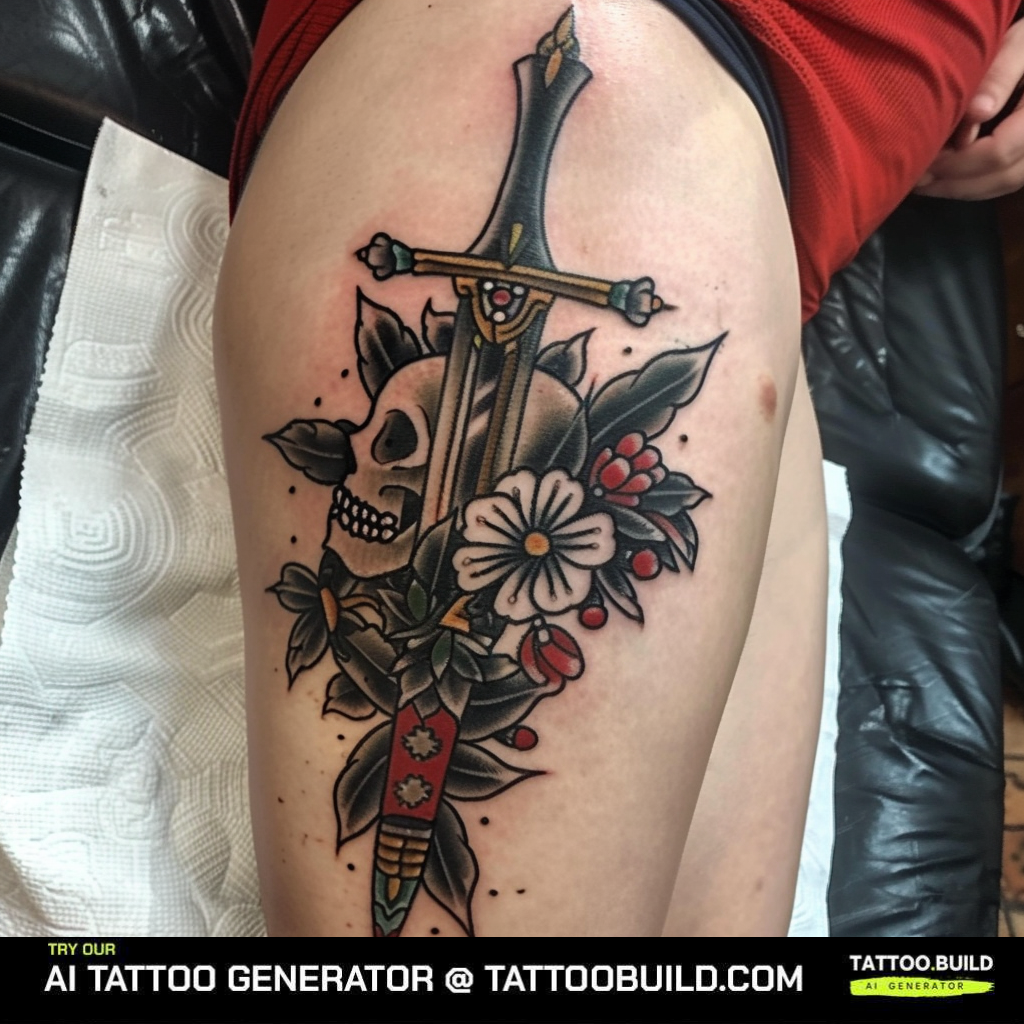
Layer another element onto it and the meaning shifts. A dagger through a rose usually reads as love and pain bound together; a dagger through a skull leans toward defiance or mortality; a snake wrapped around one tends to signal betrayal or temptation.
The direction matters too. Point-down is commonly read as a conflict finished or laid to rest, point-up as one still being carried. Most artists I have asked treat this as a loose convention rather than a rule, so say plainly what you want it to mean.
And if it means nothing beyond looking good on your arm, that is a legitimate reason. A lot of the best traditional work was chosen off a flash wall for exactly that reason.
Dagger Tattoo Ideas Worth Stealing
These are the compositions I see working most often, roughly in order of how frequently they land well.
1. Dagger Through a Rose
This is the reference design, and it is popular for a reason: the round mass of the rose balances the long straight blade, so the tattoo reads well at any size.
When I have had this drawn up, the artist always angles the dagger slightly rather than running it dead vertical. A five- to fifteen-degree tilt keeps it from looking like a diagram.
Traditional colour is a red rose against black-and-grey steel. A fully black rose keeps the same shape language while dropping the colour entirely, and it heals a little cleaner.
Best size is roughly six to eight inches — smaller than that and the petals start to merge as the tattoo settles.
2. Dagger and Snake
The snake solves the biggest problem with a dagger tattoo, which is that a blade alone is a very narrow shape.
Wrapping a serpent around the handle and blade fills the space and gives the artist somewhere to put shading and movement.
In my experience this one is best on the outer arm or calf, where the natural curve of the limb echoes the coil.
It also works as a step toward a larger piece later. If that is the plan, look at how full snake tattoo designs are composed before you commit to the dagger placement.
3. Skull and Dagger
The heaviest of the classic pairings, and the one that most often gets overloaded.
A skull already carries a lot of black. Adding a fully rendered blade on top of it can turn the whole area into one dark mass once the tattoo has healed and settled.
The version I have seen age best keeps the skull in mid-grey with a clean white highlight, and lets the dagger stay mostly outline.
For more on how these two elements sit together, our skull and rose combinations guide covers the same balance problem.
4. Dagger Through a Heart
Old-school, unambiguous, and still one of the most requested versions.
The banner is what makes or breaks it. A name or short phrase across the design gives it weight; an empty ribbon usually looks unfinished.
Keep banner text to about twelve characters. Beyond that the lettering shrinks and small letters are the first thing to blur as a tattoo ages.
This design carries risk if the banner holds a partner name, and every artist I know will say so before they start.
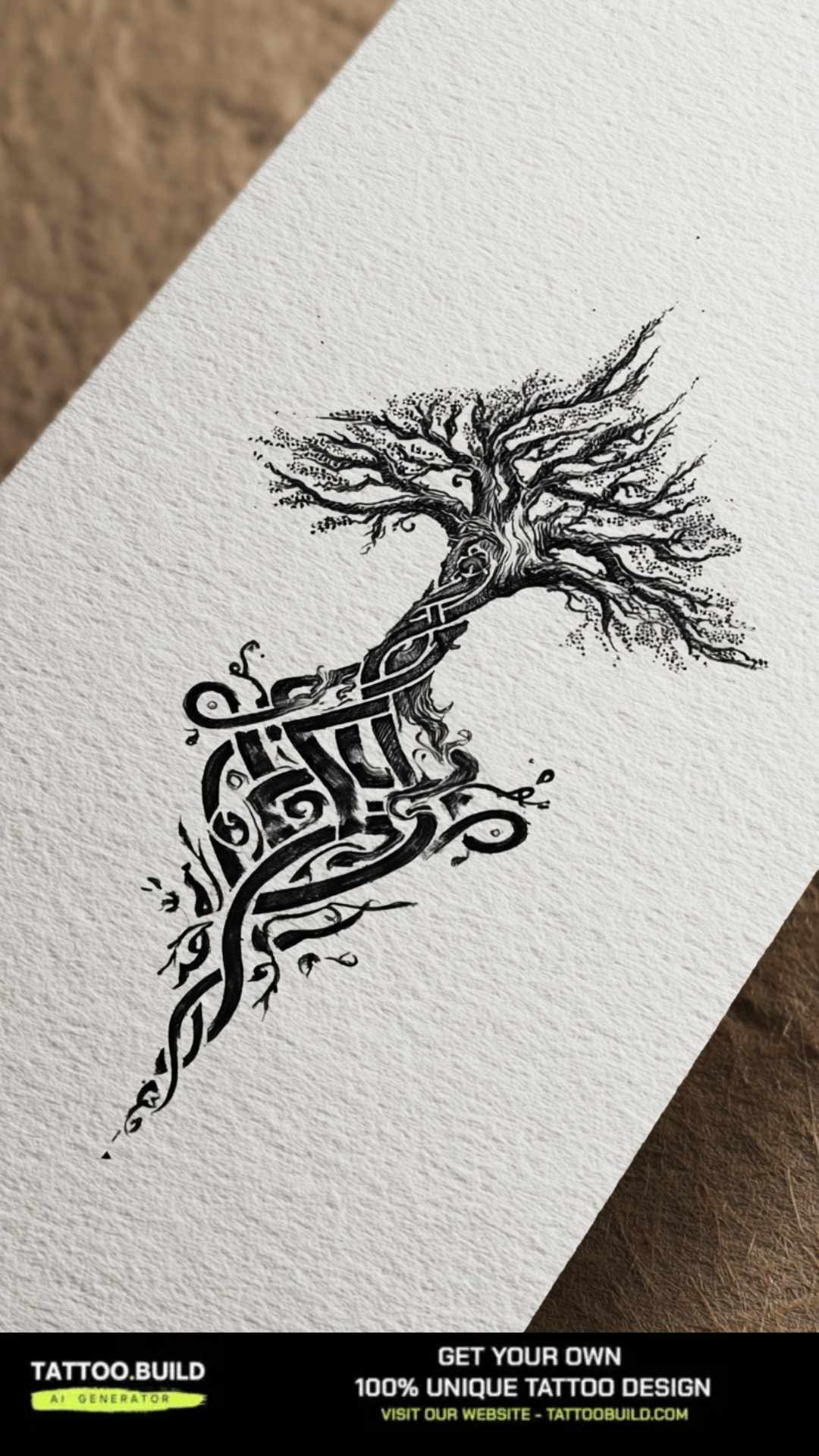
5. Ornamental and Blackwork Daggers
This is where dagger tattoos have moved most in the last few years.
Instead of a literal weapon, the blade becomes a spine for filigree, dotwork and geometric pattern — closer to jewellery than to iconography.
It suits the sternum, spine and inner forearm particularly well because those areas want a long vertical shape anyway.
If this direction appeals, our blackwork tattoo ideas collection shows how much negative space these designs need to stay readable.
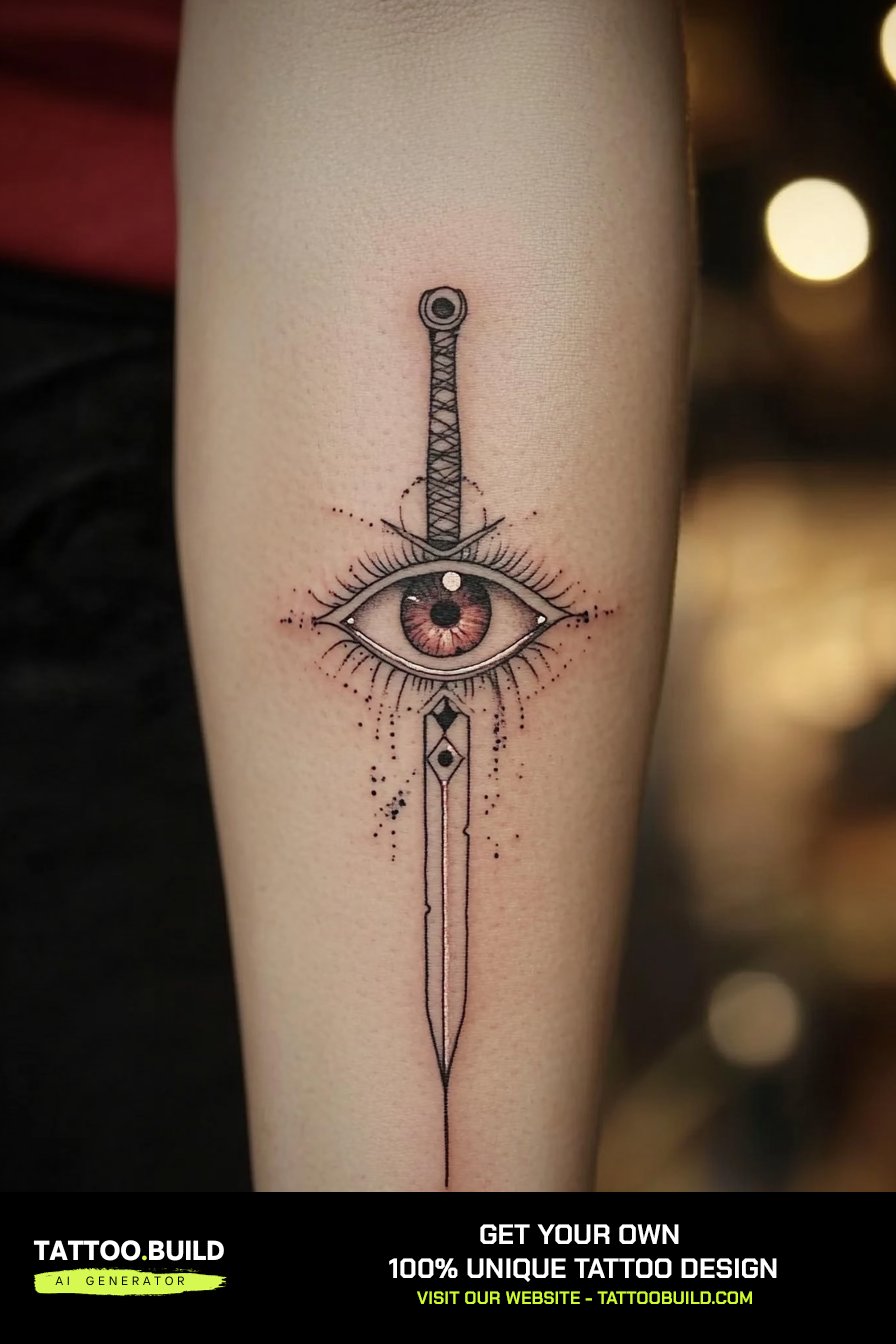
6. Fine Line and Minimal Daggers
The smallest viable version of this design, and the one I get asked about most by people getting their first tattoo.
A single-needle dagger on the wrist or inner arm takes under two hours and heals fast.
Be realistic about longevity though. Fine line work softens, and a hairline blade on a high-friction spot may want a touch-up within a few years.
The trade-offs are covered properly in our fine line tattoo guide, which is worth reading before you book.
7. Neo-Traditional Daggers
Traditional shapes, modern palette. Muted greens, dusty reds and warm greys instead of the flat primary colours of old-school flash.
The handle is usually where the detail goes — carved grips, gemstones, wrapped leather.
These take longer and cost more, but they hold up well because the linework underneath is still bold.
8. Dagger With Moths, Butterflies and Moons
The softest of the modern pairings, and a genuinely good counterweight to the hardness of a blade.
A moth spread behind a dagger creates a wide-plus-tall shape that fits the sternum and upper back unusually well.
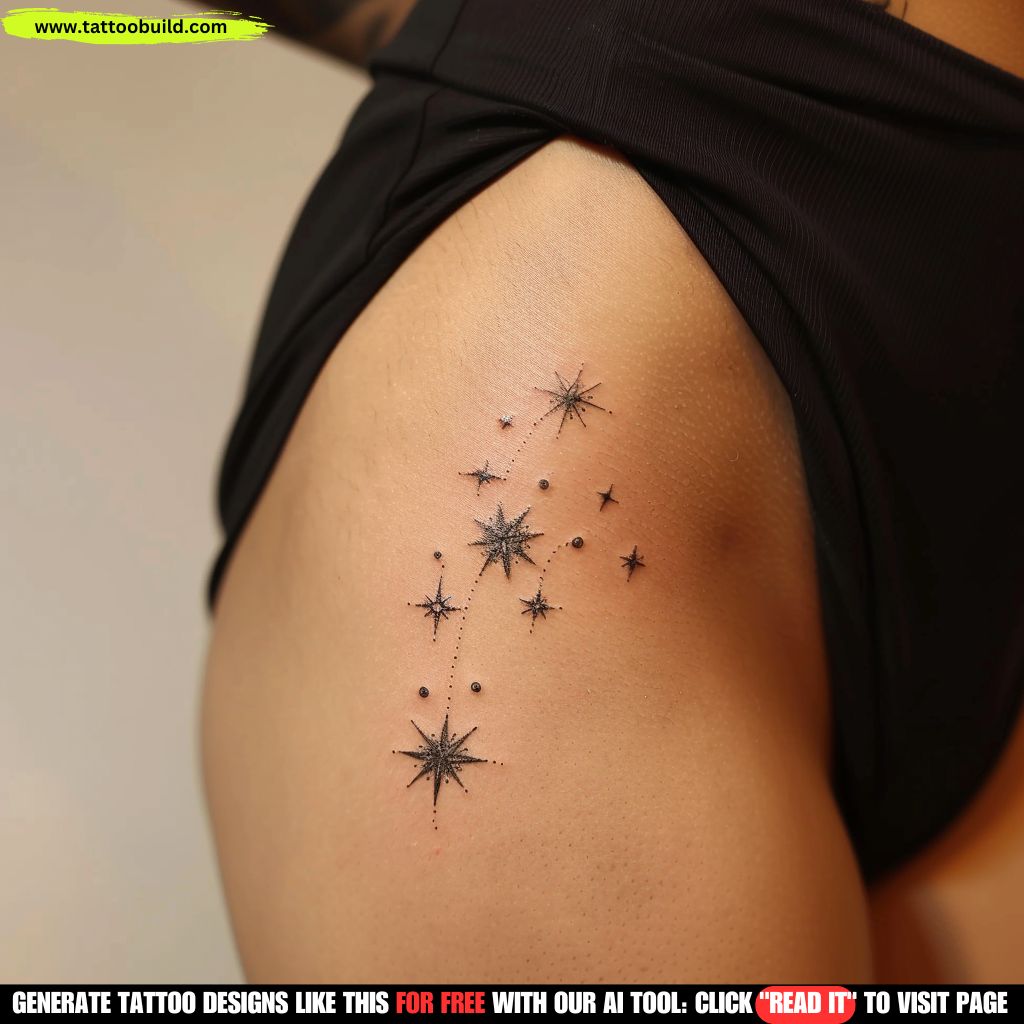
Crescent moons and small stars do a similar job in less space, which makes them a common choice for the forearm.
Variations Worth Considering Instead
If the dagger is nearly right but not quite, these are the usual alternatives.
The Sword
Longer, more formal, and reads as duty rather than nerve. It needs a long placement — outer arm, spine or the side of the calf. Our sword symbolism guide goes deeper on the difference.
The Straight Razor
Compact and blunt in tone, with a strong barbershop and traditional-flash association. It fits places a dagger will not, such as the side of the finger or the back of the arm.
The Ceremonial or Ritual Blade
Kris blades, kunai and athame-style designs all carry cultural weight. If you are drawn to one from a tradition that is not yours, read up on it first and talk it through with your artist.
Twin or Crossed Daggers
Two blades crossed or mirrored fill a chest or upper back far better than a single vertical piece, and they give the design a natural centre point.
Placement, Pain and Aftercare
Placement is largely a shape problem. A dagger is tall and narrow, so it wants a tall narrow area: forearm, outer arm, calf, spine, sternum. Our forearm tattoo ideas page shows how those proportions work in practice.
On pain, the honest ranking holds up: ribs, sternum and spine are the hardest, outer arm and calf the easiest. If that is a deciding factor, the tattoo pain breakdown is more detailed than anything I can fit here.
For aftercare, follow the instructions your artist gives you over anything you read online, including this page — they know the ink, the machine and how your skin took it.
The general shape of it is clean hands, a thin layer of whatever ointment your artist recommends, no soaking, and no picking. The American Academy of Dermatology publishes practical tattoo care guidance that is worth reading in full.
If you see spreading redness, heat, swelling that gets worse after the first few days, or any discharge, that is a doctor visit rather than a message to your artist. Allergic reactions to certain pigments are uncommon but real, and the FDA has published consumer guidance on tattoo ink safety. Nothing on this page is medical advice.
Still Not Sure? Avoid These Mistakes First
The most common one I see is going too small. A dagger relies on a long clean blade, and under about three inches the tip and the handle detail collapse into each other.
The second is over-rendering. A blade is a flat reflective object; the more highlights an artist packs into it, the muddier it looks once healed.
The third is copying a reference exactly. Bring three or four images, say what you like about each, and let the artist draw something original — our wider dagger tattoo collection is useful for exactly that kind of reference-gathering.
And the fourth is choosing a placement for the photo rather than for your life. A hand or neck piece looks superb online and carries real professional consequences, which our bold placement guide touches on as well.
Frequently Asked Questions
What does a dagger tattoo symbolise?
Most commonly it stands for courage, protection, or a willingness to face something difficult directly. That reading comes from Western traditional tattooing, where it was worn by sailors and servicemen. The meaning shifts once you add another element, so a dagger with a rose reads differently from a dagger with a skull. In practice it means what you decide it means, and it is worth telling your artist so the drawing supports that.
Is a dagger tattoo considered aggressive?
It can be read that way, especially in realistic styles with blood detail. Traditional and ornamental versions usually read as decorative rather than threatening. Style, size and placement affect this far more than the subject does. If you want the shape without the edge, a fine line or floral-wrapped version softens it considerably.
How much does a dagger tattoo cost?
It depends almost entirely on size, style and your artist’s hourly rate, which varies enormously by city and by reputation. A small fine line dagger is typically a shop minimum or a single short session. A detailed neo-traditional or realistic piece can run several sessions. Ask for a quote once the artist has seen the drawing rather than relying on any online estimate.
Where does a dagger tattoo look best?
Anywhere long and narrow: the forearm, outer arm, calf, spine and sternum all suit the shape naturally. The forearm is the most popular for good reason, since it is a straightforward heal and easy to sit through. Wider placements like the chest usually work better with crossed or twin daggers. Avoid squeezing a tall design into a wide, short space.
Do dagger tattoos age well?
Traditional and blackwork versions age particularly well because bold lines and solid black hold their shape as skin changes. Fine line daggers soften over time and may need a touch-up after several years. Sun exposure is the biggest single factor in how any tattoo holds up, so sunscreen on healed work makes a real difference. Your artist can advise on what will last best for your skin and placement.
Quick Summary
- The dagger is one of the oldest surviving tattoo motifs and still reads clearly at almost any size.
- Meaning depends on what you pair it with — rose for love and pain, skull for defiance, snake for betrayal.
- American traditional and blackwork versions age the best; fine line versions age the fastest.
- Six to eight inches is a reliable size for combination designs; under three inches the detail collapses.
- Tall narrow placements suit it best: forearm, outer arm, calf, spine and sternum.
- Banner text should stay short, roughly twelve characters, so the lettering survives.
- Over-rendering the blade is the most common design mistake — flat steel needs restraint.
- Follow your artist’s aftercare instructions, and see a doctor for any sign of infection.