A small tattoo has to earn its space, and that is exactly what makes it hard to design well. There is nowhere for a weak idea to hide when the whole piece is the width of two fingers.
I have sat in on a lot of consultations for pieces under two inches, and the pattern is always the same. The women who walk out happiest are not the ones who picked the prettiest image on the studio wall – they are the ones who could say, in one sentence, what the tattoo was for.
This guide collects the small meaningful tattoos for women that I keep seeing hold up years later, along with the practical side nobody mentions at the consultation: which designs survive at that scale, which placements age well, and where the money actually goes. If you are still deciding on size, the tiny tattoo ideas guide is a useful companion read.
Everything below is illustrated with real designs at real scale, so you can see how much detail actually fits.
Which Small Tattoo Style Is Right for You?
Style matters more than subject at this size. The same rose can look elegant or muddy depending on how it is drawn and how much ink is packed into it.
| Style | Best for | How it ages | Typical session |
|---|---|---|---|
| Fine line | Florals, script, delicate symbols | Softens noticeably; may need a touch-up in a few years | 20-45 minutes |
| Bold minimal linework | Moons, hearts, geometric symbols | Holds shape well over decades | 20-40 minutes |
| Dotwork / ornamental | Lotus, mandala fragments, beading | Dots can blur together if packed too tightly | 45-90 minutes |
| Script & lettering | Words, dates, short quotes | Thin serifs are the first thing to go soft | 20-40 minutes |
| Micro black and grey | Feathers, portraits of objects, texture | Light greys fade fastest; contrast flattens | 60-120 minutes |
If you are torn between two of these, the honest tiebreaker is how often you want to think about maintenance. Bold minimal linework is the low-effort choice.
What Actually Makes a Small Tattoo Last
Small tattoos fail for boring, predictable reasons, and almost none of them are about the idea itself.
The first is line density. When lines sit closer than roughly a millimetre or two apart, ink spread over the years can close the gap and turn a detailed design into a solid shape.
Every artist I have asked says the same thing: at small scale, they would rather remove detail than shrink it. A rose with four petals at half an inch will always outlive a rose with twelve.
The second is placement. Areas with heavy friction or a lot of sun exposure – hands, fingers, the outer edge of the feet – lose crispness faster than the inner forearm or the upper back.
The third is simply budget, because most studios have a shop minimum regardless of how tiny the piece is. It is worth reading up on what a small tattoo actually costs before you plan a set of three.
Small Meaningful Tattoo Ideas for Women
These are grouped by meaning rather than by body part, because in my experience the meaning is what people arrive with and the placement is what gets decided in the chair.
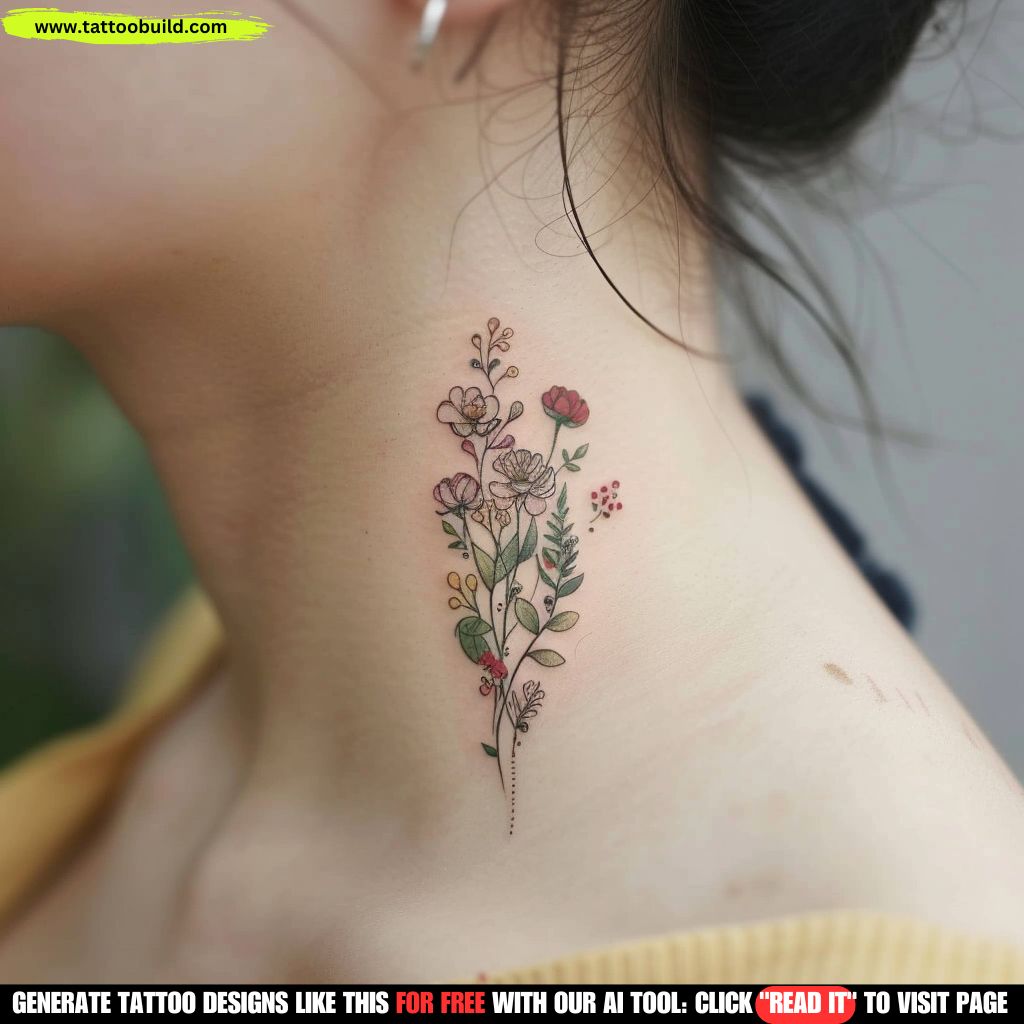
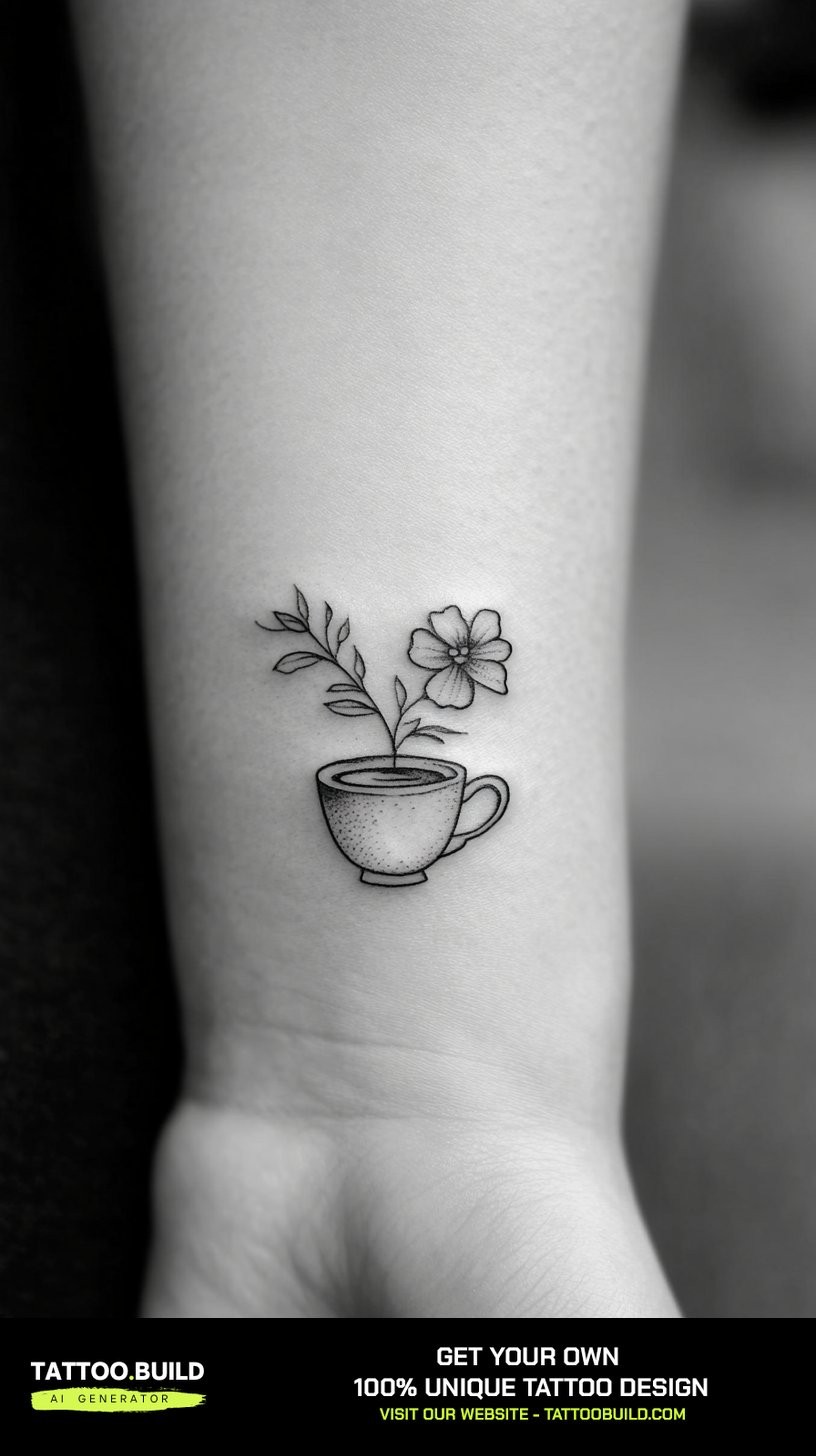
1. Fine-Line Florals: Growth You Can Point To
The single-stem rose is the most requested small tattoo I see, and it survives at that size for a good reason – it is essentially three curves and a stem.
What makes it meaningful varies enormously. I have inked the same rose as a grandmother’s memorial, as a birth-flower for a daughter, and once simply because the client liked roses and was tired of being asked to justify it.
If you want a flower that carries a date without being a date, look up the birth flower for the month in question. It reads as decoration to strangers and as a name to you.
Wrist placement keeps it visible to you and easy to cover; the women’s wrist tattoo ideas guide goes deeper on the angles that work.
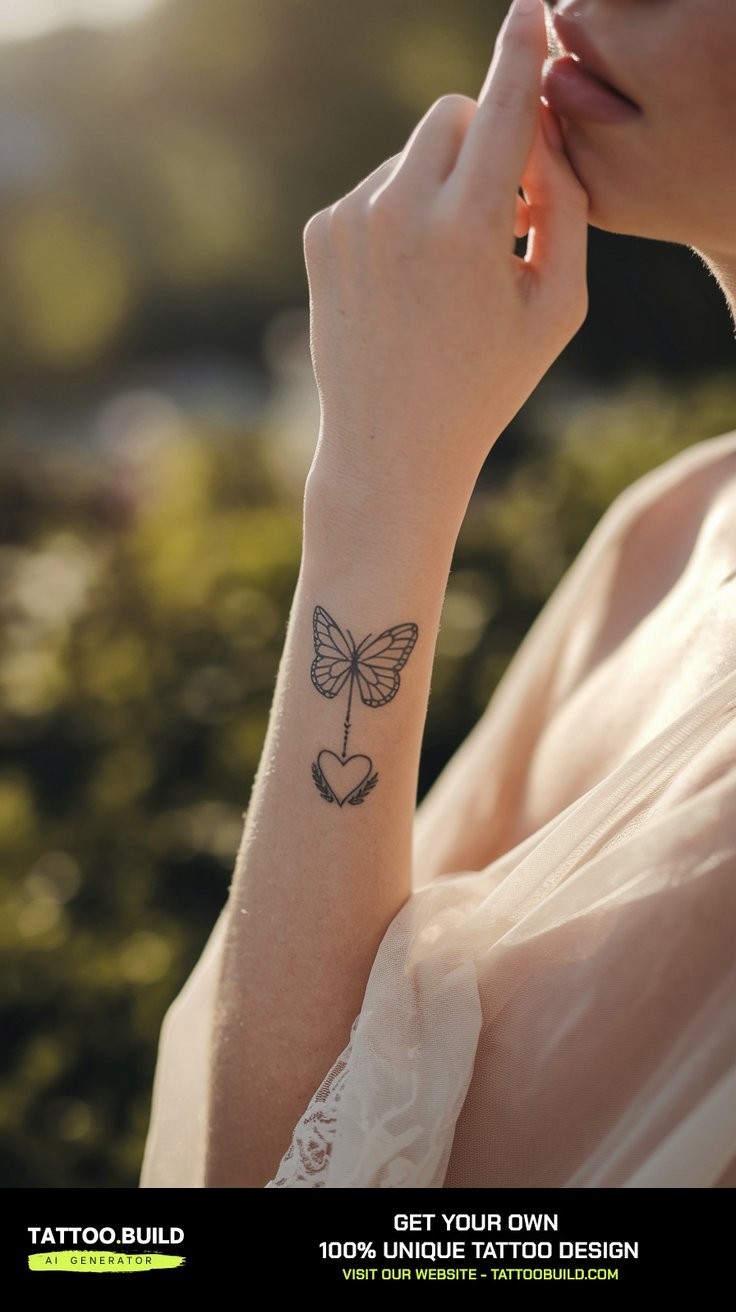
2. Butterflies and the Transformation Cliche That Still Works
Butterflies get dismissed as overdone, and I understand why, but they remain one of the few symbols almost everyone reads correctly without explanation.
The version that has aged best in my experience is the one that avoids realism entirely: a clean outline, open wings, minimal internal detail.
Pairing the butterfly with a second small element – a heart, a set of wings, a name in tiny script – turns a generic motif into a specific one. That is usually the difference between a tattoo you like and a tattoo you defend.
If a symbol feels overused to you, the fix is almost never a different symbol – it is a more personal composition of the same one.
3. Moons, Stars and Celestial Markers
Moon phases have quietly become the default for anyone marking a cycle: a recovery, a pregnancy, a year they would rather remember than repeat.
They also happen to be technically ideal for small work. A crescent is a single closed curve, and dots scale down without losing meaning.
I usually suggest running celestial pieces along the length of a limb rather than across it. The forearm and the inner bicep both have a natural line that a moon-and-stars arrangement can follow.
One honest caveat: dotted trails look beautiful fresh, but very fine isolated dots are the element most likely to need a touch-up later.
4. Lotus and Ornamental Linework
The lotus is the most common request I see from women marking something they came through rather than something they lost.
Ornamental treatment – symmetrical petals, a small beaded drop below – gives it structure that a purely botanical flower does not have, which helps enormously at wrist size.
Watch the shading. A lotus with dense stippling packed into the petal bases can grey out into a solid patch within a decade; ask your artist to leave the negative space wider than feels necessary.
5. Hearts, Pulse Lines and Love That Is Not Sentimental
Heart tattoos split into two camps: the decorative kind, framed with foliage, and the diagrammatic kind, built from a heartbeat line.
The floral heart works well as a memorial piece because the botanical frame carries the emotion without the tattoo announcing itself as grief.
The pulse line is the more literal option and is popular with nurses, paramedics and anyone marking a survived medical event. In my experience it needs a confident, bold line to stay legible – fine-line versions of this design tend to close up.
Keep the composition asymmetrical if you can. A pulse line broken slightly off-centre reads as designed rather than clip-art.
6. Words, Dates and Short Script
Text is the highest-risk small tattoo and also the one that changes people’s posture when they look at it.
Two rules I would not bend on. Keep it under about four words, and pick a typeface with even stroke weight rather than one with hairline serifs.
Set the text where you can read it yourself. The inner forearm works because it faces you naturally when your arm is at rest.
Finger script is the most requested and the least durable placement in the whole category – it is worth reading the honest version in the finger tattoo ideas guide before committing.
7. Trees, Feathers and Birds Taking Flight
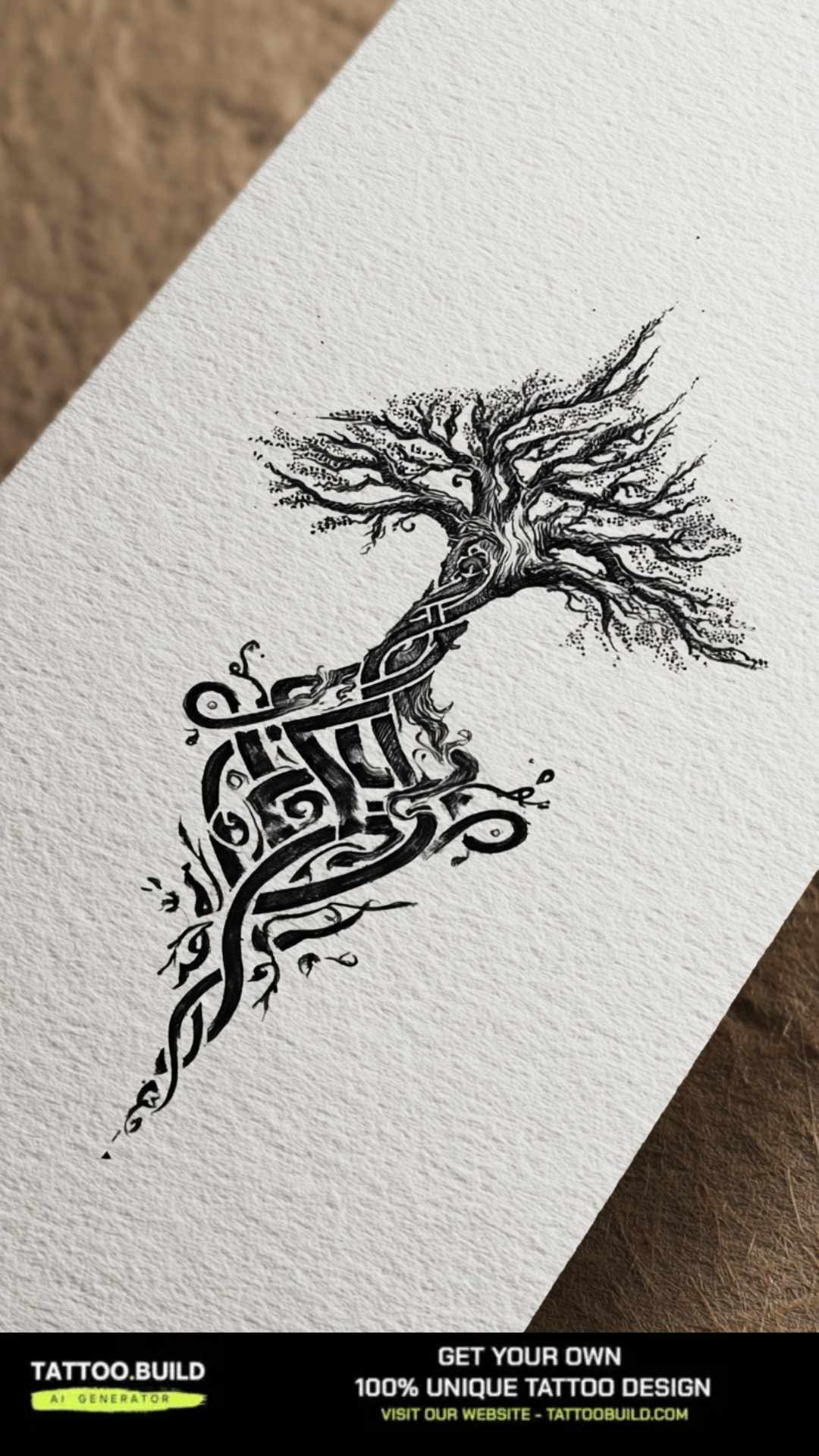
A rooted tree with birds leaving the branches is one of the few small compositions that tells an actual story rather than showing a single object.
It works especially well for mothers, and for anyone marking a move away from where they grew up. The roots stay; the birds do not.
The feather-into-birds design carries a similar idea in less space, which makes it the better choice for a wrist or ankle.
Both designs live or die on the birds. At this scale each bird is two brushstrokes, so ask to see the artist’s healed work before booking – fresh photos flatter this style enormously.
8. Compasses and Direction
The compass rose is the quiet favourite of people who have moved a lot. It reads as travel to strangers and as something closer to orientation to the person wearing it.
It is one of the few detailed motifs that genuinely holds up small, because the geometry is regular and the eye fills in what fades.
Collarbone placement suits it particularly well – the bone gives the design a horizon to sit on. The collarbone tattoo ideas guide covers how that area heals and how visible it stays under different necklines.
9. Infinity, Continuity and the Case for Very Small
The infinity symbol is about as minimal as a tattoo can get while still meaning something, and it is often someone’s first.
I like it as a starting point precisely because it is easy to build on later – it sits comfortably beside a name, a date or a second symbol added years afterwards.
If you are worried about regret, this is the shape to start with. It is small, quick, and if you later decide you want more, it becomes part of something bigger rather than an obstacle.
10. The Personal and the Slightly Absurd
Not every meaningful tattoo has to be solemn, and the ones that make me laugh in the studio are usually the ones with the longest story behind them.
A dotwork UFO abducting a horse is not a symbol anyone will decode. That is the point – the meaning is private and the tattoo does not perform it for an audience.
I would encourage more women to consider this category. The pressure to pick something that reads as tasteful to other people is real, and it produces a lot of tattoos that their owners feel neutral about.
Placement Alternatives Worth Considering
If you already know the design, the remaining decision is where it goes – and that choice affects longevity more than anything else on this page.
Inner Forearm
The most forgiving area for small work: low friction, moderate sun exposure, and easy to see without a mirror. It is where I send most first-timers.
Wrist and Bracelet Line
Visible, easy to cover with a watch, and quick to sit through. The downside is that the wrist bone itself is sharp, so designs usually work better slightly above or below it.
Collarbone and Sternum
Flattering for symmetrical designs, and controllable in terms of who sees it. Healing is a little more awkward because bra straps and seatbelts cross the area.
Ankle, Ribs and Behind the Ear
All three are popular and all three are more painful than their size suggests. Behind the ear in particular is a small tattoo with a big sensation attached, and hair regrowth changes how visible it stays.
For a broader look at how design and placement interact at this scale, the minimalist tattoo ideas collection is worth browsing.
Practical Tips Before and After You Book
Bring a reference and a sentence. The reference shows the style you want; the sentence tells the artist what the piece is for, which is what lets them change your idea for the better.
Ask for the stencil to be placed and then walk to a mirror and move normally. Where a tattoo sits when your arm is relaxed matters far more than where it sits when you are holding still for the artist.
On pain: small tattoos are short, and the anticipation is usually worse than the session. If you want a realistic map before you book, the tattoo pain chart is a better guide than asking friends.
For aftercare, follow the instructions your artist gives you over anything you read online, including this page. The American Academy of Dermatology’s guidance on caring for tattooed skin and the FDA’s tattoo and permanent makeup fact sheet are both solid, non-commercial starting points if you want to understand the reasoning behind those instructions.
If a healing tattoo becomes increasingly painful, hot, swollen or starts weeping after the first few days, or if you develop a rash or a fever, contact your artist and see a doctor. Redness and itching can be an allergic reaction to a specific pigment, and the AAD’s overview of tattoo skin reactions explains what those reactions look like. Nothing in this article is medical advice, and no small tattoo is worth treating an infection at home.
Still Not Sure? Common Mistakes to Avoid
Shrinking a design instead of simplifying it is the single most common mistake, and it is the one artists most often let slide because the client insisted.
Booking three tiny tattoos in one sitting is another. Most shops charge a minimum per piece, so three small tattoos frequently costs more than one medium one that would have held detail better.
Choosing a design because it looked good on someone else’s skin tone or arm shape is a quieter mistake. Fine grey shading in particular reads very differently on different complexions, and a good artist will tell you so.
And finally, waiting for certainty. If you are close but not decided, browsing first tattoo ideas for women or the strength tattoo collection tends to be more useful than another month of deliberation.
Frequently Asked Questions
How small can a meaningful tattoo actually be?
In practical terms, most artists will not go much below about one inch for anything with internal detail, and roughly half an inch for a single simple shape like an infinity symbol or a crescent. Below that, the lines have nowhere to spread as the skin ages. The honest limit is not the needle, it is the decade after. If an artist tells you your design is too small, they are almost always protecting the tattoo rather than upselling you.
Do small tattoos hurt less than large ones?
They hurt about the same per second, but they are over much faster, which is what most people actually mean by the question. Placement affects the sensation far more than size does – a tiny tattoo on the ribs or behind the ear can feel much sharper than a larger one on the outer forearm. Most small pieces are done in under an hour, and many in under half. Eat beforehand and it is usually far less dramatic than expected.
Will a small tattoo fade faster than a big one?
It does not fade faster, but the fading is more noticeable because there is less design to absorb it. A thin line losing crispness matters more when the whole tattoo is three thin lines. Sun exposure is the main variable you control, so sunscreen on the area once it is fully healed makes a real difference. Many small fine-line pieces are touched up once every few years, which most artists treat as routine rather than a repair.
What are the best small tattoo ideas for a first tattoo?
A simple bold-line symbol on the inner forearm is the most forgiving combination: quick to sit through, easy to see, and slow to blur. Avoid fingers, feet and anything under about an inch with fine internal detail for a first piece. Choosing something you can build on later – a single symbol rather than a finished composition – also leaves you options. In my experience, first tattoos that leave room to grow are the ones people regret least.
How much should I expect to pay for a small tattoo?
Nearly every studio has a shop minimum, and a small tattoo will usually cost that minimum regardless of how quick it is. The minimum varies widely by city and by artist demand, so ask when you enquire rather than assuming. Booking several small pieces in one session sometimes reduces the per-piece cost, but not always – it depends on how the shop charges. Tipping conventions also vary by country, so it is worth asking a local friend rather than guessing.
Quick Summary
- Simplify rather than shrink – remove detail before reducing size.
- Bold minimal linework ages best; fine line and light grey shading fade first.
- The inner forearm is the most forgiving placement for a first small tattoo.
- Florals, moons, lotuses, hearts and compasses all hold up well at small scale.
- Keep script under about four words and avoid hairline serifs.
- Personal and private meanings outlast symbols chosen to look tasteful.
- Expect to pay the shop minimum, and expect a touch-up every few years on fine work.
- Follow your artist’s aftercare instructions, and see a doctor for any sign of infection or allergic reaction.
Whichever design you land on, the tattoos that hold up are the ones with a clear reason behind them and a clear line drawing them. Get both right and size stops mattering.