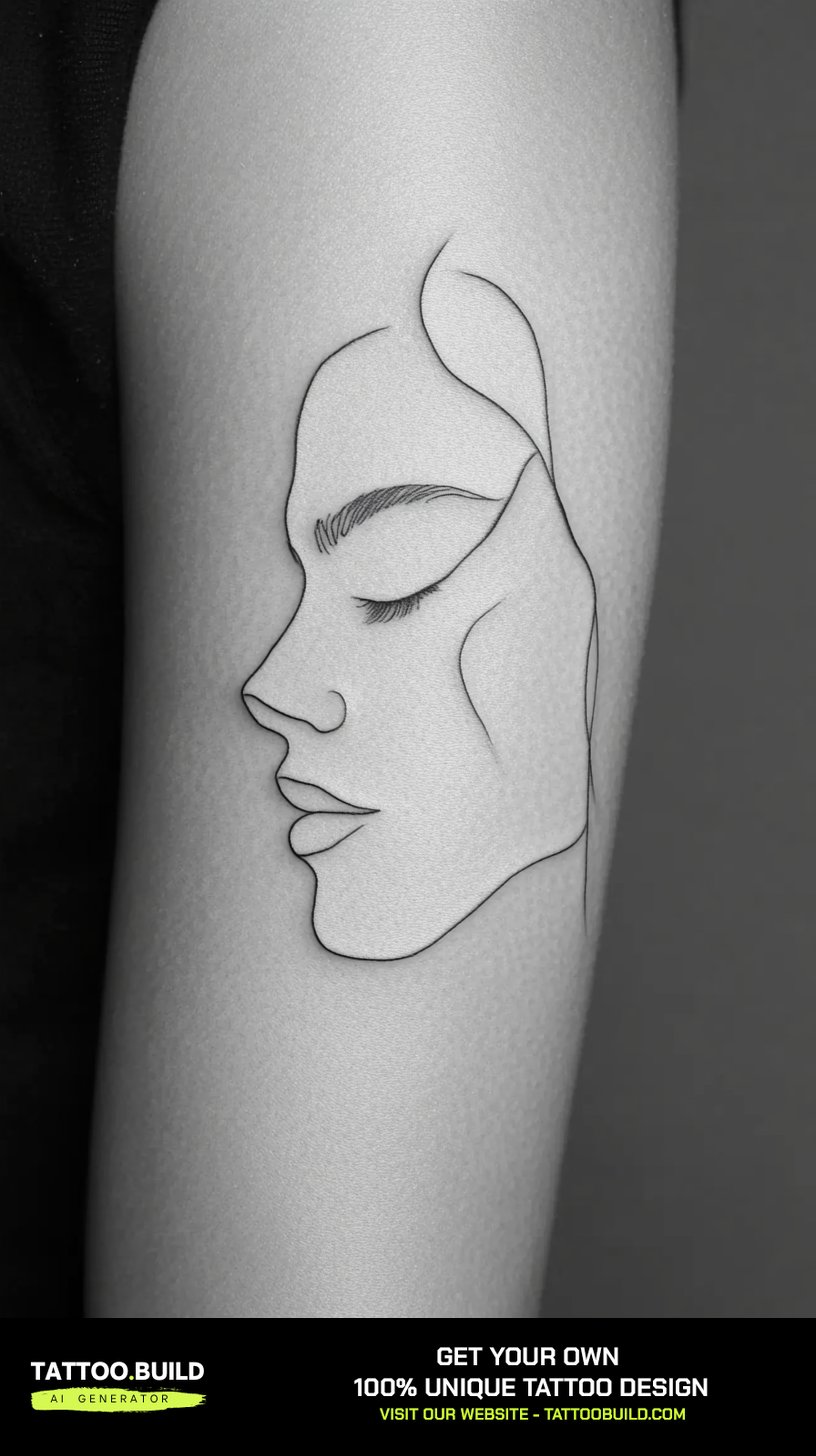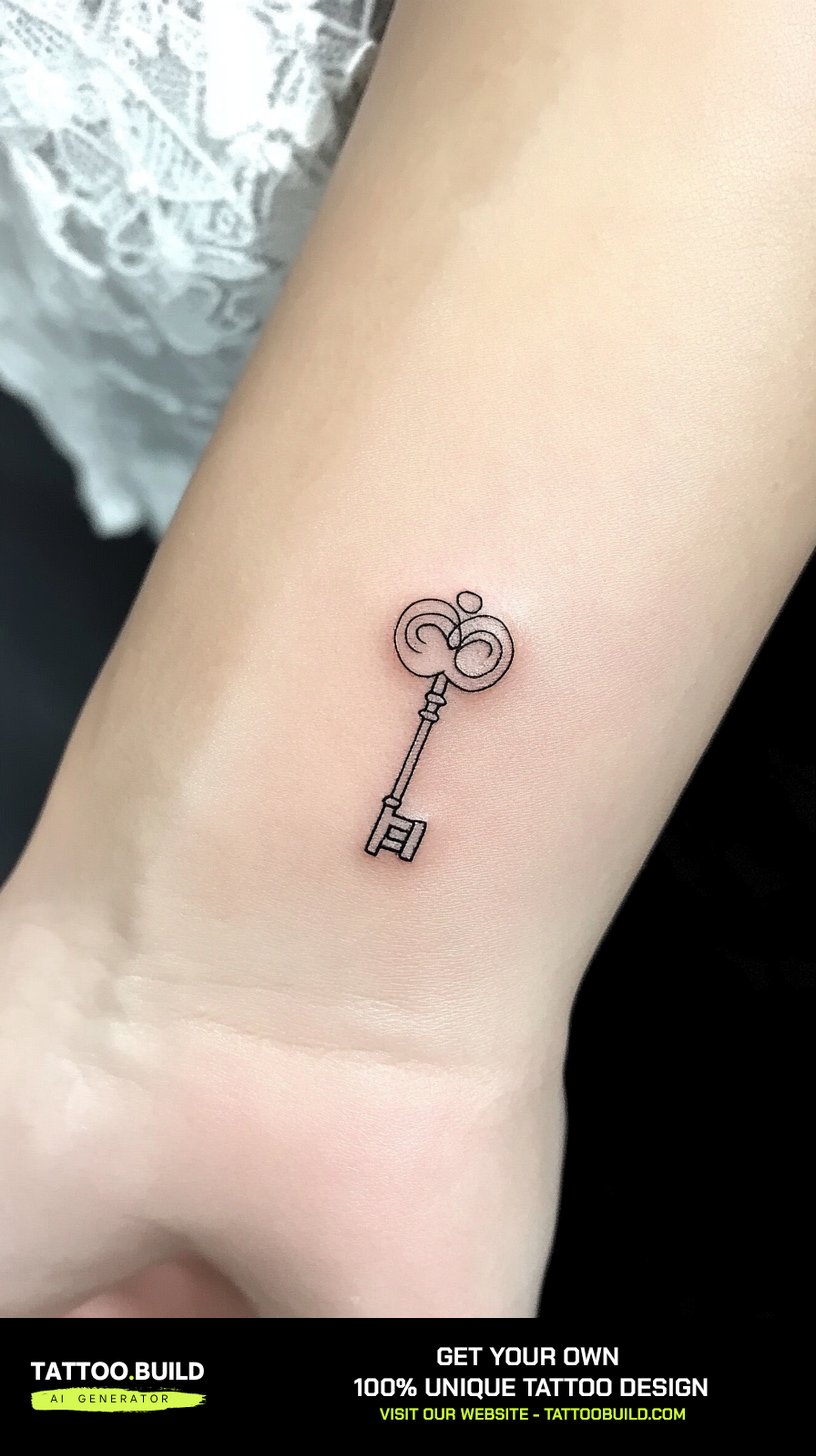
I have spent more hours than I can count sitting in tattoo studios with women who arrive holding a screenshot of something enormous and leave with something the size of a postage stamp. The tattoos that mean the most are almost never the biggest ones on the body.
Small meaningful tattoos work because they carry a single idea cleanly. A key, a wave, a name in script — one thought, one glance, done.
This guide walks through 30+ small tattoo ideas for women, grouped by what they actually symbolise, with honest notes on how each one holds up after a few years. If you want the very smallest end of the spectrum, my tiny tattoo ideas for women guide covers pieces under an inch.
Every design pictured here is real ink on real skin, photographed at the size it was actually made — not an oversized illustration shrunk down for a mood board.
Which Small Tattoo Style Is Right for You?
Style matters more than subject when a tattoo is this small. The same key looks completely different in hairline fine line versus solid blackwork, and the two age nothing alike.
| Style | Best for | Smallest size that works | How it ages |
|---|---|---|---|
| Fine line | Script, single symbols, delicate florals | About 2.5 cm / 1 inch | Softens noticeably; usually wants a touch-up within a few years |
| Bold outline | Animals, hearts, anchors, simple objects | About 3 cm | The safest small-tattoo choice — stays readable for decades |
| Solid blackwork | Butterflies, silhouettes, geometric shapes | About 3 cm | Holds the strongest, though edges thicken slightly |
| Micro-realism / shading | Landscapes, portraits, detailed insects | About 5 cm / 2 inches | Grey wash lifts first; detail blurs if it was crammed too tight |
| Colour | Flowers, ribbons, traditional motifs | About 4 cm | Depends heavily on sun exposure; reds and yellows fade first |
When I ask artists which of these they would put on their own wrist, bold outline wins nearly every time. It is also the least photogenic on day one, which is why it loses to fine line work on social media.
Why Small Tattoos Age Differently Than You Expect
Ink does not sit still. Over years it spreads very slightly inside the skin, which is why fine detail closes up and thin lines thicken.
On a large piece that movement is invisible. On something the width of a fingernail, it is the whole design.
That is the single most useful thing I have learned from artists who specialise in minimalist tattoo work: leave gaps. Empty skin between lines is what keeps a small tattoo readable in ten years.
Placement changes the maths too. Hands, fingers and feet see constant friction and sunlight, so they fade faster than an inner arm almost every time.
Sun exposure is the factor most people underestimate. The American Academy of Dermatology recommends broad-spectrum sunscreen on healed tattoos, and in my experience that one habit separates the pieces that still look sharp at year eight from the ones that do not.
30+ Small Meaningful Tattoo Ideas for Women
Everything below is grouped by meaning rather than by body part, because that is how most people actually shop for a tattoo.
Landscapes, Mountains and the Outdoors
Nature scenes are the most requested category I see, and they compress surprisingly well. A mountain range is really just three or four angled lines.
The sun-over-wave design is a favourite for a reason: two symbols, one continuous line, and it reads at arm’s length. It usually means renewal, or simply a person who feels better near water.
Circular framing does real work here. Enclosing a landscape in a thin ring gives the eye a boundary, so the scene still looks intentional once the shading has softened.
The detailed forest-and-figure piece is the exception in this group — it needs more room than the others. When I have seen that design attempted at under two inches, the trees turn into a grey smudge within a couple of years.
If you want a landscape smaller than a business card, ask for outline only. Grey wash at that scale rarely survives.
Boats, Fish and Life on the Water
A sailboat is one of the cleanest journey symbols available. Four lines for the hull and sails, a couple of horizontal strokes for water, and it is finished.
The canoe-with-a-tree design is my personal favourite in this whole set. It puts roots and movement in the same little frame, which is a genuinely hard idea to draw simply.
Small fish are quietly popular as family markers — three fish for three siblings, or three children. They avoid the literalness of names while still counting the people who matter.
Nautical themes also suit forearms and calves better than wrists, because the horizontal lines want a little width to sit straight on the limb.
Anchors, Locks and Symbols of Steadiness
Anchors read as stability, and they are one of the few motifs that genuinely benefit from colour at a small size because the shape is already bold.
Padlocks have quietly overtaken keys in the studios I visit. They tend to mean something kept safe rather than something opened.
The two padlocks pictured show the trade-off perfectly. The shaded one looks richer today; the pure outline version will still be legible long after the other has softened.
If a design has an interior detail like a keyhole, ask the artist to make it larger than looks correct on paper. Interior negative space is always the first thing to close up.
Butterflies, Bees and Small Creatures
Butterflies remain the most common request for women’s small tattoos, and the meaning is consistent: transformation, or coming through something.
Solid black butterflies age far better than the delicate fine-line versions. The pair shown here has enough ink density that they will still look like butterflies in twenty years.
Bees have become the sleeper hit of the last few seasons. They carry ideas of work, community and persistence, and the striped body gives an artist an easy rhythm of light and dark to work with.
Notice the size difference between the two bees pictured — the forearm version has room for stippled shading, while the wrist version drops the detail and keeps only the silhouette. Both are correct choices for their placement.
Florals and Leaves, Scaled Down
Roses shrink better than almost any other flower because the spiral centre is readable even when it is only a few millimetres across.
The collarbone rose here is roughly thumbnail-sized, which is about the floor for a recognisable bloom. There are more options in my rose tattoo ideas for women collection.
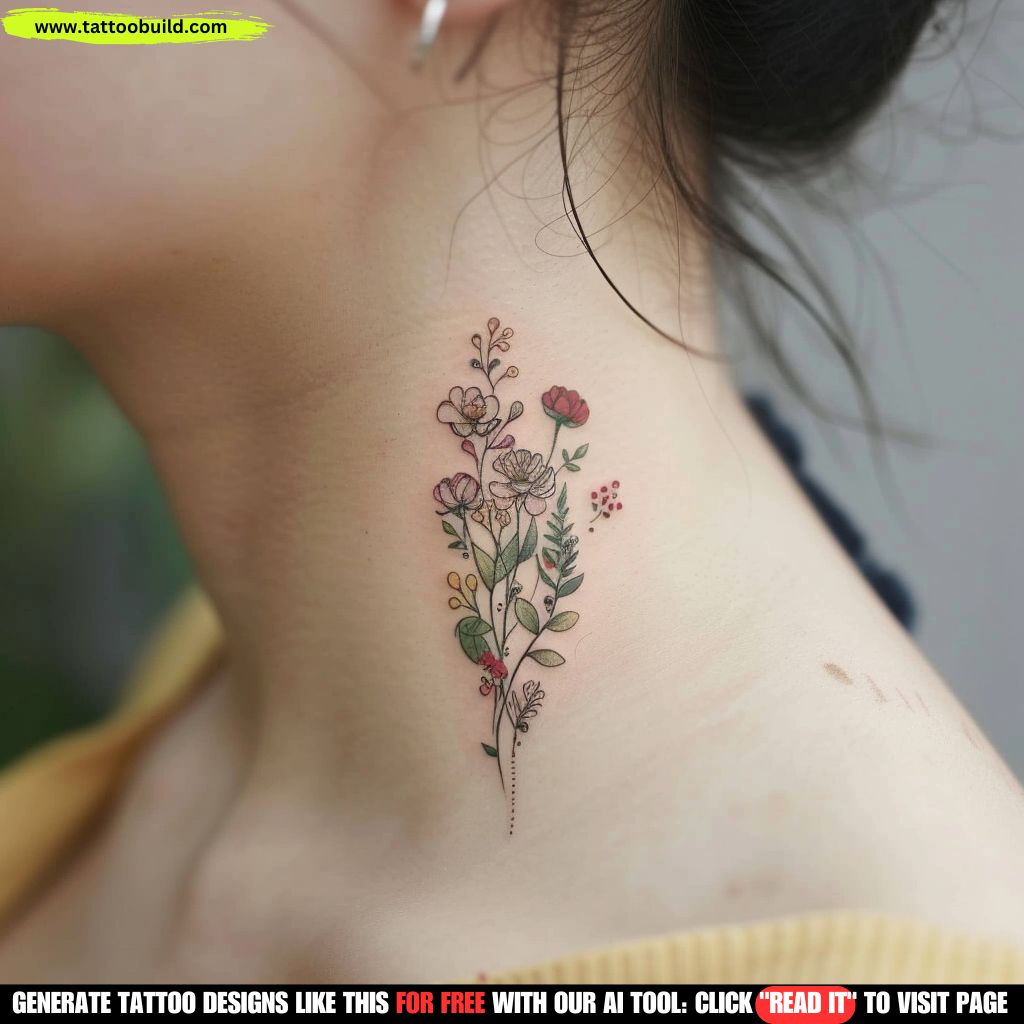
A long-stemmed rose that follows the shoulder is a different proposition. The stem does the design work, letting the flower itself stay small while the piece still occupies real space.
Single leaves are underrated. A maple leaf can mean a home country, a season of change, or nothing more than the fact that you like the shape — and no one needs to know which.
Faith, Protection and Quiet Devotion
Ornamental crosses give an artist somewhere to put detail without enlarging the overall footprint, since the decoration lives inside the arms of the cross itself.
Script-and-flower combinations on the hand look striking in photos. I want to be straightforward about the cost: hands and fingers fade faster than any other placement, and most artists will tell you to expect touch-ups.
Dreamcatchers deserve a note of care. They come from Ojibwe tradition and hold specific cultural meaning, so it is worth reading about their origin and speaking with your artist before committing to one.
Protective symbols work best where you can see them. An inner forearm or wrist placement means the reminder actually does its job during the day.
Love, Family and the People You Carry
Silhouette tattoos of a parent and child are the ones I most often see people get emotional about in the chair. Adding a name in script underneath is what turns a generic image into a specific person.
Names carry risk, and it is worth naming it plainly: children and parents are the safe bet, partners less so. Every artist I have asked says the same thing.
The infinity-and-hearts design is a compact way to say the same thing without printing a name. It sits neatly on the wrist bone and stays under a watch strap.
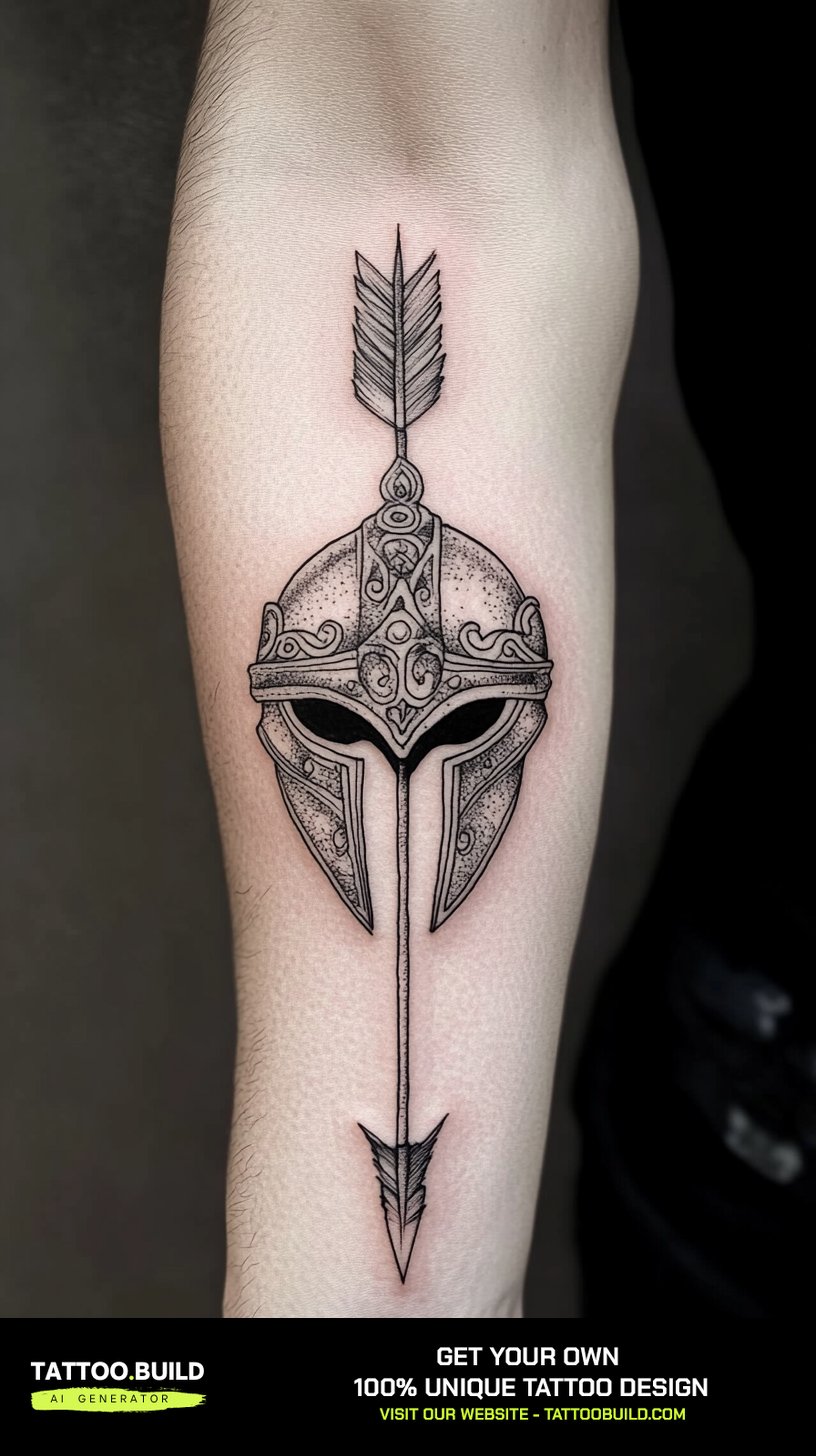
A heart pierced by an arrow, drawn in three strokes, is about as small as a meaningful tattoo gets while still being instantly readable at conversation distance.
Words, Script and Awareness Ribbons
One-word tattoos are harder than they look. Thin handwriting closes up as it ages, so I always suggest sizing script slightly larger than feels necessary — there is more on this in my quote tattoo ideas for women guide.
A single word like “breathe” on the inner wrist works because it is placed for the wearer, not for anyone else. That is usually the right instinct with script.
Awareness ribbons carry meaning through colour, which makes them one of the few small designs where colour is doing essential work rather than decoration.
Pairing a ribbon with a butterfly is a common way to honour someone while keeping the piece from reading as purely medical.
Variations Worth Considering Before You Book
Most people arrive with a design and no plan for how it will be executed. These four decisions change the result more than the subject does.
Outline Only Versus Shaded
Dropping the shading from a small design is the single easiest way to make it last. It also usually shortens the session and lowers the price.
Matching the Curve of the Body
A design drawn straight looks crooked on a forearm. Good artists redraw the stencil to follow the limb, and it is fair to ask them to reposition it two or three times before you commit.
Going Slightly Larger Than Planned
In my experience almost nobody regrets adding half an inch, and plenty of people regret going as small as physically possible. The extra space is what buys you legibility later.
Testing the Placement First
Wear the stencil or a temporary version for a day before the appointment. Wrist placements in particular feel different once you see them in a mirror rather than looking down.
For anything near the neckline, the collarbone sits at an angle that changes how the design reads to other people versus how it reads to you.
Keeping a Small Tattoo Sharp
Healing is where small tattoos are won or lost, because there is so little ink to spare. My full tattoo aftercare guide covers the timeline in detail, but the short version fits in a paragraph.
Keep it clean, keep it lightly moisturised, and do not pick. Scabbing that gets pulled off takes pigment with it, and on a design this size a single lost patch is obvious.
Once it is healed, sunscreen is the whole game. I put SPF on healed tattoos the same way I would on a face, and the difference over years is genuinely visible.
Watch for signs that are not normal healing: spreading redness, heat, pus, or a fever. The Mayo Clinic lists infection and allergic reaction among the real risks of tattooing, and those need a doctor rather than advice from a blog or a friend.
Still Not Sure? Common Mistakes to Avoid
The most frequent one is choosing a design from a drawing rather than from healed photographs. Ask any artist for pictures of their work at one year old, not one hour old — and browse first tattoo ideas for women if this is your first piece.
The second is picking a spot purely for how easy it is to hide. Some placements hurt considerably more than others, and it is worth checking a map of the most painful tattoo spots before committing to ribs or feet for a piece you could comfortably wear on a forearm.
The third is over-detailing. If you are asked to describe your design and it takes more than one sentence, it is probably too much for two inches of skin.
And the fourth is rushing. Nothing about a small tattoo needs to happen this week, and the U.S. Food and Drug Administration notes that removal is far harder, slower and more expensive than getting the tattoo in the first place.
Frequently Asked Questions
How small can a meaningful tattoo actually be?
Most artists I have spoken to set the practical floor at around 2.5 centimetres, or one inch, for a design with any interior detail. Pure symbols like a heart, a bolt or a single word can go smaller. Below that size, lines that sit close together tend to merge as the ink settles over the years. If you want something truly tiny, choose a shape that stays recognisable as a silhouette.
Do small tattoos hurt less than large ones?
They hurt for less time, which is not quite the same thing. The sensation per second depends mostly on placement — ribs, sternum, feet and inner arms are sensitive regardless of size. A small wrist piece is often finished in fifteen to thirty minutes, so even if the sensation is sharp it is over quickly. Most people describe a first small tattoo as far more manageable than they expected.
How much do small tattoos usually cost?
Nearly every studio has a minimum charge that covers setup, sterile equipment and the artist’s time, and a small tattoo almost always lands at that minimum. This means a one-inch design and a two-inch design frequently cost the same, which is another argument for not going as small as possible. Prices vary widely by city and by artist demand, so ask for a quote before booking. Tipping conventions also vary by country.
Will a small tattoo need to be touched up?
Fine-line work and script often do, typically after a few years, and hands and fingers almost always do. Bold outline and solid black designs on protected skin frequently go a decade or more without any work. Many artists include one free touch-up within a set window after the original session — worth asking about before you book. Sun protection is what most reliably delays the need.
What if I want the meaning to stay private?
That is one of the real advantages of working small. Abstract symbols, a single line, a colour or a number can hold significant meaning while telling a stranger nothing at all. In my experience the tattoos people love longest are the ones they never have to explain. You are also never obliged to answer when someone asks what it means.
Quick Summary
- Pick meaning first, then let the artist decide how simple the drawing needs to be at that size.
- Bold outline and solid black age best; fine line and grey wash look better today and soften sooner.
- Leave visible gaps between lines — negative space is what keeps a small tattoo readable long term.
- Inner forearm, upper arm and collarbone hold ink better than hands, fingers and feet.
- Go half an inch larger than feels necessary; the studio minimum usually covers it anyway.
- Sunscreen on healed ink is the highest-return habit for keeping a small tattoo crisp.
- Ask to see healed photographs of your artist’s small work before you book.
- Anything that looks infected — spreading redness, heat, pus, fever — is a doctor’s call, not a forum’s.