The inner arm is the most forgiving canvas on the body for a tattoo that has to look good for decades. It is soft, flat, rarely sunburned, and easy to cover with a sleeve when you need to.
I have been writing about placement for years, and this is the spot I keep steering people toward when they describe something detailed, personal, and not necessarily for public consumption.
It also sits right next to the busiest real estate on the arm, which means it can stay a standalone piece or grow later into something bigger — the same logic behind most forearm tattoo ideas for women.
Below are the styles that actually hold up on this part of the arm, what each one costs you in sitting time, and the honest trade-offs nobody mentions in the consultation.
Which Inner Arm Style Is Right for You?
Every style below works on the inner arm, but they do not age the same way or cost the same amount of chair time. Here is how I compare them when someone asks me to narrow it down.
| Style | Best for | Rough sitting time | How it ages here |
|---|---|---|---|
| Fine-line florals | Soft, feminine pieces that follow the arm | 2–4 hours | Lines soften over the years; usually needs a touch-up eventually |
| Script and lettering | A private message you read, not display | 30–90 minutes | Very good if the letters are spaced generously |
| Blackwork and mandala | Bold graphic impact and armbands | 3–6 hours, often split | The most durable option in this list |
| Illustrative animals | A single focal subject with meaning | 3–5 hours | Holds well when shading has real contrast |
| Micro-minimalist | A first tattoo or a discreet accent | Under an hour | The most likely to blur; keep it simple |
| Colour work | Peonies, koi and warm-toned pieces | 4–8 hours | Better here than most places, because of low sun exposure |
What Makes the Inner Arm Different From the Outer Arm
The skin on the inner arm is thinner and softer than the skin on the outside, and it sits over far less muscle. That combination changes both how it feels and how it heals.
The practical upside is sun exposure. Unless you spend your summers with your palms turned up, this strip of skin sees a fraction of the UV that the outer arm does, and UV is the single biggest cause of a tattoo going flat and grey.
The trade-off is sensation. Thin skin over the ulnar side, and the ditch of the elbow in particular, is genuinely uncomfortable — I have watched people breeze through an outer forearm session and then get quiet an hour into the inner side.
It is not the worst place on the body by a long way, and it is nowhere near ribs or sternum, but it is worth knowing in advance. Our guide to the most painful tattoo spots puts it in context.
One more thing that matters: the inner arm curves. A design drawn flat on paper will wrap out of view unless the artist stencils it on the arm in the position you actually hold it.
Inner Arm Tattoo Ideas for Women
These are the eight directions I see working most consistently on this placement, roughly in order of how often people ask for them.
1. Fine-Line Floral Trails
A trailing arrangement of flowers that runs the length of the forearm is the most requested inner arm design I come across, and there is a good structural reason for it.
The arm is a long, tapering shape, and a trailing composition is the only floral layout that respects that. A round bouquet fights the limb; a vine follows it.
In my experience the best versions use two or three flower sizes and let the smallest buds run off toward the wrist, so the piece has somewhere to end rather than stopping abruptly.
Ask for slightly heavier line weight than the reference photo shows. Fine-line work looks crisp on day one and softens over years, which is the standard trade in fine line tattooing.
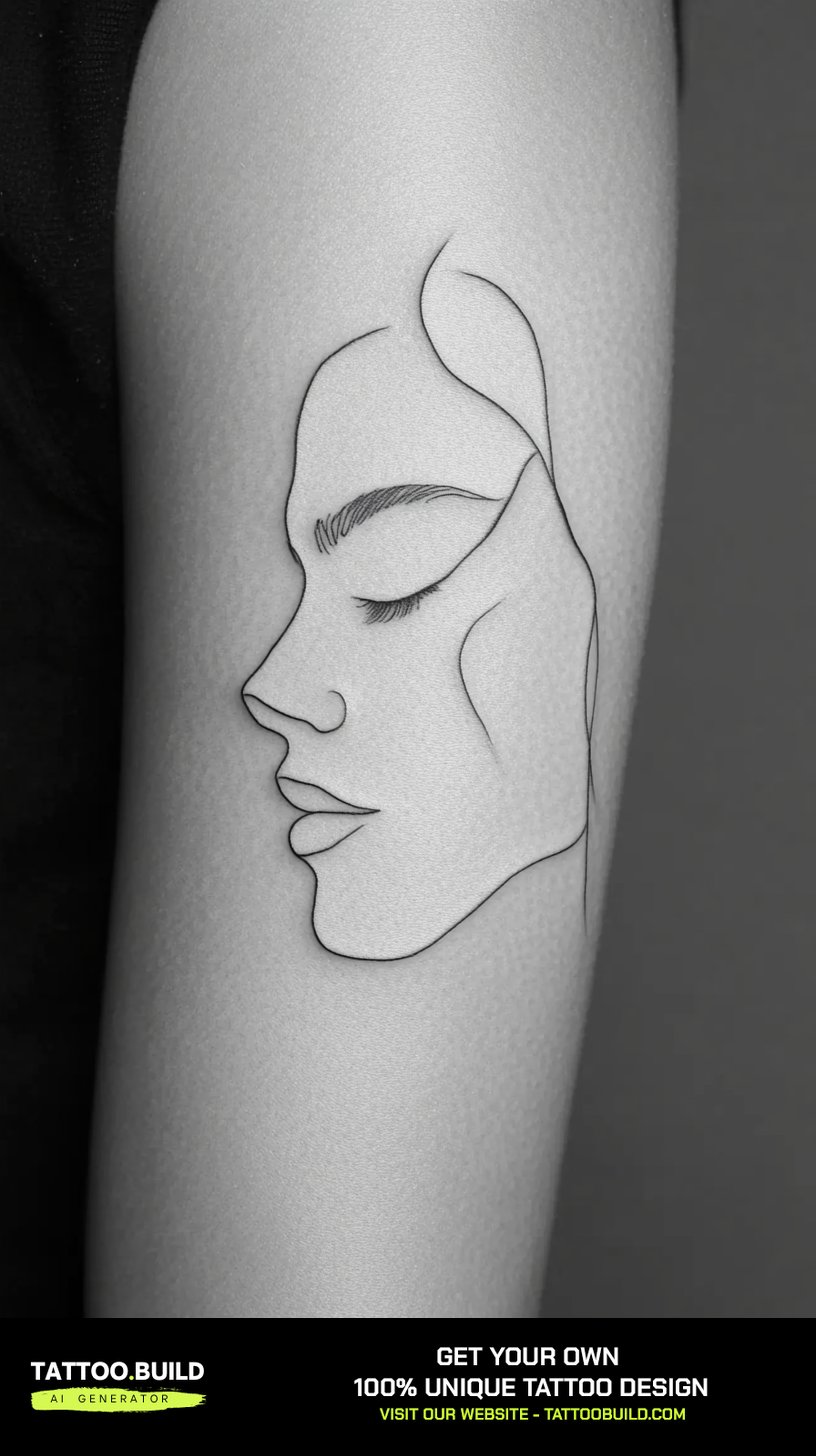
2. Single-Stem Botanicals and Minimalist Line Art
If a full trail feels like too much, a single stem drawn in one continuous line is the quietest version of the same idea.
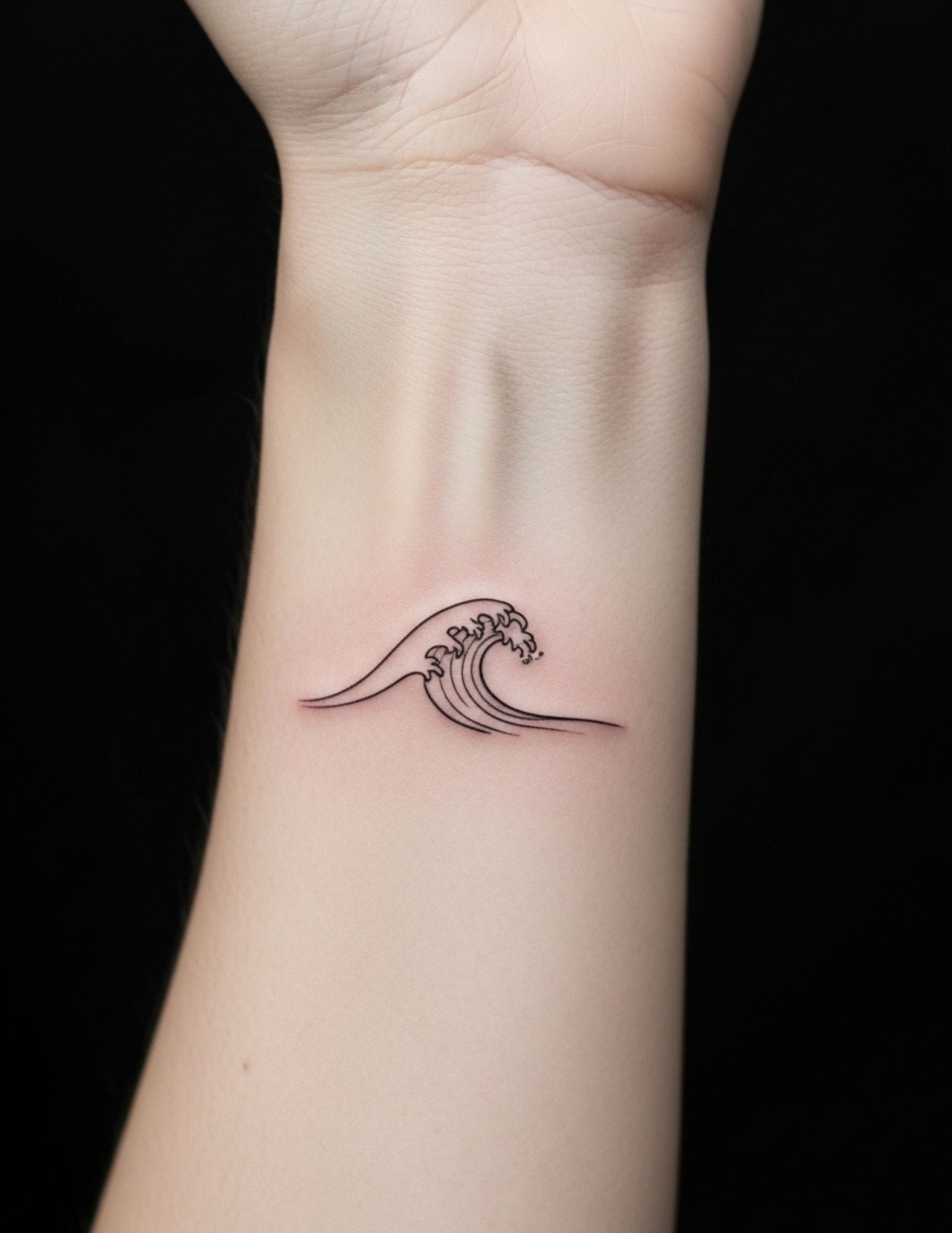
These take under an hour, sit comfortably on a first-timer, and read as an intentional design choice rather than a small tattoo.
Simplicity is what makes them last. A single needle line with nothing crossing it will still read clearly in fifteen years, whereas a tiny design packed with detail turns into a smudge.
Every artist I have asked about micro work says the same thing: leave gaps. If two lines are closer than a couple of millimetres, they will eventually merge. That rule governs most good minimalist tattoo ideas.
3. Script, Quotes and Handwriting
The inner arm is the natural home for lettering because of how you read it. Turn your wrist up and the text is right there, oriented toward you rather than toward everyone else.
Keep it short. Two or three words in a well-drawn hand almost always beat a full sentence squeezed into the same space.
A traced signature or a line in a family member’s handwriting is one of the few cases where I would tell you not to let the artist clean it up too much — the wobble is the point.
Watch the font. Thin, high-contrast scripts with hairline connectors are the most likely lettering to blur. If you want more direction, see our roundup of quote tattoo ideas for women.
4. Celestial Moons, Stars and Dotwork
Crescent moons, star fields and dotted night skies have been steadily popular for years, and they work here because the arm gives them a vertical axis to hang on.
Dotwork shading also ages unusually well. Individual dots spread slightly rather than bleeding into one another the way packed grey wash sometimes does.
The best celestial pieces mix scale — one large moon, a few mid-size stars, and a scatter of tiny points that fade out toward the edges.
When I have seen these paired with flowers, the moon usually works better as the anchor at the top, with the botanical element spilling downward.
5. Mandala Bands and Geometric Cuffs
A band that wraps the forearm is a different proposition from a design that sits on the inner arm, and it is worth being clear which one you want.
Wrapping bands are unforgiving of sloppy stencilling. If the two ends do not meet cleanly at the back, you will notice it every day for the rest of your life.
Ask to see healed photos of the artist’s previous bands specifically, not just their mandala work, and ask them to stencil with your arm relaxed at your side.
Geometric and mandala designs carry meaning in several traditions — balance, wholeness, cycles. There is more on symbolism and layout in our mandala tattoo guide.
6. Animals and Creature Portraits
A single animal gives you a focal point, which is something long trailing designs sometimes lack.
Turtles, ravens, birds and big cats all read well at forearm scale because they have a recognisable silhouette even before the shading goes in.
Silhouette is the test I use for any animal design. If you cannot tell what it is from a black shape at arm’s length, no amount of detail will rescue it.
In my experience these need more contrast than clients expect. Ask the artist to push the darks; a piece that looks slightly too heavy in the chair is usually the one that still looks sharp in ten years.
7. Blackwork Blooms and Wrap-Around Peonies
Heavier black and grey florals are the most durable option on this list, and they are what I recommend to anyone who wants one tattoo that will not need revisiting.
Peonies, roses and anemones all have layered petals that give an artist somewhere to put real contrast, which is exactly what makes a tattoo survive.
Solid black holds its edge longer than any other value in a tattoo. Grey wash softens, colour shifts, but black stays black.
These pieces often want three to six hours, and most artists will split that across two sittings. That is not a red flag — on thin inner arm skin, a fresh start beats pushing through hour six.
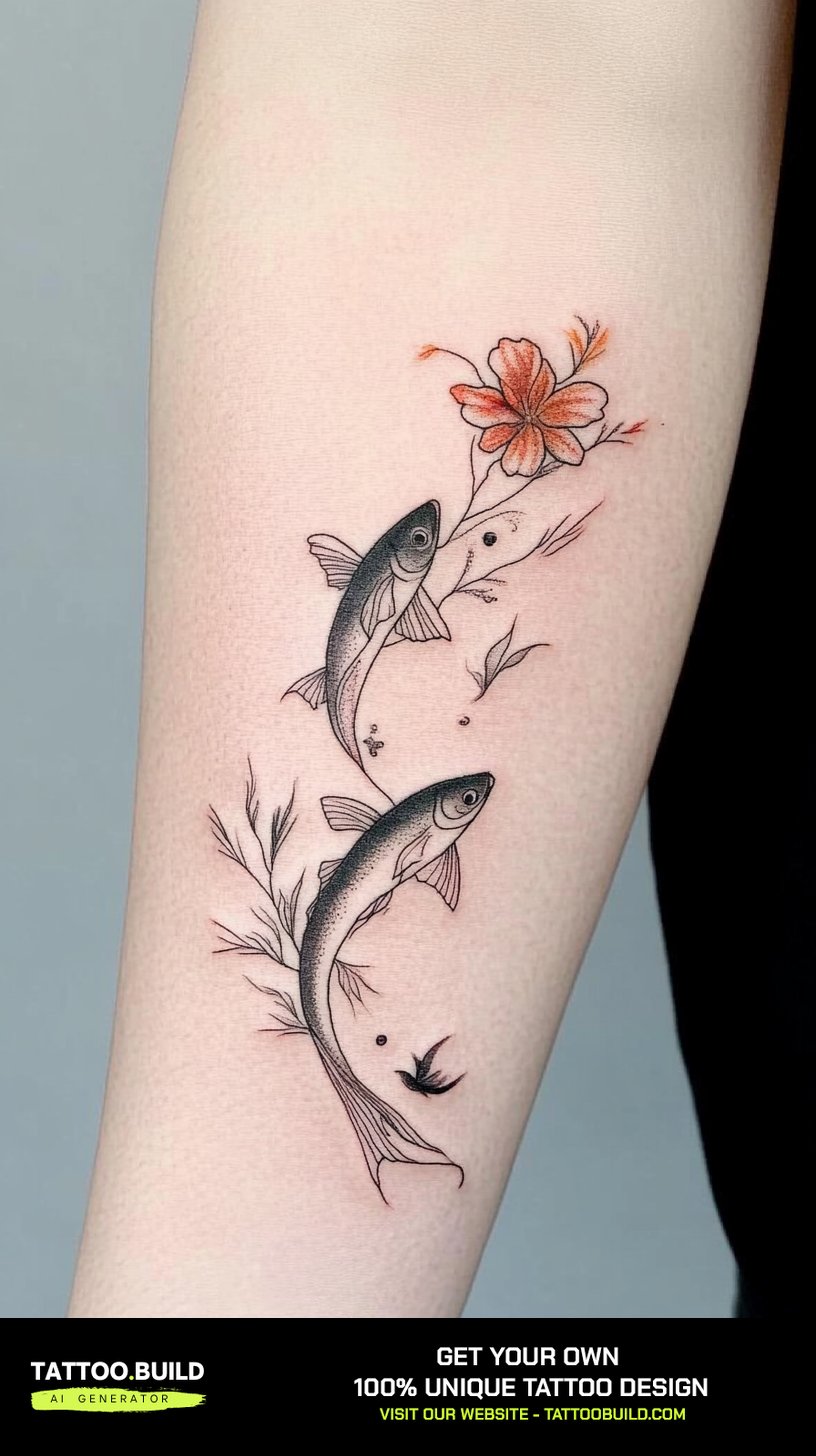
8. Colour Work: Soft Reds, Pinks and Koi
Colour on the inner arm is a better bet than colour almost anywhere else, for the same reason the whole placement works: very little sun.
Soft reds and pinks in peony work, and warm orange accents on koi, are the palettes I see holding up most reliably.
Colour is slower and usually more expensive, because saturating a bright tone properly means going over the same skin more than once.
Be honest with your artist about your skin tone and let them adjust the palette rather than matching a reference photo exactly. Pigments read differently on different skin, and a good artist will tell you so unprompted.
Variations and Alternative Placements
If the standard inner forearm is not quite right, there are four close neighbours worth considering.
The Inner Bicep
Higher, softer, and hidden by almost every short sleeve. It takes a larger design comfortably and is the most private option on the arm.
It is also more tender than the forearm, and the skin moves more, so the stencil placement matters even more here.
The Ditch of the Elbow
Small mandalas and floral medallions sit nicely in the crease. Be warned that it is one of the more painful inches on the arm and one of the slower to heal, because it creases constantly.
Extending Toward the Wrist
Trailing designs that finish just above the wrist bone give you a natural stopping point and keep the piece coverable by a watch or a shirt cuff.
Growing Into a Sleeve
An inner arm piece is a sensible first panel of a larger project. Leave a little negative space at the edges so the next artist has somewhere to connect, as most lower arm sleeve designs are built up in stages rather than planned in one go.
Aftercare and Healing on the Inner Arm
Inner arm tattoos have one specific healing hazard: the arm rubs against your torso all day, and the elbow crease folds constantly.
Loose sleeves for the first week make a real difference. Most artists suggest keeping a fresh tattoo clean, lightly moisturised and out of soaking water for two to three weeks; the American Academy of Dermatology publishes general guidance along the same lines, and our tattoo aftercare guide covers the day-by-day version.
Once it is healed, sunscreen is the whole game. The inner arm is naturally shaded, which is why pieces here tend to stay sharp — but a beach holiday can undo years of that. The US Food and Drug Administration also has a plain-language overview of tattoo ink safety worth reading before a first tattoo.
This article is not medical advice. If you develop spreading redness, heat, swelling that worsens after the first few days, pus, or a fever, contact a doctor rather than waiting it out — and if a colour pigment triggers persistent itching or raised skin months later, that is an allergic reaction worth having looked at professionally.
Never attempt to tattoo or remove a tattoo yourself. Both are procedures that break the skin, and both belong with a licensed professional working in a properly sterilised studio.
Common Mistakes — and What to Do If You Are Still Not Sure
The most common mistake is choosing a design that ignores the shape of the arm. A square composition on a cylindrical limb will always look slightly wrong, no matter how good the artwork is.
The second is going too small and too detailed at once. Detail needs room; a design that needs a magnifying glass on day one will be unreadable in a decade.
The third is booking on style rather than on portfolio. Find an artist whose healed work in your chosen style you actually like, then adapt the idea to how they draw — not the other way around.
If you are still narrowing things down, it helps to look at the same idea in other placements. Browsing rose tattoo ideas for women or general lotus tattoo designs will often tell you fairly quickly whether you are drawn to the subject or to the style.
Frequently Asked Questions
Do inner arm tattoos hurt more than outer arm tattoos?
Generally yes, though not dramatically. The skin is thinner and sits over less muscle, so most people report the inner arm as noticeably sharper than the outer forearm. The ditch of the elbow and the strip nearest the armpit are the most tender parts. That said, it is still considered a mid-range placement rather than a difficult one, and a two-hour session is manageable for most first-timers.
How long do inner arm tattoos take to heal?
The surface usually looks settled in two to three weeks, while the deeper skin continues to remodel for a couple of months. The inner arm can be slightly slower than average because the elbow crease flexes constantly and the arm rubs against clothing and your body. Loose sleeves and avoiding heavy gym work for the first week both help. Follow the aftercare your artist gives you, since it will be tailored to the ink and technique they used.
Will an inner arm tattoo fade quickly?
It is one of the slower-fading placements on the body, mainly because the area gets so little direct sunlight. Black and grey work in particular tends to stay sharp here for many years. Very fine linework and very small details will still soften over time regardless of placement. Daily sunscreen once healed is the single most useful thing you can do to keep it crisp.
How much does an inner arm tattoo cost?
It depends far more on the artist and the hours involved than on the placement itself. A small minimalist piece may be a shop minimum, while a detailed blackwork floral running from wrist to elbow can run several sessions. Ask for an hourly rate and an honest session estimate at the consultation. Be wary of a quote that is dramatically below local rates for the same amount of work.
Can I cover an inner arm tattoo for work?
Easily, which is a large part of the appeal. Any long sleeve conceals the whole area, and even a three-quarter sleeve hides everything above the mid-forearm. This is the main reason people who work in conservative environments choose this placement over the outer arm or the hand. If total discretion matters, keep the design above the point where a rolled shirt cuff would sit.
Quick Summary
- The inner arm gets very little sun, which makes it one of the best placements on the body for a tattoo that stays sharp.
- It hurts somewhat more than the outer arm because the skin is thinner, but it is a mid-range placement, not an extreme one.
- Trailing compositions suit the arm’s tapering shape far better than round, self-contained designs do.
- Blackwork and heavier black and grey florals are the most durable choice here; micro fine-line work is the least.
- Colour ages better on the inner arm than almost anywhere else, though it costs more chair time to saturate properly.
- Wrapping bands need careful stencilling — the join at the back of the arm is what makes or breaks them.
- Expect two to three weeks of surface healing, loose sleeves for the first week, and daily sunscreen after that.
- Choose the artist from healed portfolio work in your style first, then adapt the design to how they draw.