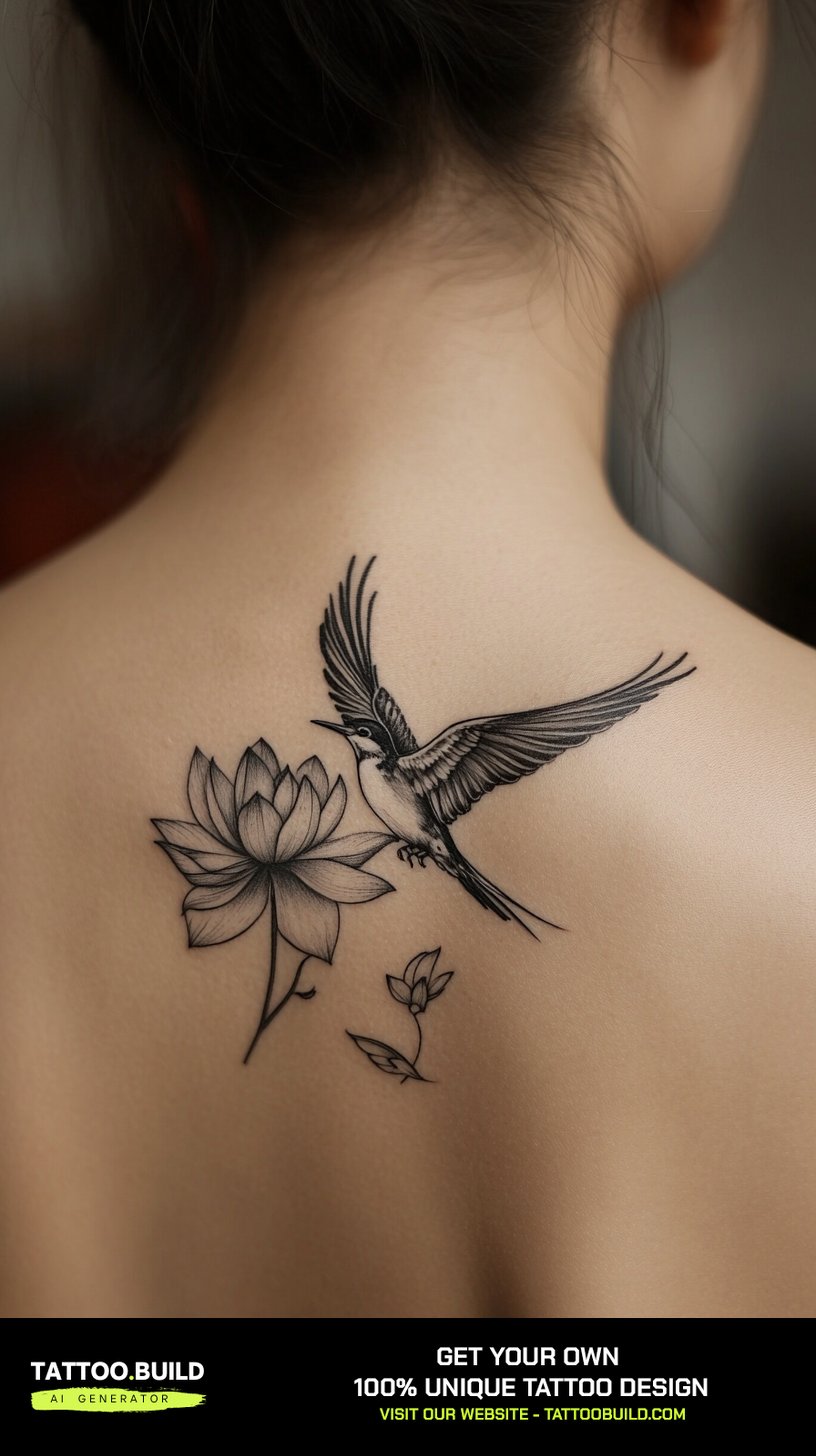
A lotus grows out of mud, opens clean, and closes again at night. That single image is why the lotus is the most requested flower tattoo I hear women ask for by name — it carries a story about coming through something without needing a word of explanation.
I have spent a long time looking at lotus work, both in shops and in healed photos sent back months later, and the gap between the two is where most of the useful advice lives.
A lotus that looks perfect on the day it is finished can turn into a grey smudge in four years if the petals were drawn too close together. The good ones are almost always simpler than the reference photo that inspired them.
Below are more than thirty designs organised by style rather than by body part, along with the practical notes I wish someone had given me the first time. If you want a wider view of the flower itself, the lotus flower tattoo designs guide covers the shapes in more depth.
Which Lotus Tattoo Style Is Right for You?
Style matters more than size when it comes to how a lotus ages. This is the comparison I run through with anyone who is undecided.
| Style | Typical sitting | How it ages | Best for |
|---|---|---|---|
| Fine line | 30–90 minutes | Softens and thickens; often needs a refresh around year 5–8 | Small, discreet placements |
| Dotwork / mandala | 2–5 hours | Very well, if the dots are spaced generously | Forearm, thigh, sternum |
| Black and grey realism | 3–6 hours | Reliable when the contrast range is wide | Shoulder, upper arm, back |
| Watercolour | 2–4 hours | Fades fastest; usually wants touch-ups | Covered placements, colour lovers |
| Geometric | 1–3 hours | Holds shape well; crooked lines show forever | Forearm, spine, calf |
| Neo-traditional | 3–6 hours | Best colour longevity of any style here | Arm, thigh, larger pieces |
What the Lotus Actually Means Before You Commit
The short version is that the lotus stands for rising out of difficulty into something clearer. That reading holds across most of the traditions the flower appears in, which is unusual for a symbol this widely used.
In Hindu and Buddhist iconography the flower is tied to purity and to spiritual awakening, largely because the plant sits rooted in silt while the bloom stays clean on the surface. The species most often meant is Nelumbo nucifera, the sacred lotus.
In ancient Egypt a different flower — the blue water lily — carried a related meaning around rebirth, because it closes at dusk and reopens in the morning. Plenty of modern tattoo designs blend the two without distinguishing them.
Colour is where personal meaning usually enters. Pink is commonly read as the flower of the Buddha, white as purity, blue as knowledge and restraint, and purple as mysticism — though in practice most women I have spoken to picked their colour because they liked it, then found the meaning afterwards.
None of that obliges you to explain your tattoo to anyone. A lotus can simply mean you came through a hard few years, and that is a complete reason.
Lotus Tattoo Ideas for Women, Style by Style
Here are the designs worth borrowing from, grouped by the technique that defines them.
1. Fine-Line and Single-Needle Lotus Tattoos
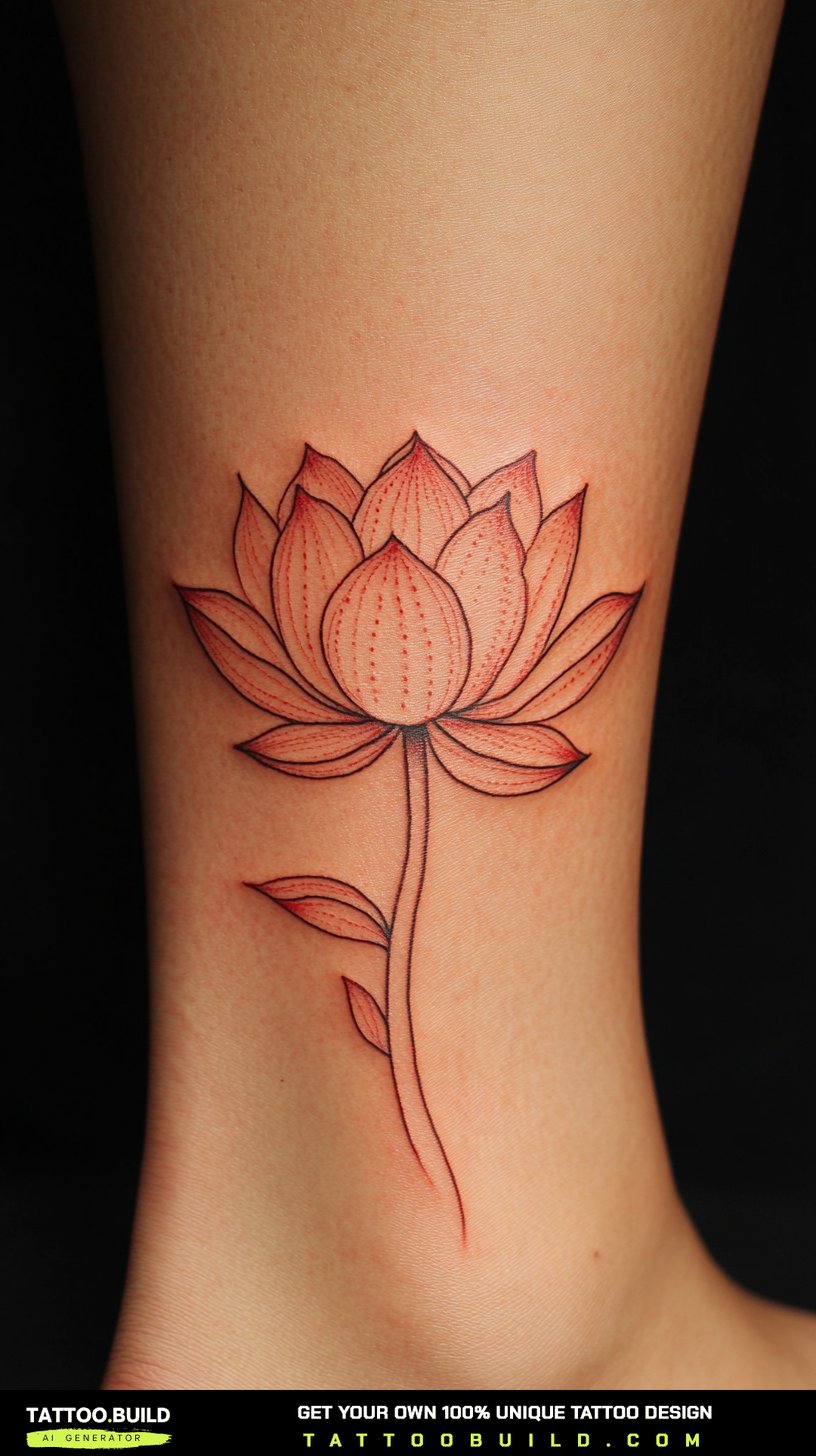
Fine line is where most women start, and for good reason: it is quick, it hurts less than shaded work, and it suits small placements.
The catch is durability. A single-needle lotus on the inner wrist will look razor sharp for two or three years, then gradually soften as the ink spreads a fraction under the skin. That is normal, not bad work.
If you want a fine-line piece to last, ask for slightly wider gaps between petals than the reference shows — a millimetre of extra space now is the difference between a readable flower and a grey blob in a decade.
I would keep these above about 5cm tall. Below that, detail starts fighting itself. The women’s wrist tattoo ideas roundup shows the scale that tends to work.
2. Mandala and Ornamental Lotus Tattoos
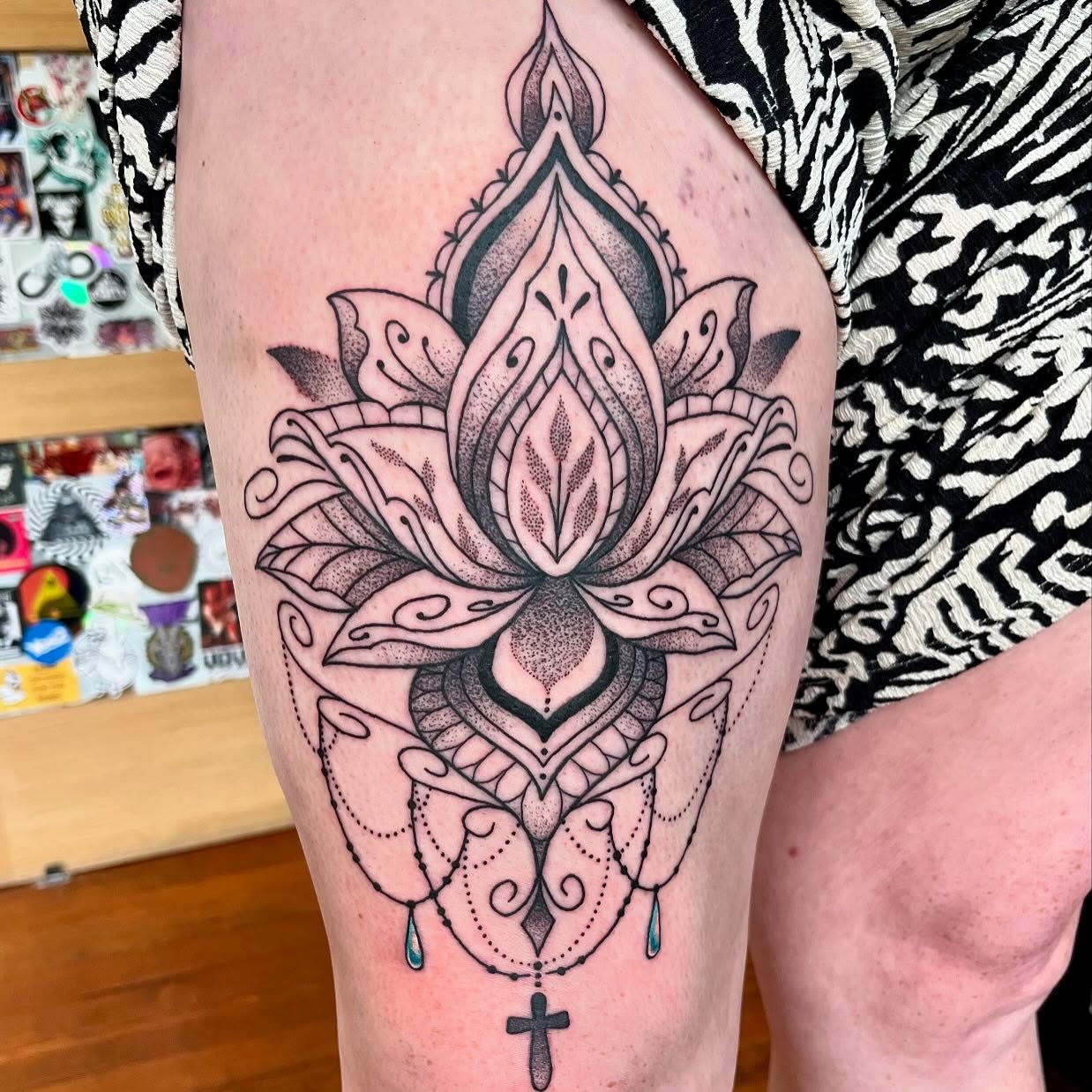
A mandala lotus turns the flower into a symmetrical pattern, usually built from dots, small arcs and repeated petal shapes radiating from a centre point.
This is the style I recommend most for pieces you want to keep for thirty years. Dotwork stipples sit as separate points of ink, so as they soften they blend into a gradient rather than collapsing into a smear.
Symmetry is unforgiving, though. Any drift shows immediately, so this is a style where the artist’s stencil work matters as much as their needle work. Ask to see healed photos, not just fresh ones.
Common placements are the centre of the forearm, the sternum and the outer thigh — anywhere the design can sit flat. There is more on the geometry in the mandala tattoo ideas for women collection.
3. Minimalist and Tiny Lotus Tattoos
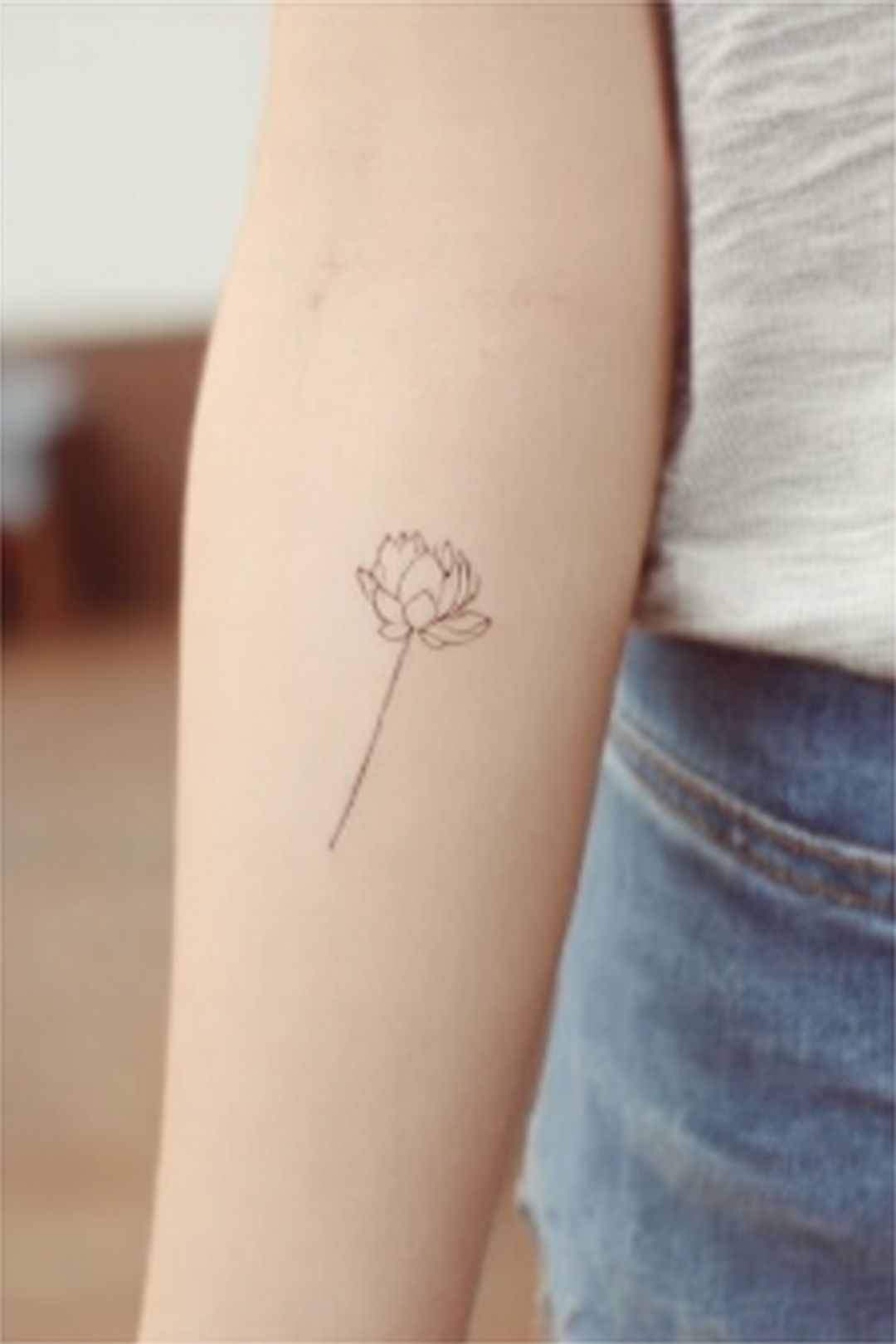
A minimalist lotus reduces the flower to five or seven strokes. No shading, no fill, just the silhouette.
These are the fastest tattoos on this page — often under half an hour — and usually the cheapest, which makes them a sensible first piece if you are not certain how you will feel about permanent ink.
Behind the ear, the inner wrist and the back of the arm are the three placements I see most. All three are easy to cover for work without needing to think about it.
The trade-off is that small simple pieces are the ones people most often outgrow. If you think you might eventually want a larger composition, place a small lotus where it can become part of something bigger later. The minimalist tattoo ideas guide is a useful companion here.
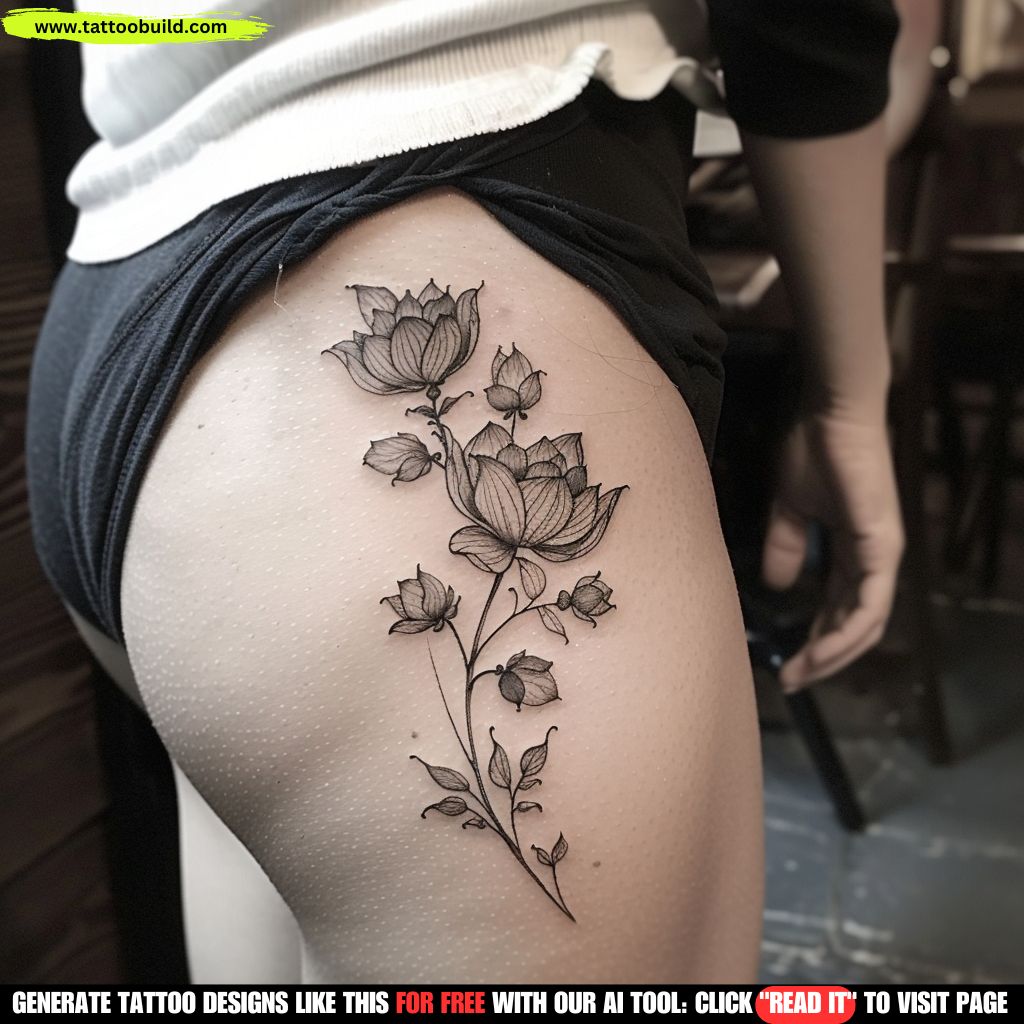
Lotus designs and the prompts behind them
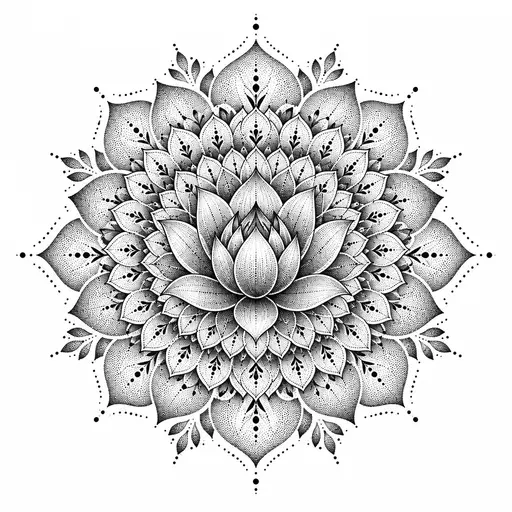
A mandala blooming outward from a lotus at its centre, each ring of petals finer than the last
Use this idea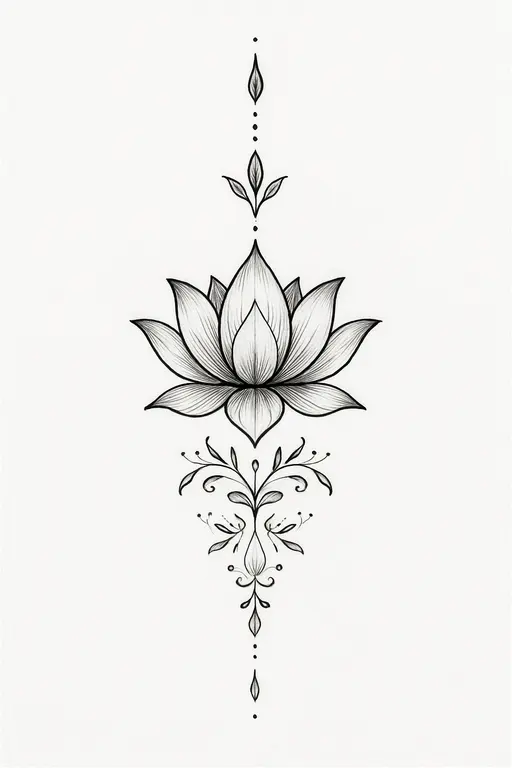
Elegant black and gray linework tattoo of a lotus flower centered on the spine, with ornamental details extending vertically up the nape of the neck and down the upper back. Symmetrical fine lines, soft shading, delicate mandala-inspired accents with dots and leaves. Minimal yet intricate, graceful and feminine style.
Use this idea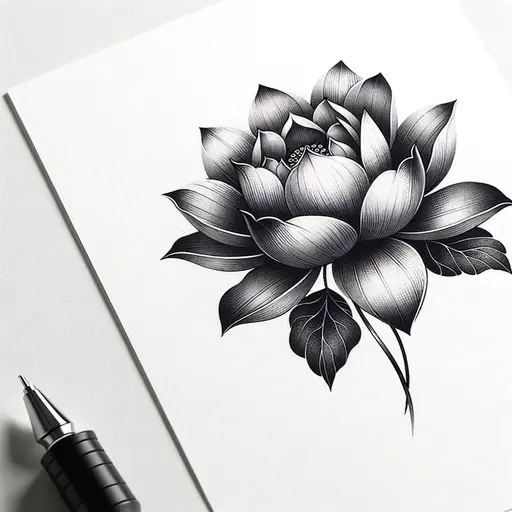
lotus flower tattoo design
Use this idea
4. Watercolour Lotus Tattoos
Watercolour work mimics paint bleeding across paper: soft edges, overlapping colour, often no black outline at all.
It is genuinely beautiful fresh, and it is the style I am most cautious about recommending. Without black containment lines the design relies entirely on colour saturation, and colour is the first thing sunlight takes.
If you want watercolour anyway — and plenty of women do, knowingly — put it somewhere clothing covers most days, budget for a touch-up every few years, and accept that as part of the design rather than a failure.
A compromise that works well: a fine black line drawing of the lotus with watercolour washes behind it. You keep the structure and get the colour. See the watercolor tattoo ideas page for more of this approach.
5. Black and Grey Realistic Lotus Tattoos
Realistic lotus work treats the flower as a photograph rather than a symbol — layered petals, real light direction, visible depth.
This needs a specialist. Smooth grey wash is a skill that takes years, and a realistic lotus done by an artist who mostly draws linework will look flat within a year.
Size is the other requirement. Realism needs room for the shading to breathe; anything under about 12cm tends to lose its detail as it heals. Shoulder, upper arm and upper back are the natural homes.
Expect three to six hours and, honestly, expect a second sitting for the finer highlights. Rushing this style is how you end up with a lotus that reads as a grey cloud from two metres away.
6. Geometric Lotus Tattoos
Geometric designs rebuild the flower from triangles, straight lines and precise arcs — a graphic reading rather than a botanical one.
They age well because there is almost nothing to blur: clean lines with space between them stay clean. The risk sits entirely in the stencil, since a geometric shape that is a degree off looks wrong forever.
Placement matters more here than in any other style. Straight lines follow the body’s curves, so a geometric lotus on a rounded surface can look skewed from certain angles. Flat panels — forearm, calf, spine — are safest.
The spine tattoo ideas for women page shows how vertical designs sit along the back, which is worth a look before committing to a spine piece.
7. Lotus and Moon Combinations
Pairing a lotus with a crescent moon or a full moon-phase sequence is one of the most requested combinations, and one of the easiest to get right.
The moon gives the composition an obvious frame. A lotus sitting inside a crescent, or centred beneath a row of phases, reads clearly even at small sizes.
Sternum and forearm are the two placements that suit it best — the sternum because the body is symmetrical there, the forearm because a phase sequence has a natural line to run along.
If you like the idea but want more options on the framing element, the moon phase tattoo ideas collection covers the variations.
Variations Worth Considering
If a straightforward lotus feels too expected, these are the directions I see people take it.
Lotus with Unalome
The unalome — a spiralling line that straightens into a point — represents the path from confusion to clarity, and it sits naturally above or through a lotus.
It suits narrow placements especially well: spine, back of the arm, the centre of the forearm. The vertical line does the work of making the composition feel intentional.
Lotus with Buds and Water
Adding closed buds alongside the open bloom is the standard way to represent family members, children, or stages of a personal story.
It also solves a design problem: a single flower can look isolated, while a bloom with two buds fills a space naturally without needing filler.
Neo-Traditional Lotus
Bold outlines, simplified petal shapes, saturated colour. Neo-traditional is the style with the best long-term colour retention of anything on this page.
It is a heavier look than most people expect from a lotus, and it works best at a decent size — a thigh or an upper arm rather than a wrist.
Floral Compositions
A lotus rarely has to stand alone. Combined with peonies, lavender or loose wildflowers it becomes the anchor of a larger botanical piece.
This is the route I would suggest if you already know you want a sleeve or a back piece eventually. The floral back tattoo ideas for women guide shows how these compositions are built up.
Aftercare and Practical Advice
Healing is where a good lotus is kept or lost, and the first two weeks do most of that work.
Keep the tattoo clean with unscented soap, apply a thin layer of whatever your artist recommends, and leave the flaking alone. Picking at a peeling lotus pulls ink out of the petals, and that shows as pale patches once it settles.
Sunscreen is the single biggest factor in how your tattoo looks in ten years. UV breaks down pigment, and it takes colour first — which matters especially for watercolour and blue lotus work. The American Academy of Dermatology has practical guidance on caring for tattooed skin that is worth reading before your appointment.
If you notice spreading redness, heat, swelling that worsens after the first few days, pus, or a raised itchy reaction weeks or months later, that is a matter for a doctor rather than a forum. Allergic reactions to tattoo pigment are uncommon but real, and the AAD outlines the skin reactions tattoos can cause that warrant medical attention. Nothing on this page is medical advice.
Still Not Sure? The Mistakes I See Most
The most common one is bringing a reference photo of a large piece and asking for it at a third of the size. Detail does not scale down; it just disappears.
The second is choosing an artist by price rather than by portfolio. A lotus is a symmetrical, shading-heavy subject, and there is nowhere for weak technique to hide.
The third is picking the placement before the design. Where a tattoo sits changes how it can be drawn, so decide roughly where it is going, then let the artist design into that space.
And the fourth: rushing. If you are still deciding, spend a few weeks browsing — the small shoulder tattoo ideas for women and first tattoo ideas for women pages are good places to test whether a smaller piece would satisfy you first.
Frequently Asked Questions
What does a lotus tattoo mean for a woman?
Most commonly it stands for resilience — growing through difficulty and coming out clean, which is drawn from how the plant actually grows in muddy water. In Hindu and Buddhist tradition it also carries meanings of purity and spiritual awakening. Many women choose it to mark recovery, a major life change, or simply a period they got through. There is no requirement to attach any of that meaning to it, though, and plenty of people pick it purely because they like the shape.
Where is the best place for a lotus tattoo?
It depends on size. Small fine-line lotuses suit the inner wrist, behind the ear, the ankle and the back of the arm, while larger shaded or mandala pieces need the forearm, sternum, shoulder, thigh or upper back. Flat areas of the body are kinder to symmetrical designs than curved ones. If you want the option of covering it easily, the upper arm and upper back are the most practical choices.
How much does a lotus tattoo cost?
Pricing varies enormously by region and by artist, so I would rather not quote a figure that would be wrong for most readers. What is consistent is the structure: small linework is usually charged at a shop minimum, and larger shaded pieces at an hourly or day rate. A mandala or realistic lotus taking three to six hours will cost several times what a wrist piece does. Ask for a quote in writing before you book.
Do lotus tattoos hurt?
The design does not change the pain, the placement does. Fleshy areas like the outer thigh and upper arm are generally the most tolerable, while the sternum, spine, ribs and ankle sit over bone and are reported as sharper. A small wrist lotus is usually over in under half an hour, which most people manage comfortably. Longer shaded sessions are less about intensity than endurance.
Which lotus tattoo style lasts the longest?
In my experience dotwork, bold linework and neo-traditional hold up best, because they rely on strong contrast and generous spacing rather than fine detail. Watercolour fades soonest, especially in colour and especially on sun-exposed skin. Fine line sits in between — it stays readable but softens noticeably over five to ten years. Sun protection makes more difference than style choice for any of them.
Quick Summary
- The lotus reads as resilience and renewal across Hindu, Buddhist and Egyptian traditions — a rare case of a symbol meaning roughly the same thing everywhere.
- Style affects longevity more than size: dotwork and neo-traditional age best, watercolour fades fastest.
- Leave more space between petals than your reference photo shows — ink spreads slightly as it settles.
- Fine-line and minimalist lotuses suit the wrist, ankle and behind the ear; shaded and mandala work needs the forearm, thigh, sternum or back.
- Symmetrical designs demand a strong stencil, so judge artists on healed photos rather than fresh ones.
- Realistic black and grey needs roughly 12cm or more to hold its detail through healing.
- Sunscreen after healing does more for long-term appearance than any aftercare product.
- Any spreading redness, worsening swelling, pus, or a late itchy raised reaction should be seen by a doctor, not managed at home.