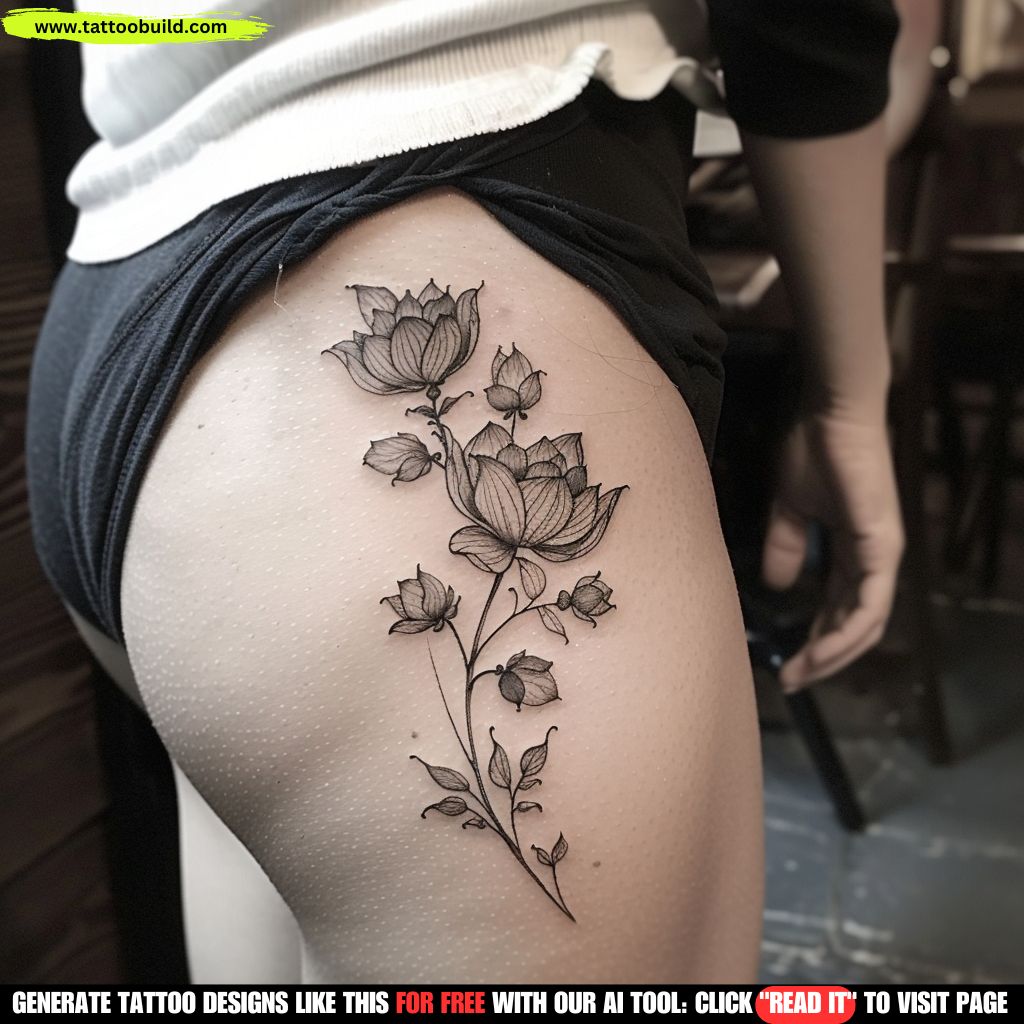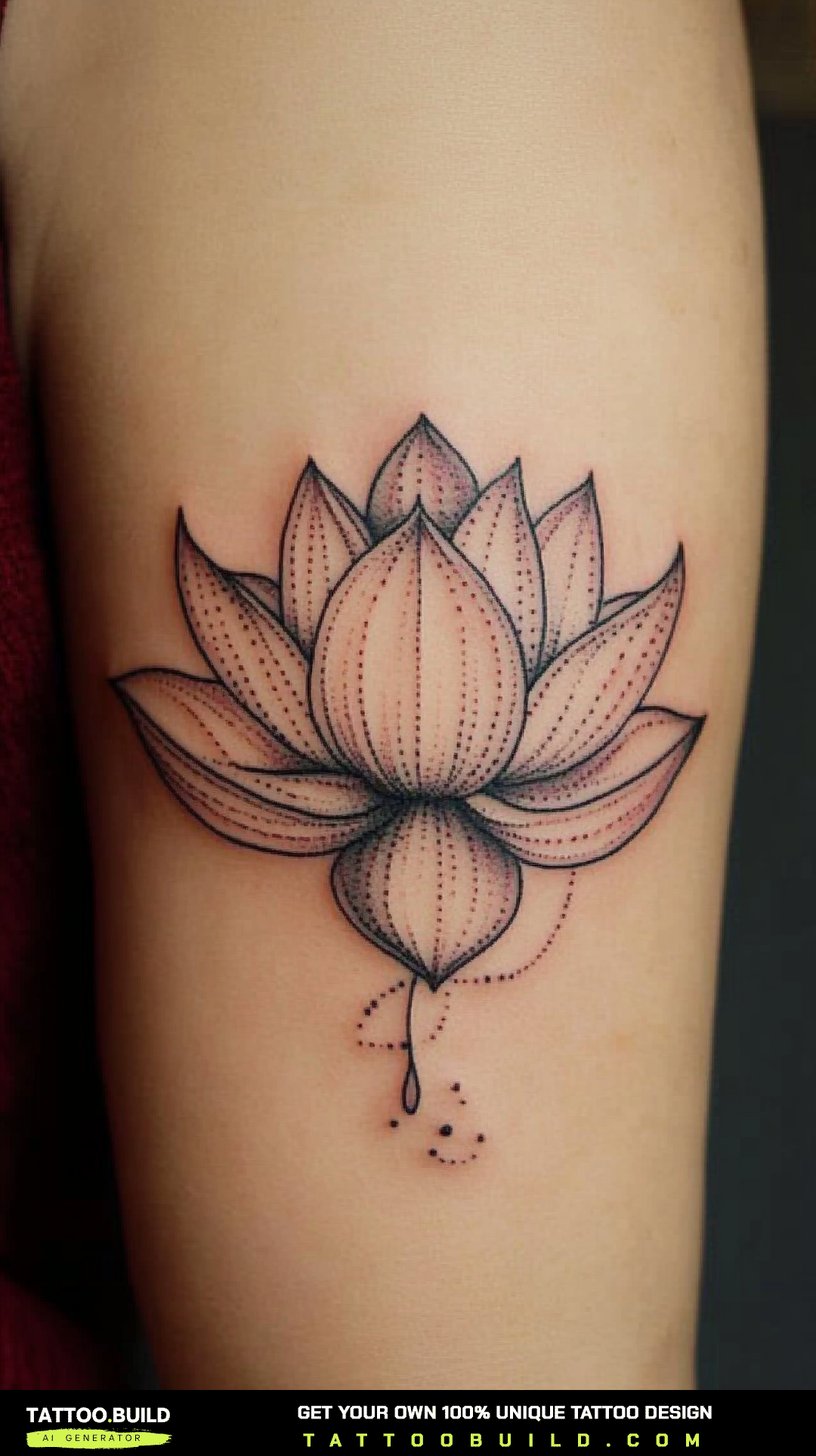
A lotus flower tattoo is one of the few designs that looks just as good at two inches as it does at twelve — and that is exactly why so many women keep coming back to it.
I have watched this design outlast a dozen trends. Infinity symbols came and went, feather-into-birds had its moment, and the lotus is still sitting quietly on spines, sternums and forearms looking like it was drawn yesterday.
Part of that is the shape itself. A lotus is symmetrical, it has an obvious centre, and it reads as a flower even when it is stripped down to eight clean lines. Very few botanical subjects survive that much simplification.
Below I have pulled together the styles, placements and practical details I get asked about most, along with thirty-one real designs to show what each approach actually looks like on skin. If you want the broader overview first, my guide to lotus tattoos for women covers the same ground from a different angle.
Which Lotus Style Is Right for You?
Before you scroll through designs, it helps to know how the main styles differ in cost, ageing and touch-up needs. Here is the honest version.
| Style | Typical Session | How It Ages | Best Size |
|---|---|---|---|
| Fine-line / minimalist | 45–90 minutes | Softens fastest; often needs a touch-up in a few years | 2–4 inches |
| Mandala lotus | 3–6 hours, sometimes split | Very well if the dotwork is spaced properly | 4–8 inches |
| Watercolor | 2–4 hours | Fades soonest, especially without a line anchor | 3–6 inches |
| Blackwork | 2–5 hours | The most durable option by a wide margin | 3 inches and up |
| Sacred geometry | 3–5 hours | Good, but crooked lines show forever | 4 inches and up |
| Ornamental | 4–7 hours | Strong, though tiny filigree can blur | 5 inches and up |
The sizes above are guidance, not rules. A skilled artist can push a mandala smaller — but they will thin out the detail to do it, and you should expect that trade.
What the Lotus Actually Symbolises
The short version: the lotus roots in mud, grows up through murky water, and opens clean at the surface. Rising unstained is the whole idea.
In Buddhist and Hindu iconography that image carries specific weight — the flower is associated with purity, spiritual awakening and detachment from suffering. The Encyclopaedia Britannica entry on the Indian lotus covers the botany and the cultural history if you want the primary background.
Colour traditionally changes the reading. White is usually tied to purity and mental clarity, pink to the Buddha himself and to devotion, blue to wisdom and self-mastery, and red to compassion and the heart. Most of the women I have talked to about this pick a colour for how it looks and then find the meaning fits anyway.
Petal count is another layer people ask about. Eight petals map to the Eightfold Path, and a thousand-petalled lotus is linked to the crown chakra, but in practice artists design around your placement and body shape rather than counting to a number.
I will be honest about the limits here. The lotus is borrowed from living religious traditions, and how much weight you give that is a personal call — it is worth at least knowing what you are wearing before you commit to it permanently.
Lotus Flower Tattoo Designs for Women, Style by Style
These are the seven approaches artists reach for most often. Each one changes the mood of the same flower completely.
1. Fine-Line and Minimalist Lotus
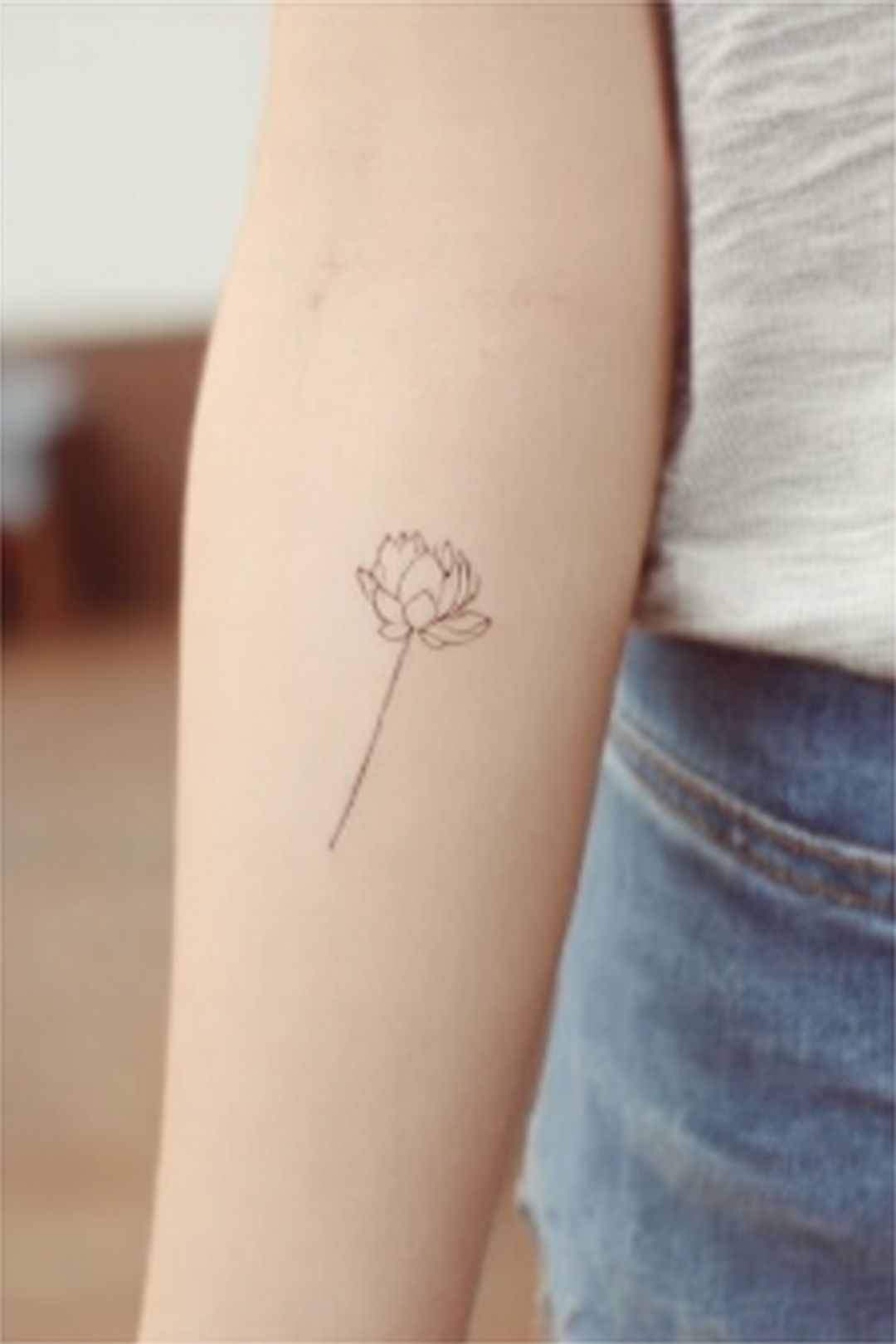
This is far and away the most requested version I see. A single-needle outline, no shading, sometimes not even a fully closed petal.
The appeal is that it reads as jewellery rather than as a tattoo. On a wrist or behind an ear it disappears under a sleeve and reappears when you want it to.
The catch is longevity. Very thin lines sit shallow and soften over the years, so a minimalist lotus often wants a refresh sooner than a bolder piece would. Ask your artist how they space the lines with that in mind.
If you like this direction, it is worth browsing broader fine-line tattoo ideas before you settle on the lotus specifically — the same linework logic applies across subjects.
2. Mandala Lotus Tattoos
Take a lotus, build concentric geometric rings around it, and you have the design that has quietly dominated women’s back and sternum work for a decade.
Mandala lotus pieces suit anyone who wants scale and symmetry without colour. The dotwork shading gives depth that pure linework cannot.
Symmetry is unforgiving here. If the centre is a few degrees off your spine or sternum line, you will notice it every time you look in a mirror, so spend real time on stencil placement before the needle starts.
Expect a longer sitting than you think — dotwork is slow, and most artists split anything above palm-sized across two sessions. My roundup of lotus mandala tattoo ideas shows how the geometry scales up.
3. Watercolor Lotus Tattoos
Loose washes of pink, blue or purple that look like ink bleeding across wet paper. Soft, painterly, and unmistakably feminine.
Watercolor is the style I give people the most caveats about. Colour without a black line anchor genuinely fades faster, and the pastel end of the palette fades fastest of all.
The fix most good artists use is a subtle line skeleton underneath the wash — you barely see it on day one, but it is what keeps the flower legible in year eight.
Sun exposure matters more here than anywhere else on this page. If you want watercolor on a forearm or shoulder, plan on sunscreen becoming a habit. There are more colour-led examples in my watercolor tattoo ideas guide.
4. Blackwork and Bold Lotus
Solid black petals, heavy contrast, negative space doing half the work. This is the opposite end of the spectrum from fine-line.
Every artist I have asked about longevity gives the same answer: bold black outlasts everything else. Saturated black packed properly will still be crisp when a fine-line piece has gone fuzzy.
Blackwork also covers well. If you are working over an older tattoo, a solid lotus is one of the more forgiving cover-up subjects because the shape tolerates a heavy fill.
The trade-off is commitment. Removing or reworking dense black is slower and more expensive than reworking light linework, so be sure of the placement.
5. Sacred Geometry Lotus
The lotus set inside triangles, hexagons, Flower of Life grids or concentric rings. Structured, architectural, and popular on the sternum and upper back.
What makes or breaks these is line consistency. A geometric frame exposes every wobble, and unlike organic linework there is nowhere for a shaky line to hide.
Ask to see healed photos of geometric work specifically, not fresh ones. Fresh geometry looks perfect on almost everyone; healed geometry separates the specialists from the rest.
These designs also tend to want more space than clients initially plan for. Cramming a geometric lotus into three inches usually means losing the frame that made it interesting.
6. Lotus and Script Combinations
A lotus paired with a name, a date, a short line of text or a mantra. Usually the most personal version of this tattoo.
The mistake I see repeatedly is script that is too small and too thin. Tiny lettering blurs as it heals, and blurred script is much harder to read than a blurred flower.
Give the text room to breathe and keep it short. One word, one date, or one short phrase holds up far better than a full sentence wrapped around petals.
If you are set on a longer quote, consider running it as a separate element in a different placement rather than crowding the lotus.
7. Ornamental and Chandelier Lotus
Filigree, hanging jewels, pearl strands and symmetrical flourishes built out from a central lotus. The most decorative option on this list.
Ornamental work suits the sternum and the centre of the back better than anywhere else, because the style depends on a strong central axis.
The fine hanging details are the part to watch. Very thin dangling chains can blur together over the years, so ask your artist to keep a little more space between strands than looks necessary on the stencil.
These are also the longest sittings on this page. A full ornamental chest piece regularly runs to multiple sessions, and rushing it is how you end up with uneven filigree.
Placement: Where a Lotus Actually Works Best
Style gets most of the attention, but placement changes how a lotus looks and how much it hurts more than the style does.
Spine and Sternum
The classic choice, because a lotus is symmetrical and the body’s centre line gives it a natural home.
Both spots hurt. Thin skin over bone is the worst-case combination, and most people describe the sternum as sharper than the spine. It is manageable, but do not book a six-hour first sitting there.
If you are weighing this up, I have written separately about spine tattoo ideas for women and about sternum tattoo ideas, both of which cover the pain and healing side in more detail.
Forearm and Wrist
Easy to sit through, easy to see, and easy to show or hide depending on sleeve length.
The inner forearm is one of the kindest placements for a first tattoo — flat, fleshy, and simple for the artist to work on. The wrist is bonier and stings more than people expect.
One practical note: forearms get a lot of sun. Whatever style you choose, this is a placement where sunscreen genuinely extends the life of the piece.
Back, Shoulder and Thigh
Where you go when you want scale. A large mandala or ornamental lotus needs room, and these areas have it.
The upper back and outer thigh are among the more tolerable large-format placements, and both hide easily under everyday clothes if your work requires that.
Thighs do change shape with weight fluctuation more than backs do — not a reason to avoid them, just something to weigh if you are planning very precise geometry. There are more large-format ideas in my floral back tattoo ideas for women roundup.
Lotus Variations Worth Considering
If the standard bloom feels too expected, these combinations are the ones I see working most often.
Lotus and Unalome
The unalome — a spiralling line that straightens into a point — sits above or below the flower and represents the path to clarity.
It suits vertical placements especially well, since the line naturally wants to run up the spine or the forearm.
Lotus and Moon Phases
A row of moon phases arcing above the petals. The pairing reads as cycles and change, and it fills a horizontal space cleanly across the collarbone or under the bust.
Lotus with Koi or Water Elements
Adding water, ripples or a koi fish leans into the flower’s origin story. It also gives an artist somewhere to put shading, which helps a large piece feel less empty.
Lotus as a Birth Flower Substitute
Some women pair a lotus with a birth flower for a child or partner rather than using it alone. It is a way to keep the symbolism personal without adding text.
Minimalist Lotus Outlines
Stripping the flower to five or six unbroken strokes. Somewhere between a symbol and a drawing, and one of the few designs that genuinely works at under an inch. My guide to minimalist tattoo ideas has more in this vein.
Aftercare and Making It Last
Follow the aftercare instructions your artist gives you first — they know what they put in your skin. What follows is general context, not medical advice.
The pattern most artists recommend is a clean, gentle wash a couple of times a day, a thin layer of fragrance-free moisturiser, and no picking at flakes. Over-moisturising causes as many problems as under-moisturising.
Sun is the single biggest factor in how a lotus tattoo looks in ten years. Once it is fully healed, sunscreen on the area is the cheapest touch-up prevention there is — and it matters most for watercolor and fine-line work.
Watch for anything that is not normal healing: spreading redness, heat, pus, or a fever. Redness and mild swelling in the first few days are expected; symptoms that get worse after the first week are not. The American Academy of Dermatology and the Mayo Clinic guidance on tattoo risks both cover the warning signs, and if you see them you should be talking to a doctor rather than to the internet.
Common Mistakes — and Still Not Sure?
The most frequent one is going too small for the style. A mandala at two inches is not a smaller mandala; it is a grey smudge in five years.
The second is choosing an artist by price rather than portfolio. Symmetrical work exposes weak fundamentals, and a cheap crooked lotus is expensive to fix.
The third is picking colour without thinking about your skin tone. Pastels behave differently on different complexions, and a good artist will tell you honestly which shades will hold.
Still weighing it up? It helps to look sideways at related designs before committing — mandala tattoos for women and other lotus flower tattoo designs both overlap with this territory and might tell you something about what you actually want.
Frequently Asked Questions
What does a lotus flower tattoo mean for a woman?
Most commonly it stands for rising through something difficult and coming out clean — the flower grows through mud and opens unstained at the surface. In Buddhist and Hindu tradition it also carries meanings of purity, spiritual awakening and detachment from suffering. Many women choose it to mark a specific period they got through rather than as a religious statement. There is no single correct reading, and the colour and petal count can add layers if you want them to.
How much does a lotus tattoo usually cost?
It depends far more on size, style and your artist’s rate than on the subject itself. A small fine-line lotus is often a shop-minimum piece, while a full ornamental or mandala back piece can run several sessions. Ask for a quote based on estimated hours rather than a flat number, and expect geometry and dotwork to take longer than they look. Always confirm whether the quote includes a touch-up.
Where does a lotus tattoo hurt the least?
The outer thigh, the upper back and the inner forearm are generally the most tolerable placements, because there is more flesh between the needle and bone. The sternum, spine, ribs and wrist are noticeably sharper for most people. Pain is individual, though, so treat this as a rough ordering rather than a promise. If it is your first tattoo, starting somewhere forgiving is a reasonable choice.
Do watercolor lotus tattoos really fade faster?
In general, yes — colour without a black line anchor tends to soften sooner than bold black work, and pale pastels fade fastest of all. A good artist can slow this down considerably by building a subtle line skeleton underneath the wash. Sun exposure is the other major factor, so daily sunscreen once healed makes a real difference. Plan on the possibility of a refresh down the line.
What size should a lotus tattoo be?
Match the size to the style rather than to the placement. Minimalist outlines work from about an inch, fine-line pieces sit comfortably at two to four inches, and mandala, geometric or ornamental designs usually need four inches or more to hold their detail. If your artist suggests going bigger than you planned, that is normally about legibility as it ages, not about the bill.
Quick Summary
- The lotus symbolises rising clean through difficulty — rooted in mud, blooming at the surface.
- Fine-line and minimalist designs are the most requested, but soften soonest and may want a touch-up.
- Mandala and sacred geometry lotus tattoos need size and a steady-handed specialist to age well.
- Watercolor fades fastest; a subtle line skeleton underneath and consistent sunscreen both help.
- Blackwork is the most durable option and the most forgiving for cover-ups.
- Spine and sternum suit the symmetry but hurt more; forearm, upper back and thigh are gentler.
- Keep any script short — small thin lettering blurs far more noticeably than petals do.
- Follow your artist’s aftercare, protect it from the sun, and see a doctor if healing worsens after the first week.