I have watched more women walk into a studio asking for something tiny and loaded with meaning than any other single request. A small meaningful tattoo works because the restraint is the point — one symbol, one story, nothing competing for attention.
My first tattoo was a five-millimetre outline on the inside of my wrist, and I still think it says more than the larger pieces I got afterwards.
This guide walks through the symbols women actually ask for, what they mean, where they sit best on the body, and the honest trade-offs of going small. If you want a wider sweep of ideas first, I keep a companion piece on beautiful small tattoo ideas for ladies.
Everything below comes from time in chairs, conversations with artists, and watching how these designs age over years rather than weeks.
Which Small Symbol Is Right for You?
Most women arrive knowing the feeling they want and not the shape. This table is how I talk it through with friends before they book.
| Symbol | What It Usually Means | Best Small Placement | Ages Well? |
|---|---|---|---|
| Heart outline | Love, grief, a person you carry | Inner wrist, collarbone, behind ear | Very — simple closed shape |
| Star | Direction, ambition, someone lost | Ankle, shoulder, finger | Good if points stay open |
| Anchor | Stability, the person who steadies you | Forearm, ribs, back of arm | Good at 4cm or larger |
| Butterfly | Change, rebuilding after something hard | Shoulder blade, hip, wrist | Depends on wing detail |
| Arrow | Forward motion, surviving tension | Forearm, spine, upper arm | Excellent — straight lines |
| Single flower | Birth month, a person, a season | Ankle, ribs, upper arm | Good with spaced linework |
| Bird | Freedom, leaving, coming home | Ribs, collarbone, wrist | Risky if under 2cm |
| Word or date | A name, a promise, a turning point | Inner arm, ribs, ankle | Only at a readable size |
Why Small Meaningful Tattoos Resonate
A small tattoo asks you to choose. You cannot fit a whole biography into two centimetres, so you have to decide what actually matters.
That editing process is usually why the result feels so personal. Women I have talked to about their tiny pieces can explain them in one sentence, which is rarely true of a half-sleeve.
There is also a practical side. A small piece is cheaper, faster, easier to hide at work, and easier to live with if your taste shifts in five years.
And it is a gentler entry point. Most first-timers I have sat with were surprised by how quickly a small outline was finished — often before the nerves had fully settled.
The trade-off, and I will come back to this, is that small designs have less room to age. Detail that is crowded on day one gets worse, not better.
What Makes Small Tattoos So Appealing
Subtlety and Versatility
A small tattoo can be private in a way a large one cannot. You decide daily whether it shows.
Inner wrist, behind the ear, the inside of a bicep, the back of an ankle — all of these sit under a sleeve, a watch strap or loose hair without any effort.
In my experience the women happiest with their placement chose it for how it feels, not how it photographs. A tattoo you see when you turn your own hand over is a different object than one other people see first.
Versatility also means you can add later. A single small element leaves the surrounding skin open for whatever comes next.
Less Pain and a Shorter Commitment
Pain is mostly a function of time and location, and small pieces cut the time dramatically.
A simple two-centimetre outline is often finished in ten to twenty minutes of actual needle time. That is a very different experience from a two-hour session.
Location still matters more than size. Ribs, sternum, feet and the inside of the elbow are sharper than the outer arm or thigh, even for something tiny.
When I tested a few placements across different sittings, the outer forearm was consistently the easiest, and the ankle bone the one I would not repeat casually.
Personal Significance
The best small tattoos I have seen are not the most beautiful ones. They are the ones with a specific reason behind them.
A grandmother’s handwriting. The coordinates of a house. A wave for the year someone moved to the coast and stopped apologising for it.
Meaning is what keeps a design from dating. Trends age; a reason does not.
Every artist I have asked says the same thing — the clients who come back to add rather than cover up are the ones who started with a reason, not a screenshot.
Popular Small Meaningful Tattoo Symbols and What They Mean
These are the designs that come up again and again, and what women actually tell me they mean to them.
Hearts
The heart is the most common small request and the most misunderstood. It is rarely about romance.
More often it marks a person who is gone, a child, or a version of yourself you decided to stop being hard on.
A single-weight outline heart is one of the safest small designs there is — a closed shape with no internal detail, so there is nothing to blur together. Solid black fill also holds up well if you want more presence.
Where it gets risky is the tiny anatomical heart. Those want four centimetres minimum in my experience, or the chambers merge into a dark blob within a few years. If you like the shape, ask your artist to mock it up at two sizes before you commit.
Stars
Stars carry direction. Sailors used them to navigate, and the symbolism survived that pretty much intact.
Women choose them for ambition, for guidance, and very often for a person they think of as still pointing them somewhere.
Keep the points open and the angles wide. A five-point star with narrow spikes fills in at the tips faster than almost any other small shape.
Constellations are the popular variation right now — small dots connected by hairlines. They read beautifully fresh, though the thin connecting lines are the first thing to soften, so I would not go smaller than a matchbox footprint.
Anchors
An anchor means the thing that keeps you in place when conditions get bad. That is usually a person.
It has a long maritime history as a symbol of hope and steadiness, which is why it still turns up in traditional flash more than a century later.
The anchor needs more room than most small symbols. The crossbar, the shank and the flukes all have to stay separate, and under about four centimetres they start to touch.
Pairing it with a short rope or a single name is the most common variation, and it is one of the few additions that does not crowd the design.
Butterflies
The butterfly is the transformation symbol, and it gets chosen most often after something difficult rather than during something happy.
Recovery, leaving a relationship, a diagnosis behind you, a move across the country — the pattern is consistent enough that artists notice it.
Wing detail is the decision that matters. A minimal two-line silhouette stays crisp indefinitely; a realistic monarch with every vein needs real estate.
Paired with a crescent moon it becomes a cycles-and-change piece, which is one of the more requested combinations I see. There are many more shapes to borrow from in this set of butterfly tattoo ideas.
Arrows
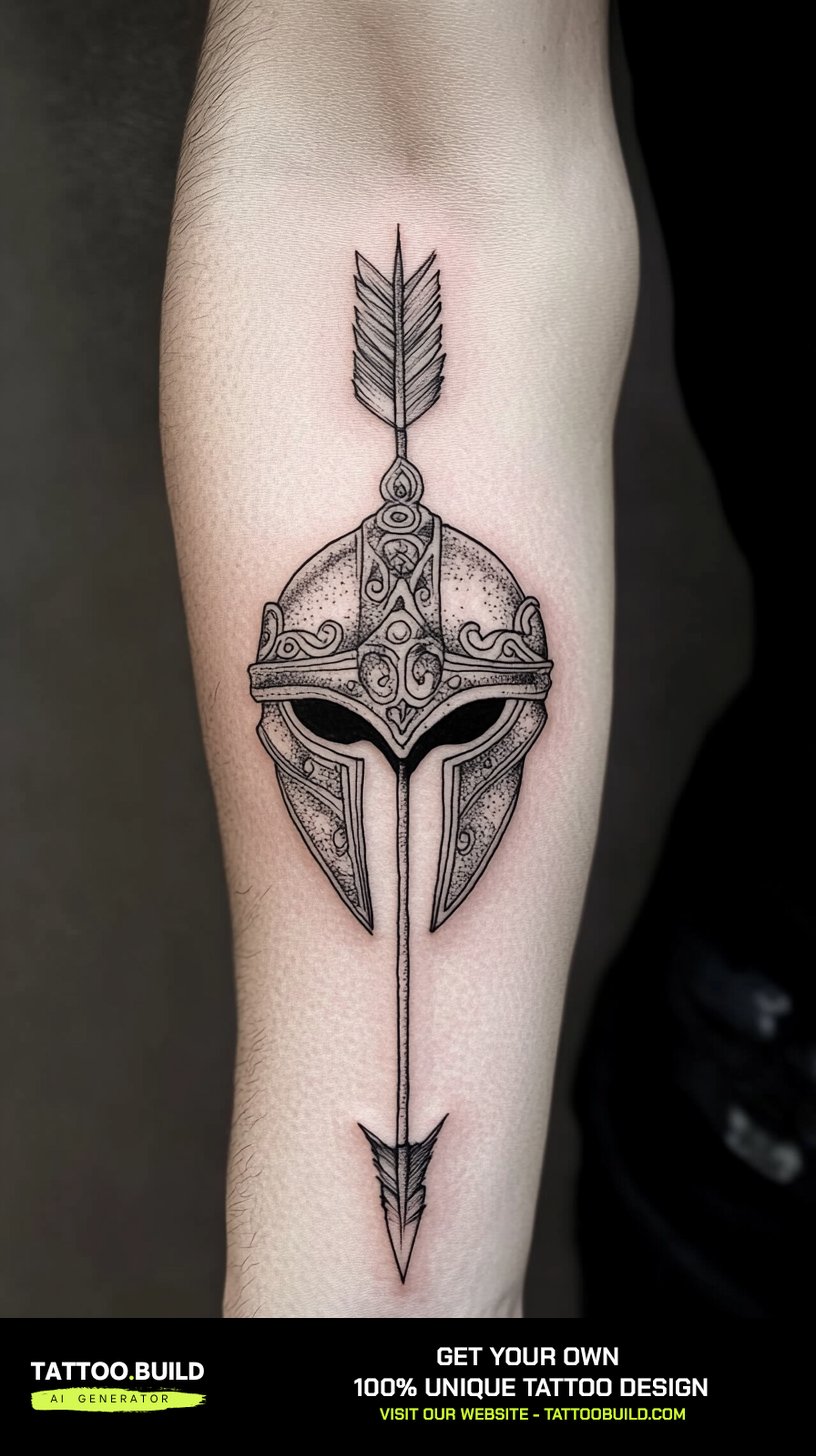
An arrow only launches when it is pulled backwards. That is the reading almost everyone who gets one gives me, and it holds up.
It is a resilience symbol dressed as a direction symbol, which is why it suits people who are mid-way through something rather than past it.
Structurally it is the best small tattoo there is. A straight shaft, a simple head, a few fletching lines — nothing to close up, nothing to blur.
It also suits long narrow placements no other symbol fits well: along the spine, down the outside of a forearm, or following the line of a finger.
Flowers
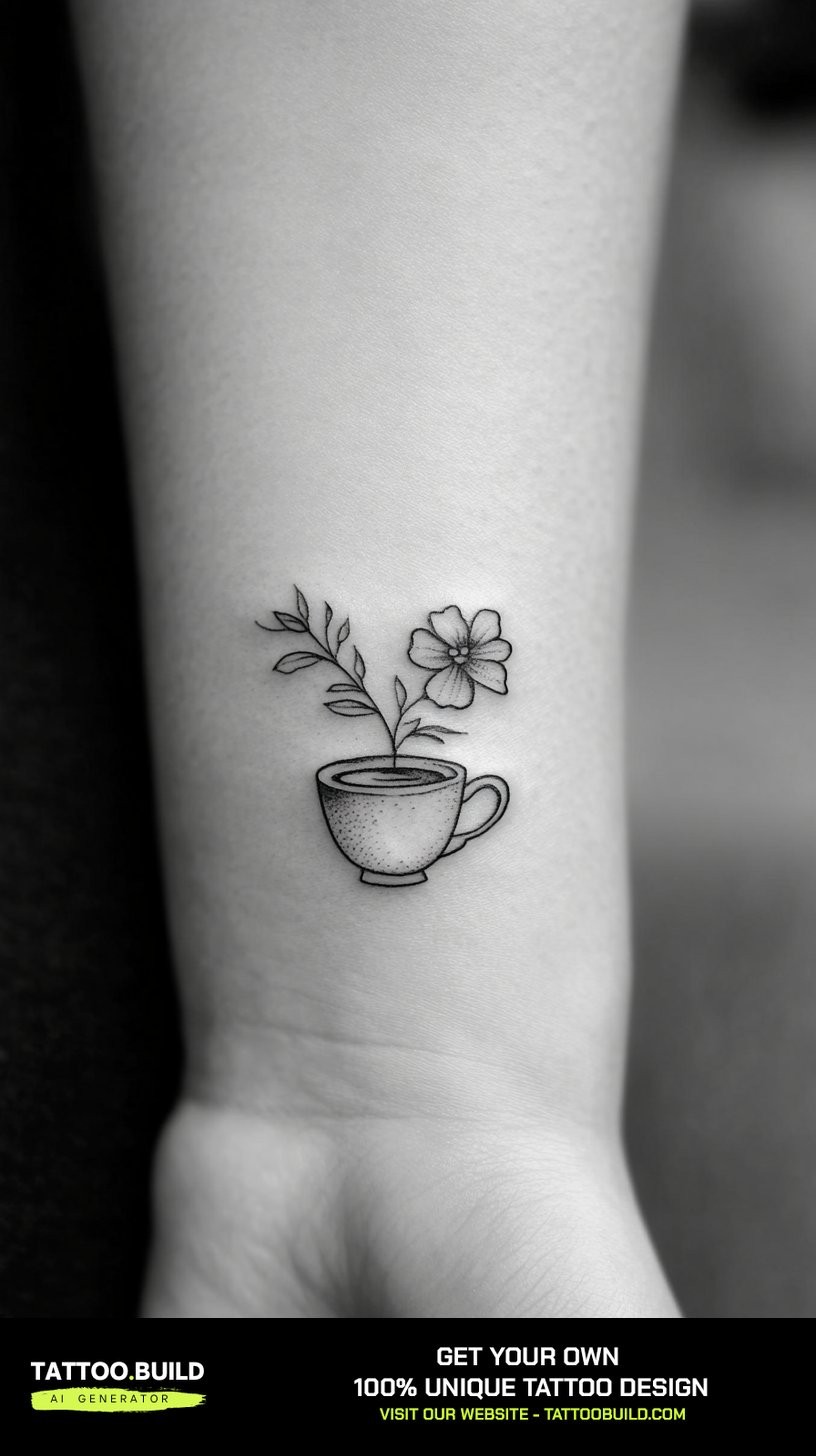
A single flower is the most personal small tattoo available, because the species does the work.
Birth-month flowers have become the dominant version — a narcissus for December, a poppy for August, a marigold for October — and they let you carry a person without a name or a date.
Ask for spaced petals and visible gaps rather than dense linework. Small florals fail when the petals sit too close and the negative space closes up.
Stems and leaves suit ribs, ankles and the back of the arm, where there is length to follow. If you are choosing by month, this guide to birth flower tattoo ideas lists them all.
Birds
Birds mean freedom, but the specific bird changes the sentence completely.
A swallow traditionally meant a safe return home. A sparrow meant loyalty. A hummingbird tends to read as joy and persistence rather than escape.
Small birds are the design I most often see done too small. Under about two centimetres the wing and body lines merge and you are left with a smudge that could be anything.
Silhouettes survive better than detailed feathering at this scale. The symbolism differs more than people expect, and it is worth reading up on bird tattoos and their meanings before committing to a species.
Infinity Symbols
The infinity loop is the most divisive design on this list, and I want to be honest about why.
It was heavily overused about a decade ago, so a plain loop can read as dated. The ones that still work are the ones doing something specific.
A loop where one half is a name in cursive, or a heartbeat line, or a feather dissolving into birds, stops being generic. The shape becomes a container rather than the whole statement.
Technically it is forgiving — two smooth curves with a clean crossing point. Keep the crossing open rather than solid. There are stronger variations collected in these infinity tattoo designs.
Quotes and Single Words
Text is the highest-risk small tattoo, and the one people rush most.
Letters have tight internal gaps — the eye of an “e”, the bowl of an “a” — and those gaps close as ink settles. A sentence shrunk to fit a wrist is a sentence you will not be able to read in ten years.
One word beats one sentence almost every time. “Breathe”, “still”, “enough” — short, legible at size, and no less meaningful.
If it must be a quote, ask for a larger point size than feels necessary and a font with open counters. Handwriting from a relative is the exception worth stretching for, and a good artist will tell you the minimum size it needs.
Beyond the Classics: More Meaningful Variations
If the standard symbols feel too familiar, these are the directions I point people toward.
Feathers and Moths
A feather is lighter symbolism than a bird — release, memory, something carried rather than something escaped.
Moths have quietly overtaken butterflies among the women I talk to, partly because the symbolism is less tidy. A moth is drawn to light knowing it is dangerous, and a lot of people find that more honest.
Both need simplification at small scale. Suggest the barbs of a feather rather than drawing every one. The full symbolic background is worth reading in this piece on the meaning of moth tattoos.
Fine-Line Placement Pieces
Fine-line work is the dominant small-tattoo style and it deserves a caveat.
Single-needle lines look extraordinary for the first year. They also soften faster than bolder linework, especially on high-friction spots like fingers, hands and feet.
Fine-line is a genuine style choice with a genuine trade-off, not a free upgrade. Ask any artist who offers it how their own three-year-old work looks, and take the answer seriously.
It suits the inner arm, the collarbone and the back of the shoulder better than it suits hands. If the wrist is where you want it, these wrist tattoo ideas for women show how the style sits there.
Matching and Memorial Pieces
Small designs are the natural format for shared tattoos, because everyone involved has to agree.
Sisters, mothers and daughters, best friends — a simple matching shape in the same spot carries more than a complicated one nobody quite loves.
Memorial pieces are where I would spend the most time deciding and the least time hesitating afterwards. A date, a small flower, a traced signature.
Complementary rather than identical often ages better between people — the same flower at different stages, say. There is a wider range of formats in this collection of matching tattoo ideas.
Tips for Choosing a Small Tattoo You Will Still Want
Decide the meaning before you open a single image search. Designs are easy to find; reasons are not, and the reason should drive the shape rather than the other way round.
Then pick placement for how often you want to see it. Somewhere you glance at daily — inner wrist, inner forearm — for something you want as a reminder; somewhere you have to look for, like the ribs or back of the shoulder, for something more private.
Size up rather than down. This is the single most common regret I hear, and it is almost never “I wish it were smaller”. Fingers, feet and inner hands are the highest-maintenance placements and the ones most likely to need touching up.
Finally, choose the artist before the design. Look for small work in their healed portfolio specifically — fresh photos flatter everyone, and a fine-line specialist and a bold traditional artist are not interchangeable for the same idea.
Aftercare and Safety Basics
Small does not mean low-maintenance. A two-centimetre tattoo is still an open wound for the first several days.
Follow your artist’s instructions over anything you read online, including this page — they know the ink, the depth and the placement they just worked on.
Generally that means keeping it clean with unscented soap, applying a thin layer of the aftercare product your studio recommends, and not picking or scratching as it flakes. Sun exposure is the biggest long-term threat to a small tattoo — fine lines fade under UV faster than heavy ones, so sunscreen once fully healed does more for longevity than anything else.
Surface healing commonly takes a couple of weeks, with the deeper layers settling over a few months. Spreading redness, heat, swelling that worsens after the first few days, pus or fever are not normal healing and warrant a doctor rather than a forum thread — the American Academy of Dermatology has clear guidance on tattooed-skin care, and the US Food and Drug Administration covers ink safety and reaction risks. This article is general information, not medical advice.
Use a licensed studio with single-use needles and visible sterilisation practice. Never attempt a home or “stick-and-poke” tattoo or any DIY removal method — both carry real infection and scarring risk, and removal in particular belongs with a qualified practitioner.
Common Mistakes — and What to Do If You Are Still Not Sure
Going too small is the mistake I see most. Ink spreads slightly in the skin over years, so a design that is tight on day one has nowhere to go.
Cramming too much in is the second — a quote, a flower, a date and a bird in one square inch becomes a single grey shape faster than any of them would alone.
Choosing by price is the one that costs the most later. A cheap small tattoo that needs covering is far more expensive than the good one would have been.
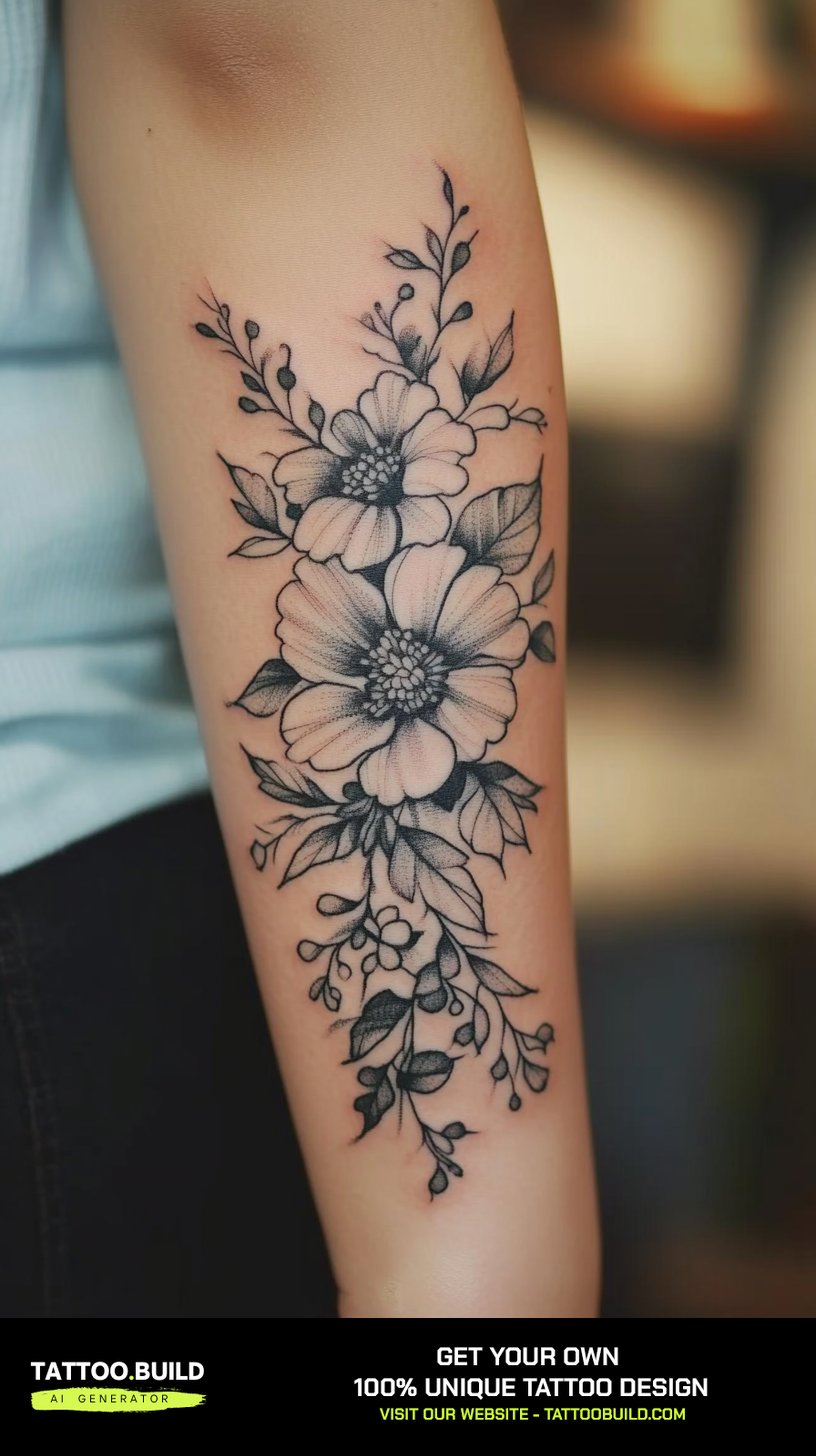
If you are still undecided, browse rather than decide: these cute little tattoos for women are useful for scale and placement, and meaningful forearm tattoos show what the same ideas look like with a bit more room. Sitting on a design for a month costs nothing.
Frequently Asked Questions
Do small tattoos hurt less than large ones?
They hurt for less time, which most people experience as hurting less. The sensation itself is driven mainly by placement rather than size, so a tiny piece on the ribs or the top of the foot can be sharper than a larger one on the outer thigh. In my experience the outer forearm and upper arm are the most forgiving spots for a first small tattoo. If you are nervous, ask your artist for an honest ranking of the placements they work on most.
How long do small meaningful tattoos take to heal?
The surface usually settles within about two weeks, with flaking and itching along the way, while the deeper layers of skin generally take a few months to finish healing. Small pieces often look “done” quickly, which tempts people to stop aftercare early — that is exactly when patchy healing happens. Follow the timeline your studio gives you rather than how it looks. Anything involving spreading redness, worsening swelling, pus or fever should be seen by a doctor rather than waited out.
Will a tiny tattoo blur or fade over time?
Some softening is normal for every tattoo, and small designs show it soonest because their gaps are smallest. Ink migrates very slightly in the skin over years, so lines that nearly touch on day one eventually do. You reduce this by sizing up, avoiding crowded detail, choosing lower-friction placements, and using sunscreen once healed. Most small pieces stay perfectly readable for decades when they were designed with that spread in mind.
What is a good first small tattoo for a woman?
A simple closed shape with a personal reason behind it — an outline heart, a small flower, an arrow, a single word. Placement on the forearm, upper arm or outer ankle keeps the sitting short and the healing straightforward. Avoid fingers, hands and feet for a first piece; they fade fastest and need touch-ups soonest. The strongest first tattoos I have seen were ones the person had been quietly thinking about for months before booking.
How much do small meaningful tattoos cost?
Nearly every studio has a shop minimum, and a small tattoo almost always lands at that minimum regardless of how little time it takes — it covers the needles, ink, setup and sterilisation. That figure varies widely by city and by artist reputation, so the only reliable answer is the one you get by asking two or three local studios directly. Custom design work, colour and a sought-after artist all push it up. Budget for a possible touch-up as well, particularly on fingers or feet.
Quick Summary
- Choose the meaning first, then find a shape that carries it — not the other way round.
- Simple closed shapes (hearts, arrows, single flowers) age best at small scale.
- Birds, anatomical hearts and full quotes are the designs most often made too small.
- Size up rather than down; ink spreads slightly over the years and tight gaps close.
- Placement drives pain more than size does — ribs and feet are sharp, outer arms are forgiving.
- Fine-line work looks stunning early but softens faster, especially on hands and fingers.
- Follow your artist’s aftercare, and use sunscreen once healed — UV is the main long-term threat.
- Pick the artist by their healed small-work portfolio, and never by price alone.