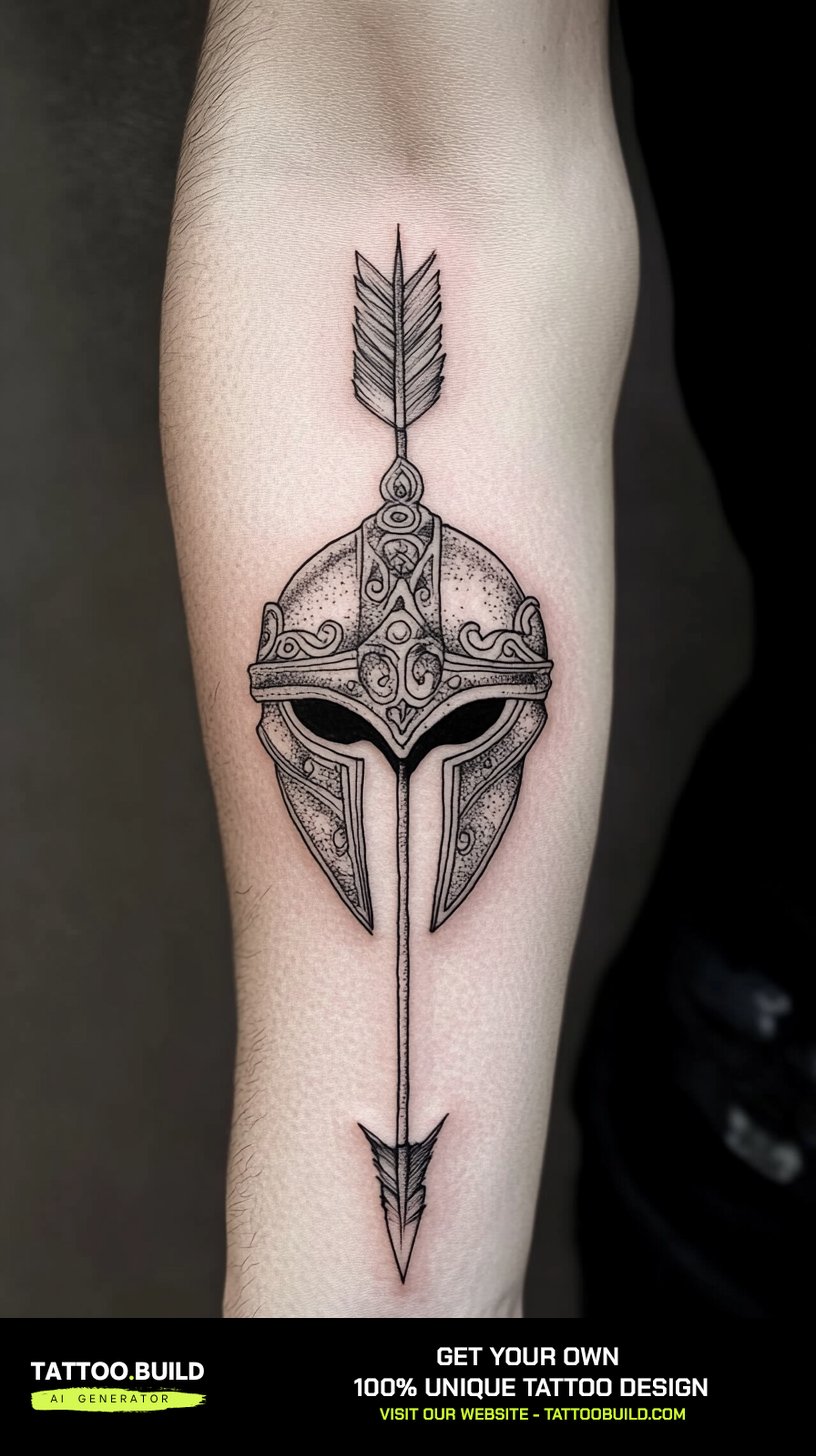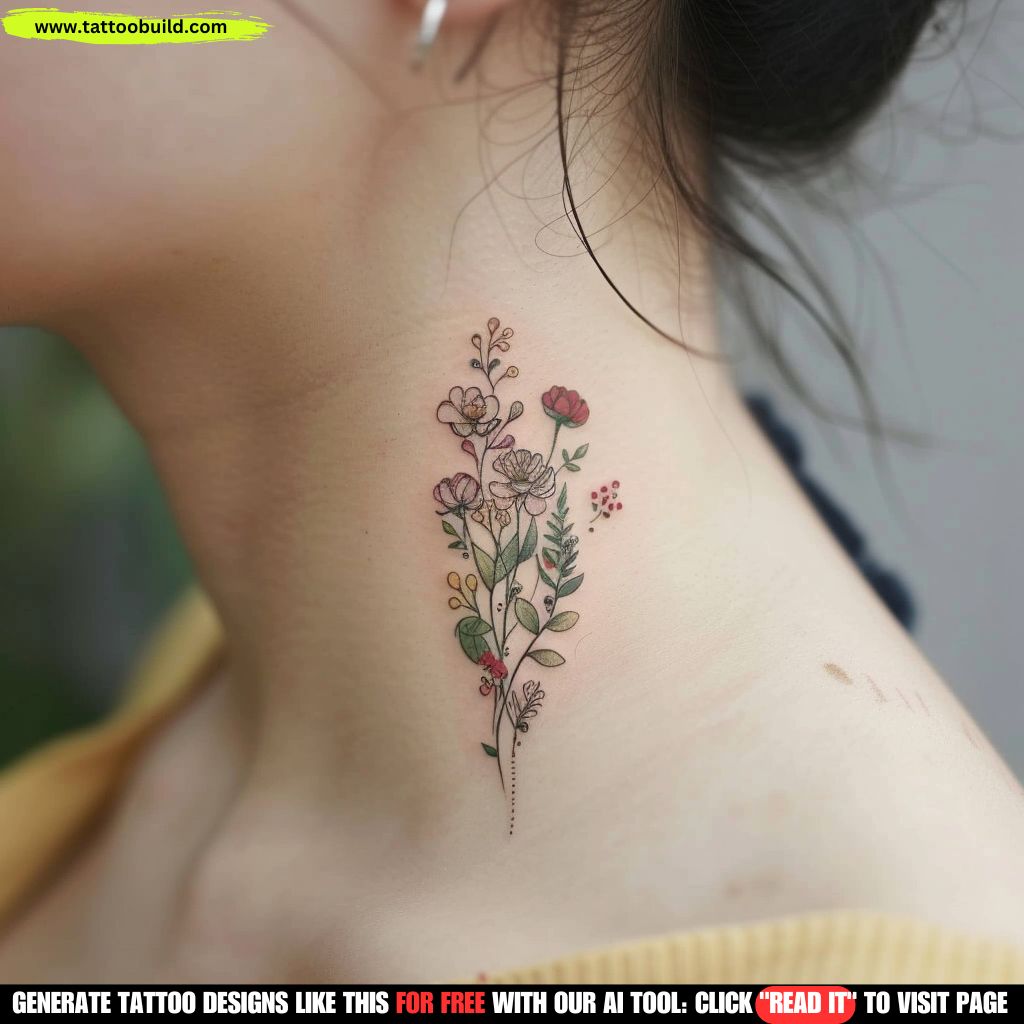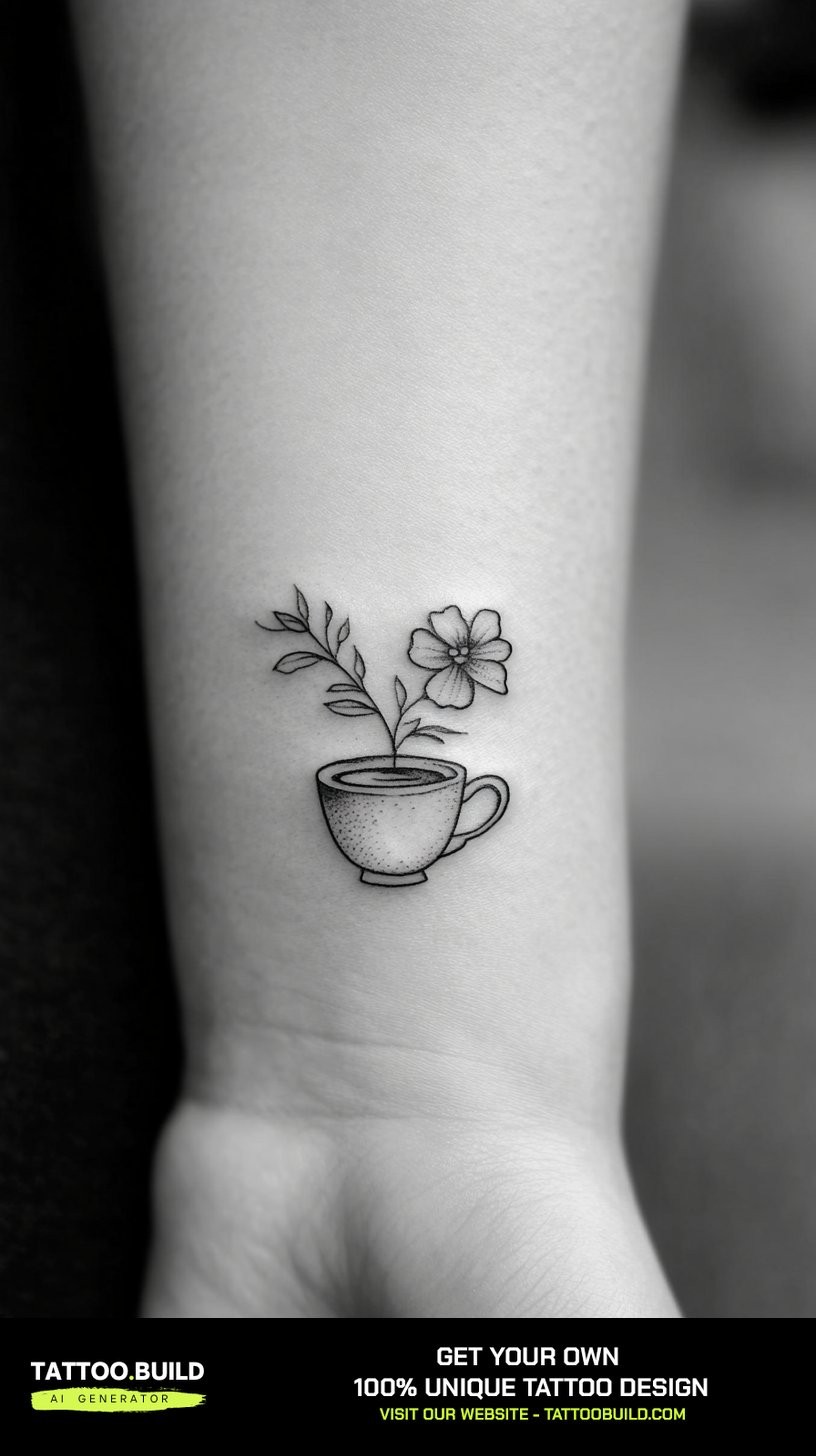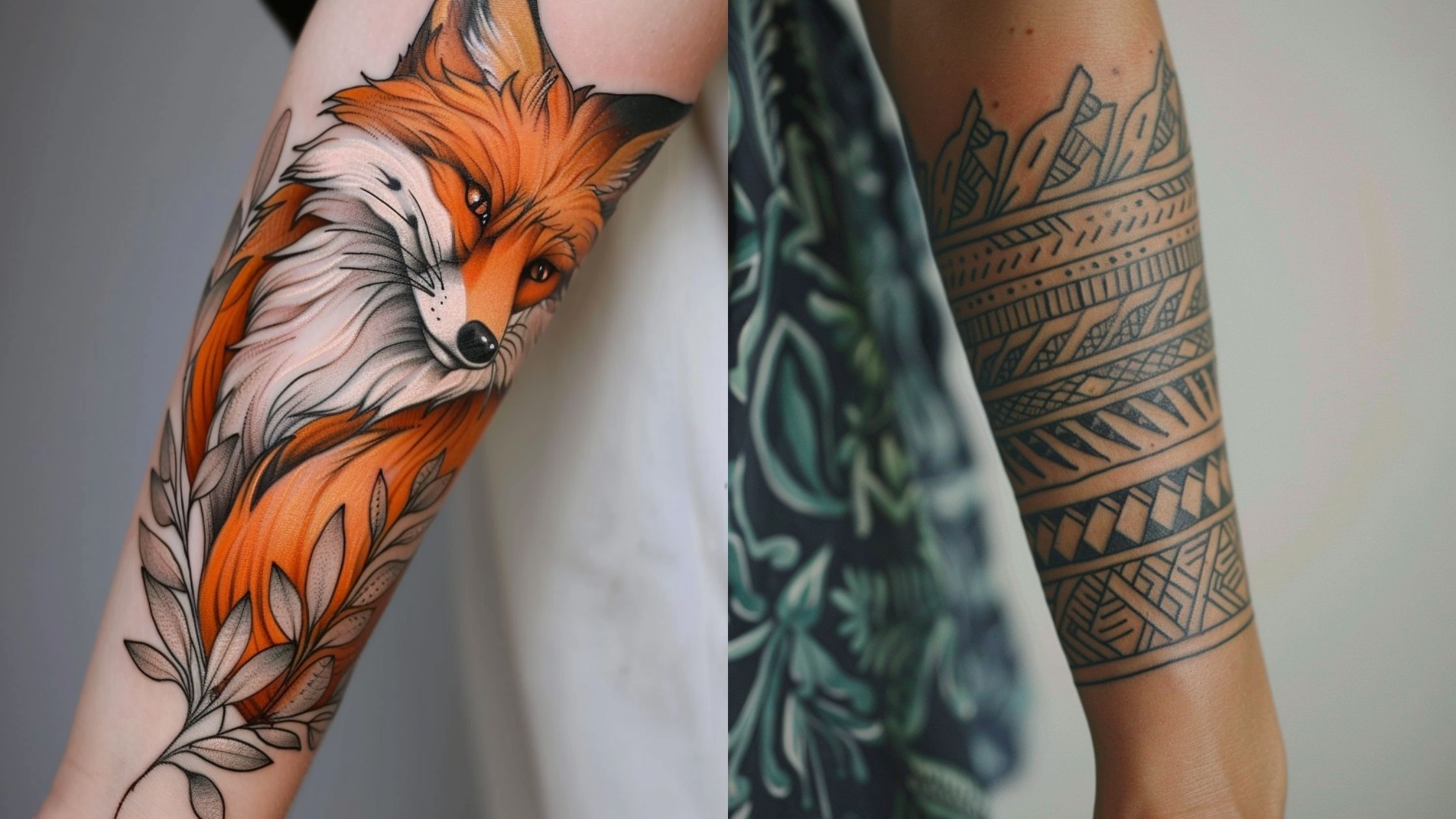
I have spent more hours than I can count sitting in studio waiting rooms, watching women point at a forearm and say “here, but I want it to actually mean something.” The forearm is the most requested meaningful placement I see for women, and it is popular for a very practical reason: it is the one visible spot you can look at yourself, all day, without a mirror.
That single fact changes how you should design the piece. A tattoo you will glance at forty times a day needs to survive being familiar, not just impress strangers on the first viewing.
In this guide I have pulled together the styles that keep coming back — botanicals, moon phases, script, animals, ornamental blackwork, landscapes — and, more usefully, the reasons certain ones hold up on this part of the body and others quietly do not. If you are still deciding on placement generally, it is worth reading alongside broader forearm tattoo ideas for females before you commit.
Every image below is a real design direction rather than a mood board of the same idea in nine fonts. Use them to narrow down a style, then take that style to an artist who actually specialises in it.
Which Meaningful Forearm Style Is Right for You?
This is the comparison I end up sketching on the back of a consultation form almost every time. Sessions and healing times are typical ranges I have seen, not guarantees — your artist’s quote is the one that counts.
| Style | Best For | Typical Session | How It Ages | Visibility |
|---|---|---|---|---|
| Fine line botanical | Soft, personal symbolism | 2–4 hours | Softens; may want a touch-up in 5–8 years | Subtle, easy to cover |
| Blackwork / ornamental | A bold statement piece | 4–8 hours, often split | Excellent — holds edges longest | High, hard to hide |
| Script / lettering | A quote, name or date | 1–3 hours | Thin script can close up; size matters | Moderate |
| Black & grey realism | Portraits, animals, scenery | 5–10 hours across sessions | Good with strong contrast; grey fades | High |
| Minimalist symbols | First tattoo, low commitment | 30–90 minutes | Fine if not too small or too thin | Low |
| Celestial / dotwork | Moon phases, stars, cycles | 2–5 hours | Dotwork can blur if packed too tight | Moderate |
Why the Forearm Suits Meaningful Tattoos So Well
The forearm gives you roughly a hand-span of relatively flat, stable skin. Compared with the ribs or the foot, it moves less, stretches less and sits over a bed of muscle rather than directly on bone.
That stability is the reason artists like it. Ink sits evenly, healing is usually straightforward, and detail placed there tends to stay where it was put.
Placement also decides how the piece behaves socially. The inner forearm faces you and is easy to cover with a rolled sleeve; the outer forearm faces the world and is much harder to hide in a short-sleeved office.
Pain is real but moderate here. In my experience women describe the inner forearm as sharper and more nerve-y, particularly near the wrist and the ditch of the elbow, while the outer forearm is closer to a dull scratch.
One caveat worth naming: the outer forearm gets serious sun. If you are outdoors a lot, that alone is an argument for higher contrast and slightly heavier linework than a similar design would need on the inner arm. Compare with inner arm tattoo options for women if you are torn between the two faces.
Meaningful Forearm Tattoo Ideas for Women
These are the seven directions I see requested most often, roughly in order of how frequently they come up in consultations.
Botanical and Floral Symbolism
Flowers carry meaning without announcing it, which is exactly why they dominate this placement.
A birth-month flower, a plant from a grandmother’s garden, a species from somewhere you lived — the symbolism is private but the design still reads as a design to everyone else.
The forearm suits botanicals because stems want length. A single stem running wrist-to-elbow uses the natural taper of the arm instead of fighting it.
In my experience the ones that age worst are the tiny, hyper-delicate sprigs done in a single hairline weight. Ask your artist to vary line thickness — thicker at the stem base, finer at the petal tips — and the piece will still read cleanly in a decade. If you want a specific bloom, the lotus tattoo remains one of the most versatile options for this spot.
Celestial, Moon Phases and Stars
Moon phase strips are one of the few designs that genuinely require a long, narrow canvas, which makes the forearm close to ideal.
The meaning most women give me is some version of cycles — that things change and come back around. It is a broad idea, which is part of the appeal.
Practically, watch the dot density. Heavy stippling packed tightly together tends to blur into solid grey over the years, so a good artist will leave visible gaps between dots even where the shading looks dark.
Size the moons larger than feels necessary. A crescent smaller than a thumbnail loses its crisp inner curve faster than almost any other shape I have watched heal.
Fine Line and Minimalist Marks
Minimalism is the most common starting point for a first tattoo, and the forearm is a forgiving place to begin.
Continuous single-line drawings look effortless and are genuinely difficult to execute — the artist gets one pass with no room to correct.
The honest limitation is longevity. Very thin lines spread slightly as they settle into the skin, so what looks razor-sharp at two weeks looks softer at two years. That is normal, not a botched tattoo.
My rule of thumb: nothing thinner than the line a fine-liner pen makes, and nothing smaller than a coin. Every artist I have asked about micro-tattoos has said some version of the same thing. If small is what you want, browse small meaningful tattoos for women for realistic scale.
Script, Quotes and Handwriting
Lettering is the most personal option on this list and the one most often regretted, usually for length rather than sentiment.
A four-word phrase can be drawn at a size that will still be legible in twenty years. A full sentence on the same arm cannot.
Running the text along the arm rather than across it keeps it readable when your arm hangs naturally — text set across the forearm ends up upside down to everyone but you.
Traced handwriting from a letter or card is the version I see hold its meaning best. Bring the original, at high resolution, not a phone photo of a photo.
Animals and Spirit Guides
Animal pieces need width, so they sit better on the outer forearm than the wrist.
Realistic work here lives or dies on contrast rather than detail. When I compare healed photos, the pieces that still look like the animal are the ones with genuinely dark shadow areas, not the ones with the most fur lines.
Illustrative animals — think a fox in clean linework with light shading — are usually a shorter session and cost proportionally less, and they hold their shape well.
Insects, birds and small mammals are the most common requests I hear from women choosing this route, generally tied to a specific memory rather than a general symbolism.
Ornamental, Tribal and Blackwork
If pure longevity is your priority, solid black is the answer and everything else is a compromise.
Ornamental banding wraps the forearm and follows its taper, which is why it flatters almost every arm shape.
Be honest with yourself about permanence here. Heavy blackwork is the hardest style to cover or remove later, and I would not recommend it as anyone’s first tattoo.
If you are drawn to patterns with cultural origins, spend a little time on where they come from before the appointment. Our tribal tattoo ideas guide is a reasonable starting point.
Geometric and Pattern Work
Geometry is unforgiving in a way freehand styles are not — a wobble of a millimetre in a straight line is visible from across a room.
That makes portfolio review more important here than anywhere else on this list. Look specifically for healed photographs of straight lines and repeated shapes.
The upside is that repeating motifs scale easily. An artist can size a pattern to your specific forearm without redrawing the whole design.
Geometric work also pairs well with later additions, since the grid gives any future piece something to align to.
Variations Worth Considering
If none of the seven core styles quite fits, these variations come up often enough to be worth a look.
Combining Two Motifs
Mixing styles works when one motif clearly leads and the other supports — a botanical frame around a small symbol, for instance.
When two elements compete for attention, the piece reads as unfinished rather than layered.
Landscapes and Scenery
Landscapes suit the forearm because a horizon line gives the composition an obvious anchor across an otherwise curved surface.
Trees are the most natural fit of all: trunk down the arm, canopy near the elbow.
The trade-off is fading. Soft grey scenery is beautiful fresh and lightens noticeably, so plan on a touch-up sooner than you would for line-based work.
Water, Waves and Flowing Forms
Flowing shapes disguise the curve of the arm better than rigid ones, which is a real practical advantage on a limb this shape.
Brush-style linework, where strokes taper the way ink does on paper, has become far more common in the last few years and suits this placement well.
Half-Sleeve Extensions
A great many forearm pieces become the first panel of something larger, whether or not that was the plan.
Tell your artist if extension is even a possibility. Leaving a deliberate open edge toward the elbow costs nothing now and saves an awkward join later. Our guide to a women’s lower arm sleeve tattoo covers how those panels usually connect.
Vertical and Column Designs
Bamboo, vines and stacked symbols use the length of the forearm rather than its width, which flatters slimmer arms in particular.
They are also the easiest designs to extend, since adding another segment does not require redesigning what is already there.
Practical Advice Before and After Your Appointment
Book a consultation rather than a walk-in for anything meaningful. Twenty minutes of conversation about why the design matters changes what the artist draws, sometimes dramatically.
Judge portfolios on healed photographs, not fresh ones. Fresh work is glossy and high-contrast on everyone; healed work at one year is where an artist’s real skill shows. Ask directly — good artists are usually pleased to be asked.
For healing, follow the aftercare your artist gives you rather than advice from the internet, including mine. Broadly: keep it clean, keep it lightly moisturised, keep it out of the sun and out of pools, and do not pick. Most forearm pieces feel settled in two to three weeks, with the deeper layers taking a couple of months.
If you see spreading redness, swelling that increases after day three, pus, or a fever, stop researching and see a doctor. The same goes for a persistent itchy raised reaction, which can indicate a pigment allergy — red inks are the most commonly implicated. The American Academy of Dermatology has straightforward guidance on what warrants medical attention, and the FDA tattoo fact sheet covers ink safety and recalls. Never attempt to treat, remove or lighten a tattoo at home.
Still Not Sure? Common Mistakes to Avoid
The most frequent one is going too small. Almost nobody comes back wishing their forearm tattoo were smaller; a fair number wish they had sized up.
The second is choosing an artist by price or availability instead of by style. An excellent traditional artist is not automatically an excellent fine-line artist, and vice versa.
The third is designing for a photograph rather than for an arm. A composition that looks balanced flat on paper can sit awkwardly once it wraps a curved limb — always ask for a stencil placement check and look at it in a mirror before the needle starts.
And the fourth: rushing the meaning. If you cannot explain the symbolism in one sentence, it is usually not finished yet.
If you are still weighing options, it can help to look sideways at related placements and styles — classy arm tattoos for women, dainty tattoo designs, or the men’s take on meaningful forearm tattoos for a different design vocabulary.
Frequently Asked Questions
How painful is a forearm tattoo for women?
Most people rate the forearm in the low-to-middle range compared with ribs, sternum or feet. The outer forearm is usually described as a dull scratching sensation, while the inner forearm — especially near the wrist and the inside of the elbow — tends to feel sharper because the skin is thinner and closer to nerves. Sessions under about three hours are manageable for most first-timers. Pain tolerance varies a great deal between individuals, so treat this as a general pattern rather than a prediction.
How long does a meaningful forearm tattoo take to heal?
The surface usually looks and feels healed in two to three weeks, once flaking has finished and the shine has gone. The deeper layers of skin continue settling for roughly two to three months, which is when the tattoo reaches its final, slightly softer appearance. Keep it out of direct sun, pools and hot tubs during that first stretch. Always follow the specific aftercare instructions your artist gives you over generic advice.
Will a fine line forearm tattoo fade faster than other styles?
In general, yes — very thin lines spread slightly as ink settles, so fine line work softens sooner than bold blackwork. That is normal ageing rather than poor work. Sun exposure accelerates it noticeably, which matters on the outer forearm. Many people book a touch-up somewhere between five and eight years in, though this varies with skin type, placement and sun habits.
Can I cover a meaningful forearm tattoo for work?
The inner forearm is straightforward to cover with a long sleeve or even a rolled shirt sleeve, and it is the placement I would suggest if visibility is a genuine concern. The outer forearm is much harder to hide in short sleeves. If your workplace policy is uncertain, ask before booking rather than after. Placement is far easier to change at the consultation stage than afterwards.
What should I do if my tattoo looks infected?
See a doctor rather than waiting it out. Warning signs include redness that spreads outward rather than fading, swelling that worsens after about day three, pus or unusual discharge, significant heat around the area, or a fever. A persistently raised, itchy reaction confined to one colour can indicate an ink allergy and also warrants a medical opinion. This article is general information, not medical advice, and home remedies are not an appropriate substitute for a professional.
Quick Summary
- The forearm is the most visible placement to you, so design for something you will enjoy glancing at daily rather than showing off once.
- Inner forearm = easier to cover, sharper pain, less sun. Outer forearm = more visible, duller pain, more fading.
- Botanicals, celestial designs, script, animals, blackwork, geometry and landscapes cover almost every meaningful request.
- Blackwork and ornamental styles age best; fine line and soft grey wash age fastest and may need a touch-up.
- Size up rather than down — going too small is the most common regret I hear.
- Run script along the arm, keep it short, and bring original handwriting at high resolution.
- Choose your artist by style match and healed portfolio photographs, not by price or first availability.
- Follow your artist’s aftercare, and see a doctor for spreading redness, worsening swelling, pus or fever.