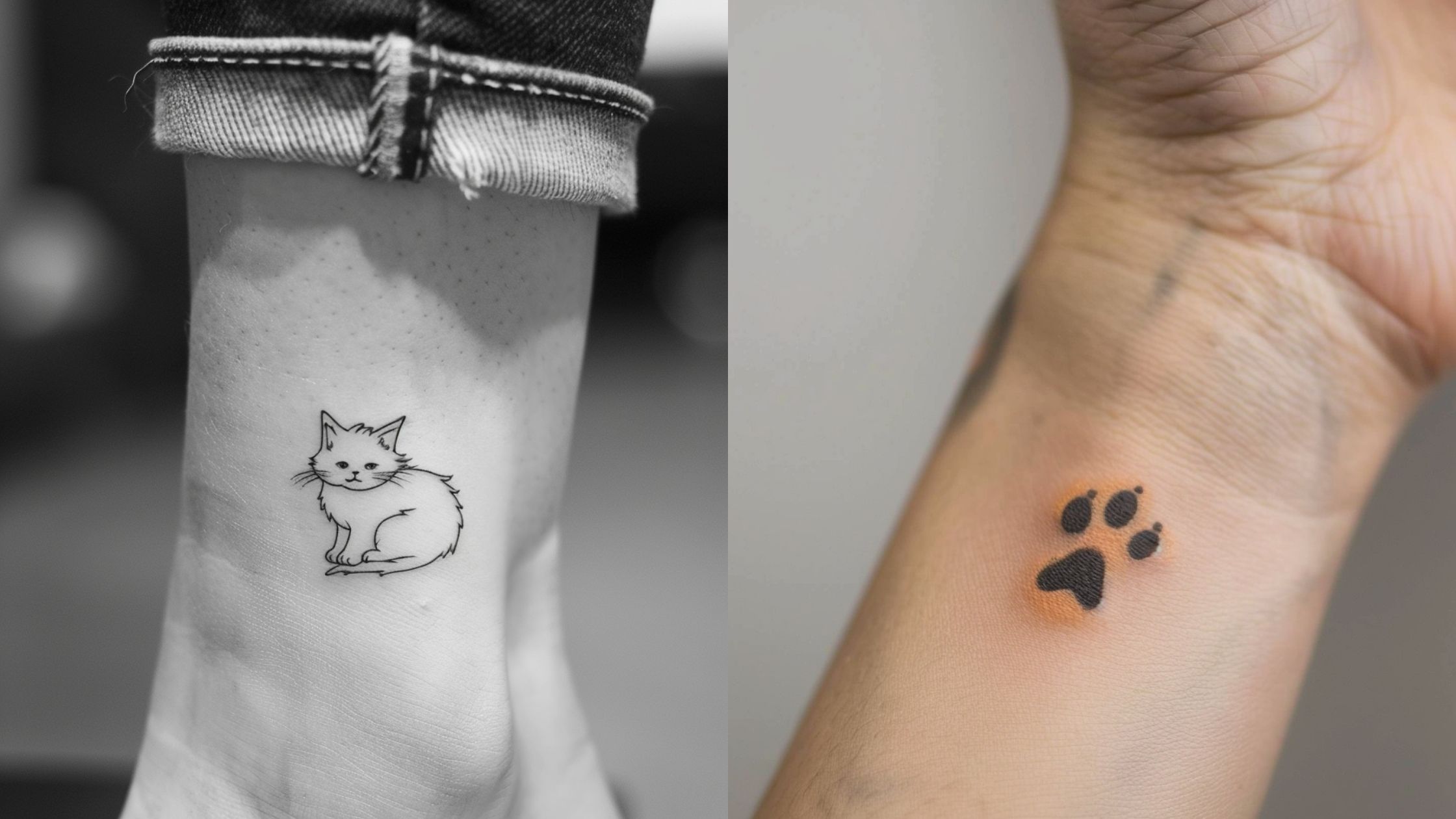
The hardest part of getting a cute little tattoo is not choosing the design, it is choosing a design that will still look like itself in five years. That is the whole game with small work.
I have spent a lot of time in tattoo shops watching artists talk clients down from designs that were too detailed for the space, and the conversation is almost always the same one.
So this guide is not just thirty pretty pictures. It is thirty ideas grouped by motif, with honest notes on which ones hold up, which ones need a touch up, and where on the body each tends to work best.
If you are still narrowing things down, it is worth reading through our wider collection of pretty small tattoo ideas for women alongside this one.
Which Cute Little Tattoo Style Is Right for You?
Most of the designs below fall into one of four working styles. The differences matter more than people expect, because they decide how the piece ages.
| Style | Best For | Smallest Practical Size | How It Ages |
|---|---|---|---|
| Bold black line | Paws, cats, foxes, silhouettes | About 1 inch | The most forgiving option; lines thicken slightly but stay readable |
| Fine line / single needle | Flowers, butterflies, script-like detail | About 2 inches | Softens fastest; often wants a touch up within a few years |
| Soft watercolor | Rainbows, balloons, abstract color | About 2 to 3 inches | Fades noticeably without a black anchor line, especially in sun |
| Geometric | Diamonds, simple shapes, symbols | About 1.5 inches | Holds well, but crooked lines are unforgiving so artist choice matters most |
If your heart is set on fine line work, that is a fine choice. Just go in knowing the maintenance trade, rather than being surprised by it later.
What Actually Makes a Small Tattoo Work
Ink spreads. Not dramatically, but every tattoo softens a little as it settles into the skin over the years.
That means the space between two lines matters as much as the lines themselves. If two lines sit closer together than roughly the width of the line itself, they will eventually read as one thicker line.
This is why a five line fox silhouette looks great at an inch, and a fox with individual fur strokes does not.
In my experience, the single best question to ask an artist is simply: at this size, what would you take out? Good artists have an answer ready, and it is usually the right one.
Placement matters for the same reason. Skin that stretches and creases, like the inner finger or the side of the hand, breaks down small detail much faster than the forearm or shoulder. Our fine line tattoo guide goes deeper into that trade off.
Cute Little Tattoo Ideas for Females
These are the motifs I see requested most often in small work, with what I would actually tell a friend about each one.
1. Paw Print Tattoos
A paw print is the most forgiving design on this entire list, and that is not a knock on it.
It is four toe shapes and a pad. There is almost nothing to lose when it shrinks, which is why it still reads perfectly at an inch across.
Most of the artists I have asked will do a simple solid black paw in well under an hour, which usually puts it at a shop minimum rather than an hourly rate.
The one decision worth thinking about is solid versus outline. Solid black holds longer. An open outline looks lighter and more delicate but shows spreading sooner, because the empty interior gives you a reference for how much the lines have moved.
For a memorial piece, some people bring in an actual print from their pet. Ask the artist in advance, since a real print often needs cleaning up to tattoo well.
2. Delicate Flower Tattoos
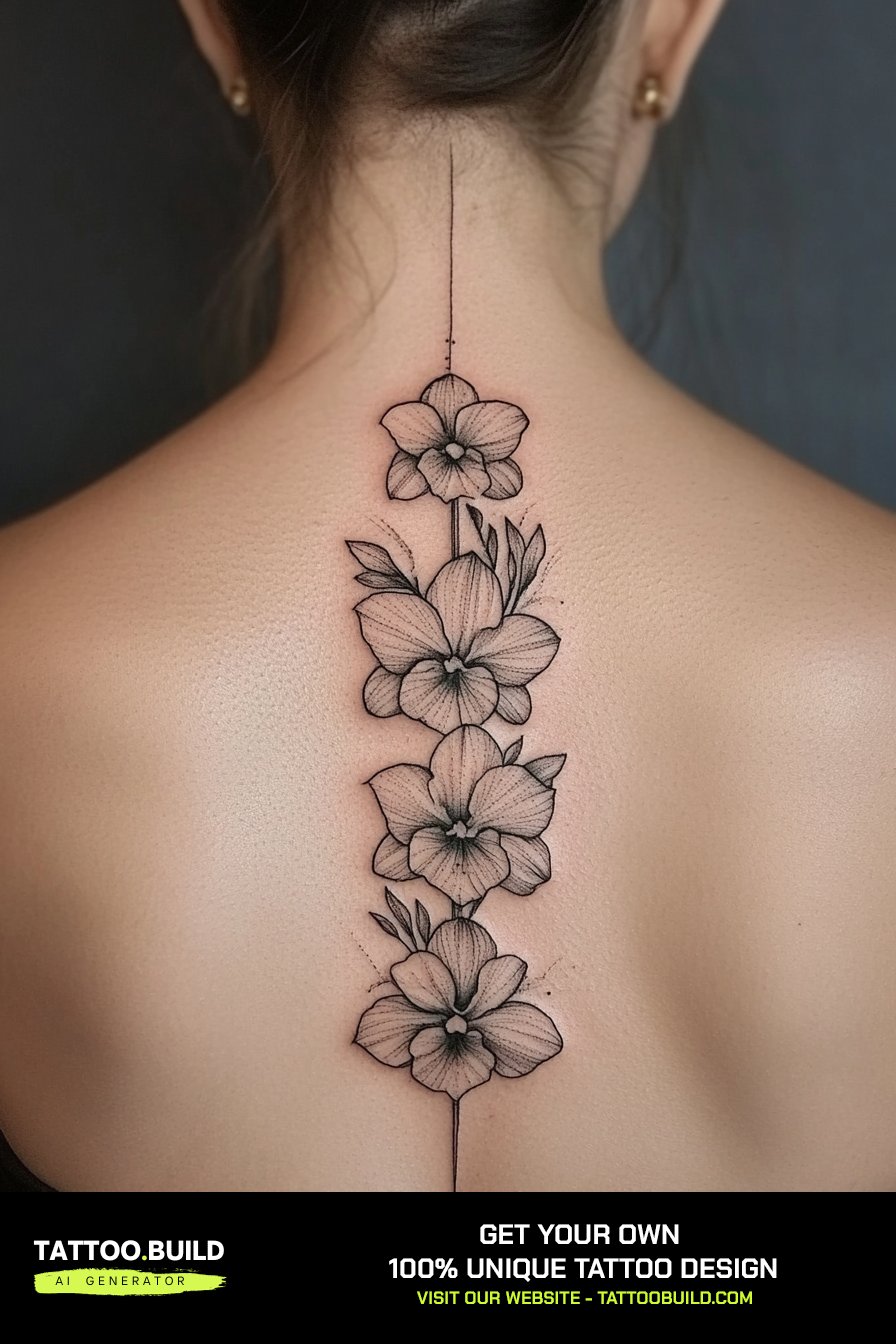
Flowers are the most requested small tattoo I have seen, and also the most commonly done too small.
A single stem with three or four petals works beautifully at two inches. The same design at one inch tends to close up, because the petal gaps are the first thing to go.
Birth month flowers have become a popular route here, since they carry personal meaning without needing text. If that appeals, our birth flower tattoo ideas collection is a good starting point.
Botanical accuracy is optional. Some of the best small florals I have seen are barely identifiable as a species, and they age better for exactly that reason.
Fine line florals will almost certainly need a touch up eventually. That is normal, not a failure, and most shops handle a first touch up at little or no cost within the first year.
3. Butterfly Tattoos
Butterflies have been a small tattoo staple for decades, and the design has quietly gotten much better in that time.
The modern version leans on clean symmetry and negative space rather than heavy shading, which is what keeps it from looking dated.
Symmetry is the hard part. A butterfly is one of the few small designs where a millimetre of asymmetry is genuinely visible, so this is worth spending on a strong artist.
I would not go under about two inches wide with wing detail. Below that, the internal patterning tends to merge into a dark mass within a few years.
Placement on the shoulder blade or outer forearm gives the cleanest result, since neither area creases much.
4. Cat and Kitten Tattoos
Cat tattoos work at small sizes for one reason: the silhouette is instantly recognisable.
Two triangle ears and a curved back and the brain fills in the rest. That is exactly the kind of design that survives shrinking.
Every artist I have asked about small animal work says the same thing, which is to simplify to the outline and resist adding whiskers and fur at this scale.
A sleeping or curled cat is my favourite version, because the closed shape holds together better than a standing pose with thin legs.
If it is a portrait of your specific cat, be realistic about size. Recognisable likeness generally needs three inches or more, and below that you are getting a generic cat with your cat in mind.
5. Balloon Tattoos
The balloon is an underrated small design and one I wish I saw more often.
It carries a lot of meaning with almost no visual complexity: a shape and a string. People get them for childhood, for letting something go, or simply because they like the look.
The string is the technical challenge. A long trailing line, drawn in one pass, is genuinely difficult to keep smooth, and a wobbly string ruins an otherwise clean piece.
Ask to see healed photos of thin line work before booking this one. Fresh photos hide a lot; healed photos do not.
Balloons scale up nicely too, so if you love the idea but want more detail, the upper arm gives you room without making it a large tattoo.
6. Music Note and Instrument Tattoos
A single music note is about as small as a meaningful tattoo can practically go.
It is a shape most people can read instantly, which is the whole requirement for tiny work.
Instruments are the more interesting version. A guitar outline with no strings drawn in reads clearly at two inches, whereas a guitar with strings and frets becomes a smudge.
The inner wrist is the classic placement here, though it is worth knowing that the wrist gets a lot of sun and friction, so it tends to fade faster than a covered spot.
If the piece has to last without maintenance, the inner arm above the wrist is a better bet. Our wrist tattoo ideas for women guide covers the placement in more depth.
More Cute Little Tattoo Variations to Consider
These four sit slightly outside the classic small tattoo motifs, and each brings a different trade off.
Rainbow and Soft Colour Designs
Rainbows are the one design here where colour is the entire point, so there is no black line version to fall back on.
Colour without a black outline fades faster than black work. That is simply how the pigments behave in skin, and sun exposure accelerates it.
Muted and dusty tones tend to age better than bright primaries, and they also tend to look more intentional a decade later.
Book an artist whose portfolio is full of healed colour work, not just fresh colour work. The difference between those two portfolios tells you almost everything.
Cupcakes and Sweet Treats
Food tattoos are genuinely fun and I have never met anyone who regretted a small dessert piece.
The design logic is the same as everything else: simplify. Frosting drawn as one spiral works; frosting drawn as fifty individual swirls does not.
Two inches is a comfortable floor for these, since a cupcake has two distinct halves that need to stay separated.
These pair well with matching pieces if a friend or sibling wants one too, and our small best friend tattoo ideas page has more on that.
Diamond and Geometric Shapes
Geometric work is the most technically demanding thing on this list, which surprises people.
There is nowhere to hide. A slightly crooked line on a flower reads as style; a slightly crooked line on a diamond reads as a mistake.
Light internal shading is what stops a small diamond looking flat, but it has to be light. Heavy shading at this size fills in over time.
For geometric work, pick the artist before you pick the design. This is the one category where artist skill outweighs everything else.
Fox and Woodland Animals
Foxes have quietly become one of the most popular small animal tattoos, and the reason is shape.
Pointed ears, a narrow snout and a thick tail give you three strong silhouette cues, so a fox stays recognisable when almost everything else is stripped away.
A curled sleeping fox is the version I would pick. The closed round shape has no thin extremities to blur, which makes it about as future proof as small tattoos get.
The same logic applies to deer, bears and rabbits if the fox is not your animal. Simple, compact, strong outline.
Aftercare and Practical Advice for Small Tattoos
Small tattoos heal fast, and that is exactly why people get careless with them.
The surface usually looks settled in about two to three weeks, but the deeper layers of skin are still repairing for a couple of months after that. Sun protection matters through all of it.
Sunscreen is the single biggest factor in how a small tattoo looks in ten years, more than the ink, the artist or the style. Wrist, ankle and hand pieces get the most exposure and fade the most.
Follow whatever aftercare instructions your artist gives you, since practices vary between shops and they know their own inks and technique. Our general tattoo aftercare guide covers the common ground.
One safety note that matters: if you develop spreading redness, swelling that increases after the first few days, pus, or a fever, that is not normal healing and you should see a doctor rather than waiting it out. The American Academy of Dermatology has clear guidance on tattoo skin care, and the U.S. Food and Drug Administration publishes information on ink safety and reactions. Nothing in this article is medical advice.
Still Not Sure? Common Mistakes to Avoid
The mistake I see most often is going smaller than the design can support, usually to keep it discreet.
A tattoo that is half an inch bigger is rarely less discreet in practice, and it can be the difference between a design that holds for fifteen years and one that blurs in four.
The second mistake is picking a placement for concealment first and suitability second. Fingers, feet and the side of the hand are notorious for patchy healing, and many artists will warn you or decline outright.
The third is bringing in a reference image that was screenshotted from a fresh tattoo photo. Fresh work always looks sharper than healed work, so ask your artist what it will look like settled.
If you are still deciding, browsing more options helps more than agonising. Try our minimalist tattoo ideas, the small tattoo ideas for ladies collection, or dainty tattoos for women if you want something even more understated. For placement specifically, the ankle tattoo ideas page is a good next stop.
Frequently Asked Questions
How small can a cute little tattoo actually be?
It depends entirely on the design rather than a fixed number. A simple silhouette like a paw print or a music note can work at around one inch, while anything with internal detail such as a butterfly or a floral sprig usually needs at least two. The practical test is whether the gaps between lines are at least as wide as the lines themselves. If they are not, the design will eventually close up and read as a solid shape.
Do small tattoos fade faster than large ones?
They do not fade faster in terms of pigment loss, but the fading is more noticeable because there is less design to lose. The same amount of line spread that is invisible on a large piece can close a small one up completely. Placement matters more than size here, since high friction and high sun areas like the wrist, hands and feet fade fastest. Consistent sunscreen use makes a bigger difference than almost anything else.
How much does a small tattoo cost?
Most shops charge a minimum for anything that takes under an hour, and small pieces almost always fall into that bracket. That minimum varies widely by city and by the artist’s experience, so the only reliable answer is to ask the specific shop. Be wary of pricing that is dramatically below local norms, since it often reflects inexperience. Paying for a strong artist on a small tattoo is money better spent than on a large one, because there is no room to correct mistakes.
Which placement hurts least for a first small tattoo?
The outer forearm, outer thigh and upper arm are generally reported as the more comfortable spots, since there is more muscle and fat between the needle and bone. Ribs, ankles, feet, hands and the sternum tend to be sharper. That said, pain varies a great deal between individuals and no chart predicts your experience reliably. Most small tattoos are finished in well under an hour, which limits how bad it gets regardless of placement.
Will I need a touch up on a small tattoo?
Fine line and single needle work often does, sometimes within the first few years, and that is a normal part of owning that style rather than a sign something went wrong. Bold black line work and simple silhouettes usually go much longer without one. Many shops include a first touch up free or at a reduced rate within the first year, so it is worth asking before you book. Colour work, particularly soft colour without a black anchor line, tends to need attention soonest.
Quick Summary
- Pick the design for how it will look healed, not how it looks in a fresh tattoo photo.
- Keep the gaps between lines at least as wide as the lines themselves, or the design will close up.
- Bold black silhouettes such as paws, cats and foxes are the most forgiving small designs.
- Fine line florals and butterflies are beautiful but should be planned around an eventual touch up.
- Colour without a black anchor line fades fastest, so choose muted tones and an artist with healed colour work in their portfolio.
- Geometric designs like diamonds demand the most precision, so choose the artist before the design.
- Forearm, shoulder and upper arm placements hold small detail better than fingers, hands and feet.
- Sun protection over the years does more for how the tattoo looks than any other single factor.