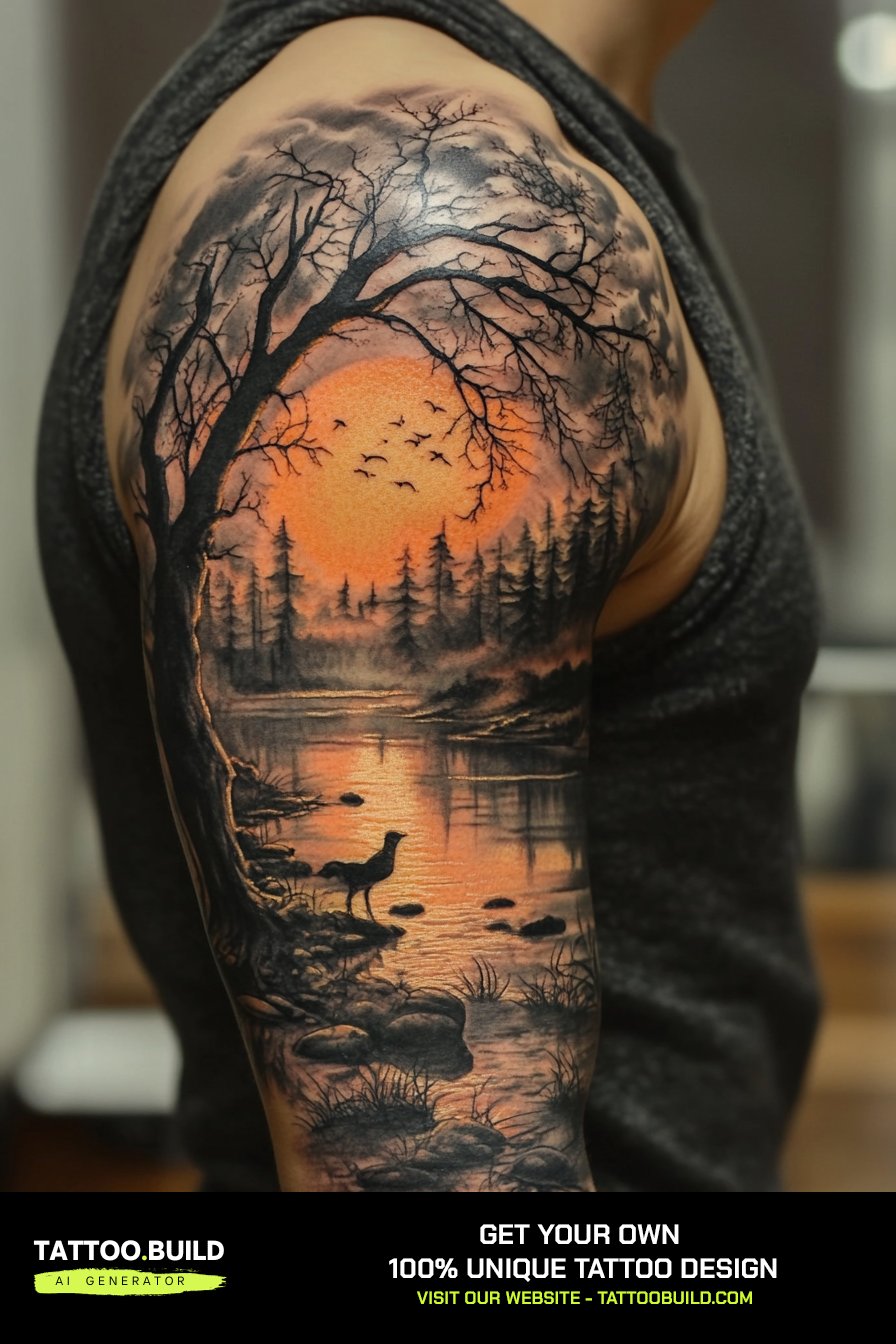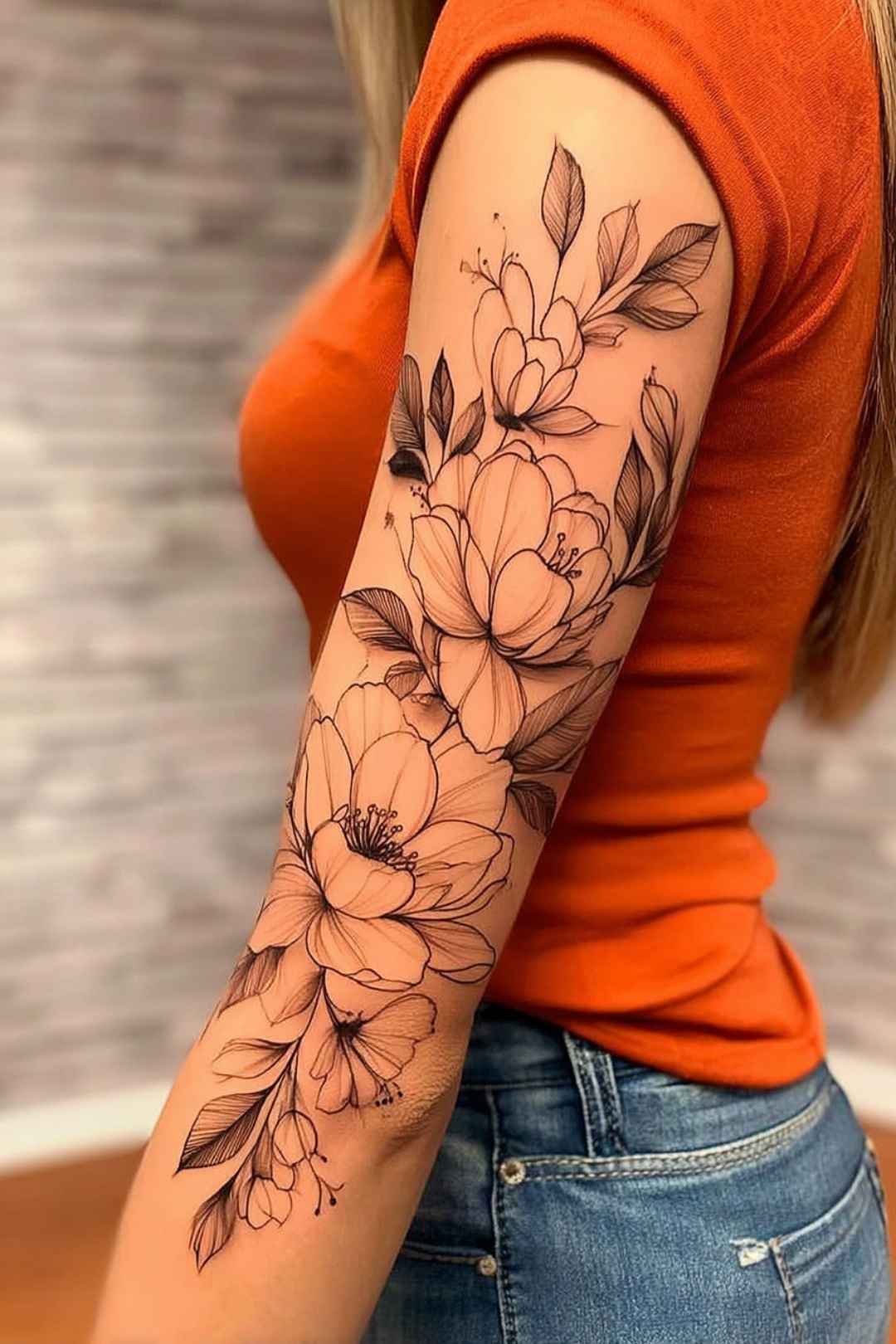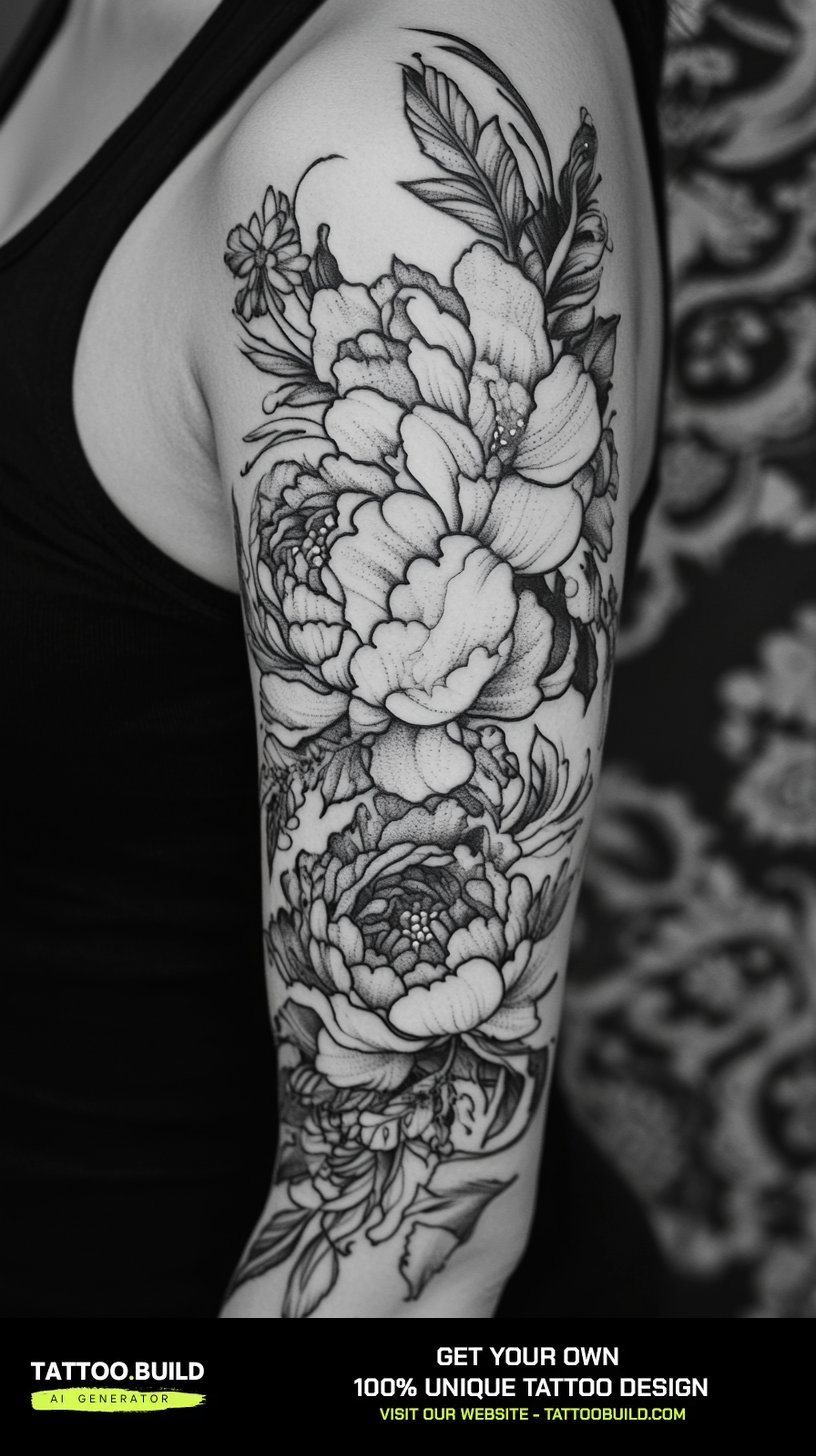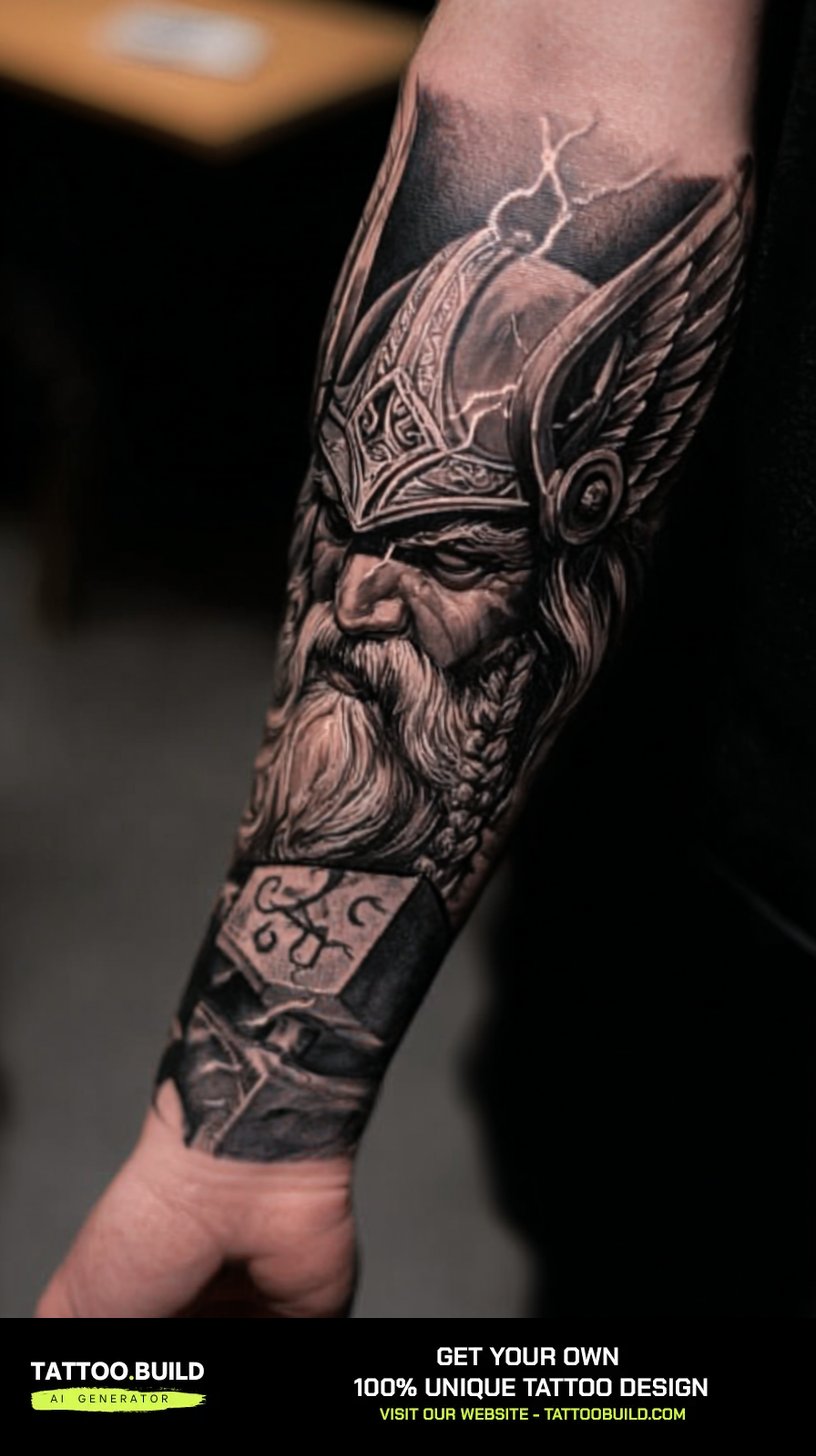
A half sleeve is the sweet spot of arm tattoos: big enough to hold a real design, small enough that a long-sleeve shirt still hides it completely. It runs from the shoulder to somewhere around the elbow, or from the elbow to the wrist if you go the other direction.
I have watched a lot of guys walk into a shop asking for “a sleeve” and walk out with a plan for a half sleeve instead, simply because the budget and the healing time were more manageable.
That is the honest appeal. You get a piece that looks intentional and finished rather than a collection of small tattoos scattered down your arm, and you can still stop there without it looking unfinished.
Below are ten half sleeve directions I keep seeing hold up well over time, plus what actually makes them work. If you are still deciding how far down the arm to go, our guide to sleeve tattoo ideas for men is worth a read alongside this one.
Which Half Sleeve Style Is Right for You?
Style choice matters more than subject. A dragon done in Japanese style and a dragon done in black and grey realism age completely differently.
| Style | Best For | Typical Sittings | How It Ages |
|---|---|---|---|
| Japanese (Irezumi) | Dragons, koi, samurai, full-arm flow | 3-5 | Excellent — built on bold outlines |
| Black & grey realism | Portraits, animals, lions and wolves | 3-6 | Good if the artist keeps contrast strong |
| Neo-traditional | Bold colour, animals, nautical themes | 2-4 | Very good — heavy linework holds |
| Biomechanical | Gears, machinery, sci-fi concepts | 3-5 | Good, though fine detail softens |
| Blackwork / tribal | Pattern, Polynesian and Norse motifs | 2-4 | Best of the group, by a distance |
| Fine line | Subtle, detailed, low-contrast pieces | 2-3 | Weakest — expect touch-ups |
Sitting counts above are what I have typically seen quoted for an upper half sleeve, not a promise. Detail level and your own pain tolerance move that number in both directions.
What Actually Makes a Half Sleeve Work
The single biggest difference between a half sleeve that looks professional and one that looks stitched together is flow — whether the design follows the shape of the arm or fights it.
Your arm is a cylinder that changes diameter and twists when you move. A design laid out flat on paper will not sit right on it.
This is why good artists spend a full session on stencil placement before any needle touches skin. In my experience that session is the one worth being patient through.
The second factor is negative space. Filler like smoke, water, clouds or knotwork is not padding — it is what separates your main subject from the skin around it and stops the piece turning into a grey smudge from three feet away.
Third is placement pain. The outer bicep and shoulder are among the more forgiving spots on the arm, while the inner bicep and the ditch of the elbow are consistently reported as rougher going. Our guide to the most painful tattoo spots breaks that down properly.
Bold, High-Impact Half Sleeve Ideas
These are the designs built to be seen. They rely on a strong central subject and heavy contrast rather than fine detail.
1. Fierce Dragon Half Sleeve
The dragon is the most-requested half sleeve subject I come across, and there is a practical reason for that: its body is long and flexible, so it wraps an arm better than almost any other creature.
In Japanese style the head usually sits on the shoulder or outer bicep, with the body coiling down and the tail resolving near the elbow. Smoke, clouds or waves fill the gaps.
What I would flag: dragons go wrong when the scales are drawn at a uniform size across the whole arm. Scale size needs to shrink as the body narrows, otherwise the depth collapses.
If you want to look at the range of styles first, we have a fuller breakdown of dragon tattoo ideas for men.
2. Realistic Lion Portrait With Tribal Framing
A lion portrait is one of the few realism subjects that survives being scaled up to half sleeve size without losing its impact.
The mane does a lot of quiet work here. It gives the artist a natural filler zone, which means the piece does not need extra background elements to feel complete.
Pairing the portrait with tribal or geometric framing is a strong move because it puts a hard edge around soft realism. Without that frame, realistic portraits can bleed into the skin as they age.
Every artist I have asked about lions says the same thing: the eyes decide whether the piece works. Budget the time for them. Our lion tattoo ideas collection shows how differently this reads in colour.
3. Japanese Koi and Cherry Blossom
Koi are the classic half sleeve for a reason: the body shape, the water, and the blossoms give you subject, movement and filler in one package.
Direction carries meaning in traditional Japanese work — a koi swimming upstream is generally read as perseverance, and one swimming down as a goal already reached. Worth deciding on purpose rather than leaving to the artist.
This style is also the most forgiving over a decade or two, because irezumi is built on bold outlines that hold their shape as ink spreads.
For design references before your consultation, browse our koi fish tattoo designs.
4. Steampunk Gears and Mechanical Machinery
Biomechanical and steampunk half sleeves are the ones that most reward a specialist. This is not a style to hand to a generalist artist.
The illusion depends on the “torn skin” edges following your actual muscle shape. When the tear ignores the anatomy underneath, the whole thing flattens out.
I would also keep the gear sizes varied. Uniform gears across the arm read as a repeating pattern rather than as machinery.
One honest limitation: very fine mechanical detail softens over ten to fifteen years. Ask your artist to keep the key shapes bold and let the small stuff be small.
5. Viking Warrior
Viking half sleeves have stayed popular for years now, and the good ones lean on texture — beard, fur, hammered metal, weathered wood.
A common mistake is stacking too many symbols into one arm: helmet, axe, longship, runes, ravens, Valknut, all at once. Pick a focal point and let the rest support it.
When I have seen these done well, the artist commits to heavy shadow around the eyes and the helmet rim. That contrast is what makes it look carved rather than sketched.
If the historical side interests you, our Viking tattoo ideas for men guide goes deeper on the symbolism.
Story-Driven and Mythology Half Sleeves
These lean on narrative. They tend to suit people who want the tattoo to mean something specific rather than just look good.
6. Wolf Howling at the Moon
This is a well-worn idea, which is exactly why execution decides everything. A generic howling wolf looks like flash; a well-composed one looks like a photograph.
The trick I keep noticing in the strong versions is that the moon is not just decoration — it functions as the light source, so the wolf is lit from behind.
Fog, a treeline or mountains near the elbow give the design a place to fade out, which is much better than a hard stop across the arm.
Our wolf tattoo design ideas page has geometric and realism variations if the classic version feels too familiar.
7. Phoenix Rising With Flames
The phoenix is the best-shaped bird for an arm. Spread wings wrap the deltoid naturally and the tail feathers trail down toward the elbow without needing extra filler.
It is also one of the few subjects that genuinely justifies colour on a male half sleeve — reds and oranges in the flames give the piece somewhere to go.
If you prefer black and grey, ask for the flames to be built from heavy smoke rather than flat shading, or the fire reads as fog.
Keep the feather detail looser near the elbow. Detail packed into a joint gets distorted every time you bend your arm.
8. Samurai Warrior
A samurai half sleeve is usually carried by one element: the menpo mask. Get that right and the armour can stay comparatively simple.
Traditional Japanese execution suits this better than photorealism, in my experience, because the bold outlines match the hard edges of the armour.
Watch the scale. A full standing samurai squeezed into a half sleeve loses all facial detail — a bust or a mask fills the space far better.
More layouts and compositions are collected in our samurai tattoo ideas guide.
9. Norse Mythology Theme
Norse half sleeves work best when you treat the mythology as a set of connected pieces rather than a checklist of symbols.
Knotwork is the tool that does this. Used as filler, it ties ravens, runes and a tree of life into one design instead of three separate tattoos sharing an arm.
One caution worth stating plainly: a few Norse symbols have been adopted by extremist groups, and the Valknut and certain runes are on that list. Ask your artist about current associations before committing.
None of that makes the imagery off-limits. It just means context and placement are worth a conversation first.
10. Pirate Ship and Nautical Themes
Nautical half sleeves have the oldest tattoo pedigree of anything on this list, and they still hold up because the subject matter is built from bold shapes.
A ship should be angled so it appears to sail around the curve of the arm. Drawn flat and face-on, it looks like a sticker.
Waves are the secret weapon — they fill space, create movement, and let the design taper cleanly at the elbow.
This theme also takes colour well if you go neo-traditional, though the black and grey versions age with less maintenance.
Alternatives and Variations Worth Considering
A half sleeve is not the only option, and it is not always the right first step.
Quarter Sleeve
Shoulder to mid-bicep. Cheaper, quicker, and easy to extend into a half sleeve later if you want to. This is what I would suggest to most first-timers.
Lower Half Sleeve (Elbow to Wrist)
More visible day to day, and the forearm is generally an easier area to sit through than the inner bicep. The downside is that it is much harder to cover for work.
Three-Quarter Sleeve
Shoulder to mid-forearm. It gives you the visual weight of a full sleeve while leaving the wrist clear, which many people find is the better compromise.
Building It in Stages
You do not have to design the whole arm on day one. Start with a strong central piece and add around it over a couple of years — our tattoo sleeve filler ideas cover how to connect separate pieces later.
The one condition: use the same artist, or at least the same style, or the join will always show.
Practical Tips Before and After You Get It
Book a consultation before you book the tattoo. A good shop expects this, and it is where you find out whether the artist actually enjoys the style you want.
Eat properly and sleep the night before. Long sittings are far harder on an empty stomach, and I have seen more than one person tap out at the two-hour mark for that reason alone.
Aftercare is where most half sleeves are won or lost. Keep it clean, keep it moisturised, and keep it out of direct sun while it heals. The American Academy of Dermatology publishes straightforward aftercare guidance that is worth reading before your first session, not after.
Expect a touch-up. Most reputable artists include one, and on a piece this size some patchy healing is normal rather than a sign anything went wrong.
If you see spreading redness, swelling that worsens after the first few days, pus, or a fever, stop treating it as normal healing and see a doctor. That is infection territory, not aftercare. General risk information from Mayo Clinic is a reasonable starting point, but nothing in this article is medical advice.
Common Mistakes — and What to Do If You Are Still Not Sure
Choosing the artist by price rather than by portfolio is the mistake I see cost people the most. A half sleeve is a multi-session commitment; the cheap version usually gets expensive at the cover-up stage.
Mixing styles in one arm is the second. Realism next to traditional next to fine line rarely resolves into a single piece.
Rushing the stencil is the third. If it does not sit right on the arm, say so before the outlining starts — no decent artist will be offended.
Still undecided on the theme? Working through a specific subject often helps more than browsing generally. Our guide to Norse mythology tattoo ideas is a good example of narrowing down from a broad concept to a workable design.
Frequently Asked Questions
How long does a half sleeve tattoo take?
Most half sleeves I have seen take three to five sessions of three to five hours each, spread over several weeks or months. The arm needs to heal between sittings, so the calendar time is usually longer than people expect. Highly detailed realism or biomechanical work can push past that range. Your artist can give a realistic estimate once the design is settled.
How much does a half sleeve tattoo cost?
Pricing varies enormously by region, artist reputation and detail level, so any single figure would be misleading. Most shops charge either an hourly rate or a day rate for large work, and a half sleeve is typically quoted as a multi-session project rather than a flat price. The most useful thing you can do is ask two or three shops in your area for a range at the consultation stage. Be wary of quotes that come in far below everyone else.
Does a half sleeve hurt more than a small tattoo?
It is not usually more intense per minute, but it lasts far longer, and cumulative fatigue is the real challenge. The outer bicep and shoulder are generally reported as more tolerable, while the inner bicep and elbow ditch are consistently described as the hardest parts. Breaking the work into shorter sessions helps a lot. Tell your artist if you need a break — they would rather pause than have you tense up.
Can I get a half sleeve as my first tattoo?
You can, and some people do, but I would usually suggest starting smaller. A first tattoo teaches you how your own skin heals and how you handle sitting still for hours, and that information is genuinely useful before committing to a multi-session piece. A quarter sleeve is a sensible middle ground. It can be extended into a half sleeve later by the same artist.
Will a half sleeve stop me getting a job?
Attitudes have shifted considerably, and in many industries an arm tattoo covered by a shirt sleeve is a non-issue. That said, some fields still have visible-ink policies, so it is worth checking rather than assuming. An upper half sleeve is the easier one to conceal; an elbow-to-wrist piece is not. If you are unsure, the upper arm is the safer choice.
Quick Summary
- A half sleeve runs shoulder to elbow (or elbow to wrist) and is easier to hide, budget and heal than a full sleeve.
- Flow matters more than subject — the design has to follow the arm, not sit flat on it.
- Japanese and blackwork styles age best; fine line ages worst and needs touch-ups.
- Dragons, koi and phoenixes suit arms because their shapes naturally wrap a cylinder.
- Realism subjects like lions and wolves need strong contrast and a framing element to stay readable.
- Biomechanical and steampunk work needs a specialist, not a generalist artist.
- Expect three to five sessions and at least one touch-up; healing time drives the schedule.
- Watch for spreading redness, worsening swelling, pus or fever during healing and see a doctor rather than waiting it out.