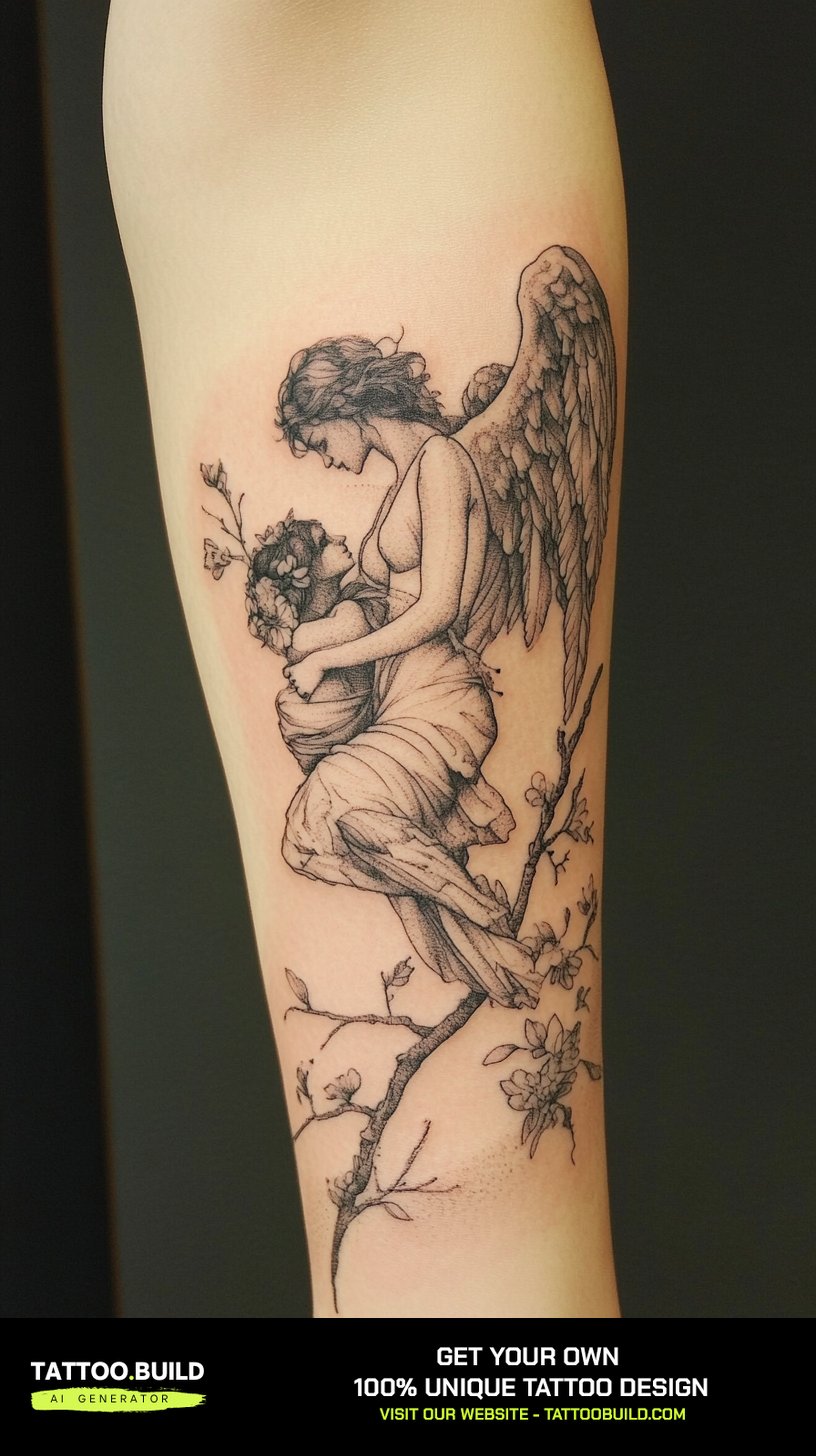
Loyalty is one of the few tattoo themes that never really goes out of fashion. A loyalty tattoo is less about decoration and more about putting a promise somewhere you cannot quietly walk away from.
I have sat in on a lot of loyalty consultations over the years, and the pattern is always the same. People arrive with a feeling and no image, and they leave with a symbol that carries the feeling better than words did.
The good news is that the visual vocabulary here is huge. Knots, anchors, wolves, keys, dates, flames, matching halves — each one says “I stay” in a slightly different accent.
This guide walks through the designs that actually hold up on skin, what each one means, and how to choose one you will still respect in fifteen years. If you are getting inked alongside someone, the couple tattoo ideas guide pairs well with this one.
Which Loyalty Tattoo Style Is Right for You?
Before picking a symbol, it helps to be honest about what kind of loyalty you are marking. The table below is the shorthand I use in consultations.
| Style | Best For | Typical Size | How It Ages |
|---|---|---|---|
| Fine-line symbol | Quiet, personal loyalty | 2–5 cm | Softens; may need a touch-up in 5–8 years |
| Bold traditional | Anchors, hearts, banners | 7–15 cm | Excellent — heavy outlines hold for decades |
| Celtic / knotwork | Family and heritage bonds | 8–20 cm | Good if strands are spaced; poor if crowded |
| Script lettering | Quotes, names, mottos | 5–20 cm | Thin script blurs first — size up |
| Blackwork / illustrative | Wolves, trees, flames | 10–25 cm | Very strong with solid black mass |
| Matching pair | Two people, one meaning | 3–8 cm each | Depends on style chosen — keep both simple |
Why Loyalty Is Such an Enduring Tattoo Theme
Loyalty is one of the oldest ideas humans have bothered to draw. Knotwork with no beginning and no end shows up across Celtic, Norse and Islamic art, and the reason is the same everywhere: an unbroken line is the easiest way to draw something that does not stop.
Sailors gave us the anchor for the same reason. The anchor was the one object aboard that held when everything else moved, which makes it an unusually honest symbol for staying put.
What I find interesting is how often people choose loyalty tattoos after the hard part, not before it. The friend who stayed through the illness. The sibling who took the call at 3am.
That timing matters, because a loyalty tattoo earned by something that already happened tends to age far better than one that is trying to guarantee a future. The strongest pieces commemorate rather than promise.
It also explains why so many of these designs are small. When the meaning is already settled in your head, the tattoo does not have to shout.
Loyalty Tattoo Designs and What They Mean
Here are the symbols that come up most often, and what each one actually communicates.
Infinity Symbol
The infinity loop is the most direct way to say “no end” with a single stroke. It is also the one I see requested smallest — usually under four centimetres on a wrist or inner forearm.
The catch is that a tiny infinity drawn in hairline needles can close up over time, because the two loops sit very near each other. Every artist I have asked about this gives the same advice: go a size up from what you first pictured.
Variations that work well include threading a name through the loop, replacing one half with a heartbeat line, or letting the loop trail into a feather. The infinity tattoo designs collection has plenty of examples of each. Keep at least 2mm of clear skin between the strands.
Animal Symbolism
Wolves dominate this category, and for good reason. A wolf reads as loyalty to a group rather than to one person, which is why it is so popular for family and military pieces.
Dogs are the other obvious choice and the most emotionally direct. I have tattooed a lot of portraits of dogs that had already died, and those sessions are usually very quiet.
Beyond those two, swans, wolves in pairs, elephants and geese all carry pair-bond or herd-loyalty associations. If you are leaning wolf, the wolf tattoo ideas guide covers linework versus blackwork treatments in depth.
Anchors
The anchor is a bold-traditional workhorse. Thick outlines, a bit of solid black, and it will still be readable in thirty years.
Meaning-wise it splits two ways: staying steady yourself, or being the thing someone else holds onto. Both are legitimate and people usually know instinctively which one they mean.
Adding a rope, a banner with a name, or a small swallow shifts the tone toward classic nautical. The anchor tattoo meaning guide goes deeper on the maritime history behind it.
Celtic Knots
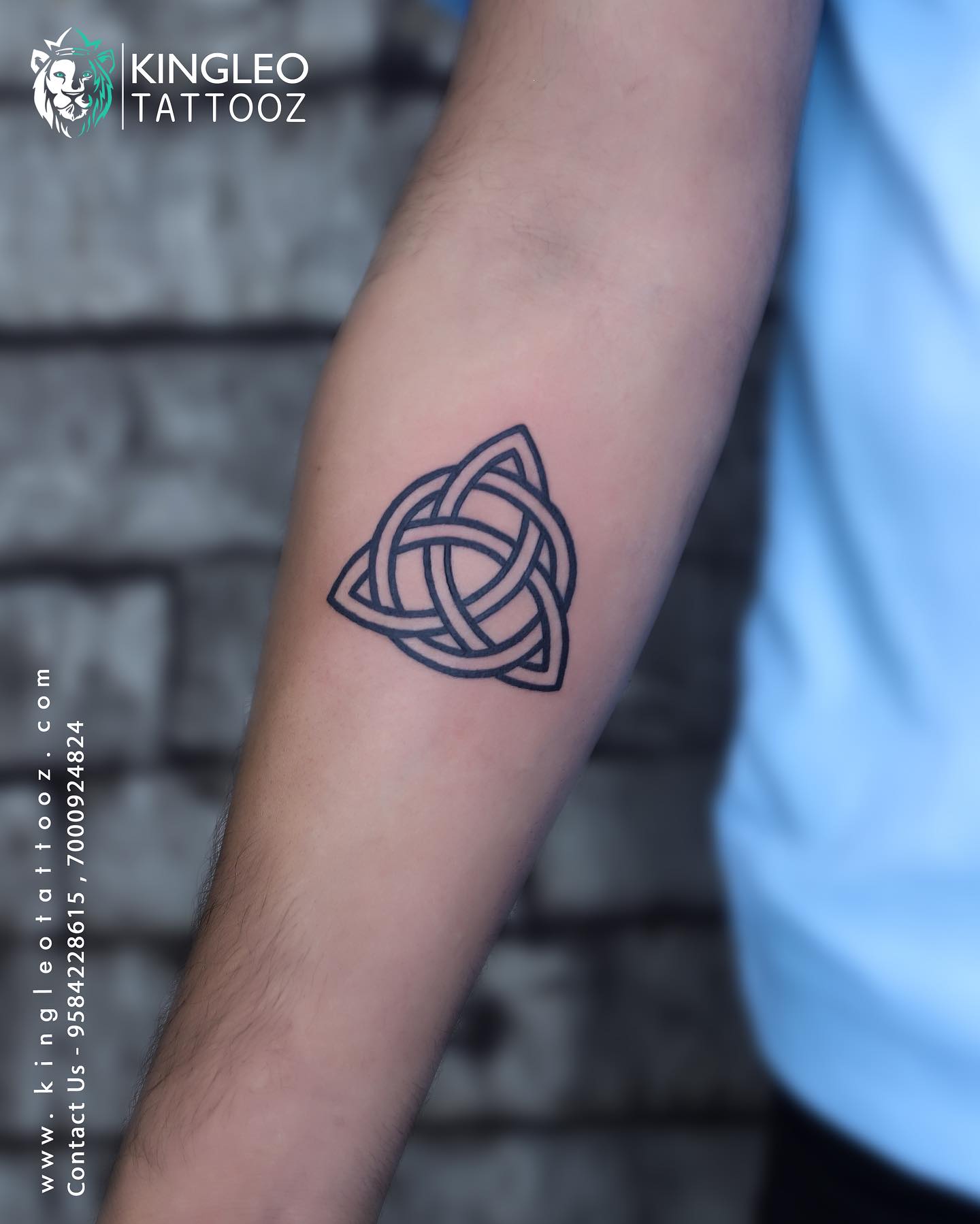
Celtic knotwork is the purest visual argument for loyalty: one continuous strand, no start, no finish. The Dara knot and the trinity knot both come up constantly.
The design risk is density. Knotwork that looks stunning on paper can turn into a grey smudge on skin if the negative space between strands is under about 2mm.
I always ask for the stencil to be sized up at least twenty percent from the drawing. Negative space is the part of knotwork that has to survive, not the ink.
Heart and Key
A heart shaped into a key, or a key with a heart-shaped bow, is a softer take on devotion. It suggests access rather than ownership.
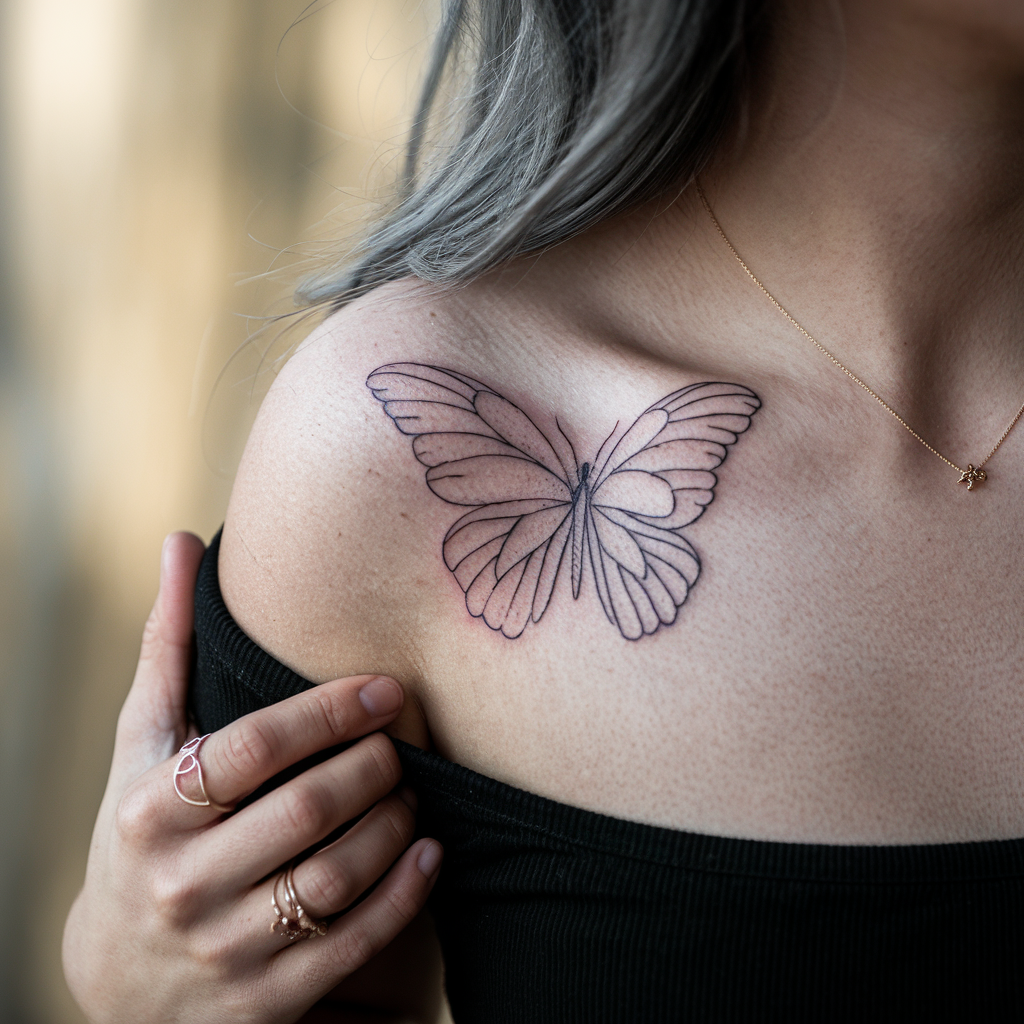
This one photographs beautifully at small sizes and suits the inner forearm, the ribs, or just below the collarbone.
If you want the warmer end of this style, look at rounded heart shapes with a slightly oversized bow — they hold their silhouette better than sharp-tipped hearts.
Tree of Life
The tree of life is the go-to for family loyalty, mostly because the roots do the symbolic heavy lifting. Roots say where you came from; branches say who came after.
People often add initials in the leaves or the root system. In my experience that works if you keep it to three or four, and gets cluttered fast beyond that.
Size is the main constraint. Below about eight centimetres the branch detail stops reading. The tree of life tattoo guide shows how different artists handle the root-to-branch balance.
A Quote or Phrase
Lettering is the most literal option and the easiest to get wrong. Short is better: three to five words holds up, a full sentence rarely does.
The technical issue is stroke weight. Thin script blurs before almost anything else on this list, especially on fingers, ribs and the inner bicep.
When I tested a hairline script against a medium-weight serif on the same forearm placement, the serif still read cleanly years later while the script had softened noticeably at the thin joins. If you want script, size it up and accept a slightly thicker stroke.
Bonding Symbols
These are abstract marks two or more people share — a shape, a rune, a made-up glyph that only your circle understands.
I like these because they are private by design. Nobody at work asks what it means, because it does not look like it means anything.
Groups of three or four friends often go this route. The matching tattoos guide has good examples of symbols that scale across several people without looking repetitive.
Roman Numeral Dates
A date in Roman numerals is clean, geometric, and reads as deliberate rather than sentimental. It suits the forearm, the collarbone and the spine.
The practical warning: numerals are unforgiving. A single mis-stroked character is permanent and very visible, so proofread the stencil yourself before the needle starts.
I ask clients to write the numerals out on paper themselves and compare, because it catches transcription errors that everyone else has stopped seeing. Roman numeral dates pair naturally with a small symbol underneath.
Lock and Key
Lock and key works best as a two-person set: one wears the lock, one wears the key. It is playful without being cute.
Done as a single piece it shifts meaning slightly, reading more as trust kept safe than trust exchanged.
Vintage skeleton keys and ornate padlocks give an artist more to work with than modern hardware. The key and lock tattoo ideas collection is worth browsing for shape options.
Two Halves of a Whole
Split designs only complete when two arms are held side by side. Mountains, moons, hearts and compasses all split well.
This is the highest-commitment idea on the list, because half of it lives on someone else permanently. I say that plainly to every couple who asks.
A gentler version: each person gets a complete design that echoes the other rather than depending on it. Designs that stand alone survive relationships that do not.
Compass Rose
The compass frames loyalty as guidance — the person who keeps you pointed the right way. It is a favourite for parents and mentors.
Compasses scale well. A detailed rose fills a forearm nicely, and a stripped-back four-point version works at wrist size.
If you want the larger treatment, the compass forearm tattoo guide covers how much detail a forearm can realistically hold.
Interlocking Hearts
Two hearts linked like chain rings is an old design that still works, particularly in bold traditional styling.
Keep the overlap generous. When the rings barely touch, the piece loses the thing that makes it read as joined.
Three interlocked hearts is a common variation for a parent marking two children, and it balances surprisingly well on the inner forearm.
Lotus Flower
The lotus grows out of mud and opens clean, which makes it a symbol for loyalty that survived something difficult.
It is one of the few designs here that works equally well in fine line, dotwork and full colour.
Petal count and symmetry are the things to watch — an odd number of visible petals tends to look more natural than an even one.
Eternal Flame
A flame says the feeling has not cooled. It is a warmer, more active symbol than a knot or an anchor.
Flames are also forgiving to tattoo, because the shape is organic and small irregularities read as movement rather than error.
Blackwork flames hold longer than fine-line ones. If you want colour, reds and oranges on the forearm hold up better than on high-friction spots like hands.
Fidelity Knot
The fidelity knot is a tighter, more specific cousin of general Celtic knotwork, usually chosen for faithfulness between partners.
Because the strands are closer together than in a Dara knot, the spacing rule matters even more here.
It suits the inner wrist, the ankle and the back of the neck. Ask your artist to show you a healed photo of one they did at your chosen size.
Alternatives and Variations to Consider
If none of the classic symbols fit, these approaches give you loyalty without the obvious iconography.
Fingerprint and Handwriting
A fingerprint pressed into a heart shape, or a phrase traced from someone’s actual handwriting, is about as personal as this gets.
Handwriting needs a clean, high-contrast scan and an artist comfortable working from one. Thin loops in real handwriting are the same blur risk as script lettering.
Matching and Coordinated Sets
Coordinated beats identical. Same style, same artist, different subject — it looks intentional without being a uniform.
Booking both people with one artist on the same day is the single easiest way to make a set look cohesive.
Combining Symbols
Layering works when one element leads. An anchor with a small knot at the base reads well; an anchor, knot, compass and flame together reads as indecision.
My rule of thumb is one primary symbol and at most one supporting detail.
Placement and Aftercare Tips
Placement changes how long a loyalty tattoo stays sharp. Inner forearm, outer bicep, calf and upper back all hold detail well because the skin moves less and sees less sun.
Fingers, palms, feet and the inner wrist are the high-turnover spots. Fine-line work there commonly needs touching up, sometimes within the first year.
For healing, follow whatever your artist tells you over anything you read online, including this. Broadly: keep it clean, keep it lightly moisturised, keep it out of the sun, and do not soak it in a bath or pool while it is still healing.
If you see spreading redness, heat, swelling that increases after the first few days, pus, or a fever, that is a doctor’s call rather than an artist’s. The CDC guidance on tattoo safety is a reasonable plain-language reference. Nothing in this article is medical advice.
Common Mistakes and Still Not Sure?
The most frequent regret I hear about is scale. People pick a design with knotwork or script and then ask for it small enough to hide, and the two goals fight each other.
The second is rushing. A loyalty tattoo is commemorating something that took years to earn, so waiting a month to be sure costs you very little.
The third is matching under pressure. If one person in a pair is hesitating, that is information, not an obstacle.
Still weighing options? If you want something small and quiet, the small meaningful tattoo ideas round-up is a good browse. For friendship rather than romance, start with small best friend tattoos.
Frequently Asked Questions
What is the best symbol for a loyalty tattoo?
There is no single best symbol, because the right one depends on who the loyalty is to. Celtic knots and infinity loops suit unbroken bonds in general, wolves and trees suit family, and anchors suit steadiness through difficulty. In my experience the design people keep loving is the one that already meant something to them before they started planning a tattoo. If nothing on a list resonates, that usually means the symbol should come from your own history instead.
Are loyalty tattoos only for couples?
Not at all, and couples are probably the minority. Plenty of loyalty tattoos mark friendships, siblings, parents, military units, sports teams and pets. The symbolism works the same way regardless of the relationship. Group designs among friends are especially common, usually as a shared shape rather than matching artwork.
Should I get my partner’s name tattooed to show loyalty?
You can, but understand that names are the hardest loyalty tattoo to adapt if things change. Symbols, dates and abstract marks can be reinterpreted; a name generally cannot. Many artists will quietly suggest an initial, a date or a shared symbol instead, and that is not cynicism so much as experience. If you do want the name, place it somewhere that leaves room for a future cover-up.
Where is the best place for a loyalty tattoo?
The inner forearm is the most common choice because it is visible to you, easy to cover, and holds detail well. The wrist, ribs, collarbone and upper back are also popular depending on how private you want it. Avoid fingers and feet for anything with fine detail, since those areas fade fastest. Your artist can tell you how your specific design will sit on a given spot.
Do loyalty tattoos hurt more than other tattoos?
Pain depends almost entirely on placement and size, not on what the design means. Fleshy areas like the outer forearm and thigh are generally more comfortable, while ribs, sternum, ankles and the inside of the upper arm tend to be sharper. Most small loyalty symbols take under an hour, which keeps the whole experience manageable. If pain is a real concern, say so at the consultation and your artist can plan breaks.
Quick Summary
- Pick the symbol by who the loyalty is for — family, partner, friends or a group — before you look at styles.
- Celtic knots and infinity loops read as unbroken bonds; anchors read as steadiness; wolves and trees read as family.
- Size up anything with knotwork or script. Crowded detail is the most common source of regret.
- Bold traditional and blackwork age best. Hairline fine-line work often needs a touch-up within 5–8 years.
- Avoid fingers, palms and feet for detailed loyalty designs — they fade fastest.
- For pairs, coordinated designs that each stand alone are safer than split halves that only work together.
- Names are the least adaptable option; symbols, dates and initials leave you more room later.
- Follow your artist’s aftercare instructions, and see a doctor rather than an artist for signs of infection.