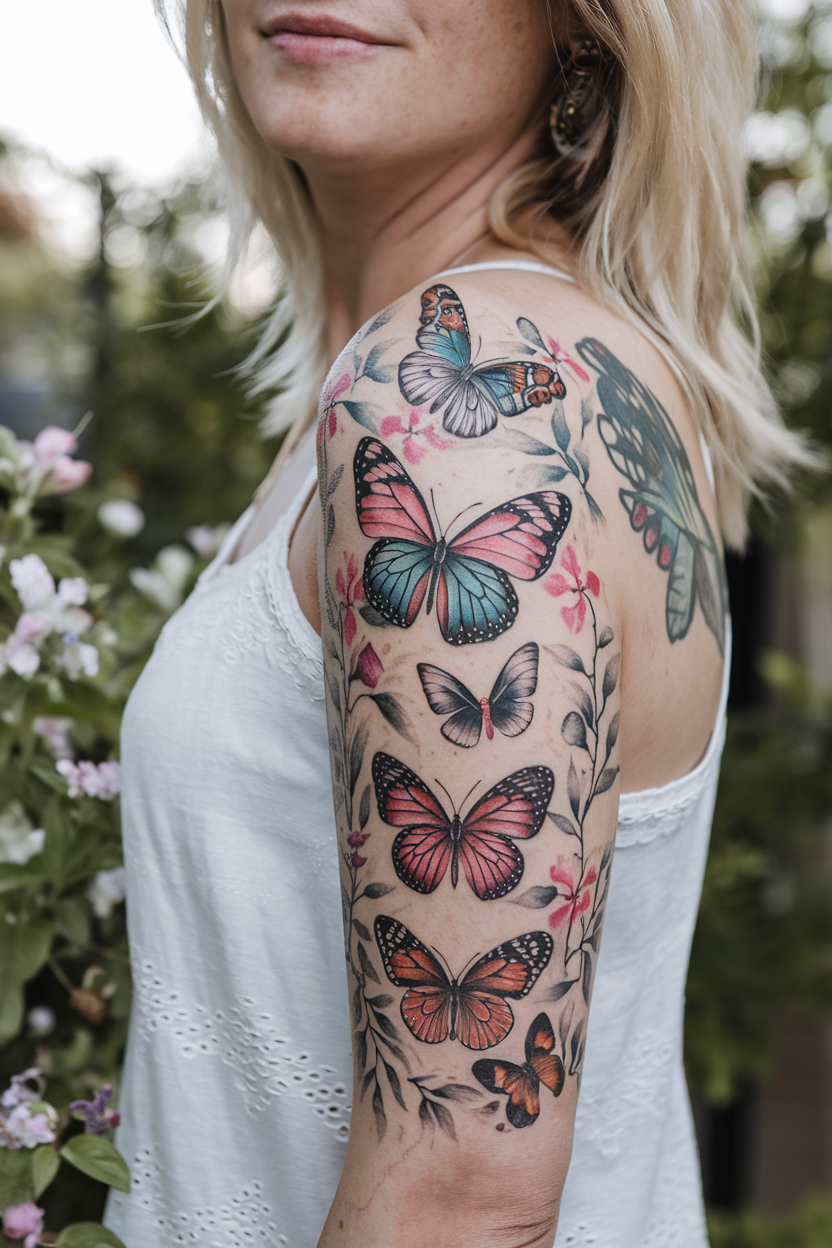
I have lost count of how many anchor tattoos I have watched get made, and the reason people give is almost never the one I expect. An anchor tattoo symbolizes stability, hope, and the things in your life that refuse to let you drift — and only rarely does it have anything to do with sailing.
The design is one of the oldest in Western tattooing, and it has picked up meanings the way a hull picks up barnacles: nautical service, Christian hope, loyalty to a person, and a private promise to stay grounded.
In my experience, the people who love their anchor tattoo ten years later are the ones who picked a specific meaning before they picked a design. The ones who regret it grabbed a flash sheet because the shape looked cool at arm’s length.
This guide walks through every meaning the anchor carries, the variations that shift that meaning, and how placement and line weight affect how the piece reads a decade from now. If you want design references rather than symbolism, our roundup of anchor tattoos for females is a good companion to this page.
Which Anchor Tattoo Style Is Right for You?
Style changes the meaning more than most people expect. Here is how the four most common approaches actually differ in the chair and on the skin years later.
| Style | Reads As | Typical Size | How It Ages | Best For |
|---|---|---|---|---|
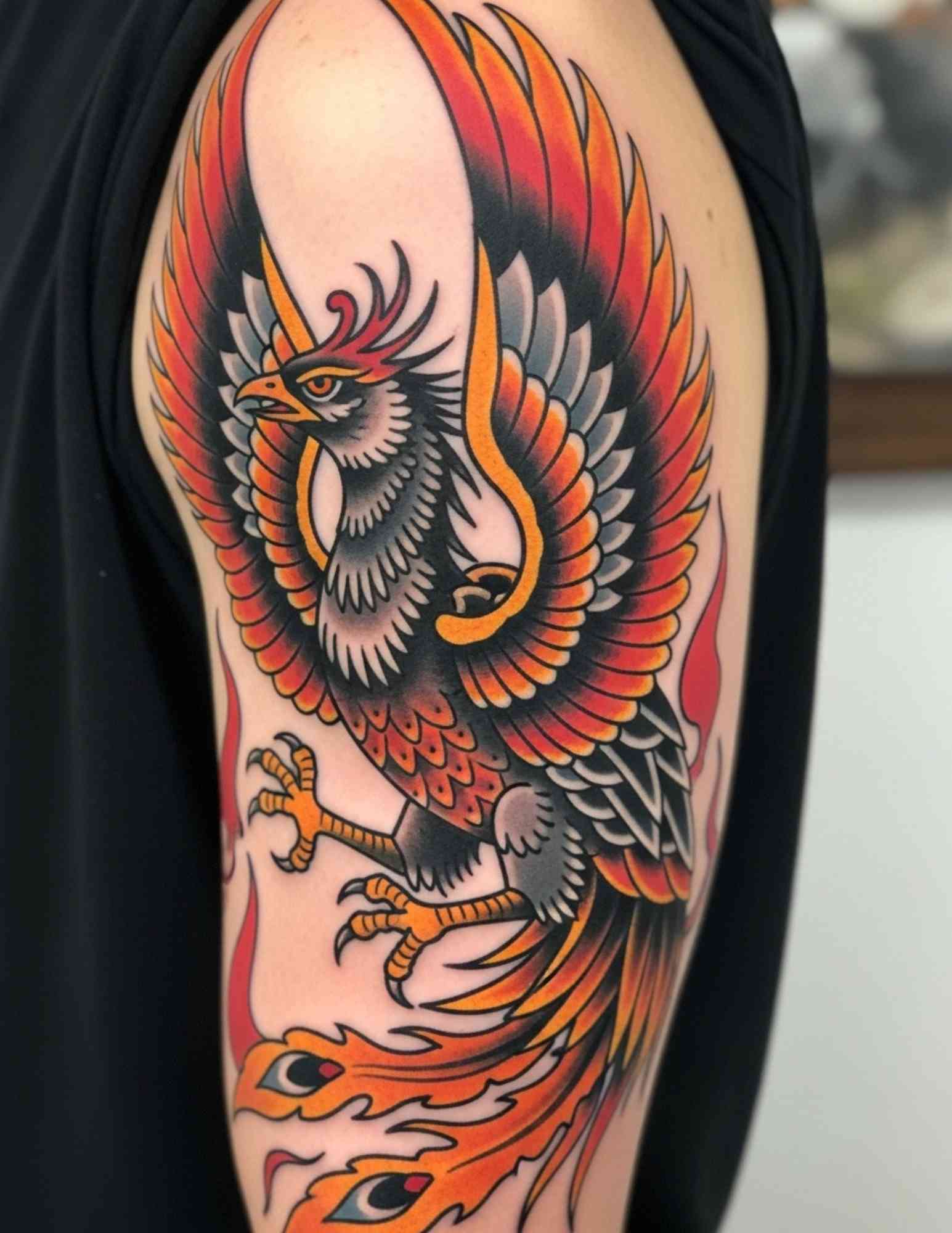
| American traditional | Heritage, grit, old-school loyalty | 3–6 inches | Excellent — heavy outlines hold for decades | Forearm, upper arm, calf |
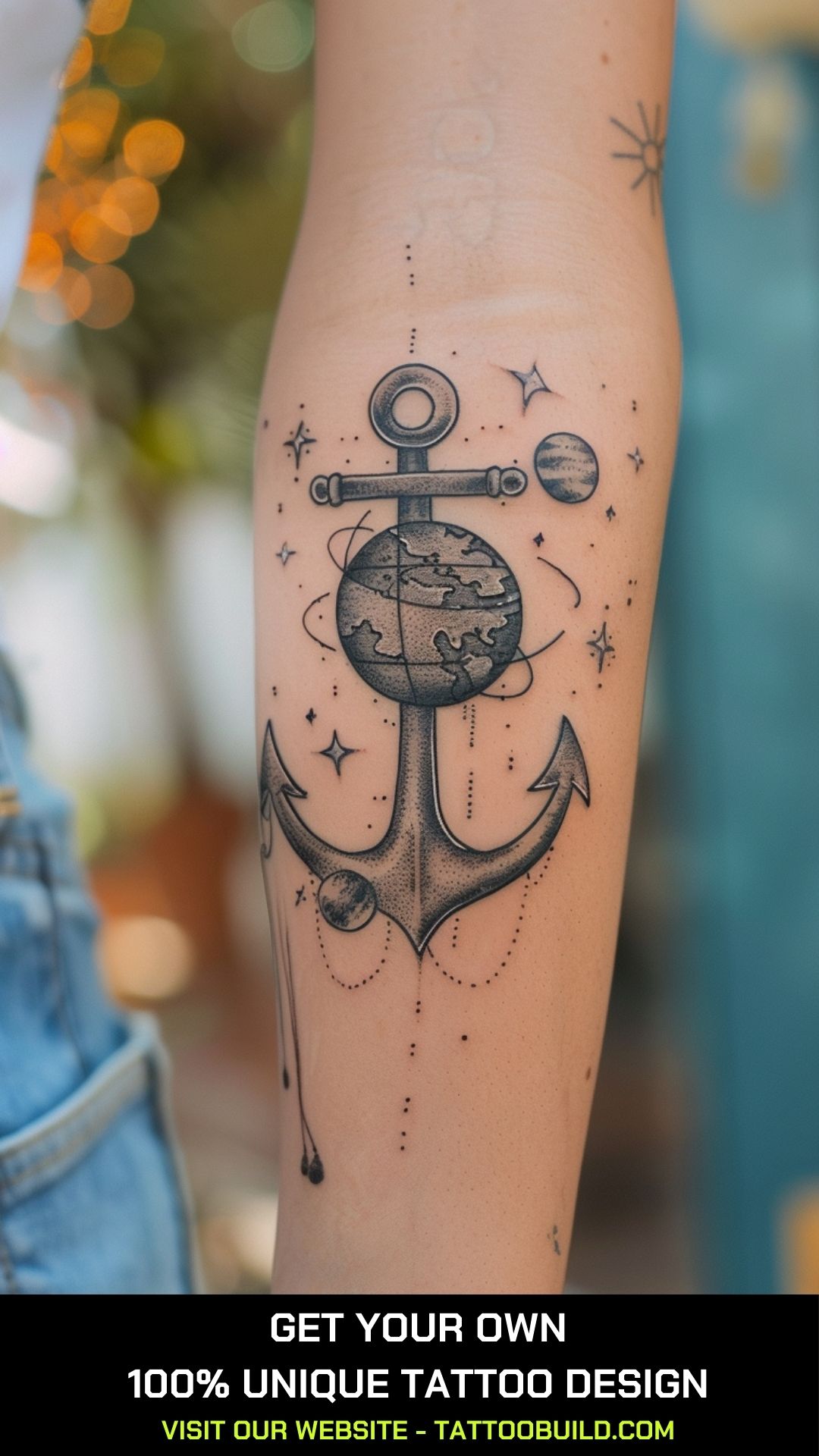
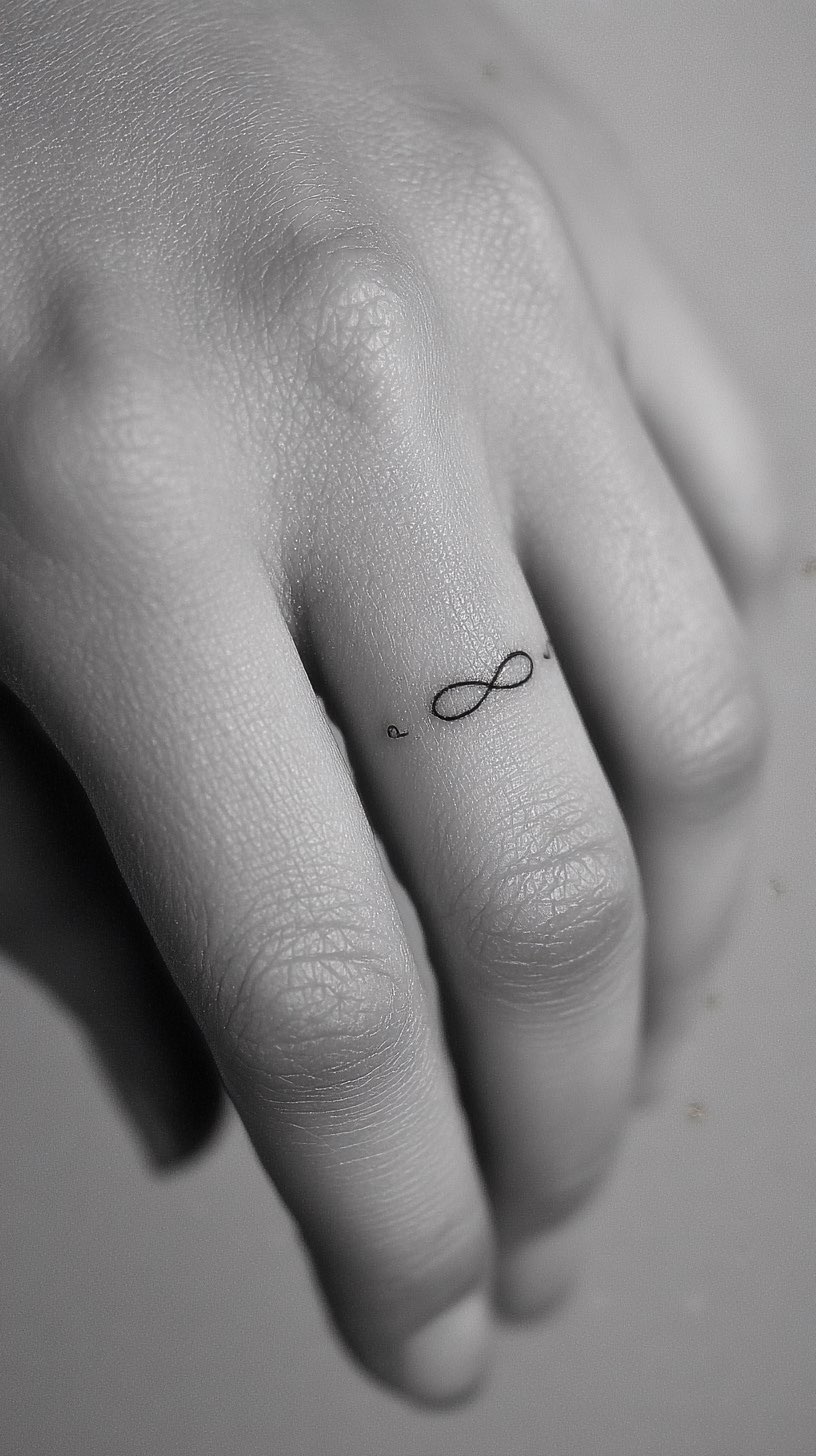
| Fine line / minimalist | Quiet, personal, modern | 1–2 inches | Softens noticeably; often needs a touch-up in 5–10 years | Wrist, ankle, ribs, behind the ear |
| Black and grey realism | Weight, memory, memorial | 5–10 inches | Good if contrast is strong; mid-greys can fade flat | Upper arm, chest, back |
| Neo-traditional colour | Bold, decorative, storybook | 4–8 inches | Strong, though colour needs sun protection | Thigh, shoulder, outer arm |
If you are torn, I usually steer people toward traditional. It is the only one of the four that I have never seen a client return to unhappy about legibility.
Why the Anchor Has Outlasted Almost Every Other Nautical Symbol
The anchor works as a tattoo for a plain visual reason: it is a strong vertical shape with a heavy base and a clear silhouette. That is exactly what skin wants.
Tattoo ink spreads slightly over a lifetime as the body reorganises the pigment held in the dermis. Designs built on thick lines and open negative space survive that spread; designs built on delicate detail do not.
The symbolism is just as durable. Long before it was a sailor’s mark, the anchor was an early Christian emblem — it appears in the Roman catacombs as a covert reference to hope, partly because its shape hides a cross (Catholic Encyclopedia, “Anchor”).
By the eighteenth and nineteenth centuries it had become part of a working sailor’s visual vocabulary, alongside swallows, ropes and ships. Those maritime motifs are still some of the most requested pieces I see, and they pair naturally — see our collection of ship tattoo ideas for how the two work together.
What makes the anchor unusual is that its old meanings never got replaced — they stacked. A modern anchor tattoo can carry the sailor’s meaning, the religious meaning, and a purely personal one at the same time, without any of them cancelling the others out.
What Anchor Tattoos Symbolize
Here are the six meanings that come up again and again when I ask people why they chose the design.
A Symbol of Stability and Security
This is the meaning most people land on: something in your life holds you in place when conditions get rough.
An anchor does not stop a storm and it does not move the boat. It just keeps the boat from being carried somewhere it cannot come back from — which is a fairly precise description of what a good support system does.
When I have asked clients to say the meaning out loud, this one usually comes with a specific name attached: a parent, a partner, a sponsor, a sibling. The anchor is rarely abstract for the person wearing it.
If stability is your meaning, weight matters visually. A thin, wispy anchor undercuts the idea; a solid, heavy one reinforces it.
Nautical Heritage and the Sailor’s Badge
Historically, anchors were earned marks. Across various naval and merchant traditions they were associated with sea service, crossings and time served.
I want to be careful here, because tattoo history is full of confident claims that do not survive checking. The specific “one anchor equals crossing the Atlantic” type rules vary by fleet, era and telling, and I would not treat any single version as gospel.
What is reliable is the broader pattern: sailors marked service and superstition on their skin, and the anchor was one of the core symbols in that vocabulary.
Every artist I have asked who does a lot of traditional work says the same thing — clients with genuine maritime service almost always want the plainest version of the design, not the most decorated one.
Hope, Faith, and the Hidden Cross
The religious reading of the anchor comes mainly from Hebrews 6:19, which describes hope as “an anchor for the soul, firm and secure” (background on the passage).
That line is why the anchor appears on gravestones, church carvings and early Christian burial sites — and why it is still one of the most common faith tattoos that does not look overtly religious from across a room.
In my experience this discretion is the whole appeal. People who want their faith on their skin but not on display gravitate to the anchor over a plain cross.
If that is your meaning, ask your artist to keep the crossbar clean and the shank straight. Over-styling the shape is what buries the cross reference.
Love, Loyalty, and “Refuses to Sink”
Anchors with names, dates or initials are extremely common, and they read as loyalty rather than romance — which is part of why they age better than most couple tattoos.
The phrase “refuse to sink” is by far the most requested anchor script I have seen. It is worth knowing how popular it is before you commit to it.
My honest advice on name tattoos has not changed in years: put the relationship in the symbol, not the spelling. An anchor that means your mother is still meaningful in twenty years; the word itself locks you in.
Memorial anchors are a genuine exception. Dates for someone who has died carry a different weight, and almost nobody regrets those.
Personal Grounding and Staying True
This is the fastest-growing meaning I see, and it has nothing to do with the sea. The anchor stands for the person’s own values holding steady.
People in recovery, people who have moved countries, people coming out of a chaotic few years — this reading shows up constantly in those conversations.
Design-wise, this meaning tends to want a smaller, quieter piece. A wrist or inner forearm anchor you can see yourself, rather than one aimed at other people.
If that is the direction you are leaning, the broader minimalist tattoo ideas collection covers what actually survives at small scale and what does not.
New Beginnings and Weathering the Storm
Anchors get lifted as often as they get dropped, and a lot of people choose the symbol for exactly that half of the cycle.
Read that way, the anchor is not about staying put — it is about having survived something and being able to move on from it deliberately.
I have tattooed this meaning onto people after divorces, after leaving jobs and after finishing long medical treatment. It is usually paired with waves, a compass or a rising sun to make the forward motion explicit.
Adding water to the design tips it firmly in this direction. Our guide to ocean tattoo ideas is useful if you want that element done properly rather than as an afterthought.
Popular Anchor Tattoo Variations and What They Change
Adding an element does not decorate the meaning — it redirects it. Here is what each common pairing actually does.
The Anchor With Rope or Chain
Rope is the single most common addition, and it shifts the meaning from the thing that holds you to the connection that does the holding.
A chain reads harder than rope. Clients who choose chain are usually pointing at something they could not escape rather than something they chose.
One practical note from the chair: rope wraps eat space fast. A rope-wrapped anchor generally needs at least four inches to stay readable long-term.
Anchor With a Compass
This is the most requested combination I encounter, and the meaning is neatly balanced: the anchor holds, the compass points.
Together they read as “I know where I am going and I know what keeps me steady” — which is why it is so common as a travel or transition piece.
Compasses are detail-heavy, so this pairing needs size. If you are considering it, our breakdown of compass tattoo meaning covers how the second symbol behaves on its own.
Anchor With a Swallow or Rose
The swallow is the anchor’s oldest companion in traditional tattooing, carrying its own associations with returning home safely.
A rose softens the whole design and pushes it toward love and remembrance rather than service or grit.
If the bird is doing the symbolic heavy lifting for you, read up on the meaning of a swallow bird tattoo before you commit to the pairing.
Anchor With Sea Creatures
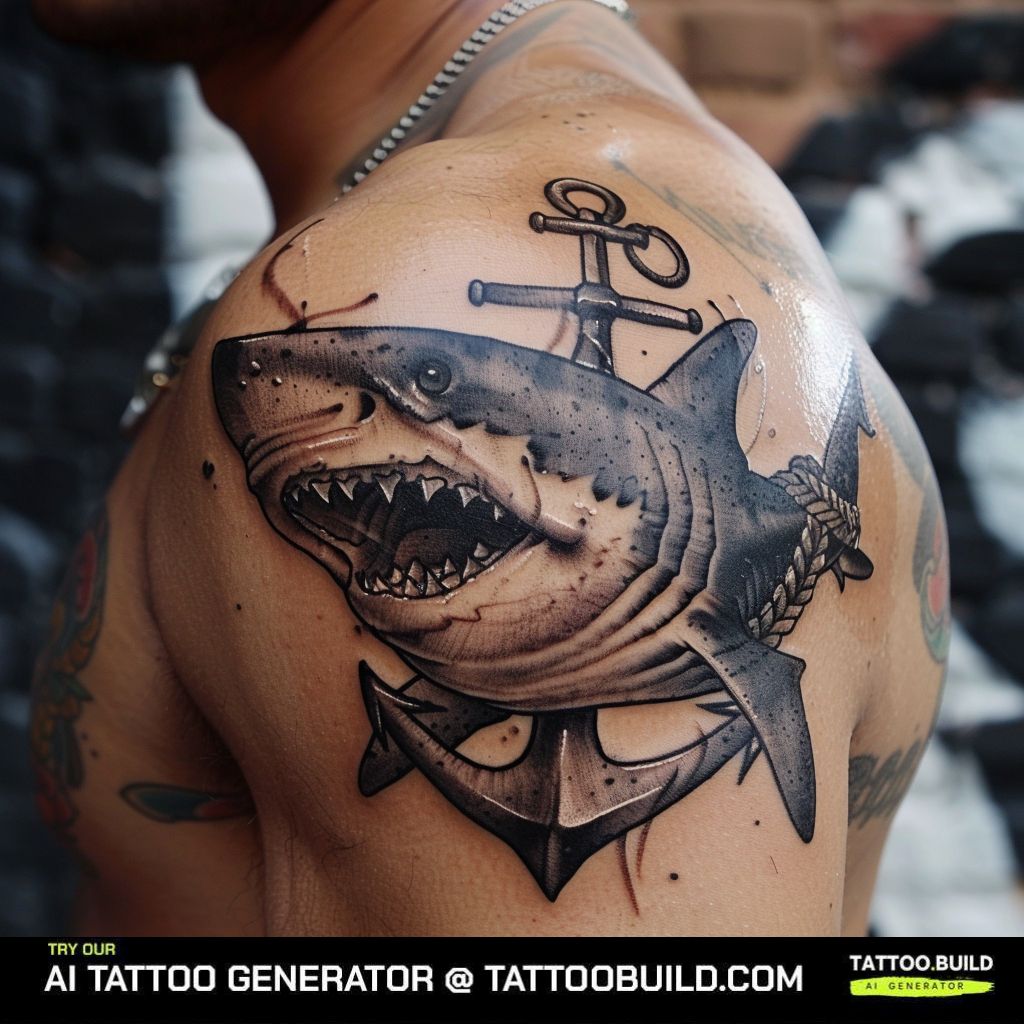
Sharks, octopuses, crabs and koi all show up wrapped around anchors, and each one adds an edge of danger or resilience to the base symbol.
The shark version in particular has become a style of its own — we cover it separately in our shark and anchor tattoo meaning guide.
In my experience these compositions only work above about six inches. Below that the creature and the anchor fight each other for the same silhouette.
Placement, Sizing and Aftercare
Placement changes how an anchor tattoo is read almost as much as the design does. Forearms and calves read as heritage; wrists, ankles and ribs read as private.
Hands, fingers and feet are the high-turnover placements. Constant friction and washing mean those pieces commonly need touch-ups far sooner than anywhere else — plan for that rather than being surprised by it.
On size: I would not go below about one and a half inches for an anchor with any rope, chain or shading. The internal detail closes up as the ink settles.
For healing, follow the aftercare your artist gives you, since it is matched to the work they just did. General, reliable guidance on caring for new tattoos is published by the American Academy of Dermatology.
If a healing tattoo becomes increasingly painful, hot, swollen, or starts weeping after the first few days, stop guessing and see a doctor. Infections and allergic reactions to pigment both happen, both are treatable, and neither is something to manage from a blog post or a forum thread.
Long-term, sun is what fades tattoos. Sunscreen on healed work is the single highest-value habit for keeping an anchor crisp.
Common Mistakes and How to Avoid Them
The most common mistake is choosing a size that cannot carry the detail. A four-inch design shrunk to two inches does not become a smaller tattoo — it becomes a blurry one.
The second is copying a reference exactly. Bring three or four images that show the feeling you want, then let the artist draw something that fits your body.
The third is treating placement as a last-minute decision. Sit with a stencil for ten minutes and move your arm around before anyone starts.
The fourth is picking symbolism you have not thought through. If you want the anchor to mean something specific, spend an hour with our guides to wave and moon tattoo meaning and symbolic back tattoos before you book.
Still not sure? That is a good sign, not a bad one. Anchors are not going anywhere, and waiting a month costs you nothing.
Frequently Asked Questions
What does an anchor tattoo symbolize most commonly?
Stability and hope are the two meanings that come up most often. The anchor represents whatever holds you steady when circumstances are not steady — a person, a belief, a set of values. It carries a secondary nautical meaning tied to sea service and a religious meaning tied to hope. Most people wearing one mean at least two of those at the same time.
Are anchor tattoos only for sailors or people in the navy?
No. Anchors began as a maritime mark but have been a general-purpose symbol for well over a century. In my experience, the majority of anchor tattoos I see are chosen for personal grounding rather than service. If you do have naval or merchant service, a plainer traditional design tends to read as more authentic than a heavily decorated one.
Does an anchor tattoo have a religious meaning?
It can. The anchor is an early Christian symbol of hope, linked to Hebrews 6:19 and found in the Roman catacombs, where its shape also functioned as a discreet cross. Plenty of people choose it for exactly that reason. Equally, plenty choose it with no religious intent at all, and neither reading cancels the other.
Where is the best place to get an anchor tattoo?
The forearm and upper arm are the most reliable placements: flat enough for clean lines, stable enough to age well, easy to cover or show. Wrists, ankles and ribs suit smaller, more private pieces. Hands and fingers look excellent at first but fade fastest. Choose based on how visible you want it and how much upkeep you are willing to do.
Do anchor tattoos age well over time?
Usually yes, and better than most designs, because the anchor is a bold silhouette rather than a fine-detail image. Traditional-style anchors with heavy outlines hold their shape for decades. Fine-line and micro versions soften faster and often need a touch-up within roughly five to ten years. Sun exposure is the biggest variable in either case.
Quick Summary
- An anchor tattoo symbolizes stability, hope, loyalty and staying grounded — nautical service is only one reading among several.
- Its Christian meaning comes from hope as “an anchor for the soul” and from the shape’s hidden cross.
- Traditional, heavy-lined anchors age the best; fine-line versions are elegant but need touch-ups sooner.
- Rope shifts the meaning toward connection, a chain toward something inescapable.
- Compass pairings read as direction plus steadiness; swallows and roses soften the design toward home and love.
- Forearms and upper arms are the safest placements; hands and fingers fade fastest.
- Keep it at least one and a half inches if there is any rope, chain or internal shading.
- Follow your artist’s aftercare, use sunscreen on healed work, and see a doctor if healing looks infected.