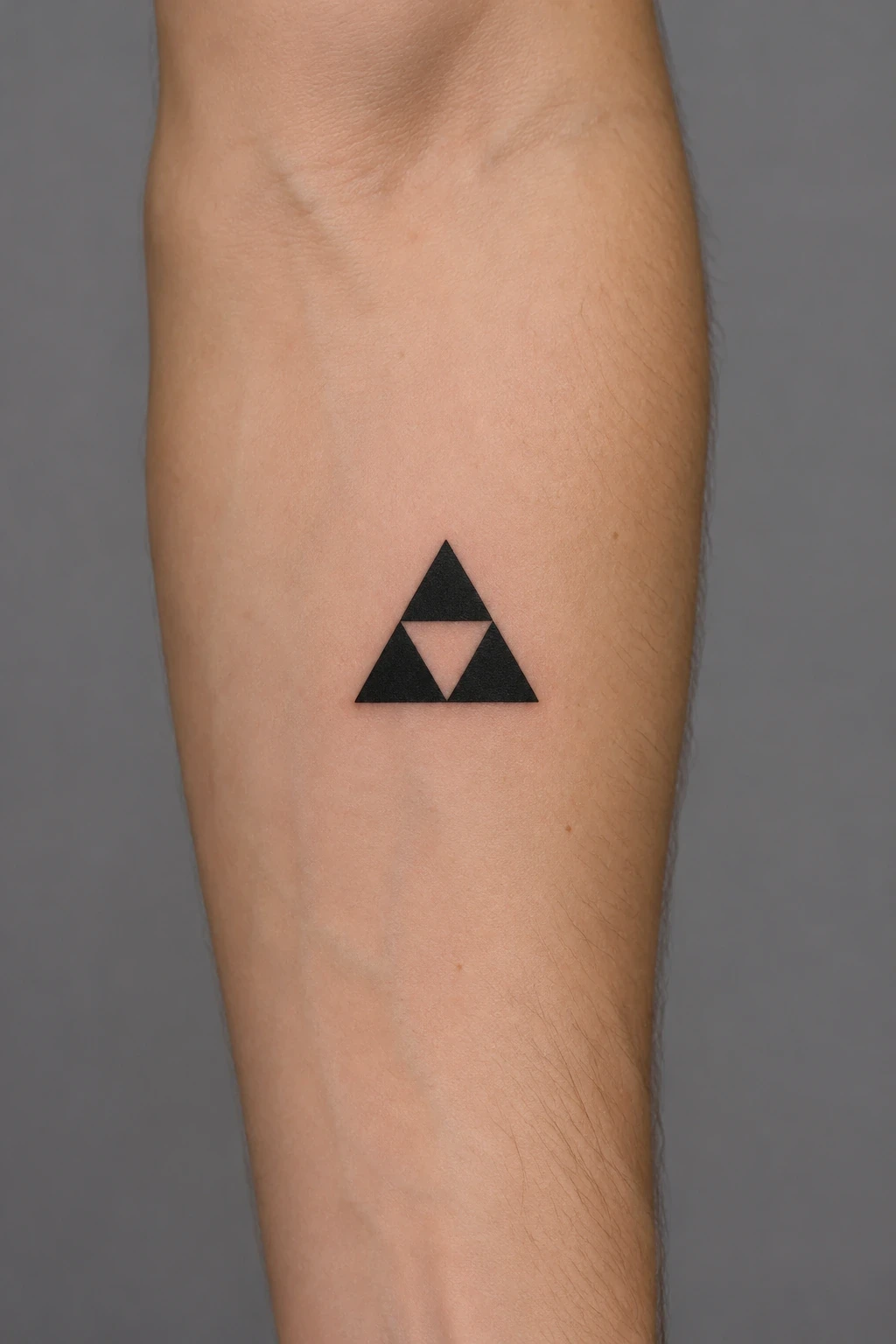
I have lost count of how many compass tattoos I have seen come through a studio, and I have never once seen the symbol look dated. The compass survives because it is one of the very few tattoo symbols that means something honest about the person wearing it without announcing anything private.
It reads instantly to a stranger — direction, guidance, travel — while the specific reason sits underneath, known only to the person who chose it.
That double layer is the whole appeal. When I ask people why they picked a compass, almost nobody gives me the answer I expect from the design. The needle on the skin is public; the thing it points at is not.
This guide unpacks what a compass tattoo actually means, how the variations shift that meaning, and the practical decisions that separate a compass that still reads clearly in fifteen years from one that blurs into a grey disc. If you are still gathering visual references, our gallery of compass tattoo designs and inspirations is a good place to start before you read on.
Which Compass Meaning Fits You?
Not every compass says the same thing. Before you book anything, it is worth knowing which of these four you are actually asking for, because they are drawn differently.
| Design | Core Meaning | Reads Best At | Typical Session |
|---|---|---|---|
| Simple magnetic compass | Protection, guidance, coming home safe | 2–3 in / 5–8 cm | 1–2 hours |
| Compass rose | Many possible directions, choosing one | 3–5 in / 8–13 cm | 2–4 hours |
| Nautical compass with case | Maritime heritage, a working tool | 4–6 in / 10–15 cm | 3–6 hours |
| Compass plus second symbol | A specific, named direction | 5 in+ / 13 cm+ | 4–8 hours, often two sittings |
The right-hand columns are the ones people skip. A compass rose crammed into a two-inch space stops being a compass rose — it becomes a star, and within a decade of ink spread it becomes a smudge.
Why the Compass Has Outlasted Almost Every Other Symbol
The compass is old technology with a very long history behind it. Magnetic direction-finding was in use in China well before it reached European navigation, and by the medieval period the instrument had become central to open-water sailing — you can read a solid overview of that development at Britannica.
That matters for tattooing because maritime culture is where a huge portion of Western tattoo tradition comes from. Sailors carried the imagery of their trade on their skin, and the compass was among the most obvious candidates.
A sailor without a compass was genuinely in danger. The symbol was not decorative for them — it was the difference between a route and a guess. That original stake is still faintly present in the design, which is part of why it does not feel trivial.
The second reason the compass persists is structural. It is a symbol built from clean geometry, which means it survives the two things that destroy tattoos: ink spread and fading. A radial design with defined points stays legible even after decades of blur, in a way that dense portraiture does not.
And the third reason is simply that its meaning is flexible without being vague. Direction means something specific to almost everybody, but what direction means to you is yours. Few symbols manage both.
What a Compass Tattoo Actually Means
In practice the compass carries around seven distinct meanings. Most people arrive with one of them and leave having realised they meant two.
1. Guidance and Protection
This is the oldest reading and the one closest to the maritime source. The compass was a protective object: carry it, and you would not be swallowed by open water.
Worn on skin, that becomes a wish rather than a tool — the hope that you will be guided through whatever you are heading into. In my experience this is the meaning people choose when someone else is involved: a compass for a child, a partner, a person deploying or emigrating.
It is also the reading that pairs most naturally with religious or family imagery, because the underlying idea is the same. Something outside you is helping you steer.
2. Finding Your Own Way
The dominant modern meaning is internal rather than external: not a guide watching over you, but your own capacity to orient yourself.
Every artist I have asked about compass bookings says the same thing — they cluster around transitions. People come in after a move, a divorce, a career change, the end of a degree, the end of a long illness.
The compass in this reading is a statement that the person trusts their own judgement about which direction matters. It is less about the destination and more about the confidence to pick a heading at all.
This is also why the compass works so well as a first meaningful tattoo. It marks a decision without committing you to explaining which one.
3. Never Being Permanently Lost
A quieter variant, and one people rarely say out loud in the consultation.
This is the compass as insurance — not a promise that you will always know where you are going, but that you will find your way back if you do not. It belongs to people who have had a genuinely disoriented period and came out of it.
When I have seen this meaning chosen, the design tends to be smaller and more private. Inner forearm, ribs, upper arm. It is not a tattoo aimed at an audience.
4. Adventure, Travel and Restlessness
The most extroverted reading, and the one most likely to appear alongside mountains, waves, planes or map lines.
Here the compass is not about being lost at all. It is about deliberately going somewhere unmapped, and the symbol works as equipment rather than reassurance.
If this is your version, look at how the design gets treated in our travel tattoo ideas and map tattoo ideas collections — the compass almost never appears alone in this category, and the companion element carries half the meaning.
Compass designs and the prompts behind them
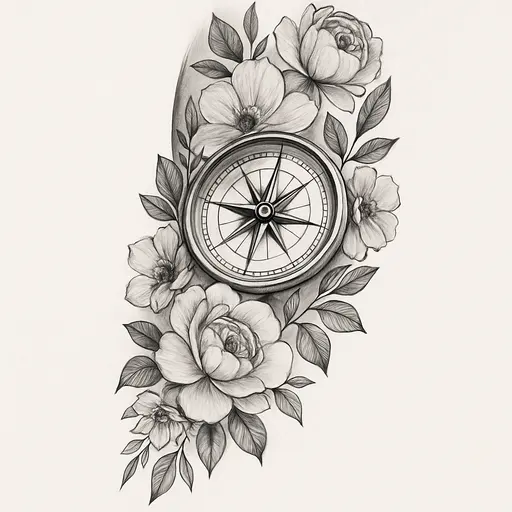
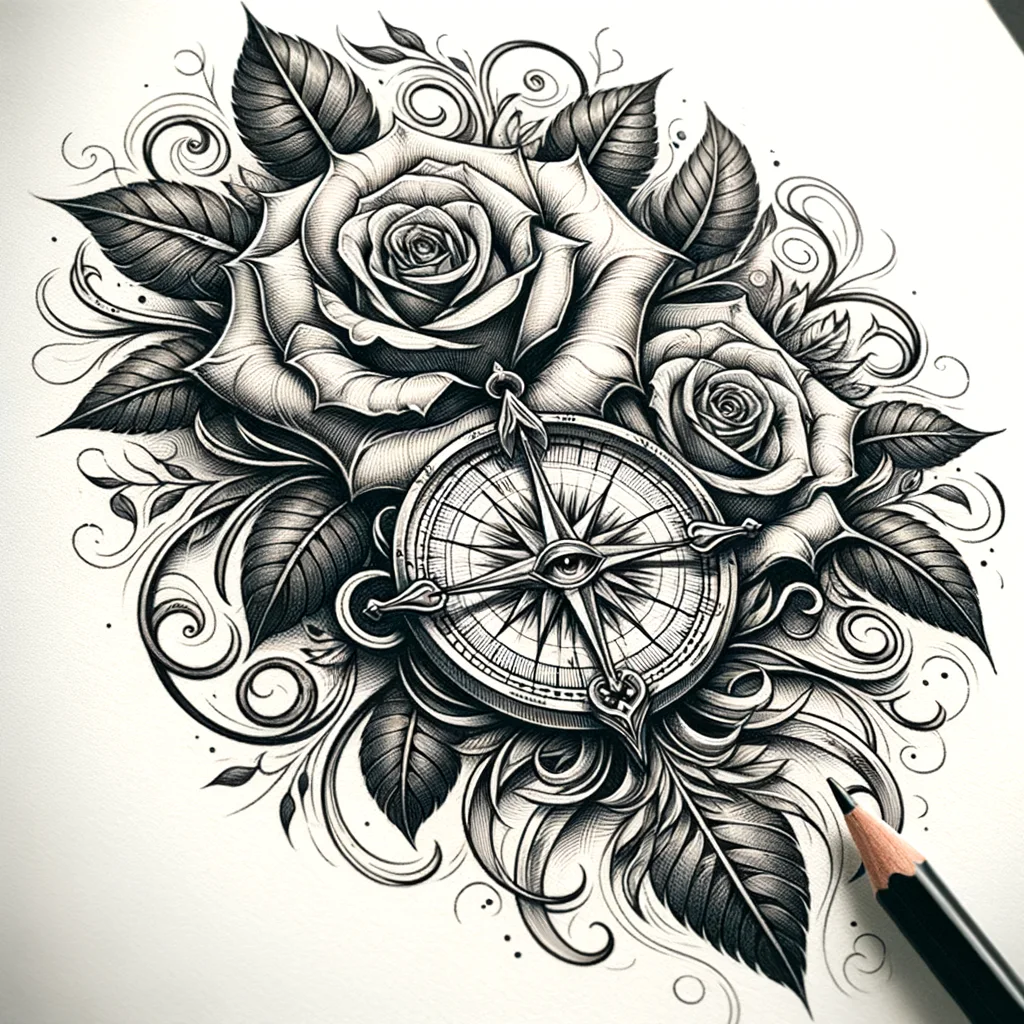
Floral arm sleeve with a compass tattoo design on a bright-white paper background, modern, realistic
Use this idea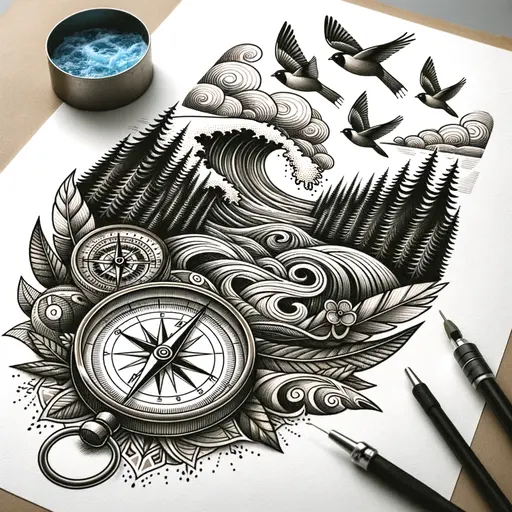
Compass, forest, waves, sparrows
Use this idea
Compass, timepiece, hummingbirds, sunflowers
Use this idea
5. True North
A compass rose with north emphasised is its own sub-meaning: a fixed value that does not move regardless of what is happening around it.
There is a nice literal wrinkle here that most people do not know. Magnetic north and true north are not the same point, and the angle between them — declination — changes depending on where you stand and drifts over time. The NOAA geomagnetic declination resource exists precisely because navigators have to correct for it.
I like this detail because it complicates the symbol in a useful way. Even a real compass does not point at true north; it points close, and you correct the rest yourself. If you want a tattoo that acknowledges that your values are approximate and maintained rather than fixed, that is the honest version of a true north piece.
6. Direction Over Destination
A compass tells you which way. It does not tell you what is at the end.
This distinction is the most underrated part of the symbol, and it is why the compass reads as more mature than, say, a map with an X marked on it. One commits to a bearing; the other commits to an outcome.
In my experience people who have been through a plan that collapsed tend to gravitate here. The compass becomes a deliberate refusal to promise themselves a specific ending.
7. A Personality Statement, Not a Turning Point
Not everyone who gets a compass is marking an event. Some people simply are compasses — unusually clear about their priorities, hard to knock off course, slightly irritating about it.
These tend to be the boldest compass tattoos: traditional styling, heavy black, visible placement. The design is not private because the trait is not private.
It is worth being honest with your artist about which of these two you are. A memorial-of-a-transition compass and a this-is-who-I-am compass want different sizes, different placements and often different styles entirely.
Compass Pairings and Variations
The fastest way to make a compass mean something specific is to give it a second element. Each pairing shifts the reading noticeably.
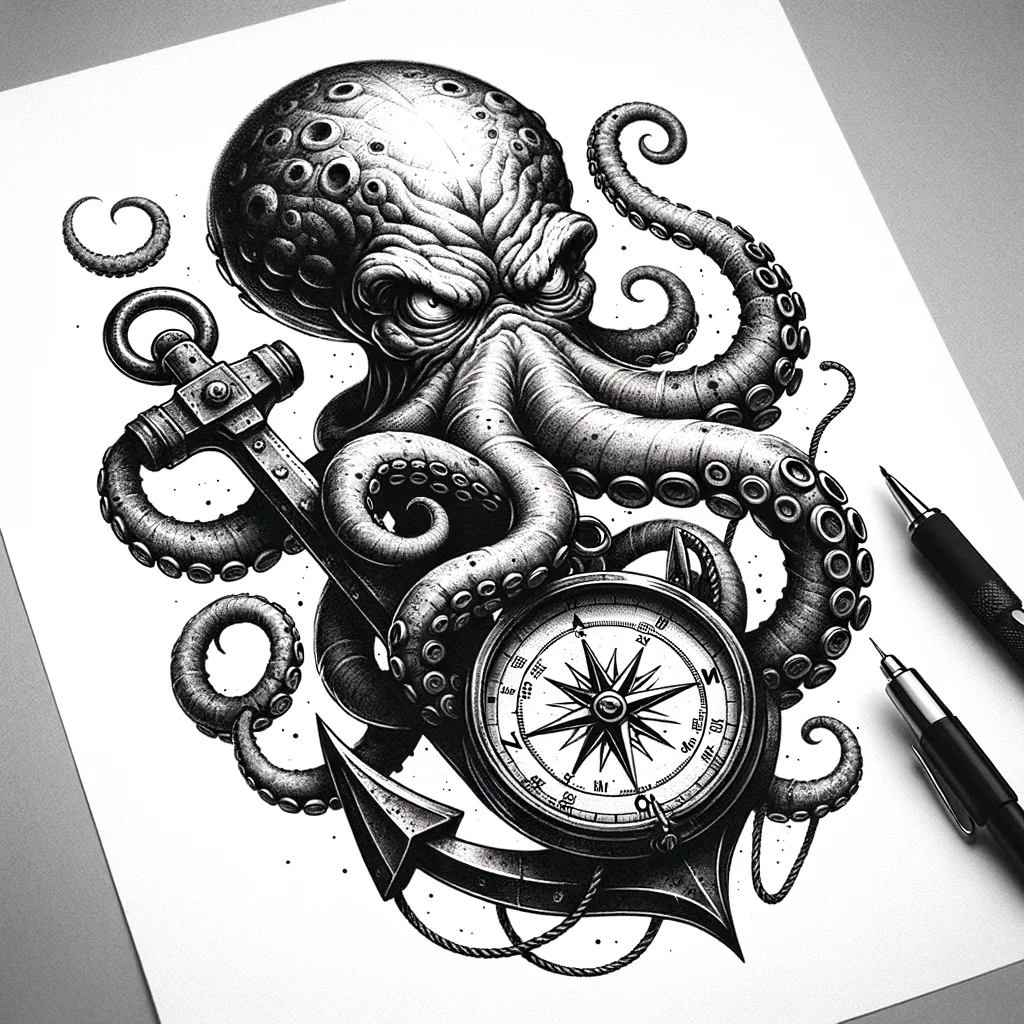
Compass and Anchor
Direction plus stability — the freedom to move and the ability to stop. This is the classic maritime combination and it still reads cleanly in traditional styling.
If the anchor half is doing most of the work for you, our guide to what an anchor tattoo symbolizes covers that side properly.
Compass and Ship or Wheel
Pushes the whole design back toward its nautical origin and reads as heritage rather than self-direction. It usually needs more space — see ship tattoo ideas for how much room the combination really wants.
Compass and Animal
An animal turns the compass into a character rather than an instrument. A wolf compass tattoo reads as instinct-led direction; a snake compass tattoo pulls it toward transformation and shed skin.
This is the pairing that most often goes wrong technically. Two detailed subjects competing in one circle will merge as they age unless the artist plans clear separation early.
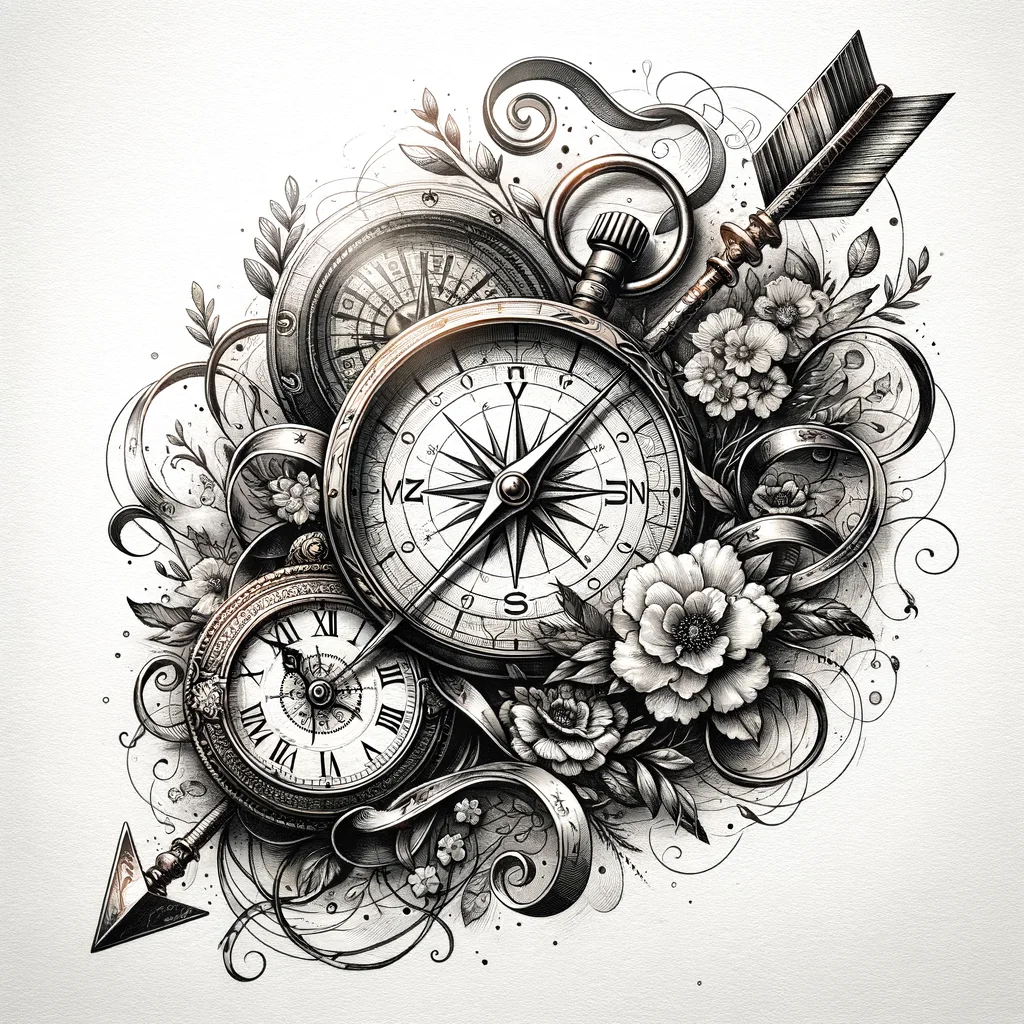
Compass and Clock, Quote or Coordinates
Time, words or numbers make the meaning explicit — a date, a place, a line you live by. It is the least ambiguous version and the one most likely to feel over-specific in twenty years.
Coordinates in particular: be certain about the place before you commit. Text is also the first element to blur, so keep it large enough to hold.
Getting a Compass Tattoo That Ages Well
Size is the single biggest predictor of whether a compass still looks like a compass in fifteen years. Radial designs live or die on the gaps between their points, and those gaps are the first thing ink spread closes.
As a rough working rule, a simple compass wants at least two to three inches across; a full compass rose with sixteen points or ornamental detail usually wants four or more. If an artist tells you your idea will not fit the space you have picked, that is technical advice, not a sales pitch.
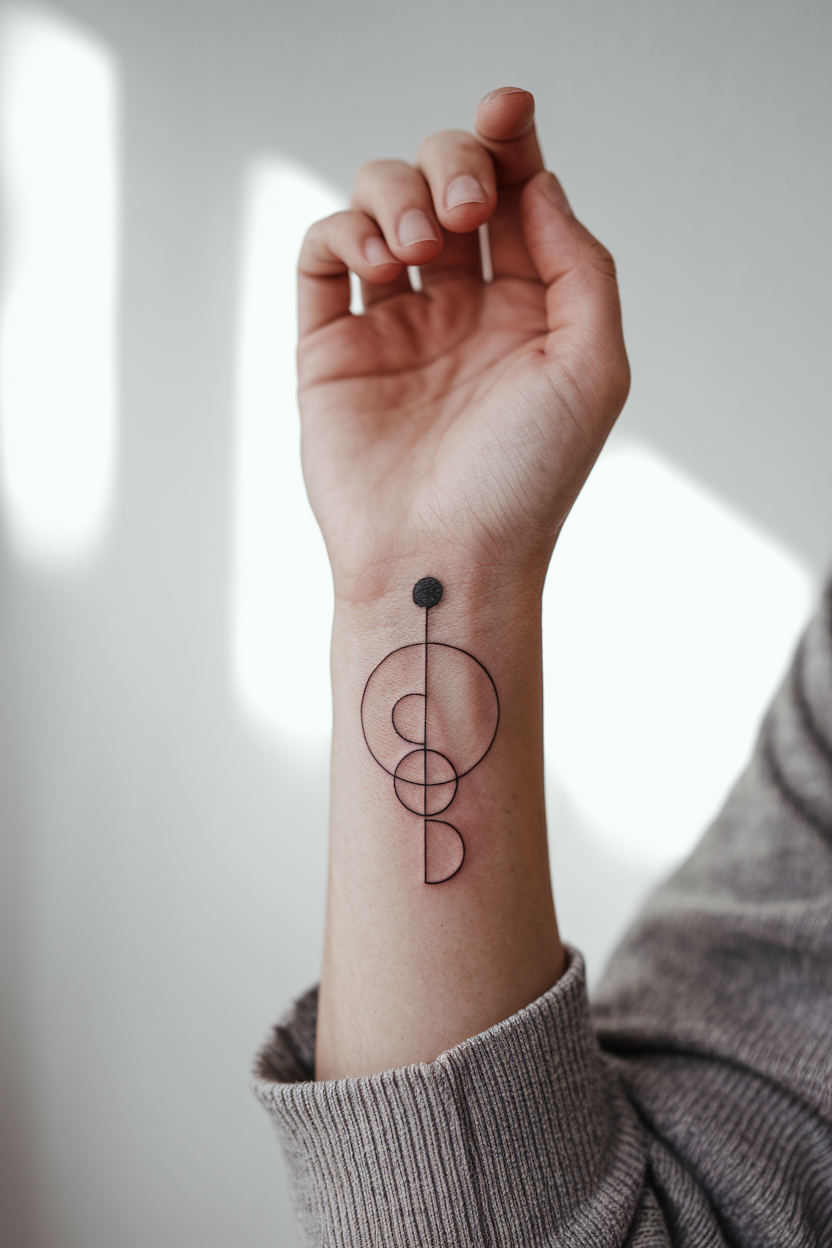
Placement matters almost as much. Forearms, outer upper arms, calves and shoulder blades all hold detail well and stay relatively protected. Hands, feet, fingers and the inner wrist take more friction and sun, and fine geometric work there often needs touching up sooner — the compass forearm tattoo guide covers why that placement is the default for a reason.
On healing, follow the aftercare your artist gives you rather than anything you read online, including this. Tattoos are open wounds for the first stretch, infections and allergic reactions do happen, and anything that looks wrong — spreading redness, heat, pus, a fever, a rash confined to one ink colour — is a reason to contact your artist and a doctor rather than wait it out. The American Academy of Dermatology has straightforward guidance on caring for tattooed skin, and nothing here is medical advice.
Still Not Sure? The Mistakes I See Most Often
The most common mistake is treating the compass as decoration and then being disappointed that it does not feel meaningful. Decide what direction means to you before the stencil goes on, not after.
The second is copying a reference photo exactly. A compass drawn for someone else’s forearm rarely sits right on yours, and most artists would far rather design around your anatomy than trace a screenshot. Bring three or four references and let them build something.
The third is over-detailing. Compasses tempt people into adding roman numerals, tiny cardinal lettering, filigree, a map background and a quote. In most cases the design would have been stronger with two of those elements removed — the neo traditional compass tattoo approach handles density better than fine line if you want a busy piece.
The fourth is ignoring how the piece will sit alongside future tattoos. A compass is a strong anchor point for a sleeve, but only if it is placed where the rest of the arm can grow around it.
Frequently Asked Questions
What does a compass tattoo mean?
A compass tattoo most commonly means guidance, direction and the ability to find your way — either through outside protection or through your own judgement. Its origin is maritime, where a compass was the instrument that made safe navigation possible. In modern tattooing the meaning has shifted inward, so it usually marks a transition or a settled sense of personal direction. The specific meaning depends heavily on what, if anything, the compass is paired with.
Is a compass tattoo good for a first tattoo?
In most cases yes, and it is one of the designs I would actively suggest for a first piece. It is geometric rather than portrait-based, which means a wider range of artists can execute it well, and it ages better than heavily detailed work. It also carries meaning without forcing you to explain anything personal. Keep it at least two to three inches across and pick a low-friction placement like the forearm or outer upper arm.
What is the difference between a compass and a compass rose tattoo?
A compass is the instrument — usually a housing with a needle, sometimes drawn with a case or lid. A compass rose is the figure printed on a chart or dial, with eight, sixteen or thirty-two points radiating from a centre. The rose suggests many available directions and the act of choosing between them; the instrument suggests being guided along one. Roses generally need more space to stay readable.
Does a compass tattoo have to point north?
There is no rule, and artists orient them in whatever way suits the placement. That said, a clearly marked north point is what gives a compass rose its “true north” reading, so if that meaning matters to you, say so at the design stage. Some people deliberately point the needle toward a meaningful direction, or toward the heart. It is worth deciding before the stencil, because rotating a compass later is not a simple fix.
How much does a compass tattoo cost and how long does it take?
It varies enormously by artist, region and complexity, so treat any figure you read online as a rough guide only. As a rule of thumb, a small simple compass is typically a one to two hour session, a detailed compass rose two to four hours, and a compass combined with a second detailed subject often four to eight hours across one or two sittings. Most studios have a minimum charge that makes very small pieces less of a bargain than they look. Ask for a quote in the consultation rather than estimating from photos.
Quick Summary
- The compass means guidance, direction and the ability to find your way — the reading shifts from external protection to internal judgement depending on the design.
- Its roots are maritime, which is also why it fits traditional and nautical styling so naturally.
- A compass rose implies many possible directions; a simple instrument compass implies one.
- A marked north point creates the “true north” reading of a fixed personal value.
- The symbol is about direction rather than destination, which is what makes it feel less naive than a marked map.
- Pairings do most of the work: anchor for stability, ship for heritage, animal for instinct, clock or coordinates for specificity.
- Size is the main technical risk — give a simple compass 2–3 inches and a full rose 4 or more, and avoid high-friction placements for fine detail.
- Follow your artist’s aftercare, and contact a doctor rather than the internet if healing looks wrong.