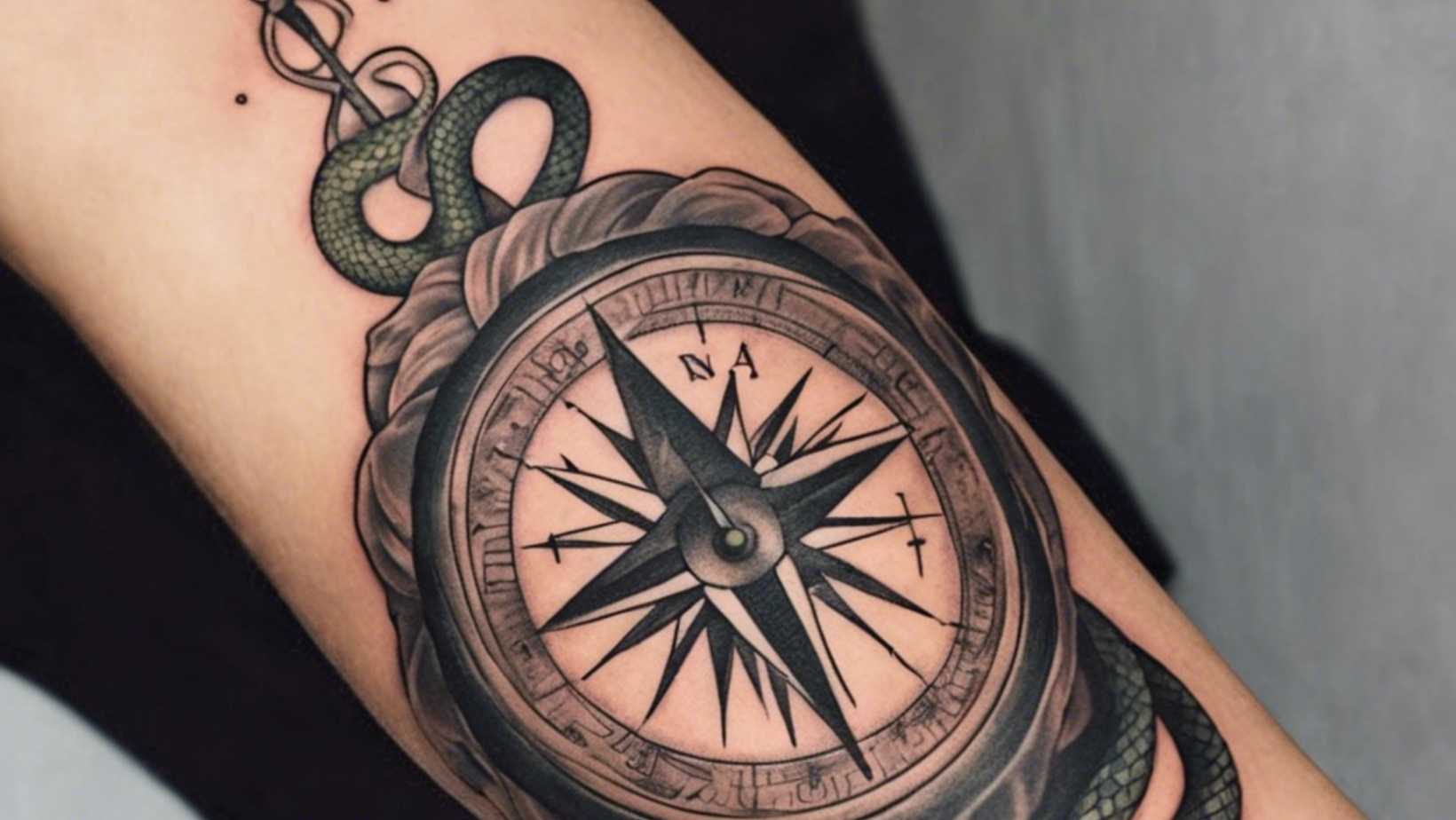
A snake compass tattoo pairs two symbols that pull in opposite directions, and that tension is exactly why it works. The compass says you know where you are going; the snake says you are willing to become someone else on the way there.
I have watched this design move from a niche request to something artists now get asked for most months, and the reason is usually personal rather than aesthetic. People bring it in after a move, a career change, or a year they would rather not repeat.
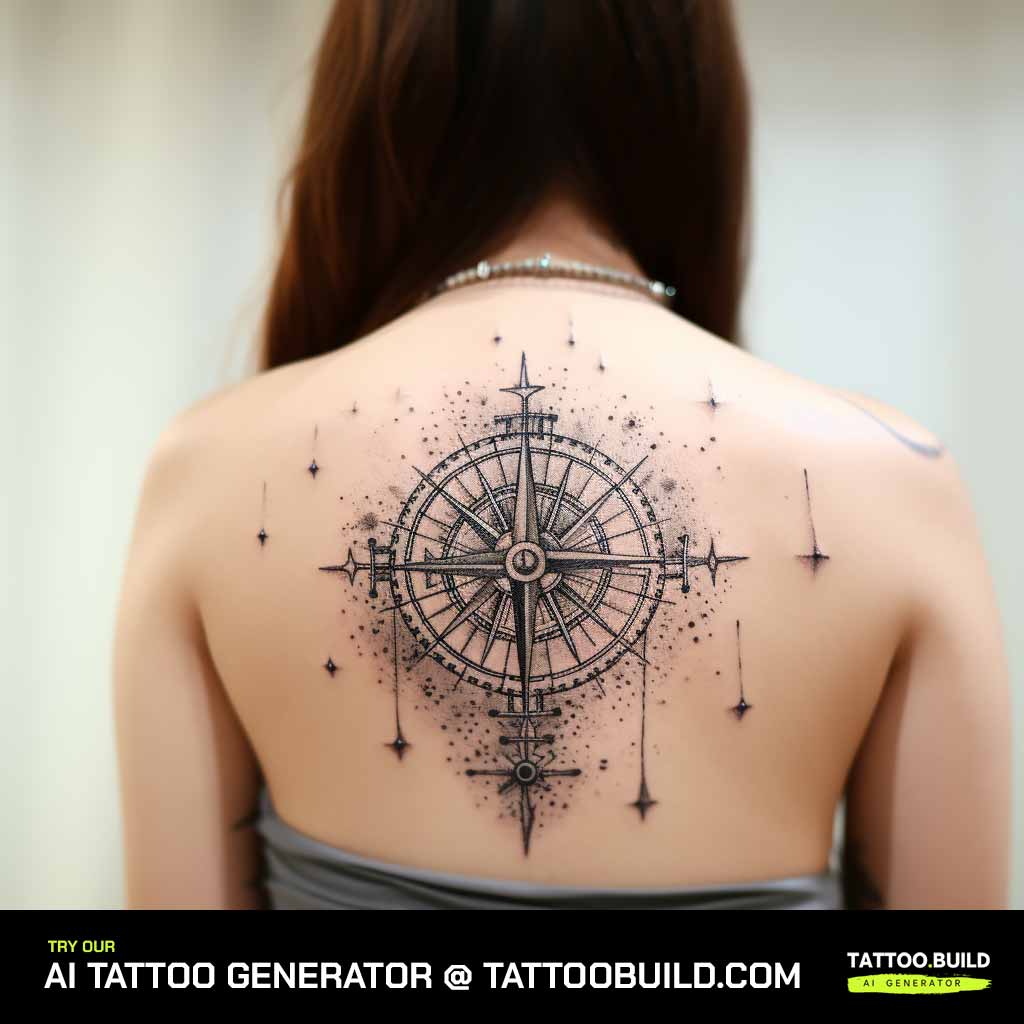
If you have only ever looked at the two halves separately, it is worth reading up on what a compass tattoo actually means before you commit, because the snake changes the reading of it substantially.
Below is everything I have learned from looking at hundreds of these pieces: which styles hold up, where they sit best on the body, what they cost in time, and the mistakes I keep seeing.
Which Snake Compass Style Is Right for You?
Style is the first real decision, and it drives everything after it – size, session length, and how the tattoo looks a decade from now.
| Style | Best Size | Typical Sitting | How It Ages | Good If You Want |
|---|---|---|---|---|
| Fine line | 3-6 inches | 2-3 hours | Softens noticeably; may need a touch-up | Subtlety and a light first tattoo |
| American traditional | 4-8 inches | 3-4 hours | Excellent – built for it | Something that still reads clearly in 20 years |
| Blackwork / dotwork | 5-10 inches | 4-6 hours | Very well; solid black is the most stable | High contrast and graphic impact |
| Black and grey realism | 6-12 inches | 6-10 hours, often split | Fine if not undersized; fades in sun | Detailed scales and a real-looking compass |
| Neo traditional | 5-10 inches | 5-8 hours | Good outlines, colour needs sun care | Bold colour without losing structure |
| Minimalist | 1.5-3 inches | 45-90 minutes | Lines can blur; simplify the compass | Something small and easy to cover |
What the Snake and the Compass Actually Mean Together
On its own, the snake is one of the oldest renewal symbols there is – it sheds, it survives, it starts again. The broader meaning of snake tattoos covers healing, danger and rebirth depending on the culture you look at.
The compass is far more literal. It is a navigation tool, and in tattooing it has carried the same meaning for over a century: find your way home, or at least do not lose the direction you set.
Put them together and you get something more specific than either half. The design reads as directed change rather than drift.
That is the reading most artists I have spoken to give it, and it is why the piece lands so often with people who have just made a deliberate, difficult decision.
It is worth saying plainly that none of this meaning is fixed. In some traditions the serpent is a guardian; in others it is a warning. Your tattoo means what you decide it means, and no one on the internet gets a vote.
Snake Compass Tattoo Ideas by Style
These are the six approaches I see most often, roughly in order of how frequently they get requested. If you want a wider pool of serpent work to compare against, the general snake tattoo gallery is a useful reference point.
Fine Line Snake Compass
Fine line strips the design back to outline and a small amount of grey wash. The snake becomes a single flowing curve rather than a rendered animal.
The trade-off is honest: single-needle work sits shallower and lighter, so these pieces usually soften within a few years. Most fine line artists I have asked expect a touch-up at some point, and say so upfront.
Keep the compass to four or eight points if you go fine line – a 32-point rose at this weight turns into a grey smudge as the ink settles.
In my experience this is the version people choose for a first tattoo, and it is a reasonable choice for that. Shorter session, less commitment, easy to build on later.
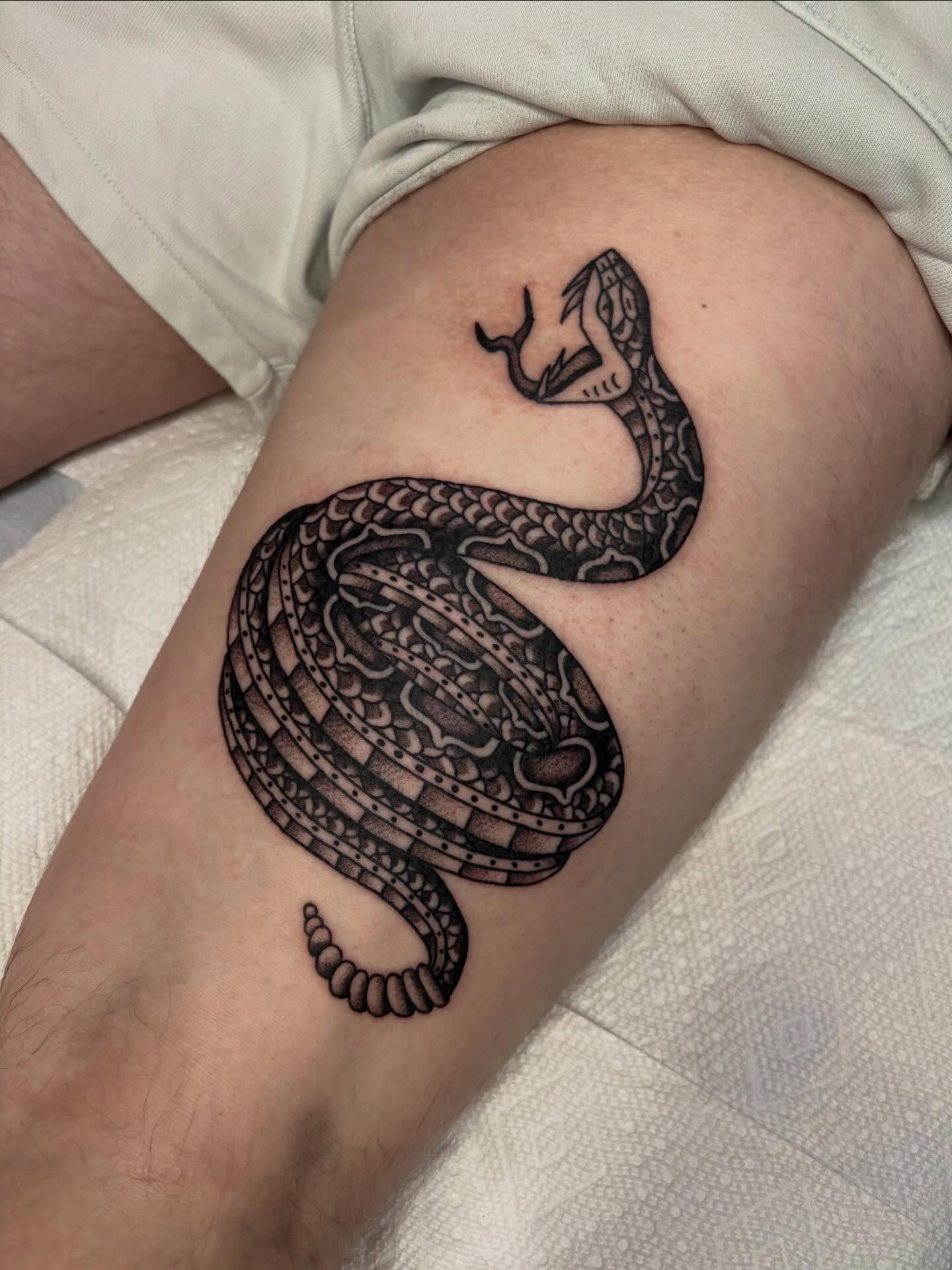
American Traditional Snake Compass
Bold outlines, a limited palette, and no shading gradients to speak of. Traditional exists because it was designed to survive decades on skin, and it does.
The snake in this style is stylised rather than realistic – flat scales, an open mouth, a strong S-curve. The compass usually sits as a rose or a ship’s wheel behind it.
When I compare ten-year-old traditional pieces against ten-year-old realism at the same size, the traditional ones are almost always the ones still reading clearly from across a room.
A banner underneath is common and genuinely useful. It gives you somewhere to put a date, a set of coordinates, or one word, without cramming text into the design itself.
Blackwork and Dotwork
Blackwork treats the compass as a solid shape and lets the snake cut through it as negative space. It is the highest-contrast option on this list.
Dotwork gets to the same graphic feel by a slower route, building tone out of stippling rather than solid fill. It takes noticeably longer for the same coverage.
Solid black is the most stable thing you can put in skin, which is why these age so well. The cost is that it is difficult to change your mind about later.
Geometric framing – a hexagon, a circle, a set of hard axis lines – suits this style particularly well, because the snake’s organic curve needs something rigid to push against.
Black and Grey Realism
Realism is where the snake compass tattoo gets its most dramatic results and its most common failures, usually for the same reason: size.
Individual scales, the texture on a brass compass housing, the reflection in the glass – all of that needs room. Below roughly palm size, the detail collapses into grey.
Every realism artist I have asked gives the same advice: go bigger than you think you need, or pick a different style. That is not upselling, it is how the detail survives.
Expect this one to be split across sessions. A full forearm or calf realism piece running six to ten hours is normal, and being tattooed for ten straight hours is not something most people should attempt in one sitting.
Neo Traditional in Colour
Neo traditional keeps the strong outlines of old school but opens up the palette and the detail. It is my favourite compromise for this particular design. See more neo traditional compass work here.
Greens and teals on the snake against a warm brass compass is the combination I see most, and it works because the colours sit opposite each other.
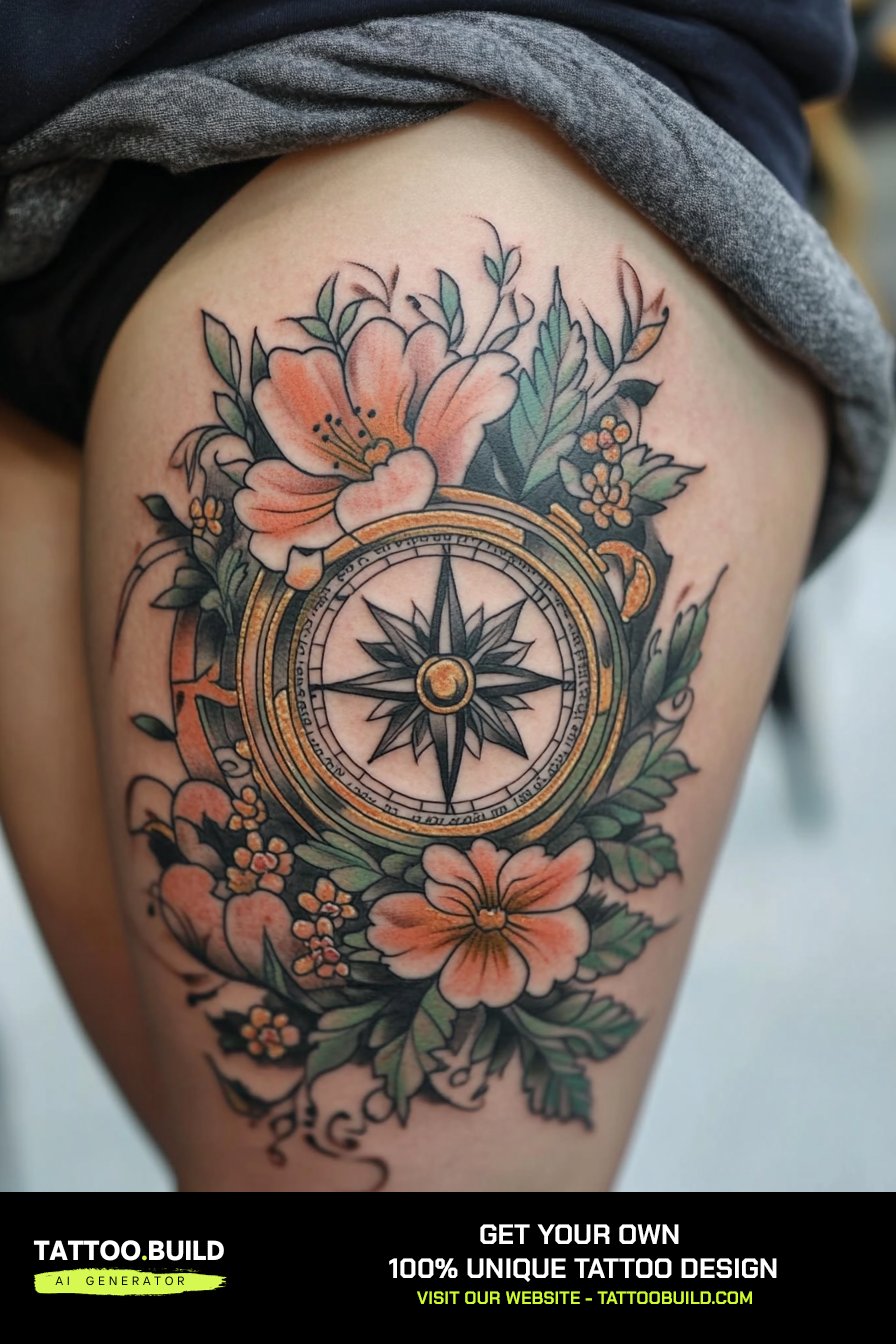
Florals are a common addition here – roses, peonies, or foliage filling the space around the compass. They soften the aggression of the serpent without weakening the composition.
Colour needs more aftercare than black and grey, mostly in the form of sun protection. The American Academy of Dermatology covers long-term tattooed skin care in more detail than I will here.
Minimalist and Small Versions
The smallest workable snake compass I have seen sat at around an inch and a half, and it worked because the artist cut it down to a four-point compass and a simple coiled line.
That is the whole trick with small work – remove elements rather than shrink them. A miniaturised complex design does not stay legible.
Small pieces blur more than large ones over time because there is less space between lines for the ink to spread into. Plan for that rather than being surprised by it.
The upside is real: a short session, an easy heal, and something you can cover with a watch or a sleeve when you need to.
Best Placements and How They Change the Design
Placement is not just about visibility. The shape of the body part dictates how the snake can wrap, and a good artist will redraw the design for the spot you pick.
Forearm
The most common choice, and for good reason. The forearm gives you a natural vertical run that suits a snake’s body, with easy visibility and a relatively comfortable sit.
Inner forearm hurts more than outer but fades less, since it sees less sun. There is more on this in the compass forearm tattoo guide.
Chest and Over the Heart
Chest placement puts the compass over the heart, which is usually the whole point. It is a private placement that carries a specific meaning.
It is also one of the more painful spots, particularly near the sternum and collarbone. Worth knowing before you book a long session.
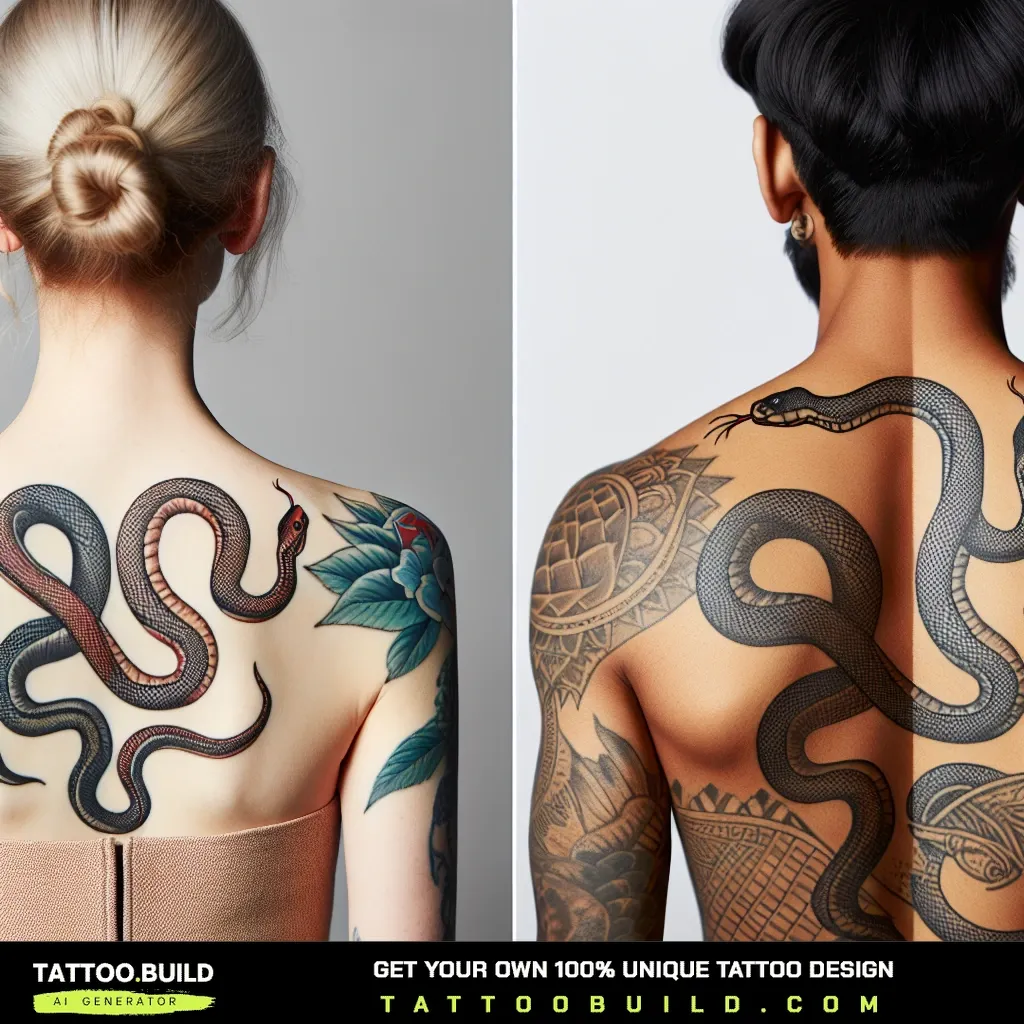
Upper Back and Shoulder Blade
The back is the best canvas on the body for detailed versions – flat, wide, and forgiving. If you want realism at full scale, this is where it fits.
The obvious drawback is that you will rarely see it yourself, and aftercare is harder to reach without help.
Calf and Leg
The calf lets the snake genuinely wrap, which suits designs built around movement rather than a flat composition.
Leg pieces sit lower on the body and heal a little slower for some people, mostly because of swelling. Keep it elevated in the first few days.
Practical Tips Before You Book
Bring reference images of the style you want, not the exact tattoo you want. Artists work better from direction than from a copy request, and copying someone else’s piece is bad form anyway.
Check the artist’s healed work, not just fresh photos. Fresh tattoos always look sharp. Healed galleries tell you whether the linework actually held.
Ask what inks they use if you have any history of skin sensitivity. The FDA fact sheet on tattoo inks is a reasonable starting point for understanding what is and is not regulated.
Eat properly beforehand and do not drink the night before. This sounds like generic advice, but for a five-hour session it makes a genuine difference to how well you sit.
Common Mistakes and Still Not Sure?
The most frequent mistake is going too small for the style. A realism snake compass at three inches will not look like the reference, and no artist can fix that with technique.
The second is over-filling the composition. A compass, a snake, florals, a banner, a map, and coordinates in one piece leaves nothing for the eye to rest on.
If the snake element is what you are unsure about, look at snake tattoo ideas with softer styling or snake and rose combinations before deciding.
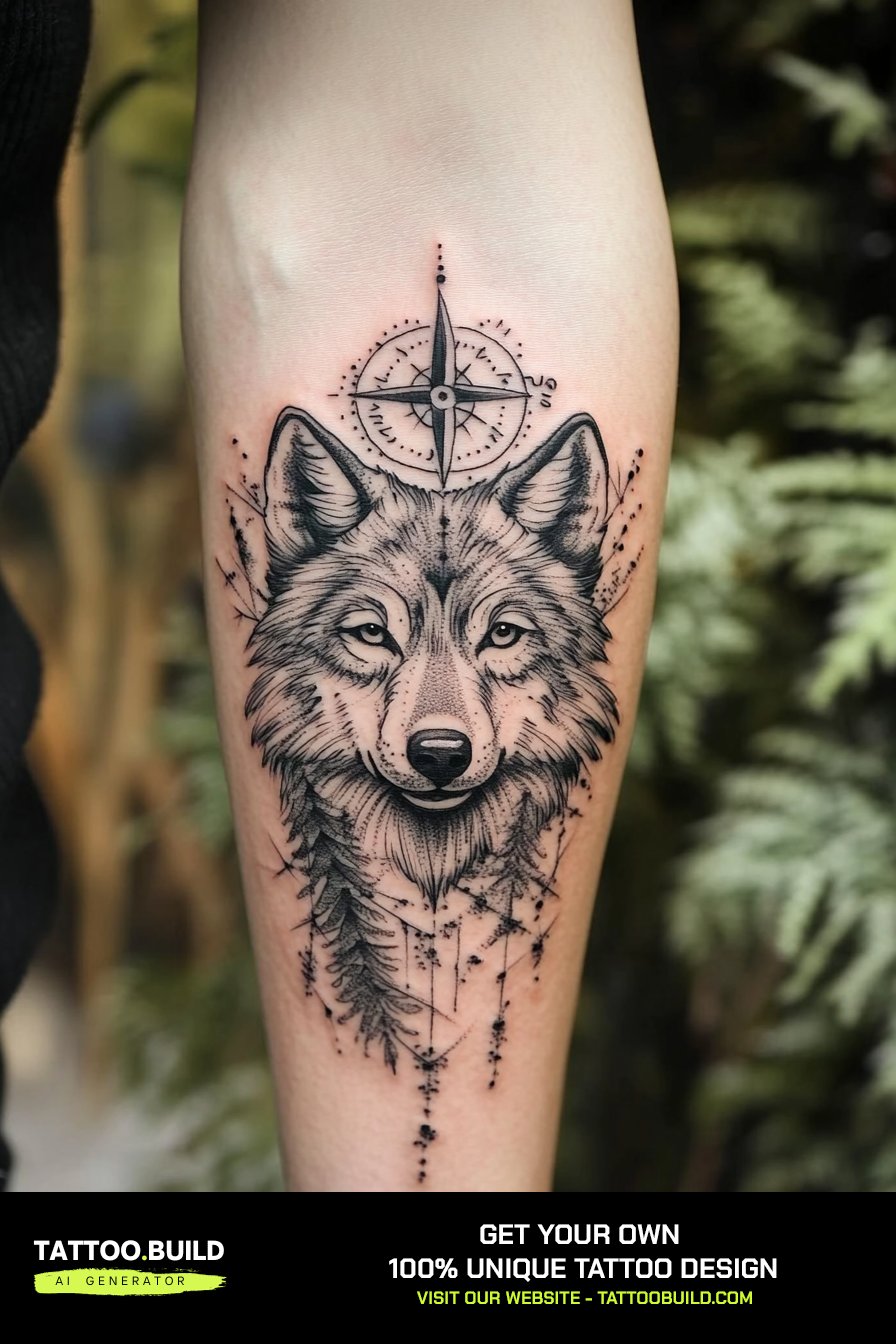
If it is the compass you want to keep and the snake you want to swap, wolf compass designs and broader travel tattoo ideas cover similar ground with a different animal.
On healing: some redness and tightness in the first few days is normal, but spreading warmth, increasing pain after day three, or discharge is not. That warrants a doctor, not a forum thread. the Mayo Clinic overview of tattoo risks sets out what to watch for.
And to state the obvious – do not tattoo yourself at home, and do not attempt removal with anything you bought online. Both go wrong in ways that are expensive and permanent.
Frequently Asked Questions
How much does a snake compass tattoo cost?
It depends almost entirely on size and style rather than the subject. A small fine line version is a short session, while a full black and grey realism piece can run six to ten hours across multiple appointments. Most artists price either by the hour or by the piece, and quoting without seeing the placement is difficult for them. Ask for a written estimate at the consultation.
Does a snake compass tattoo have a negative meaning?
Not inherently. The snake carries different associations across cultures – guardian in some, warning in others – and the compass is almost universally read as direction or homecoming. Together they most often read as deliberate change. If a particular association matters to you, talk it through with your artist during the design stage.
What size should I get?
Match the size to the style rather than the space. Fine line and minimalist versions work from about an inch and a half up, traditional sits comfortably between four and eight inches, and realism generally needs six inches or more to hold its detail. Going smaller than the style supports is the single most common regret I hear.
How long does it take to heal?
The surface usually looks settled within two to three weeks, but the deeper layers keep healing for a couple of months. Follow whatever aftercare your artist gives you rather than advice from the internet, since it varies with ink, placement and your own skin. If anything looks infected, see a doctor rather than waiting it out.
Can I add to it later?
Usually yes, and many people do. Snake compass designs extend well into half sleeves because the serpent gives an artist a natural line to build along. Mention it at the first appointment so the composition leaves room, because retrofitting a sleeve around a tightly framed piece is much harder.
Quick Summary
- A snake compass tattoo reads as directed change – the compass sets the course, the snake handles the transformation.
- Pick your style before your size, because style dictates the minimum size that will actually work.
- Traditional and blackwork age the best; fine line and micro versions soften fastest.
- Realism needs six inches or more, and usually more than one session.
- Forearm is the most popular placement; back is the best canvas for detail; chest carries the most personal meaning.
- Colour needs sun protection long term – black and grey is lower maintenance.
- Bring style references rather than a copy of someone else’s tattoo, and check the artist’s healed work.
- Any sign of infection is a doctor’s question, not a forum question – and never attempt DIY tattooing or removal.