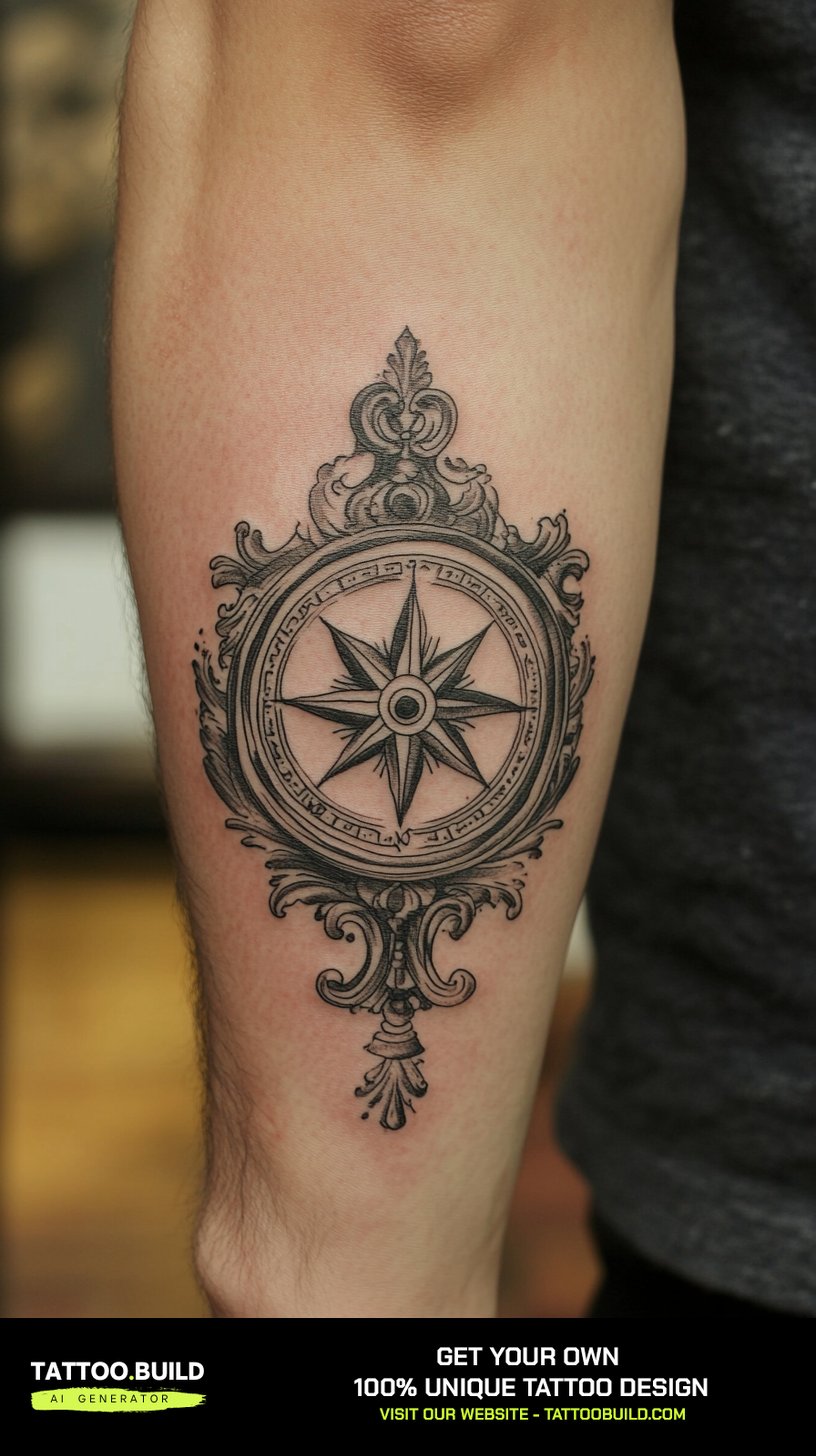
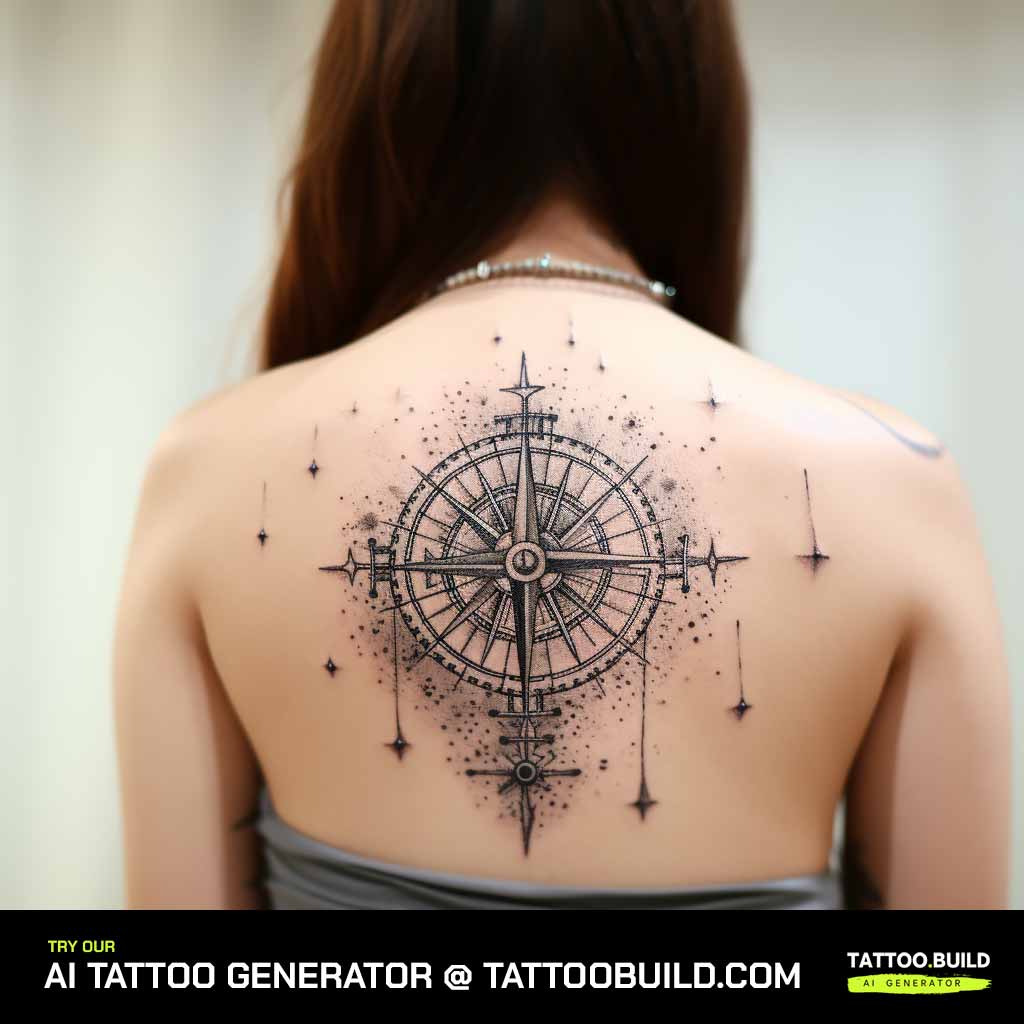
I have been photographing and writing about forearm work for years, and the compass keeps coming back to the same chair. A compass forearm tattoo works because the shape and the arm agree with each other — a circle needs a flat, even canvas, and the inner or outer forearm gives you one.
That sounds like a small point. It is the whole reason some compass tattoos still read clearly ten years in and others turn into a grey smudge on a bicep.
This guide walks through the styles that actually hold up on a forearm, what each one costs you in time and pain, and the detail choices I would push back on if you brought them to me. If you want the symbolism first, the full breakdown of compass tattoo meaning covers that side properly.
Everything below is based on designs I have watched go on, heal, and settle — not on what looks good in a fresh photo.
Which Compass Forearm Style Is Right for You?
Style is the decision that drives everything else — size, session count, and how the piece looks in a decade. Here is how the five common approaches actually compare.
| Style | Best for | Typical size & sitting | How it usually ages |
|---|---|---|---|
| Fine-line minimalist | First tattoo, office-friendly, subtle | 3–5 in, one sitting under 2 hours | Softens fastest — thin lines spread, expect a touch-up |
| Black and grey realism | Ships, mountains, aged dial faces | 6–9 in, two sittings of 3–4 hours | Holds shape well if the artist kept contrast high |
| Neo-traditional colour | Bold, decorative, flowers and birds | 5–8 in, one to two sittings | Outlines stay strong; colour needs sun protection |
| Geometric / blackwork | Symmetry lovers, modern look | 4–7 in, one longer sitting | Very well — solid black and clean angles are forgiving |
| American traditional | Nautical roots, classic aesthetic | 4–6 in, usually one sitting | The most durable of the five by a clear margin |
What Actually Affects How a Compass Forearm Tattoo Ages
A compass is a geometry problem disguised as a symbol. The eye notices when a circle is slightly off-round or when the eight points are not evenly spaced, in a way it never notices with a rose.
That means the artist’s linework matters more here than in almost any other forearm design. Look through a portfolio specifically for circles and repeated points — not just shading.
Detail density is the second factor. Compass faces tempt people into tiny degree markings, miniature lettering, and hairline cross-hatching. Those elements sit fine for a year or two and then start closing up as ink settles under the skin.
Placement plays into it as well. The inner forearm is softer and generally less painful; the outer forearm gets more sun and more incidental contact. Neither is wrong, but the outer arm asks more of your aftercare.
Finally, scale. Most of the compass tattoos I have seen go badly were simply too small for the amount of detail packed into them. If you want a working dial with numbers, give it the room. If you want small, simplify the design instead. The same principle applies across small forearm tattoo ideas for men generally.
Compass Forearm Tattoo Ideas for Guys
These are the directions I see requested most, roughly in order of how often they walk through the door.
1. Minimalist Fine-Line Compass
The stripped-back compass is the most requested version and the one I recommend most often for a first forearm piece.
You get a single-weight outline, evenly spaced points, and either a small dotwork centre or nothing at all. It sits comfortably on the inner forearm at around three to four inches and usually finishes inside two hours.
The trade-off is longevity. Fine lines are the first thing to blur, so plan on a touch-up somewhere in the five-to-eight-year range. Every artist I have asked about this says the same thing and none of them treat it as a failure — it is just how thin black behaves in skin.
If you want minimal and permanent, ask for a slightly heavier line weight than the reference photo you brought in. It will look marginally bolder on day one and considerably better on year ten. The same logic runs through most meaningful forearm tattoos for guys.
2. Compass and Mountain Range
Pairing the compass with a mountain range is the most common combination on a forearm, and it works because the shapes complement each other: a hard circle against soft, irregular peaks.
In black and grey it gives an artist somewhere to put actual tonal range, which is what stops a compass from looking flat.
The layout question is whether the mountains sit inside the compass ring or behind it. Inside reads tidier and holds up better at smaller sizes; behind gives you a landscape but needs six inches or more to breathe.
I would avoid stacking a mountain range, a forest, a river and a sunburst into one four-inch circle. Pick two elements. If peaks are the real subject, browse mountain tattoo ideas for men before you commit to burying them inside a dial.
3. Nautical Ship and Compass
This is the compass at its historical root: a rigged ship, a swelling sea, and a rose that tells you which way the boat is pointing. It is also the most demanding of the ideas here.
Rigging is thin, repetitive linework, and waves need genuine contrast to read as water rather than grey texture. That combination asks for size — realistically six inches and up, running with the length of the forearm rather than across it.
When I have watched these done well, the artist simplified the rigging deliberately, keeping maybe a third of the lines a photograph would show. The healed result reads more like a ship than the technically accurate version does.
Budget two sittings for a full nautical piece and do not let anyone talk you into finishing it in one four-hour marathon. Skin stops taking ink well long before your willpower runs out. If the vessel is the point rather than the compass, dedicated ship tattoo ideas may serve you better.
4. Compass with Pine Trees and Forest
The forest compass swaps the sea for treeline, and it is the version I would point most people toward if they want detail without a two-day commitment.
Pines are forgiving. A row of triangular silhouettes reads correctly even when the linework softens, which is not true of rigging or lettering.
Circular framing works especially well here — a solid ring with the forest scene contained inside gives the piece an obvious edge and keeps it from drifting into a vague grey patch over time.
In my experience this design also scales down better than any other landscape option. I have seen it work at three and a half inches, which the ship version simply cannot do.
5. Neo-Traditional and Colour Compass
Colour compasses tend to divide people, and the split usually comes down to whether you want the tattoo to be decorative or symbolic.
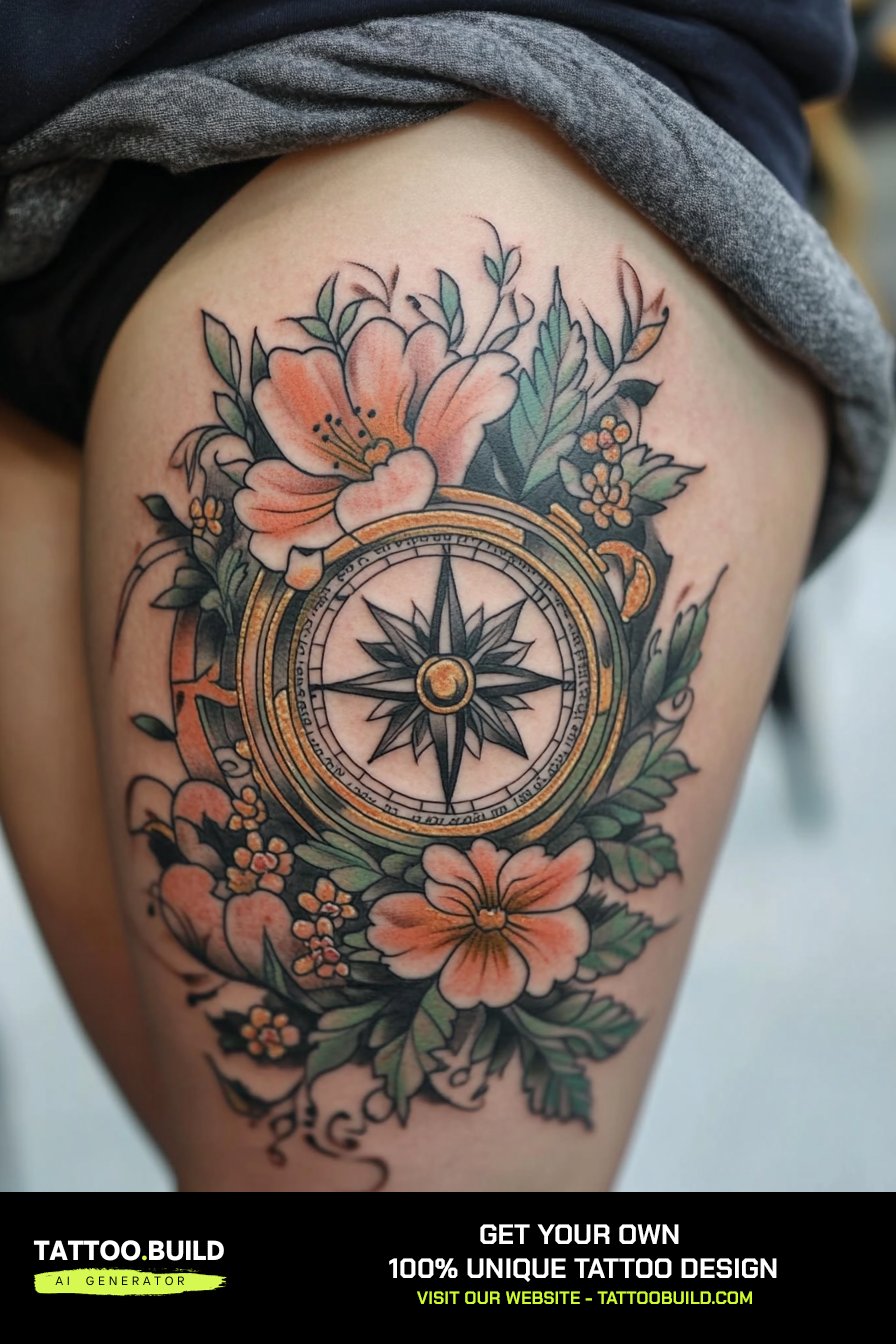
Neo-traditional gives you bold outlines, saturated fills, and room for roses, doves, or banner work around the dial. Because the outline carries the design, it ages differently to fine line — the shape stays put even as colour shifts.
Reds and yellows fade fastest under sun exposure, and the forearm gets a lot of sun. Long-sleeve habits or consistent sunscreen make a real difference over a decade.
If you are considering colour, ask your artist to show you healed photos at three years or more, not fresh work. Fresh colour tells you almost nothing. There is a fuller look at the style in this neo-traditional compass tattoo guide.
6. Geometric and Blackwork Compass
If the compass appeals to you as a shape rather than a story, this is the direction to take it.
Geometric versions strip the design to straight lines, repeated angles and negative space. Blackwork goes further, using solid fill so the compass reads as a silhouette rather than a drawing.
Both age unusually well. Solid black and wide, deliberate spacing are the two things that survive skin best, which is why tribal work from decades ago is often still legible while fine-line work from five years ago is not.
The catch is precision. A geometric compass with one angle slightly off is more obviously wrong than a hand-drawn one, and there is nowhere to hide it. Vet the portfolio hard — this collection of geometric tattoo ideas for men is a useful reference for what clean execution looks like.
7. Compass with Coordinates or Lettering
Adding coordinates is the most common way men personalise a compass — a birthplace, a hometown, a place that meant something.
It is a good idea executed badly more often than not. Tiny script under a compass is exactly the kind of detail that closes up as the tattoo settles, and coordinates have no redundancy: one blurred digit and the numbers are wrong forever.
The fix is size and spacing. Ask for lettering at least as tall as the width of the compass ring, with generous gaps between characters. It will feel oversized on the stencil and correct on your arm.
Check every digit on the stencil yourself before the needle goes anywhere near you. I have heard about more than one wrong coordinate and every single case was caught too late.
Variations Worth Considering
If none of the seven above land, these are the adjacent directions people usually end up taking.
Compass Paired with an Animal
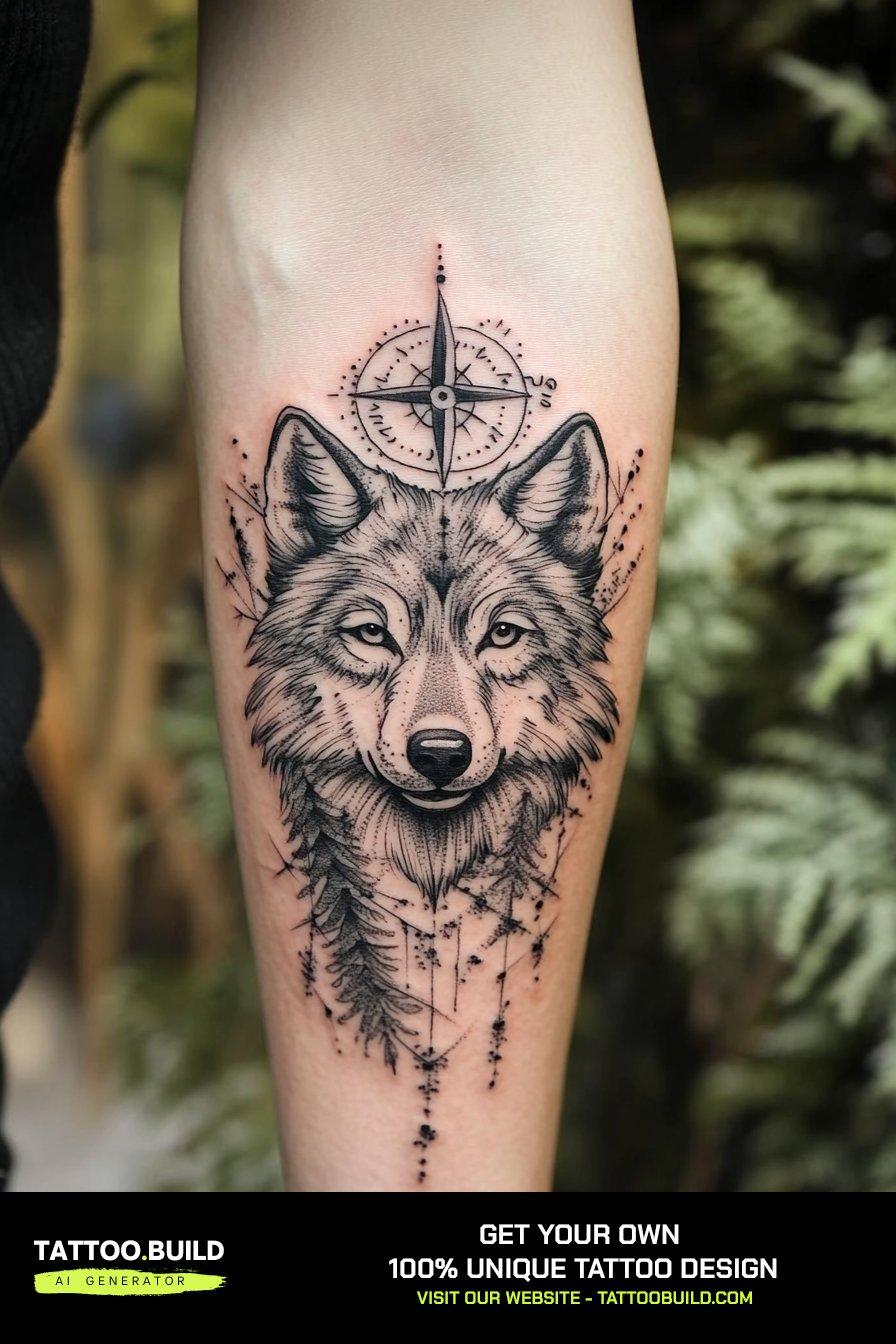
A wolf, bear or stag head behind the dial turns the compass from a symbol into a portrait piece. It roughly doubles the size and session count, and the animal becomes the focal point whether you intended that or not. Wolf compass designs are the most common version of this.
Compass as the Anchor of a Half Sleeve
Plenty of forearm compasses start as standalone pieces and become the hub of a larger sleeve. If that is even slightly on your mind, tell the artist now — where they place the circle changes what can be built around it later.
Wrist-to-Elbow Vertical Layout
Running the design lengthwise instead of centring a circle gives you far more usable space and suits ships, treelines and vertical landscapes. It is also harder to photograph, which is why you see it less online than in real life.
Inner Forearm Placement
The inner arm is softer, less sun-exposed, and easier to cover. It is also more sensitive near the elbow ditch and the wrist. Most people find the middle third entirely manageable.
Booking, Sessions and Aftercare
Book a consultation rather than a walk-in for anything larger than a palm. Bring three or four reference images and be clear about which element matters most — most artists will redraw around your priority if they know what it is.
Eat properly beforehand and do not drink the night before. Both make a longer sitting substantially easier, and artists notice the difference immediately.
For healing, follow the aftercare instructions your artist gives you over anything you read online, including this page — they know the ink and the wrapping they used. The general principles are covered well by the American Academy of Dermatology’s guidance on tattoos and skin care, and the US FDA’s overview of tattoo safety is worth reading before a first piece.
If you develop spreading redness, swelling that increases after the first few days, pus, or a fever, that is a doctor’s visit — not something to manage yourself or ask a tattoo forum about. Allergic reactions to pigment can also appear weeks or months later, most commonly with red inks; the Mayo Clinic’s summary of tattoo risks explains the warning signs clearly. Never attempt to remove or alter a tattoo at home.
Common Mistakes and Still Not Sure?
The three mistakes I see repeatedly: too much detail for the size, choosing an artist on price rather than portfolio, and approving a stencil that is not actually centred on the arm.
That last one is worth a moment. Stand up, let your arm hang naturally, and look at the stencil in a mirror rather than looking down at it. A compass that is perfectly placed when you are staring at your own forearm can sit visibly off-axis to everyone else.
The fourth mistake is rushing the decision because you have a trip or a birthday coming up. There is no deadline on this.
Still weighing it up? Compare against a broader set of compass forearm designs, or think about whether a travel-themed tattoo captures what you are actually after better than a compass would.
Frequently Asked Questions
How much does a compass forearm tattoo hurt?
The forearm is generally considered one of the more manageable placements because of the muscle and tissue underneath. The inner forearm near the elbow ditch and the area close to the wrist are the sharper spots; the middle third is usually described as very tolerable. Pain is individual, though, and a four-hour session hurts more from fatigue than from any single moment. If it is your first tattoo, starting with a smaller design is a reasonable way to find out how you handle it.
How long does a compass forearm tattoo take?
A simple fine-line compass often finishes in ninety minutes to two hours. A detailed black and grey ship or landscape piece usually runs two sittings of three to four hours each. Colour and neo-traditional work sits somewhere in between, depending on how much filler surrounds the dial. Your artist can give a realistic estimate once they have seen the drawing at actual size.
Will a compass tattoo blur over time?
All tattoos soften as ink settles and spreads slightly under the skin, and compasses show it more than most because the eye expects clean geometry. Fine-line work blurs soonest; solid blackwork and bold traditional outlines hold their shape longest. A touch-up somewhere in the five-to-ten-year range is normal, not a sign anything went wrong. Sun protection makes a genuine difference to how slowly it happens.
Should I get the compass on my inner or outer forearm?
The inner forearm is softer to tattoo, less exposed to sun, and easier to cover for work. The outer forearm is more visible to other people and gives a slightly flatter, wider canvas for larger designs. Neither is better in general — it comes down to whether you want to see the tattoo or show it. If you burn easily, the inner arm is the more forgiving of the two.
Can a compass tattoo be added to later?
Yes, and it is one of the more extendable designs because the circle works as a natural hub. Waves, mountains, banners and animal portraits all build outward from a compass without looking bolted on. Mention the possibility at the consultation even if you are unsure, because placement decisions made now will either open or close that door. An artist who knows a sleeve might follow will position the piece differently.
Quick Summary
- The forearm suits a compass because a circular design needs a flat, even canvas.
- Linework quality matters more here than in almost any other design — check portfolios for circles specifically.
- Fine-line minimalist is the easiest entry point but will need a touch-up sooner than bolder styles.
- Blackwork, geometric and American traditional age the best of the five main styles.
- Mountains and pine forests scale down better than ships and rigging.
- Coordinates and lettering need generous size and spacing, and must be proofread on the stencil.
- Book two sittings for anything detailed rather than one long marathon.
- Follow your artist’s aftercare instructions, and see a doctor for spreading redness, pus or fever.