I have lost count of how many travel tattoos I have watched people talk themselves out of, usually because they could not decide between the plane, the compass and the map. The fix is almost always the same: stop choosing one symbol and start combining two or three into a single scene.
A lone airplane on a wrist is fine. An airplane cutting across a sun, with a dotted flight path trailing behind it, actually says something about how you travel.
Over the past few years I have collected and compared hundreds of these designs, and the ones that still look good years later share a pattern — restraint, a clear focal point, and enough negative space to breathe. If you want a single-symbol starting point instead, the airplane tattoo ideas guide is a good place to begin.
Below are the combinations I keep coming back to, what each one signals, where they sit best on the body, and the practical things worth knowing before you book the appointment.
Which Travel Tattoo Style Is Right for You?
Style matters more than the symbol. The same compass looks completely different in fine line than it does in traditional, and the two age in opposite directions.
| Style | Best For | Smallest Sensible Size | How It Ages |
|---|---|---|---|
| Fine line | Minimal planes, single compass roses, flight paths | Around two inches | Softens and spreads; usually needs a touch-up sooner than other styles |
| Traditional | Ships, lighthouses, swallows, anchors | Three to four inches | The most forgiving — bold outlines hold their shape for decades |
| Blackwork / illustrative | Mountain ranges, forests, camper vans | Three inches | Very well, as long as detail is not crammed in |
| Watercolour | Hot air balloons, sunsets, world maps | Four inches | Fades fastest, especially without a black line to hold it together |
| Geometric / dotwork | Compasses, globes, framed landscapes | Three inches | Well, though fine stippling can blur into grey over time |
If you are torn, the honest advice most artists gave me was to pick the style first and let it dictate how much detail the design can carry, rather than drawing the design and hoping a style will fit it.
What Actually Makes a Travel Tattoo Work
The travel tattoos that fail are rarely badly drawn. They fail because they try to hold too many ideas at once.
A good combination has one hero element and one or two supporting ones. The lighthouse is the hero; the sun is support. The plane is the hero; the mountains are the horizon it flies over.
The second factor is scale. A world map with recognisable coastlines needs real estate — thigh, back, upper arm. Squeeze it onto a wrist and within a few years it reads as a grey smudge.
Third is meaning that survives. Coordinates of a hostel you loved at twenty-two may not mean much at forty. Symbols of how you travel — by sea, by road, by air — tend to hold up better than symbols of a single trip.
In my experience the people happiest with their travel tattoos five years on are the ones who left space to add to the piece rather than finishing it in one sitting.
Travel Tattoo Ideas and Combinations Worth Considering
These are grouped by the core pairing rather than by placement, since almost all of them can be scaled up or down.
1. Lighthouse and Sun
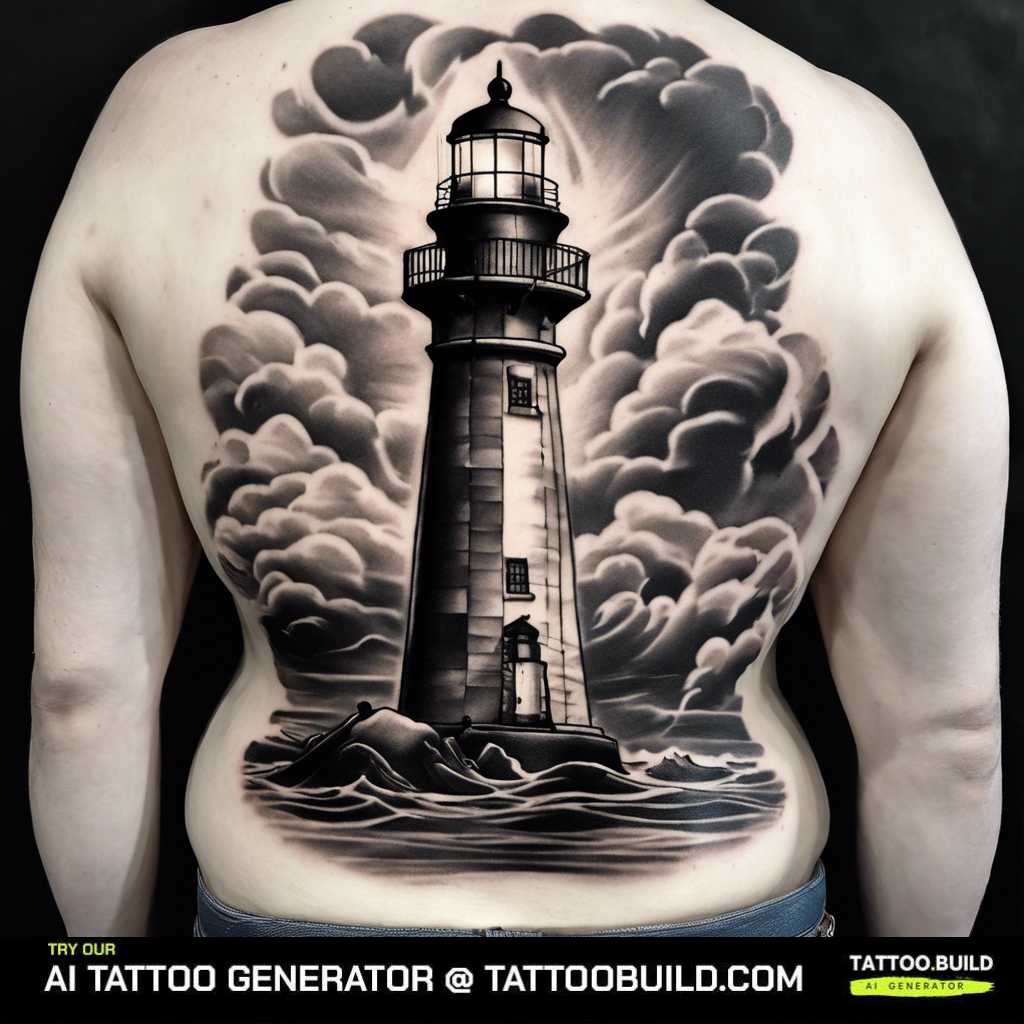
A lighthouse stands for guidance and for getting home safely; a sun behind it turns the whole design warm rather than sombre.
It is a natural fit for anyone whose best trips happened on a coastline. Waves can be drawn wrapping the base of the tower to link the two elements without adding a third idea.
When I tested this pairing against a plain lighthouse in a few shop portfolios, the version with rays behind it consistently read better from a distance — the sun gives the eye something to resolve when the fine detail on the tower disappears.
Placement-wise it suits the outer forearm or the calf, where you have a long vertical run. See more variations in the lighthouse tattoo ideas collection.
2. Suitcase and Postcards
This is the most openly nostalgic combination on the list, and the most personal.
A vintage hard-shell case gives you a frame; postcards, luggage tags or destination stickers arranged around it give you somewhere to add a new detail after every trip.
That expandability is the real selling point. Every artist I have asked about this design has said the same thing — leave the composition open on one side so future additions do not look bolted on.
Handwriting works here too. A short line from a postcard, in your own script, is more distinctive than another quote in a generic font.
3. Ship and Compass
The oldest travel pairing there is, and still the one with the most weight behind it.
Sailors wore ships and compass roses long before either was a design trend, which is part of why the motifs are so well suited to traditional line weights and limited colour.
A ship sailing across the face of a compass gives you movement and direction in one image. A ship alone is quieter and often the better choice if you want the piece to sit inside a larger sleeve later.
Be realistic about size. Rigging, sails and a compass rose together need at least a few inches or the lines will merge. If you want the meaning without the scale, the compass tattoo meaning guide covers simpler options, and ship tattoo ideas has more full designs.
4. Airplane and Sun
If your travel is mostly flights and warm destinations, this is the shorthand for it.
The sun brings energy and new beginnings; the plane brings the departure. A dotted or dashed flight path arcing behind the plane ties them together and adds motion without adding clutter.
A plain airplane on its own is the most common first travel tattoo I get asked about, and there is nothing wrong with that. It is small, quick, cheap and hides easily under a sleeve or watch.
Keep the line work simple. Tiny rivets and window detail on a two-inch plane will blur; a clean silhouette will still look intentional in fifteen years.
5. Hot Air Balloon and World Map
The whimsical end of the spectrum, and a good option if the maritime and mountain motifs feel too rugged for you.
A balloon drifting above an outlined globe suggests wandering rather than arriving. It works especially well in watercolour, though a black outline underneath will keep the colour from drifting into a bruise over time.
On maps, outlined continents hold up far better than solid filled landmasses. Filled shapes lose their edges as the ink settles, and coastlines are exactly where the eye looks for accuracy.
The thigh, shoulder blade and upper arm all give you the width this needs. More options in map tattoo ideas.
6. Airplane and Mountain Range
Mountains give a floating plane a horizon to sit on, which solves the most common composition problem with small aviation tattoos.
The range can be as literal or abstract as you want — a recognisable skyline you have actually climbed, or a generic set of peaks that simply reads as altitude.
This one scales unusually well. At four inches you can shade the ridges; at two inches you can strip it to outline only and it still works, which is rare.
It is a strong forearm piece and one of the better options for a first tattoo. There are more peak-focused designs in mountain tattoo ideas.
7. Canoe or Kayak
Underrated, and a welcome break from the plane-and-compass default.
A canoe on still water signals a slower kind of travel — lakes, rivers, portages, camping. It suits anyone whose best trips involved no airport at all.
A single horizontal line under the hull is often enough to imply water. Adding pines or a treeline behind places the scene without naming a location, which keeps it personal rather than touristy.
If that whole mood appeals, the camping tattoo ideas gallery runs in the same direction.
8. Caravan or Campervan
For road trips, van life and anyone whose travel happens at ground level.
A van is instantly readable even at small sizes, which is why the line-only versions work so well on the forearm and ankle.
Details are where you personalise it: surfboards on the roof, a dog in the window, the specific shape of the van you actually owned. Those specifics are what stop it looking like clip art.
Adding a winding road underneath gives you a base line and an easy way to extend the piece later.
Alternatives and Variations Worth Knowing
If none of the combinations above feel right, these are the directions people usually move in next.
Coordinates and Flight Paths
A set of coordinates is the most understated travel tattoo there is, and the easiest to get wrong. Check every digit and the direction symbols twice before the needle touches skin — this is the mistake I hear about most often.
A dashed flight path between two small dots does the same job more visually, and does not require anyone else to decode it.
Topographic Lines
Contour lines from a real map of a place you love make a quietly personal band or armlet, and they age well because there is no fine detail to lose.
Passport Stamps
Stamps are a natural collector’s format — one per country, added over years. Agree a consistent size and border style with your artist at the start or the set will drift.
Matching Travel Tattoos
Split designs work well here: one person takes the plane, the other the destination. There are more paired concepts in matching tattoo ideas for best friends.
Practical Tips and Aftercare for Travel Tattoos
There is a specific problem with travel tattoos: people get them right before they travel. That is the worst possible timing.
A fresh tattoo generally needs a couple of weeks before the surface has closed, and longer before the deeper layers settle. During that window, swimming pools, oceans, hot tubs and strong sun are all things artists will tell you to avoid. Booking your appointment at least a month before a trip saves a lot of frustration.
Sun is the long-term enemy of every travel tattoo. Once healed, high-SPF sunscreen on the piece is the single most effective thing you can do to keep line work crisp — the American Academy of Dermatology has straightforward guidance on caring for tattooed skin.
On safety: use a licensed studio that opens single-use needles in front of you, and take allergic reactions or persistent swelling seriously rather than waiting them out. The US Food and Drug Administration publishes plain-language information on tattoo ink risks. If something looks infected, see a doctor — nothing in this article is medical advice, and never attempt to tattoo or remove ink yourself.
Common Mistakes, and What to Do If You Are Still Not Sure
The most frequent regret I hear is not about the design at all — it is about size. People go smaller than the artist recommended, then watch the detail close up within a few years.
The second is combining too many symbols. Plane, compass, map, mountains and waves in one piece is a mood board, not a tattoo.
The third is rushing the placement decision. Sit with a temporary version or a printed stencil for a few days before committing, especially on visible areas.
If you are stuck between directions, browse by mood rather than by symbol. Ocean tattoo ideas suits the maritime pull, minimalist tattoo ideas suits anyone who wants something quiet, and a consultation with an artist you already like is usually worth more than another week of scrolling.
Frequently Asked Questions
What is the best placement for a travel tattoo?
It depends on the size of the design more than anything else. Small single symbols like a plane or a compass sit comfortably on the wrist, ankle or inner forearm, while world maps, ships and detailed mountain ranges need the thigh, upper arm or back. In my experience the outer forearm is the best compromise for combinations, because it gives you a long vertical run and stays easy to show or cover. Keep in mind that areas with heavy sun exposure will fade faster over the years.
How much does a travel tattoo usually cost?
Prices vary enormously by country, studio and artist demand, so any specific figure would be misleading. What is consistent is the structure: most artists charge either a shop minimum for small pieces or an hourly rate for anything larger. A simple line-art plane is usually a minimum-charge job, while a detailed ship and compass can run several hours. Ask for a quote in the consultation rather than assuming, and be wary of pricing that is far below local norms.
Do travel tattoo combinations fade faster than single designs?
Not because they are combinations, but because they often carry more fine detail in the same amount of space. The elements most likely to blur are thin parallel lines, dense stippling and unlined colour. Bold outlines and generous negative space age best in almost every case. Sun protection makes a bigger difference to fading than the design itself.
Can I add to a travel tattoo later?
Yes, and it is one of the main reasons this theme suits people who travel regularly. Tell your artist at the first session that you intend to expand the piece so they can leave the composition open on one or two sides. Suitcases with stickers, maps with pinned destinations and passport-stamp sets are all built for this. Returning to the same artist keeps the line weight and shading consistent.
What travel tattoo should I get as a first tattoo?
Something with clean outlines, moderate size and a placement you can live with — an airplane with a small mountain range or a simple compass are both good starting points. Avoid heavy colour packing and micro-detail for a first piece, since both are more painful and less forgiving. Sit with the design for a couple of weeks before booking. If you still like it after that, you probably will in five years.
Quick Summary
- Combine two or three symbols with one clear hero element rather than stacking five.
- Pick the style before the symbol — traditional and blackwork age best, watercolour fades fastest.
- Size to the detail: maps, ships and realistic shading need the thigh, back or upper arm.
- Favour symbols for how you travel over souvenirs of one specific trip.
- Leave the composition open on one side if you plan to add to it later.
- Book at least a month before a trip so swimming and sun exposure do not interfere with healing.
- Use a licensed studio, and see a doctor rather than guessing if something looks infected.
- Sunscreen on healed ink is the cheapest way to keep line work sharp.