A sleeve is the one tattoo you cannot quietly cover with a sleeve. The coolest sleeve tattoos for women are not the busiest ones — they are the ones built around a single idea that still reads clearly from across a room.
I have watched a lot of women walk into a shop with a folder of forty saved images and walk out with a plan for one. That narrowing is the whole job.
What follows is a set of sleeve directions I keep coming back to, with honest notes on what each one costs in time, what it looks like at year five, and where people usually get stuck. If you are still deciding on coverage, the wider round-up of full sleeve tattoo ideas for women is a useful companion read.
Nothing here is a rule. It is what I have seen work, and what I have seen artists gently talk clients out of.
Which Sleeve Style Is Right for You?
Style choice drives almost everything downstream — the number of sessions, how the piece ages, and how much freedom the artist needs. Here is how the main directions compare in practice.
| Style | Typical Commitment | How It Ages | Best If You Want |
|---|---|---|---|
| Japanese / Irezumi | Longest — many sessions, designed as one piece up front | Excellent; bold outlines and wind bars hold shape for decades | A sleeve that looks intentional from day one and never reads as scattered |
| Fine line / botanical | Shortest — often two or three sessions | Softest; thin lines spread and lighten, touch-ups are common | Something delicate and low-contrast that sits quietly under office wear |
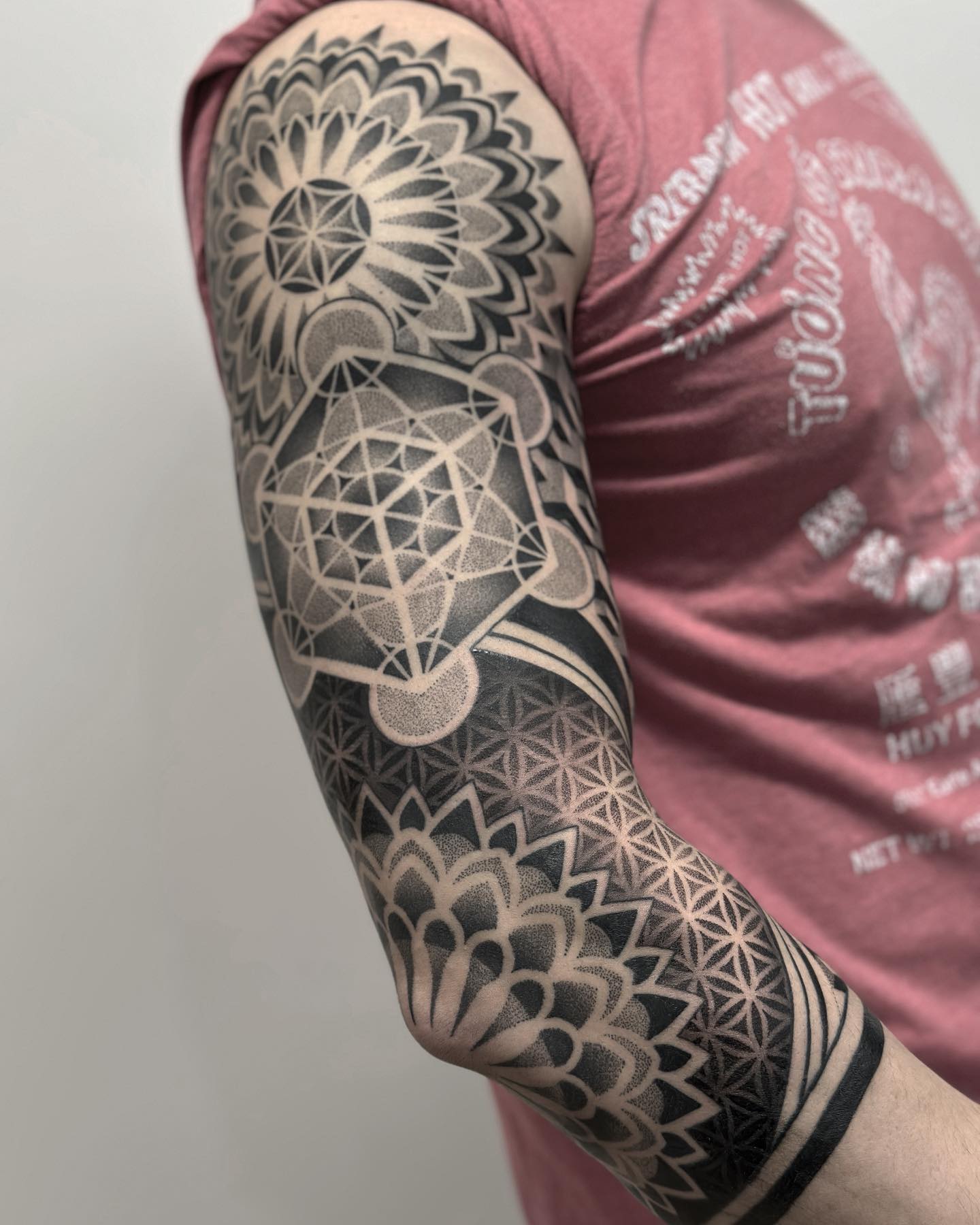
| Blackwork / mandala | Moderate to long, depending on solid black coverage | Very well; heavy black is the most durable ink there is | Strong graphic impact and clean symmetry down the arm |
| Neo-traditional | Moderate; colour packing adds time | Good; outlines carry the design as colour softens | Rich colour, animals, portraits and storybook imagery |
| Realism / portrait | Long, and the most artist-dependent | Most fragile; soft grey wash can blur without strong contrast | A photographic centrepiece and are willing to travel for the right artist |
What Actually Makes a Sleeve Work
A sleeve is not a collection of tattoos on the same arm. It is one composition that happens to wrap a cylinder.
The thing that separates a sleeve you love from a sleeve you tolerate is flow — whether the design moves with the muscle instead of fighting it. Good artists plan around the bicep, the elbow ditch and the outer forearm before they draw a single flower.
Negative space matters just as much. Skin left bare is what gives the eye somewhere to rest, and it is the first thing people sacrifice when they try to fit every idea in.
Background is the other half of the job. Waves, wind bars, smoke, dotwork fields and soft leaf fill are what stitch separate elements into one piece — there is a whole vocabulary of tattoo sleeve filler ideas worth knowing before you start.
In my experience the sleeves that age best were designed as a whole and executed in stages, not assembled piece by piece over years with different artists.
Sleeve Tattoo Ideas Worth Building Around
Each of these has carried a full sleeve for people I know. I have noted where each one gets difficult.
1. Sugar Skull With Roses
A Day of the Dead sugar skull is one of the few centrepieces that survives being surrounded by heavy floral work, because the skull’s own linework is already ornamental.
It sits best on the outer forearm or the bicep, where the shape gets a flat plane to read against. Placed on the inner arm it tends to distort.
When I tested colour options on this theme, the versions that held up were the ones that kept the skull mostly black and grey and put the colour in the roses. Full-colour skulls plus full-colour flowers turn into noise within a few feet.
It is also a design with real cultural weight behind it, so it is worth understanding what the imagery means rather than treating it as decoration. There are more variations in our guide to sugar skull tattoo ideas.
2. Fairy Tale Castles and Enchanted Forest
A storybook sleeve is the most underrated option on this list, mostly because people assume it will look childish. Done in neo-traditional or etched blackwork it does not.
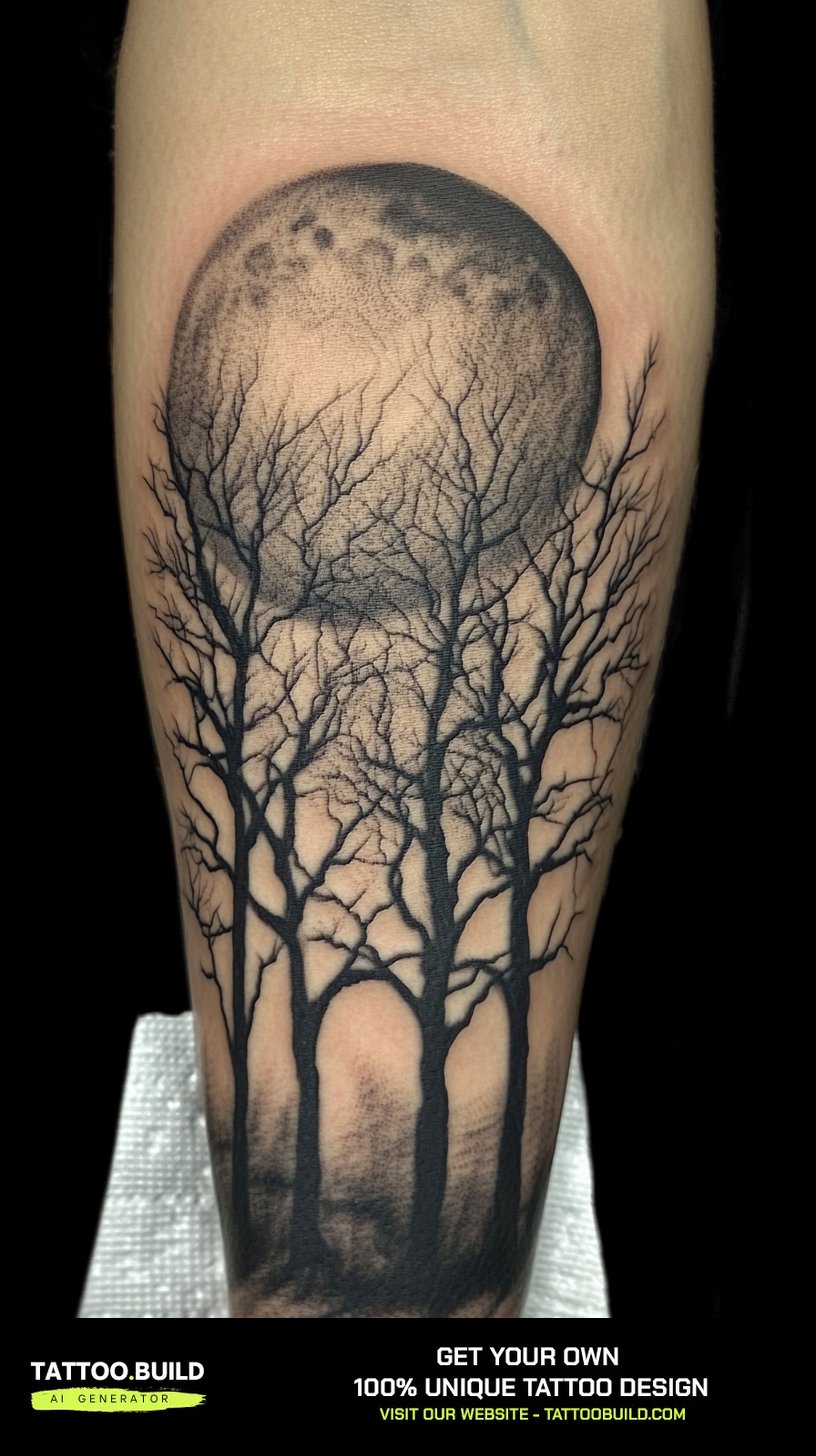
The structure is what makes it work: a castle or a single tall structure near the shoulder, a treeline that narrows down the forearm, and mist or sky as the connective tissue.
Every artist I have asked about these says the same thing — keep the number of buildings low. One castle reads as a story, three reads as a map.
This theme also gives you somewhere obvious to grow. A moon, a wolf or a lantern can be added later without breaking the composition, which is rare for a scene-based sleeve.
3. Owl on a Branch at Night
An owl is a strong sleeve anchor because it is vertical. The body fills the bicep, the branch cuts across the elbow, and the wings give the artist something to fade into background.
It reads well in black and grey, and it reads well in colour, which is not true of most animal subjects at this scale.
The detail that decides the piece is the eyes. I have seen otherwise beautiful owl sleeves let down by eyes that were rushed at the end of a long session — ask your artist to do the face early, while both of you are fresh.
If you like the motif but are not sure about the scale, the broader collection of owl tattoo ideas shows how it works at smaller sizes too.
4. Goddess Portrait Framed With Flowers
An ornamental goddess portrait is the most demanding idea here, and the one where the artist matters more than the design.
Faces are unforgiving. A line that is a millimetre off changes an expression, and no amount of surrounding floral work will distract from it.
If you want this piece, choose the artist first and let them design it. Bringing a fully drawn reference to a portrait specialist usually produces a worse result than briefing them on the mood and stepping back.
Framing the face with flowers, drapery or ornamental linework is not just decoration — it gives the portrait an edge to sit inside so it does not float on the arm.
5. Lotus Mandala Down the Sleeve
Geometric mandala work is the most forgiving sleeve style for anyone worried about ageing, because it leans on solid black and repeated line weights rather than subtle shading.
A lotus at the shoulder with mandala fields flowing toward the wrist gives the arm a natural taper. It follows the limb instead of ignoring it.
The hard part is symmetry on a curved surface. Dotwork shading helps, and a good artist will stencil in sections rather than trying to wrap one flat design around the bicep.
In my experience these are also the sleeves people are happiest with five years later — heavy black holds. See more layouts in our mandala sleeve tattoo ideas guide.
6. Japanese-Style Dragon
A dragon is the classic full-sleeve subject for a reason: its body is a line, and a line can be routed anywhere the arm needs it to go.
Traditional Japanese execution comes with a grammar — waves, clouds, wind bars — and following it is what makes the sleeve look coherent rather than like a dragon sticker on skin.
Expect this one to be planned as a single piece before any needle touches you. Artists working in this tradition will usually refuse to start it piecemeal, and they are right to.
It is not a masculine design, whatever the internet assumes. Our collection of dragon tattoo ideas for women shows how differently it can be softened.
More Sleeve Directions Worth Considering
If none of the above fits, these four cover most of the remaining ground.
Ocean and Coral Reef
Dolphins, sea turtles and reef structure give you a scene with built-in movement, and water is the easiest background in tattooing to make flow around a limb.
Keep the colour palette narrow. Every blue-green in the box at once is the most common way this one goes wrong.
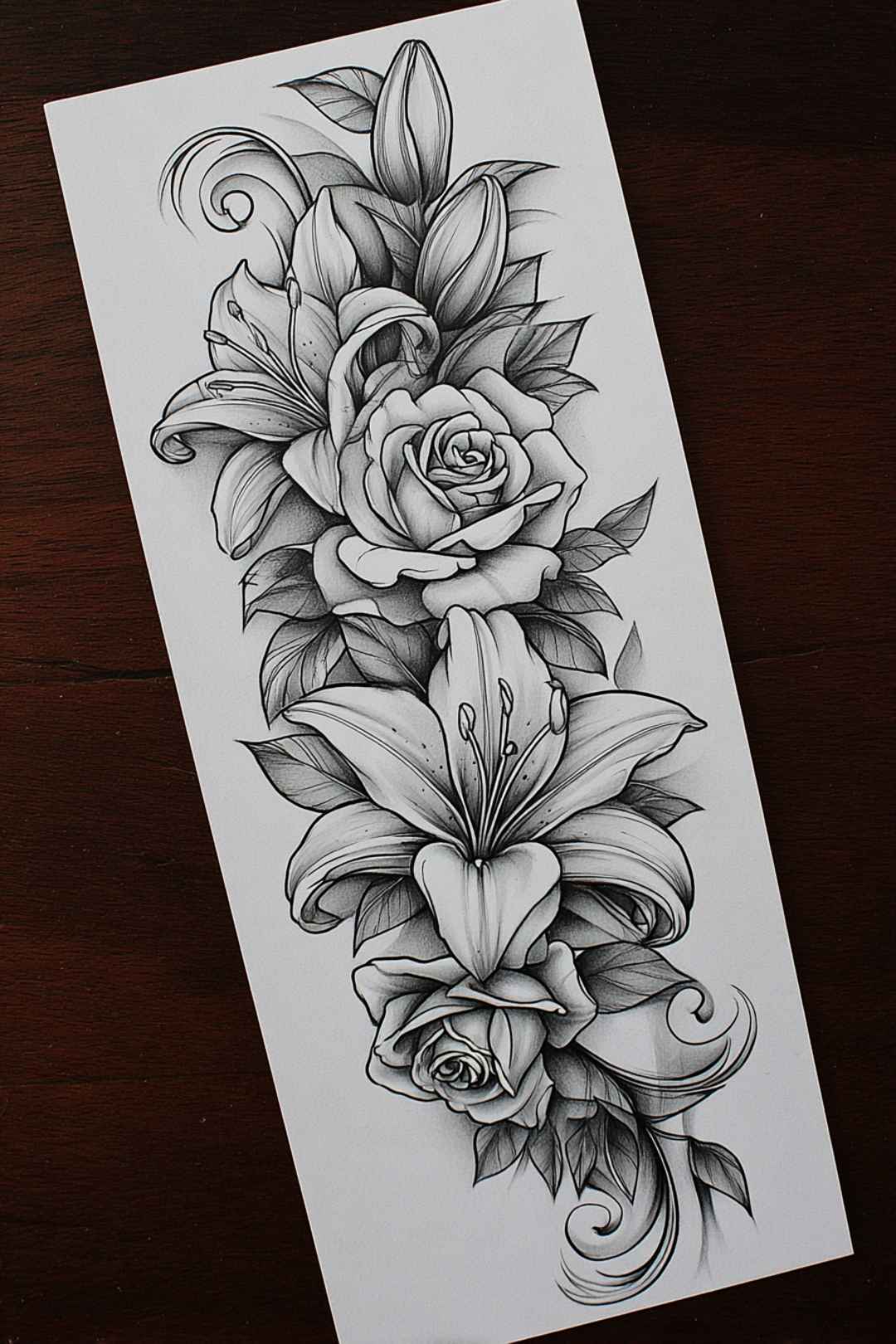
Minimalist Fine-Line Florals
A fine-line botanical sleeve is the lowest-commitment full-arm option, and by far the easiest to live with professionally.
Be realistic about maintenance. Thin single-weight lines soften over time and touch-ups are normal, not a sign of bad work — there is more on this in our fine line sleeve tattoo ideas round-up.
Bees and Honeycomb Geometry
Hexagons repeat naturally, which makes honeycomb one of the few background patterns that can carry an entire sleeve without a large centrepiece.
It also scales down cleanly. If you are not ready for a full arm, this idea works as a half sleeve and can be extended later.
Lioness With Florals
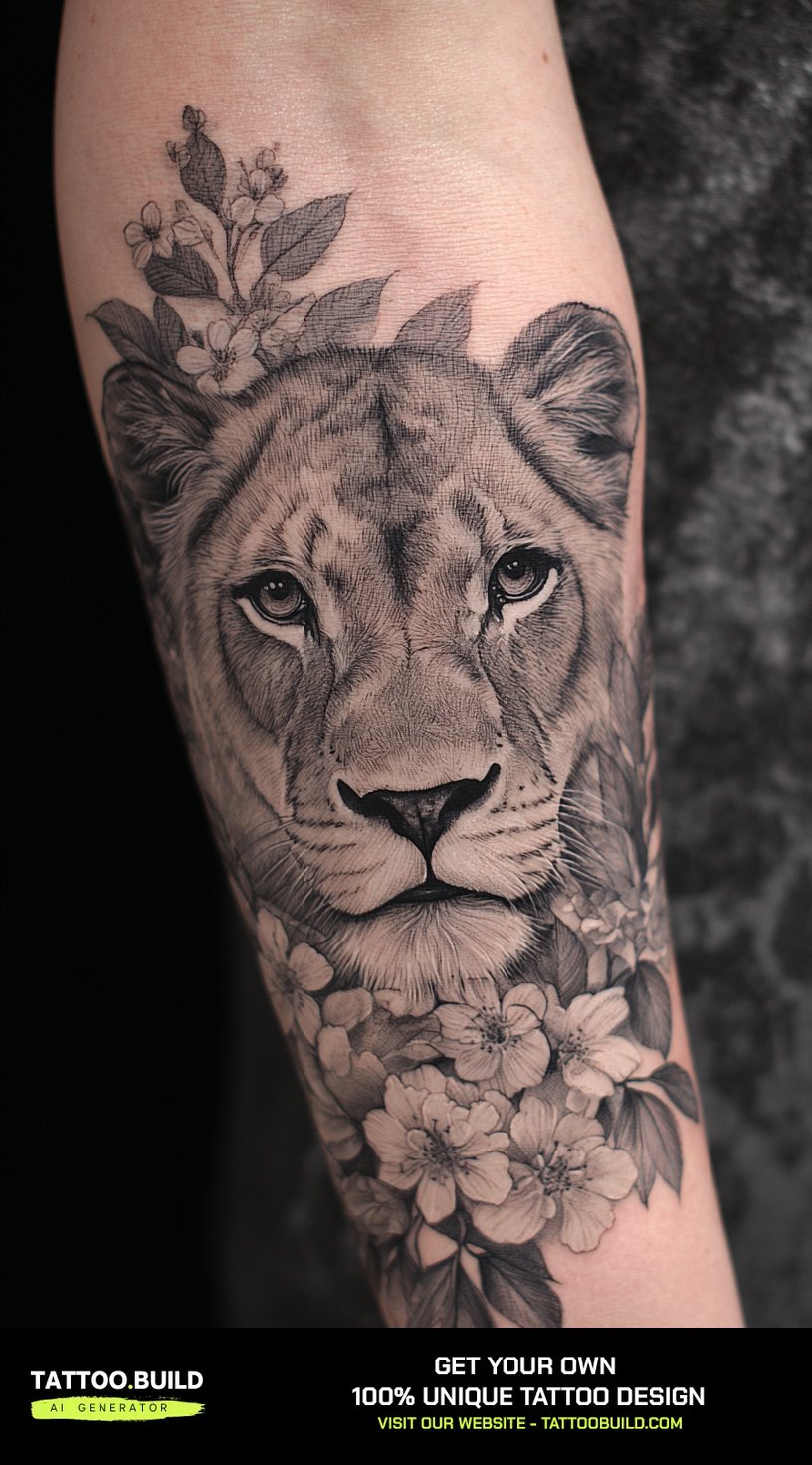
A lioness surrounded by soft blooms is the strength-plus-softness combination that keeps showing up, and it earns its popularity.
The contrast is the point: realistic fur against loose petals. Ask for the animal in higher contrast than feels necessary — see also geometric lion tattoo ideas for geometric treatments of the same subject.
Planning, Sessions and Aftercare
Sleeves are usually built over multiple sittings with healing time in between, and most artists will not book them back to back. Plan around that rather than against it.
Eat properly beforehand and stop if you need to. A long session where you tense up for the last hour produces worse linework than two shorter ones, and any artist worth booking will tell you the same.
For healing, follow the aftercare instructions your artist gives you over anything you read online, including this page. General guidance from the American Academy of Dermatology is a reasonable baseline, and the US Food and Drug Administration has a useful consumer overview of what to check before you sit down.
Anything that looks like spreading redness, increasing pain after the first few days, pus or fever is a doctor visit, not a forum question. Allergic reactions to specific pigments are also possible and can appear late; the Mayo Clinic summarises the risks plainly.
Once healed, sunscreen is the single most effective thing you can do to keep a sleeve looking like it did in year one. That is unglamorous advice and it is still the right advice.
Still Not Sure? Common Mistakes to Avoid
The most expensive mistake is starting without a plan for the whole arm. Filling gaps later almost always costs more than designing the space up front.
The second is collecting artists. Different hands mean different line weights and different blacks, and the seams show.
The third is choosing based on a photo of fresh ink. Healed work looks softer than day-one work, so ask any artist you are considering for healed photos of pieces at least a year old.
If a full arm still feels like too much, there are gentler routes in. A floral half sleeve on the forearm covers the same ground below the elbow, and a half leg sleeve moves the commitment somewhere easier to cover.
There is no deadline on this decision. The sleeves I have seen people regret were almost all booked in a hurry.
Frequently Asked Questions
How long does a full sleeve tattoo take?
Most full sleeves are built across several sessions rather than one marathon sitting, and the total depends heavily on style and detail. Fine-line botanical work is usually the quickest, while Japanese and realism sleeves take the longest. Your artist will give you a realistic session count once they have designed the piece. Healing time between sittings is part of the timeline, so expect the calendar to stretch over months rather than weeks.
Do sleeve tattoos hurt more than other placements?
Pain varies a lot by spot rather than by the sleeve as a whole. The outer arm and bicep are generally the easiest areas, while the elbow ditch, the inner bicep and the wrist tend to be sharper for most people. Session length matters as much as location, because tolerance drops the longer you sit. Tell your artist when you need a break rather than pushing through.
How much does a sleeve tattoo cost?
Pricing depends on your artist’s hourly or day rate, your city, and how many sessions the design needs, so any single figure would be misleading. Most artists working at this scale quote by the session or the day rather than per piece. Ask for a total session estimate at the consultation, not just an hourly number. Be wary of a quote far below local norms — at sleeve scale, that usually reflects experience.
Can I build a sleeve from tattoos I already have?
Sometimes, and a skilled artist can do a lot with background work to tie separate pieces together. It works best when your existing tattoos share a rough style and colour approach. When they do not, the honest options are usually cover-up work, laser lightening before the sleeve, or accepting visible seams. Bring photos of everything on the arm to the consultation so the artist can tell you which situation you are in.
Will a fine-line sleeve fade faster than a bold one?
Thin, low-contrast lines do generally soften more visibly over time than heavy black, which is a property of how ink settles in skin rather than a quality problem. That does not make fine-line work a bad choice — it just means budgeting for occasional touch-ups. Sun exposure accelerates fading in every style, so daily sunscreen on the healed arm helps more than anything else. Ask your artist how their fine-line work has healed on past clients.
Quick Summary
- Design the whole arm first. Piecemeal sleeves cost more and read as a collection, not a composition.
- Pick the style before the subject. Japanese, blackwork, fine-line, neo-traditional and realism have very different timelines and ageing.
- Protect the negative space. Bare skin is what lets the design breathe.
- Choose the artist for portraits and dragons. For these, the hand matters more than the reference.
- Ask for healed photos of work at least a year old before booking.
- Plan for multiple sessions with real healing time in between.
- Follow your artist’s aftercare and see a doctor for spreading redness, worsening pain, pus or fever.
- Wear sunscreen on the healed sleeve. It is the cheapest way to keep it sharp.