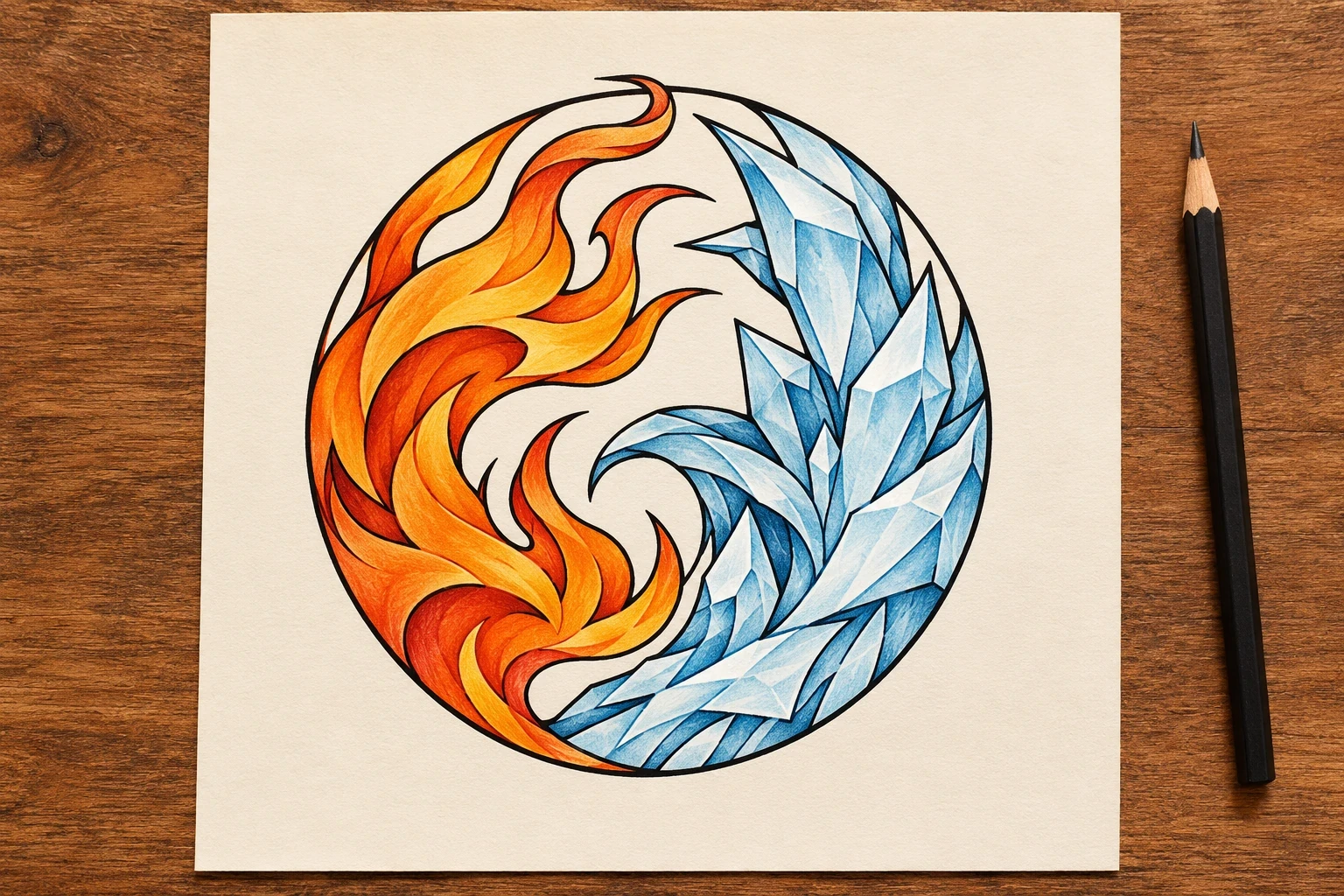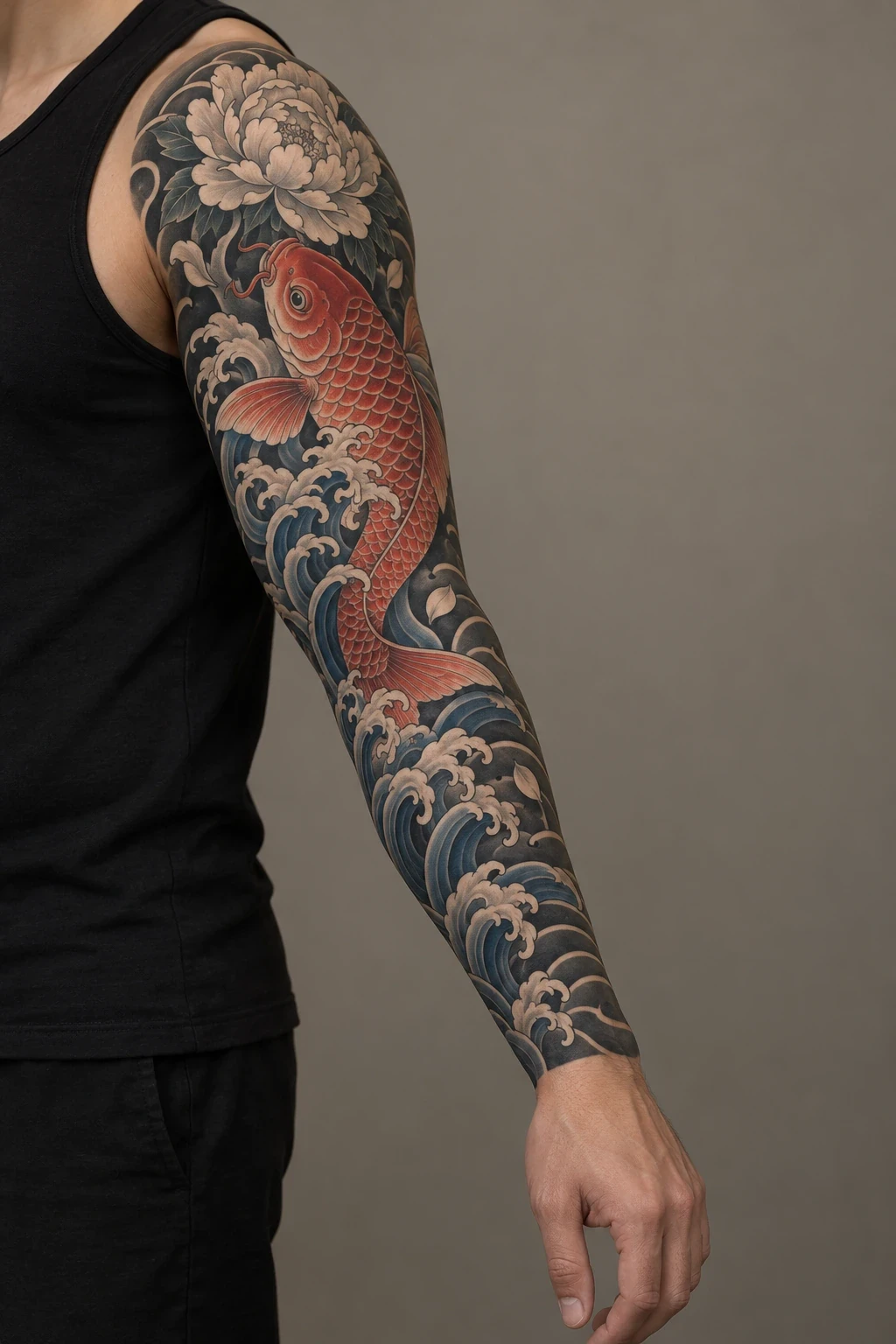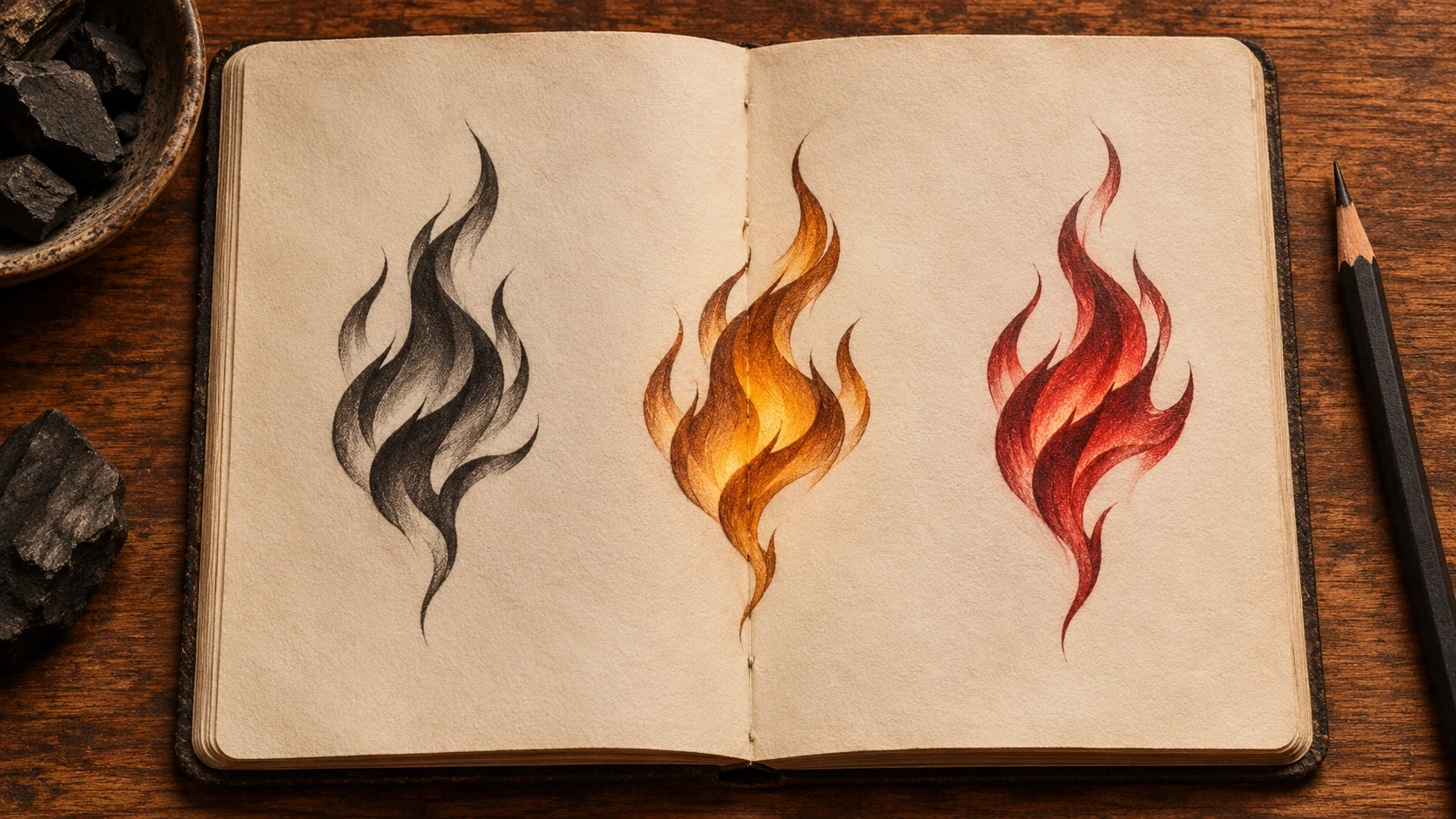
A fire tattoo can be a single curling line or a block of color surrounded by dark ink. Start with the outline you want to see at arm’s length, then decide what should sit beneath it: a wick, a row of coals, or nothing at all. These 19 ideas give you different ways to make that choice.
Image disclosure: All 19 designs and the separate hero are AI-generated concepts. They do not depict real or healed client tattoos.
Choose the shape before the color
A candle flame works within a narrow vertical space. A bed of embers looks at home in a low, wide space. If you want the shape itself to carry the design, start with a single flame or cutout. To explore a second element alongside the flame, see these fire and ice tattoo ideas.
1. One-line flame
An unbroken contour can be enough if the tip curls and the base stays broad. At stencil size, keep space around the curl so the outline still reads as a flame.
2. Three black tongues
Three sweeping shapes give the flame rhythm. Draw the gaps as carefully as the ink. If the tongues blur together in a small printout, widen the gaps before adding detail.
3. Flame cut from a black circle
The pale center does the work. A round frame gives the exposed shape a crisp edge. Try a smaller disk with fewer interior turns if the design needs to fit between other pieces.
4. Matchstick with an amber flame
The narrow stick gives the flame a strong upright line. Keep the color in the flame and let the handle stay simple so the two parts remain easy to distinguish.
5. Pillar candle with dripping wax
The wax gives the flame something solid to sit above. The base of the flame is where the wick meets it. The NIST study of candle flames includes candle references if you want to compare forms.
6. Small campfire
The logs establish a wide base, and the trees suggest a place without needing a full landscape. Shrink or remove the trees first if the design feels crowded.
7. Glowing embers
A low line of coals can suggest a fire without a tall outline. Concentrate the warm accents in a few spots and use small gaps to separate the individual pieces.
8. Heart made of flame
The opening between the two flame forms makes the heart legible. Try the drawing at its intended size and see whether the upper notch still shows.
9. Rose with petals turning into fire
Let the outer petals stretch into the flame so the two forms feel connected. Keep enough of the stem or leaves to make the rose recognizable.
10. Phoenix with flame-shaped tail
The wings set the width and the tail sets the direction. Keep space between the streaks of the tail before adding feather detail.
11. Blue flame
A cool palette makes a different impression from orange. Pick one dark edge and one lighter interior tone so the flame still has a clear outer shape.
12. Long hot-rod flames
A low flame graphic follows a horizontal placement. Test which way the tips should point by looking at the stencil with your arm at rest.
13. Curling flame ribbon
The long S-curve adds movement while the small accents tell you where to look. Follow the curve of the forearm or calf and check that the tips stay distinct.
14. Fire over a mountain ridge
A dark ridge anchors a tall plume. Let the mountain occupy a smaller part of the stencil if you want people to see the flame first.
15. Flame in an arched window
The arch creates a still frame around the moving flame. Keep a visible gap between the top of the flame and the frame, especially at a small scale.
16. Sun with flame-shaped rays
Alternating ray lengths break up the outline. Use fewer rays with wide gaps if you prefer a simpler silhouette.
17. Flame turning into dots
A dense base can fade toward scattered dots. Decide how far the dotwork should travel so it doesn’t compete with the main shape or an adjacent tattoo.
18. Snake beside a flame
The two motifs need a clear gap. Let the snake’s curve point toward the flame and keep the head legible on its own.
19. Faceted flame
Angular panels make the flame look sharp. Open grooves are easier to read when the outer silhouette stays simple. Try a few broad facets before adding smaller ones.
Fit the fire to the placement
- Small area: Try one tongue of flame, a matchstick or a cutout. Simplify the tip before reducing the whole design.
- Long, narrow area: Test a ribbon flame or tall candle along the forearm or calf. Compare both orientations with your limb at rest.
- Wide area: Use embers, hot-rod flames or spread wings when the design can be seen straight on.
What to bring to your tattoo artist
Bring one example for the flame shape and another for the color or linework you like. Point out which gaps you want to keep open. Ask to see the stencil at actual size and look at healed work in a similar style. Compare bold fills in these blackwork tattoo designs if you want to see how much dark area feels right.
Fire tattoo FAQs
What can a fire tattoo mean?
That depends on the person and the subject. A candle can recall someone, a campfire can remind you of a place, and an abstract flame can be a shape you simply enjoy.
Does a fire tattoo need orange or red ink?
No. A recognizably tapered outline can work with black ink alone. You can also use a small color accent to draw attention to the center.
What’s a good starting point for a small flame tattoo?
Choose one clear outer shape and keep the inside open or use one broad accent. Ask your artist to test the size on the intended spot before adding details.