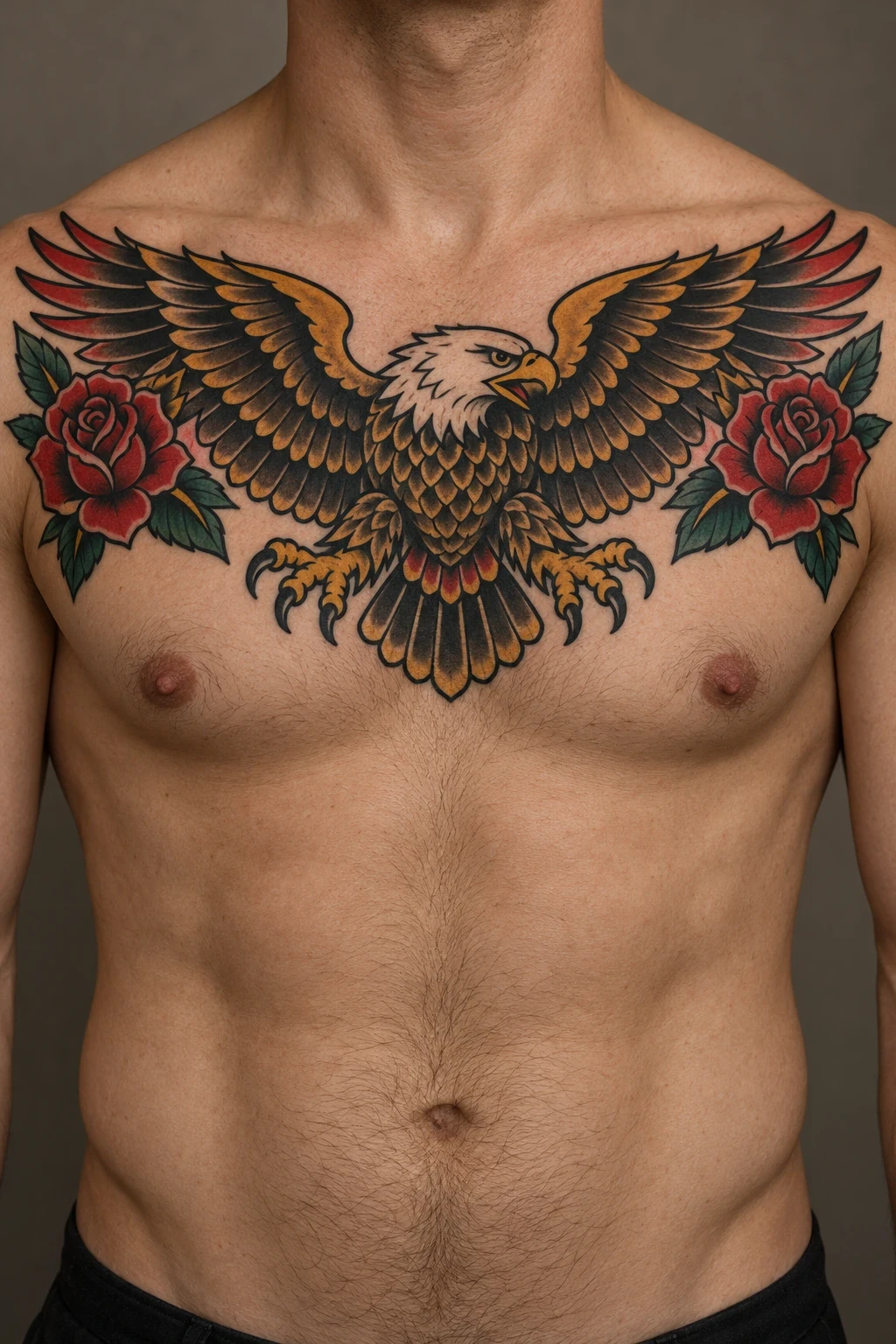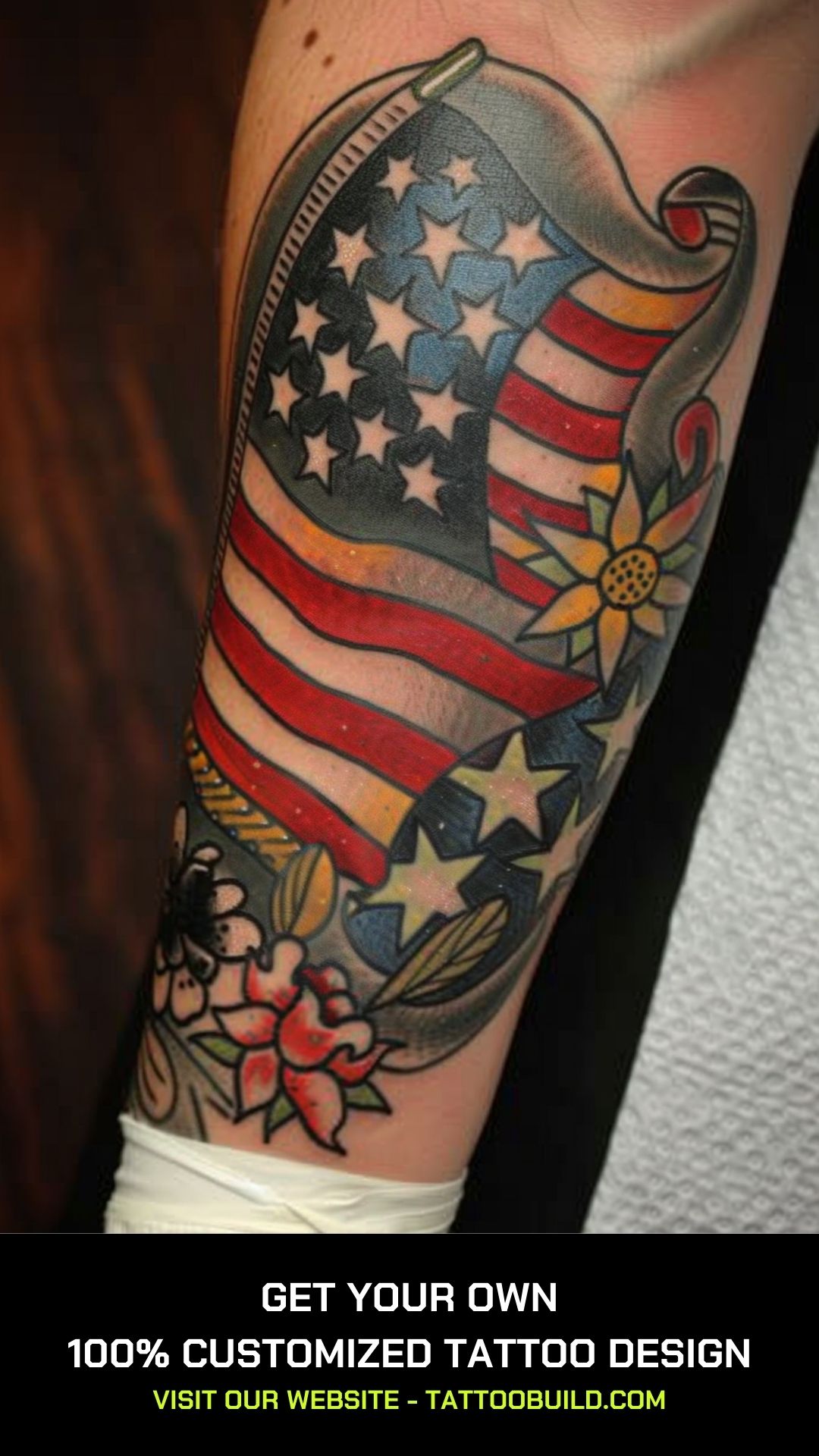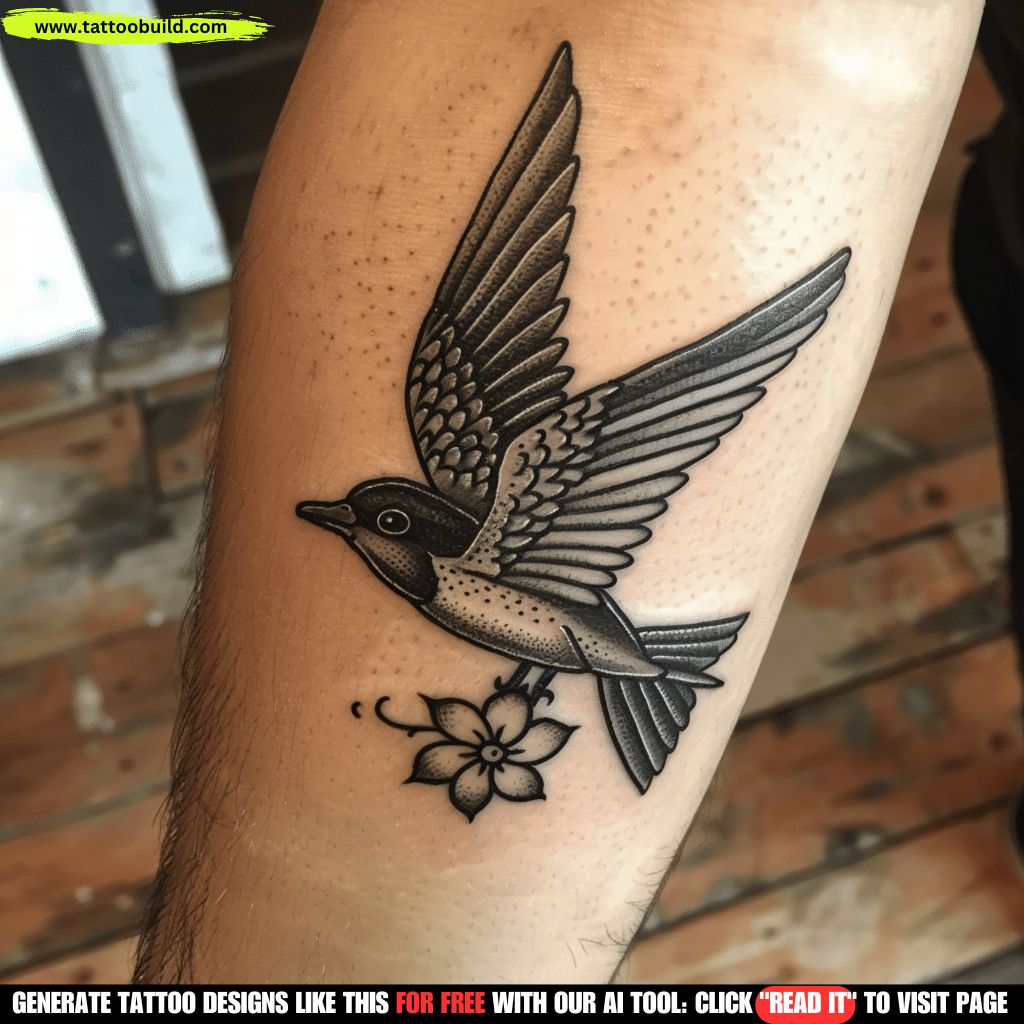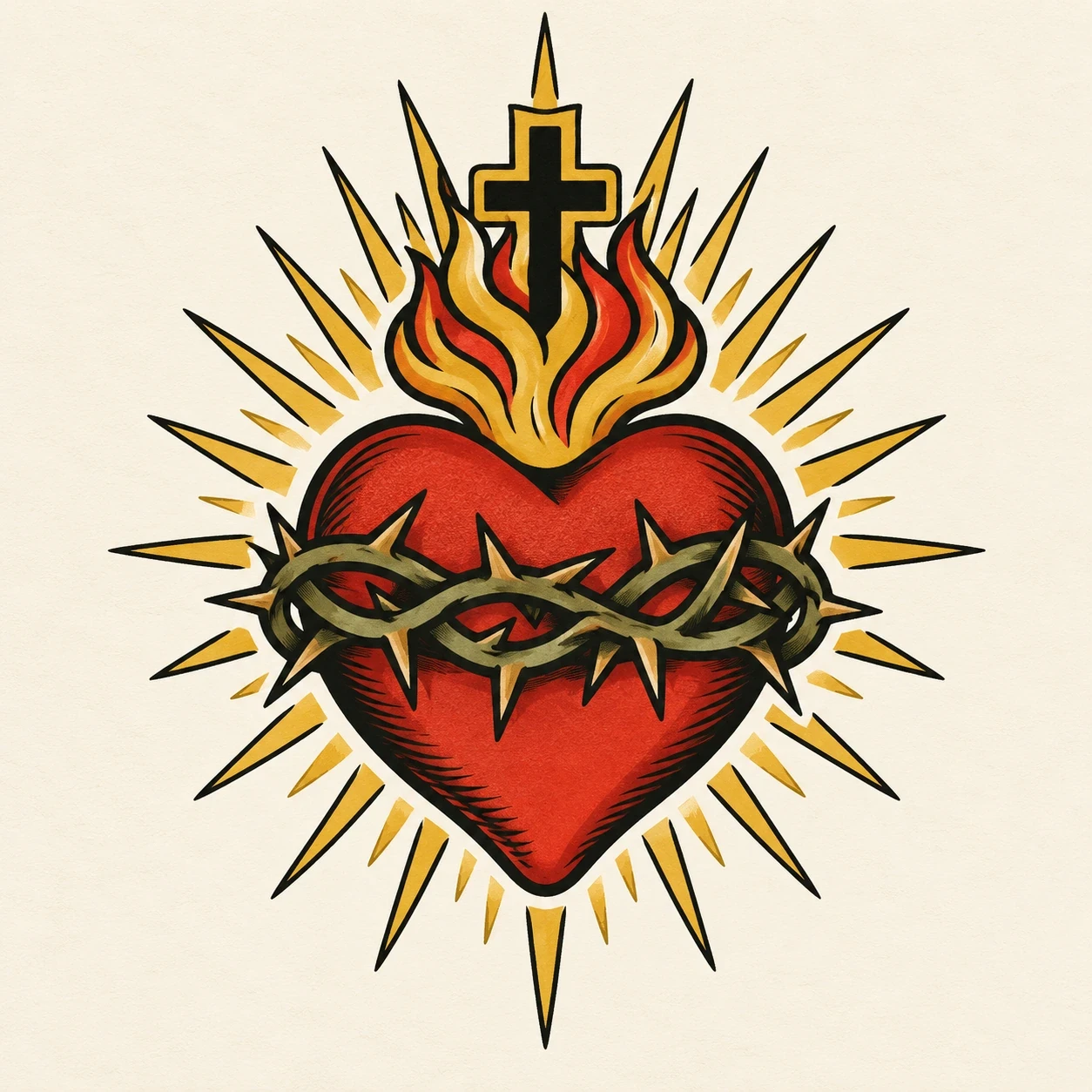
American traditional religious tattoo ideas pair a clear symbol with a bold outline, a limited palette and room between the main shapes. A cross and rose, a Sacred Heart or a dove can each become a complete design without a complicated background.
This collection compares 16 Christian-inspired concepts in that visual direction. It includes devotional subjects and simpler personal emblems, with those differences explained below. It is not a survey of every religion’s symbols or a statement that all Christians share the same views about religious images or tattoos.
Image disclosure: Every image is an original AI-generated tattoo concept on an ivory background. These are not real or healed client tattoos, historical flash sheets or approved liturgical images. Ask an artist experienced in traditional work to redraw the concept for your placement and review its details.
Choose the subject, then simplify the drawing
Start with the symbol you intend to use and the context it belongs to. A Sacred Heart is not simply any heart with decoration, and a decorative string of beads is not automatically a correctly constructed rosary. Tell the artist which details carry meaning for you before deciding what can be simplified.
The concepts here use thick black outlines, broad red, gold, blue and green areas, and restrained shading. Those choices give the collection its traditional-inspired direction. Judge the main silhouette first; fine texture and extra decoration should not be what makes the symbol understandable.
For a wider style comparison, see our tattoo styles guide. Our Christian tattoo ideas cover more approaches, while these designs concentrate on bold shapes and a compact palette.
1. A cross with one red rose
A dark cross and a single red rose make two clearly separated shapes. Gold inset details add warmth without introducing several competing colors. The flower gives the lower part a rounded base while the cross keeps the composition upright.
Decide where the stem and leaves should finish before adding more flowers. One rose can be enough to frame the cross. Ask the artist to preserve the gap around the cross arms so the petals do not conceal the shape you want to emphasize.
2. A Sacred Heart with flames and thorns
The red heart, thorn band, flame and cross create a distinct devotional subject. In Catholic context, this is the Sacred Heart of Jesus, not a generic love-heart design. The concept uses large color areas so each element remains visible.
Bring a reliable religious reference if the devotional identity matters to you. The Vatican News account linked later in this guide describes flames and a crown of thorns in the imagery. Ask the artist which small marks can be omitted while preserving the intended subject.
3. Praying hands with a rose
Two hands pressed together give this design its central gesture. Blue cuffs and a red rose supply the color, leaving the hands as the main focal point. The drawing can stay compact without adding a face or full figure.
Check the finger arrangement and the way the wrists meet the cuffs before approving the drawing. The rose should support the gesture instead of hiding an unresolved hand. Ask the artist to adjust the outline for the size you plan to wear.
4. A white dove carrying an olive sprig
A dove uses the wings and tail to make a broad, readable silhouette. Pale blue shading separates the white sections from the background, while a small sprig adds a contrasting detail. Gold rays complete the framing without a dense scene.
A dove can carry religious or personal associations, but not every dove tattoo makes the same statement. Decide which reference you intend. Keep the bird’s beak, wing attachments and tail clear before adding extra rays or small leaves.
5. A decorative cross-and-bead loop
A black cross beneath red beads creates a compact hanging composition. The oval loop gives the design a rounded upper section, with the cross extending below. This concept is a decorative bead-and-cross emblem, not a diagram of a prayer rosary.
If you want an actual rosary, provide a reference for its structure and have the bead sequence and connectors checked before tattooing. Do not use the generated loop as an accurate counting aid. The artist can retain a bold visual style while redrawing the object correctly.
6. An anchor with a cross-shaped shaft
An anchor, rope and small red flowers combine an upright center with a broad base. The dark blue anchor is the main subject, with gold rope providing contrast. A cross-shaped upper section connects the design to the Christian-inspired theme.
The Orthodox Church in America lists the anchor among Christian symbols of hope, as linked below. That context does not mean every anchor tattoo is religious. Tell the artist whether the cross is essential to your brief, and keep the rope route clear around the shaft.
7. An open book with a cross
A cream-paged book beneath a gold cross uses a simple object rather than lettering as its focal point. The red cover and green leaves form a compact base. Blank pages keep the concept from inventing words or an unreadable verse.
If the book is intended to represent the Bible, explain that in the brief. If you want actual text, choose the passage and translation separately and verify every character. Avoid filling both pages with tiny lines simply to imitate writing.
8. A chalice, host and wheat
A golden cup, cross-marked host and wheat stems create a centered devotional composition. The host supplies a round upper shape while the chalice gives the design a clear stem and base. A limited palette keeps the objects distinct.
This is Christian Eucharistic imagery, and its religious interpretation depends on the tradition. Discuss that context rather than treating the objects as interchangeable decorations. The artist should check the cup’s symmetry, stem and base before adding small wheat details.
9. A crown of thorns around a cross
A thorn ring frames a small red cross with a clear open center. The dark outer shape gives the design weight, while the red cross remains separate. There is no figure or graphic injury in this concept.
Keep the thorn directions legible instead of turning the ring into a dense knot. Ask the artist to show which branches overlap and where they join. The cross should remain easy to identify without relying on the color alone.
10. A cross with golden rays
A red cross over broad gold rays makes the center unmistakable. Short blue cloud accents provide a base without adding another subject. The composition is more about a strong emblem than a detailed scene.
Decide how many rays the design needs at the intended size. Broad shapes can supply the effect without many narrow spikes. Leave a clear border around the cross so its outline does not merge into the surrounding rays.
11. An angel portrait with a red garment
An adult angel portrait brings a face into the collection. A halo and compact wings frame the head and shoulders, with red clothing adding the focal color. The simplified portrait differs from a full figure or battle scene.
This is a generic angel concept, not a named saint or an approved icon. If you want a specific subject, supply a reliable reference. For one named archangel, our Saint Michael tattoo ideas compare full figures, portraits and attribute-based emblems.
12. A cross inside a window-inspired arch
A pointed arch contains a red cross surrounded by blue and gold sections. Dark dividing lines suggest a window while the larger shapes keep the cross dominant. The border creates a deliberate outer boundary.
Treat this as a tattoo illustration inspired by a window, not a copy of a particular church’s glass. Let the artist simplify the pane divisions for the final size. Too many compartments can distract from the cross and make the frame feel crowded.
13. A cross with one white lily
A white flower gives the dark cross a lighter companion than a red rose. Yellow in the center and green leaves keep the palette controlled. The petal shape can provide width while the cross supplies the vertical direction.
Check which petals sit in front of the cross and which parts remain visible behind them. Choose the plant because it suits your intended brief rather than assuming one flower meaning applies to everyone. A few clear petals can communicate more than many tiny folds.
14. A personal heart-and-cross emblem
A plain red heart beneath a small cross creates a simpler personal design. This concept leaves out the thorn band and flames of the Sacred Heart. Leafy stems frame the base without adding a second main subject.
Call it a heart-and-cross emblem if that is what you intend. The distinction helps the artist understand whether you want a personal arrangement or a particular devotional image. Agree on the position of the cross before refining the heart’s outline.
15. A lamb beside a cross-marked pennant
A white lamb, halo and small cross-marked pennant form a figure-based Christian-inspired composition. The pale body is separated by a strong dark outline, while red and gold details provide limited accents. The animal and staff remain distinct objects.
Give the artist a clear reference for the religious subject you mean. Check the lamb’s legs and the staff’s route before adding wool texture. Keep the pennant simple so it does not become a small, crowded surface for invented lettering.
16. A burning candle with a cross
An ivory candle in a gold holder gives the collection a quieter object-based design. The flame makes the upper point, with a red cross on the candle and a small floral base below. The simple silhouette can stay readable without a larger scene.
This is a personal devotional-style arrangement rather than a claim about a particular ritual candle. Tell the artist which details matter to you. Keep the flame, candle body and holder connected clearly, and remove extra wax drips if they obscure the outline.
Plan the shape and placement together
A cross, candle or chalice makes a tall composition. A thorn ring or Sacred Heart uses a more rounded outline, while a dove spreads across a wider area. Choose that overall direction before deciding how much detail the tattoo should contain.
One compact piece
For a standalone tattoo, keep one main subject and a small number of supporting elements. Ask the artist to show the drawing at its actual proposed size, including the outer leaf tips, rays or wings. A symbol that reads clearly on a large screen may need fewer lines when reduced.
A chest, shoulder or larger composition
A larger area does not need to be filled with several unrelated symbols. One cross and flower, a broad dove or a framed panel can provide a clear focal point. Compare our American traditional chest tattoo designs for wider arrangements, then decide which parts of the religious concept you want to preserve.
Adding to existing traditional work
Bring photographs of the surrounding tattoos so the artist can compare outline weight, color and spacing. Decide where the new design should end before adding filler. A consistent amount of open skin can help the religious subject remain distinct among nearby flowers, animals or nautical motifs.
Keep the religious reference accurate
The motifs here come from Christian-inspired visual traditions, but their contexts differ. Vatican News’ account of the Sacred Heart devotion discusses the heart, flames and crown of thorns. Those details explain why the Sacred Heart concept is labelled more specifically than the plain heart-and-cross emblem.
A dove also needs context. Matthew 3:16 describes the Spirit descending like a dove at Jesus’s baptism. The Orthodox Church in America’s overview of Christian symbols identifies the anchor with hope. These references can inform a brief without making every dove or anchor tattoo a statement of faith.
The lamb concept draws on Christian Lamb of God imagery; John 1:29 supplies that biblical title for Jesus. The chalice-and-host design uses Eucharistic imagery, while the candle and open-book concepts are simpler personal arrangements. Explain which reference you intend rather than letting an image generator decide the religious identity of the tattoo.
Christians differ about sacred images
There is no single Christian approach to all religious imagery. The Catholic Catechism, paragraphs 2131–2132, distinguishes the veneration of sacred images from the adoration due to God. The Orthodox Church in America’s discussion of icons explains their place in Orthodox worship.
Some Reformed traditions take a more restrictive position on representations of God. The Westminster Larger Catechism, question 109, as published by the Orthodox Presbyterian Church, rejects representations of any of the three persons of the Trinity. That is one confessional position, not a statement about every Protestant community.
These teachings concern images and worship; they do not establish blanket approval or disapproval of every tattoo. Views and personal applications can differ within communities as well. If the choice is devotional, ask a knowledgeable leader in your own tradition about the subject and its intended use. This article gives design comparisons, not a religious verdict, and the concepts are not presented as liturgical icons.
Check the drawing and any text
Inspect fingers, wing attachments, stems, bead connectors and object outlines before approving the stencil. If an accurate rosary is essential, verify its structure from a reliable reference. If you want scripture, choose the translation, confirm the passage and check the wording character by character. The blank book pages and unlettered designs here do not stand in for verified scripture.
Discuss practical details with the artist
Ask for a quote based on the final drawing, size, placement and colors, including what the appointment and any touch-up policy cover. These concepts do not establish a standard price or session length. Review the artist’s healed examples in a comparable style and get written aftercare instructions for your actual placement.
For healed tattooed skin, the American Academy of Dermatology recommends broad-spectrum, water-resistant SPF 30 or higher sunscreen before going outside, reapplied at least every two hours. It notes that UV light can fade some tattoo inks. Follow the artist’s instructions for a fresh tattoo and ask a clinician about skin concerns.
The AAD advises seeing a dermatologist if tattooed skin develops a reaction or changes. Sources were checked on 18 October 2026. The generated illustrations do not show healing stages or predict an individual result.
American traditional religious tattoo questions
What gives these concepts their traditional-inspired appearance?
The collection uses thick black outlines, broad color areas, a limited palette and clear outer shapes. The aim is to make the main symbol understandable without relying on tiny detail. Have the artist adapt those choices to their own drawing rather than copying every mark.
Are these ideas representative of every religion?
No. This collection is explicitly Christian-inspired. It includes subjects with particular devotional contexts and some personal emblems. Do not assume that symbols from different religions can be exchanged without understanding their meaning and use.
Can a religious tattoo be black and grey?
Yes, but the drawing needs a deliberate balance of dark and open areas. Ask the artist to show how the outline, flower, rays or other supporting shapes will separate without color. Removing color from a complicated image is not the same as designing it for black and grey.
Is a Sacred Heart the same as a heart with a cross?
No. The Sacred Heart has a specific Catholic devotional context. A plain heart-and-cross design can be a personal emblem. Tell the artist which you intend and verify the details that matter to your religious reference.
Can I add a Bible verse?
Choose and verify the text separately. Include the translation and any reference you want shown, then ask whether the wording fits legibly at the intended size. It may be better to keep the symbol and text as separate parts of the composition.
How do I choose the final design?
Pick one main subject, the amount of coverage and the palette you prefer. Bring a reliable religious reference where relevant, plus a photograph of the intended placement. Ask the artist what they would simplify and review the corrected drawing before tattooing.