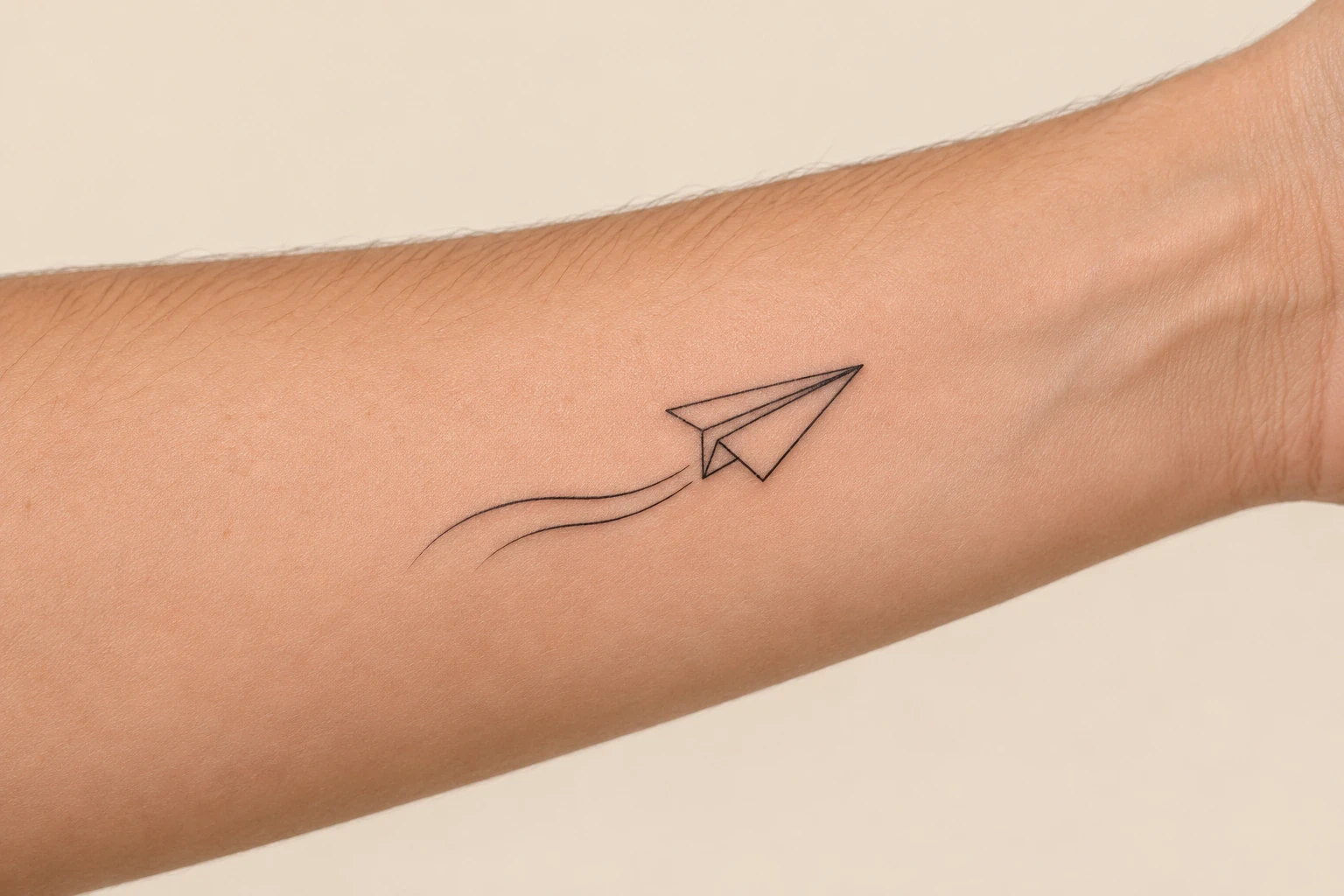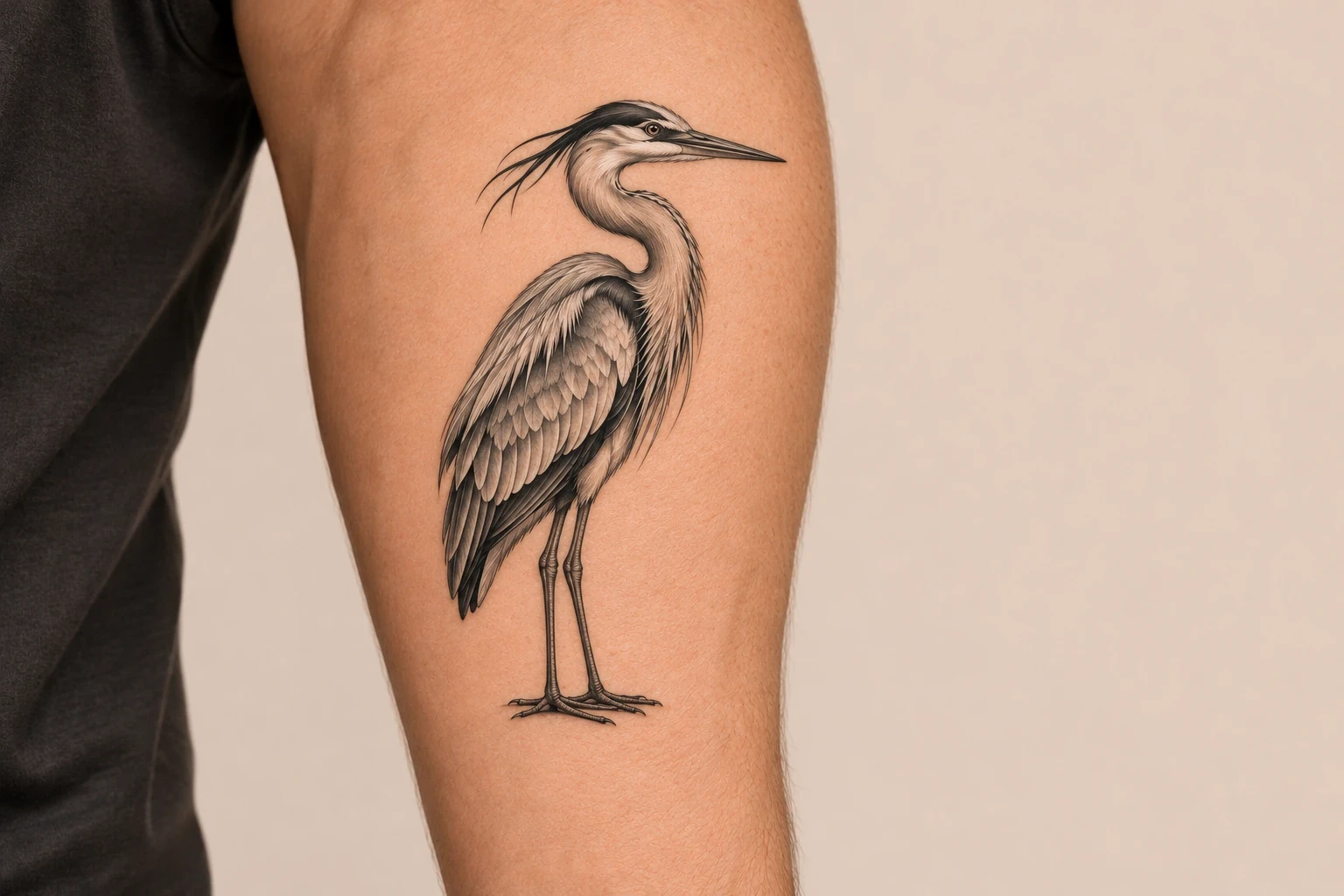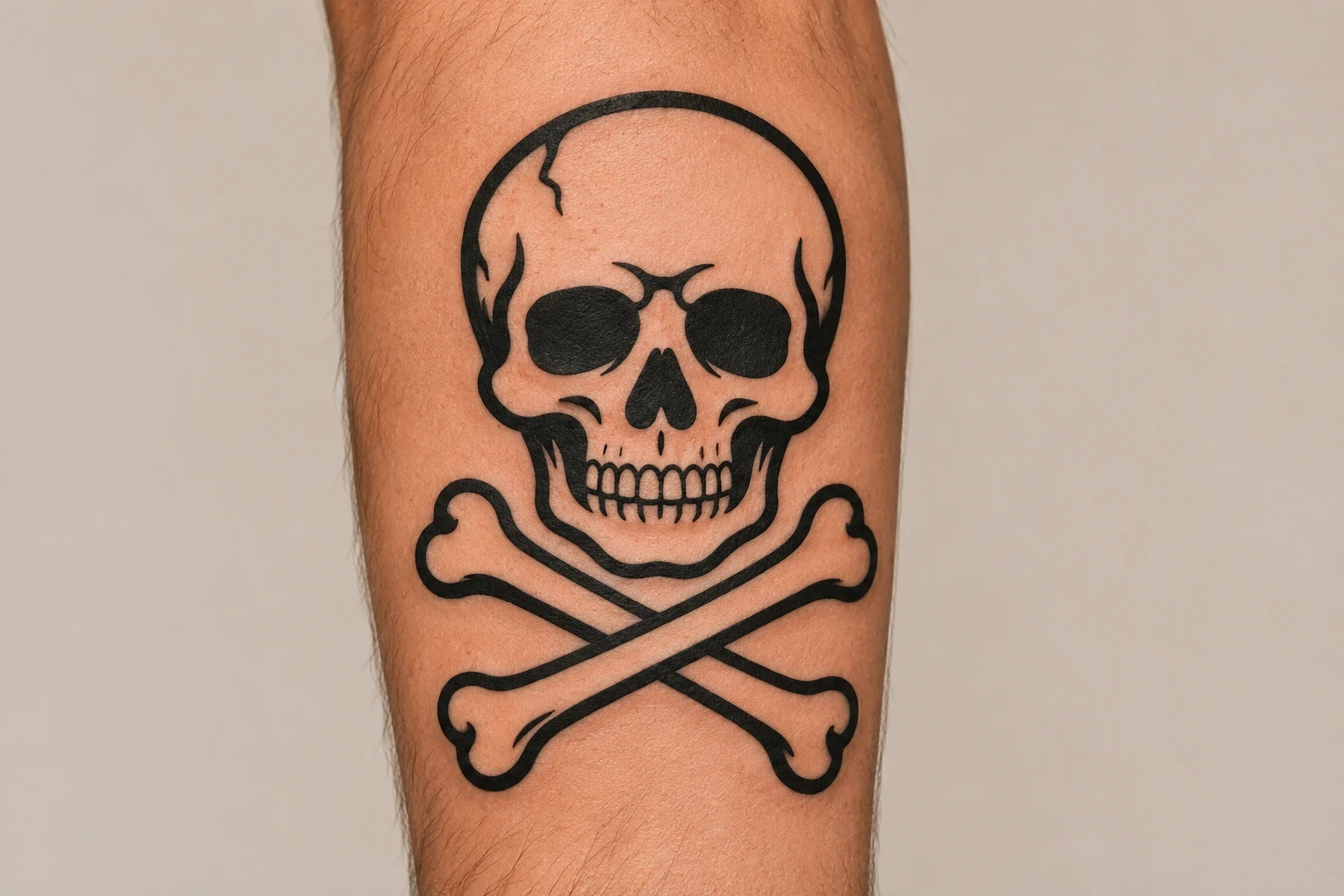
A Christian tattoo works best when the symbol means something to you before it ever means something to the person reading it. That is the single biggest thing I have learned from years of looking at faith-based work.
I have watched people walk into a shop with a screenshot of a cross they found in ten seconds, and I have watched people bring in a verse their grandmother underlined in her Bible. The second tattoo always ages better, and not because of the linework.
This guide runs through 36 Christian tattoo ideas, what each symbol has traditionally meant, and the practical stuff nobody mentions until you are already in the chair. If you want something focused on one figure, the Jesus tattoo ideas collection goes deeper on portrait work.
I have kept the honest notes in here too, including which designs I would not put on a hand and why fine-line script is a harder ask than it looks.
Which Christian Tattoo Style Is Right for You?
Most of the decision comes down to how visible you want it, how much you want to spend, and how much detail your placement can actually hold.
| Style | Best For | Typical Session | How It Ages |
|---|---|---|---|
| Fine-line / minimalist | Small crosses, ichthys, single words | 30-90 minutes | Softens noticeably; may need a touch-up in 5-8 years |
| Black and grey realism | Jesus portraits, angels, Sacred Heart | 4-10 hours across sessions | Holds well if the artist left enough contrast |
| Traditional / bold line | Sacred Heart, praying hands, banners | 2-4 hours | The most reliable long term, by a wide margin |
| Script lettering | Bible verses, single names | 1-3 hours | Depends entirely on letter spacing and thickness |
| Dotwork / stippling | Geometric crosses, halos, radiant light | 3-6 hours | Can blur into grey if the dots sit too close |
If you are torn, traditional bold linework is the safest bet. It is the style tattooing has been stress-testing for the longest.
Why Christian Tattoos Carry More Weight Than Most Designs
A faith tattoo is one of the few pieces people are asked about by strangers. That changes what you should put on your skin.
In my experience the designs that hold up are the ones the wearer can explain in a sentence without sounding rehearsed. A cross on the forearm, a verse that got someone through a specific year, a dove for a person they lost.
There is also the theological question, and it is worth being straight about it. Leviticus 19:28 tells the Israelites not to make cuttings in their flesh or print marks upon themselves, and some Christians read that as a standing prohibition while others read it as tied to the mourning and pagan practices of that specific context.
I am not here to settle that. But if you belong to a church community where it matters, having the conversation before the appointment is a lot easier than having it after.
The practical layer matters too. Tattoo ink sits permanently in the dermis, so the design you pick at 22 is the design you explain at 60 — worth reading the American Academy of Dermatology guidance on tattoos before you book.
Popular Christian Tattoo Ideas
These nine categories cover the overwhelming majority of faith-based requests I see. Each one has a version that works small and a version that needs real space.
1. Cross Tattoos
The cross is the most requested Christian tattoo and the easiest one to get wrong, because a plain shape gives the artist nowhere to hide.
A bare Latin cross is essentially two rectangles. What makes it a tattoo rather than a shape is what surrounds it: cloud shading, light rays, wood grain texture, or a wrapped cloth.
Placement drives size. The inner forearm and outer bicep are the two spots I would recommend first, because both are flat enough to keep the vertical line straight as the arm moves.
If you want something with a specific cultural lineage rather than a generic shape, the Celtic cross designs carry knotwork that gives the artist far more to work with. A cross with texture will always outlast a cross that is only an outline.
2. Bible Verse Tattoos
Verse tattoos are the ones people most often want changed later, and it is almost never the verse they regret. It is the font.
Very thin script with tight letter spacing will thicken as the ink settles, and letters that sat 2mm apart can close up into a smudge. Any artist worth booking will push back on spacing before they push back on the words.
My honest advice: shorten it. A full three-verse passage on a forearm forces the lettering so small that it stops being readable within a decade. One line, or even a reference like “Isaiah 49:16”, carries the same weight.
That verse is a common pick for a reason — “See, I have engraved you on the palms of my hands” is about as close as scripture gets to describing a tattoo. For more layouts, the Bible verse tattoo ideas guide has a good range.
3. Angel Tattoos
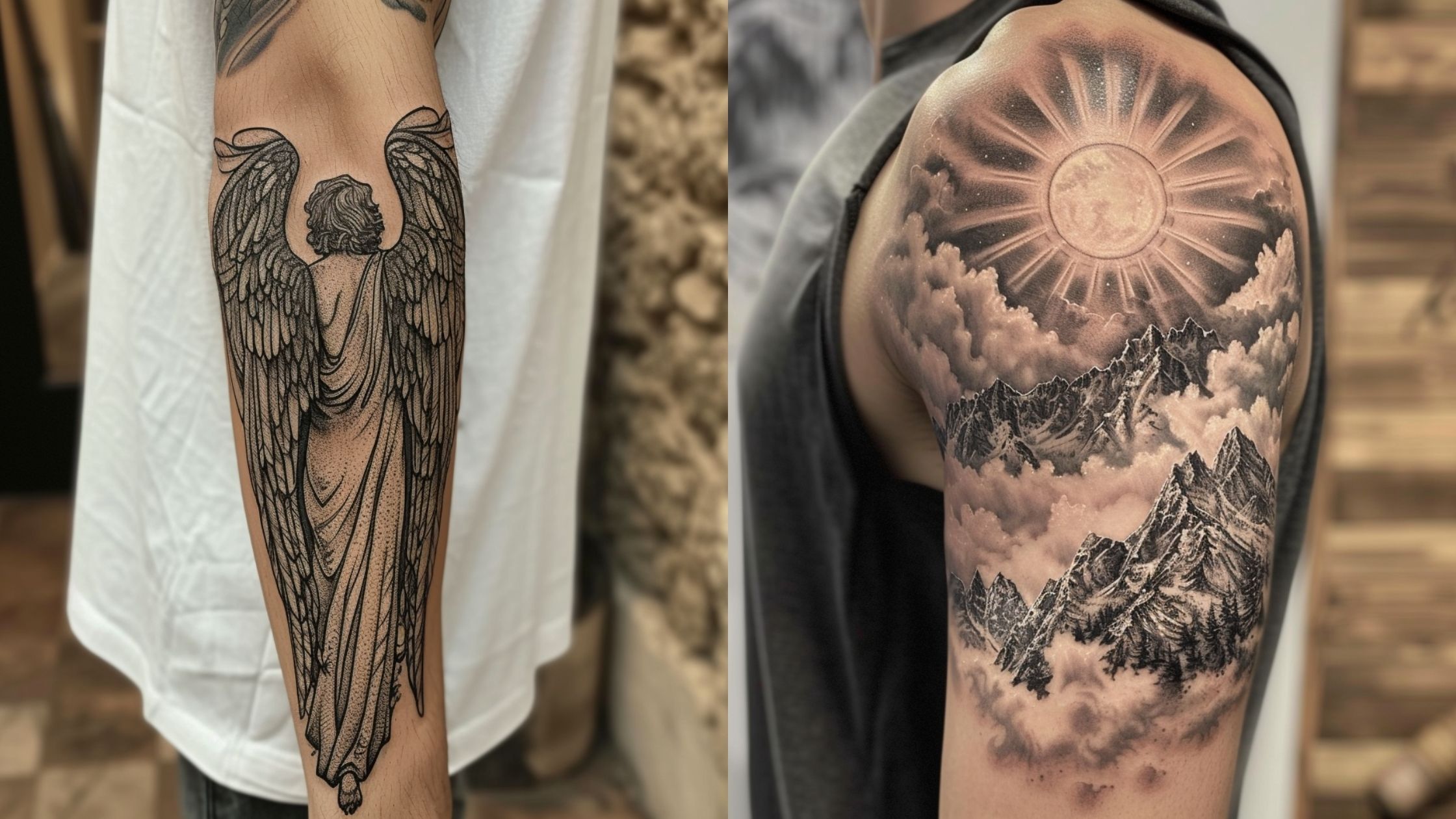
Angels are the most technically demanding design on this list. Wings alone can eat four hours.
The reason is feather structure. Real feathers layer in overlapping rows with different lengths, and an artist who draws them as identical repeated shapes produces something that reads as decoration rather than an angel.
Guardian angel pieces work well on the shoulder and upper back, where there is enough surface for the wings to open properly. Kneeling or mourning angels suit the outer arm.
If you want the wings without the figure, that is a legitimate design in its own right — the wing tattoo ideas collection covers the standalone versions, and angel tattoos for women leans toward softer, smaller-scale work.
4. Dove Tattoos
The dove is the symbol I recommend most often to people who want something recognisably Christian but not immediately obvious to strangers.
It carries the Holy Spirit from the baptism accounts in the Gospels, and it carries peace from the Genesis flood narrative, so it works on two levels without needing explanation.
Doves scale beautifully. A 3cm fine-line dove on the wrist reads clearly, and so does a 20cm realistic one across the chest, which is not true of most designs on this page.
The common mistake is drawing the wings fully spread and symmetrical, which reads as a logo. A dove caught mid-turn, with one wing shortened by perspective, looks alive. Ask your artist for a reference photo of an actual bird, not a clipart silhouette.
5. Jesus Tattoos
This is the one where the artist matters more than the idea. A Jesus portrait is a realism piece first and a faith piece second.
Every artist I have asked about portrait work says the same thing: check their healed photos, not their fresh ones. Fresh realism looks incredible on everybody. Healed realism separates the specialists from everyone else.
Budget realistically. A quality black and grey portrait usually runs multiple sessions, and rushing it into one sitting is how you end up with flat, overworked skin.
The scene versions — carrying the cross, the crown of thorns, hands reaching down — need a half sleeve or a chest panel to work. Squeezing a narrative scene onto a 10cm patch loses the detail that made you want it.
6. Fish Tattoos (Ichthys)
Two curved lines. That is the whole design, and it is the oldest Christian symbol still in common use.
Early Christians used the ichthys as a discreet marker, and that history is exactly why it still appeals to people who want their faith visible but not announced.
It is also the cheapest tattoo on this page. Most shops will do a small one at their minimum charge, and it heals in a fortnight.
The only real design decision is whether to leave it as a clean outline or add the Greek letters inside. In my experience the plain version ages better, because there is simply less to blur.
7. Crown of Thorns Tattoos
A crown of thorns armband is one of the few band tattoos that does not look dated, because the shape has an actual reason to circle the arm.
The technical challenge is spacing. Thorns drawn tight against each other merge into a dark ring within a few years, and then you have a black band rather than a crown.
I would ask for visible skin between each thorn, more than feels right at the time. The design should look slightly sparse when it is fresh.
It also pairs well as a frame — around a portrait, around a heart, or around a wrist. That is usually a stronger composition than the standalone band.
8. Rosary Tattoos
Rosary tattoos are strongly associated with Catholic devotion, and they have a specific structural advantage: the beads follow the body.
Wrapped around a wrist, down a forearm, or over a shoulder, the chain gives the design a natural path rather than sitting on the skin like a sticker.
The honest warning is placement. Wrist and hand rosaries are the most photographed version and the fastest to fade, because hands see constant sun and washing. Expect touch-ups.
If you want the devotional imagery without the fading risk, praying hands designs deliver a similar feel on placements that hold ink far longer.
9. Sacred Heart Tattoos
The Sacred Heart is the design I would pick if someone told me they wanted one Christian tattoo that would still look good in forty years.
It comes from traditional tattooing, which means the composition was already optimised for bold lines and heavy contrast long before anyone was worried about how it photographed.
The three components that make it legible are the flame at the top, the crown of thorns around it, and the light rays behind. Drop any one and it starts reading as a generic heart.
It works in red and black traditional, in straight black and grey, and in a stripped-back fine-line version. Of everything on this page, this is the design most forgiving of an average artist.
More Christian Tattoo Designs Worth Considering
If none of the nine above fit, these are the ones I see next most often.
The Anchor
Drawn from Hebrews 6:19, which describes hope as an anchor for the soul. It suits people who want a faith tattoo that reads as nautical to anyone who does not know the reference.
The Lion of Judah
Rooted in Revelation 5:5. It needs strong blacks and real size — a small lion loses the mane detail that makes it a lion rather than a cat.
The Shepherd and Lamb
Psalm 23 and John 10 both sit behind this one. It is a gentler image than most on this list and works well in fine-line or soft grey wash.
Cross and Compass
A modern combination rather than a historical symbol, but a good one: faith as direction. It fits the forearm well because the circle balances the vertical line of the arm.
Praying Hands
Traditionally traced to Dürer’s study drawing, and a staple of black and grey tattooing for decades. Reliable, readable, and it holds detail at moderate size.
Practical Tips Before You Book
Bring your own reference, and bring more than one. Handing an artist a single screenshot means you get that screenshot; handing them three means you get their interpretation, which is usually better.
Ask to see healed work in the specific style you want. This is the single most useful question in the whole process, and most artists are happy to be asked.
Give yourself a week between the consultation and the appointment. The designs I have seen people regret are almost always the ones booked the same day they were decided.
On aftercare, follow whatever your artist tells you over anything you read online — they know their ink and their technique. Generally that means keeping it clean, keeping it moisturised, and keeping it out of the sun while it heals.
If a healing tattoo becomes hot, swollen, unusually painful, or starts weeping after the first few days, that is a doctor visit, not a forum question. Allergic reactions to certain pigments and infections are both real risks, and neither is something to wait out. Nothing in this article is medical advice — the Mayo Clinic overview of tattoo risks is a better starting point than anything I can tell you.
Still Not Sure? Avoid These Mistakes First
Choosing based on how it photographs. Fresh fine-line work photographs beautifully and that is exactly why so much of it exists. Ask how it looks in year eight.
Going too small for the detail. A Jesus portrait at 8cm is not a smaller portrait, it is a grey smudge with a beard.
Picking a verse for the aesthetic of the font rather than the meaning of the words. If you cannot say why that verse, pick a symbol instead.
Choosing a hand, finger, or foot placement for a first tattoo. These fade fastest and hurt most, which is a rough combination to learn on.
If you are still narrowing things down, it is worth browsing the wider faith tattoo ideas and spiritual tattoo ideas collections, or the cross tattoos for women gallery if you want smaller-scale options.
Frequently Asked Questions
Is it a sin for a Christian to get a tattoo?
Christians disagree on this, and both positions are held sincerely. Leviticus 19:28 instructs the Israelites not to print marks upon themselves, which some read as a permanent prohibition and others read as addressing the specific mourning and pagan rituals of that era. The New Testament does not address tattooing directly. If your church community has a settled position on it, that conversation is worth having before you book rather than after.
What is the most popular Christian tattoo design?
The cross, by a wide margin, followed by Bible verse lettering and Jesus portraits. Its popularity is also its weakness — a plain cross outline is one of the most common tattoos in existence, so adding texture, shading, or a specific tradition like Celtic knotwork is what makes yours yours. In my experience the crosses people are still happy with are the ones that had a reason to look the way they do.
How much does a Christian tattoo cost?
It depends far more on size, detail and your artist’s rate than on the subject matter. A small ichthys or wrist cross usually falls at a shop’s minimum charge, while a black and grey Jesus portrait runs multiple sessions and is priced by the hour. Ask for a written estimate at the consultation, and be wary of a realism quote that comes in dramatically below everyone else’s.
Where is the best place on the body for a Christian tattoo?
The inner forearm and outer upper arm are the two I recommend most, because both are flat, hold detail well, and are easy to cover when you want to. The chest and upper back suit larger pieces like angel wings or a Sacred Heart. Hands, fingers and feet fade fastest, so save those for designs you are comfortable touching up.
How long does a Christian tattoo take to heal?
The surface usually looks settled in about two to three weeks, though the deeper layers keep healing for a couple of months. Peeling, itching and some dullness during that window are normal. Heat, swelling, spreading redness or discharge after the first few days are not — see a doctor rather than waiting it out.
Quick Summary
- Pick the symbol first, the style second. A meaningful design in an average style beats a stunning design that means nothing.
- Traditional bold linework ages the most reliably. Fine-line and dotwork need touch-ups sooner.
- For Bible verses, shorten the text and widen the letter spacing — fonts fail before words do.
- Angel and Jesus pieces are realism work. Judge the artist on healed photos, not fresh ones.
- The dove and the ichthys are the two designs that scale from tiny to large without losing meaning.
- The Sacred Heart is the most forgiving design here, because traditional tattooing already optimised it.
- Avoid hands, fingers and feet for a first tattoo — fastest fading, highest pain.
- Follow your artist’s aftercare, and treat heat, swelling or discharge after day three as a doctor visit.
Thirty-six ideas, and the only one that matters is the one you can still explain in twenty years.