If you are searching for Jesus tattoo ideas, you are almost certainly weighing two things at once: the design you want on your skin and the faith you want it to represent. The best Jesus tattoos are not the most detailed ones — they are the ones built around a single clear focal point that will still read as a face, a cross, or a crown of thorns in fifteen years.
I have spent a lot of time looking at religious tattoos, both fresh and healed, and the pattern is consistent. Fresh portraits look spectacular. Healed portraits look spectacular only when the artist committed to real contrast instead of chasing photographic detail.
This guide walks through the symbolism behind each motif, the styles that hold up over time, placement by size, and the honest trade-offs nobody mentions in the consultation. If you are still deciding on a broader theme, our overview of Christian tattoo ideas is a good companion read.
Everything below assumes you are working with a professional artist in a licensed studio. Nothing here is a substitute for that conversation.
Which Jesus Tattoo Style Is Right for You?
Style choice drives cost, session length, and how the tattoo will look a decade from now. Here is how the four most common approaches compare.
| Style | Best For | Typical Size | Ages Well? | Watch Out For |
|---|---|---|---|---|
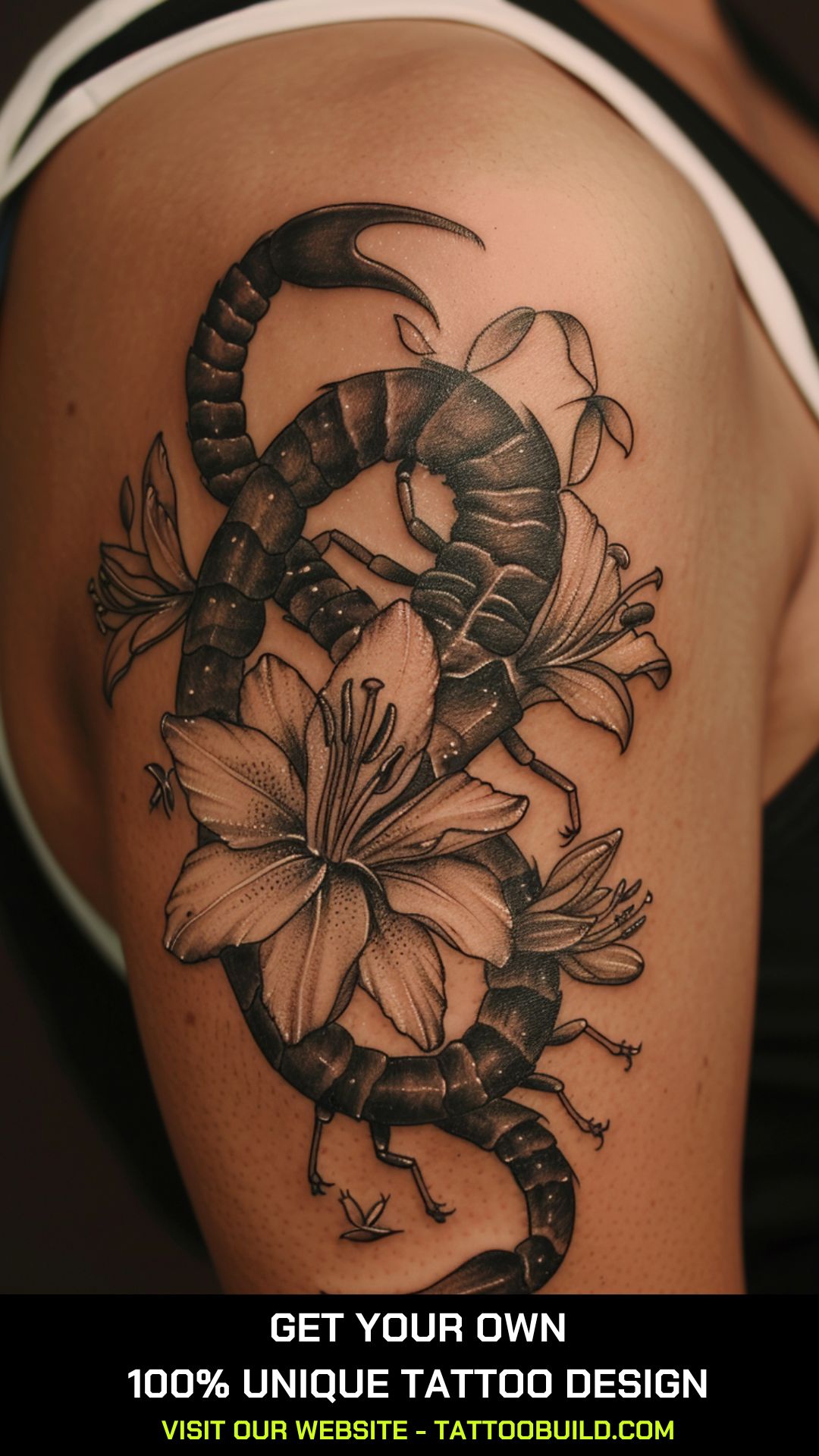
| Black & grey realism | Portraits of Christ, Sacred Heart, crucifixion scenes | 6 in. and up | Yes, if contrast is strong | Soft mid-tones that blur into one grey mass |
| Traditional / neo-traditional | Sacred Heart, praying hands, banner text | 4–8 in. | Excellent | Less photographic likeness in the face |
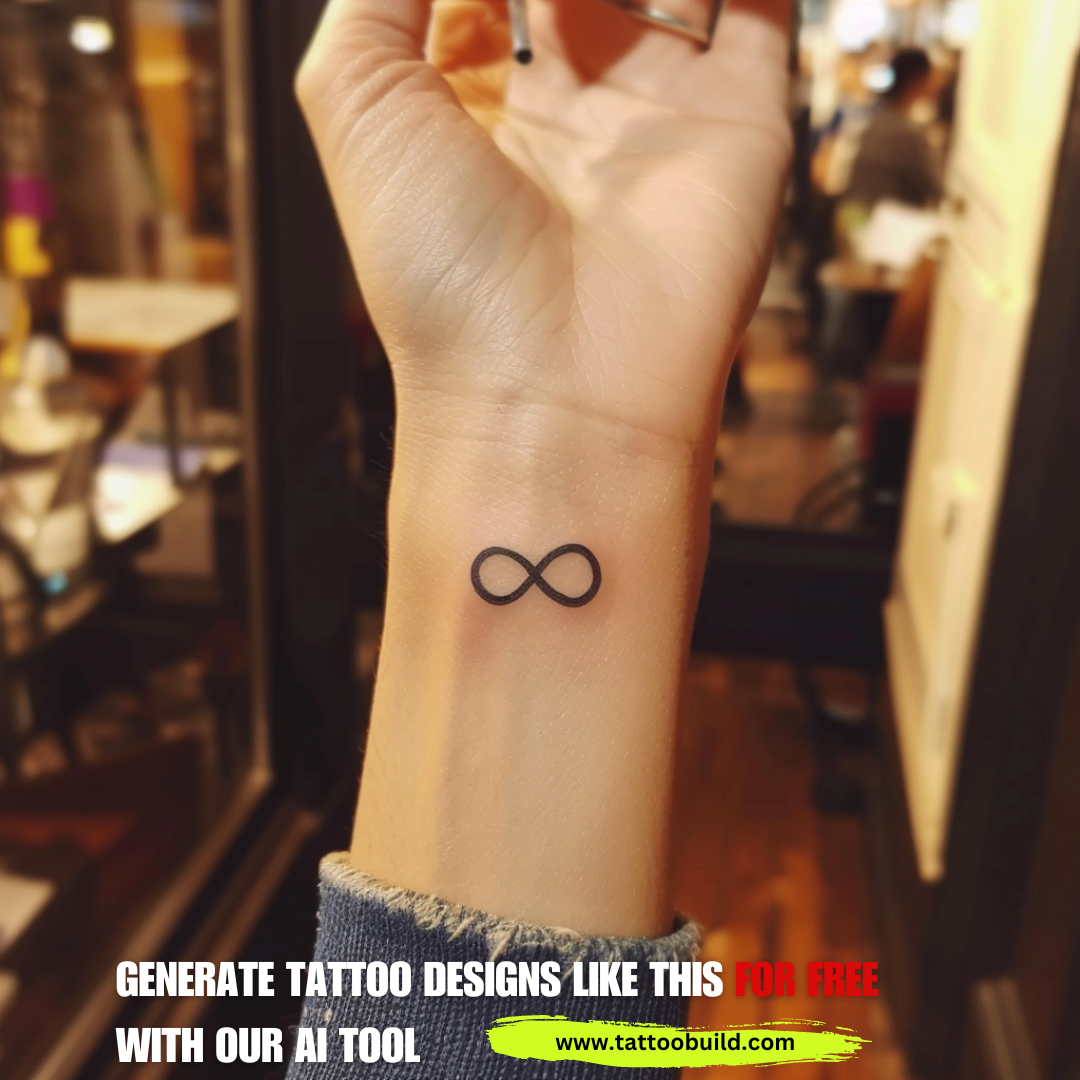
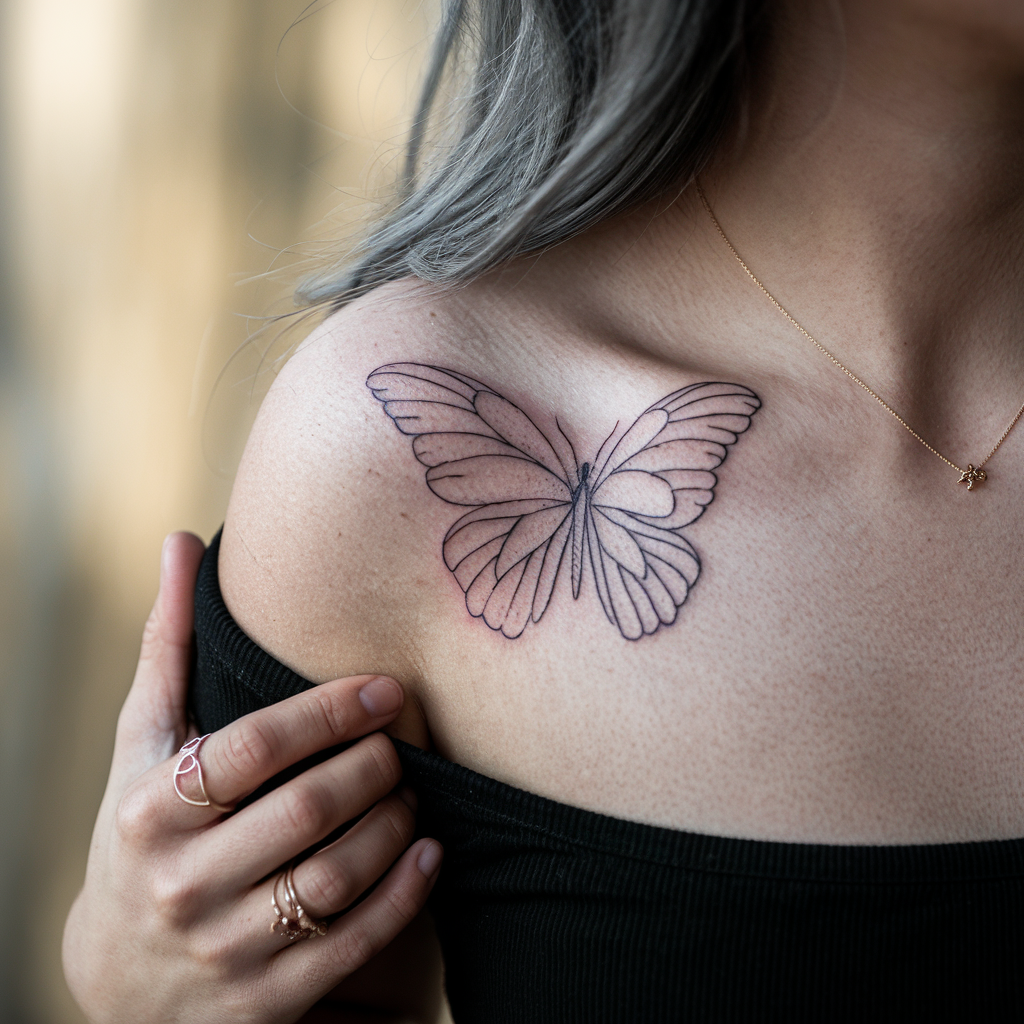
| Fine line | Small crosses, minimal Christ profiles, script | 2–5 in. | Moderate — expect softening | Detail packed too tightly to stay separate |
| Colour realism | Stained-glass motifs, Sacred Heart, sleeves | 8 in. and up | Yes with upkeep | Sun fading, and touch-ups every few years |
What Actually Makes a Jesus Tattoo Work
The single biggest factor is not the reference photo. It is whether the design has a hierarchy — one element the eye lands on first, then everything else in supporting order.
A Christ portrait with equally dark hair, robe, and background gives the eye nowhere to rest. Six months of healing pushes those tones closer together and the piece flattens.
Size is the second factor, and it is less negotiable than most people want it to be. A realistic face needs roughly five to six inches of height before the eyes, nose, and mouth can each hold their own space. Below that, a symbolic design like a cross almost always serves you better.
Skin tone matters too, and good artists will raise it before you do. On deeper skin tones, contrast comes from value spread rather than from lighter greys, so an artist experienced across skin tones will plan the design differently from the outset.
Finally, the reference. Every artist I have asked prefers a clear, well-lit reference with strong directional light over a dozen dim ones, because shadow direction is what turns flat ink into a face.
Jesus Tattoo Ideas and What They Mean
Each motif below carries its own tradition. Choosing one on meaning rather than looks alone is what keeps the tattoo from feeling generic.
1. The Sacred Heart
The Sacred Heart — a flaming heart wrapped in thorns, often with a cross above it — represents Christ’s love and his suffering held in the same image.
It is my favourite recommendation for anyone who wants unmistakably Christian imagery without committing to a portrait, because the symbol is bold enough to read at four inches.
The motif has centuries of devotional art behind it, and the Metropolitan Museum of Art holds a deep archive of early Christian imagery worth browsing for reference ideas.
It also adapts across styles. I have seen it work in American traditional with heavy black shading and in soft colour realism, and both held up.
2. Portrait of Christ
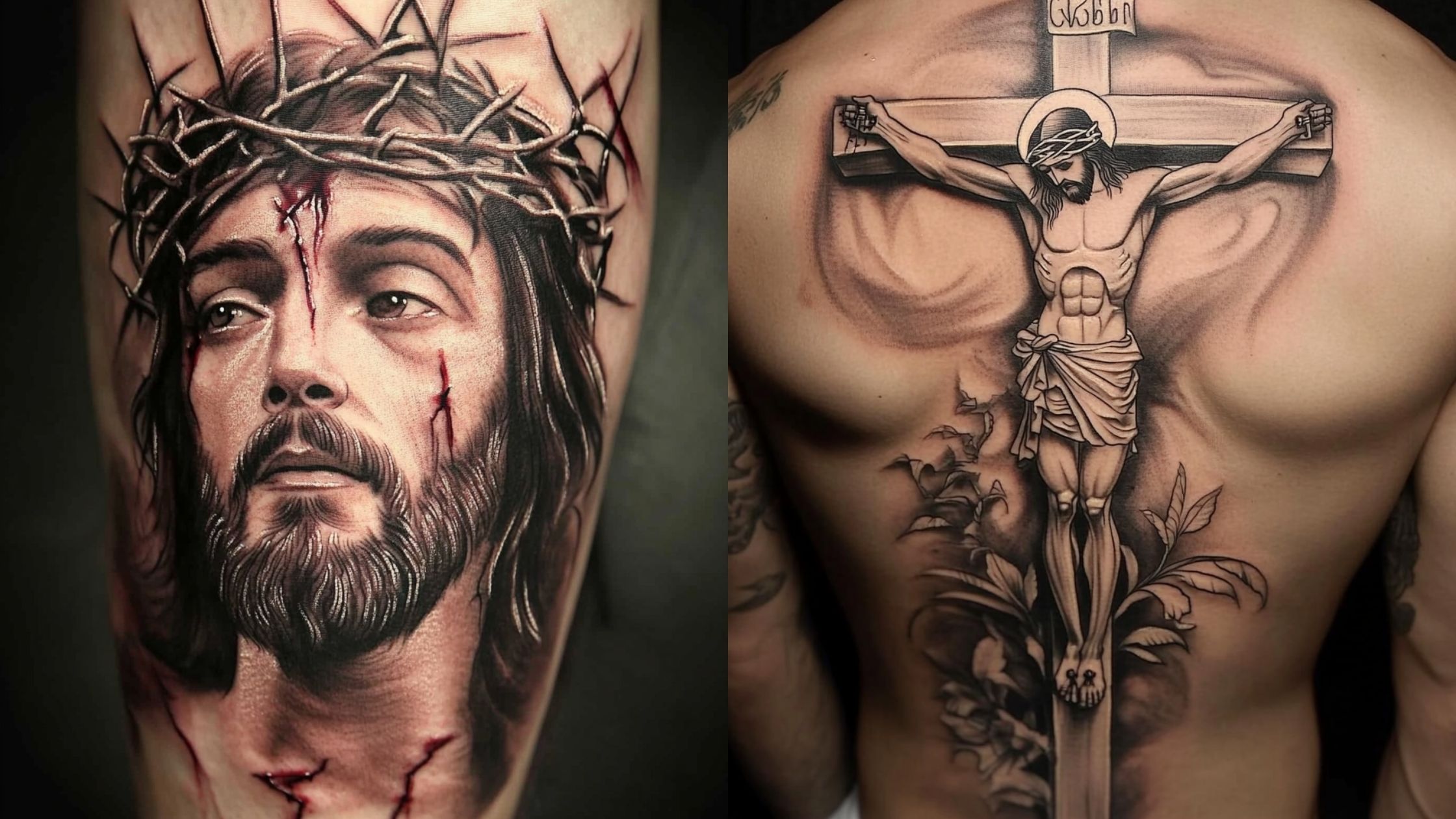
The classic: a rendered face, usually three-quarter view, usually black and grey. It is the most requested Jesus tattoo and the one most often done badly.
Book a portrait specialist, not a generalist. Look through healed work in their portfolio specifically — fresh photos hide the problems that show up at the one-year mark.
When I have compared healed portraits, the ones that survived all shared the same trait: genuine near-black in the deepest shadows, and untouched skin left as the brightest highlight.
Expect multiple sessions. A detailed forearm or chest portrait commonly runs six to ten hours of tattoo time split across two or three appointments.
3. Jesus on the Cross
The crucifixion scene is the most narrative option — it tells a story rather than presenting an icon.
It suits vertical placements naturally: the spine, the outer forearm, the calf, or the side of the ribs all follow the shape of the cross.
The mistake I see most often is cramming the full scene into a space that cannot hold it. Landscape, sky, figures, and the cross itself need room, or they merge.
If you like the shape but not the full scene, a standalone cross design gives you the same symbolism at a fraction of the size.
4. Crown of Thorns
A crown of thorns on its own is one of the strongest compact options in religious tattooing.
It wraps beautifully around a bicep, a wrist, or a finger, and the interlocking branch shape is naturally suited to a band.
Because it is drawn from linework rather than shading, it tends to hold its clarity longer than a portrait of similar size.
I would still keep the thorns slightly larger and further apart than looks right on paper — healing closes gaps, it never opens them.
5. Praying Hands
Praying hands are technically a separate motif, but they sit alongside Christ imagery constantly and often appear in the same composition.
They are forgiving to tattoo — hands have clear structural landmarks, so likeness pressure is far lower than with a face.
This is a strong entry point if you want religious work but are not ready for a portrait. Our collection of faith tattoo ideas covers more designs in this register.
Rosary beads draped through the hands add movement and let the artist connect the piece to other elements on a sleeve.
6. Fine Line and Minimalist Christ
Minimal Jesus tattoos strip the image down to a profile, a silhouette, or a few defining lines.
They are quiet and modern, and they suit placements like the inner forearm, the ribs, or behind the ear.
Be realistic about longevity. Fine line work spreads slightly as it settles, so designs that rely on hairline gaps between strokes will soften first.
An artist who works in this style daily will space the lines with that in mind. One who does not will hand you something that looks perfect for a year.
7. Religious Sleeves and Large Scenes
A full or half sleeve lets you combine motifs — Christ, clouds, light rays, doves, script — into one continuous piece.
These are planned as a whole, not assembled from separate tattoos. Booking the full design with one artist from the start avoids mismatched shading later.
Budget accordingly; our guide to what a sleeve tattoo costs breaks down the typical session maths.
A dove is the most common connective element I see used to fill the awkward gaps between larger elements.
Placement Variations to Consider
Placement changes the design as much as style does. Here is how the main options actually behave.
Chest
The chest offers the widest flat area on the body, which is why symmetrical compositions — a centred Christ figure, wings, radiating light — land here so often.
It is a demanding session, especially over the sternum. If you are planning something large, our chest piece tattoo ideas show how these compositions are usually structured.
Forearm
The forearm is the most popular placement for religious work, and for a practical reason: you see it constantly.
The taper toward the wrist is the design challenge. Good artists narrow the composition rather than shrinking it uniformly.
Back and Shoulder Blade
The back is where full crucifixion scenes and multi-figure compositions belong. Nothing has to be cropped.
The obvious trade-off: you will rarely see it, and aftercare is harder to manage alone in the first week.
Small and Discreet Placements
Wrist, inner bicep, ankle, and behind the ear all work for compact religious symbols.
Keep the design to one idea at this scale. A cross, a crown of thorns, or a short line of scripture — the Bible verse tattoo ideas collection has options that stay legible small.
Aftercare and Keeping the Detail Sharp
Detailed religious tattoos have more to lose during healing than simple ones, so aftercare matters more here than on a small line piece.
Follow the written instructions your artist gives you — they know their ink, their needle configuration, and their local climate better than any generic guide, including this one.
Sun is the long-term enemy. Once healed, sunscreen on an exposed forearm or chest piece does more to preserve contrast than anything else. The Mayo Clinic outlines the health risks worth understanding before you book, and the FDA publishes guidance on tattoo inks and reactions.
If you develop spreading redness, swelling that worsens after day three, pus, or a fever, contact a doctor rather than your artist. Allergic reactions to red pigment in particular can appear weeks or months later and need medical assessment. Never attempt to treat, remove, or re-work a reacting tattoo yourself.
Common Mistakes — and What to Do Instead
Choosing the artist by price rather than portfolio. A portrait is the least forgiving thing in tattooing, and the correction cost dwarfs the saving.
Bringing a low-resolution reference. If you cannot see the shadow direction on the face, neither can your artist.
Going too small. This is the most common regret I hear about religious portraits, and it is unfixable without a cover-up.
Not sure the portrait route is for you? Browse spiritual tattoo ideas for symbolic alternatives, or angel tattoo ideas if you want figurative religious work with more design freedom.
Frequently Asked Questions
Are Jesus tattoos disrespectful?
Views differ across denominations and communities, and there is no single answer. Many Christians treat religious tattoos as a genuine expression of devotion, while some traditions discourage tattooing altogether, often citing Leviticus 19:28. If it matters to you, it is worth a conversation with someone in your own faith community before booking. Ultimately this is a personal and theological question rather than a design one.
How much does a Jesus tattoo cost?
Cost depends almost entirely on size, detail, and your artist’s hourly rate, which varies widely by city and experience level. A small symbolic piece may be a single short session, while a detailed portrait typically runs several hours across multiple appointments. Realism specialists generally charge more than generalists because the work is slower and more demanding. Ask for an estimate in hours rather than a flat figure — it is a more honest number.
Does a Jesus portrait tattoo hurt more than other tattoos?
The pain comes from placement, not subject matter. Ribs, sternum, spine, and inner arm are consistently reported as more painful than outer forearm, thigh, or calf. What does differ is duration: portraits take longer, so you sit through more of it. Breaking a large piece into shorter sessions usually makes it far more manageable.
Can a Jesus tattoo be done in colour?
Yes, and stained-glass-inspired colour work in particular suits religious imagery well. Colour requires more upkeep than black and grey, since pigments fade faster under sun exposure and generally need touch-ups over the years. On deeper skin tones, some colours read differently, so an artist experienced with your skin tone should guide the palette. Ask to see healed colour work before committing.
What is the best size for a Jesus portrait tattoo?
For a realistic face, most portrait artists want at least five to six inches of height, and many prefer more. Below that, individual features start to compete for the same space and blur together as the tattoo heals. If your available space is smaller, a symbolic design such as a cross or crown of thorns is a better use of it. Your artist will tell you honestly if a size will not work — listen to that.
Quick Summary
- Pick your motif on meaning first — Sacred Heart, portrait, crucifixion, or crown of thorns all carry different traditions.
- Build the design around one clear focal point; hierarchy is what keeps it readable as it heals.
- Allow at least five to six inches of height for a realistic portrait of Christ.
- Choose a portrait or realism specialist and judge them on healed work, not fresh photos.
- Bring one well-lit, high-resolution reference rather than a dozen dim ones.
- Match placement to composition: chest for symmetry, forearm for visibility, back for full scenes.
- Expect multiple sessions for anything detailed, and budget in hours rather than a flat price.
- Follow your artist’s aftercare instructions, use sunscreen once healed, and see a doctor for any sign of infection or reaction.