Freedom tattoo ideas can show movement, an opening or a direction you have chosen for yourself. A flying bird feels different from an unlocked padlock; a quiet horizon says something different again. Start with what freedom means in your own life, then choose a shape that communicates it without needing a long explanation.
These 16 concepts range from a small paper airplane to an open doorway, a monarch butterfly and a loose rope loop. Each offers a different visual starting point for a custom drawing, with notes on keeping the main detail clear at the size you want.
All 17 images, including the hero, are AI-generated concepts or placement mockups. They are not photographs of real tattoos, healed client work or ready-to-use stencils. Ask your artist to redraw the idea for your body, line spacing and intended size.
Choose the kind of freedom you want to express
Before collecting symbols, finish one sentence: “This tattoo reminds me that I can…” Your answer might be travel, set boundaries, change direction, make your own decisions or leave space for something new. That gives the artist a more useful brief than a list of unrelated objects.
- Movement: a bird, butterfly, sailboat or paper airplane.
- An opening: an unlocked padlock, open chain link or doorway.
- Self-direction: a compass, winding path or open horizon.
- Letting go: drifting seeds, a loose feather or an untied loop.
These are editorial interpretations, not a universal dictionary of tattoo meanings. A symbol may have personal, historical or cultural associations beyond your intention. If a particular reference matters, explain it and research that reference before combining it with other imagery.
Choose one primary image and, if needed, one supporting detail. You do not need a bird, chain, compass, quote and sunrise in the same tattoo to make the meaning stronger. The shape should still work when viewed at its actual size.
1. Swallow with open wings
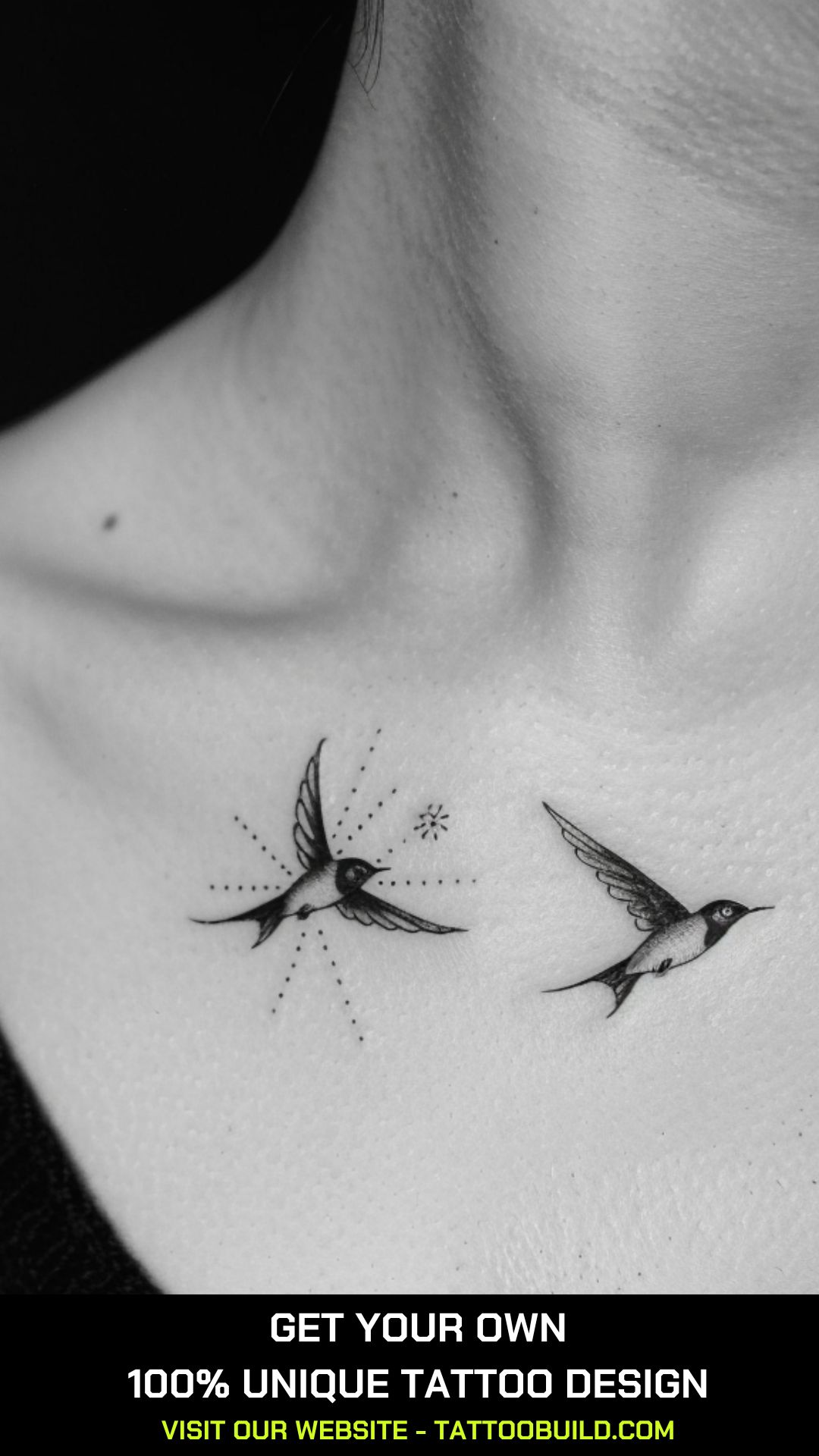
A swallow gives the theme a clear sense of movement. Spread wings create a wide outline, while a forked tail makes the bird more specific than a generic flying silhouette. Muted blue adds color without changing the basic shape.
Ask your artist to keep the wing tips and tail distinct at the chosen size. A bird that fits across an upper arm may need a different pose on a narrow forearm; preserve the whole outline rather than trimming away its identity.
2. A chain with an open link
The opening is the main detail in this design. Three links give the object enough context, but the separated ends of the center link create the visual change that can express release or a boundary being removed.
Explain your personal intention before choosing this imagery. Ask for a clear gap and coherent interlocking geometry; adding shattered fragments is unnecessary if the opening already communicates what you mean.
3. Unlocked padlock
An open shackle makes a small, familiar object tell a different story. The restrained gold shading gives it weight, while the empty opening is more important than decorative scratches or an elaborate keyhole.
Check that the shackle visibly clears the lock body in the final stencil. If you want a small version, simplify the internal shading before reducing the space that makes it look unlocked.
4. Doorway to an open horizon
The door gives the composition a threshold, and the distant horizon suggests somewhere beyond it. This can be a personal image of possibility without requiring a destination name or a written quote.
Ask the artist to resolve the door hinges and perspective in one coherent drawing. Keep the landscape simple enough that it reads as a view through the opening rather than a second picture laid on top.
5. Sailboat on simple waves
A small boat gives the theme a travel-oriented direction. Two triangular sails and a compact hull create a readable center, with just enough water underneath to anchor the scene.
Decide whether the boat should resemble a particular vessel or remain a loose illustration. Keep the mast and sail edges clear; tiny rigging lines can be optional when the composition is scaled down.
6. Winding path between mountains
A path can express choosing your own route more quietly than a dramatic emblem. The space between the peaks provides a destination for the eye, and the curved trail introduces movement without adding another object.
Choose whether the landscape should refer to a real place. If it does, bring a photograph and let the artist simplify its outline instead of treating the generated mountain shapes as an accurate location.
7. Compass without lettering
The compass concentrates the idea of direction into a compact graphic shape. This version uses points and a circular boundary rather than tiny letters or coordinates, keeping the center relatively uncluttered.
Tell the artist which point should lead and check the symmetry at stencil size. If you add coordinates or initials, supply them separately and verify every character instead of copying markings from an image.
8. Monarch butterfly
Orange wing panels, dark veins and white edge dots make the butterfly the color-focused option in the collection. The U.S. Fish & Wildlife Service describes the monarch's long-distance migration; connecting that movement with freedom is a personal interpretation, not an established universal tattoo meaning.
Bring a species reference if you want a monarch rather than a decorative butterfly. Ask the artist which vein lines and edge dots should remain at the final size so the wing pattern stays clear.
9. Kite in a breeze
A diamond kite adds a playful direction. Its curved string and small tail create a sense of movement, while the muted rust and teal panels keep it from relying entirely on black linework.
Keep the string and tail visually separate. Ask the artist where each attaches and whether all the bows are useful at the selected size; a clear kite shape matters more than many tiny accents.
10. Single curling wave
The wave keeps the idea open-ended: it can be a personal connection to the sea, movement or a place where you feel unconstrained. A dark teal accent gives the curl a little depth without building a full seascape.
Choose which way the curl should face in relation to your body and any nearby tattoos. Check the open center at stencil size before adding more foam detail.
11. Dandelion seeds drifting away
A few detached seeds make this a light, directional composition. The space between the seed head and drifting forms creates the sense of release, rather than a large cloud of tiny marks.
Ask the artist to keep the seed stems connected to their parachute shapes. If the design is small, use fewer clearly drawn seeds instead of filling the area with dots that lose their structure.
12. A loose curved feather
A single feather offers a quieter interpretation of lightness and letting go. The curve of the shaft provides direction, and small breaks between the barbs keep the edge from becoming a solid leaf-like shape.
Discuss whether the feather is a general natural object or a reference to a particular bird. If it is species-specific, supply a source photograph; avoid adding ceremonial associations that are not part of your own brief.
13. Hot-air balloon
The balloon turns the theme toward exploration. A rounded envelope and small basket create a tall, self-contained design, with terracotta panels giving it a warm focal point.
Check the connection between the envelope and basket so the suspension reads clearly. Keep enough space around the basket to distinguish it from a knot or dangling ornament.
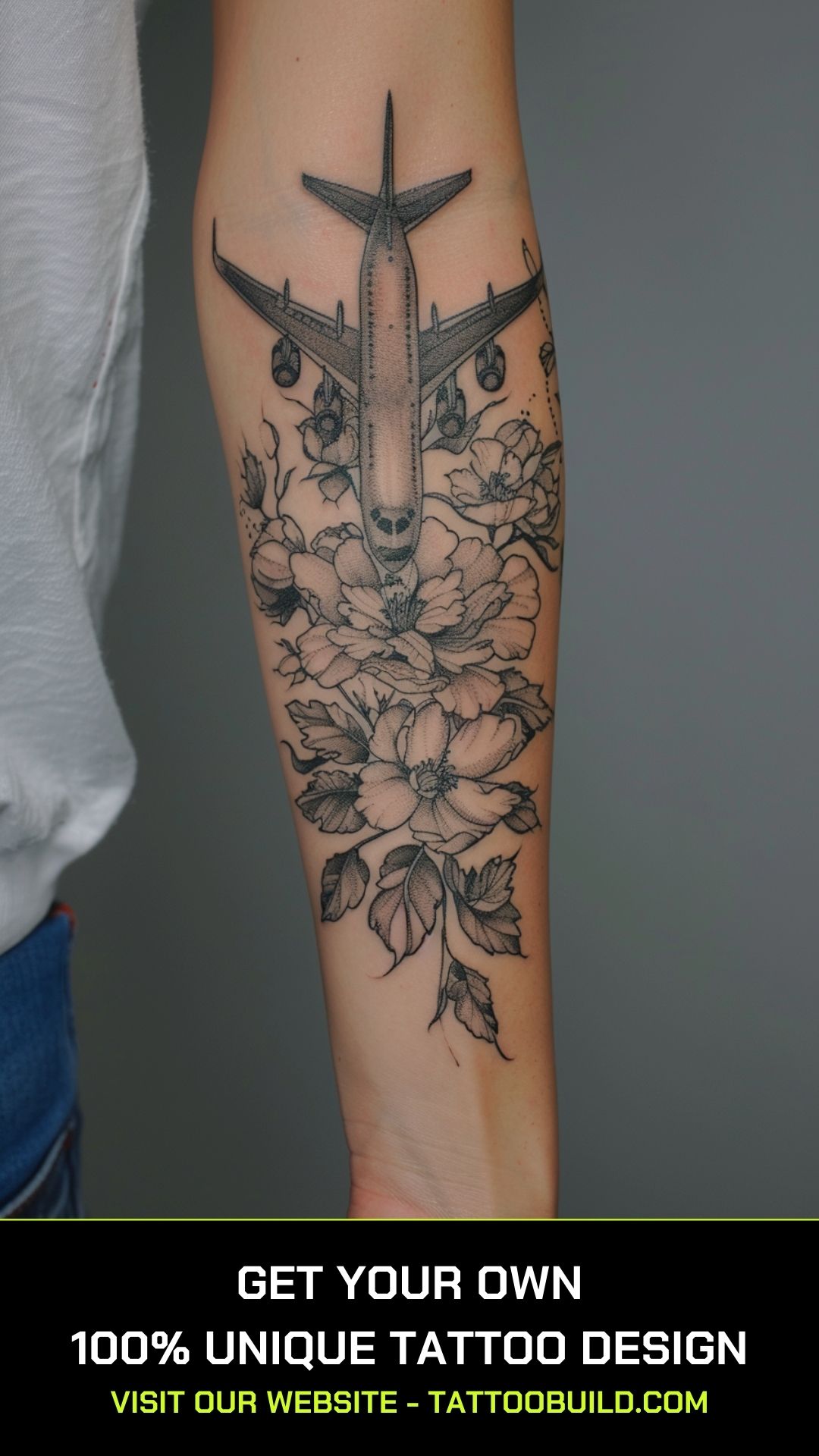
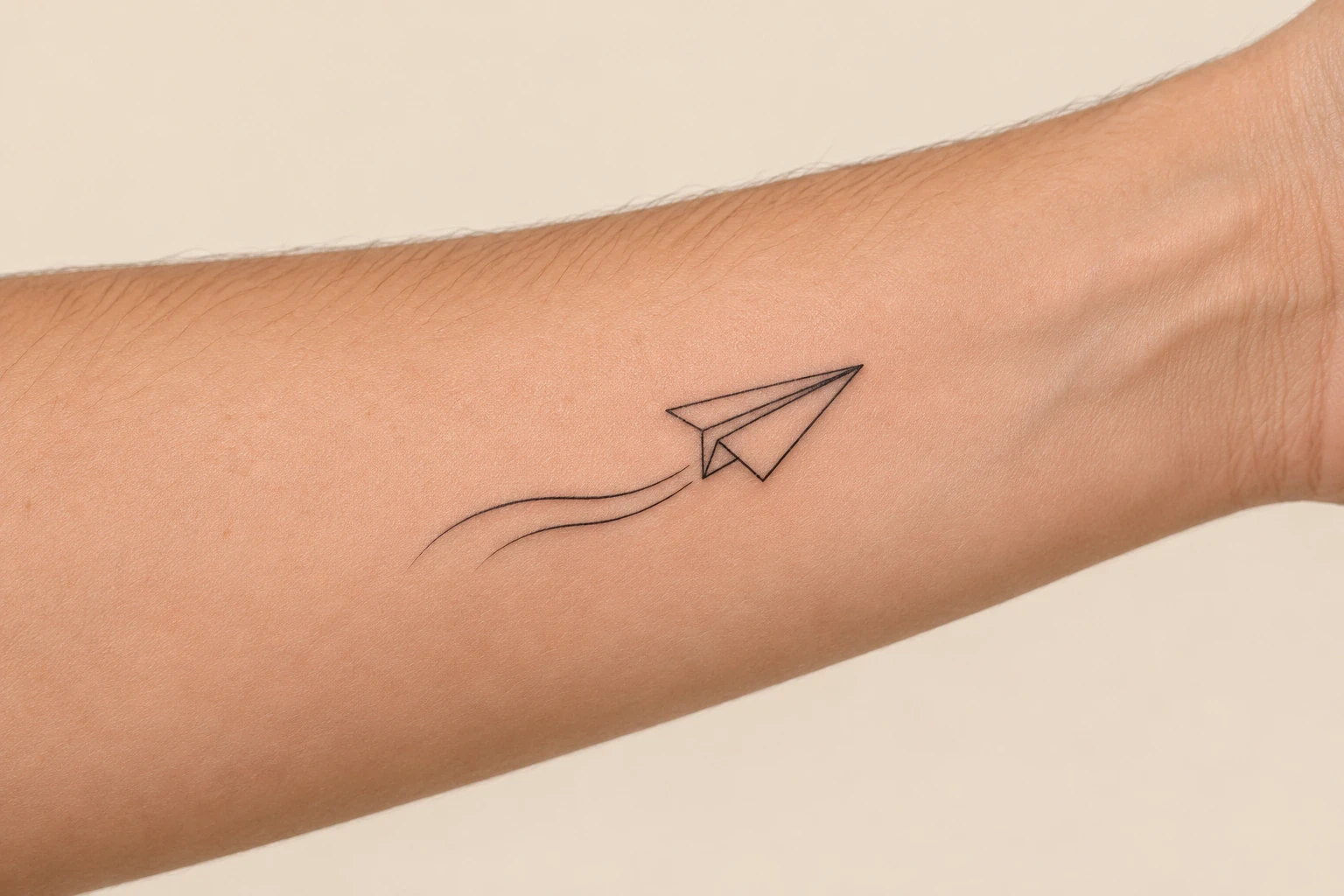
14. Paper airplane and flight trail
A folded plane can stand for a journey, a new decision or a lighter approach to moving forward. The triangular folds make a simple graphic center, and a short curved trail adds direction.
Keep the folds consistent so it looks like one plane. Choose a brief trail that suits the available space; a long line looping around nearby tattoos can become a separate design problem.
15. Half sun at the horizon
A low sun suggests an opening day without adding a whole landscape. The warm half circle and separated rays create a compact mark that can remain quiet even when the color is visible.
Check that the horizon stays level in the viewing angle you care about. Ask your artist how many rays the final size needs rather than treating the exact count in a generated drawing as essential.
16. Untied rope loop
A relaxed loop with two free ends can suggest loosening a restriction without the harder shape of a metal chain. The rope texture adds interest while the open ends explain that it is not tied shut.
Ask for both ends to remain clearly free and for the loop to read as loose rope. Avoid a tightening or hanging composition if that is not your intention; the drawing should express the specific kind of release you mean.
Match the space to the shape
Choose the complete outline before settling on a placement. A swallow with spread wings needs width; a doorway or balloon needs height. A compass can be compact, but its center still needs clear spacing. Check the outer tips and trails as well as the main object when testing a stencil.
| Design shape | Placement to discuss | What to check |
|---|---|---|
| Wide wings, mountain path or horizon | Upper arm, thigh or a broader forearm area | The ends remain visible around the body curve |
| Doorway, feather or balloon | Forearm or calf | The full vertical design fits without cramped ends |
| Small plane, padlock or compass | A compact standalone space or an existing gap | Folds, openings and central lines stay distinct |
| Seeds, kite string or loose rope | A space with room around the curve | The supporting lines do not look disconnected |
These are composition suggestions rather than fixed minimum sizes. Ask your artist to make a stencil at the intended size and show it with your body relaxed. Their healed portfolio can help you judge the line treatment you prefer.
Turn a symbol into a useful artist brief
Bring a favorite concept and say what matters most: the opening in the chain, the forked swallow tail, the plane's folded shape or the warm color of the sun. Tell the artist which details are optional. That leaves room for a coherent new drawing instead of requiring a literal trace of generated geometry.
If you want lettering, write the exact words separately and check every character in the final stencil. None of the concepts here relies on text. For restrained linework, compare our minimalist tattoo ideas. For a more detailed insect subject, browse our butterfly tattoo ideas.
Think carefully about symbols tied to specific histories or communities. An open chain can be personally meaningful, but it can also carry associations beyond a generic idea of travel or independence. You can choose the quieter horizon, path or plane if those better express the story you actually want to tell.
Plan for care after the appointment
Follow your artist's written instructions for a new tattoo, and ask a clinician about a skin reaction or healing concern. For established tattooed skin, the American Academy of Dermatology notes that UV light can fade some inks and recommends broad-spectrum, water-resistant SPF 30 or higher sunscreen when in the sun. Discuss when products are appropriate for fresh tattooed skin with your artist or clinician.
Our tattoo aftercare guide can help you prepare questions. A generated image cannot predict an individual's healed result or guarantee that a particular line or color will remain unchanged.
Frequently asked questions
What tattoo symbol means freedom?
No single symbol has that meaning for everyone. Birds, openings, paths and travel objects can all express a personal version of freedom. Choose the image that matches your story and ask yourself whether it still feels right without a caption.
What is a simple freedom tattoo idea?
A paper airplane, half sun or open outline padlock gives the artist a compact starting shape. Simple does not mean arbitrarily tiny: the folds, rays or shackle opening still need space. Compare the stencil at actual size before deciding.
Can a freedom tattoo work without birds?
Yes. This collection includes an open doorway, a path, an unlocked padlock, a compass, a wave and a balloon. If birds are your main interest, our bird tattoo ideas and meanings provide a wider subject comparison.
Should I combine several symbols?
Start with one main image and one optional supporting detail. Ask what the second element contributes. If it only repeats the same message or makes the outline crowded, leaving it out can make the design easier to read.
Nature and care sources checked November 4, 2026. Symbol meanings and placement comparisons are editorial suggestions, not universal cultural claims.