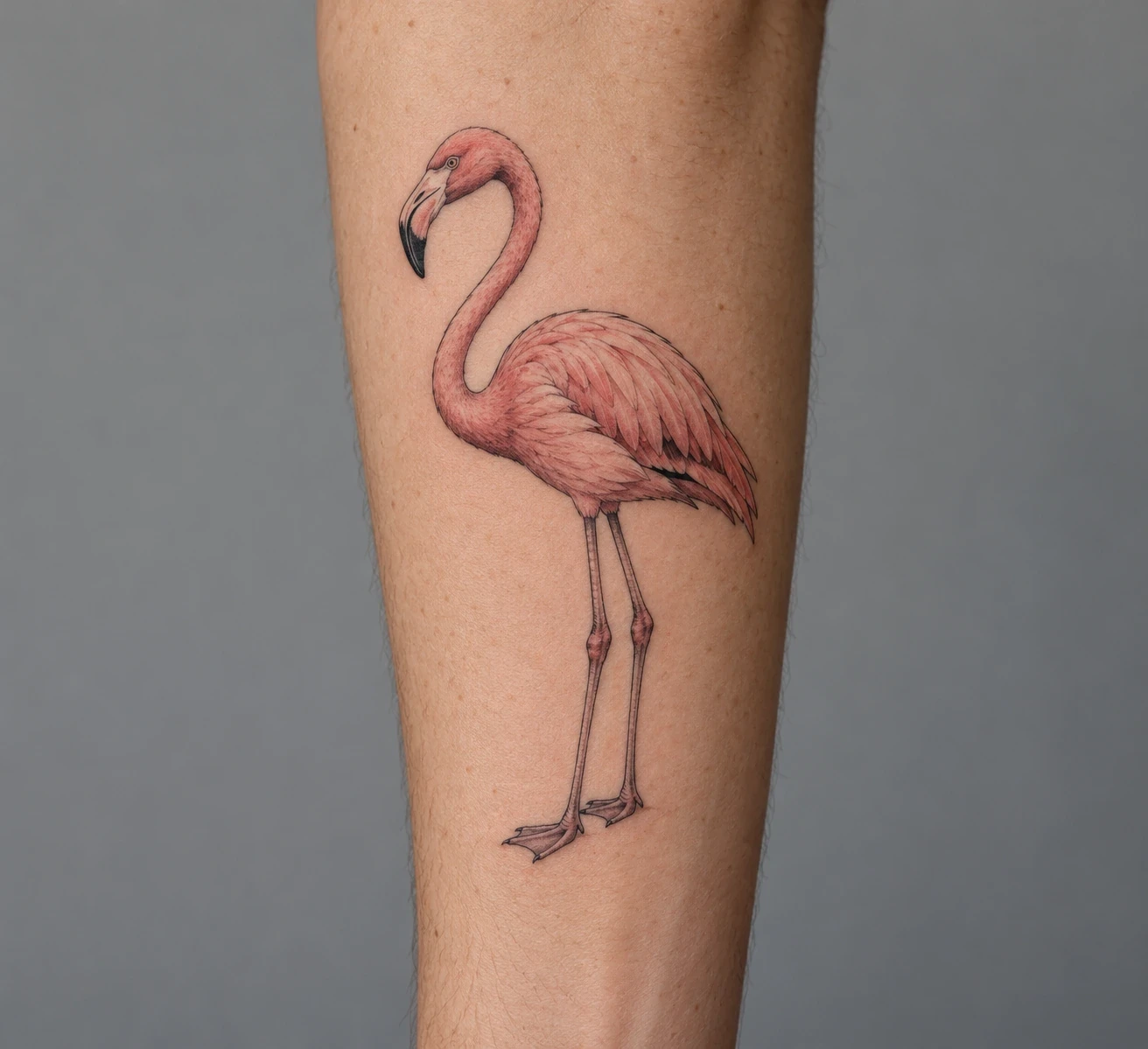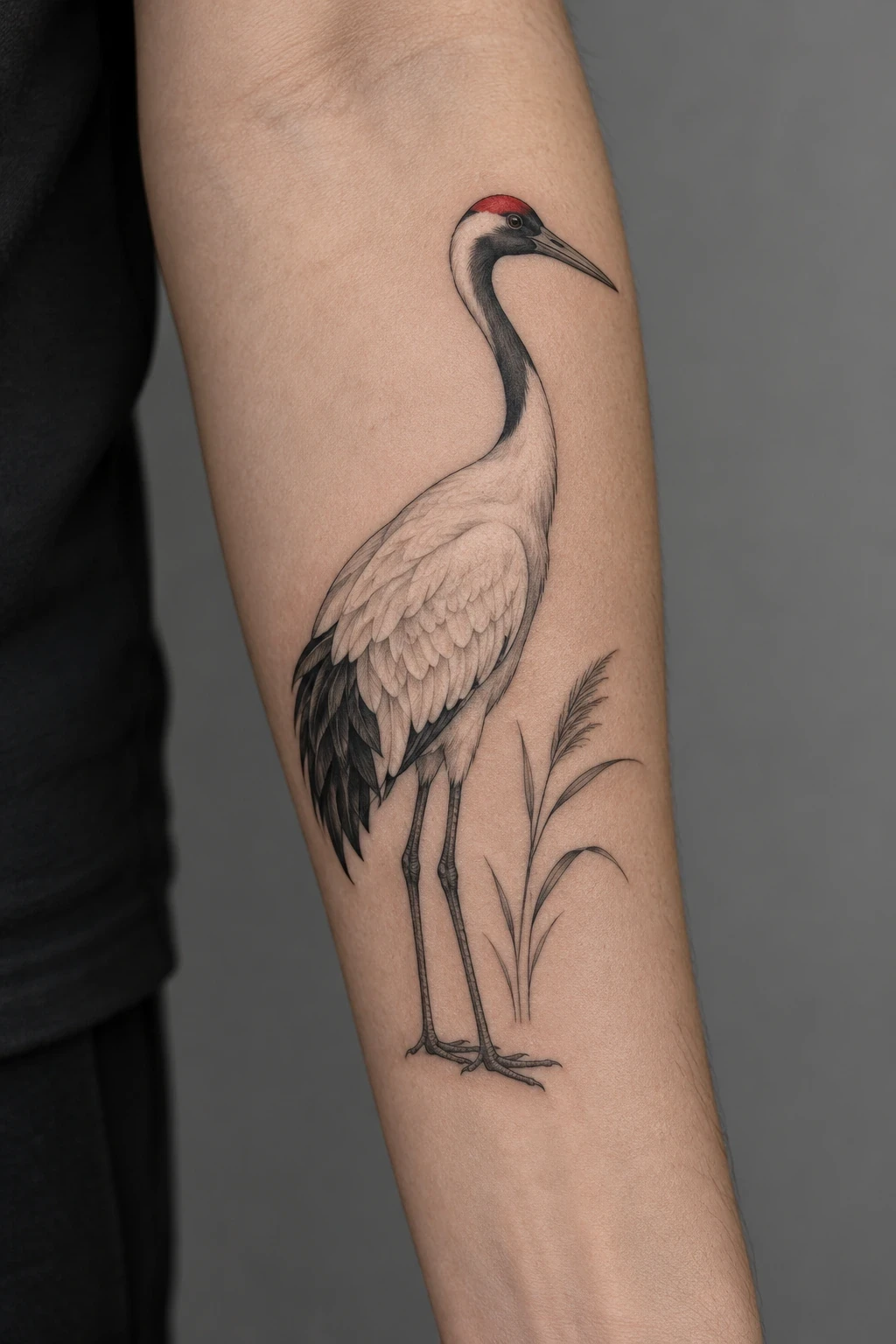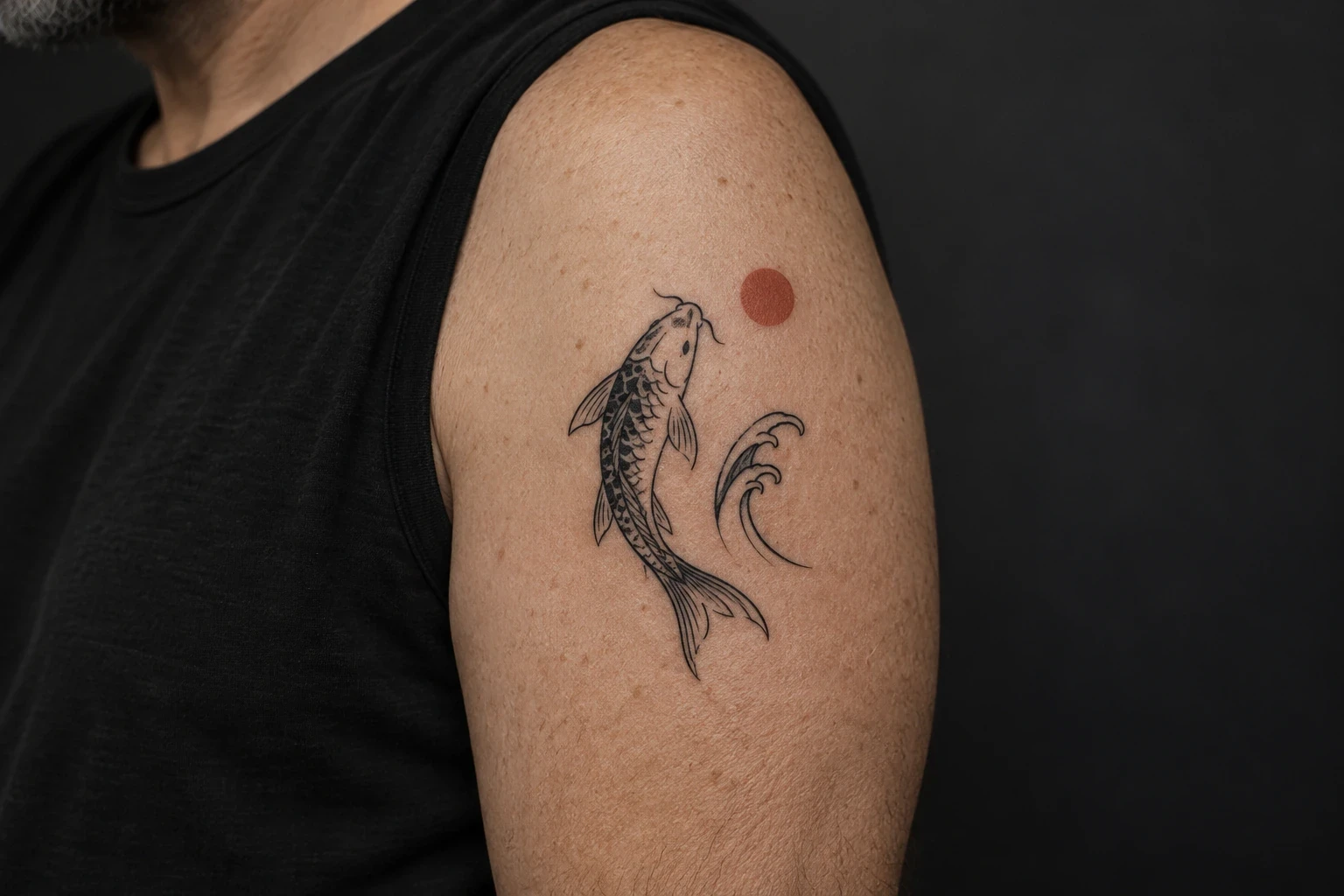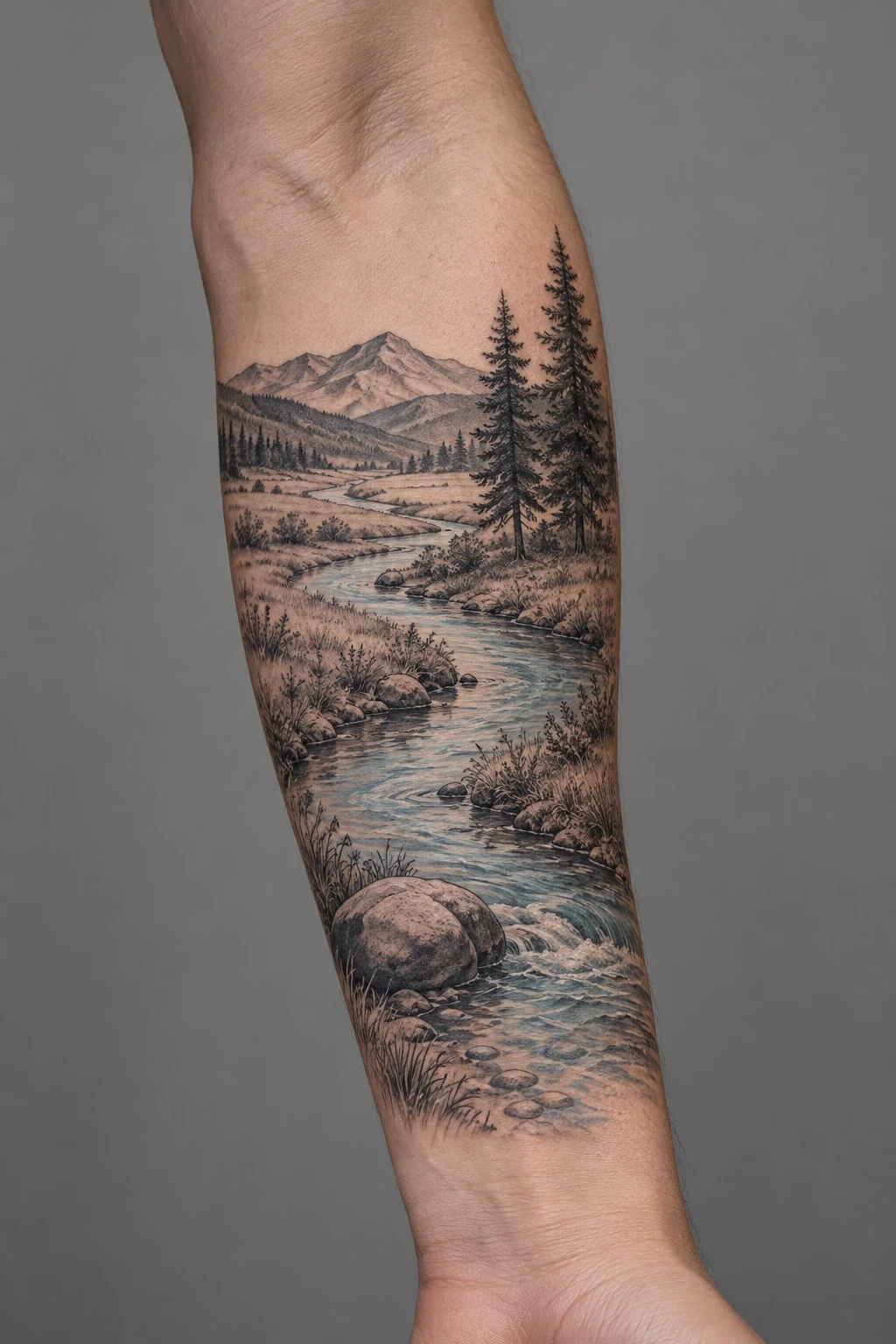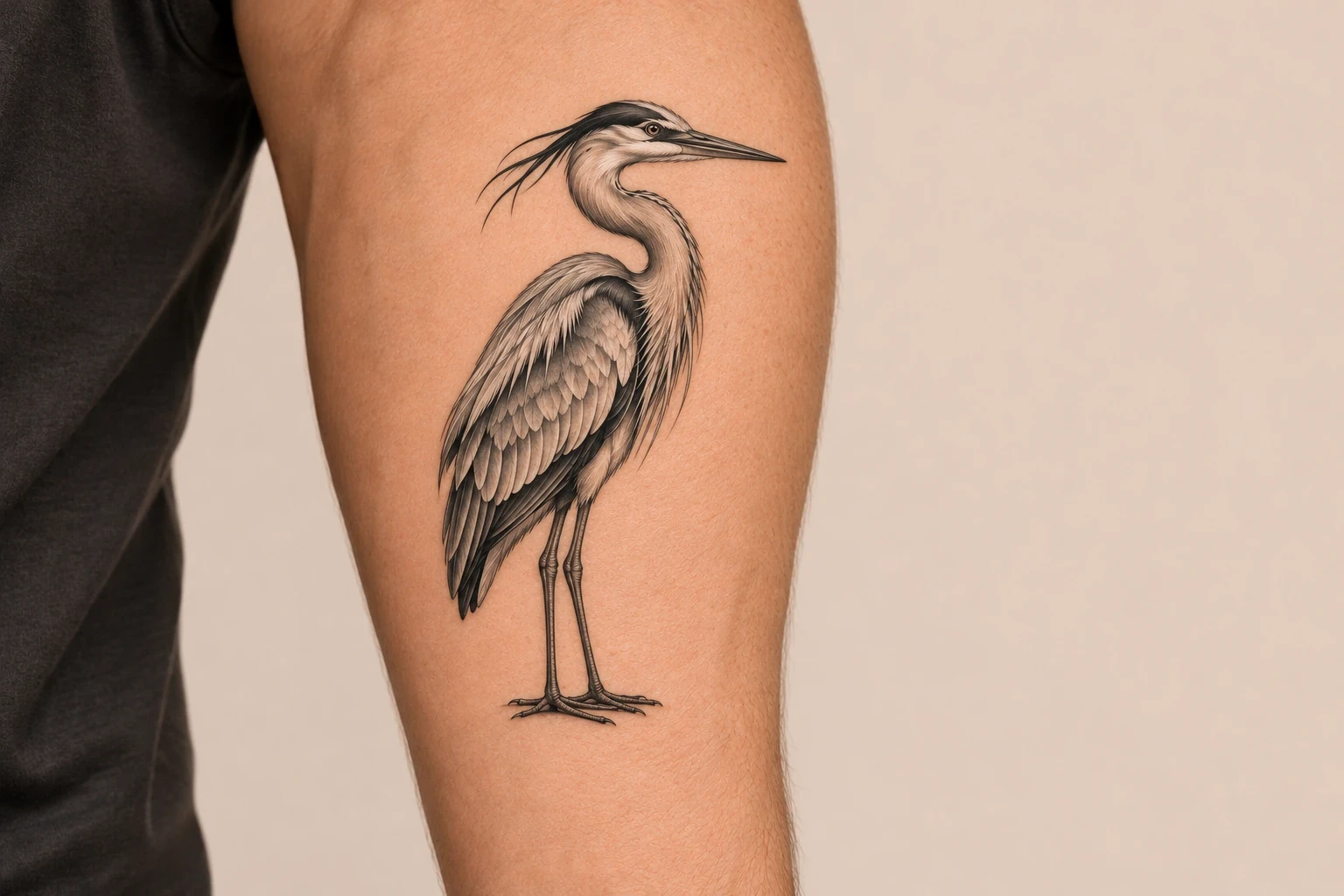
Heron tattoo ideas work best when the bird's long bill, curved neck and slender legs remain clear. A standing bird gives you a tall, quiet composition; a flying heron spreads the design outward. From there, choose whether the feathers, the silhouette or a small wetland setting should carry the detail.
These 16 concepts compare outlines, blue-grey color, dotwork, geometric planes and simple frames. Each is a different design direction to discuss with an artist, rather than a promise that one style will suit every placement.
All 17 images, including the hero, are AI-generated design concepts or placement mockups. They do not show real tattoos, healed client work or finished stencils. Your tattoo artist should redraw the chosen concept for accurate anatomy, clear spacing and your intended placement.
Choose a bird reference before choosing a meaning
A heron can be a personal reminder of a particular shoreline, a birdwatching memory or the feeling of standing still. Patience, independence and calm are possible personal interpretations; none is a universal meaning carried by every heron tattoo.
If the species matters to you, bring a clear reference photograph as well as the tattoo concept. The Cornell Lab of Ornithology's Great Blue Heron guide describes a long-legged bird with a sinuous neck and a thick, pointed bill. The typical blue form has blue-grey plumage and a dark stripe above the eye. In sustained flight, the neck is usually drawn back and the legs trail behind the tail.
Do not simply recolor every long-legged bird white and call it the same species. Cornell's Great Egret identification guide shows a related white heron with its own field marks. Start from the bird you mean, then simplify deliberately. The designs below are mostly generic heron concepts, with one blue-heron study; they are not field-guide plates.
For a wider comparison of subjects, browse our bird tattoo ideas and meanings. Choose the personal story first, then decide how much of it needs to be represented in the drawing.
1. Open outline heron
This is the simplest way to emphasize the bird's posture. A long curved neck and a folded wing create the main lines, with open areas keeping the body light. The drawing leaves room for the eye to follow the silhouette.
Ask the artist which lines are necessary at the final size. Keep the bill distinct from the head and leave a clear gap between the legs instead of trying to preserve every small feather mark.
2. Great blue heron study
Blue-grey feathers, a pale face and a dark head accent give this design a more specific natural-history direction. Color separates the wing from the lighter neck without requiring a large background.
Bring a species reference if this is the bird you want. Treat the generated drawing as a palette and composition idea; your artist should check the proportions and feather pattern against that reference.
3. Solid black silhouette
The silhouette reduces the heron to a recognizable outer edge. It is the bill, neck bend and long legs that make the image work, while the folded wing becomes part of one dark shape.
Check the gap beneath the bill and between the legs before adding texture. If the outer contour loses the bird's identity, internal detail will not fix the basic shape.
4. Heron among sparse reeds
A few reed stalks place the bird near a wetland without turning the design into a full landscape. Their vertical lines echo the long legs and give the composition a setting.
Keep the reeds away from the bill and feet where possible. Ask the artist to make the stalks a quieter line weight so they support the bird instead of competing with its outline.
5. Heron in flight
Raised wings change the design from a tall standing figure into a broader moving shape. The drawn-back neck and trailing legs help preserve a heron-like flight profile within the spread of feathers.
Discuss wing span before choosing placement. A broad back or thigh composition gives you different options from a narrow forearm piece; avoid cutting off wing tips simply to fit an already chosen space.
6. Open circular frame
The thin circle provides a boundary while leaving the lower area open. It turns a standing bird into a small emblem, with the curved neck repeating the rounded shape of the border.
Allow a clear gap around the head and bill. A frame that touches several parts of the bird can make it harder to tell which lines describe the animal and which belong to the border.
7. Heron beneath a crescent
The small moon adds an upper accent and creates a quieter, night-inspired mood. The gap around it keeps the bird from being absorbed into a cluster of celestial decoration.
Choose the moon as a personal or visual addition rather than a fixed code for a particular meaning. A single crescent can be enough; extra stars may change the balance of this simple arrangement.
8. Heron beside an iris
The iris gives the composition a restrained purple and green palette. Its vertical stem echoes the bird's legs, while the flower becomes a secondary point of interest beside the head and body.
Decide whether a particular flower species matters to your story. Give the artist a separate botanical reference if it does, and leave enough space between leaves and legs to read both subjects.
9. Engraved feather shading
Hatched strokes give the folded wing an illustrated, print-like texture. The shading follows the bird's form instead of filling the background, keeping the outer silhouette relatively clean.
Ask for the hatching to be grouped into readable areas. At a smaller size, fewer deliberate marks can explain the wing more clearly than a dense copy of every line in the concept.
10. Stippled wing and body
Dotwork creates a soft transition from dark wing shadows to open areas. The neck and legs stay comparatively light, making the body the main area of texture.
Choose an artist whose healed stippling you like. Discuss where the darkest dots belong and which areas should remain unfilled rather than assuming the entire bird needs the same density.
11. Blue and teal watercolor accents
Soft washes introduce color around the folded wing while a dark contour holds the bird together. This version is more painterly than the naturalistic blue-heron study and does not aim to reproduce every field mark.
Tell the artist whether you want the wash contained within the bird or drifting slightly outside it. Keep the head and feet clear so the color does not blur the main pose.
12. Geometric heron planes
Angular surfaces reinterpret the rounded body and curved neck as a series of connected planes. Different grey values build the form, with a narrow bill and long legs keeping the subject recognizable.
Ask the artist to resolve the neck joints and transitions between planes. Geometry should create a deliberate bird shape rather than a stack of disconnected triangles.
13. Oval wetland scene
The oval gives the heron a small landscape of its own. A low horizon and shallow water provide context while the bird remains the tallest and most prominent element.
Keep the background low in contrast and decide how the legs meet the waterline. If you want a reflection, have it drawn deliberately; this concept uses a simpler scene without a second mirrored bird.
14. Rust-red sun disk
A muted warm disk behind the cool monochrome bird changes the palette without requiring colored feathers. The contrast separates the upper body from the plain background.
Treat the disk as a graphic sun rather than evidence of a particular cultural tradition. Ask the artist how much of the disk should remain visible around the bird at the chosen size.
15. Layered feather study
This version concentrates attention on the folded wing. Groups of overlapping feathers give the body depth while the long neck and legs create a comparatively spare outer structure.
Bring close reference images of the wing if realism matters. Ask which feather groups the artist would keep at stencil size rather than requiring every generated feather to become a separate tattoo line.
16. Quiet waterline
A single horizontal ripple gives the standing bird an anchor. Most of the space stays open, making this a useful direction for someone who wants a small hint of habitat instead of a framed scene.
Make the waterline meet the legs intentionally. Keeping it short and light helps the bird remain the subject and avoids turning a simple design into a dense band across the placement.
Match the placement to the pose
Think of the entire outline before choosing the site. A standing heron includes a long bill that projects sideways and legs that extend well below the body. A placement that fits the torso may still crowd the beak or feet. In a flight design, the wing tips need their own space.
| Composition | Placement to discuss | Stencil question |
|---|---|---|
| Standing bird with little background | Forearm, calf or upper arm | Can the bill and both legs remain fully visible? |
| Broad wings in flight | Upper back, shoulder area or thigh | Does the full wing outline fit from the main viewing angle? |
| Circle or oval scene | A broader upper-arm or thigh area | Is there enough gap between bird and border? |
| Detailed feather study | An area sized around the drawing | Which feather groups should be simplified at actual size? |
These are layout suggestions rather than fixed size recommendations. Ask your artist to show the stencil from more than one angle and with your body in a relaxed position. A composition that reads beautifully flat on paper may need a different curve on skin.
What to check in the artist's drawing
Check the head-to-body relationship, the direction of the bill and how the neck joins the chest. Trace each leg from the body to the foot so it remains a single coherent limb. Where water hides a foot, ask for the waterline to make that intentional rather than leaving an unexplained unfinished leg.
For flying birds, use photographs of the pose you want rather than assembling a neck from one species and wings from another. Our crane tattoo ideas offer another subject to compare, but a crane reference should not stand in for a heron reference. If the drawing is very small, compare the detail level with our minimalist tattoo ideas and discuss what to remove.
Bring two favorites and name the features you want: the outline from one, the wing shading from another, or the color palette of a third. Keep the final brief concise. A new, coherent drawing will be more useful than a collection of copied parts.
Plan care around the finished tattoo
Follow your artist's written instructions for the new tattoo, and ask a clinician about a skin reaction or healing concern. For established tattooed skin, the American Academy of Dermatology says UV can fade some inks and recommends broad-spectrum, water-resistant SPF 30 or higher sunscreen when in the sun. Ask your artist or clinician when products are appropriate for a fresh tattoo.
Use our tattoo aftercare guide to prepare practical questions before your appointment. An AI concept cannot show how a particular person's tattoo will heal or guarantee how a color will look years later.
Frequently asked questions
What does a heron tattoo mean?
It can represent a personal connection to wetlands, stillness, a place or a memory. Some people choose it for patience or independence. Those are possible interpretations rather than a single established meaning. You can also choose the bird because you like its shape.
Can a heron tattoo be small?
A simplified standing silhouette or open outline gives the artist fewer details to fit. The final size still depends on the bill, legs, line spacing and placement. Compare the full stencil at actual size instead of choosing from a zoomed-in screen image.
Should the neck be straight in a flying heron tattoo?
Use a reference for the exact pose. Cornell describes the Great Blue Heron's usual flight posture as a tucked neck with trailing legs; its gallery also shows that an outstretched neck can occur. Do not treat a single stylized illustration as a rule for every moment of flight.
Are these designs ready for an artist to tattoo directly?
No. They are starting points for a discussion. Your artist needs to resolve anatomy, line weight, shading and fit in a new drawing. The hero is a generated placement mockup, and the paper concepts are not examples of healed work.
Bird references and care guidance checked November 3, 2026. Meanings, style comparisons and placement options are editorial suggestions.