I have spent more hours than I care to admit sitting in tattoo studios, and the leg is the placement I get asked about most by women who are ready for something bigger than a wrist piece. The leg gives you more usable space than almost anywhere else on the body, and it lets you decide every morning whether the tattoo is visible or not.
That combination is why it works so well as a first large tattoo.
But “leg tattoo” covers a lot of ground. The thigh, the calf, the shin and the ankle behave like four different placements, and a design that looks incredible on one can be a poor fit on another.
This guide walks through what actually works on each part of the leg, based on the pieces I have watched heal and the artists I have asked. If you already know you want something above the knee, my guide to thigh tattoos for women goes deeper on that one area.
Which Part of the Leg Is Right for You?
Here is how the four main leg placements compare on the things people actually ask about.
| Placement | Pain level | Best for | Watch out for |
|---|---|---|---|
| Outer thigh | Lowest on the leg | Large detailed pieces, colour, portraits | Skin stretches over time with weight change |
| Inner thigh | Noticeably higher | Private designs, script, florals | Friction while healing; chafing |
| Calf | Moderate | Vertical designs, animals, botanicals | Swelling in the first few days |
| Shin | High over the bone | Slim vertical designs that follow the bone | Thin skin; longer sessions are tough |
| Ankle | High on the bone | Small pieces, bands, fine line | Sock and shoe rub during healing |
| Back of knee | Highest on the leg | Connecting a thigh piece to a calf piece | Constant movement slows healing |
Take the pain column as a general pattern rather than a promise. Pain is personal, and I have met people who found the shin easy and the thigh unbearable.
What Actually Affects How a Leg Tattoo Ages
Legs get more sun, more friction and more movement than most placements, and all three change how a tattoo looks in five years.
Sun exposure is the big one. Lower legs are uncovered for a good chunk of the year in most climates, and unprotected ink fades faster than the same design on a shoulder.
Friction matters more than people expect. Boots, socks and gym leggings all rub the shin and ankle, which is one reason artists often steer very fine detail away from those spots. If pain is your main worry, my guide to the most painful tattoo spots breaks down how the leg compares to the rest of the body.
Then there is skin movement. The thigh stretches with weight change and pregnancy, so a design with heavy geometric symmetry can distort in a way a loose floral never would.
None of this is a reason to avoid leg tattoos. It is a reason to pick a style that is forgiving, and to be honest with your artist about how you actually live.
Best Leg Tattoo Ideas for Women
These are the design directions I see working again and again, grouped by what they suit.
Lighthouse and Nautical Thigh Pieces
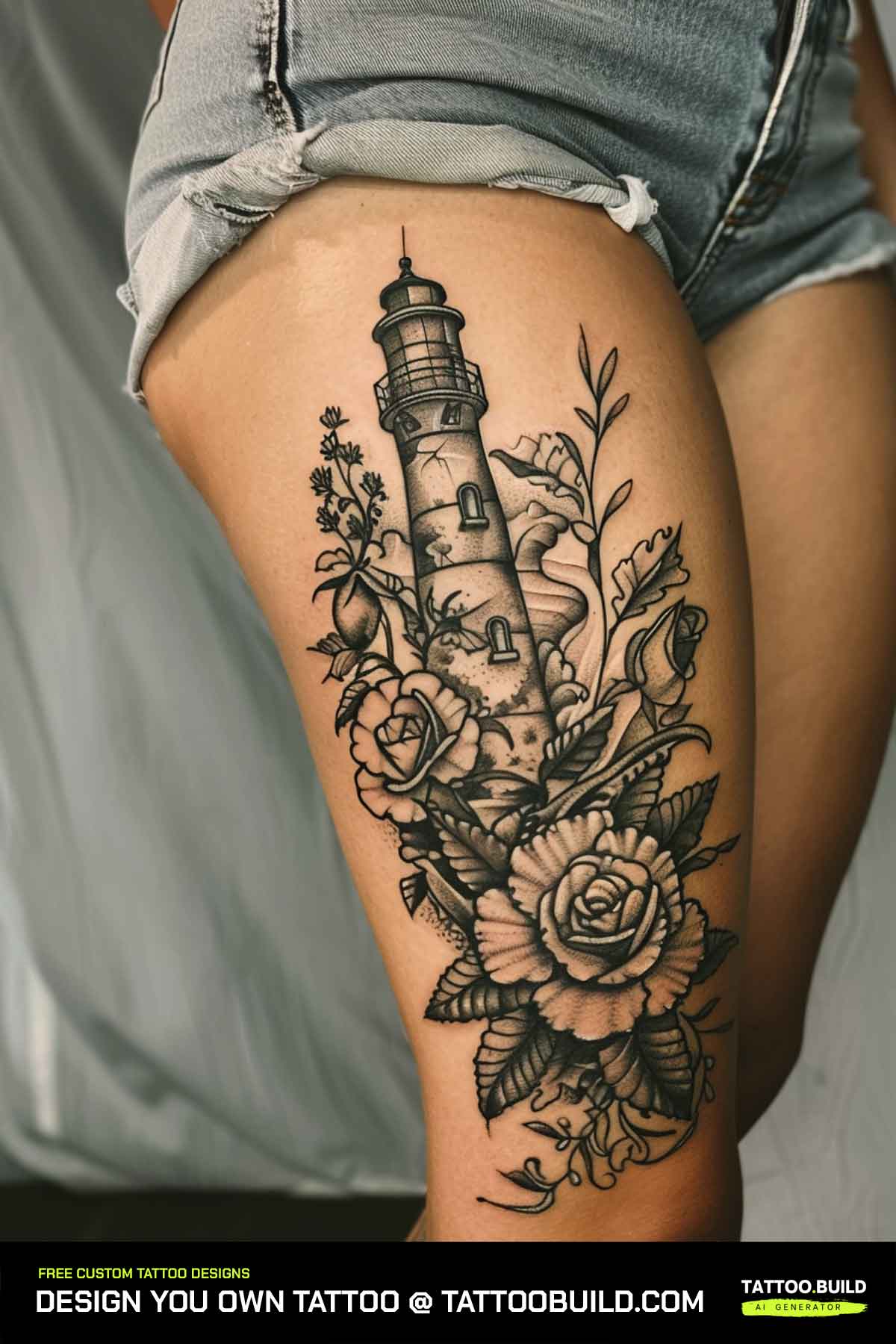
Lighthouses are one of the most requested thigh designs I come across, and there is a practical reason for it.
A lighthouse is tall and narrow, which matches the shape of the thigh almost perfectly. You get height without needing to wrap around the leg.
The tower also gives an artist a clean structure to build around, so flowers, waves or birds can be added later without the composition falling apart.
In my experience the black and grey versions hold up best, because the smooth grey wash in the sky hides the softening that happens to every tattoo over time. There is a much larger collection in my lighthouse tattoo ideas for women guide.
Floral Thigh Tattoos
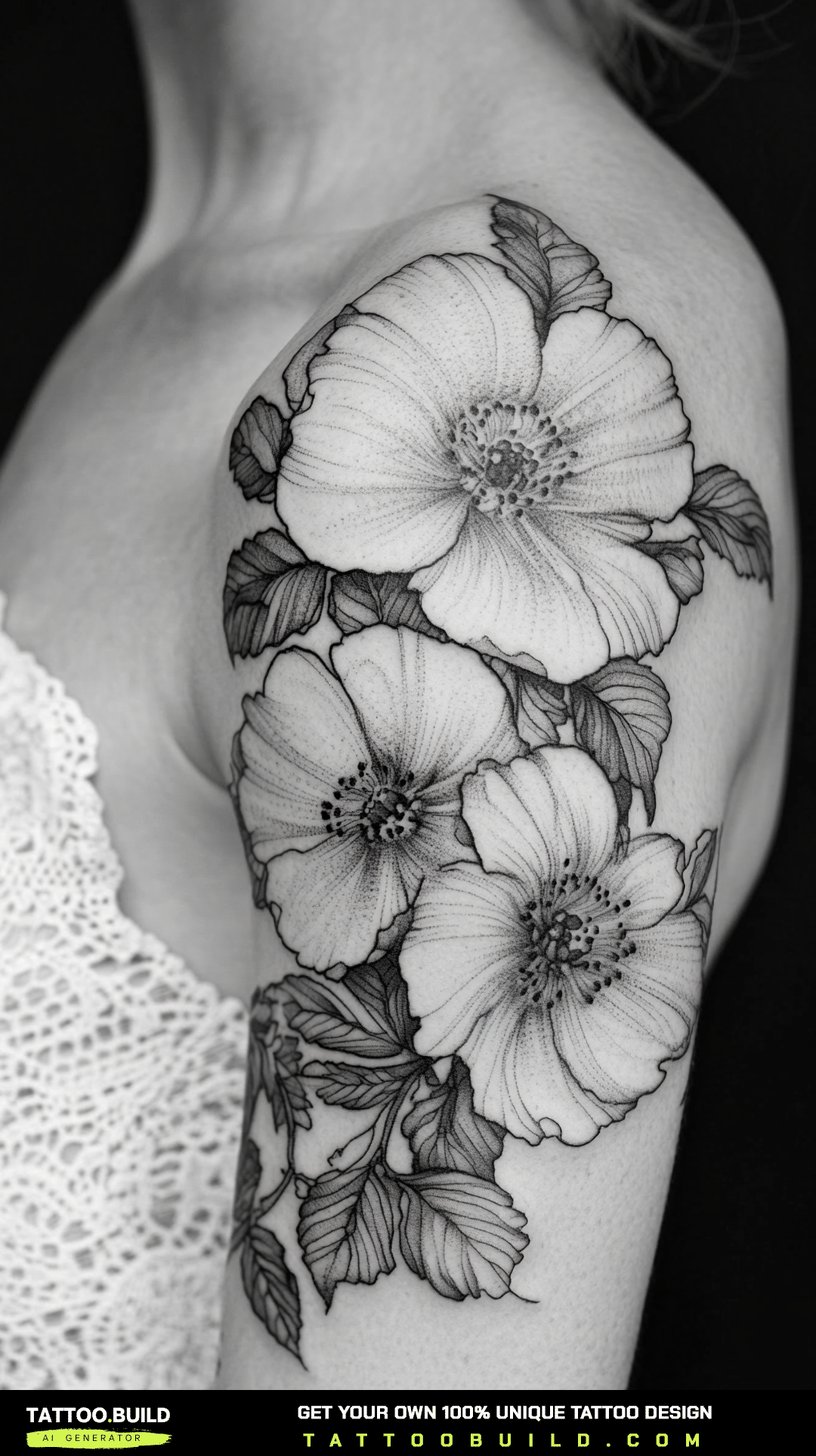
Florals are the default for a reason: they bend.
A rose, peony or wildflower arrangement has no fixed outline, so an artist can shape it to your leg instead of forcing your leg to fit the drawing.
That flexibility also means it ages gracefully. When the skin stretches, a petal that shifts a millimetre still looks like a petal.
The one thing I would push for is contrast. Every artist I have asked says the same thing: floral tattoos fail when the shading is all one mid-grey and the petals blur into each other after a few years. If you want something more polished, look at classy feminine thigh tattoo designs.
Small Meaningful Pieces and Fine Line Work
Not every leg tattoo needs to be large. Some of the pieces I like most are barely bigger than a coin.
Small designs work well on the inner calf and just above the ankle, where the skin is relatively flat.
The trade-off is longevity. Fine lines placed too close together tend to soften and merge, so the tiniest designs usually need the most careful spacing.
When I have asked artists about small work on the leg, the advice is consistent: go slightly bigger than you think you need. A design at 5cm will still read clearly in ten years; the same design at 2.5cm often will not.
Ankle Tattoos and Bands
The ankle is the most visible leg placement, which is exactly why some people want it and others avoid it.
Bands and small florals work best here because they follow the natural shape of the joint.
What I would avoid is placing anything directly on the ankle bone. The skin there is thin, the pain is genuinely sharp, and ink sits less evenly over bone.
Healing is the other consideration. Socks and shoes rub constantly, so most artists suggest loose footwear for the first two weeks. My ankle tattoo ideas for women and flower ankle tattoo collections have far more designs.
Shin and Lower Leg Designs
The shin is underused, and I think that is a shame.
It gives you a long straight canvas that suits vertical designs: a single stem, a sword, a snake, a column of script.
The honest downside is pain. There is very little between the needle and the bone, and long sessions on the shin are hard going for most people.
When I have watched shin pieces done, the artists almost always split them across two shorter sessions rather than one long one.
Bold Blackwork and Animal Designs
If you want a tattoo that still looks sharp in fifteen years, heavy black is the most reliable choice on the leg.
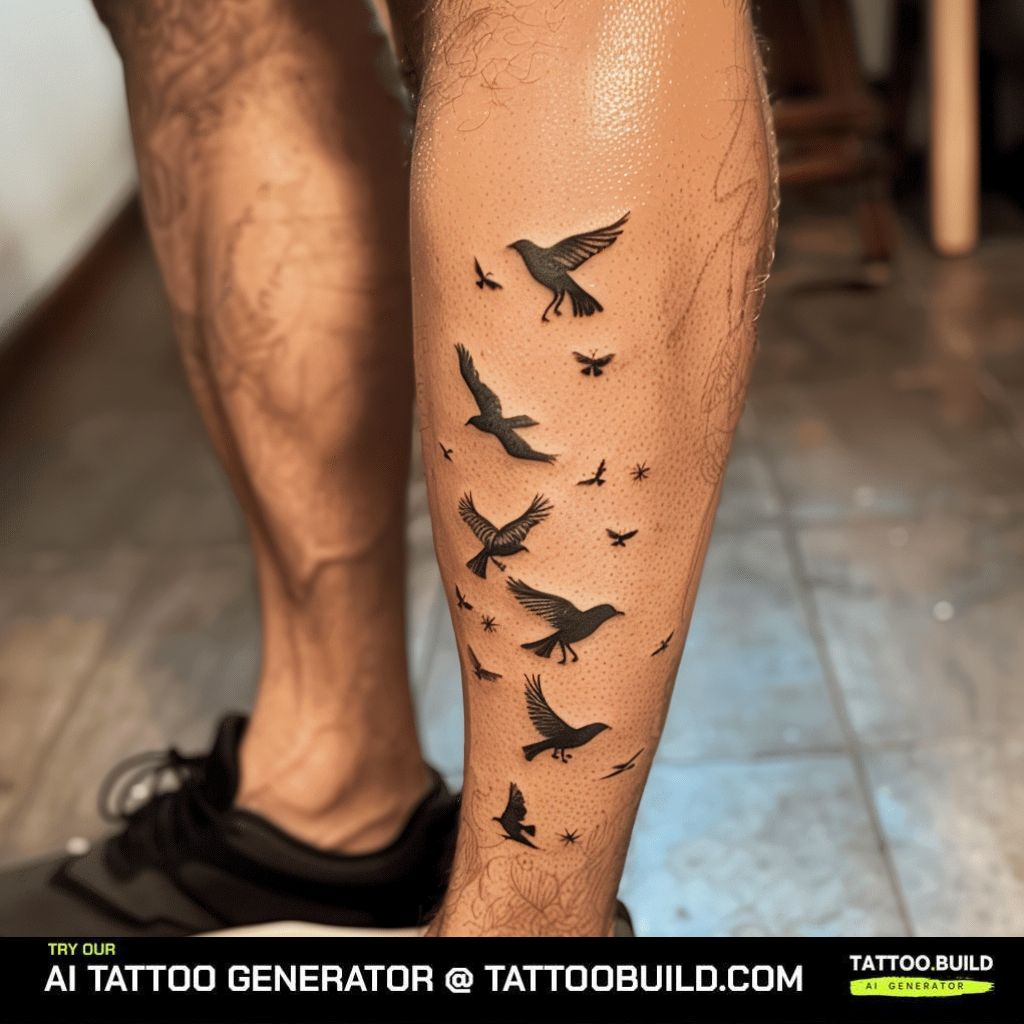
Wolves, birds and big cats suit the thigh and calf because both areas have enough surface for the animal to be recognisable.
Bold outlines do something subtle too: they contain the design. Even as the ink softens, the silhouette stays readable.
The catch is that heavy black is much harder to cover or change later, so this is a style to be sure about.
Stars, Celestial and Buildable Designs
Scattered stars, moons and small celestial shapes have one real advantage: you can keep adding to them.
I have seen women start with three small stars above the ankle and build a full lower leg over several years.
It is a low-commitment way into a larger piece, and each session is short enough to be easy.
If you think you might go this route, tell your artist at the first appointment so they can leave sensible gaps.
Modern Leg Tattoo Looks
The direction I have noticed most recently is illustrative colour on the thigh paired with negative space rather than a solid background.
It reads as lighter on the leg, and it means the tattoo does not have to dominate the whole area.
Soft botanical work down the calf is the other thing artists keep showing me, usually a single long stem rather than a cluster.
Both looks depend on planning the whole leg first, even if you only get part of it now.
Alternatives and Variations to Consider
If none of the above is quite right, these are the variations worth discussing with your artist.
A Leg Sleeve Instead of a Single Piece
A leg sleeve is not one tattoo, it is a plan. The individual designs are chosen so they connect.
If that appeals, look at leg sleeve tattoo drawings before your consultation so you can show your artist the flow you want, not just the elements.
Half Leg: Knee to Ankle
Stopping at the knee keeps the tattoo hidden under most trousers and cuts the cost roughly in half.
It is also a natural stopping point visually, so it does not look unfinished.
Matching Both Legs
Mirrored designs across both legs look striking, but they are unforgiving.
Any asymmetry between the two sides becomes obvious, so this really needs an artist who is confident with symmetry.
Cover-Ups on the Leg
The leg is one of the better places for a cover-up because there is room to go bigger.
Expect the new design to be considerably larger and darker than the original, though — that is how cover-ups work, not a sign of a lazy artist.
Aftercare Tips That Matter Most on the Leg
Leg tattoos have a couple of quirks that arm tattoos do not. Swelling is the first: the lower leg often puffs up for a few days simply because of gravity, and elevating it helps. The American Academy of Dermatology has straightforward guidance on the basics of caring for tattooed skin.
Clothing is the second. Loose trousers, loose socks, and no new boots for two weeks.
Sun is the long game. Once fully healed, sunscreen on the lower leg is the single biggest thing you can do for how the tattoo looks in a decade, and the FDA fact sheet on tattoos and permanent makeup is a good plain-language starting point on ink safety more generally.
If anything looks wrong, see a professional rather than working it out online. Spreading redness, heat, pus, a fever, or a rash that appears weeks or months later are all reasons to contact your artist and a doctor — the AAD documents several skin reactions tattoos can cause. Nothing in this article is medical advice, and I would never suggest treating a suspected infection yourself.
Common Mistakes and Still Not Sure?
The mistake I see most often is choosing the design before choosing the placement.
A drawing made for a flat page rarely maps cleanly onto a curved leg, and reshaping it at the stencil stage is where good artists earn their fee.
The second is underestimating cost. Leg pieces are large, and large means multiple sessions.
If you are budgeting, my breakdown of how much a sleeve tattoo costs gives realistic numbers to work from.
And if you are still deciding whether you want something this size at all, starting with small meaningful tattoos for women is a sensible way to test how you feel about having ink on your leg at all.
Frequently Asked Questions
How painful is a leg tattoo for women?
It depends heavily on where on the leg you go. The outer thigh is one of the more comfortable spots on the body because there is a decent layer of fat and muscle underneath. The shin, ankle bone and back of the knee are considerably sharper, since the skin sits close to bone or over a joint that keeps moving. In my experience most people describe the thigh as tolerable for a couple of hours and the shin as something they would rather split across two sessions.
How long does a leg tattoo take to heal?
The surface usually looks settled within two to three weeks, but the deeper layers take longer, often a couple of months. Legs can be slower than arms because of swelling and because clothing rubs the area constantly. Elevating the leg in the first few days genuinely helps with the puffiness. Follow the aftercare your artist gives you, and contact them or a doctor if anything looks infected rather than waiting it out.
Do leg tattoos fade faster than other placements?
Lower leg tattoos often do, mostly because of sun exposure and friction from clothing and footwear. The thigh tends to hold colour better since it spends more of the year covered. Sunscreen once the tattoo is fully healed is the most effective thing you can do about it. Bold lines and strong contrast also age more predictably than very fine or very light work.
What size should a first leg tattoo be?
Bigger than most people expect. The leg is a large surface, so a design that felt substantial on paper can look lost on the thigh. Artists I have spoken to generally suggest going up a size rather than down, particularly with fine line work, because tightly spaced lines soften over the years. Ask to see the stencil on your leg before any needle touches skin.
Can I get a leg tattoo in summer?
You can, but the healing window is harder. Sun, swimming, sweat and shorts all work against a fresh tattoo on the lower leg. Most artists I know suggest autumn or winter for large leg pieces simply because keeping it covered and out of the sun is easier. If you do go ahead in summer, plan to keep it covered with loose clothing rather than sunscreen while it is still healing.
Quick Summary
- Pick the placement first, then the design — thigh, calf, shin and ankle each suit different shapes.
- The outer thigh is the most comfortable spot on the leg and the best home for large, detailed or colour work.
- The shin and ankle bone hurt more and suit slim vertical designs rather than dense detail.
- Florals and organic shapes handle skin stretch better than rigid geometric designs.
- Bold black outlines are the most reliable choice if you want the tattoo to stay sharp for decades.
- Go slightly larger than feels necessary, especially with fine line work.
- Elevate the leg for the first few days, wear loose clothing, and avoid new footwear for two weeks.
- Once healed, sunscreen on the lower leg matters more than any product you use during healing.