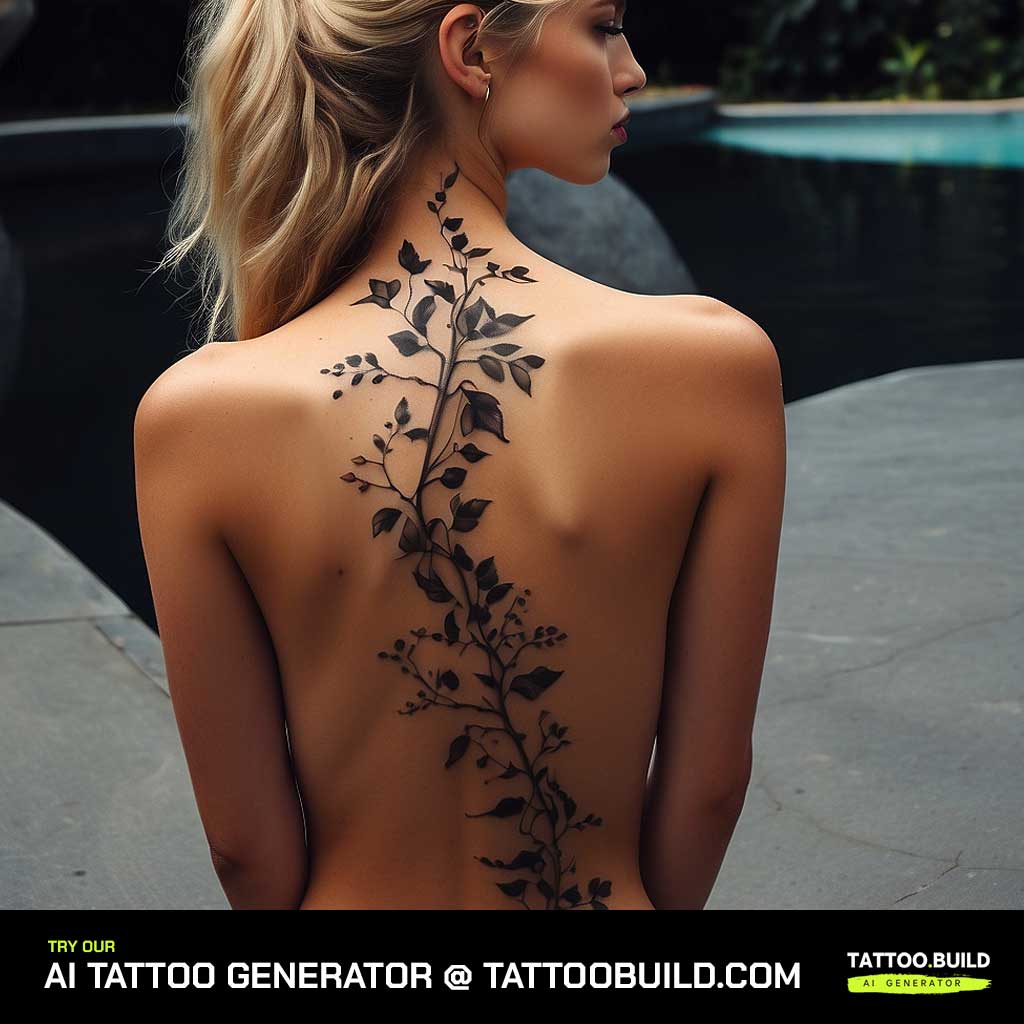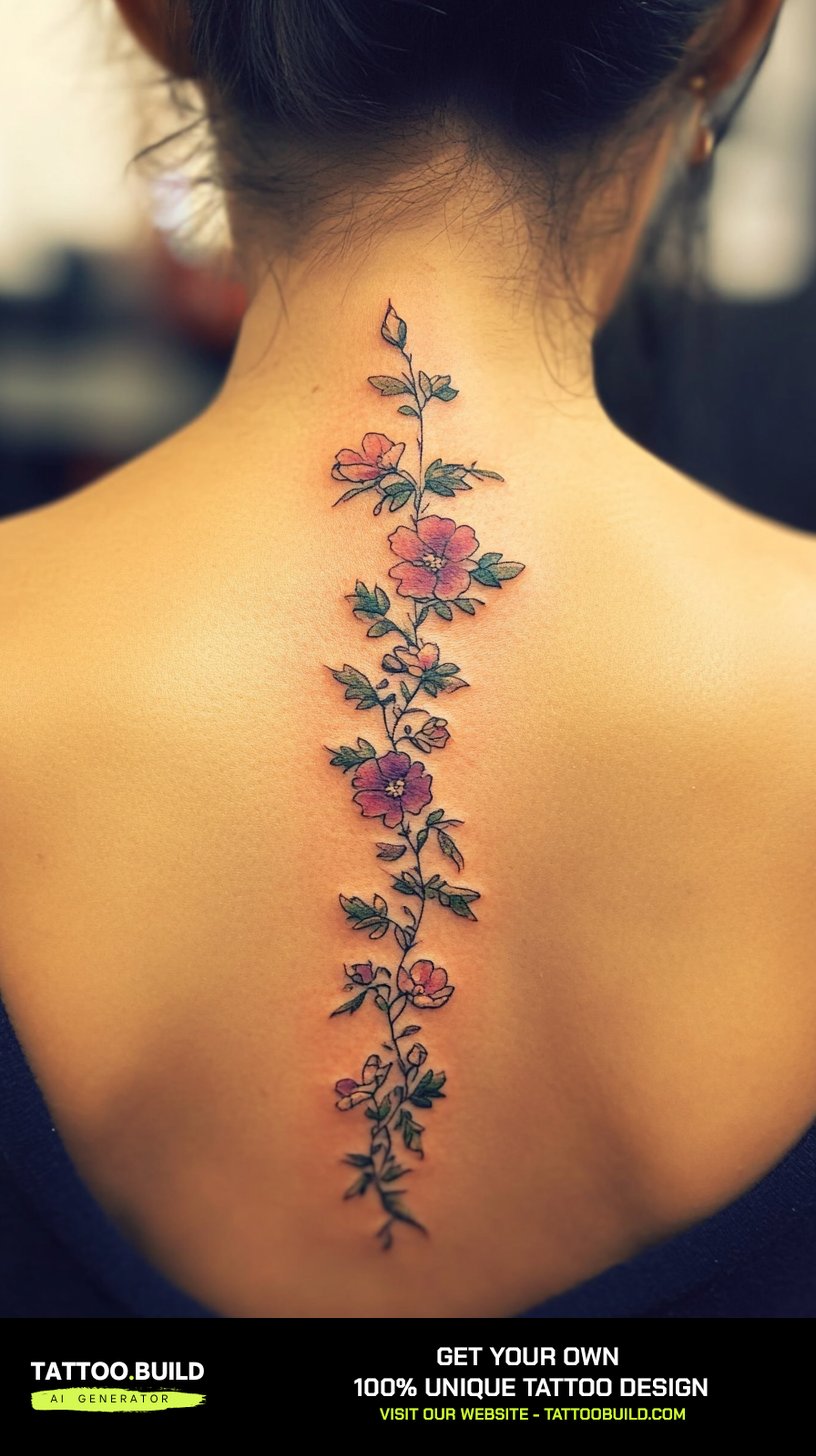
A vine spine tattoo works because the design and the body agree on a direction — the backbone already draws a line, and a vine is one of the few motifs that follows it without looking forced.
I have watched a lot of spine pieces get planned, and the ones that hold up are almost never the busiest. They are the ones where the stem does the structural work and the flowers are allowed to breathe.
This guide walks through the vine styles that actually sit well on a spine, what the session realistically feels like, and how to brief an artist so you get a design that fits your back rather than a stock image stretched onto it. If you are still deciding on placement, it is worth browsing broader spine tattoo ideas first.
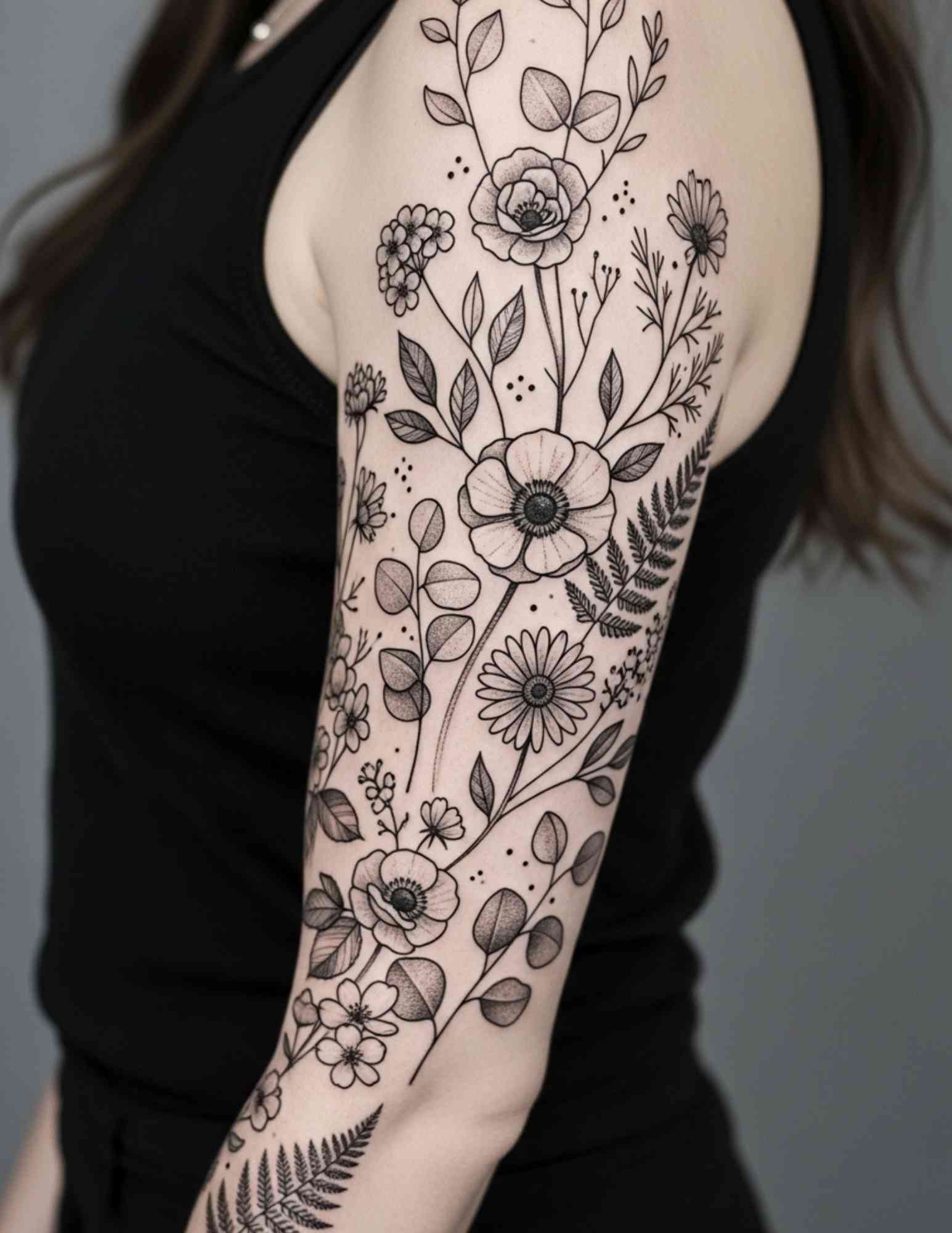
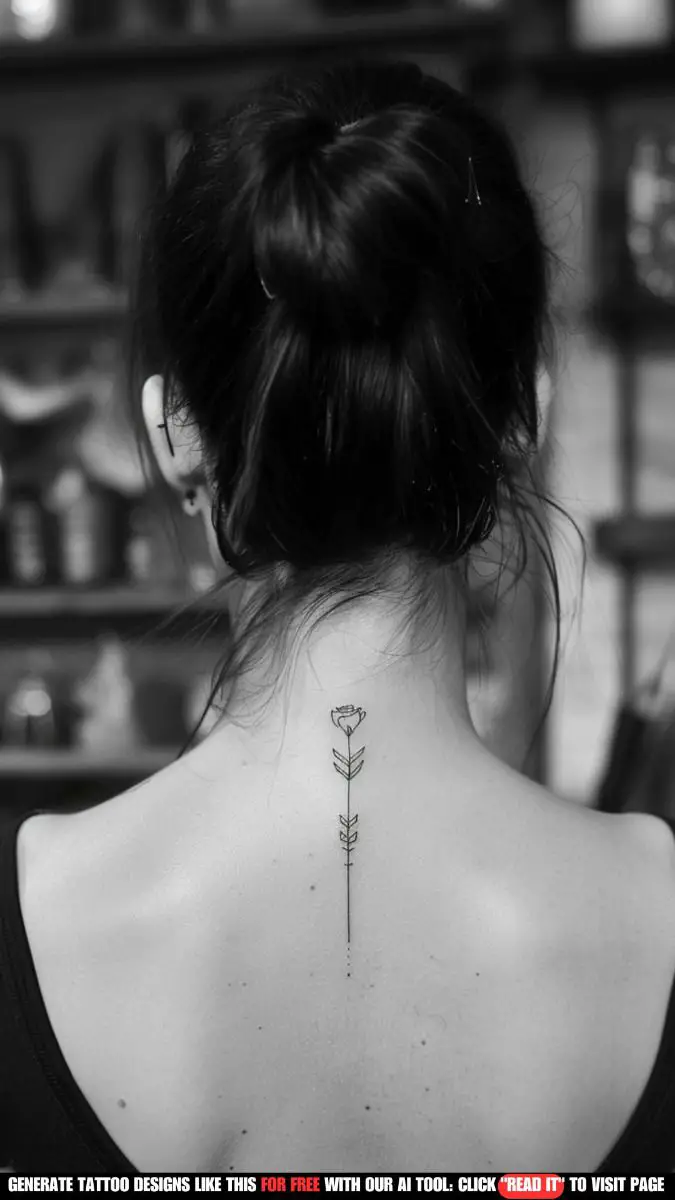
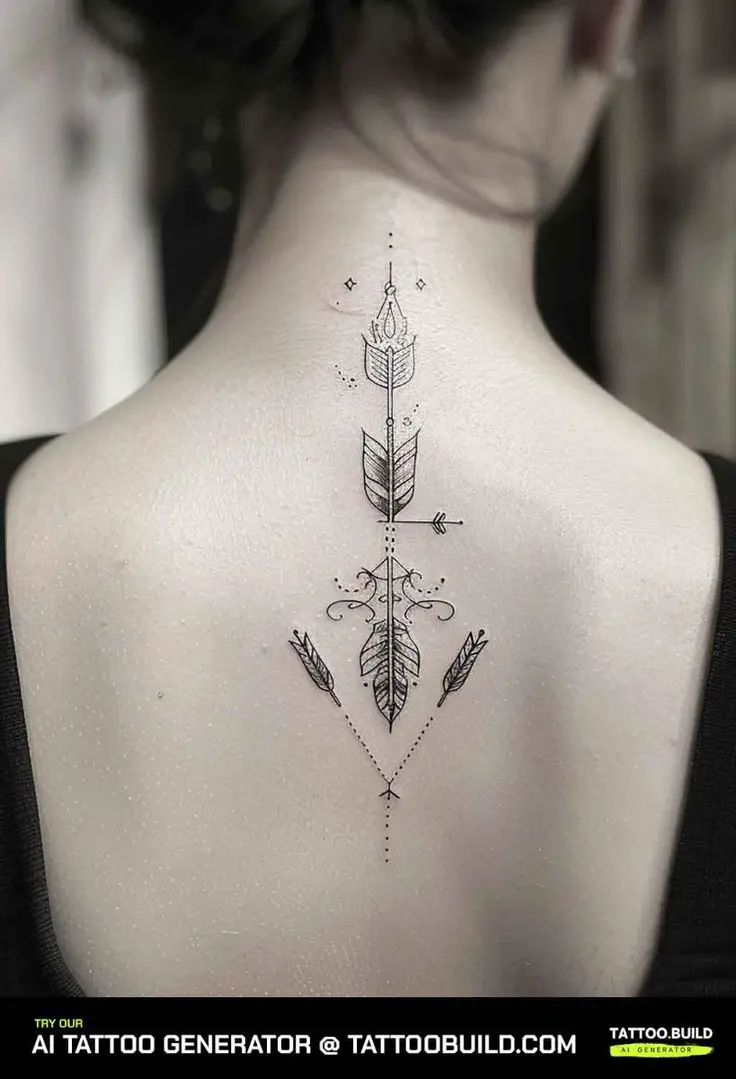
Every image below is a real design reference. Use them to point at what you like — that is far more useful to an artist than a paragraph of description.
Which Vine Style Is Right for You?
Most of the decision comes down to three things: how much time you want to sit, how visible you want it, and how well the design will hold its shape in ten years.
| Style | Typical sitting time | Best for | Ageing notes |
|---|---|---|---|
| Fine line vine | Roughly 2–4 hours | Subtle, easily covered pieces | Thin lines soften first; may need a touch-up |
| Minimalist single stem | Often under 2 hours | A first spine tattoo | Holds shape well if spacing is generous |
| Rose or peony vine | Commonly 5–8 hours, often split | A statement back piece | Shading gives it staying power |
| Wildflower vine | Roughly 3–6 hours | Varied, organic look | Small details can blur; keep buds distinct |
| Colour or watercolour vine | Roughly 4–7 hours | Softer, painterly designs | Fades faster than black; line base helps |
Those times are the ranges I have seen quoted most often by artists — your own quote will depend on length, detail and how well you sit.
What Makes the Spine Different From Any Other Placement
The spine is not flat and it is not still. It flexes, it has bone close to the surface, and the skin over it moves differently depending on posture.
That matters for the design more than most people expect. A vine drawn dead straight on paper will look slightly off on a back that curves, which is why good artists draw the stencil on you rather than printing it flat.
The bone is also why the spine has a reputation for being uncomfortable. Areas where the needle passes close to bone tend to feel sharper — the spine sits alongside ribs and ankles on most tattoo pain charts for that reason.
Every artist I have asked about spine work says the same thing about length: decide the top and bottom points before anything else. Where the vine starts at the neck and where it stops at the lower back defines how the whole piece reads.
Placement also affects visibility in a practical way. A vine that starts below the C7 vertebra stays hidden under most collars; one that runs onto the neck does not, and that is a decision worth making deliberately rather than discovering later.
Vine Spine Tattoo Designs That Work on a Real Back
These are the categories artists tend to sort spine vines into. Within each one there is a lot of room, but the structural logic stays the same.
1. Rose Vine Down the Spine
The rose vine is the most requested version of this tattoo and, honestly, for good reason — the bloom gives you a focal point and the thorned stem gives you a spine-length line.
What separates a good one from a crowded one is spacing. Three or four blooms with clear skin between them read as a vine; eight blooms stacked edge to edge read as a solid stripe.
In my experience the strongest layouts put the largest rose between the shoulder blades and let the flowers shrink as they descend. It follows the natural taper of the back.
Ask for the thorns to be sparse. A few placed thorns suggest a real stem; a thorn on every inch turns into visual noise. If the symbolism side interests you, the meaning behind rose vine tattoos is worth reading before you commit.
2. Fine Line Botanical Vines
Fine line is the style most people picture when they say they want something delicate. It is thin, usually black, and relies almost entirely on line quality.
It is also the least forgiving. There is no shading to hide a wobble, and on a curved, flexing surface like the spine the artist has very little margin.
When I have compared fine line spine pieces a few years apart, the ones that held up best used slightly heavier line weight than the client originally wanted. Very thin lines tend to soften as they settle.
If this is the direction you are leaning, look at dedicated fine line spine tattoo designs and pay attention to how the artist handles the leaves, not the flowers — leaves are where thin work usually falls apart.
3. Daisy and Wildflower Vines
A wildflower vine trades the single strong bloom for variety: daisies, small buds, sprigs, sometimes a bit of grass.
It suits people who want the tattoo to feel gathered rather than designed. Done well, it looks like something picked rather than drafted.
The risk is that lots of small elements sit close together and blur into each other over time. Keeping distinct gaps between flower heads is the fix, and a good artist will push for that even if you ask for more.
I have seen the best results when one flower type repeats as an anchor and the others vary around it. Total variety with no repetition reads as chaotic.
4. Morning Glory and Climbing Vines
Climbing vines are the closest thing to what a vine actually does — wrap, curl, reach out sideways and come back.
Morning glories are the usual flower here because the trumpet shape reads clearly even when it is small. Tendrils curling off the main stem are what stop the piece from looking like a straight ruler line.
This style benefits most from having the stencil drawn on your back rather than printed. The wrap needs to respond to your actual shape.
One honest limitation: a wrapping vine drifts wider than a straight one, so it uses more of the back. If you want something narrow enough to hide under a thin strap, this is not the style.
5. Minimalist Single-Stem Vines
The minimalist vine is one stem, a handful of leaves, and restraint. It is the version I would suggest to anyone unsure about committing to a full spine piece.
It usually sits in one session, it hurts for less time, and it leaves the rest of the spine open if you want to extend it later.
The design point that matters here is spacing between leaves. Generous gaps keep it legible for years; crowded leaves merge into a fuzzy line.
Plenty of vine spine designs for women sit in this minimal register, and they age noticeably better than heavily detailed pieces of the same size.
6. Peony and Bold Floral Vines
At the other end, a bold floral vine uses large layered blooms and real shading. This is a back piece, not an accent.
Peonies, full roses and magnolias all work because their petal structure gives the artist something to build contrast with.
Expect this to take multiple sessions. Bold work on the spine is a long sit, and most artists will split it rather than push through in one day.
The trade is durability. Solid shading and confident contrast hold their shape far longer than fine detail — if you want the tattoo to still read clearly in fifteen years, this is the direction.
7. Colour and Watercolour Vines
Colour on a spine vine is less common than black and grey, but it is not unusual, and soft botanical palettes suit the motif.
The version that holds up is colour laid over a proper black line drawing. Pure watercolour with no line base tends to lose its edges as it settles.
Muted and earthy tones — sage, dusty pink, soft ochre — generally age more forgivingly than bright saturated colour, particularly on skin that sees sun.
Ask your artist directly how colour has aged in their own healed work. Any artist who does a lot of colour will have healed photos, and those photos tell you more than a fresh portfolio shot.
Variations Worth Considering
Not every vine has to run the full spine, and not every spine tattoo has to be a vine.
Half-Length and Partial Vines
Running the vine from the neck to mid-back, or from mid-back down, halves the sitting time and leaves room to extend later.
It is also the honest answer for a first spine tattoo — you learn how you handle the placement before committing to the whole length.
Vines That Drift Off the Spine
Letting the vine curve onto a shoulder blade or the ribs breaks the strict vertical and often flatters the back more than a rigid centre line.
Other Botanical Spine Motifs
If a vine feels too busy, a single long-stemmed flower does similar work with less ink. An orchid spine tattoo is a good example of the same vertical logic with a different silhouette.
Ornamental and Abstract Vines
Dotwork, ornamental filigree and abstract stems suit anyone who likes the shape of a vine but not the literal flowers.
Planning the Session and Healing It Properly
Book the longest appointment you can manage rather than several short ones — the spine takes a while to settle each time it is worked on, and fewer sessions usually means less total discomfort.
Eat properly beforehand and bring something to drink. Long spine sits are done face down, which is tiring in a way people underestimate, and practical pain management matters more here than on an arm.
Healing a spine piece is awkward because you cannot see or easily reach it. Arrange for someone to help, or use a mirror and a clean applicator. Follow the aftercare your artist gives you — general tattoo aftercare guidance is a useful supplement, not a replacement.
Keep it out of the sun while it heals, avoid soaking it, and do not let clothing rub it constantly. Backpack straps and tight sports bras are the usual culprits.
If you see spreading redness, increasing pain after the first few days, swelling, discharge or a fever, that is a reason to contact a doctor rather than wait it out. The American Academy of Dermatology lists the skin reactions worth taking seriously, and the FDA’s tattoo safety page covers ink-related risks. This article is design guidance, not medical advice.
Still Not Sure? Common Mistakes to Avoid
The most common one is bringing a reference image of someone else’s back and expecting it to transfer. Backs differ in length, width and curve — the reference is a direction, not a template.
The second is asking for too much detail in too small a space. Detail that looks crisp on a screen at full size does not survive at four inches on skin.
The third is skipping the healed-work question. Ask any artist to show you their vine or floral work photographed months after healing, not the day it was done.
And the fourth is deciding on a whim about a placement that is genuinely uncomfortable. If you are weighing that up, read whether spine tattoos carry real risks and look at floral back tattoo ideas for placements that hurt less and still give you a botanical piece.
Frequently Asked Questions
How much does a vine spine tattoo hurt?
The spine is generally considered one of the more uncomfortable placements because the needle works close to bone with little padding. Most people describe it as sharp rather than dull, with the area over the lower back and the base of the neck often reported as the worst of it. That said, pain varies a great deal between individuals. Breaking the work into shorter sessions is the usual way people manage it.
How long does a vine spine tattoo take?
A minimalist single stem can often be finished in under two hours. A fine line vine running most of the spine typically takes a few hours, and a bold floral vine with full shading is commonly quoted at five to eight hours and frequently split across sessions. Your artist’s quote will depend on length, detail and how well you sit. Ask for the estimate in writing when you book.
Will a vine spine tattoo blur over time?
Very fine lines placed close together are the most likely to soften as the ink settles and the skin ages. Generous spacing between leaves and flowers is the single most effective thing you can do to keep the design legible. Sun exposure accelerates fading, so keeping a healed back piece covered or protected helps. A touch-up after a few years is normal, not a sign that something went wrong.
Can I get a vine spine tattoo if I plan to get pregnant?
Skin across the back and lower back can stretch during pregnancy, and stretching may distort a design, though how much varies widely between people. Many artists suggest waiting if a pregnancy is planned in the near future, particularly for pieces that extend low on the back. This is worth discussing with both your artist and your doctor rather than deciding from an article. There is no single right answer that applies to everyone.
Does the vine have to run the full length of my spine?
No, and plenty of the best ones do not. Half-length vines running from the neck to mid-back are common, and they leave room to extend the design later if you want to. Starting partial is a sensible way to find out how you handle the placement before committing to a long sit. Your artist can design the stopping point so it looks intentional rather than unfinished.
Quick Summary
- Decide the top and bottom points of the vine before anything else — that defines the whole piece.
- Spacing beats detail: gaps between blooms are what keep a spine vine legible for years.
- Fine line looks delicate but is the least forgiving style on a curved, flexing surface.
- Minimalist single-stem vines are the sensible choice for a first spine tattoo.
- Bold floral vines cost more sitting time but hold their shape longest.
- Colour ages best when it sits over a solid black line drawing.
- Ask every artist to show you healed work, not just fresh photos.
- Arrange help for aftercare — you cannot reach your own spine, and healing it properly matters.