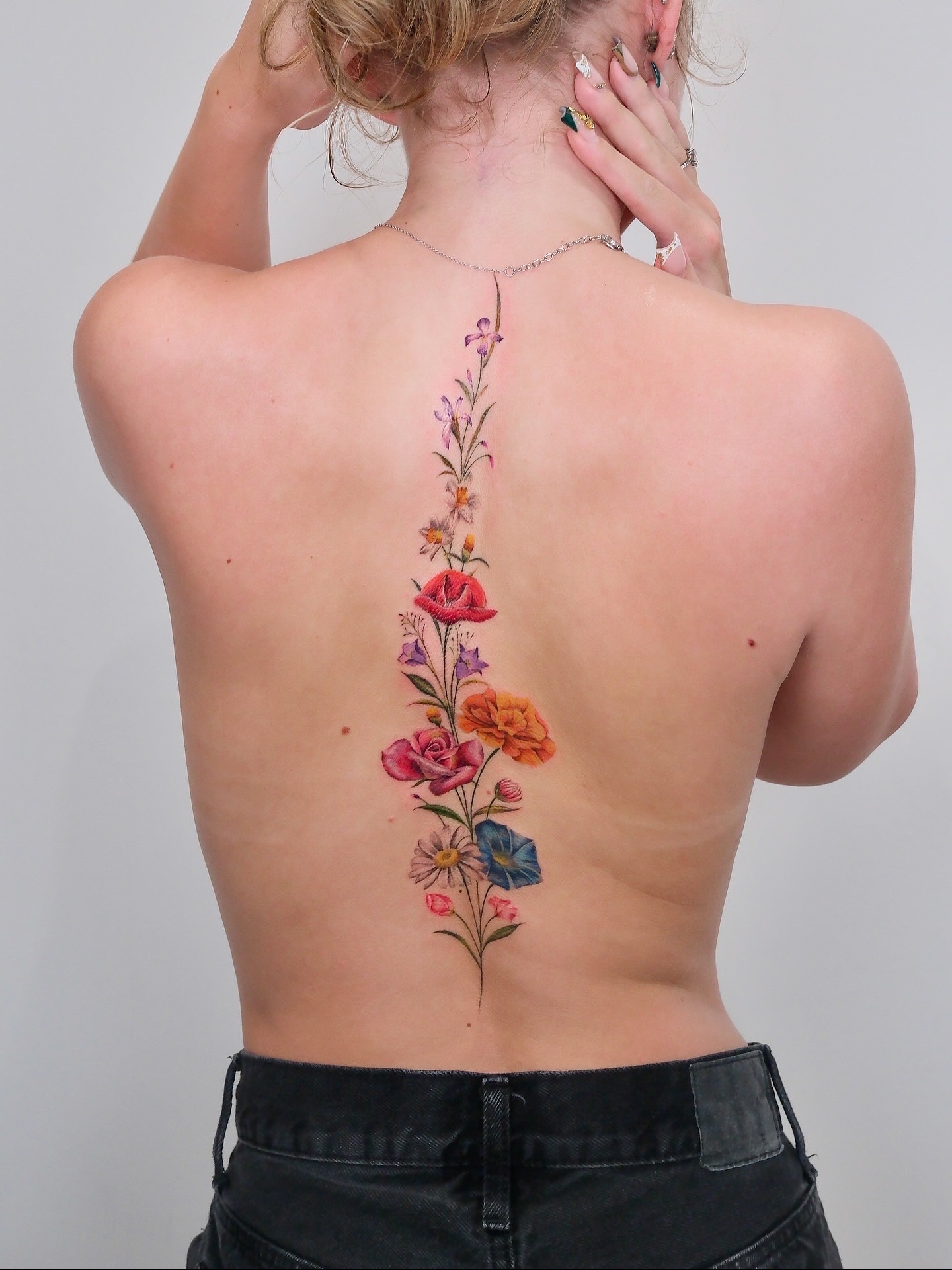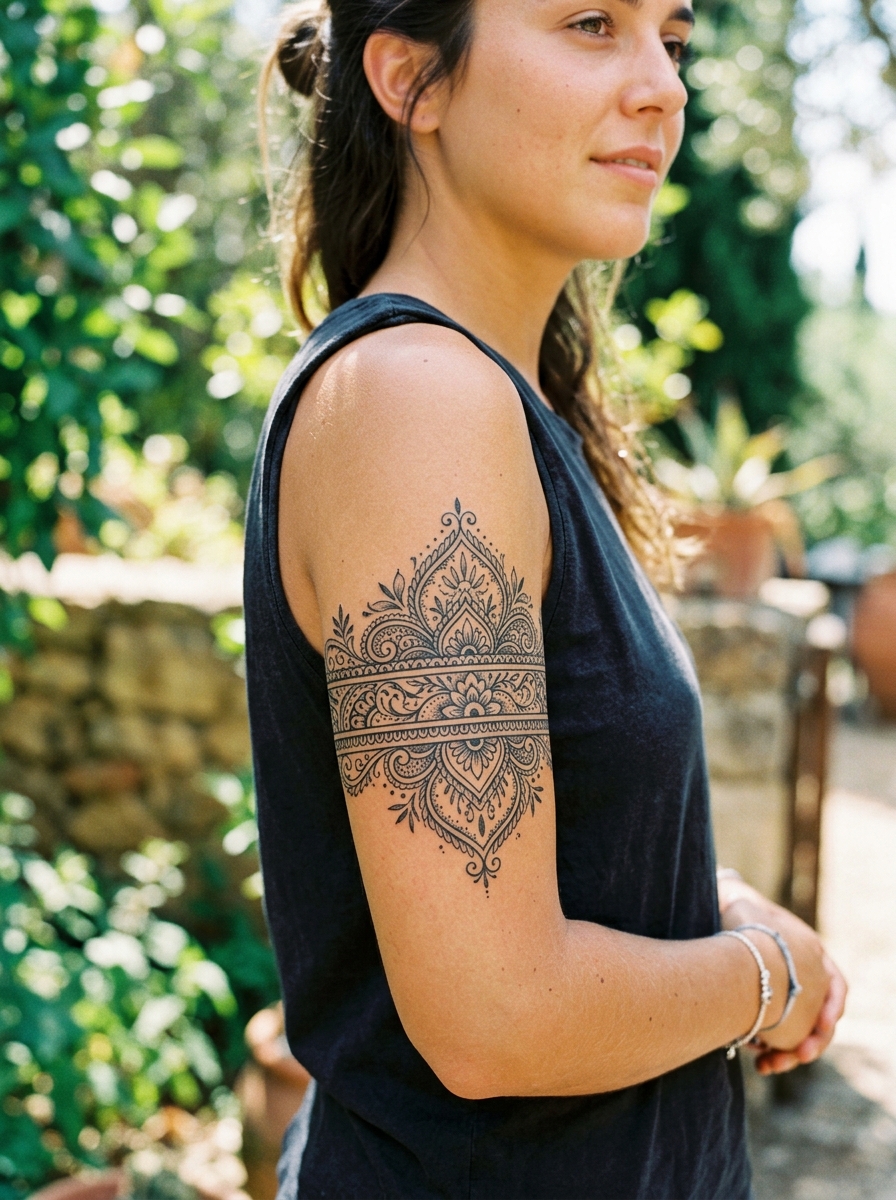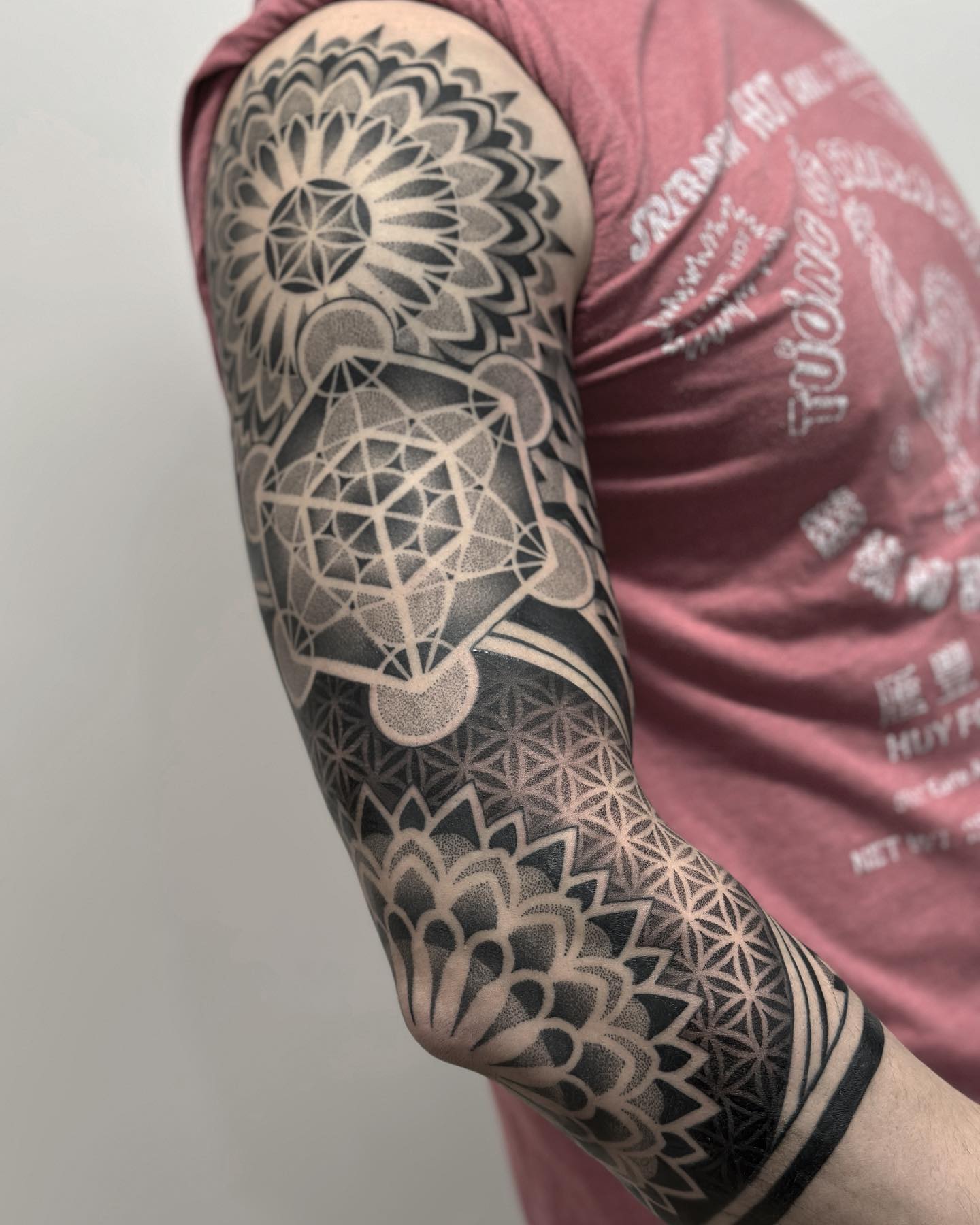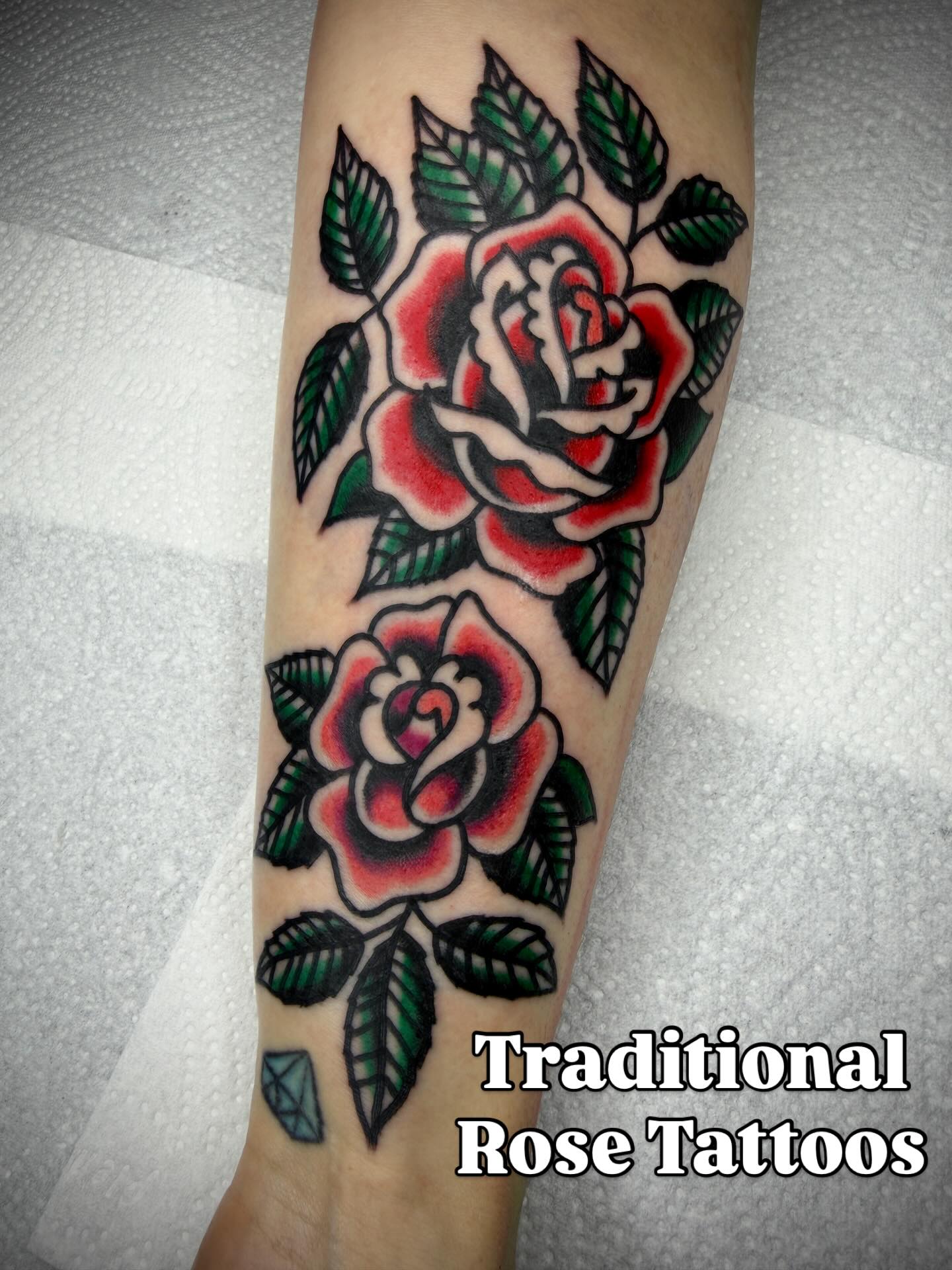
A spine tattoo is not dangerous in the way most people fear it is — the needle never comes close to your spinal cord — but it is one of the least forgiving placements on the body for pain, healing and long-term crispness.
I have sat through two spine sessions of my own and watched a lot more from the other side of the room, and the same pattern shows up every time: the fear people arrive with is almost never the thing that actually causes them trouble.
They worry about paralysis. What they should be planning for is a three-hour session over bone, a healing window where they cannot sleep on their back properly, and a design that has to stay straight on a surface that moves every time they breathe.
This guide walks through the real risks, the myths that refuse to die, and what I would tell a friend before they booked. If you are still choosing a design, the spine tattoo ideas gallery is a better starting point than a Pinterest scroll.
Spine Tattoos vs. Other Back Placements: What You Are Trading
If the risk conversation is what is holding you back, it helps to see the spine next to the placements people usually consider instead.
These are my working estimates from watching sessions and talking to artists, not published figures — your own experience will shift depending on your pain tolerance and the size of the piece.
| Placement | Pain Level | Healing Difficulty | Best For |
|---|---|---|---|
| Spine (vertebral line) | High — bone with almost no padding | Hard: constant movement, awkward to reach | Vertical script, florals, symmetrical linework |
| Shoulder blade | Low to moderate | Easy: flat, stable, well padded | First tattoos, medium round designs |
| Upper back / full back | Moderate, spikes near the spine | Moderate: large surface, long sessions | Statement pieces and scenes |
| Lower back | Moderate | Moderate: waistbands rub | Wide horizontal or ornamental designs |
| Ribs / sternum | Very high | Hard: breathing stretches the skin | People who already know their pain limits |
The honest read: the spine is not the most painful spot on the body, but it is the one where pain, healing and design precision all get harder at the same time. Compare it against the most painful tattoo spots before you commit.
Why Spine Tattoos Feel Riskier Than They Are
The anxiety around spine tattoos comes from a simple mental picture: a needle, and the spinal cord directly beneath it.
That picture is wrong by a wide margin. A tattoo needle deposits ink in the dermis, roughly one to two millimetres deep — it does not reach muscle, let alone the vertebral column or the spinal cord sitting inside it.
Between the needle tip and your spinal cord there is skin, subcutaneous tissue, a layer of muscle and connective tissue, and the bony arch of the vertebra itself. A tattoo machine is not remotely capable of crossing that.
What the spine really gives you is a thin, bony, mobile canvas. Thin skin over bone means more sensation. Mobility means healing skin gets stretched and folded every time you sit up, twist or reach.
So the risks are real, but they are ordinary tattoo risks — pain, infection, ink reactions, blowouts, crooked lines — turned up a notch by the location. That is a very different problem from nerve damage, and it responds to preparation.
The Actual Risks of a Spine Tattoo
1. Pain That Peaks Over the Vertebrae
This is the one nobody exaggerates. The vertebral bumps are the sharpest part of the session, and the sensation is closer to vibration and scraping than to the hot scratch you get on a forearm.
In my experience the pain is not constant — it comes in waves as the artist crosses each vertebra, then eases across the softer gaps between them.
The upper spine between the shoulder blades is usually the most tolerable stretch. The lower thoracic and lumbar area, where the bone sits closest to the surface, is where people start asking for breaks.
Sessions on a full spine piece commonly run two to four hours. If that sounds like a lot for a first tattoo, it is — most artists I have asked would rather you had one smaller piece somewhere else first. Our tattoo pain chart gives a fuller comparison.
2. Infection During Healing
Infection is the most common genuine complication of any tattoo, and the spine makes it slightly more likely simply because the area is hard to reach and hard to keep still.
You cannot see your own spine. That means you are cleaning and moisturising by feel, or asking someone else to check it, which people skip more often than they admit.
Warning signs are the same as anywhere: spreading redness beyond the tattooed area, increasing rather than decreasing pain after day three, heat, swelling, pus, or a fever.
If you see any of those, contact a doctor rather than your artist. An infected tattoo is a medical problem, not a touch-up problem, and it is treated with antibiotics — nothing you can fix with more ointment.
3. Ink Reactions and Sensitivities
A small number of people react to tattoo pigment itself. Red and red-adjacent pigments are the ones dermatologists flag most often, though reactions to other colours do happen.
A reaction usually looks like persistent itching, raised bumpy skin or a rash confined to one colour in the design, and it can appear weeks or even years after the session.
The spine does not make this more likely — but a raised, itchy reaction along your vertebrae is more uncomfortable than the same reaction on a shoulder, because clothing and chair backs press on it all day.
If you have known pigment allergies or a history of eczema or psoriasis, talk to a dermatologist before booking. A patch test is not a perfect predictor, but it is better than finding out across a 30cm piece.
4. Blowouts and Line Distortion
A blowout happens when ink spreads below the dermis and the line develops a blurry blue halo. Thin skin over bone is exactly the terrain where this is most likely.
It is not dangerous. It is permanent, and it is the single most common regret I hear about spine work — fine-line script that looked razor sharp on day one and looks slightly fuzzy at eighteen months.
The fix is prevention: an artist with a genuine spine portfolio, a design that is not built entirely from hairline strokes, and letters or motifs large enough to survive a little spread.
If you love the delicate look, go in with your eyes open — the fine-line spine tattoo guide covers how to keep that style ageing well.
5. Crooked Placement and Anatomical Asymmetry
Almost nobody’s spine is perfectly straight, and almost every spine design is perfectly symmetrical. Those two facts meet on the day of your appointment.
A good artist will mark you standing up, then check the stencil again while you are lying down, because your back curves differently in each position.
Ask to see the stencil in a mirror before any ink goes in. I have seen more people unhappy about a piece sitting two millimetres off-centre than about anything medical.
Mild scoliosis, a rotated pelvis or uneven shoulders will all pull a straight design visually off-line. It is worth mentioning to your artist rather than assuming they will spot it.
6. Epidurals and Future Medical Procedures
This is the concern that sends most people searching, especially anyone planning a pregnancy, so it deserves a straight answer.
The theoretical worry is that a needle passing through pigmented skin could carry ink particles inward. It is a reasonable thing to wonder about — but it has stayed theoretical.
A 2020 review in Anaesthesia Critical Care & Pain Medicine described the idea that lumbar tattoos rule out epidural analgesia as a myth that has not held up. Augusta Health similarly notes that reports of actual problems are rare, and that a back tattoo does not by itself prevent an epidural.
In practice, anaesthetists commonly aim for a gap in the design or an untattooed patch of skin where one is available. Where the tattoo is fresh, raised, red or still healing, they will usually postpone — which is a good argument for not getting spine work late in a pregnancy.
None of this is medical advice, and policies vary between hospitals and individual clinicians. If you are pregnant or planning to be, ask your own anaesthetist — they will give you a clearer answer than any article, including this one.
7. Sun Damage and Fading Over Time
Spine tattoos are not inherently faster to fade, but they live on a part of the body that people forget to protect.
Open-back tops, swimwear and beach days expose the spine directly, and it is an awkward spot to reach with sunscreen when you are on your own.
Ultraviolet light breaks down pigment over years, and black ink fades to a soft grey while colours dull unevenly. Fine-line work shows this earliest because there is less pigment to lose.
Once fully healed, treat SPF as part of the maintenance. Ask someone to get your back, or use a spray so you can reach the middle.
Four Myths Worth Retiring
Myth: A Spine Tattoo Can Paralyse You
There is no credible evidence linking professional tattooing to paralysis. The needle stops in the dermis; the spinal cord sits centimetres deeper, behind bone.
The place this stops being true is unlicensed, unsterile work — not because of depth, but because a serious infection near the spine is genuinely dangerous. Use a licensed studio.
Myth: You Can Never Get an Epidural Again
Covered above, and it is the single most repeated piece of misinformation about back tattoos. The current position in the anaesthesia literature is far more relaxed than the internet suggests.
Where it is true is timing — a healing tattoo is a reason to wait, not a permanent disqualification.
Myth: Spine Tattoos Fade Faster Than Anywhere Else
Location matters less than sun exposure, ink quality, skin type and aftercare. A well-protected spine piece ages about as well as a well-protected shoulder piece.
What is true is that the delicate styles people choose for spines — hairline script, tiny botanicals — show ageing sooner than bold work does.
Myth: The Pain Is Unbearable
It is high, not unbearable. Most people I have spoken to describe it as intense but manageable in stretches, with a handful of genuinely rough minutes over the bony points.
Breaks, food beforehand, and splitting a long design into two sessions handle most of it. The tattoo pain management tips guide goes into specifics.
How to Get a Spine Tattoo Safely
Everything below is what I would actually do, in order, and most of it is about the decisions you make before the machine starts.
Pick the artist for spine work specifically. Ask to see healed spine photos, not fresh ones — healed work tells you whether their lines hold up on thin skin.
Eat a real meal beforehand and bring something sugary. Long sessions over bone drain people faster than they expect, and lightheadedness is the most common reason a session gets cut short.
Plan the recovery around your life. For the first week you will want loose tops, no back sleeping, no gym sessions that stretch your back, and no pools or hot tubs until it is fully healed. Our tattoo aftercare guide has the full routine.
Aftercare Specific to the Spine
Standard aftercare applies, with three adjustments that matter for this placement.
- Get a second pair of eyes. You cannot inspect your own spine properly. Have someone photograph it every couple of days so you can actually see how it is settling.
- Sleep on your side or front for the first week or so. Back sleeping presses a healing tattoo into bedding for eight hours at a time.
- Skip the seated gym work early on. Anything that grinds your back against a bench or a chair back will irritate the area.
- Watch bra straps, backpacks and waistbands — friction is the main cause of patchy healing on spine pieces.
- Moisturise thinly and often rather than thickly once a day. Over-applying traps moisture and softens scabs.
Expect the usual arc: tight and tender for a few days, itchy and flaky through weeks one and two, then a dull settled look before the ink sharpens up again. The tattoo healing stages breakdown covers what is normal week by week.
If anything sits outside that arc — pain increasing after day three, spreading redness, discharge, fever — treat it as a medical question and see a doctor.
Still Not Sure? Common Mistakes to Avoid
The mistakes I see most often are not safety failures. They are planning failures.
- Making a spine piece your first tattoo. Learn your pain tolerance somewhere forgiving first.
- Booking the whole design in one sitting because it is cheaper. Two shorter sessions produce better lines than one exhausted marathon.
- Choosing a font so thin it will not survive five years. If you want script, size it up.
- Not checking the stencil in a mirror, then noticing the tilt a week later.
- Booking spine work during pregnancy, when healing skin is exactly what would delay an epidural.
- Assuming the spine is the only vertical option — the sternum and lower back both take vertical designs with easier healing.
If pain is the sticking point, read does getting a tattoo hurt before you decide — it may reassure you more than another risk article will.
Frequently Asked Questions
Are spine tattoos dangerous?
Not in the way most people mean. A tattoo needle only reaches the dermis, so it cannot damage the spinal cord or the nerves inside the vertebral column. The genuine risks are infection during healing, reactions to pigment, blowouts on thin skin, and a session that is more painful than most placements. Those are manageable with a licensed artist and disciplined aftercare.
Can I still get an epidural with a spine tattoo?
Usually, yes. Anaesthesia literature has moved away from treating lumbar tattoos as a barrier, and reports of actual complications are rare. Clinicians will often use a gap in the design or nearby untattooed skin where they can. A fresh or inflamed tattoo is a reason to delay, so ask your own anaesthetist rather than relying on general guidance.
How painful is a spine tattoo compared to other spots?
High, but not usually the worst on the body — ribs and sternum are often rated harder. Pain peaks directly over each vertebra where skin sits closest to bone, and eases in the gaps between. Most people describe it as sharp and vibrating rather than burning. Splitting a large design across two sessions makes a real difference.
How long does a spine tattoo take to heal?
The surface usually looks healed in two to three weeks, while the deeper skin continues settling for around two to three months. Spine tattoos can take slightly longer in practice because the area moves constantly and gets rubbed by clothing and seating. Avoid pools, hot tubs and heavy back training until the flaking has finished. See a doctor if pain or redness increases instead of fading.
Do spine tattoos stretch or distort with weight change?
Less than people expect. The spine has relatively little fat over it, so it distorts less than the stomach, hips or upper arms with moderate weight change. Significant changes, pregnancy or major muscle gain can shift a design slightly. Long vertical pieces tend to cope better than wide horizontal ones.
Quick Summary
- A tattoo needle stops in the dermis — it cannot reach your spinal cord, and paralysis is not a realistic risk from professional work.
- The real risks are infection, pigment reactions, blowouts on thin skin, and crooked placement.
- Pain is high and peaks over each vertebra, but sits below ribs and sternum for most people.
- A spine tattoo is a poor choice for a first tattoo — learn your tolerance somewhere easier.
- Lumbar tattoos do not automatically rule out an epidural; fresh or inflamed ones are a reason to delay.
- Fine-line spine work is the most likely to blur over time, so size the design up if you want it sharp at ten years.
- Healing is harder here because you cannot see the area and cannot keep it still — get someone to check it.
- Any spreading redness, increasing pain, discharge or fever is a doctor’s question, not an artist’s.
Spine tattoos are one of the most striking placements available, and none of the above is a reason to avoid one. It is a reason to plan it properly, with an artist who has done it before.