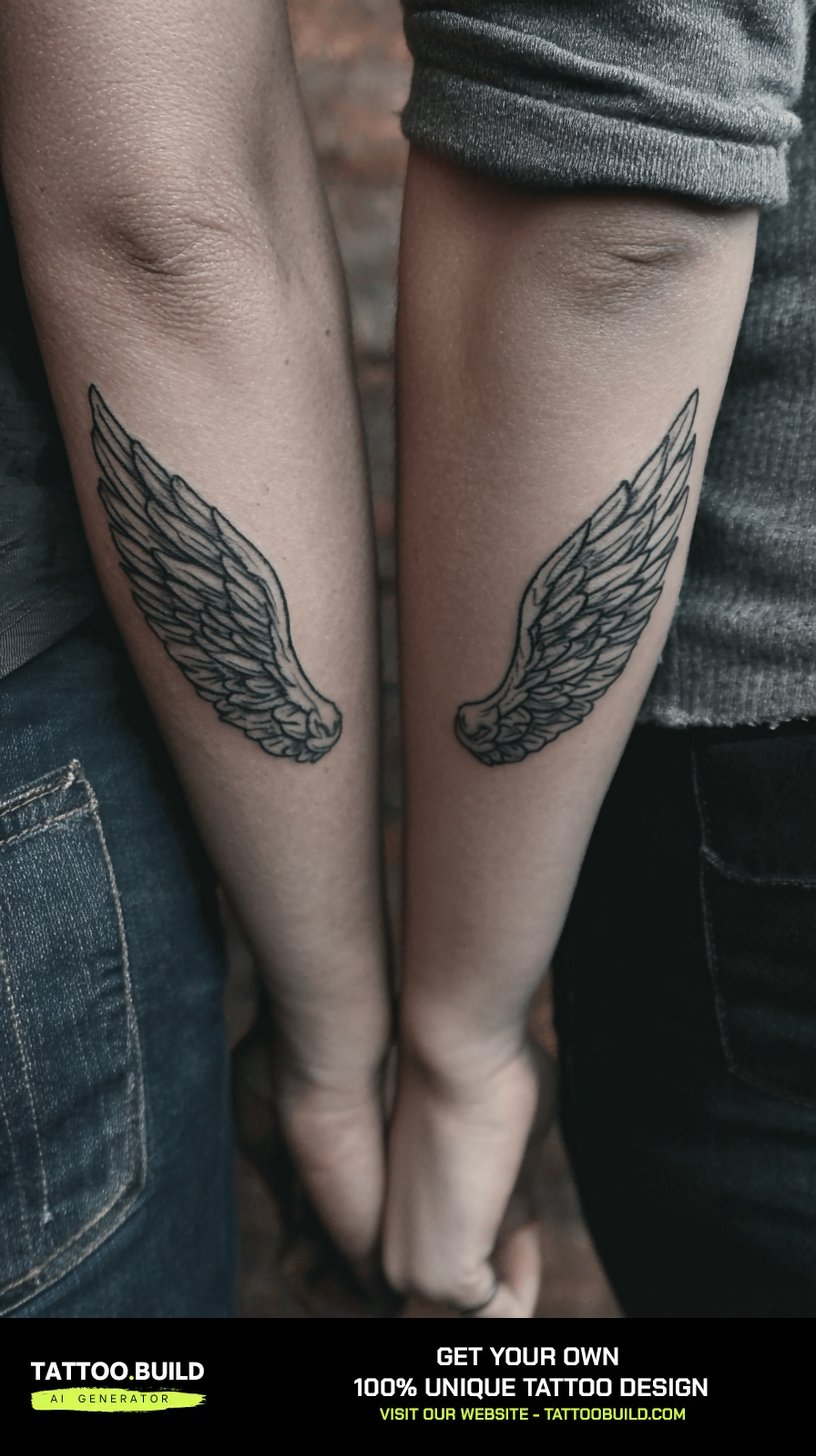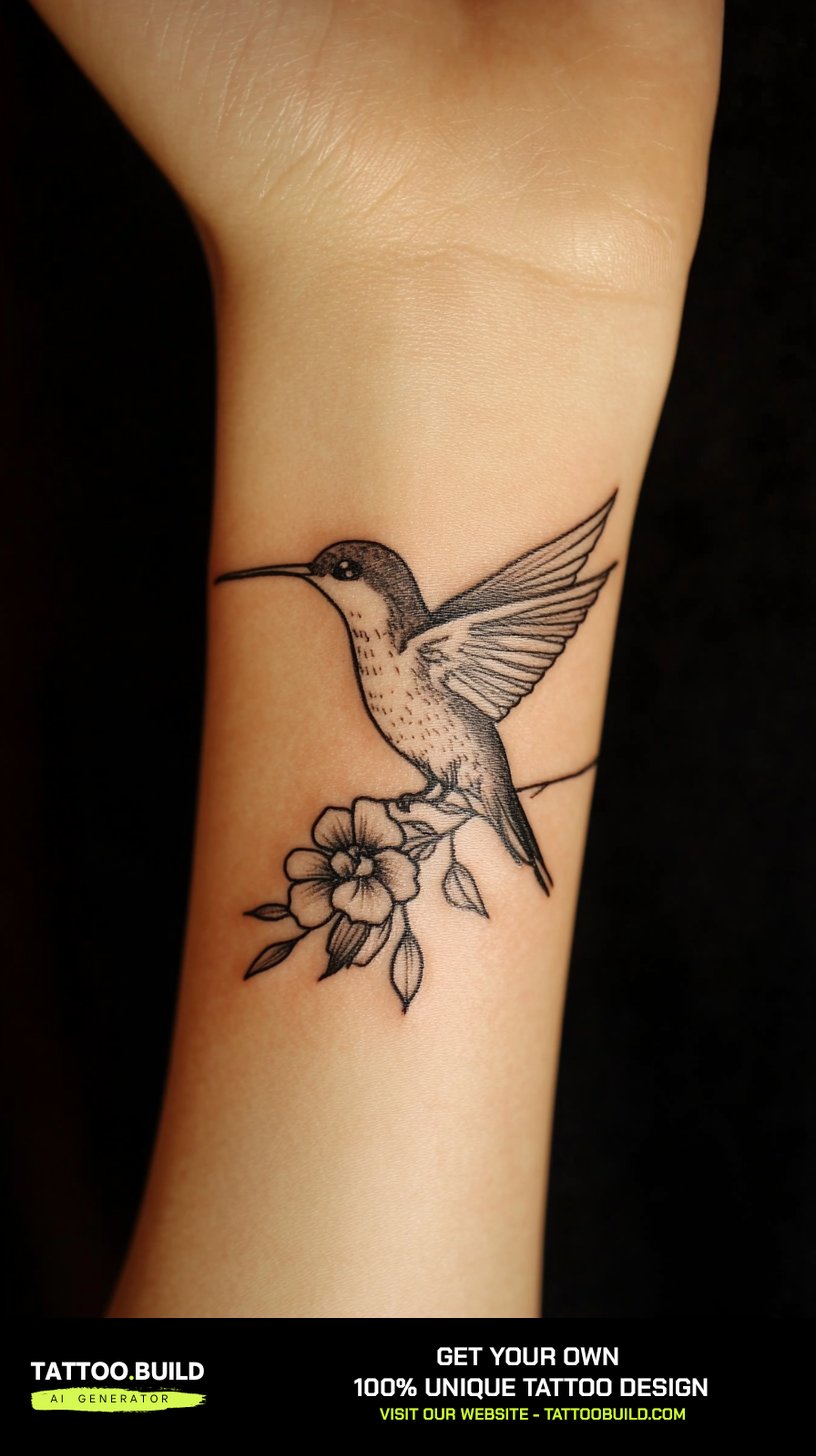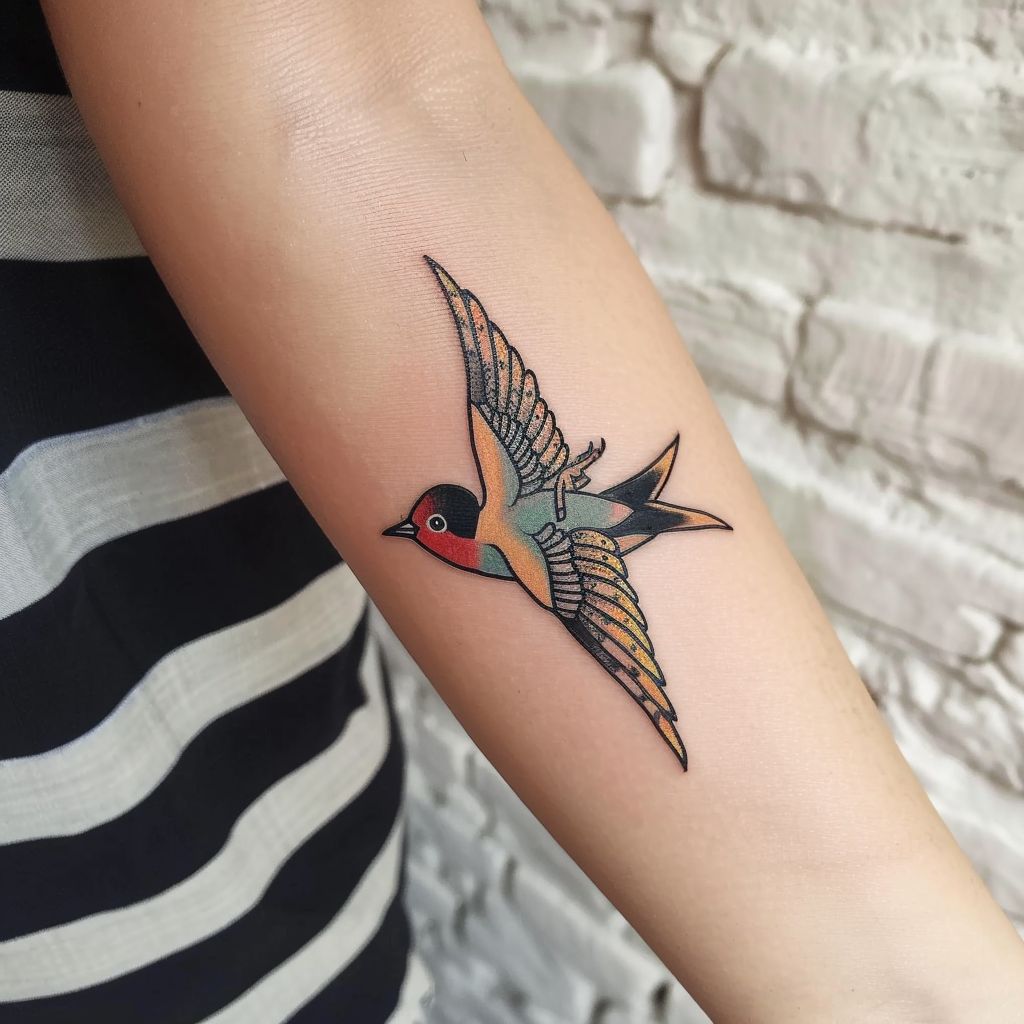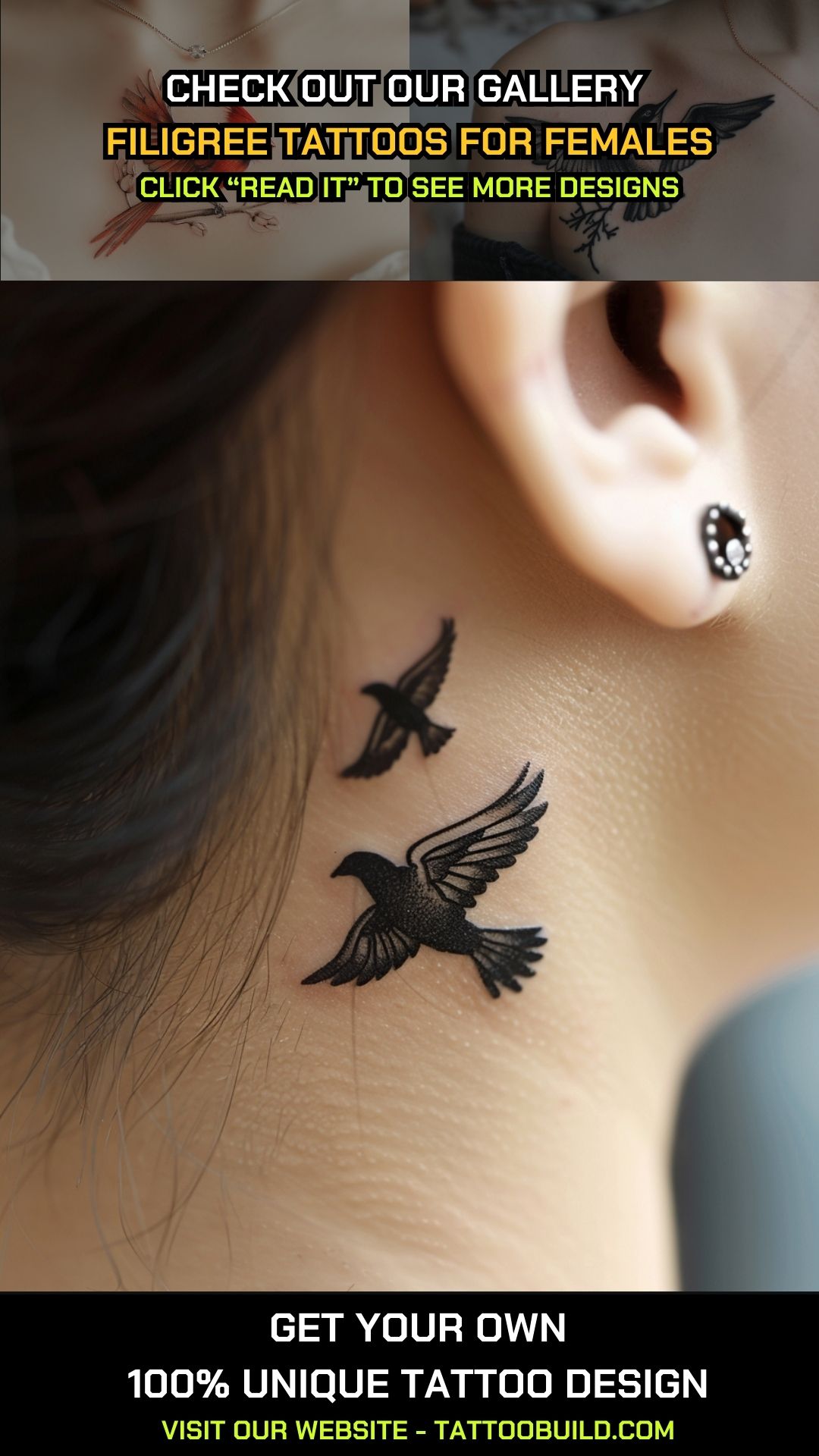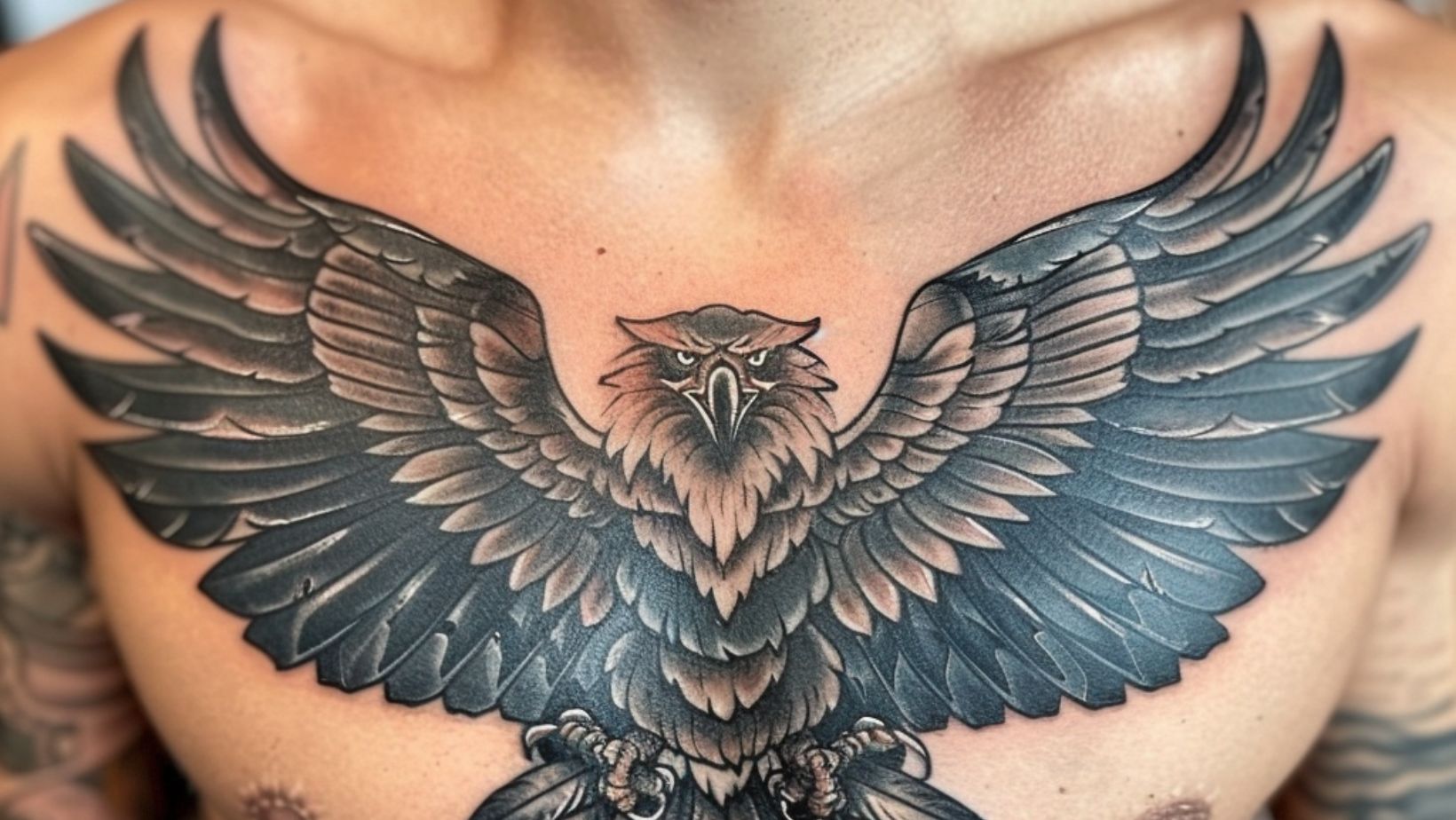
A traditional bird tattoo in black and gray keeps everything that makes American traditional work — the heavy outline, the simple shapes, the readable silhouette — and trades the color packing for shading. The result ages like flash and reads like a portrait.
I have watched this pairing go from a niche request to one of the most common things walk-in clients ask for, and the reason is practical rather than fashionable.
Black and gray is the one palette almost every artist can execute well, on almost every skin tone, with the fewest long-term surprises. When I have asked artists which of their older pieces still photograph well after ten years, the black and gray birds come up constantly.
This guide covers the motifs that work, the ones that fight the style, how composition changes the whole piece, and what to expect in the chair. If you want the single most classic entry point, start with the black and gray traditional swallow.
Black and Gray, Bold Color, or Fine-Line: Which Is Right for You?
Most people arrive deciding between three approaches rather than three designs. Here is how they actually differ once the tattoo is healed.
| Approach | Best for | Session time | Trade-off |
|---|---|---|---|
| Traditional black and gray | Long-term readability, most skin tones, larger scale | Usually 2–4 hours for a palm-sized bird | Less immediate pop from across a room than color |
| Bold traditional color | Classic flash energy, strong contrast on lighter skin | Often 3–5 hours, colour packing takes longer | Some pigments soften sooner; touch-ups more likely |
| Fine-line or illustrative | Small, delicate placements and first tattoos | Commonly 1–2 hours | Thin lines tend to blur first, especially at small sizes |
If you are undecided, the honest answer is that black and gray asks the least of your future self. It is the version that still looks intentional after a decade of sun.
Why Black and Gray Traditional Bird Tattoos Endure
Traditional tattooing was designed around a constraint: it had to read clearly from a distance, on a moving body, in bad light.
That constraint is why the outline is heavy and the shapes are simplified, and it is exactly why the style survives the move to black and gray without losing anything structural.
Color in traditional work mostly fills areas the outline has already defined. Remove it and the design still holds, which is not true of most illustrative styles.
Black ink is also the most stable option in the box. Artists I have asked consistently say a solid black outline with gray wash is the safest bet for a piece you want legible in twenty years, and dermatology guidance on tattoo reactions generally points to colored pigments — particularly reds — as more frequently implicated in allergic responses than black, per the American Academy of Dermatology.
There is a practical angle too. Black and gray gives you more options later, because color can be added into an existing black and gray piece far more easily than color can be removed or lightened.
And if you already lean toward this palette generally, it is worth browsing black and grey tattoo ideas before committing to a bird specifically.
Bird Motifs That Shine in Black and Gray
Not every bird translates equally. The ones below are the motifs I see healed well most often, and the reasons are usually about silhouette rather than symbolism.
Swallows
The swallow is the archetype: forked tail, pointed wings, a shape you can recognise as a shadow.
In black and gray the tail feathers and wing bars carry the whole design, which is why artists render them with clean parallel lines rather than fussy detail.
It is also the most forgiving motif at small size. A two-inch swallow still reads; a two-inch owl generally does not.
The traditional meaning behind a swallow tattoo ties to safe return and distance travelled, which is part of why it stayed popular well past its sailor origins.
Sparrows
Sparrows sit close to swallows but with a rounder body and a shorter tail, which makes them read slightly softer.
When I have watched artists tattoo these, most of the session goes into the chest and wing shading rather than the outline.
They suit small placements — inner forearm, ankle, behind the ear — and they pair well in mirrored sets across the collarbones.
Eagles
The eagle is the opposite decision: it wants scale, and it punishes you for going small.
Feather layering, the beak, and the eye all need room, and in black and gray those details rely on contrast between solid black and open skin.
In my experience the minimum that works is roughly palm-sized; below that the feather stacks blur together within a few years.
If you want a softer take on the motif, eagle tattoo designs for women tend to use more open wing shapes and lighter shading.
Owls
Owls are a texture problem more than a shape problem, because almost all of their character sits in the face and the feather pattern.
Black and gray handles this well when the artist uses whip shading to suggest feathers instead of drawing every one.
Ask to see healed owl work specifically — it is the motif where the gap between a fresh photo and a two-year-old tattoo is widest.
Ravens and Crows
Ravens are the easiest birds in this list to render in black and gray, because the subject is already black.
That lets the artist use large areas of solid black and reserve gray only for the sheen on the wings.
The risk is the opposite of the owl problem: too much solid black and the bird becomes a blob with no internal structure.
There are many ways to handle this, and the raven tattoo gallery shows the range from heavy blackwork to lighter linework treatments.
Seagulls and Shorebirds
Seagulls appear throughout old flash, usually as small background birds above a ship or a lighthouse.
On their own they work as a set of two or three, scaled slightly differently to suggest distance.
This is one of the few cases where I would argue for minimal shading — a nearly outline-only gull looks deliberate, not unfinished.
Doves
Doves carry peace and memorial associations, and they are one of the most common requests for a tribute piece.
Black and gray suits that intent, because the softer gray wash reads quieter than bold color would for a memorial subject.
Most artists will keep the body lighter and push the contrast into the wingtips so the shape still holds at a distance.
Exotic and Reinterpreted Birds
Flamingos, cranes, peacocks, and hummingbirds are usually color-driven subjects, which makes them the interesting challenge here.
The translation works when the artist commits to the silhouette — a flamingo is its neck and legs, not its pink.
Hummingbirds are the hardest of the group because their appeal is iridescence, though the wing blur can be suggested with directional gray. If that is your motif, browse hummingbird tattoo ideas before deciding on palette.
Composition Choices That Change the Whole Piece
Two people can request the same bird and walk out with tattoos that feel nothing alike. Composition is usually why.
Wings Open or Perched
An open-wing bird is wider than it is tall and wants a flat area: chest, upper back, outer thigh.
A perched bird is compact and vertical, which suits forearms, calves, and the space beside an existing tattoo.
Pick the pose to fit the body part, not the other way round. Forcing a spread-wing eagle onto a narrow forearm is the most common reason a piece looks cramped.
Banners and Lettering
A banner under the bird is the traditional way to carry a name, a date, or a short phrase.
In black and gray the banner needs its own value separation from the bird, usually a lighter gray with a darker fold shadow.
Keep the text short — most artists will tell you that anything past about three words at this scale becomes unreadable as it settles.
Roses and Filler
Roses, banners, and small stars are the classic filler set, and they do real work rather than decoration.
They give the composition weight at the base so the bird does not appear to float on the limb.
This also makes future expansion easier, since filler elements give an artist somewhere to connect the next piece.
Feather Detail and Texture
The single biggest technical difference between a flat bird and one with depth is how the feathers are shaded.
Whip shading, where the needle lifts as it moves, is the usual method and creates the soft-to-dark gradient the style relies on.
When I have compared healed work, pieces with fewer, better-placed shaded areas consistently outlast pieces where every feather was detailed.
Style Variations Worth Considering
If strict traditional is not quite the fit, there are three adjacent directions that keep the black and gray palette.
Neo-Traditional
Neo-traditional keeps the bold outline but adds depth, varied line weight, and more anatomical accuracy.
It tends to need more room and more time in the chair, but the result reads as a richer illustration rather than flash.
Fine-Line and Illustrative
Fine-line birds are delicate and quiet, and they are the most common choice for a first tattoo.
Be realistic about longevity: thin lines at small sizes tend to soften first, and a touch-up in a few years is normal rather than a failure.
Blackwork and Realism Blends
Some artists bridge traditional outlines with realistic gray shading inside them, which is a genuinely different look.
It works best at medium to large scale, because the realism needs tonal range that small pieces cannot hold.
Placement, Sizing, and What to Expect in the Chair
Placement affects longevity more than most people expect, and it is worth deciding before the design is drawn.
Inner forearm, outer upper arm, calf, and upper back hold contrast well because the skin sees less friction and less direct sun.
Hands, fingers, feet, and the inside of the wrist turn over skin faster and generally need touch-ups sooner.
For a first bird, the forearm is the most reliable choice — good visibility, moderate pain, and enough flat area for a palm-sized design. There are more options in this forearm tattoo guide if you are weighing spots.
On pain: ribs, sternum, inner bicep, and anywhere over bone tend to be reported as sharper, while outer arm and calf are usually described as manageable. Individual experience varies more than any chart suggests.
Getting the Best Result: Practical Advice
Bring reference of healed tattoos, not fresh ones. A fresh photo shows the artist’s best hour; a healed photo shows what you are actually buying.
Ask specifically to see black and gray birds in the artist’s portfolio, because strong color work does not guarantee strong gray wash control.
Give the artist the body part and the feeling you want, then let them handle composition. In my experience the people happiest a year later are the ones who brought a direction rather than a finished drawing.
For aftercare, follow whatever your artist tells you, since their instructions are matched to the products and technique they used. General guidance from the U.S. Food and Drug Administration is a reasonable cross-check, not a replacement.
Keep it out of direct sun while healing, and use sunscreen on it afterwards — sun exposure is the most preventable cause of a faded black and gray piece.
If you see spreading redness, swelling that worsens after the first few days, pus, fever, or a rash in the tattooed area, contact your artist and see a doctor. That is a medical question, not a tattoo-forum one, and it is worth taking seriously early.
Common Mistakes, and What to Do If You Are Still Not Sure
The most frequent mistake is choosing a motif that needs scale and then shrinking it to fit a budget.
The second is over-detailing. Traditional works because it leaves things out, and every extra feather is one more line that will merge with its neighbour over time.
The third is picking the bird before the meaning. If the symbolism matters to you, read through bird tattoo meanings first — it will often change which species you want.
The fourth is ignoring placement flow. A bird angled against the natural line of the limb looks wrong in a way that is hard to name and impossible to unsee.
If you like the movement but are not attached to a whole bird, wing tattoo designs offer a related route with a different footprint.
Frequently Asked Questions
Do black and gray tattoos fade faster than color?
Generally the opposite, at least in terms of readability. Solid black holds its structure longer than most colored pigments, so a black and gray piece usually keeps its shape even as it softens. What does change is contrast: light gray wash lifts over the years and can flatten out. Sun exposure accelerates that far more than the palette choice does.
What is the best first bird tattoo in this style?
A swallow or a sparrow on the forearm is the standard recommendation, and it holds up. Both have simple silhouettes that stay readable at modest size, and both sit comfortably in a two to three hour session. The forearm is also one of the more manageable spots for pain. If you later want a larger piece, a small traditional bird is easy to build around.
How much does a traditional black and gray bird tattoo cost?
Pricing varies a great deal by city, artist demand, and experience, so any single figure would be misleading. Most artists charge either a shop minimum for small work or an hourly or day rate for anything larger. The practical approach is to email two or three artists with your size, placement, and reference and compare quotes. Be wary of a price far below local norms.
Does black and gray work on darker skin tones?
Yes, and it is often the stronger choice. Black ink provides reliable contrast across skin tones, whereas some lighter colored pigments read poorly on deeper skin. The key variable is the artist: look for a portfolio with healed work on skin similar to yours, and expect the design to use slightly bolder linework and more deliberate value separation.
Is a bird tattoo more painful in certain spots?
Placement matters more than the design itself. Areas over bone or with thin skin — ribs, sternum, ankle, inner wrist — are commonly reported as sharper, while the outer arm, thigh, and calf tend to be easier. Sessions for shaded pieces also run longer than outline-only work, and fatigue is often the harder part. Tell your artist if you need breaks; it is routine.
Quick Summary
- Black and gray keeps traditional tattooing’s structure — heavy outline, simple shapes — and swaps color packing for shading.
- Swallows and sparrows are the most forgiving motifs at small size; eagles and owls need scale to stay readable.
- Ravens suit the palette naturally, but need internal structure so solid black does not flatten the shape.
- Composition decides the feel: open wings want flat, wide areas, and perched birds suit limbs.
- Banners, roses, and small filler give the piece weight and make later expansion easier.
- Forearm, outer upper arm, calf, and upper back hold contrast best over time.
- Ask for healed black and gray portfolio work specifically, not just fresh photos.
- Sunscreen after healing is the single highest-value thing you can do for longevity.