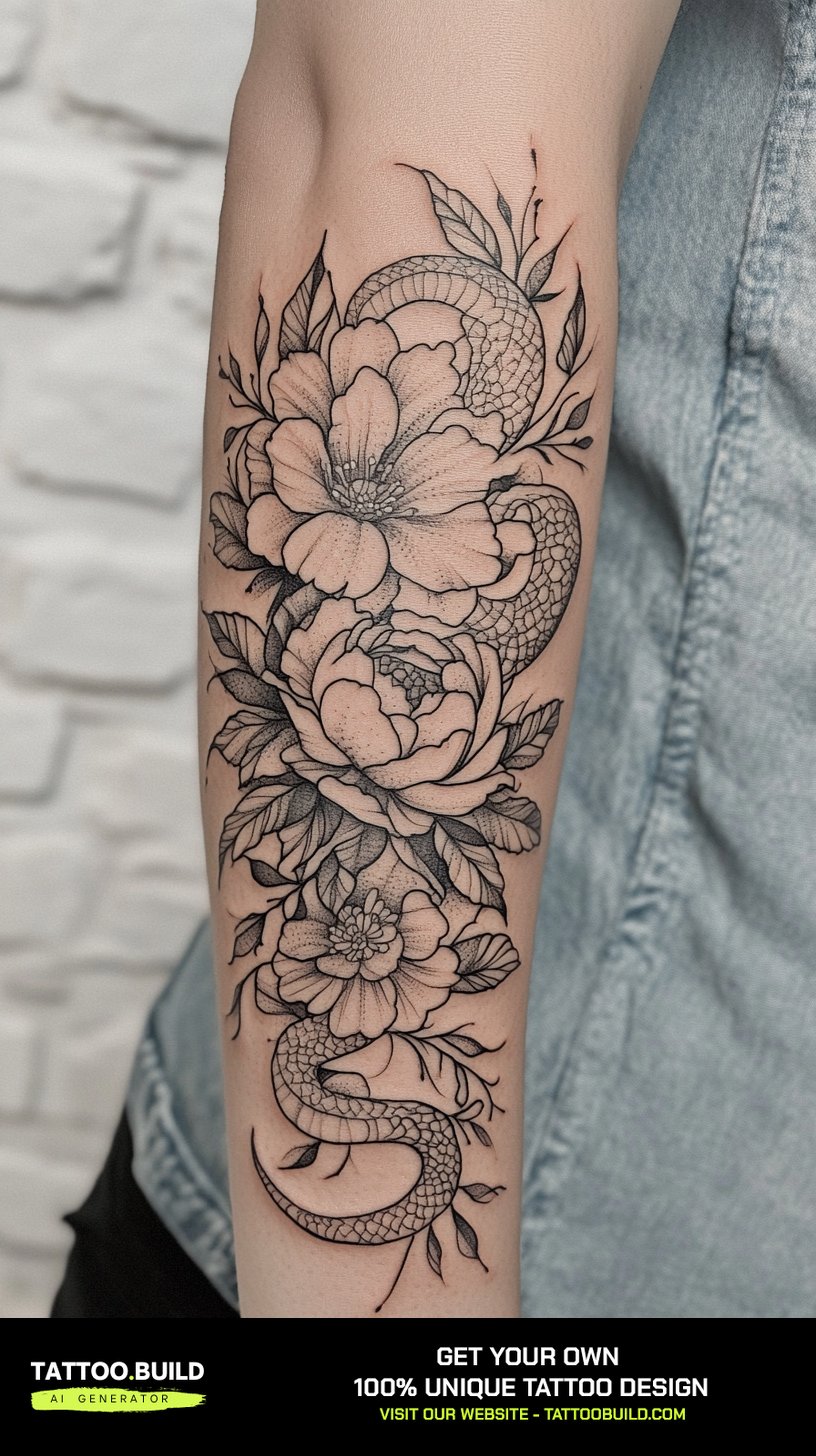
A floral lower arm tattoo is the most forgiving big commitment in tattooing — large enough to hold real artwork, flat enough to heal cleanly, and easy to cover with a sleeve on the days you would rather not explain it.
I have sat for forearm work three times now, and the thing nobody warns you about is how often you will look at it. Unlike a back or thigh piece, this one is in your eyeline every time you type, drive or lift a coffee cup.
That changes what you should choose. A design that photographs beautifully but bores you at month four is the wrong design, and I have watched friends learn that the expensive way. If you are still weighing placement, it is worth comparing the forearm against women’s floral upper arm tattoo ideas before you book anything.
Below is what actually holds up on the lower arm — which flowers, which styles, how big, and the mistakes that send people back for cover-ups.
Which Floral Style Is Right for You?
Style matters more than flower choice on the forearm, because style decides how the piece will look in ten years, not just ten days.
| Style | Best For | How It Ages | Typical Sitting |
|---|---|---|---|
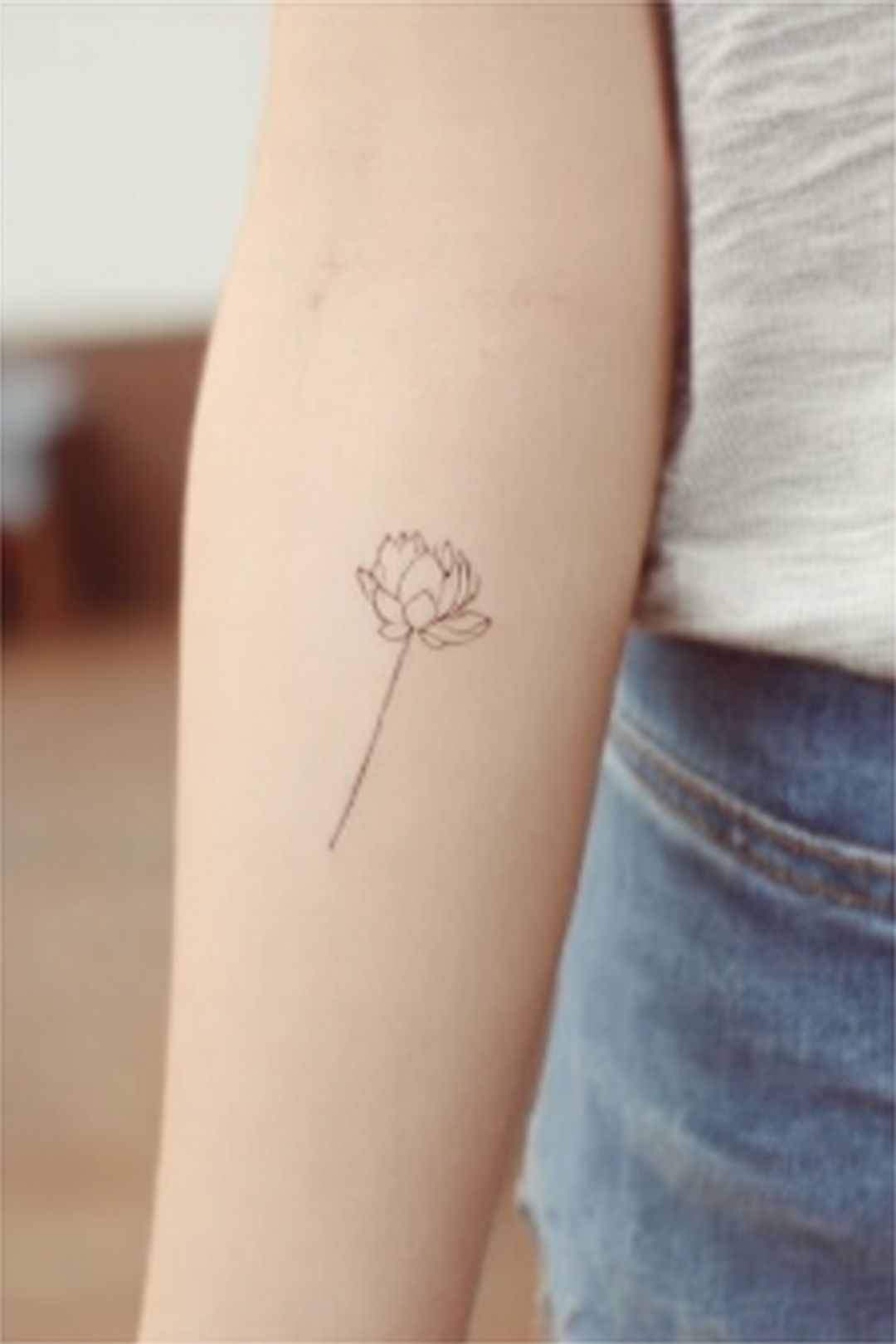
| Fine line | Subtle, delicate pieces you can dress up or down | Softens and spreads the most; usually needs a touch-up | 1–3 hours |
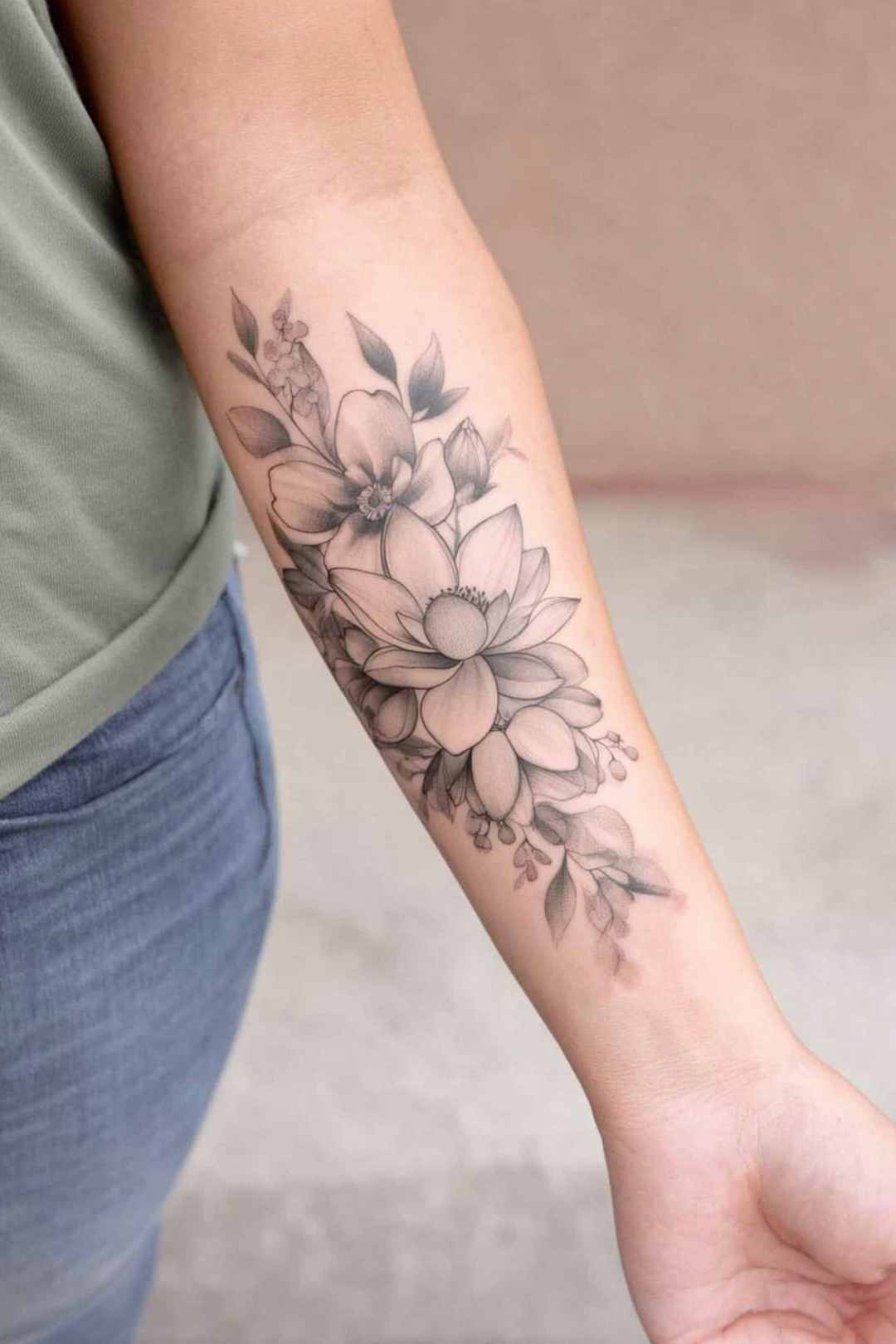
| Black and grey shaded | Realistic petals with depth and contrast | Holds well when the artist keeps enough contrast | 3–6 hours, often split |
| Illustrative / neo‑traditional | Bold outlines that stay readable across the room | The most durable of the four | 3–5 hours |
| Ornamental with botanicals | Wrapping designs that follow the arm’s curve | Fine ornament blurs first; the flowers outlast it | 4–7 hours |
If you are torn, my honest advice is to size up and simplify. Every artist I have asked says the same thing: the pieces that come back for repair are the ones that were too small and too detailed, not the ones that were too bold.
Why the Lower Arm Works So Well for Floral Work
The forearm has a long, gently tapering shape that happens to match how flowers actually grow — a stem with weight at one end and lighter elements trailing off the other.
It is also relatively flat and low on movement compared with an elbow, knee or ribcage, which means ink tends to settle evenly there.
Pain is usually moderate. The outer forearm is one of the easier spots on the body; the inner forearm and the strip near the wrist are noticeably sharper, and I have never met anyone who described the wrist bone as pleasant.
Sun exposure is the real long-term enemy. Your forearms catch more daylight than almost anywhere else on your body, and unprotected ultraviolet exposure fades tattoo pigment over time — which is why sunscreen matters more here than on a covered placement.
It is a practical placement too. You can see it, show it and hide it, and it is one of the reasons the forearm dominates most collections of forearm tattoo ideas for females.
Floral Lower Arm Tattoo Ideas That Actually Hold Up
These are grouped by how they behave on the arm rather than by flower name, because that is the distinction that changes how a piece looks years later.
1. The Single Statement Bloom
One flower, drawn well, placed on the outer forearm. This is the design I recommend most often to first-timers.
It gives the eye somewhere to land, it costs a fraction of a full piece, and it leaves room to build outward later if you want more.
The trick is scale. A single bloom smaller than roughly a credit card tends to lose its interior detail as it heals, because the lines soften and fill toward each other.
Ask your artist to draw it slightly larger than feels comfortable. In my experience that instinct to shrink it is the one people regret.
2. Roses, Peonies and Other Layered Blooms
Layered flowers give an artist something to actually render — overlapping petals, cast shadow, depth.
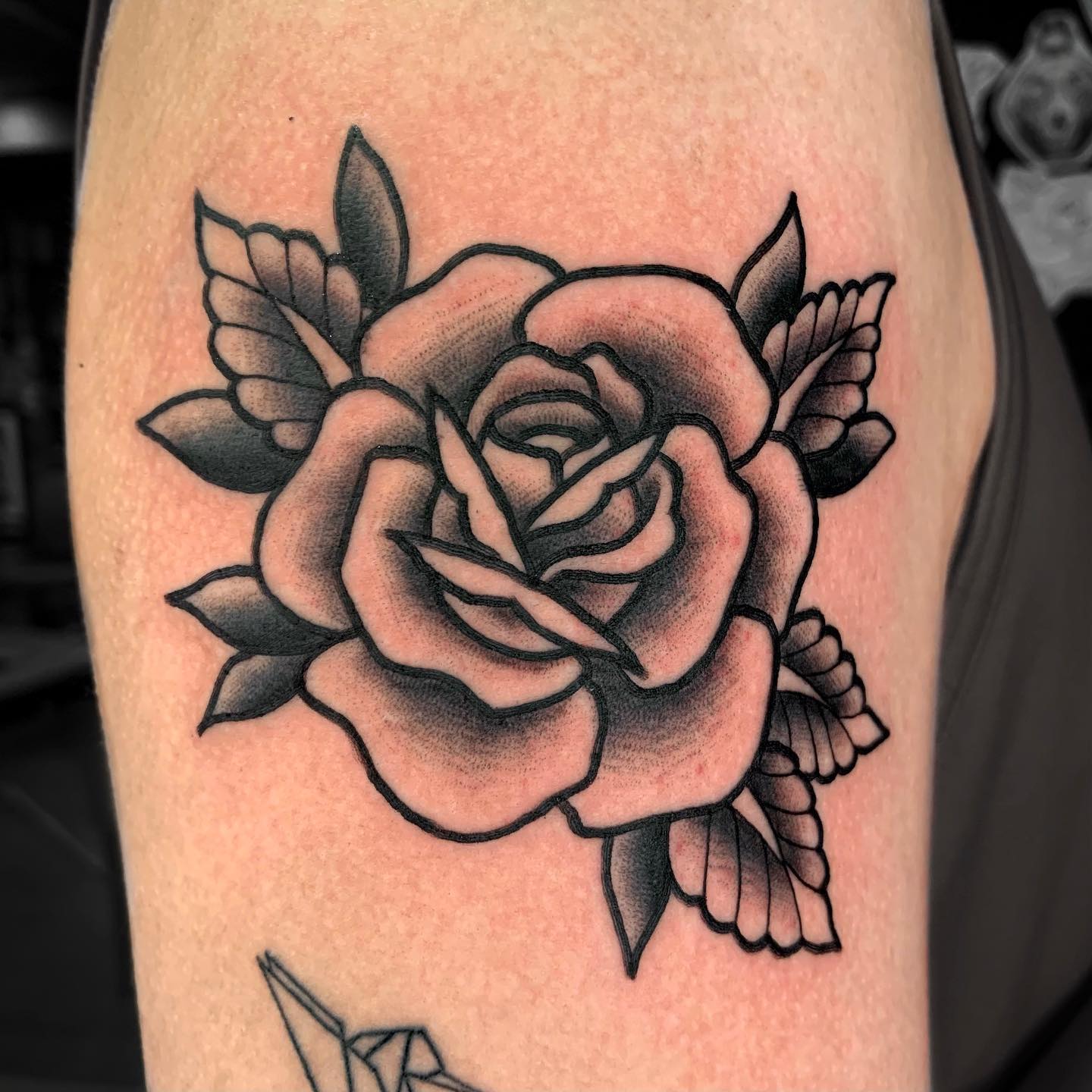
Roses remain the most requested, and their meaning shifts with treatment rather than colour alone; a heavily shaded rose reads very differently from a bare-outline one.
Peonies are the quiet favourite among artists I have talked to, because the ruffled petal structure hides small imperfections and fills space generously.
If you want to see how much range a single flower has before committing, browse dedicated rose tattoo ideas and notice how differently each artist handles the same bloom.
3. Ferns, Leaves and Greenery
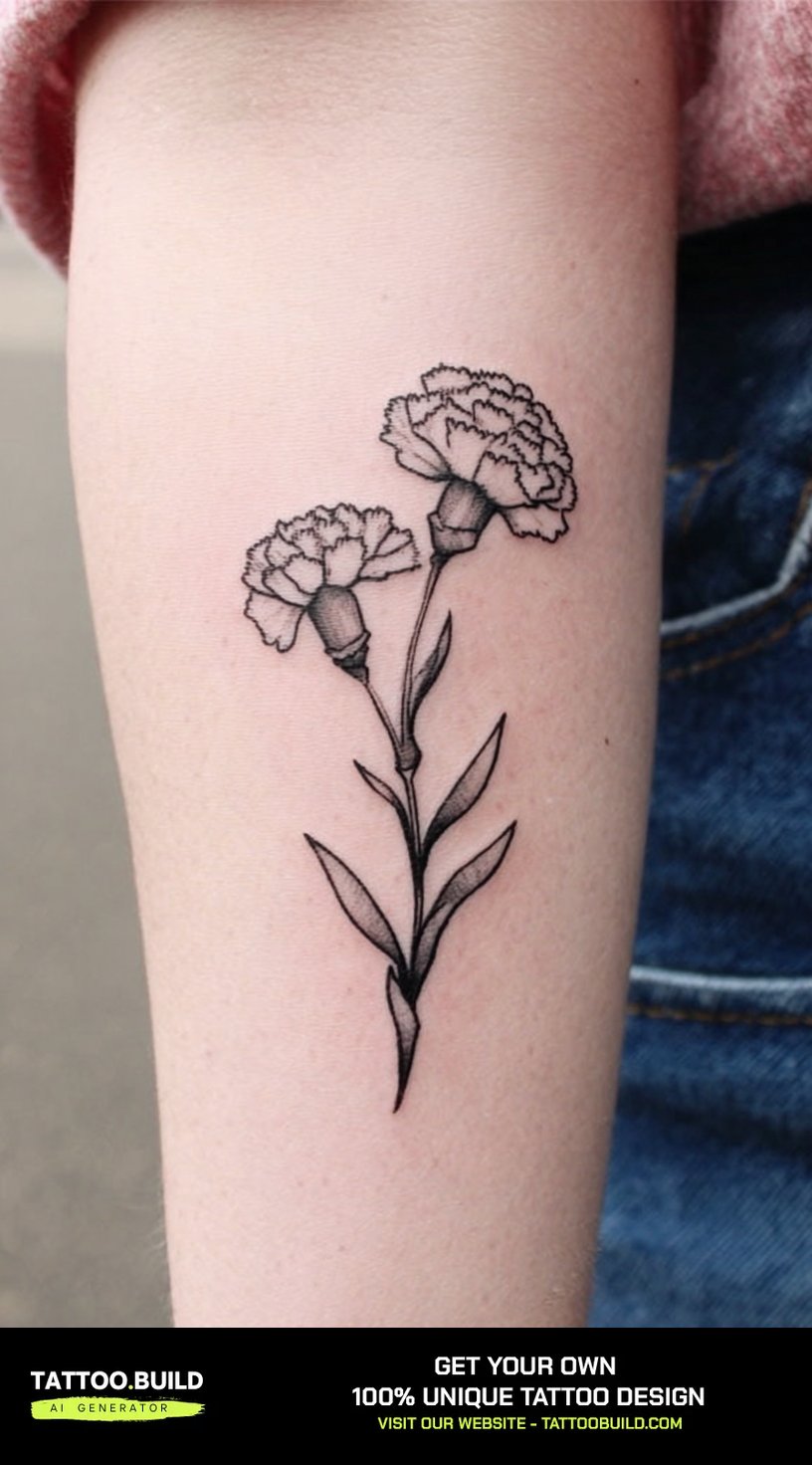
Foliage is the most underrated element in floral tattooing. It is what makes a piece feel composed rather than like flowers floating on skin.
Fern fronds in particular follow the length of the forearm naturally, and their repeated shape gives an artist an easy way to fill negative space without adding another focal point.
Solid black leaf work also does something useful: it creates contrast, and contrast is what keeps a tattoo readable as it ages and softens.
If your design looks sparse in the stencil, greenery is usually the fix — not another flower.
4. Florals With Butterflies and Dragonflies
Adding an insect solves the most common composition problem in floral work, which is that flowers alone can read as decorative wallpaper with no clear centre.
A butterfly or dragonfly gives the eye a subject. It also carries symbolic weight for a lot of people — change, transition, a person they lost — without needing text.
These pieces tend to work best when the insect sits slightly off-centre and partially overlaps a bloom, rather than hovering above the design in its own empty space.
One caution: fine antennae and wing veins are the first details to blur. Ask for them a touch heavier than looks right on paper.
5. Snakes Threaded Through Flowers
The serpent-and-flower combination has become one of the most requested forearm designs, and it suits the placement unusually well.
A snake’s body gives the artist a line to wrap around the arm, which turns a flat design into one that genuinely uses the three-dimensional shape of the limb.
It also balances softness with something sharper, which appeals to people who find pure florals too sweet for their taste.
Worth knowing before you commit: this is a design that reads as a full piece from day one. It is difficult to add to later without redrawing the flow.
6. Ornamental and Mandala-Centred Florals
Ornamental work — mandalas, dotted borders, geometric filigree — pairs with botanicals more elegantly than it has any right to.
The structure of the ornament contrasts with the looseness of the flowers, and the repeated geometry makes a wrapping design feel intentional rather than scattered.
Be aware that fine ornamental dotwork is usually the first element to soften. The flowers will still read clearly in a decade; the tiniest dot patterns may not.
Skilled ornamental work is genuinely hard, so this is the category where choosing an artist who specialises matters most.
7. Dense, Wrapping Half-Sleeve Density
At the far end of the scale, a floral lower arm tattoo becomes a wrapping piece that covers most of the forearm and carries the full commitment of a sleeve.
These are usually built across multiple sessions, and I would treat any quote promising a full dense forearm in one sitting with suspicion.
Density is what makes these age well. Solid black backgrounds and heavy shading hold their edges long after fine linework has softened.
If this is the direction you are leaning, look at how artists structure a floral half sleeve on the forearm before you design piece by piece.
Variations Worth Considering Before You Book
If nothing above is quite right, these are the adjustments people most often land on.
Inner Forearm Instead of Outer
The inner forearm is more private, softer skin and noticeably more sensitive to tattoo.
It suits text-and-flower combinations and pieces meant mostly for you rather than for other people.
A Band Instead of a Panel
Rather than filling the length of the forearm, some designs sit as a floral band circling the arm near the elbow or wrist.
This uses less skin, costs less, and leaves the rest of the arm open for future work.
Colour Instead of Black and Grey
Colour florals are striking, though they generally require more maintenance over time and are more affected by sun exposure.
Muted, desaturated palettes tend to hold their look better than bright saturated ones, in every healed piece I have seen.
Growing It Into a Sleeve Later
If a full sleeve is the eventual goal, tell your artist at the first appointment, not the third.
A piece designed with room to grow connects cleanly to later work, while an isolated design often has to be partially reworked. Looking at a full women’s lower arm sleeve tattoo early makes that planning much easier.
Healing and Aftercare: What Actually Matters
Follow the aftercare instructions your artist gives you, because they know what they put in your skin. What follows is general context, not medical advice.
The surface of a new tattoo usually looks healed in about two to three weeks, while the deeper layers take considerably longer to settle. That gap is why a piece can look slightly cloudy for a month or two before it sharpens up.
Keep it clean, keep it lightly moisturised, and do not pick or scratch the flaking. The American Academy of Dermatology publishes clear, non-commercial guidance on caring for tattooed skin that is worth reading before your appointment rather than after.
Sunscreen once healed, every time. On a forearm this is the single highest-value habit for keeping the linework crisp.
Take any sign of infection or allergic reaction seriously. Spreading redness, heat, swelling that worsens after the first few days, pus, fever or a persistent rash are reasons to contact your artist and see a doctor — not to wait it out. The AAD’s overview of tattoo skin reactions and the FDA’s tattoos and permanent makeup fact sheet both cover what to watch for.
Please only get tattooed by a licensed professional working in a clean, regulated studio. Home kits and unlicensed artists are where the serious complications come from, and the same goes for any at-home removal product.
Common Mistakes — and What to Do If You’re Still Not Sure
The most common regret I hear is not about the flower. It is about size — people go too small, then find the detail has closed up within a couple of years.
The second is choosing an artist by price rather than portfolio. Ask specifically to see healed photos, not fresh ones, because fresh work always looks sharp.
The third is designing around a trend rather than around your own arm. A composition that suits a long slim forearm may crowd a shorter one, and a good artist will adjust the drawing to your limb.
The fourth is booking a dense piece with no plan for the follow-up sessions or the budget they require.
If you are still undecided, it usually helps to look sideways rather than harder. Browsing meaningful forearm tattoos for women can clarify what you actually want the piece to say, while floral shoulder tattoos for women and dainty tattoo ideas are useful for testing whether the forearm is genuinely the placement you want.
There is no rush. A design you have wanted for a year is a much safer bet than one you found last week.
Frequently Asked Questions
How much does a floral lower arm tattoo cost?
Cost depends on size, detail, your artist’s rate and your city, so any figure quoted online is close to meaningless. In my experience a single small bloom is usually a shop-minimum or one-hour job, while a dense wrapping forearm piece runs across several sessions and is priced by the day. The most reliable approach is to email two or three artists whose healed work you like with a reference image and a size in centimetres. Expect a range rather than an exact number until they have drawn it.
Does a forearm tattoo hurt more than other placements?
The outer forearm is generally one of the more manageable areas, because there is muscle and tissue between the needle and bone. The inner forearm is more sensitive, and the area right at the wrist is sharper again for most people. Pain is genuinely individual though, and things like sleep, food and hydration on the day make a real difference. If you are worried, book a shorter first session rather than a full day.
How long does a floral lower arm tattoo take to heal?
The surface usually looks and feels healed in roughly two to three weeks, with flaking and itching in the first fortnight being normal. The deeper skin takes longer to fully settle, which is why the piece often looks slightly soft or cloudy for a month or more before it sharpens. Follow your artist’s specific aftercare instructions during that time. If anything looks infected or the reaction worsens rather than improves, contact your artist and a doctor.
Will fine line floral work fade or blur over time?
All tattoos soften as they age, and fine line work shows it earliest because the lines start thin and close together. Sun exposure, placement and how densely the design was drawn all affect the pace. Many fine line pieces need a touch-up at some point, which is normal rather than a sign anything went wrong. Sizing the design up slightly and leaving more space between elements is the most effective way to slow it down.
Can a floral lower arm tattoo be extended into a full sleeve later?
Yes, and it is one of the reasons the forearm is such a popular starting point. The important step is telling your artist at the first session that a sleeve is the long-term plan, so the composition is drawn with connecting space and flow in mind. Pieces designed in isolation can usually still be incorporated, but sometimes need partial reworking or a linking element. Staying with the same artist, where possible, makes the whole thing considerably easier.
Quick Summary
- Size up. Too small and too detailed is the most common regret with forearm florals.
- Choose your style before your flower — style decides how the piece ages.
- The outer forearm is the easier, less painful side; the inner forearm and wrist are sharper.
- Foliage and greenery are what make a floral composition feel finished, not extra blooms.
- Insects, snakes and ornamental elements give the eye a focal point that flowers alone can lack.
- Ask every artist for healed photos, not fresh ones, before you book.
- Sunscreen on healed forearm work is the highest-value habit for keeping lines crisp.
- Tell your artist on day one if a full sleeve is the eventual goal.