A lily tattoo carries more meaning per square inch than almost any other flower I have looked at on skin. It reads as purity, renewal and remembrance all at once, and it still looks like a flower rather than a symbol lecture.
I have been collecting and comparing lily designs for years, and the thing that surprises people most is how differently the same flower behaves depending on the species drawn. A stargazer lily and a calla lily are not interchangeable.
That single choice changes the silhouette, the shading load, and how well the piece ages. It also changes the price, because petal count is line work and line work is time.
This guide walks through the styles, placements, companion elements and practical trade-offs I have found actually matter. If you want to sketch before you commit, start with a lily flower tattoo drawing and bring it to your consult.
Which Lily Style Is Right for You?
Before picking a design, it helps to see the trade-offs side by side. This is the comparison I sketch out for anyone who asks me where to start.
| Style | Best For | Typical Session | How It Ages |
|---|---|---|---|
| Fine line | Small, delicate placements | 1–2 hours | Softens fastest; may need a touch-up in a few years |
| Black and grey realism | Forearm, calf, shoulder | 3–6 hours | Very well when contrast is built in from the start |
| Neo-traditional | Bold colour and heavy outlines | 3–5 hours | Excellent — outlines hold the shape for decades |
| Watercolour | Soft, painterly looks | 2–4 hours | Least predictable without an underlying line or anchor |
| Blackwork / dotwork | Graphic, high-contrast pieces | 2–5 hours | Strongest long-term readability of the group |
| Minimalist single-needle | Wrist, ankle, behind the ear | 45 min–2 hours | Blurs if placed on high-friction skin |
What Lily Tattoos Actually Mean
The lily has been loaded with symbolism for a very long time. In Western Christian art the white Madonna lily is associated with purity and with the Annunciation, which is why it appears so often alongside religious imagery.
In Greek myth the flower is tied to Hera, and in Victorian flower language different lilies carried different messages entirely — one reason the species you choose matters more than most people expect.
There is also a strong modern reading: renewal. Lilies return from bulbs season after season, which makes them a natural fit for recovery, sobriety and starting over.
The genus itself is broad, and what most florists sell as a lily is not always a true Lilium; day lilies and calla lilies sit in different genera, as Britannica’s entry on the lily lays out. That distinction is worth knowing before you tell an artist “just a lily.”
And plenty of people get one for no symbolic reason at all. In my experience roughly as many clients pick a lily because it is their mother’s favourite flower as pick it for meaning — both are perfectly good reasons.
Lily Tattoo Ideas by Style
These are the design directions I keep coming back to, roughly in order of how often people actually choose them.
1. Lily and Butterfly Tattoo
Pairing a lily with a butterfly is the most requested combination I see, and there is a good structural reason for it beyond the symbolism.
The butterfly gives the artist somewhere to break the composition. A lily on its own is a tall, vertical shape; a butterfly lets the design spread sideways and fill a limb properly.
Symbolically the two reinforce each other — the lily reads as rebirth, the butterfly as transformation. Ask for the butterfly slightly smaller than you think you want it, because at tattoo scale wings compete with petals for attention.
If you like this direction but want a different flower under the wings, the same logic applies to rose and butterfly tattoo ideas.
2. Tribal and Blackwork Lily Tattoo
Blackwork lilies are the quiet workhorse of this category. Heavy solid black holds its shape longer than almost anything else you can put on skin.
The trade-off is detail. Once you commit to solid fill you lose the ability to show subtle petal curl, so the design has to work as a silhouette first.
Modern tribal-influenced lilies usually stylise the petals into sweeping points rather than copying the botanical shape. That is a deliberate choice, not a shortcut.
Blackwork is also the most forgiving option for cover-ups, which is why artists suggest it when there is older ink underneath.
3. Lily and Cross Tattoo
The lily and cross combination has genuine historical grounding rather than being a modern mashup. White lilies appear in Christian art specifically as a purity symbol.
Most of the versions that work well let the lily wrap the cross rather than sit beside it. Separation makes the design look like two tattoos sharing a space.
Memorial versions are extremely common here, often with a date or a name worked into the stem. If you are adding text, keep it larger than feels necessary — small script is the first thing to blur.
I have seen this done in both fine line and heavy black and grey, and the heavier version consistently holds up better past the five-year mark.
4. Stargazer and Tiger Lily Designs
If you want colour, these are the two species that reward it most. Stargazers bring deep pink with white edging; tiger lilies bring orange with dark speckling.
That speckling is the detail worth protecting. In my experience it is the first thing an inexperienced artist drops, and without it a tiger lily just looks orange.
Both species have strongly recurved petals, meaning the tips bend backwards. Drawn correctly it gives the tattoo real depth; drawn flat it looks like a star.
Bring reference photos of the actual species, not just other tattoos. Artists consistently tell me this is the single most useful thing a client can do.
5. Minimalist and Fine Line Lily Tattoo
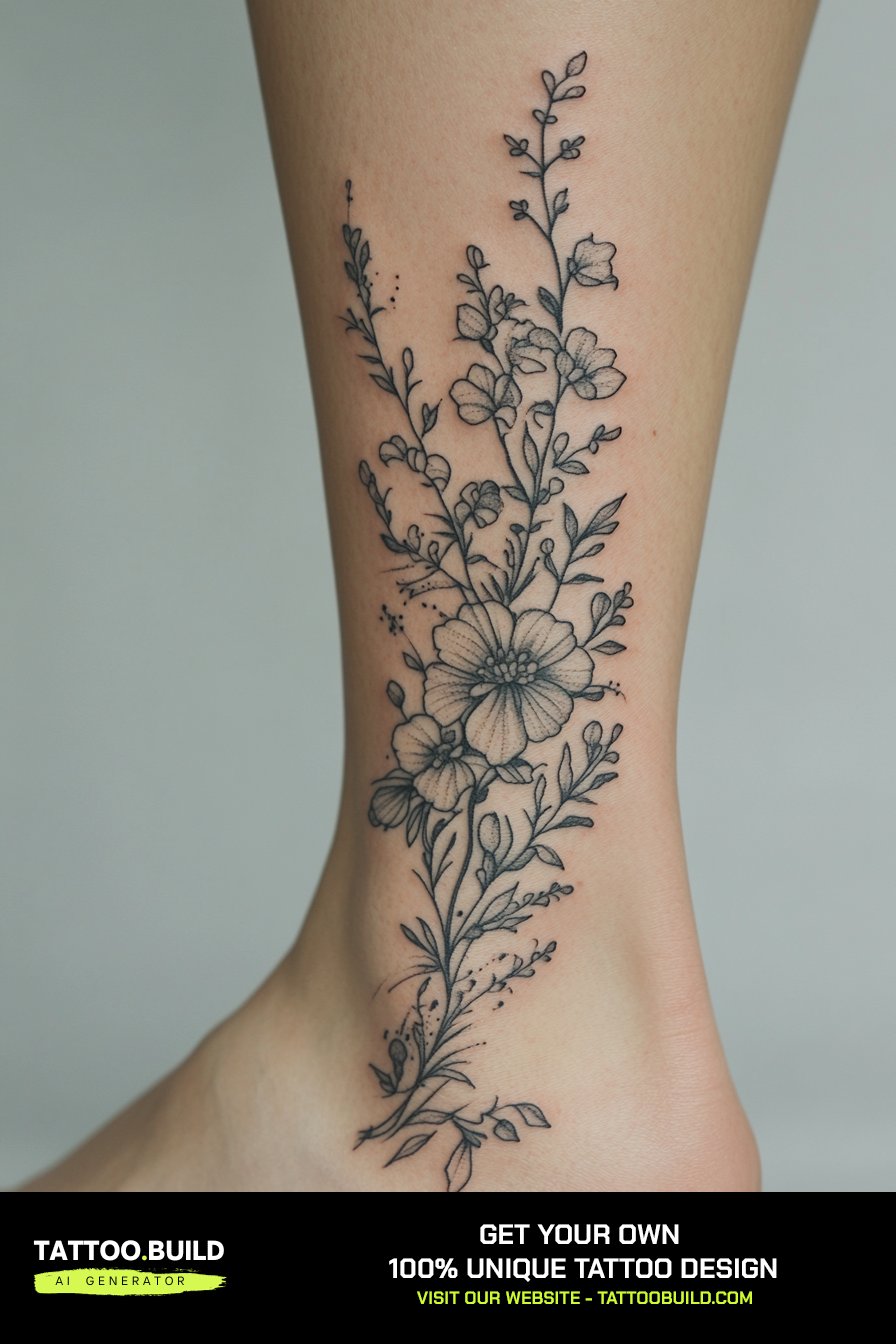
A minimalist lily is often a single continuous outline with no shading at all. Done well it is elegant; done badly it is a blob within a few years.
The deciding factor is spacing. Lines placed too close together will migrate into each other as the ink settles, which is why good fine line artists leave more gap than looks right on paper.
Single-needle work also sits shallower, so it fades faster in sun-exposed spots. Expect to consider a touch-up eventually rather than treating it as a failure.
Small does not mean cheap or quick. A tiny fine line lily can take longer than a larger bold piece because there is no margin for correction.
6. Lily with Hummingbird or Dragonfly
Both of these add motion to a static flower, and both let an artist introduce colour without recolouring the lily itself.
Hummingbirds work best mid-hover beside the bloom, which sets up a natural diagonal across the design. It is a composition trick, and it works.
Dragonflies are the lighter-touch option — thinner body, translucent wings, far less ink. They suit smaller placements where a hummingbird would overwhelm the flower.
For more on each companion element, see this hummingbird tattoo drawing and this dragonfly tattoo inspiration.
7. Lily and Moon Tattoo
The lily and crescent moon pairing has become genuinely popular over the last few years, and it is one of the easier combinations to place well.
A crescent gives the artist a frame. The lily sits inside or across the curve, which solves the awkward vertical-flower problem without adding a second subject.
Symbolically both elements point at cycles and renewal, so the meanings stack rather than compete — something that is not true of every pairing.
Fine dotwork inside the moon is the detail that separates a good version from a generic one. If you like this direction, browse these moon tattoo ideas for framing options.
Lily Tattoo Placement Ideas
Placement changes a lily tattoo more than style does. The same design on a wrist and on a thigh are effectively two different tattoos.
Sleeve and Full Arm
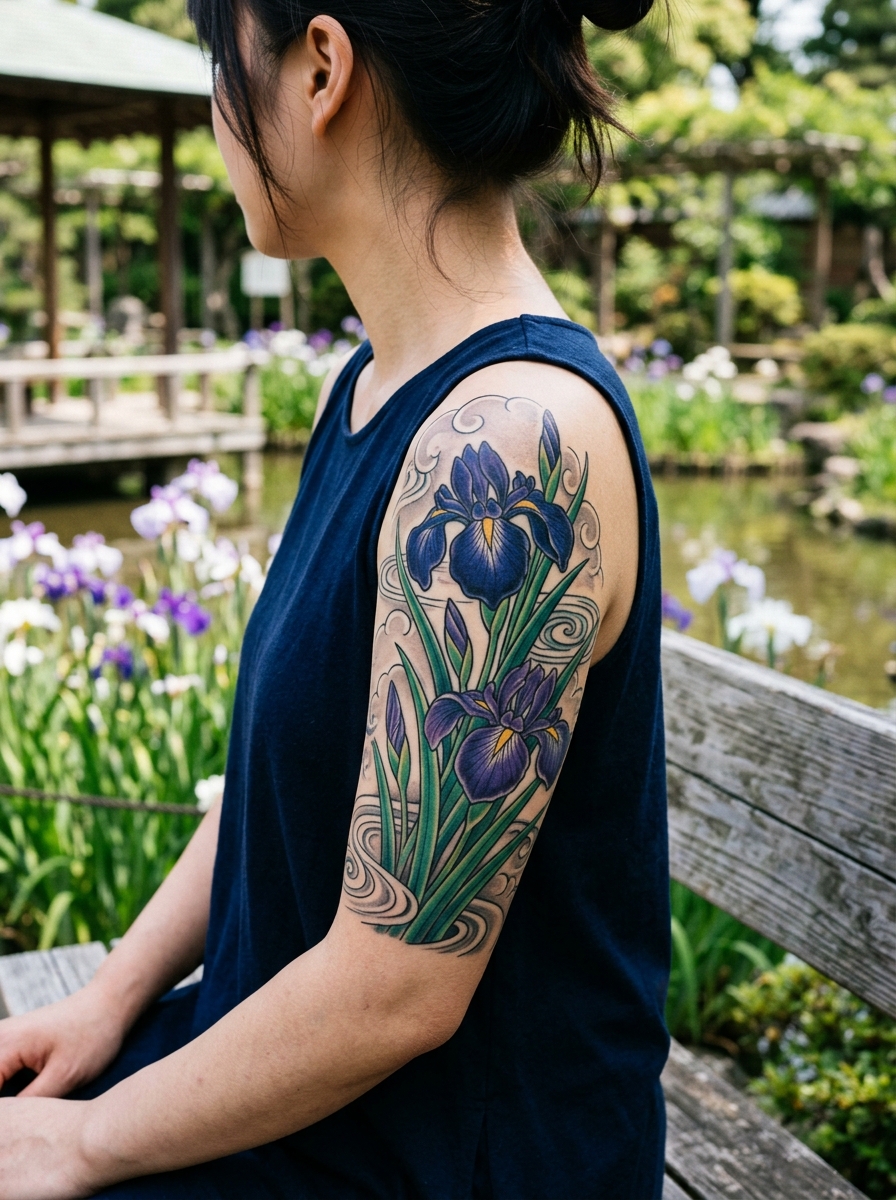
A lily sleeve gives you room to show the whole plant — bloom, bud, stem and leaves — which is where the flower looks most natural.
Sleeves are usually built across multiple sessions rather than one marathon. Plan the layout for the whole arm before the first needle goes in, even if you only book the first panel.
The inner arm hurts noticeably more than the outer arm for most people, so schedule the softer areas when you are fresh.
Chest and Sternum
Chest placements let a lily follow the natural symmetry of the body, which suits paired or mirrored designs.
It is also one of the more painful areas because of how close the bone sits to the surface. Most people describe the sternum as the sharpest part.
If you are considering this area, these floral chest tattoo ideas for women show how the shapes tend to be arranged.
Shoulder and Back
The shoulder is my default recommendation for a first larger floral piece. The skin is relatively flat, the pain is moderate, and it is easy to cover at work.
Back placements give the most uninterrupted canvas of anywhere on the body, but you will never see the tattoo properly without two mirrors.
For layout inspiration in this area, look through these floral shoulder tattoos for women.
Wrist, Ankle and Small Placements
Small lilies on the wrist or ankle are the most common first tattoo in this category, and also the most likely to need touching up.
Both areas move constantly and see a lot of sun and friction. That is not a reason to avoid them, just a reason to expect maintenance.
Keep the design to one bloom. Trying to fit a full stem into a wrist-sized space is where small floral tattoos usually go wrong.
Thigh and Leg
Thighs offer sleeve-sized space with less pain than the ribs or sternum, which makes them one of the best value placements for a large floral piece.
They are also fully coverable, which matters for anyone in a workplace with a visible-ink policy.
The main caution is healing. Thigh tattoos sit under clothing all day, so friction during the first two weeks is a real concern.
Variations Worth Considering
If the classic single bloom is not quite right, these are the directions I would look at next.
Lily as a Birth Flower
The lily is commonly listed as a birth flower for May, which makes it a natural choice for family-themed pieces with multiple flowers.
These designs work best when all the flowers are drawn in one consistent style. Mixing realism and fine line in the same bouquet rarely lands well. Browse these birth flower tattoo ideas to see how the combinations are usually handled.
Lily with Other Flowers
Lilies sit comfortably alongside roses, peonies and wildflowers because their petal shape is distinct enough not to blur into the neighbours.
For loose, scattered arrangements, these wildflower tattoo ideas show the approach. For something more structured and symmetrical, lotus flower tattoo designs are the closer cousin.
Calla Lily Designs
The calla is technically not a true lily, but it is requested often enough to deserve its own mention. Its smooth trumpet shape suits minimalist and art-deco treatments.
Because there are no separate petals to define, calla tattoos live or die on the shading gradient inside the curve.
Aftercare and Healing for Floral Tattoos
Fine floral work is unforgiving during healing because the details that make it good are also the details that scab off first.
Follow the specific instructions your artist gives you — they know the ink, the depth and the placement. General guidance is a supplement, not a replacement.
The broad consensus is straightforward: keep it clean, keep it lightly moisturised, do not pick at scabs, and keep it out of direct sun and out of pools, lakes and baths until it has fully closed. The American Academy of Dermatology publishes plain-language guidance on caring for tattooed skin that is worth reading before your appointment.
Sunscreen after healing is the single biggest factor in how a colour lily looks in ten years. Every artist I have asked says the same thing, and it costs almost nothing to do.
If you see spreading redness, increasing pain after the first few days, swelling, pus or a fever, that is not normal healing — contact a doctor rather than waiting it out or asking online. Allergic reactions to specific pigments are uncommon but real, and red inks are the ones most often implicated.
Common Mistakes — Still Not Sure?
The mistakes I see repeated most often are all avoidable with one extra conversation before the appointment.
Going too small for the detail requested is the biggest one. If an artist says a design will not hold at that size, believe them — they are describing physics, not upselling you.
Picking a reference photo that is another artist’s finished tattoo is the second. Bring it as a style reference, but expect and want your artist to draw their own version.
Booking a colour piece without asking about your skin tone is the third. Some pigments read very differently on different skin, and a good artist will tell you honestly which colours will work.
If you are still weighing options, it is worth comparing against a few adjacent guides before committing.
Frequently Asked Questions
What does a lily tattoo symbolise?
Most commonly purity, renewal and remembrance. In Western Christian art the white lily is strongly tied to purity, while the flower’s habit of returning each year from a bulb gives it a modern reading around recovery and starting over. Different species carry different associations, so the variety you choose matters. Plenty of people also get one simply because they like the flower, which is a perfectly valid reason.
How much does a lily tattoo cost?
It depends almost entirely on size, detail and your artist’s hourly rate, which varies widely by city and by reputation. A small fine line lily is typically a shop-minimum or one-hour job, while a detailed black and grey forearm piece is usually a multi-hour sitting. Colour work generally takes longer than black and grey at the same size. Ask for a quote at consultation rather than over text, because artists need to see the placement.
Do lily tattoos age well?
Bold styles age best. Blackwork, neo-traditional and well-contrasted black and grey hold their shape for decades because the design does not depend on hairline detail. Fine line and watercolour lilies soften faster and may need a touch-up within a few years, especially on hands, wrists, ankles and anywhere that gets a lot of sun. Sunscreen after healing makes a bigger difference than most people expect.
Which lily species works best as a tattoo?
Stargazer and tiger lilies are the strongest choices for colour because their markings give the design character. Madonna and Easter lilies suit black and grey and religious or memorial themes. Calla lilies, despite not being true lilies botanically, are excellent for minimalist and art-deco work because of their smooth trumpet shape. Bring photos of the actual species to your consultation, not just other tattoos.
Where does a lily tattoo hurt least?
For most people the outer upper arm, the outer thigh and the shoulder are the more comfortable areas, since there is more muscle and fat between the needle and bone. Ribs, sternum, ankles, the inner arm and anywhere directly over bone tend to be sharper. Pain is individual, though, and the reports of one friend will not necessarily predict your experience. Longer sessions are usually harder than the sensation itself.
Quick Summary
- Choose the species before the style — stargazer, tiger, Madonna and calla all behave differently on skin.
- Bold styles like blackwork and neo-traditional age best; fine line and watercolour need more maintenance.
- Butterflies, hummingbirds, dragonflies and crescent moons all solve the awkward vertical shape of a single bloom.
- Shoulder and outer thigh are the easiest large placements; wrist and ankle are the highest-maintenance small ones.
- Keep small designs to one bloom rather than squeezing in a full stem.
- Bring reference photos of the real flower, not just other people’s finished tattoos.
- Follow your artist’s aftercare instructions, and use sunscreen once it has healed.
- Signs of infection or a strong reaction are a reason to see a doctor, not to search online.