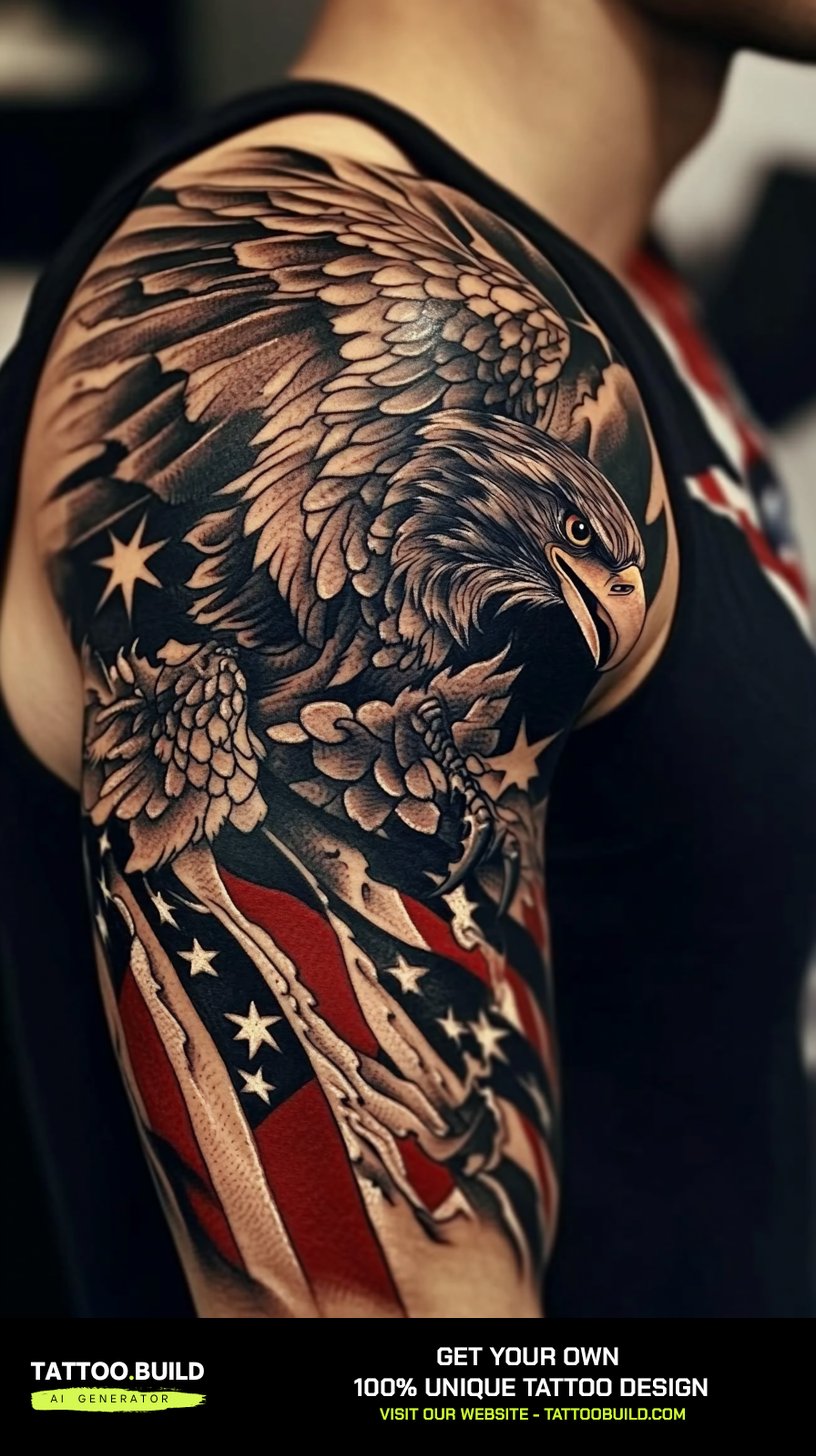
I have spent more hours than I want to admit standing in tattoo studios watching artists stencil the same spot over and over, and the shoulder is the one placement I keep coming back to. The shoulder is the most forgiving canvas on the male body — it is curved enough to make a design look alive, big enough to hold detail, and easy enough to cover with a t-shirt when you need to.
That combination is rare. The forearm is visible all the time. The ribs hurt in a way most people underestimate. The shoulder sits comfortably between those extremes.
What follows is the collection I actually point people toward when they ask, plus the practical stuff nobody tells you until you are already in the chair — how the deltoid muscle changes a design, what wraps well, and what I have watched age badly. If you are still deciding on placement in general, the broader guide to shoulder tattoo placement covers the back and blade options too.
Every design below is a real reference image, not a mockup. Take one to your artist as a starting point and let them redraw it for your body.
Which Shoulder Tattoo Style Is Right for You?
Before picking a subject, it helps to pick a lane. These five styles behave very differently over ten years, and that difference matters more than the subject you choose.
| Style | Typical sitting | How it ages | Best for |
|---|---|---|---|
| Black & grey realism | 4–8 hours, often split over two sessions | Softens; mid-greys can fade toward flat | Animals, portraits, anything with texture |
| Tribal / Polynesian | 3–6 hours for a shoulder cap | Extremely well — solid black holds | Guys who want boldness over detail |
| Fine line | 1–3 hours | The weakest of the five; lines widen | A first tattoo or a small standalone piece |
| Neo-traditional / colour | 4–7 hours | Good if outlines are bold; reds fade first | Wings, roses, anything you want loud |
| Blackwork / dotwork | 3–6 hours | Very well when the artist keeps spacing open | Geometry, botanicals, armour and mask motifs |
If you take one thing from that table: solid black outlives everything else. Every artist I have asked says the same, usually without being prompted.
Why the Shoulder Works Better Than Most Placements
The deltoid is a rounded muscle that sits under a relatively thick layer of skin, and both of those things work in your favour.
Thicker skin over muscle generally means a more manageable session than bone-adjacent spots like the collarbone or the ribs. It is not painless — nowhere is — but in my experience it is the placement people describe afterwards as “honestly fine”.
The curve does something else useful. A design stencilled on a flat surface looks flat, but the same design on a deltoid gets a natural sense of depth as it wraps. A lion’s mane that follows the shoulder cap reads three-dimensional in a way the same drawing never would on a thigh.
The shoulder is also the natural starting block for a half or full sleeve later. Plenty of guys I know began with a single shoulder piece and extended it down the arm two or three years afterwards. Starting there keeps that option open.
And there is the practical argument. A short-sleeve shirt hides most shoulder work, which still matters in plenty of workplaces. If you want something permanently visible, the outer bicep sits lower and shows more.
Shoulder Tattoo Designs for Men Worth Stealing
These are grouped by subject rather than by style, because that is how most people actually shop for a tattoo.
Lions and Big Cats
The lion is the most-requested masculine shoulder subject I have seen, and there is a reason it keeps working: the mane is basically built for a shoulder cap.
A good artist will let the mane radiate outward from the deltoid so the muscle does the composition work. When it is done badly the head sits like a sticker on the arm — flat, centred, ignoring the anatomy underneath.
Ask specifically for the mane to wrap toward the back of the shoulder. It costs nothing to request and it is the single biggest difference between a good lion and a great one. The wider gallery of lion tattoo ideas has more angles if you want to compare.
Realism here needs a specialist. This is not the piece to give to a generalist with a strong flash portfolio and no photorealistic work in it.
Eagles, Wings and Feathers
Wings are the other subject the shoulder handles better than anywhere else, because a wing is naturally shaped like the joint it sits on.
A single wing running from the shoulder blade over the deltoid is one of the strongest designs on this page, and also one of the largest commitments. Expect multiple sessions.
Eagles give you a middle option: enough wingspan to fill the shoulder without committing to the back. The flag variation is a classic in American traditional and black-and-grey alike.
Colour wings — the red one below in particular — look excellent early and need more upkeep. Red and orange pigment generally fades faster than black. If you want a deeper dive on symbolism and layout, see the guide to wing tattoos.
Tribal and Polynesian Blackwork
Tribal work fell out of fashion in the 2000s and has come back properly, mostly because artists stopped treating it as generic barbed wire and started respecting the actual traditions behind it.
Polynesian-inspired patterning suits the shoulder cap better than almost anything, since the style is built around flowing panels that follow the body.
One point of respect worth making: Polynesian tattooing carries real cultural meaning, and many artists who work in that tradition will want to talk with you about the motifs rather than just copying a photo. That conversation is part of the process, not an obstacle to it.
If you want the boldness without the cultural specifics, generalised tribal patterning in a heavy blackwork style gets you the same graphic weight.
Dragons and Serpents
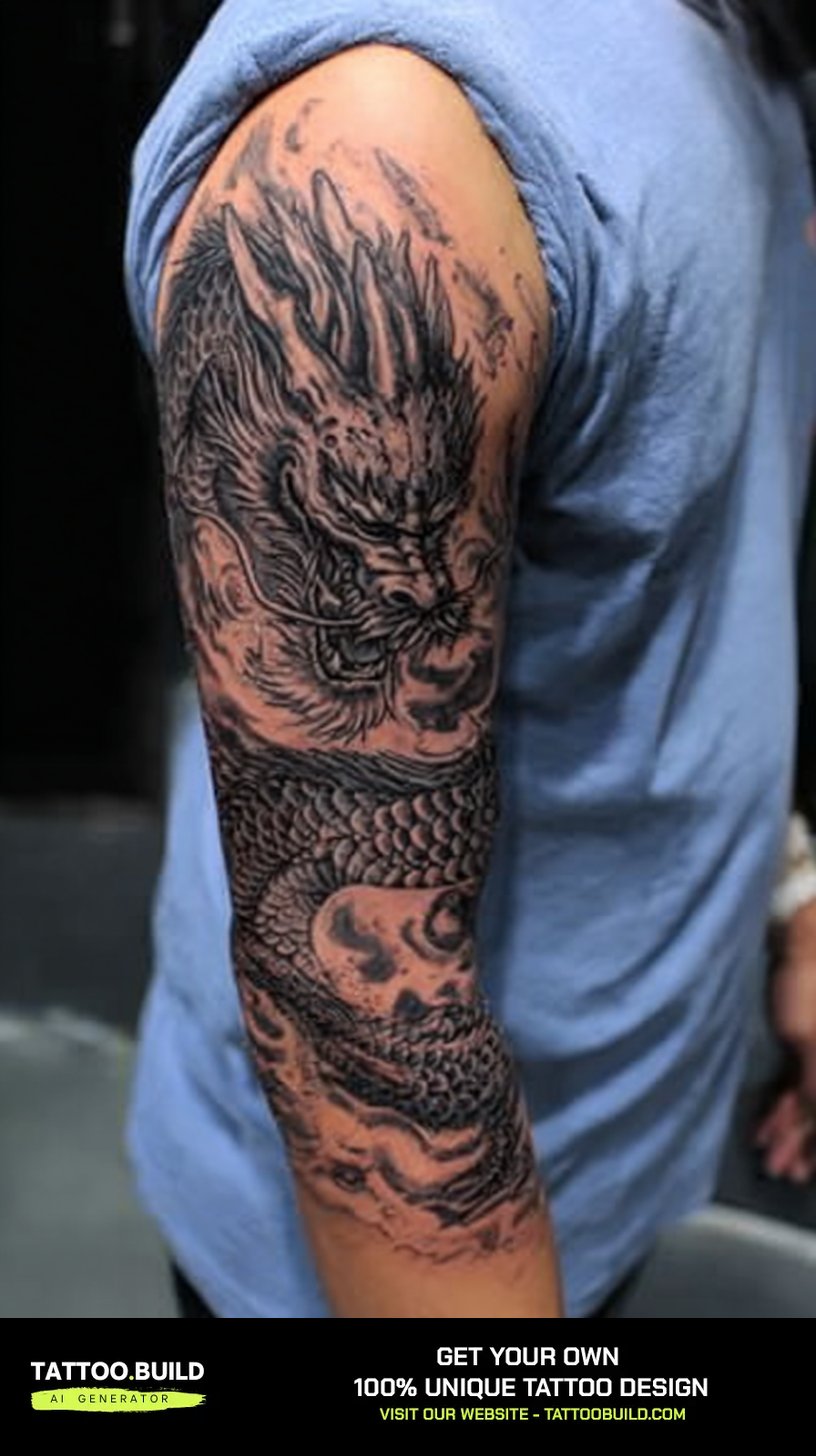
A coiled dragon wrapping the deltoid is the design I most often see people describe as “the one” — the movement is the whole point.
Because the body of the dragon spirals, it uses the round shape of the shoulder instead of ignoring it. Take a photo of your own shoulder from three angles before the consultation so your artist can plan the wrap properly.
Japanese-influenced dragons are usually designed as part of a larger composition, so bring it up early if you might extend it into a sleeve later. More options in the dragon tattoo collection.
Compass, Nautical and Fine Line
Not everyone wants their whole shoulder covered, and a small fine-line piece high on the deltoid is the most under-rated option here.
A compass rose is the classic — visually simple, endlessly readable, and it carries a straightforward meaning around direction and finding your way home. The full background is in the guide to compass tattoo meaning.
The honest limitation of fine line is longevity. Very thin lines spread over years as ink settles in the skin, and small negative-space gaps can close up. Ask your artist to keep the design slightly larger and more open than feels necessary.
Trees, Nature and Sketch Style
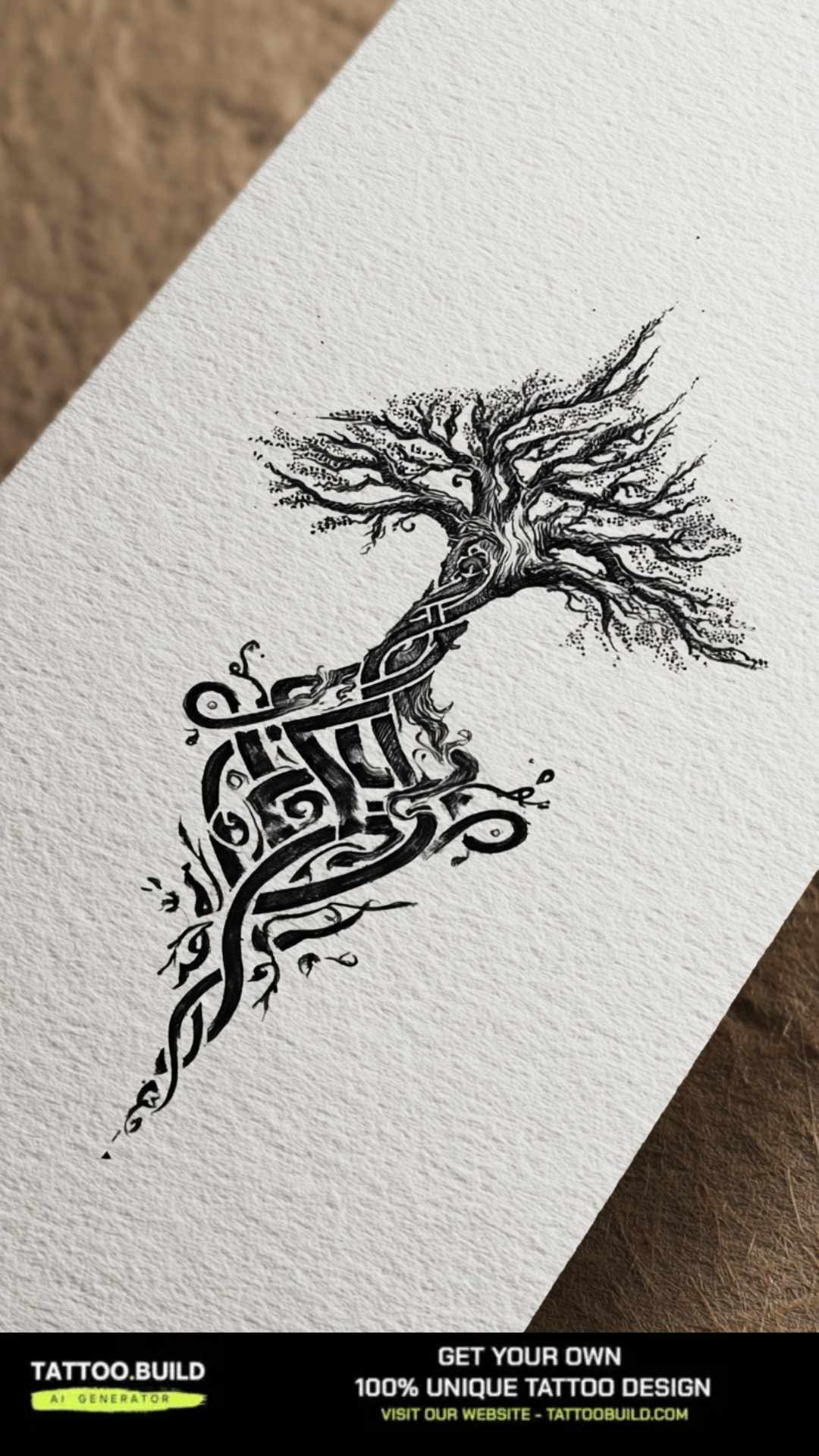
Sketch-style trees have taken over the shoulder in the last few years, and they suit the placement for a specific reason: the arm gives the trunk somewhere to go.
A tree that starts at the shoulder cap and runs down the bicep uses the natural line of the arm rather than fighting it. That is the version that ages well.
These pieces live or die on line weight variation. Flat, uniform lines make a tree look like clip art; a good artist varies pressure so the branches thin out naturally toward the tips.
Armour, Masks and Dark Blackwork
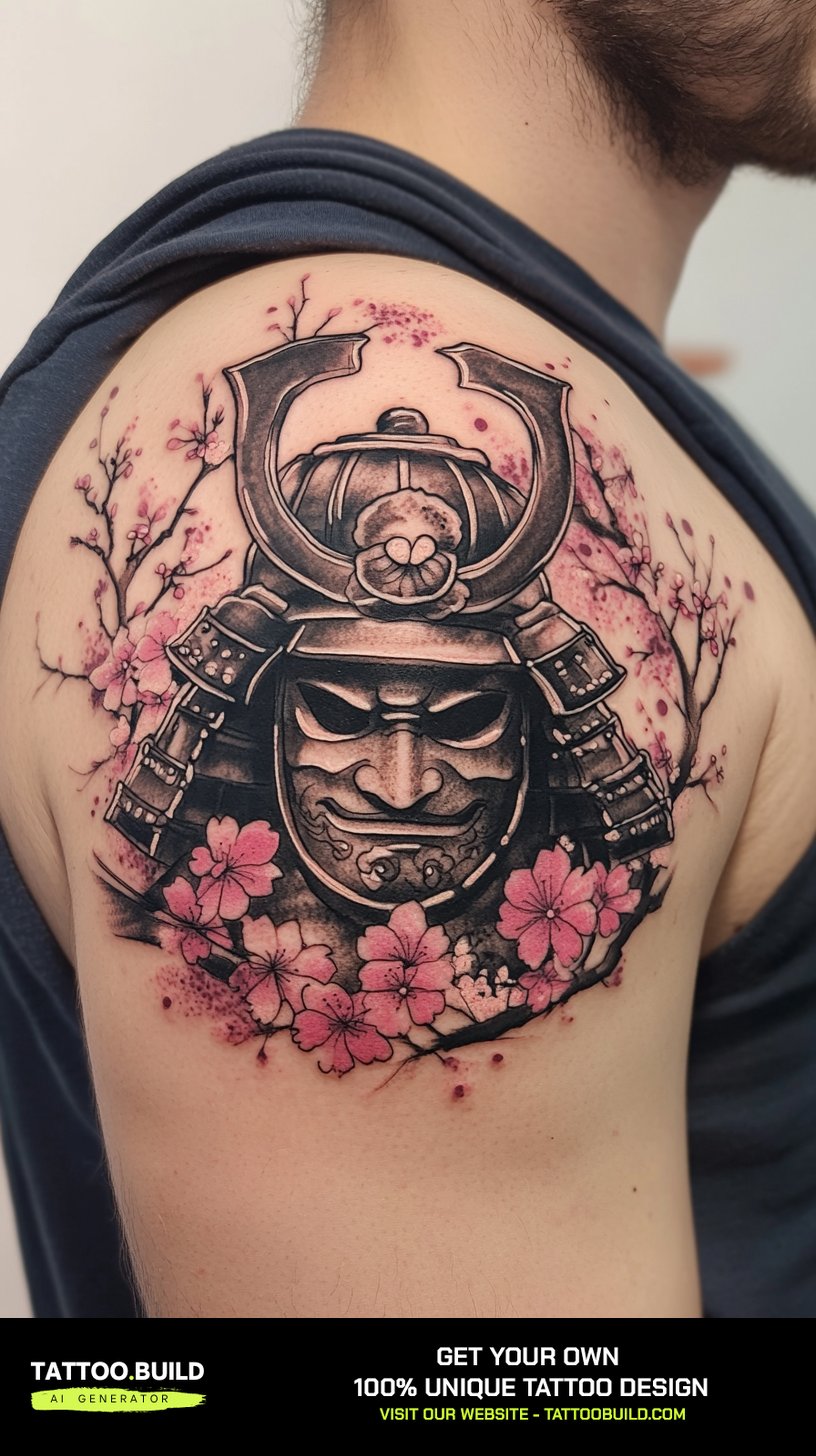
Helmets, masks and armour panels are the quieter corner of masculine shoulder work, and I think they are the most interesting.
The shoulder pauldron association helps — a piece of armour drawn on the shoulder reads as intentional in a way a random skull does not.
Dotwork shading gives these designs texture without heavy solid fill, which is worth knowing if you burn easily or have paler skin where large black areas can look harsh.
Variations Worth Considering Before You Commit
Front Deltoid vs. Shoulder Blade
The front and side of the deltoid is what most people mean by a shoulder tattoo, and it is visible in a tank top. The blade at the back is bigger, flatter and better for symmetrical designs, but you will almost never see it yourself.
Shoulder Cap Only vs. Wrapping Onto the Chest
Wrapping onto the pectoral makes a design look far more integrated, and it also roughly doubles the sitting time and the pain, since the chest near the armpit is a genuinely tender area.
Leaving Room for a Sleeve
If there is any chance you will extend downward later, tell your artist now. Adding a sleeve around an existing standalone shoulder piece is possible but usually means designing around a shape that was never meant to connect. Sketching the wider arm layout in advance is time well spent.
Aftercare That Actually Matters for a Shoulder Tattoo
Shoulder tattoos have one aftercare problem the internet rarely mentions: your t-shirt sits directly on the healing skin, and shirt sleeves rub every time you move your arm.
For the first several days I recommend loose sleeves or sleeping in a vest, and cotton rather than synthetics. Rubbing lifts scabs early, and lifted scabs are how you end up with patchy healing that needs a touch-up.
Beyond that the basics apply: clean gently with unscented soap, moisturise thinly rather than thickly, and leave it alone. The American Academy of Dermatology publishes straightforward aftercare guidance that is worth reading in full, and our own tattoo aftercare guide covers the day-by-day version.
Sun is the long game. Shoulders catch direct sun more than almost any other placement, and UV exposure is the main reason tattoos look washed out after a decade. Once fully healed, sunscreen on that shoulder is not optional if you care how it looks in fifteen years.
On the medical side: some redness and swelling for a few days is normal, but spreading redness, heat, pus or a fever is not — that needs a doctor rather than a forum thread. The Mayo Clinic has a clear rundown of tattoo risks including infection and allergic reaction, and nothing in this article is a substitute for a professional opinion.
Common Mistakes — and What to Do If You Are Still Not Sure
The most common mistake I see is choosing a design from a photo taken on a completely different body. A piece that fits a broad, muscular shoulder often needs redrawing for a leaner frame, and vice versa.
The second is booking on price. A cheap shoulder piece that needs covering up in three years is the most expensive tattoo you can buy.
The third is going too small for the space. The shoulder is large, and a design that looks substantial on a screen frequently looks lost once it is on skin. When in doubt, size up slightly.
Still undecided? It usually helps to browse adjacent placements before committing — outer bicep pieces overlap heavily with what you are considering, and comparing them tends to clarify things quickly. If pain is the sticking point, the guide to the most painful tattoo spots puts the shoulder in context against everywhere else.
Frequently Asked Questions
How much does a men’s shoulder tattoo hurt?
Most people describe the outer shoulder as moderate — noticeably easier than ribs, spine or inner arm. The deltoid has muscle underneath and reasonably thick skin, which cushions the needle. The area closer to the armpit and the top of the collarbone is a different story and stings considerably more. In my experience, the discomfort people actually complain about afterwards is the length of the session rather than the intensity.
How long does a shoulder tattoo take to heal?
The surface usually looks healed in about two to three weeks, but the deeper layers keep settling for a couple of months after that. Shirt friction is the main thing that slows shoulder healing specifically, so loose sleeves in the first week make a real difference. Follow whatever aftercare instructions your artist gives you, since they know exactly what they put into your skin. If anything looks infected rather than just irritated, see a doctor.
Can I get a shoulder tattoo as my first tattoo?
Yes, and it is one of the better first choices. The pain is manageable, the placement is easy to cover for work, and you can start small and extend later. I would suggest keeping a first shoulder piece to something under a couple of hours so you learn how your body handles it before booking a full-day session.
Do shoulder tattoos stretch if I gain or lose muscle?
Moderate changes in muscle size have very little visible effect, since the skin over the deltoid stretches proportionally. Significant, rapid weight change is a different matter and can distort fine detail. If you are in the middle of a serious body transformation, waiting until things stabilise is usually the smarter call.
How much should I expect to pay?
Pricing varies enormously by city and by artist reputation, so any specific number would be misleading. What is consistent is the structure: most artists charge either an hourly rate or a flat day rate for larger work, and detailed realism takes far longer than bold blackwork of the same size. Ask for a written estimate at the consultation and expect a deposit.
Quick Summary
- The shoulder is the best all-round male placement — curved, roomy, moderate pain, easy to cover.
- Solid black ages better than anything else; fine line ages worst.
- Lions and wings suit the deltoid because their shapes follow the muscle naturally.
- Ask your artist to wrap the design around the shoulder rather than centring it flat.
- Tell your artist now if you might extend into a sleeve later.
- Shirt friction is the number one cause of patchy shoulder healing — wear loose sleeves for the first week.
- Sunscreen on a healed shoulder tattoo is the difference between crisp and washed out at fifteen years.
- Bring reference photos, then let the artist redraw them for your body.