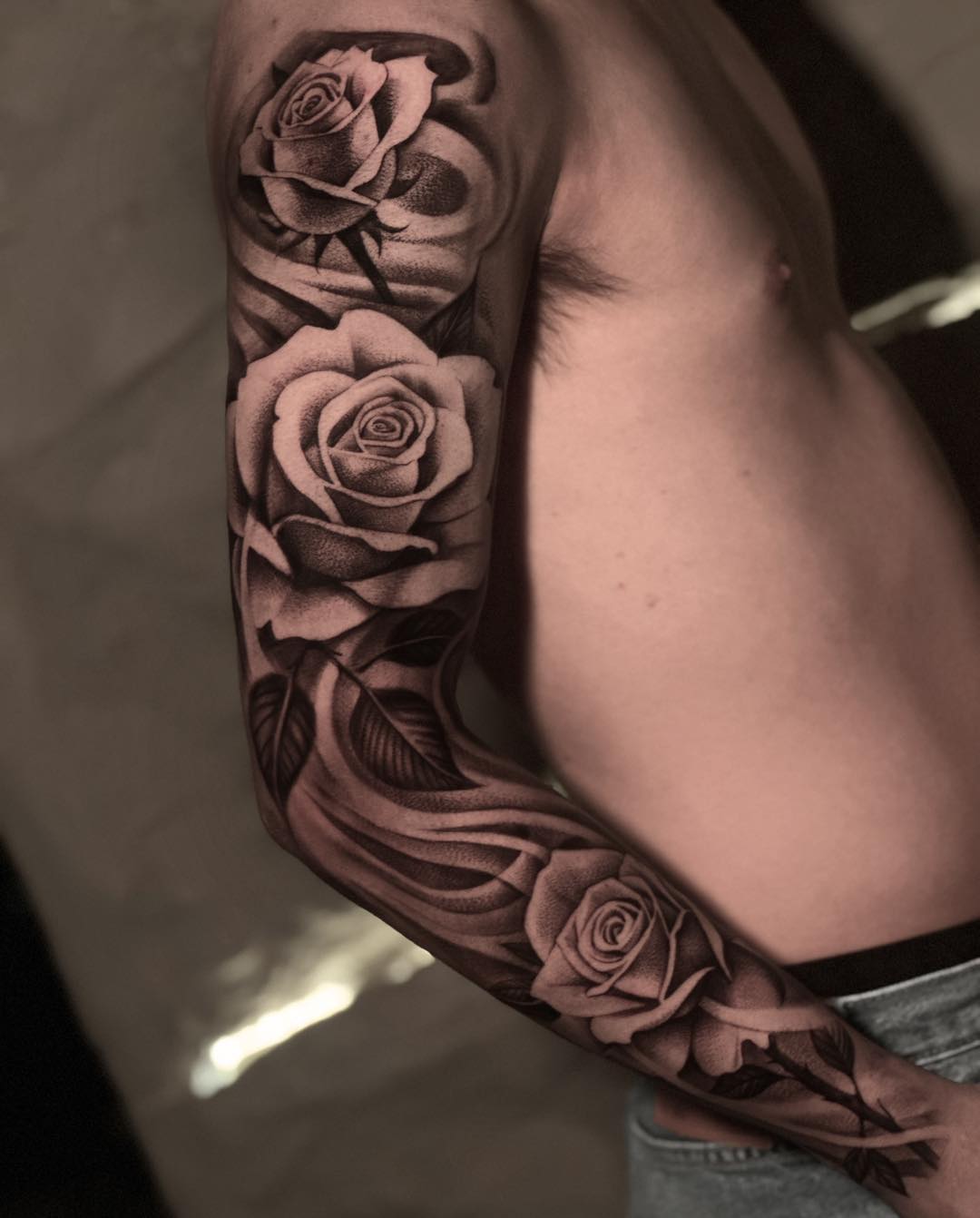
After sitting through more upper arm sessions than I can count and asking every artist I book with the same question, I keep landing on the same answer: the outer bicep is the most forgiving high-impact tattoo placement a man can choose.
It is visible in a t-shirt and invisible in a dress shirt, which is why it survives job changes.
The surface is flat enough to hold fine detail, large enough for a full composition, and backed by muscle rather than bone — which is the real reason it sits at the comfortable end of most pain charts.
Below are 17 outer bicep tattoo ideas I have either worn, watched go on, or been talked out of, with honest notes on what each one actually demands. If you are weighing the outside of the arm against the inside, my notes on inner arm tattoos for men cover the trade-off in more detail.
Which Outer Bicep Style Is Right for You?
Most of the decision comes down to three things: how long you can sit, how much touch-up work you are willing to accept, and how the piece will look in ten years.
| Style | Typical sitting time | Ages best when | Best for |
|---|---|---|---|
| American traditional | 2–4 hours | Lines are heavy and colour is flat | First big arm piece, low maintenance |
| Black and grey realism | 4–8 hours, often split | Contrast is pushed dark early | Portraits, animals, armour detail |
| Blackwork / tribal | 3–6 hours | Fills are packed solid in one pass | Bold shapes, wrapping designs |
| Fine line / geometric | 1–3 hours | Lines are not crowded together | Landscapes, sacred geometry, lettering |
| Japanese traditional | 5+ hours, multi-session | It is built with a sleeve in mind | Koi, dragons, long-term expansion |
Why the Outer Bicep Works So Well
The outer bicep is padded. There is muscle and a reasonable layer of tissue between the needle and the humerus, and that changes the experience more than anything else.
In my experience it sits in the mild-to-moderate band — noticeably easier than the ribs, the inner arm, or anywhere near the elbow ditch. Pain is individual, though, so treat any tattoo pain chart as a rough map rather than a promise.
The second advantage is geometry. The outer bicep presents an almost flat rectangle when the arm hangs naturally, which is exactly what straight lines, lettering, and symmetrical compositions need.
Curved placements like the forearm or calf pull a design as the limb rotates. The outer bicep barely does this, so what your artist stencils is close to what you will see every day.
The third advantage is expansion. Every artist I have asked treats the outer bicep as the natural starting block of a half sleeve, so a single piece here rarely paints you into a corner later.
17 Outer Bicep Tattoo Ideas for Men
1. Traditional Eagle
The eagle on the outer bicep is one of the foundational images in American traditional tattooing, and it is still the piece I recommend most often to men getting their first large arm tattoo.
Wings spread or in a diving pose, heavy black outlines, flat red and blue fills — the whole design is built to stay readable.
The spread-wing shape is almost exactly the shape of the muscle, which is why it fits without the artist having to compress anything.
The practical argument is ageing. Bold lines and solid colour hold their edges for decades, and when the piece does soften, a single touch-up session usually brings it back.
2. Black and Grey Portrait
A portrait of a person, an animal, or a cultural figure rendered in photorealistic black and grey is the most demanding thing you can put on this placement.
The outer bicep helps because the flat surface presents the face forward when your arm is at rest — a portrait on a curved placement gets read at an angle almost all the time.
Be honest about the artist selection here. Portrait realism is a specialism, not a style any competent tattooer can deliver, and healed photos matter far more than fresh ones.
When I have booked portrait work I ask specifically for healed images of the same subject at a similar size, ideally two or more years old.
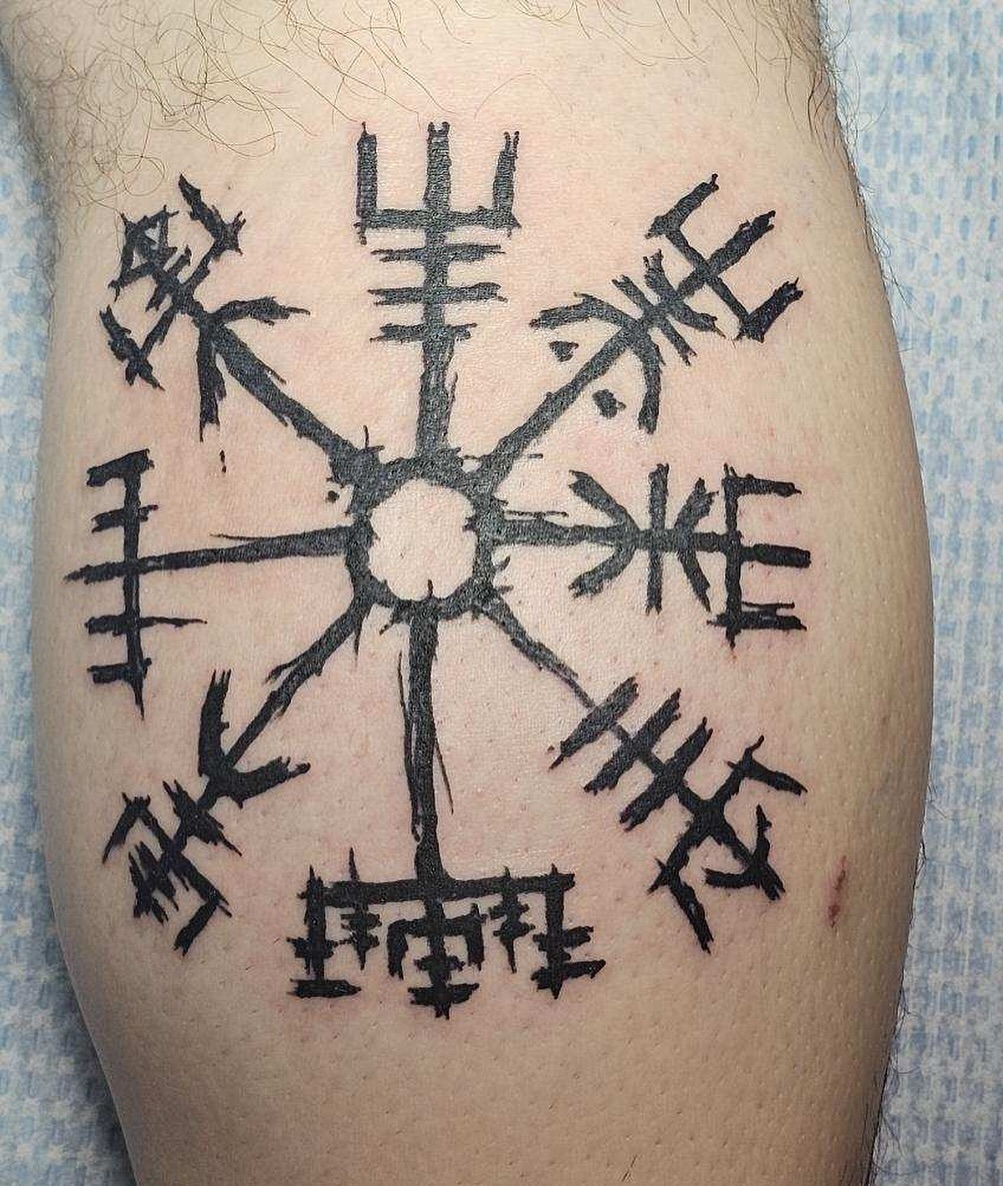
3. Tribal Band
A band of bold black pattern wrapping the upper arm is one of the oldest arm tattoo concepts there is, and it has appeared in some form in nearly every tattooing culture that uses the arm.
If you are drawing on a specific tradition — Polynesian, Marquesan, Filipino, Bornean — the respectful route is an artist who works inside that tradition and can explain what the motifs mean.
A generic 1990s-style barbed band is the version that dates badly. Pattern with structure ages far better than pattern with none.
Solid black fills also demand a firm hand at the packing stage; patchy blackwork is the most common thing I see sent back for touch-ups. There are more directions to explore in this blackwork tattoo guide.
4. Lion Head
The lion is probably the single most requested animal for this placement, and the reason is structural rather than symbolic.
A maned lion head is roughly square, and so is the working area of the outer bicep, so the subject fills the space without awkward negative gaps.
Ask for the mane to be built in large tonal masses rather than individual hairs. Hair-by-hair detail is the first thing to blur as a tattoo settles.
I have watched two lions go on at roughly the same size — the one with stronger dark-to-light separation still reads cleanly across a room years later. More variations are collected in this lion tattoo ideas roundup.
5. Japanese Koi
A koi ascending or diving suits the outer bicep because the fish’s elongated body maps onto the vertical run of the muscle.
In Japanese traditional work the direction the fish swims carries meaning, so decide that with your artist rather than leaving it to the stencil.
Water, wind bars, and maple leaves are the background elements that make a koi look finished instead of floating. Budget space for the background from the start.
A koi placed here is also the most common first block of a Japanese sleeve, which is worth knowing before you commit to size. The broader vocabulary is covered in this Japanese tattoo design guide.
6. Geometric Composition
Interlocking shapes, sacred geometry, or a geometric animal built from facets all depend on one thing: a stable surface underneath the line.
That is the outer bicep’s strongest technical argument. A straight line drawn here stays straight when you move, which is not true on the forearm or the calf.
The honest limitation is longevity. Very fine, closely spaced lines spread slightly as they heal and keep spreading over the years.
Every fine line artist I have asked says the same thing: leave more gap between lines than looks necessary on paper, and accept a touch-up somewhere around the five-year mark.
7. Wolf in Black and Grey
The wolf is the other animal that shows up constantly on this placement, usually face-forward with the eyes aimed directly at the viewer.
What separates a good one from a generic one is almost always the eyes and the nose — the two areas where contrast has to be pushed hardest.
Fur is easier to fake than either, which is why so many mid-tier wolf tattoos look soft and featureless once healed.
Ask to see a healed wolf, not a fresh one, before you book. Composition options are worth browsing in this wolf tattoo design collection.
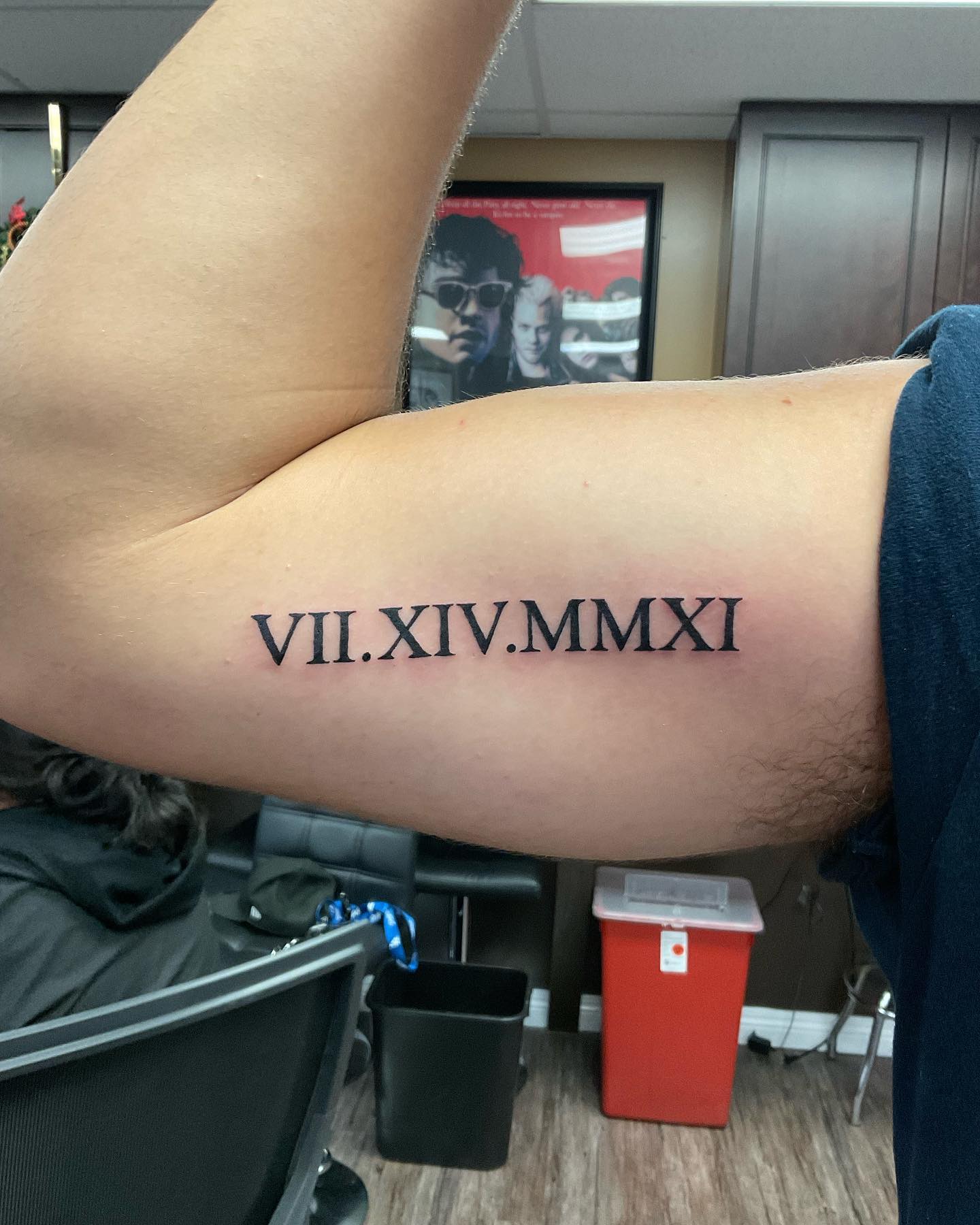
8. Script and Date
A phrase, a name, or a date in script runs horizontally across the muscle or vertically down its length, and both work.
Lettering is where the flat surface pays off most obviously, because curved placements distort letterforms in ways you only notice after healing.
Have the spelling checked by someone who is not you and not the artist. I have seen two misspelled script tattoos in person, and both were approved by a tired client at the stencil stage.
Very thin script also thickens as it ages, so a slightly heavier weight than you think you want is usually the safer call.
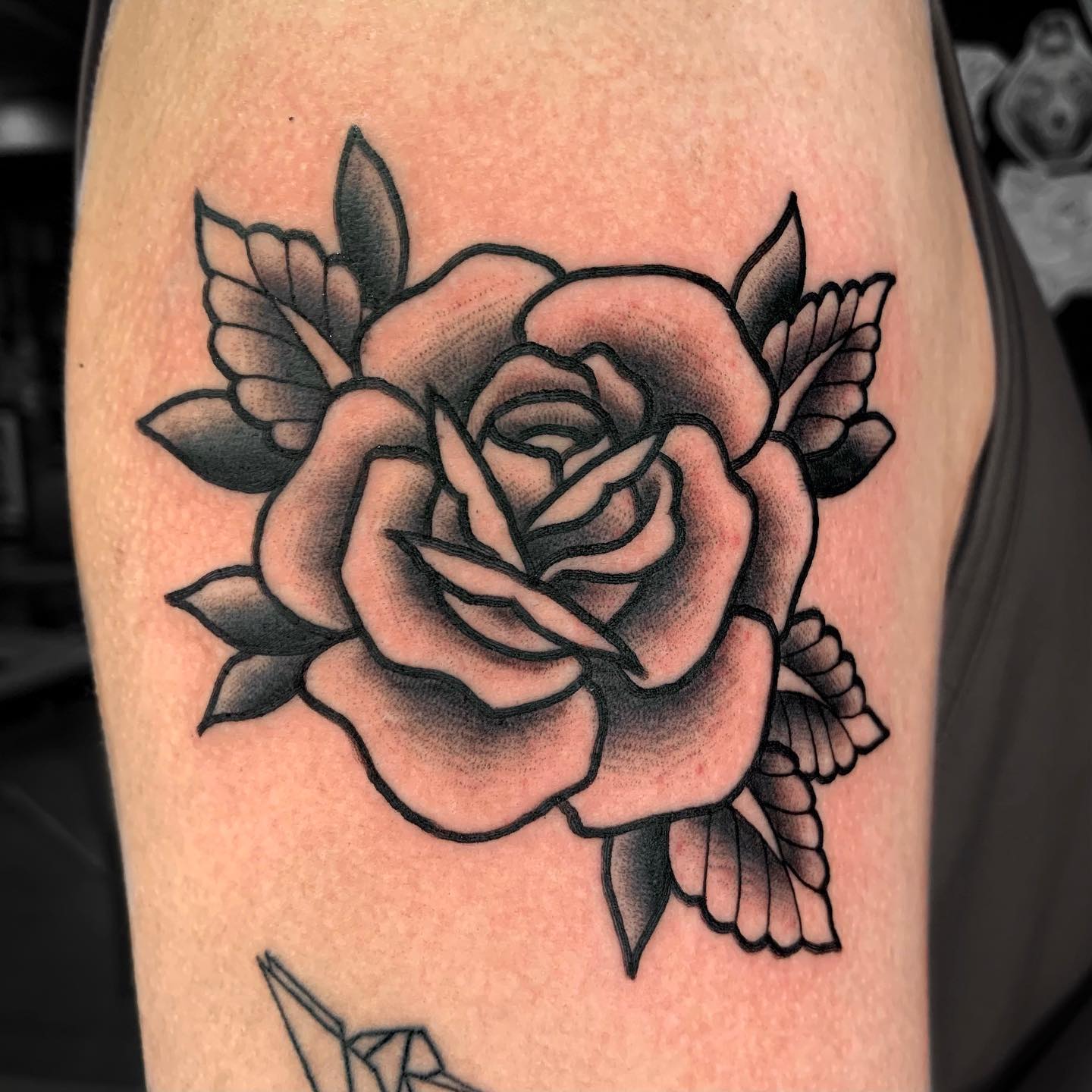
9. Cross with Elements
A cross paired with wings, a banner, roses, or a crown is one of the longest-running outer bicep compositions in Western tattooing.
It works because the cross gives the design a vertical spine and the surrounding elements fill the horizontal space either side of it.
A banner is also the most practical way to include a name or a date without a standalone lettering piece.
Keep the element count low. In my experience the memorial pieces that stay legible are the ones that resisted adding a fifth and sixth object.
10. Bear
A bear in black and grey realism reads as mass first and detail second, which makes it a good match for a placement with a muscle behind it.
Face-forward is the common choice, though a profile with the shoulders included uses the vertical space better if you want a larger piece.
The trap with bears is dense dark fur turning into a single flat shape once healed.
Negative space inside the fur is what keeps the animal three-dimensional, and a good artist will leave more of it than the reference photo shows.
11. Snake Wrapping
A serpent coiled around the upper arm with its head landing on the outer surface is one of the few designs that genuinely uses the arm as a three-dimensional object.
The effect only works if the body actually disappears around the inner arm and comes back, which means committing to a wrap rather than a flat panel.
Expect the inner arm portion to be the uncomfortable part of the session. That skin is thinner and considerably more sensitive.
Scale detail is optional; the silhouette is not. A snake that reads clearly at three metres is a snake that was designed as a shape first.
12. Eagle and Snake
The eagle-and-snake pairing is one of the most dynamic compositions in traditional tattooing, and the outer bicep gives both creatures room to occupy the frame.
The design carries built-in movement — the diving bird and the coiling snake pull the eye in opposite directions.
It also needs more space than most men initially plan for. Squeezing this pairing into a small panel is the quickest way to lose both subjects.
If your artist suggests going larger than your original sketch, that is usually the right advice on this particular design.
13. Ship or Anchor
Ships and anchors on the upper arm connect directly to the sailor tattooing that shaped Western traditional work in the first place.
A full rigged ship needs vertical space for masts and horizontal space for the hull, which is close to the outer bicep’s natural proportions.
An anchor is the simpler, smaller option and one of the best low-commitment traditional pieces going.
Bold traditional linework is the right register here, and in my experience these are the pieces that look best untouched twenty years on.
14. Dragon
A dragon works on the outer bicep in two quite different ways: a head filling the whole panel, or a full body coiling down the muscle.
Japanese and Chinese dragons have long serpentine bodies that suit the coiling approach; Western neo-traditional dragons tend to sit better as a compact head-and-shoulders.
Colour gives maximum impact, but black and grey keeps the piece easier to extend later without a palette clash.
If a sleeve is even a possibility, choose the palette now, not at session three.
15. Warrior or Samurai
A samurai, a Viking, a gladiator, or an unnamed armoured figure all rely on the same thing: hard edges and metal texture rendered convincingly.
Armour is actually easier to age well than skin, because it is built from defined planes and high contrast rather than subtle gradients.
A helmeted figure is more forgiving still, since there is no face to get subtly wrong.
Judge the reference at arm’s length, not on a phone held close. More directions are in this samurai tattoo ideas guide.
16. Abstract Blackwork
Bold black shapes with no representational subject at all are an underrated option on the outer bicep.
The impact comes purely from contrast, which means the design does not depend on detail that will soften over time.
Abstract blackwork is the most durable category on this list, and often the cheapest per square inch of coverage.
The trade-off is finality — large solid black areas are difficult to cover or lighten later, so it is worth being certain before the machine starts.
17. Mountain Scene
Peaks, treelines, and sky in fine line or light illustrative shading make a quieter piece that still uses the whole panel.
A landscape is one of the few subjects that reads well in a horizontal band, which suits men who want coverage without a dominant central figure.
It is also the easiest piece on this list to extend, because a landscape can grow sideways into the shoulder or downward toward the elbow without a compositional break.
Keep the sky simple. Dense dot-shaded skies are the part that most often needs a touch-up first.
Alternatives and Variations Worth Considering
If none of the 17 is quite right, these variations solve most of the objections I hear.
The wrap-around band instead of a panel
A band circles the arm so there is no single “front” to the design, which suits men who dislike how a flat panel disappears at certain angles.
It costs more sitting time than a panel of the same visual weight, because the inner arm is slower going and more sensitive.
The shoulder cap extension
Running the design up over the deltoid gives a bigger silhouette while keeping everything under a t-shirt sleeve.
This is the move I most often see regretted in reverse — men who kept the piece small and later wished they had committed to the cap.
Colour instead of black and grey
Colour carries further across a room, but it usually needs earlier touch-ups and is harder to match when you extend the piece years later.
On lighter skin, colour has the most headroom; on deeper skin tones, bold blackwork and high-contrast grey shading are generally the more reliable choice — though a good artist will assess your specific skin rather than any rule of thumb.
Treating it as sleeve block one
If a full or half sleeve is even a distant plan, tell the artist at the consultation so the background and edges are designed to connect.
Retrofitting a standalone panel into a sleeve is possible but almost always costs more filler work than planning ahead. This half sleeve ideas guide for men shows how the pieces usually connect.
Practical Tips and Aftercare
Book the session with the rest of your week in mind. A fresh outer bicep piece rubs against sleeves constantly, and the first two or three days are noticeably easier in loose clothing.
Follow the aftercare your artist gives you rather than the version you read online — they know what they wrapped you in and what ink they used. Our own tattoo aftercare guide covers the general shape of it, and the American Academy of Dermatology’s guidance on caring for tattooed skin is a sound medical baseline.
Sun is the thing that actually ages an arm tattoo. The outer bicep is exposed every time you wear a t-shirt, so once it is fully healed, sunscreen on that panel does more for longevity than any aftercare product.
Watch for anything beyond normal healing — spreading redness, heat, pus, a fever, or a rash that appears weeks or months later. Those need a doctor, not a forum thread; the FDA’s tattoo and permanent makeup fact sheet and the AAD’s notes on tattoo skin reactions explain what is worth escalating. Nothing in this article is medical advice.
Common Mistakes — and What to Do If You Are Still Not Sure
The most common mistake I see is going too small. A design sized for a phone screen looks stranded on an adult upper arm.
The second is choosing an artist by price or availability rather than by whether their healed work in that specific style is good.
The third is approving a stencil while tired. If the placement feels even slightly off, ask for it to be re-applied — every artist I have worked with would rather re-stencil than fix regret later.
Still undecided on the subject? It is often easier to pick the placement’s neighbours first — browse arm tattoo ideas for men and see what pairs with the placement.
And never attempt this at home. DIY or unlicensed tattooing carries real infection and bloodborne-illness risk, and it is not a saving worth making.
Frequently Asked Questions
How much does an outer bicep tattoo hurt?
For most people the outer bicep sits at the milder end of the scale, because there is muscle and soft tissue between the needle and the bone. In my experience it is a placement you can sit for several hours without much drama, especially compared with ribs, inner arm, or anywhere close to the elbow. That said, pain is genuinely individual and depends on your sleep, your nerves, and the style being tattooed. Solid black packing usually feels more intense than linework. If you are anxious about it, book a shorter first session and see how you respond.
How much should I expect to pay?
Pricing varies enormously by city, artist demand, and style, so any single figure would mislead you. What is consistent is the structure: most artists charge either an hourly rate or a flat piece price quoted after they have seen the design and the placement. Detailed black and grey realism takes the longest and therefore costs the most; bold traditional and abstract blackwork tend to be the most affordable per area covered. Ask for the full quote in writing at consultation, and ask whether a touch-up is included.
Can it be done in one session?
Many outer bicep pieces can, particularly traditional work, lettering, and medium-sized blackwork. Large realism, full colour, and anything wrapping the arm usually needs two or more sittings. Splitting the work is not a failure — skin has a limit, and pushing past it produces patchy healing and more touch-ups. Your artist will normally tell you at the consultation whether they intend to split it, and it is reasonable to ask why if they do not.
How long does an outer bicep tattoo take to heal?
The surface usually looks settled within two to three weeks, while the deeper layers keep repairing for a couple of months. Because the outer bicep sits under a sleeve, the main practical issue during that first fortnight is friction, so loose clothing helps. Avoid soaking the area, and keep it out of direct sun until it is fully healed. If you see spreading redness, swelling, heat, pus, or you develop a fever, contact a doctor rather than waiting it out.
Will an outer bicep tattoo limit a future sleeve?
Usually not, and this is one of the placement’s strengths — artists often treat the outer bicep as the natural anchor of a half sleeve. The thing that causes problems is style mismatch rather than position: a colour-realism panel is awkward to blend into a Japanese traditional sleeve, for example. If a sleeve is on your mind at all, say so at the first consultation so the background and the edges are designed to connect later. A few minutes of planning now saves a lot of filler work.
Quick Summary
- The outer bicep is flat, muscled, and easy to cover — which is why it works for a first large piece.
- Pain is generally mild to moderate here, though that varies from person to person.
- Bold traditional and abstract blackwork age the best with the least maintenance.
- Black and grey realism gives the strongest impact but needs a specialist and healed-work proof.
- Fine line and geometric designs suit the flat surface but expect a touch-up in time.
- Size up rather than down; small designs look stranded on an adult upper arm.
- Decide on a possible sleeve before the first session, not at session three.
- Sunscreen once healed does more for longevity than any aftercare product.