I have spent more hours than I care to admit scrolling shoulder tattoo galleries with clients, and one thing comes up every single time. The shoulder is the most forgiving spot on the male body for a first serious tattoo — big enough for detail, curved enough to look natural, and hidden by a t-shirt when you need it to be.
That combination is rare. The forearm is visible whether you want it or not. The ribs hurt in a way most people underestimate. The shoulder sits comfortably between the two.
Below are 40 designs I have pulled together, grouped by the themes men actually ask for — warriors, animals, skulls, mythology, landscapes and ornamental work. If you want to see how the placement reads more broadly first, the wider shoulder tattoo gallery is worth a look.
I have also been honest about which of these age well and which ones need a specific kind of artist. Not every design on this page is a good idea for every arm.
Which Shoulder Tattoo Style Is Right for You?
Style matters more than subject. The same lion looks completely different in heavy realism than it does in fine line, and the two age in opposite directions.
| Style | Best for | Rough session time | How it ages |
|---|---|---|---|
| Black & grey realism | Portraits, animals, helmets, armour | 6–12 hours, often split over two sittings | Softens gradually; mid-greys are the first to go |
| Japanese / traditional | Dragons, waves, koi, samurai | 8–15 hours for a shoulder panel | Excellent — bold outlines hold for decades |
| Blackwork / tribal | Ornamental patterns, sun motifs, geometry | 4–8 hours | Very well, though solid black can need a touch-up |
| Fine line / sketch | Trees, light animal studies, minimal pieces | 2–5 hours | The weakest of the group — thin lines spread over time |
| Biomechanical | Armour plating, gears, wings | 10–20 hours across sessions | Holds shape well when the contrast is built in early |
| Neo-traditional colour | Roses, skulls, bold illustrative work | 5–10 hours | Good with sun protection; reds and yellows fade first |
If you are torn between two of these, ask the artist which one they tattoo most often. Most people specialise, and a blackwork specialist doing soft realism is rarely the right pairing.
What Actually Makes the Shoulder Work
The deltoid is a rounded, muscular surface with a fair amount of subcutaneous fat over it. That matters more than it sounds.
Fat and muscle both cushion the needle, which is why nearly every artist I have asked ranks the outer shoulder in the easier third of the body for pain. The nearer you drift toward the collarbone or the armpit, the sharper it gets.
The curve is the other factor. A design drawn flat on paper will distort when it wraps a rounded surface, so good shoulder work is stencilled and adjusted on the body, not simply printed and slapped on.
Skin here also moves relatively little compared with the elbow or the hand, so lines stay where the artist put them. In my experience that is the single biggest reason shoulder pieces still look sharp ten years later.
The one genuine drawback is sun exposure. This is a t-shirt-and-tank-top area, and UV is the main cause of fading, which is worth factoring in before you commit.
40 Men’s Shoulder Tattoo Designs Worth Stealing
Everything below is grouped by theme rather than ranked. Use them as reference material to bring to a consultation, not as something to copy line for line.
Skulls, Ravens and Darker Symbolism
Skull work is the default request for a reason. It reads instantly, it fills a deltoid without looking crowded, and it can be pushed light or heavy depending on how much black you want.
The skull-and-roses combination is the safest version. The flowers break up the hard shapes and give the artist somewhere soft to put mid-tones.
Ravens have become just as common, and I think they suit the shoulder better. A bird in flight can follow the curve of the muscle in a way a static skull cannot.
When I have watched these pieces heal, the ones with genuine contrast — real blacks against real open skin — are the ones still readable years on. Grey-on-grey detail is the first thing to disappear.
If this is your direction, browse more skull tattoo ideas for men before you settle on a composition.
Lions and Big-Cat Portraits
A lion on the shoulder is close to a cliché at this point, which does not make it a bad tattoo. It makes it a tattoo you need to execute properly.
The two versions below show the split clearly. One is full realism with heavy shading; the other is a sketch-style interpretation using far less ink.
Realism costs more, takes longer, and depends entirely on the artist. I would not book a photorealistic big cat with anyone whose portfolio does not already contain three or four healed examples.
Sketch style is cheaper and quicker, but it is also lighter, and light work fades faster. There is a fuller set of lion tattoo ideas if you want to compare approaches.
Warriors: Samurai, Spartan and Aztec
Warrior imagery is where the shoulder genuinely outperforms other placements. A helmet or a figure needs vertical room, and the shoulder-to-upper-arm run gives you that.
Spartan and Roman helmets are the most contained option. They sit inside the deltoid cap, need no wrap, and finish in a single long session for most artists.
Samurai figures and Aztec warrior portraits are a bigger commitment. These are half-sleeve starts more often than standalone pieces, and it is worth saying that out loud at the consultation so the composition leaves room to grow.
Every artist I have asked about metal texture says the same thing: it lives or dies on contrast. A helmet without hard highlights just looks like a grey blob.
If you suspect this is the start of something larger, look at half sleeve tattoos for men before the first stencil goes on.
Dragons, Phoenixes and Mythical Beasts
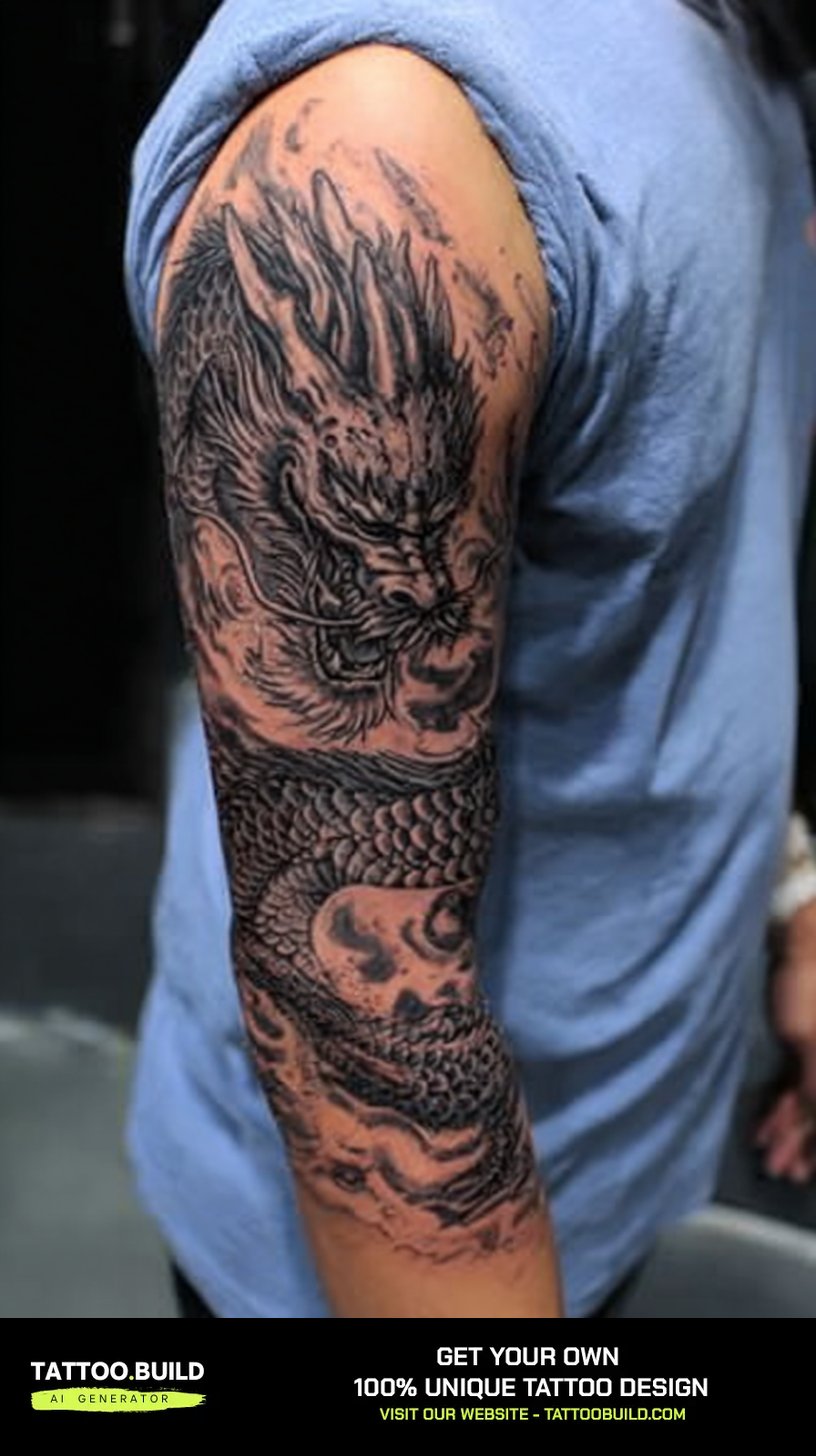
Dragons wrap. That is the whole argument for putting one here — a long serpentine body follows the shoulder into the arm naturally.
The sword-and-dragon pairing you will see below is popular because the blade gives the design a vertical spine to organise itself around.
Phoenixes work on a similar logic, with the wings shaped to the deltoid instead of fighting it. Griffins sit somewhere between the two and tend to need more space than people expect.
In my experience the mistake here is scale. Squeeze a detailed dragon into a small area and the scales blur into texture within a few years.
There are more compositions in the dragon tattoo collection if you want to see how other people have handled the wrap.
Mountains, Trees and Wild Animals
Nature scenes have overtaken tribal as the default choice for men who want something meaningful without anything aggressive in it.
Mountain ranges are the easiest entry point. They are largely linework, they scale up or down without falling apart, and a single spot of colour for a sun lifts the whole thing.
Bears, wolves and eagles all suit the placement. The wolf-and-moon composition in particular uses the round shape of the moon to echo the round shape of the shoulder.
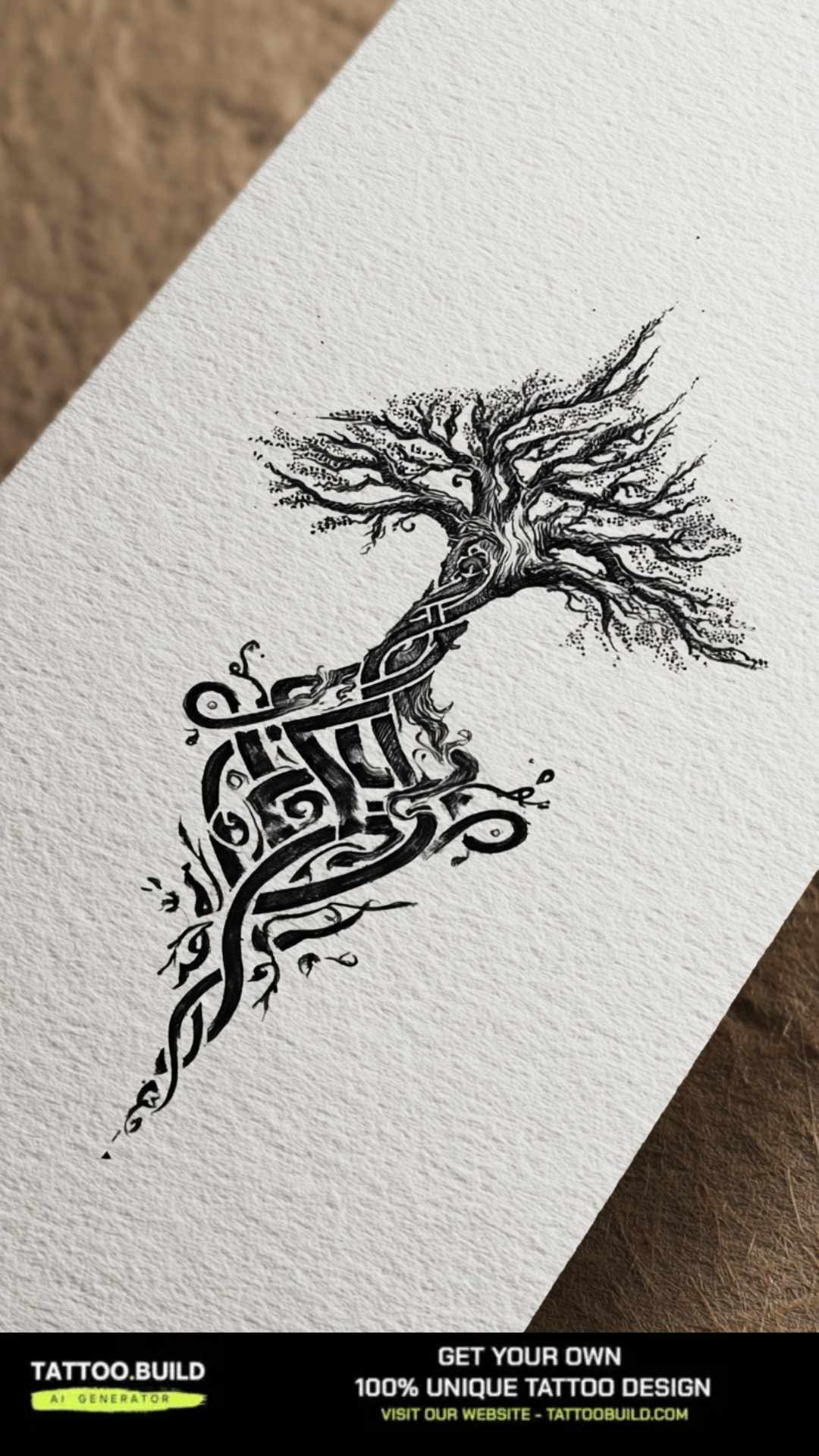
Tree of life designs are the one I would think hardest about. The roots look wonderful fresh, but very fine root lines are exactly the kind of detail that softens with age.
Worth comparing against the broader wolf tattoo ideas before committing.
Biomechanical and Steampunk Armour
This is the most technically demanding category on the page, and the most rewarding when it goes well.
The idea is that the tattoo appears to be underneath the skin rather than on it — gears, plating and mechanical structure shaped to the actual muscle beneath.
That means it cannot be designed off the body. A good biomechanical artist draws the stencil freehand onto your shoulder, using your anatomy as the layout.
Expect multiple sessions and expect it to cost more than anything else in this article. It is also the category where a mediocre artist is most obvious.
Japanese Waves and Nautical Ink
The great wave is one of the few designs that caps a shoulder perfectly without any adjustment, because the curl of the wave already matches the curve of the muscle.
Anchors are the opposite end of the scale — small, quick, traditional, and readable from across a room.
Ship and naval scenes need more room and more planning, but they carry meaning for a lot of people with service or maritime backgrounds.
Japanese work in particular rewards patience. Bold outlines and clear structure are why century-old traditional pieces still read cleanly.
Ornamental, Celtic and Geometric Work
Pattern-based tattoos have quietly become one of the strongest options for the shoulder, largely because they can be shaped to the body rather than placed on it.
Celtic knotwork and crosses carry heritage meaning for many people and hold up structurally because the linework is thick by design.
Ornamental sun motifs sit neatly on the deltoid cap and stop cleanly at the edge, which makes them a good option if you want the tattoo fully covered by a t-shirt sleeve.
Mandala and dotwork pieces flow into a half sleeve more easily than almost anything else. See more geometric tattoo ideas for men for the pattern-led approach.
Placement Variations Worth Considering
“Shoulder tattoo” covers at least four different placements, and they behave differently.
The Deltoid Cap
The classic. Fully covered by a short sleeve, moderate pain, and self-contained so it never needs to grow into anything else.
Shoulder Into Upper Arm
Gives you roughly double the canvas and is the standard starting point for a half sleeve. Slightly more painful as you move down toward the inner arm.
Back Shoulder and Shoulder Blade
Flatter, so designs distort less, and less sun exposure means slower fading. The trade-off is that you will rarely see it yourself.
Shoulder Into Chest
Dramatic and well suited to wings, ravens and armour. Be aware the collarbone area is noticeably sharper than the deltoid.
Practical Advice Before and After You Sit
Eat properly beforehand and turn up hydrated. A long shoulder session on an empty stomach is how people end up light-headed two hours in.
Wear a loose tank top or a shirt you do not mind cutting. The artist needs the whole shoulder clear, and the collar of a normal t-shirt is in the way.
Aftercare is where most damage happens. Follow whatever routine your artist gives you, keep it clean, keep it out of the sun, and do not pick. The American Academy of Dermatology publishes clear guidance on caring for tattooed skin that is worth reading before your appointment.
If anything looks genuinely wrong — spreading redness, heat, pus, fever — that is a doctor visit, not a forum question. Tattoos carry real infection and allergic-reaction risks, which the FDA sets out plainly, and this article is not medical advice. For the normal timeline, see the tattoo healing stages guide.
Common Mistakes I See With Shoulder Tattoos
Going too small is the most frequent one. Detail that looks fine on a phone screen disappears when it is shrunk to fit a modest patch of skin.
Booking on price is the second. A cheap large piece on a very visible area is an expensive decision disguised as a saving.
The third is not planning ahead. If there is any chance you will want a sleeve later, tell the artist now so the composition can extend rather than collide.
And the last is skipping sunscreen for the first year. UV is the main reason shoulder tattoos fade faster than covered placements, something the Mayo Clinic covers alongside the other risks.
Still not sure what you want? Work through the broader tattoo ideas for men collection, or price the bigger picture with our sleeve tattoo cost breakdown.
Frequently Asked Questions
How much does a men’s shoulder tattoo hurt?
Most people place the outer shoulder in the easier third of the body, because muscle and a layer of fat sit between the needle and the bone. It becomes noticeably sharper as the artist works toward the collarbone or the inner arm. A long session will get uncomfortable regardless of placement, simply through fatigue. If you have never been tattooed, a shoulder piece is a reasonable place to start.
How long does a shoulder tattoo take?
A simple ornamental or linework design usually fits into a single two to five hour session. Detailed black-and-grey realism — a lion, a helmet, a warrior figure — commonly runs six to twelve hours and is often split across two sittings. Biomechanical work can stretch well beyond that. Ask for an estimate at the consultation rather than assuming.
Will a shoulder tattoo fade faster than other placements?
It can, mostly because of sunlight rather than anything about the skin itself. This area spends a lot of time exposed in t-shirts and tank tops, and UV breaks down pigment over the years. Keeping it covered or using sunscreen once it is fully healed makes a real difference. Bold outlines and strong contrast also survive fading far better than fine grey detail.
Can a shoulder tattoo be extended into a full sleeve later?
Yes, and it is one of the most common progressions there is. The important part is telling your artist at the start, so the design is composed with an open edge instead of a hard border. Retro-fitting a sleeve around a self-contained piece is possible but usually means the new work has to negotiate around the old. Planning it early costs nothing.
What shoulder tattoo styles age the best?
Traditional Japanese and bold blackwork tend to hold up best, because thick outlines and clear structure survive the natural spreading that happens over decades. Black-and-grey realism ages acceptably when the contrast is strong, though the mid-tones soften first. Fine line and sketch styles look beautiful fresh but usually need touching up sooner. Your artist will give you an honest read on their own work if you ask.
Quick Summary
- The shoulder is one of the more forgiving placements — moderate pain, plenty of room, easy to cover.
- Choose the style before the subject; the same image ages very differently in realism versus fine line.
- Warriors, dragons, skulls, ravens, animals, landscapes and ornamental work all suit the curve of the deltoid.
- Bold outlines and real contrast are what keep a shoulder tattoo readable in ten years.
- Decide early whether this is a standalone piece or the start of a half sleeve, and tell your artist.
- Biomechanical and realism work should be stencilled or drawn onto your actual shoulder, not printed flat.
- Sun exposure is the main cause of fading here — sunscreen once healed is the cheapest insurance there is.
- Follow your artist’s aftercare, and see a doctor rather than a forum if healing looks genuinely wrong.