An ankle butterfly tattoo can be a quiet outline, a colorful focal point or the centerpiece of a delicate ankle band. The main design question is how the wings sit around the ankle’s shape without losing their silhouette.
These 16 ankle butterfly tattoo ideas compare drawing styles, supporting motifs and placement directions. Start with the overall shape you like, then ask an artist to adapt its size and detail to your ankle. A good reference helps you explain a preference; it does not replace a fitted drawing.
Image disclosure: Every image is an AI-generated design concept. These are not real tattoos, healed client photographs or a particular artist’s portfolio. An experienced tattoo artist needs to review the anatomy, details and placement before tattooing.
Choose the silhouette and placement first
Compare an isolated butterfly with a vertical floral arrangement, a curved band and a short trail of several butterflies. Those layouts use the ankle differently. A compact design can sit beside the ankle bone, while a longer arrangement may extend a little above it.
Bring the artist a reference showing the whole tattoo with surrounding skin. Review it standing naturally and with the ankle turned, rather than judging only a cropped close-up. Also show the shoe and sock lines you wear most often so the artist understands your placement preferences and can discuss appointment planning.
If personal meaning is part of the brief, explain your own association instead of assuming every butterfly tattoo tells the same story. Our butterfly tattoo meaning guide offers a broader starting point, while our butterfly tattoo ideas compare other placements and styles.
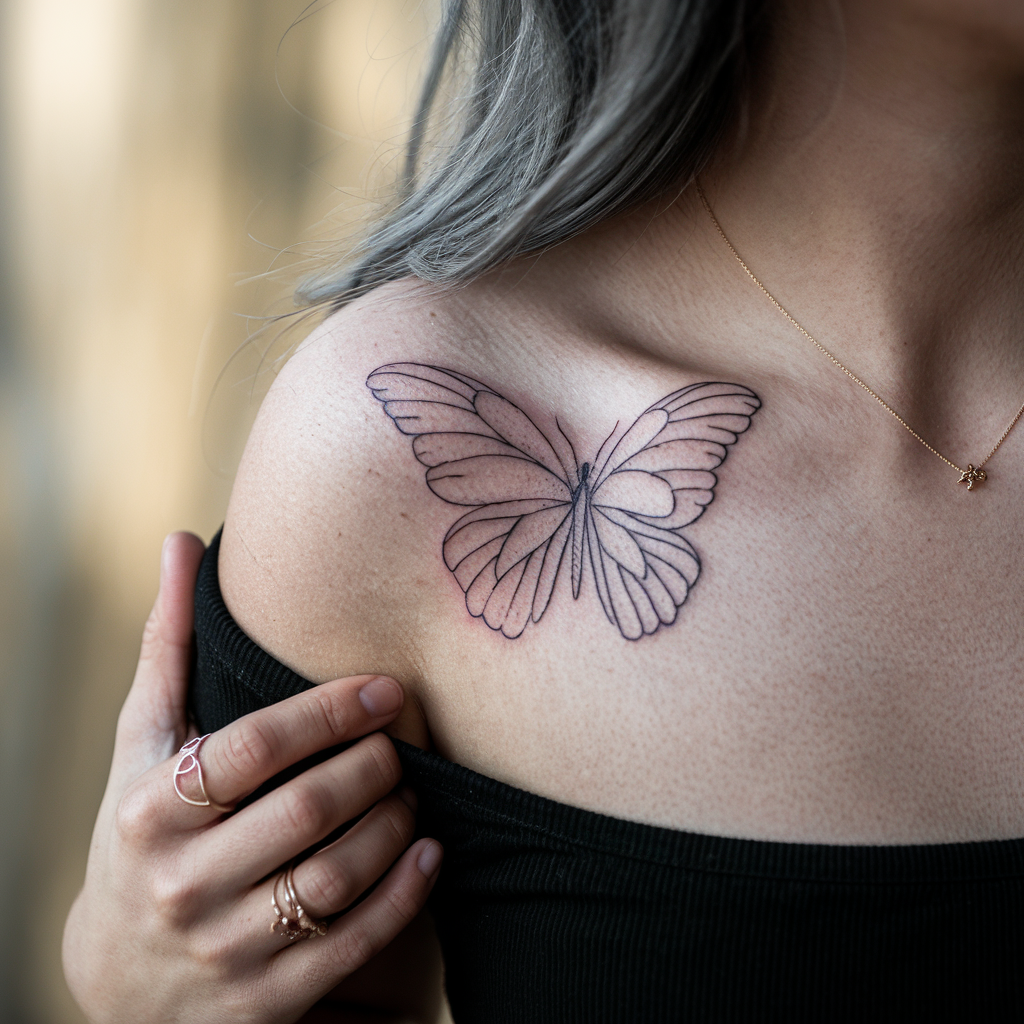
1. Simple outline butterfly
An open outline lets the butterfly’s silhouette carry the design. The wings have clear boundaries and very little internal detail, making this the simplest direction in the collection. A small central body gives the shape an obvious orientation.
Choose the angle before adding decoration. An upright butterfly and one tilted toward the lower leg create different arrangements even at the same size. Ask the artist which parts of the outline they would simplify for your intended placement rather than shrinking a more detailed design unchanged.
2. Fine-line butterfly with open wing details
Fine internal lines add texture while leaving much of the wing open. This option offers more detail than a plain outline without using a dark background or a second subject. The structure should still read clearly from a normal viewing distance.
Review the artist’s own healed examples when choosing a fine-line approach. Discuss how much separation the wing details need at the proposed size. If the drawing starts to look crowded, reduce the number of internal lines before reducing the whole butterfly.
3. Softly shaded black and grey butterfly
Shading gives the wings more volume, with darker edges defining the outer shape and lighter areas toward the center. The limited palette keeps the butterfly as one focal subject rather than making each wing a separate color feature.
Ask where the lightest and darkest areas will sit in the final drawing. Those decisions matter more than adding tiny spots to every section. Check the butterfly with your ankle in a relaxed stance so the shading does not conceal the outline as it curves around the placement.
4. Dotwork butterfly
Stippled areas create a textured wing treatment without filling the entire butterfly with solid shading. Dark outlines hold the shape together, while open sections provide contrast. The effect depends on clear larger patterns rather than a dense field of tiny decoration.
Give the artist room to adjust the dot density and the size of the open areas. At the consultation, compare the full silhouette first and the close-up texture second. The supporting pattern should not make the body or wing connections difficult to identify.
5. Bold blackwork wings
Solid black areas and open-skin channels create a graphic butterfly. This direction relies on broad contrast instead of delicate internal veins. It can feel substantial while remaining a single compact motif at the ankle.
Agree on which sections will be black and which will remain skin before tattooing. The open channels should form intentional shapes rather than leftover slivers. For a wider style comparison, see our tattoo styles guide and identify the outline weight you prefer.
6. Turquoise and violet watercolor effect
A restrained wash of turquoise and violet gives the butterfly a softer color treatment. The black outline keeps the wings identifiable, while the wash provides variation around them. Limiting the surrounding color stops the effect from overwhelming a small ankle composition.
Discuss the role of the outline and the palette with the artist. Ask to see their own work in this style, including healed examples, rather than treating the generated colors as a prediction. Decide how much wash belongs outside the wings before adding extra splashes.
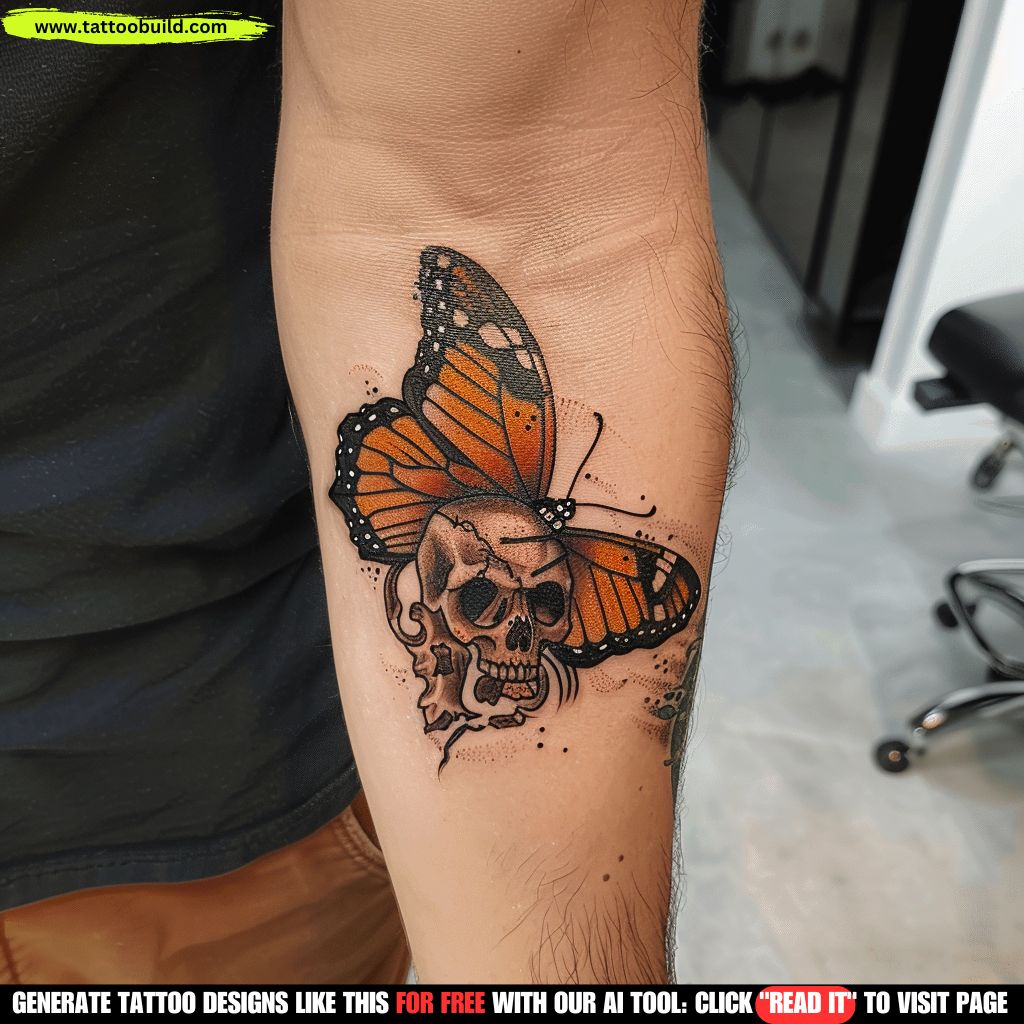
7. Orange wings with bold black pattern
Orange wings, dark divisions and pale edge details create a strong patterned butterfly. The contrast makes the wing shapes the main feature. This is a stylized color direction rather than a claim to identify a particular butterfly species.
If a specific species matters to you, bring an accurate reference and tell the artist which markings you want retained. Otherwise, focus on a coherent wing pattern and a size that gives it space. Avoid preserving every edge dot if those details crowd the outline.
8. Butterfly above a small rose
A grey butterfly above a pink rose makes a compact vertical arrangement. The flower gives the lower part a rounded base, while the wings open out above it. Clear space between the two subjects keeps the butterfly from blending into the petals.
Set the sizes of the butterfly and flower together rather than adding the rose to a leftover gap. Our rose and butterfly tattoo ideas offer other ways to arrange the pair if you want the flower to play a larger role.
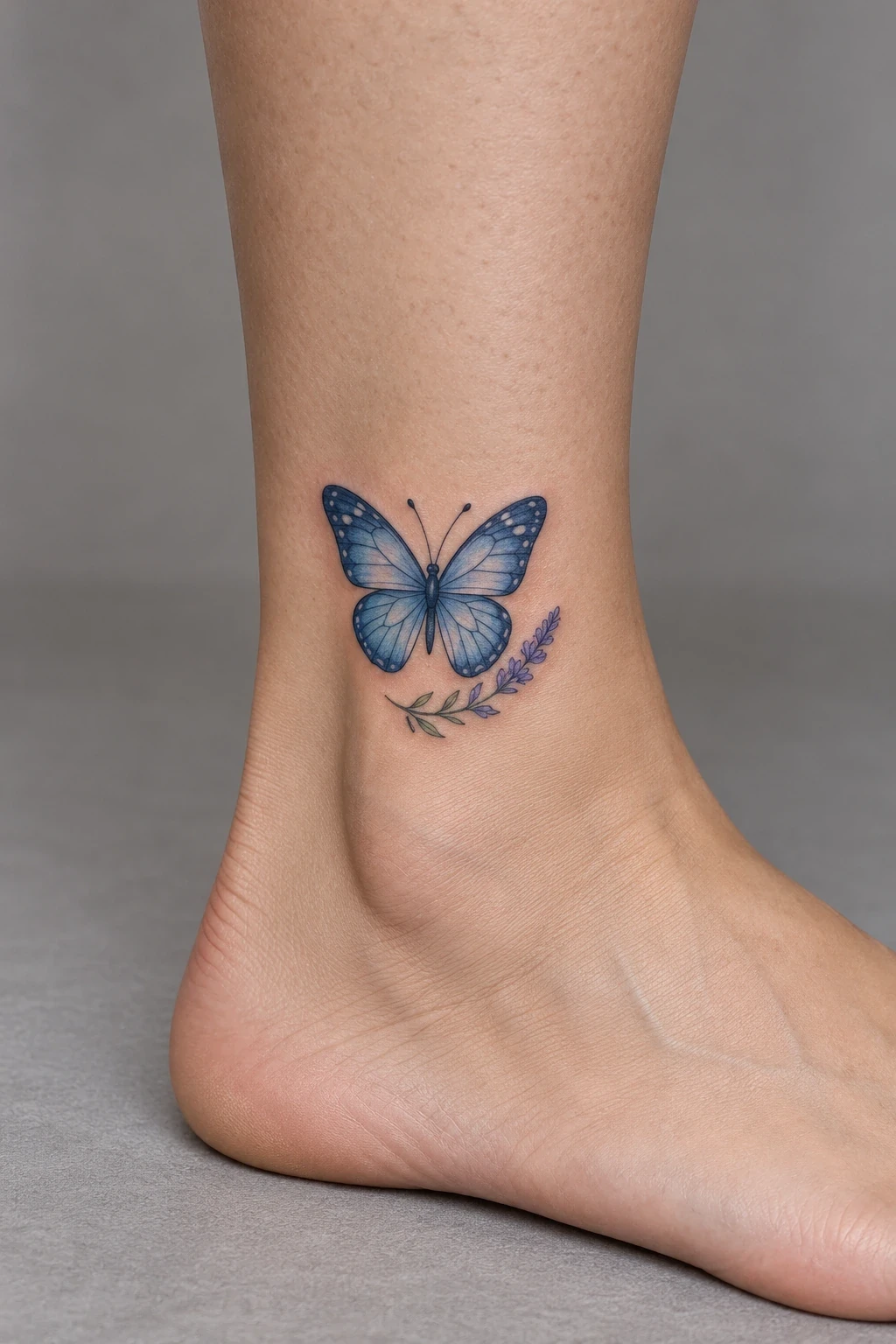
9. Butterfly beside a lavender stem
A slender lavender stem gives the butterfly a quieter floral companion. The diagonal arrangement can follow the ankle without becoming a wide band. Purple flower details add a small color accent while the butterfly remains mostly grey.
Ask the artist to keep the stem’s route simple and the butterfly separate from the flower cluster. The whole composition needs room, including the small blossoms. Compare other floral directions in our flower ankle tattoo ideas before deciding which plant shape best supports the wings.
10. Butterfly and leafy ankle band
A leafy vine changes the design from an isolated motif into a wraparound arrangement. The butterfly becomes the focal point on the visible side, while the vine connects the rest of the band. Small leaves give the line variation without needing several main subjects.
Have the artist map the whole band around the ankle, including the back and inner side. Choose where it closes or breaks and where the butterfly sits when you stand naturally. Our ankle bracelet tattoo ideas provide more band structures to compare.
11. Butterfly beside a crescent moon
A fine crescent supplies a curved frame next to a small butterfly. A few restrained star-like dots complete the arrangement without creating a busy celestial background. Open space between the moon and wings is part of the design.
Decide whether the moon or butterfly should be dominant. Keeping both subjects small but equally detailed can crowd the ankle. Ask the artist to simplify the supporting marks first and to check the wing tips against the crescent so the two silhouettes stay separate.
12. Geometric butterfly with a diamond frame
Larger angular wing sections give the butterfly a geometric drawing style. A fine diamond behind it provides an outer structure, contrasting with the body and antennae. The frame should support the butterfly rather than obscure its outline.
Review where the frame lines pass behind the wings and where they stop. A small number of clear sections is more useful here than an intricate grid. The artist can adjust the angles around your ankle so the diamond does not depend on one exact photographic viewpoint.
13. Stained-glass-inspired color sections
Dark divisions separate teal, gold and red areas within the wings. The effect is graphic and colorful, with the butterfly outline remaining easy to see. Large color sections make the design different from a more naturally patterned wing.
Choose the palette as a whole and agree on the weight of the dark dividing lines. Avoid turning every wing into many tiny compartments just to add more colors. This is an illustrated stained-glass effect, so review the artist’s own approach to outlines and color separation before choosing it.
14. Two butterflies in a diagonal pair
A larger butterfly below and a smaller one above create a sense of movement without needing a background. Their shared grey palette connects the pair. Spacing gives each butterfly its own complete outline rather than merging the wings.
Check the arrangement on your ankle instead of approving the two butterflies separately. The gap and relative angles are what make the pair work together. If the smaller butterfly becomes too detailed for its size, simplify its wing pattern rather than compressing every feature.
15. Butterfly with floral wing details
This modern illustrative concept combines conventional outlined wing shapes with a small flower-and-leaf treatment inside part of the silhouette. The body and remaining wing lines make the butterfly recognizable. Pink floral details provide a focal accent.
The wing outline should still read before you study the flower. Ask the artist to resolve how the botanical elements join the body and which petals sit inside the wing boundary. A clear hybrid shape will communicate the idea more effectively than attaching a separate bouquet to an already crowded butterfly.
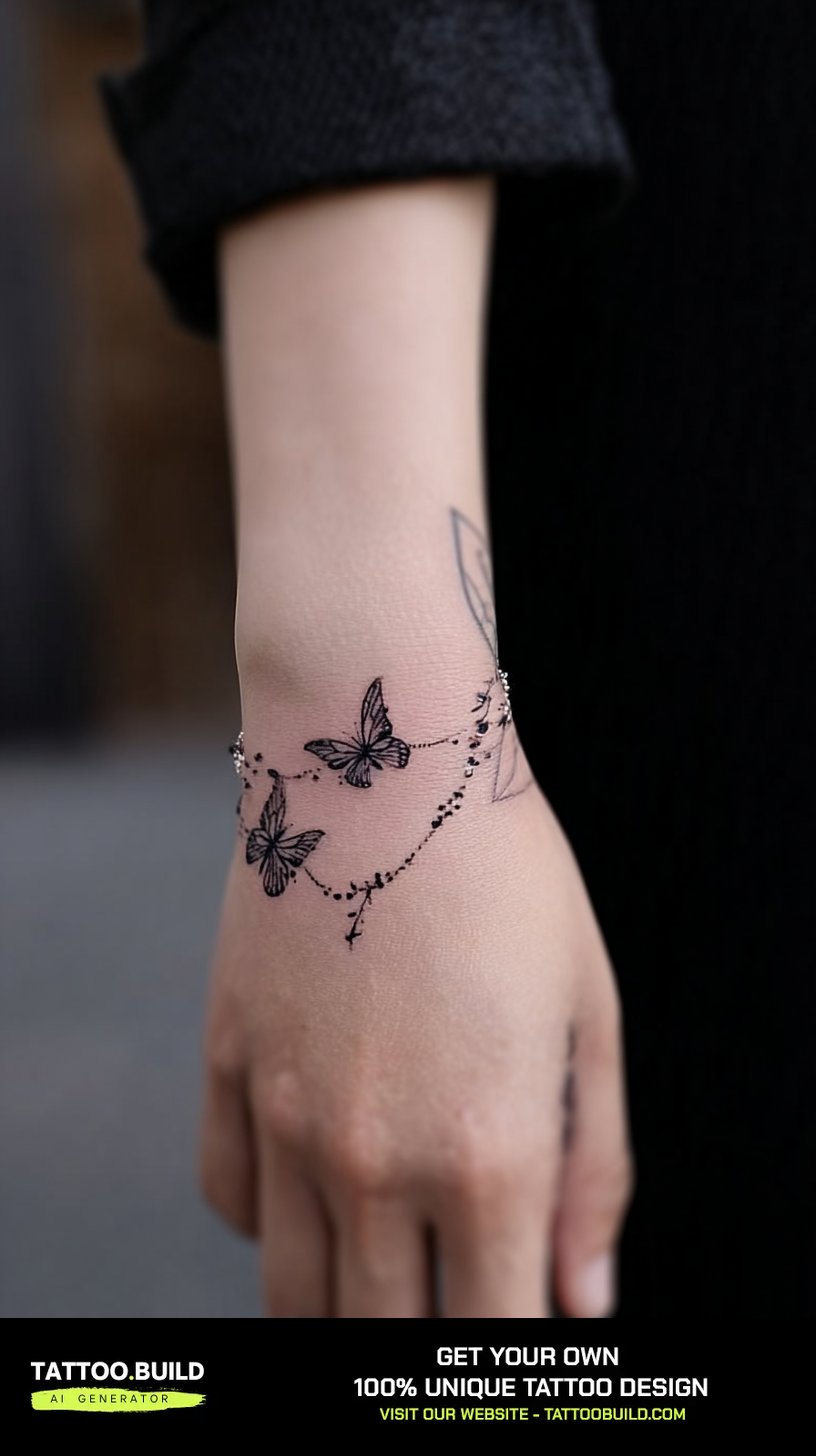
16. Three butterflies along a short curve
A short curved trail uses several separate butterflies instead of one larger centerpiece. The biggest sits nearest the ankle, with smaller shapes above it. Keeping the trail compact preserves the ankle as the main placement rather than turning the idea into a calf piece.
Agree on the top and bottom boundaries before placing the individual butterflies. Review their size changes and spacing as one composition. For a broader placement comparison, our women’s ankle tattoo ideas show other ways to use the same area.
Choose the ankle placement before the final drawing
A butterfly can sit above the ankle bone, along the side of the lower leg or within a band that continues around the ankle. Those are different compositions. Bring a placement photograph to the consultation and ask the artist to fit the drawing to your leg, rather than choosing a finished design and squeezing it into the remaining space.
Above the ankle bone
This is a useful starting point for an open-wing butterfly because the whole silhouette can sit together. Try a paper printout in a few sizes, then have the artist check a stencil while you stand naturally. Leave enough room around the outer wing tips that the butterfly reads as a complete shape.
Inner or outer ankle
Decide which view matters most to you: the view looking down at your own leg, the side view in a photograph or the outline visible above your usual shoes. The same butterfly can look different as the leg turns. Ask the artist to check the stencil from several angles and with your foot relaxed.
A butterfly within an ankle band
A band needs a plan for its back and inside sections, even if your reference only shows the outside. Decide whether the vine should join into a complete loop or finish with open ends. A little asymmetry can give the butterfly a clear focal point. For more band compositions, browse our ankle bracelet tattoo ideas.
Show the artist the shoes and sock heights you wear most often. This helps you discuss how much of the design you want visible and how you will follow their aftercare instructions around footwear. If you want to compare the butterfly with other ankle motifs first, see these ankle tattoo ideas.
Turn the concept into a tattooable drawing
These images are AI-generated concept illustrations. They are starting points for a consultation, not photographs of real or healed client tattoos and not evidence of how a particular artist's work will look over time. Ask your artist to redraw the concept and choose the line weight, spacing and color approach for the size you agree on.
Start with the butterfly's outline. The upper and lower wings should remain easy to distinguish, and the body should connect them clearly. Then choose which interior details matter most: a few veins, bold dark sections, a color pattern or flowers. Trying to keep every tiny mark from a large reference in a small ankle tattoo can undermine the simple shape that drew you to it.
If you want a specific butterfly species, bring reliable photographs and tell the artist which pattern you want preserved. The orange concept in this article is a stylized design, not a species identification. For a more decorative tattoo, there is no need to attach a species name or a universal meaning to the colors.
Review the artist's healed portfolio for work similar in scale and style. Ask what they would simplify, how they would position the wings and whether a larger drawing would better suit the details you have chosen. For pricing, request a quote for the actual placement, size and color plan; these concepts do not establish a standard price.
Plan aftercare and sun protection
Get written aftercare instructions from your tattoo artist and follow their guidance for the fresh tattoo, including questions about socks, shoes, exercise and any covering they use. Do not use these concept images as a guide to healing or assume that a clean-looking illustration shows a particular stage of recovery.
For tattooed skin, the American Academy of Dermatology notes that UV light can fade some tattoo inks. Once the skin has healed, its advice includes broad-spectrum, water-resistant sunscreen with SPF 30 or higher before going outside, reapplied at least every two hours. That is relevant when the ankle is exposed in sandals or cropped trousers.
If you notice a reaction or a change in tattooed skin, the AAD recommends seeing a dermatologist. Ask a qualified clinician about skin concerns rather than relying on an image or a general inspiration guide.
Ankle butterfly tattoo questions
How small can an ankle butterfly tattoo be?
There is no single minimum size for every drawing. An outline with a few open sections and a butterfly filled with flowers ask different things of the available space. Have your artist show you the proposed size on the ankle and explain which details they would remove or enlarge.
Should the butterfly face inward or outward?
Choose the direction you prefer after seeing a stencil on your own leg. An open-wing design is often quite symmetrical, while an angled butterfly can have a stronger direction. Look at it standing naturally and from the view in which you expect to see it most.
Can I combine a butterfly with flowers?
Yes. A separate flower beside or below the butterfly keeps both shapes easy to identify. Floral wing details create a more blended illustration. Pick one main focal point and let the artist decide how much floral detail fits the chosen size.
Does an ankle butterfly tattoo hurt?
People experience tattooing differently, so a numerical pain score would not predict your session. Talk with your artist about the exact placement, session length, breaks and any concerns you have before booking.
Which design should I bring to the consultation?
Bring the concept whose overall shape you like most, plus a short list of details to keep. For example: open wings, black ink and a small lavender stem. Add a placement photograph and your preferred level of visibility. That gives the artist a clear brief with room to create a drawing that fits you.