The best simple tattoo ideas are not the ones with the least detail — they are the ones where every remaining line is doing a job.
I have watched people walk into a studio with a Pinterest board of forty designs and walk out with a three-line wave on their wrist. That is not settling. That is editing.
In my experience the minimalist tattoos that still look good five years later share one trait: enough space between the lines for ink to spread into without turning the design into a smudge.
This guide covers the six simple motifs I see requested most — arrows, waves, sun and moon, feathers, flowers and planets — plus placement, cost and the ageing problem nobody warns you about. If you want the smallest end of the scale specifically, my roundup of beautiful small tattoo ideas goes narrower.
Which Simple Tattoo Style Is Right for You?
Not all minimalism is the same. These four approaches look similar in a photo and behave very differently on skin.
| Style | What it looks like | Typical session | How it ages | Best for |
|---|---|---|---|---|
| Fine line | Hairline-thin single-needle outlines | 30–60 minutes | Softens fastest; may need a touch-up in a few years | Delicate script, tiny florals, inner-arm placements |
| Bold minimal | Simple shapes drawn with a heavier, even line | 45–90 minutes | Holds its shape longest of the four | Arrows, waves, geometry, anyone who wants low maintenance |
| Single line / continuous | One unbroken stroke forming the whole subject | 30–45 minutes | Depends entirely on line weight and spacing | Faces in profile, mountains, abstract florals |
| Micro dotwork | Stippled shading instead of solid fill | 60–120 minutes | Dots can merge if placed too close together | Moon phases, planets, soft gradients |
If you are choosing between two of these, ask the artist which one they draw most often. Preference in this style is not vanity — it is muscle memory.
What Actually Makes a Simple Tattoo Work
Tattoo ink does not sit still. It settles into the dermis and spreads slightly over the years, which is why a design that looked crisp at eighteen can look softer at thirty.
That single fact drives almost every rule about minimalist tattoos. Lines placed too close together will eventually read as one line.
The artists I have asked about this tend to give the same rough guidance: leave at least a needle-width of clean skin between parallel lines, and be sceptical of any design smaller than a coin that contains more than a handful of strokes.
Placement matters as much as the drawing. High-friction, high-stretch areas — fingers, palms, the outer edge of the foot — break down fine work faster than the forearm or the ribcage.
None of this means small tattoos are a bad idea. It means the good ones are designed with the ageing in mind rather than in spite of it.
Popular Simple Tattoo Ideas Worth Considering
These six motifs come up constantly, and there is a reason: each one survives being stripped down to a few lines without losing what it means.
1. Arrow Tattoos
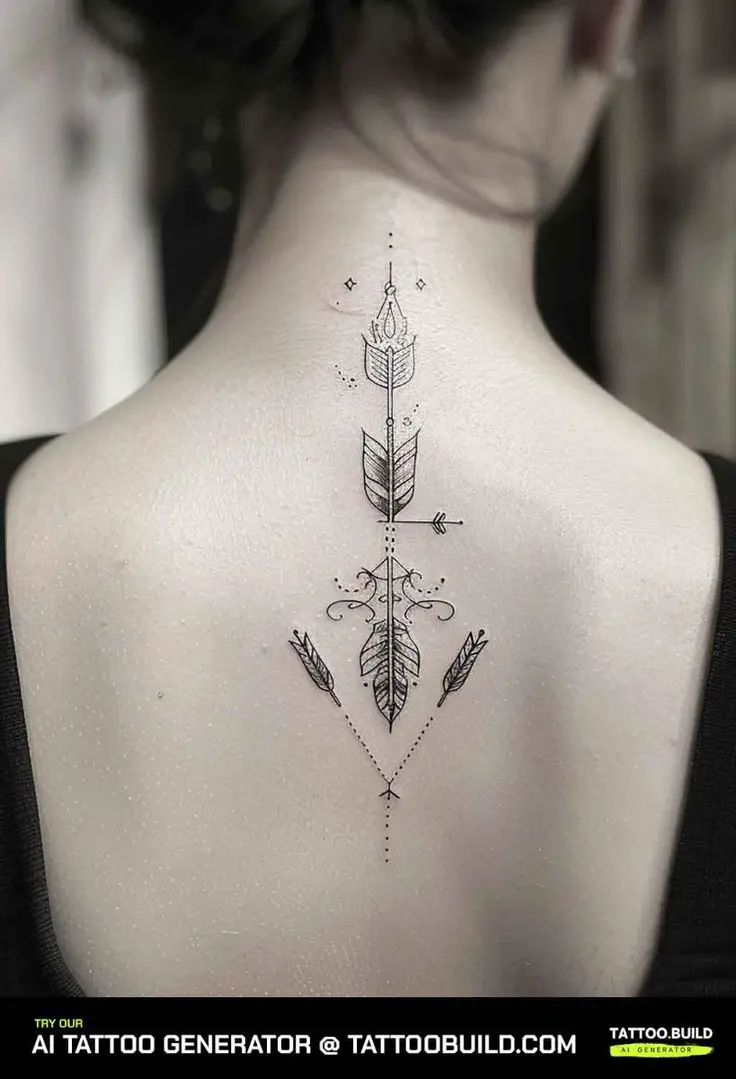
An arrow is about as forgiving as a design gets. A shaft, a head, a bit of fletching — three shapes, all of them geometric.
The symbolism is usually read as direction, forward motion, or moving through something difficult, though single arrows and crossed arrows carry different associations depending on who you ask.
When I tested placements for this one, the inner forearm and the outer ankle both worked well because the design runs with the limb rather than across it.
Watch the fletching. The little angled marks at the back are the first part to blur, so ask for them slightly wider apart than the reference photo suggests. Sizing an arrow under about two inches usually means dropping the fletching detail entirely, which is fine — a plain shaft and head still reads clearly.
2. Wave Tattoos
Waves are the motif I most often recommend to people getting their first tattoo, because a wave can be one line or twenty and still looks intentional.
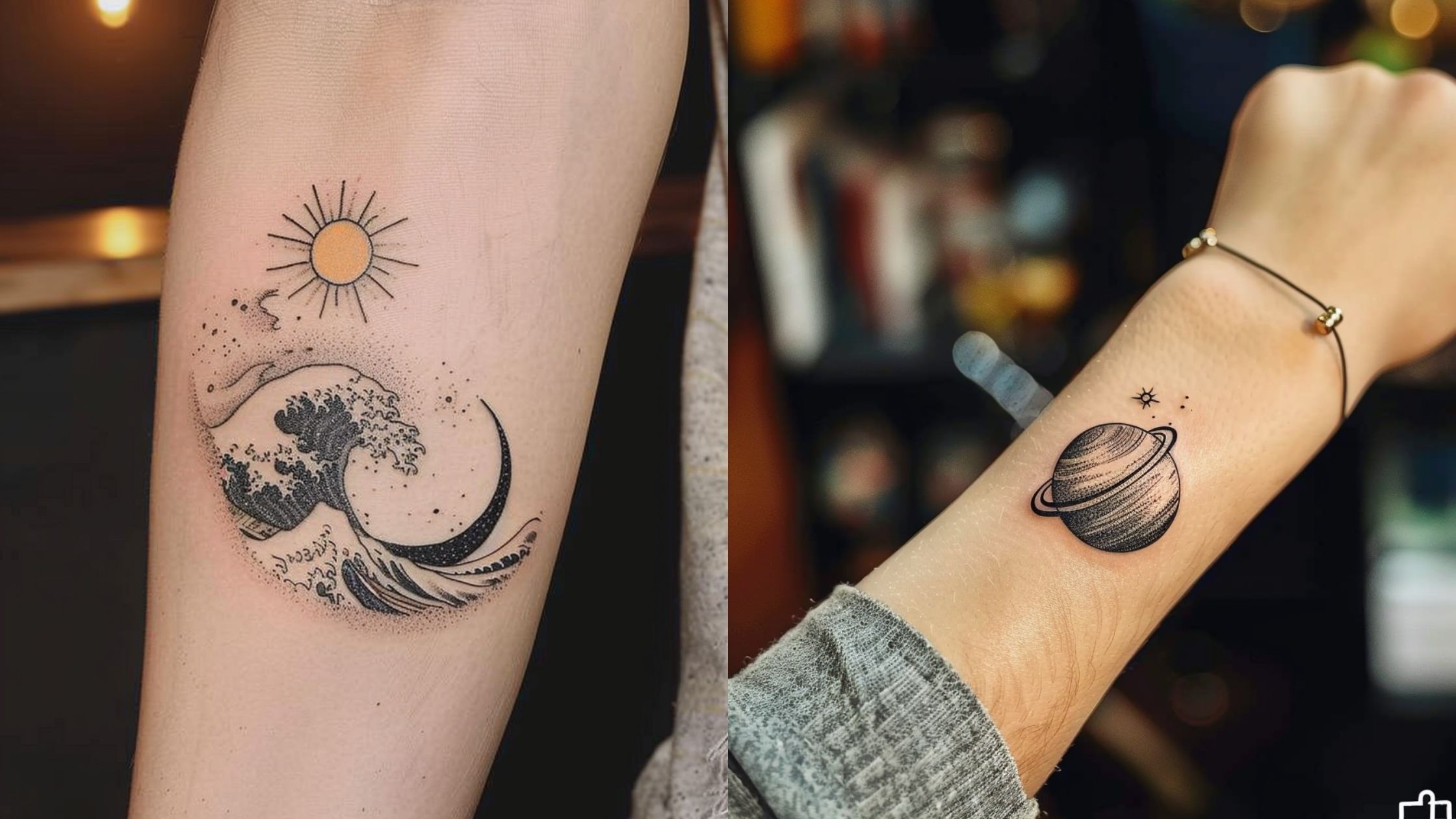
The Great Wave silhouette is the recognisable version, but a plain curl of water with a couple of foam lines is easier to place and cheaper to sit for.
Every artist I have asked about waves says the same thing: keep the foam lines short. Long thin tapers are where the design loses definition first.
Common placements are the wrist, the inside of the bicep and the ankle. On the wrist, run it along the arm rather than around it — wrapping designs distort when the wrist bends.
If you like the ocean theme but want more room to work with, the ankle tattoo ideas collection has larger variations that still read as minimal.
3. Sun and Moon Tattoos
Sun and moon designs are usually read as balance — opposites held together — which makes them a frequent choice for matching or paired tattoos.
The simplest version is a circle and a crescent, sometimes overlapping, sometimes side by side. That is genuinely all it needs to be.
Where these go wrong is rays. A sun with sixteen thin triangular rays around it is a lot of fine detail packed into a small circle.
In my experience the versions that hold up use either fewer, thicker rays or a ring of dots instead. Dotwork rays age better than hairline ones, as long as the dots are not crowded.
Spine placements suit this motif particularly well because there is vertical room for both elements — the sun and moon spine tattoo guide covers that layout in detail.
4. Feather Tattoos
A feather is deceptively difficult. It looks simple, but the barbs are dozens of short parallel lines, which is exactly the pattern that merges as ink settles.
The solution most artists use is to break the feather up — draw the spine and only some of the barbs, leaving gaps where the eye fills in the rest.
That broken style also happens to look better. A solid feather at three inches long can read as a leaf; a broken one never does.
Meanings attached to feathers vary widely across cultures, and some designs carry specific cultural significance. If a particular style matters to you, it is worth reading about its origins before committing, and being careful about borrowing from traditions you are not part of.
For more variations on this motif, the feather tattoo drawings collection has a wider range of sizes.
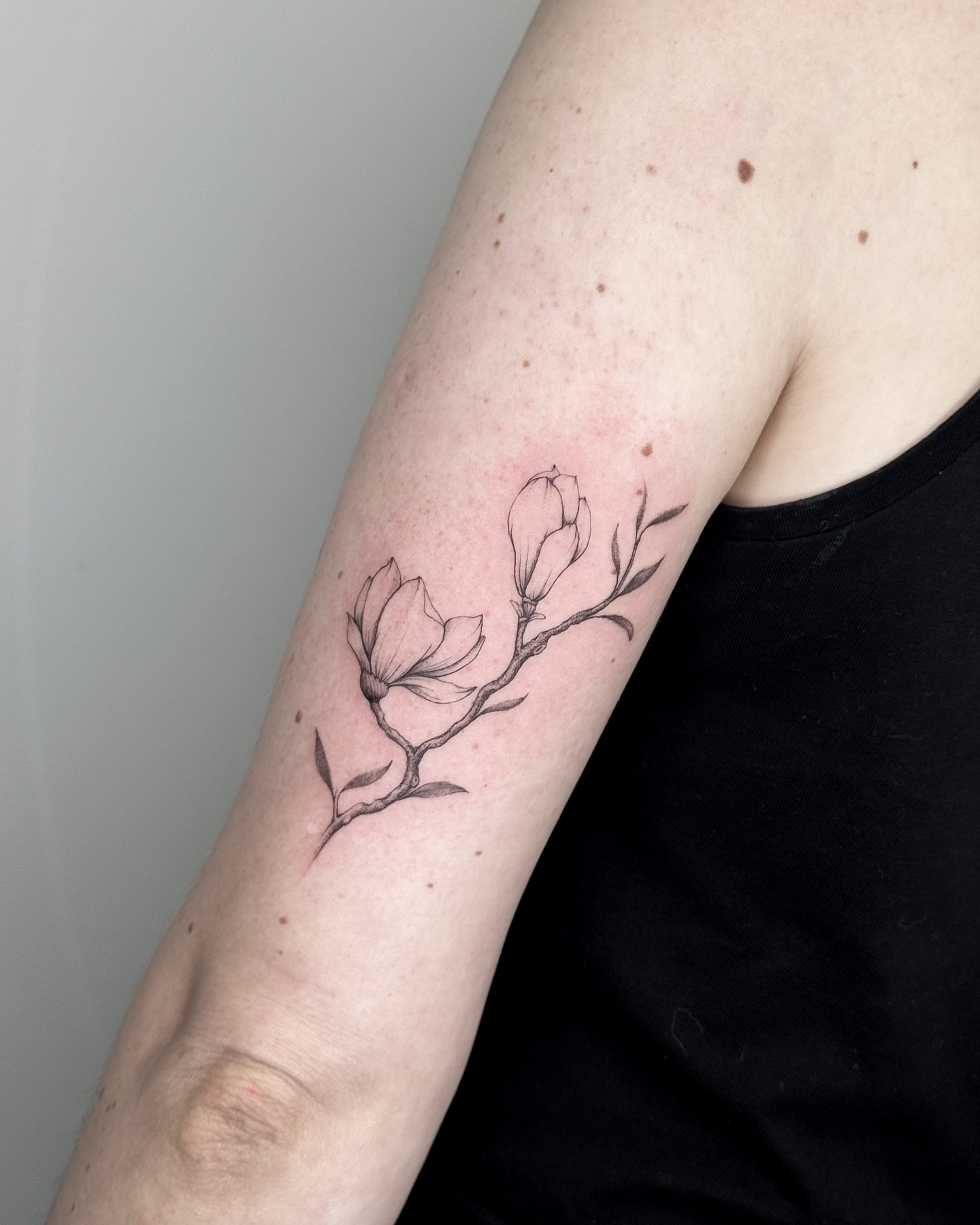
5. Flower Tattoos
Flowers are the largest category here by a wide margin, and also the one where simplification pays off most.
A lotus reduced to an outline still reads as a lotus. A daisy is five or six petals and a centre. Neither needs shading to work.
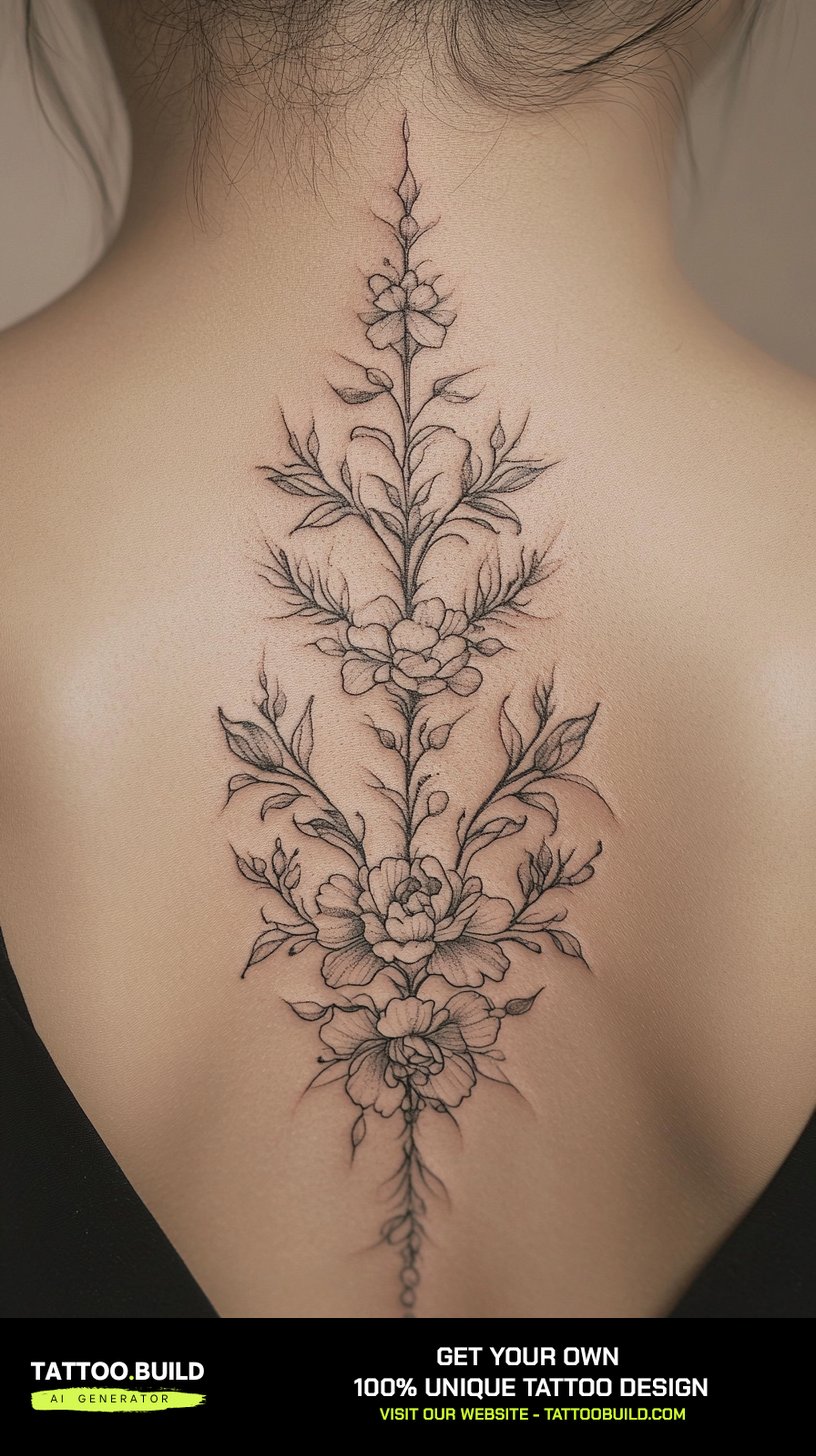
Birth flowers have become a common way to make a simple floral personal without adding visual complexity, since the meaning sits in the choice rather than the drawing.
The single most common mistake I see is scale. A rose has a lot of internal structure, and shrinking it to an inch turns that structure into a dark blob within a few years. Daisies, sprigs and single stems handle small sizes far better.
If you want to pick by meaning, birth flower tattoo ideas and the dedicated daisy tattoo ideas guide are both good starting points.
6. Planet and Space Tattoos
Saturn is doing most of the work in this category, and for a good reason: a circle with a ring through it is instantly recognisable at any size.
Other planets are just circles, which is why they usually appear as part of a small cluster or a line of orbiting shapes rather than alone.
Space designs often use dotwork for texture — stippled surfaces, scattered stars — and that is where session times climb. Dotwork is slow.
When I have sat for stippled work, a piece roughly the size of a matchbook took closer to an hour and a half than the twenty minutes an equivalent outline would have needed. Price accordingly.
Stars pair naturally with this motif, and a small cluster of them costs very little extra time to add.
Simple Tattoo Variations Worth Exploring
If none of the six above fit, these adjacent approaches keep the minimalist feel while changing the subject matter.
Single-word script
One word in a plain typeface is about as simple as a tattoo gets, and it is easier to place than any image.
Serif fonts hold up better than script fonts at small sizes, because the thin connecting strokes in cursive are the first thing to fade.
Geometric shapes
Triangles, circles, and simple line arrangements are the most durable option in this whole article — straight lines and even weights age predictably.
They also suit people who want a tattoo that does not obviously represent anything, which is more common than the internet suggests.
Tiny animal outlines
A cat’s silhouette, a bird mid-flight, a bee. These work when the animal has a distinctive outline and fail when it does not.
Test it by squinting at the reference on your phone. If the shape becomes ambiguous, it will become ambiguous on skin too.
Matching and paired designs
Simple designs are the natural fit for matching tattoos, since two people can get the same two-inch piece without either committing to a full session.
Half-and-half motifs — a sun and a moon, two halves of a wave — are the usual approach. The couple tattoo ideas guide covers pairings in more depth.
Practical Tips Before You Book
Bring a reference, but bring it as a starting point. Artists who work in this style will almost always suggest simplifying it further, and they are usually right.
Ask to see healed photos, not fresh ones. A fine-line piece photographed an hour after it was finished tells you nothing about how that artist’s work settles.
Size up rather than down when you are undecided. Almost nobody regrets a tattoo being slightly larger than planned; plenty of people return to have a too-small one reworked.
Aftercare is the same regardless of how small the piece is. Keep it clean, keep it out of direct sun while it heals, follow the specific instructions your artist gives you, and do not pick at it. If you see spreading redness, unusual swelling, heat around the site or discharge, contact a doctor rather than looking for an answer online — those can be signs of infection and are not something to manage yourself.
Cost varies enormously by city and artist, and most studios have a minimum charge that a small piece will simply hit. Our guide to tattoo costs explains how that pricing usually works.
Two sources are worth reading before you book. The FDA fact sheet on tattoos and permanent makeup covers ink safety and possible reactions, and the American Academy of Dermatology’s guidance on caring for tattooed skin goes into healing in more detail than most studio handouts.
Common Mistakes and How to Avoid Them
The mistakes in minimalist tattooing are consistent enough that most artists can list them from memory.
- Too much detail in too little space. If you are squinting at the stencil, it is too small.
- Choosing a finger or palm placement for fine work. These sites wear faster than anywhere else on the body and often need repeated touch-ups.
- Picking the artist by price rather than portfolio. Fine-line work is a specialism, not a default skill.
- Sun exposure during healing. UV is hard on fresh ink and one of the main causes of early fading.
- Booking a design you found ten minutes ago. Sit with it for a few weeks; the ones that survive that wait are the ones worth getting.
If you are still weighing options, it may help to browse by placement instead of by motif — wrist tattoo ideas approaches it from that angle, and simple tattoo designs for men covers the same six motifs with different sizing conventions.
Frequently Asked Questions
How long does a simple tattoo take?
Most of the designs in this article take between 30 and 90 minutes, including stencil placement and setup. A small outline can be done in half an hour. Dotwork and stippled shading take considerably longer for the same footprint, sometimes two hours for a piece the size of a matchbook. Your artist can give you a realistic estimate once they have seen the design at final size.
Do simple tattoos hurt less than large ones?
Generally yes, mostly because they take less time rather than because the sensation is different. Pain is driven more by placement than by size — ribs, sternum, feet and the inside of the elbow are reported as more uncomfortable than the outer forearm or thigh. A small tattoo on a sensitive area can be worse than a larger one on a forgiving area. If you are anxious about it, tell your artist; most will work in breaks.
Will a fine-line tattoo fade faster?
Fine-line work usually softens sooner than bolder work, because there is less ink in the skin to begin with. How fast depends on placement, sun exposure, your skin and the artist’s technique. Many fine-line pieces need a touch-up within a few years, particularly on hands and feet. This is normal maintenance rather than a sign anything went wrong.
What is the best placement for a first simple tattoo?
The inner or outer forearm is the usual recommendation. It is relatively low on the pain scale, easy for the artist to reach, straightforward to keep clean while healing, and it holds detail well. The upper arm, the calf and the shoulder blade are also solid choices. Fingers, palms and the outer foot are the placements most likely to need rework.
Can a simple tattoo be added to later?
Often, yes, and it is a common way to build a collection. A single wave can become part of a larger seascape; a small floral can grow into a half sleeve. Mention it at the consultation if it is a possibility, since the artist can place and orient the first piece to leave room. Adding to someone else’s work is harder than adding to your own artist’s, so continuity helps.
Quick Summary
- Simple tattoos work because of spacing, not because of size — leave room between lines for ink to spread into.
- Arrows, waves and geometric shapes are the most durable minimalist motifs.
- Sun and moon designs age best with dotted or thickened rays rather than hairline ones.
- Feathers should be drawn broken rather than solid, with gaps the eye fills in.
- Daisies and single stems handle small sizes far better than roses.
- Dotwork and stippled space designs take significantly longer than equivalent outlines, and cost more.
- Forearm, calf and upper arm are the safest first-tattoo placements; fingers and palms are the riskiest.
- Follow your artist’s aftercare instructions, keep the healing tattoo out of the sun, and see a doctor if you notice signs of infection.