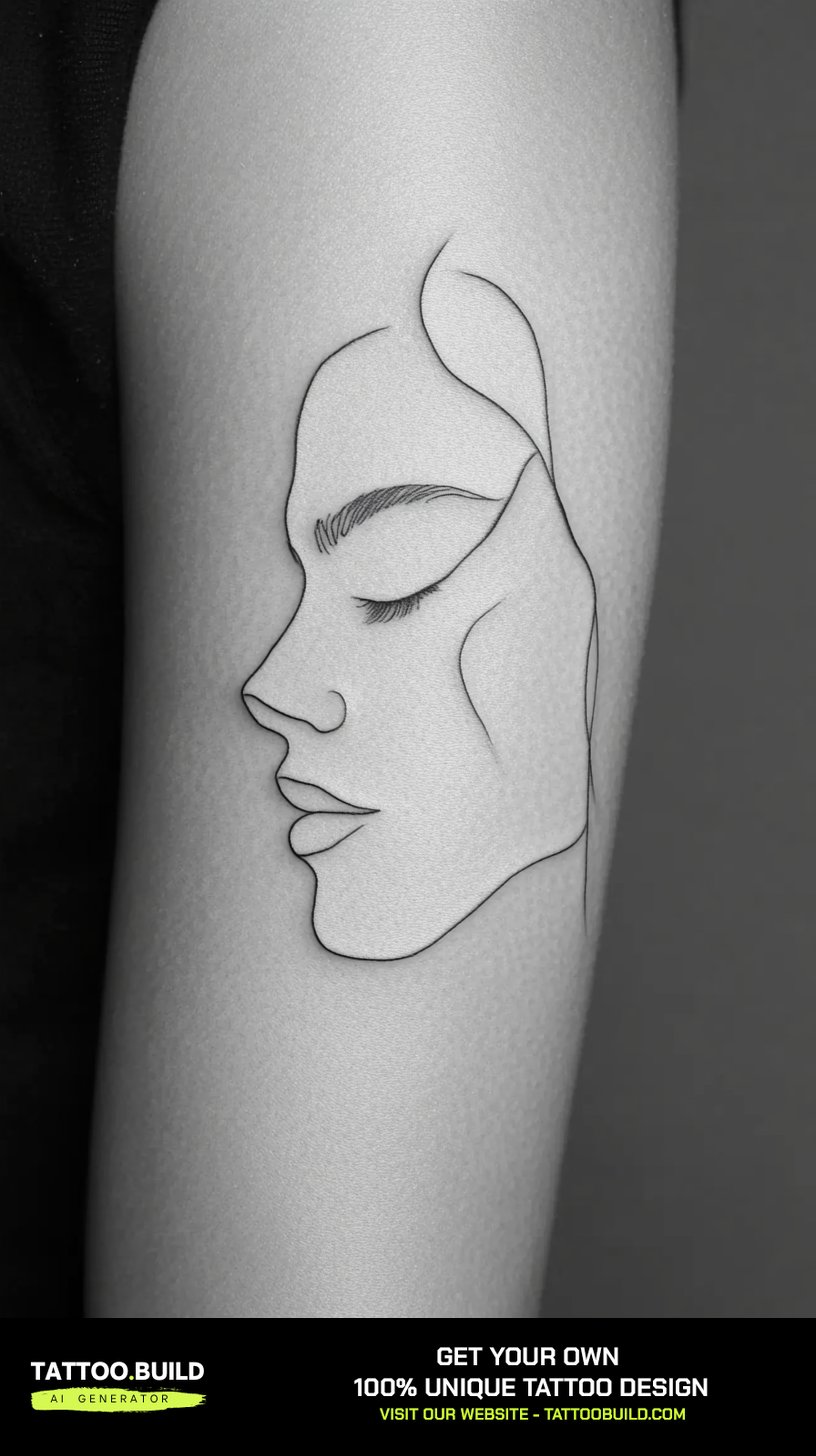
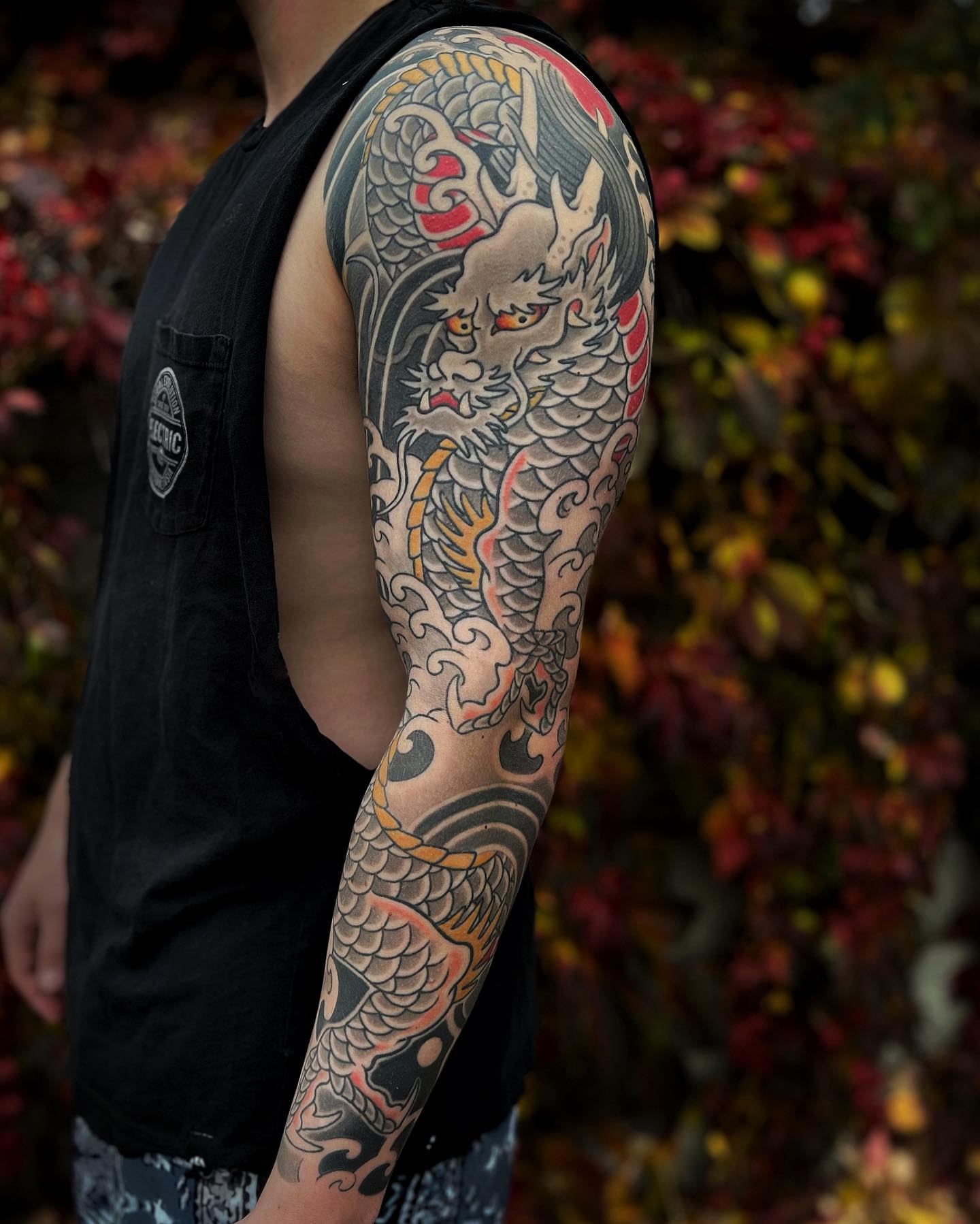
Getting tattooed at 40, 50 or 60 is a fundamentally different decision than getting tattooed at 20, and in my experience it produces better tattoos. The women I have watched book appointments in their forties and beyond almost never regret the design — they regret waiting.
The impulsive phase is usually behind you. You know your own taste, you have stopped chasing trends, and you have a much clearer sense of what is actually worth carrying on your skin for the rest of your life.
What follows is a set of ideas I keep seeing work, plus the practical side nobody mentions: how mature skin takes ink differently, which styles hold up, and what to ask an artist before you commit. If you want a broader starting point, the wider collection of classy tattoo designs for women covers designs that suit any age.
Every one of these is a real idea I have seen executed well, not a mood board fantasy.
Which Tattoo Style Is Right for You?
Style choice matters more after 40 than it does at 20, because some techniques age far more gracefully on mature skin than others.
| Style | How it ages on mature skin | Best placements | Touch-up outlook |
|---|---|---|---|
| Fine line | Elegant, but the thinnest lines can soften or blur sooner than on younger skin | Inner wrist, inner forearm, behind the ear | Plan for one within the first few years |
| Bold black linework | The most forgiving option — holds shape for decades | Outer forearm, upper arm, shoulder, calf | Rarely needed |
| Black and grey shading | Very good, provided the artist keeps real contrast rather than all mid-tones | Forearm, upper arm, thigh, back | Occasional, to restore depth |
| Watercolour | Softest over time; needs a black or grey structural anchor to stay readable | Shoulder, upper arm, thigh — areas with less sun exposure | Most likely of any style here |
| Lettering and script | Depends entirely on size; cramped letters close up as ink settles | Forearm, ribs, collarbone | Low, if sized generously from the start |
| Ornamental and dotwork | Strong, because the pattern survives even as individual dots soften | Sternum, spine, wrist band, upper arm | Low to moderate |
If you take one thing from this table: ask your artist to size up slightly and weight the lines a touch heavier than the reference photo you brought in. I have never heard anyone complain that their tattoo was too legible ten years on.
What Actually Changes About Tattooing After 40
Skin changes with age in ways that genuinely affect tattooing, and any artist who tells you otherwise is not being straight with you.
Mature skin is typically thinner, less elastic, and carries accumulated sun damage. Practically, that means it can take ink slightly differently and may not hold hairline detail as crisply as skin at 25.
Areas that have been through significant weight change, pregnancy or years of sun exposure may also differ in texture across quite small distances. A good artist maps that before they stencil anything.
None of this narrows what you can have. It shapes the technical approach: slightly heavier line weight, marginally larger sizing, and placements chosen partly for how protected they are. According to the American Academy of Dermatology, sun exposure is one of the main things that fades tattoo pigment over time, which is worth weighing when you pick a spot.
One more honest point: healing can be a little slower than it was in your twenties, particularly if you take medication that affects circulation or immune response. Mention anything relevant to your artist, and to your doctor if you are unsure.
Tattoo Ideas Rooted in Memory and Meaning
These are the designs that tend to come from something already settled — a line you have carried for years, a place, a person.
1. A Line That Has Always Mattered
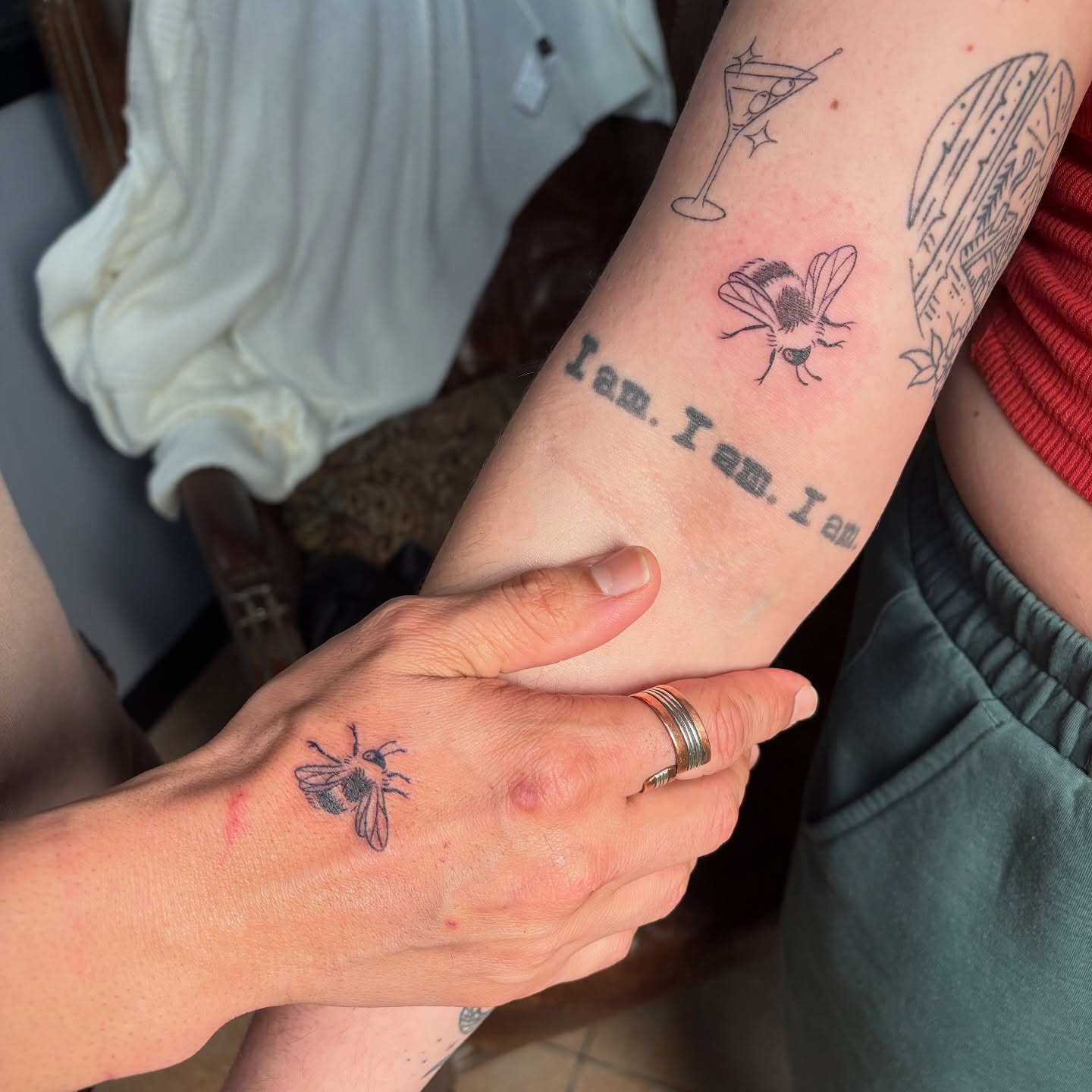
Not a quote you found last month. A line from a book, song or letter that has followed you for a decade or more.
The test I give people is simple: if you cannot remember when you first loved it, it has earned a place. Keep it short — a single line reads far better than a stanza — and ask for it set in a typeface you would actually choose for a printed book.
Size it generously. Small script that looks razor sharp on the day will close up slightly as the ink settles, and cramped lettering is the single most common regret I hear about word tattoos.
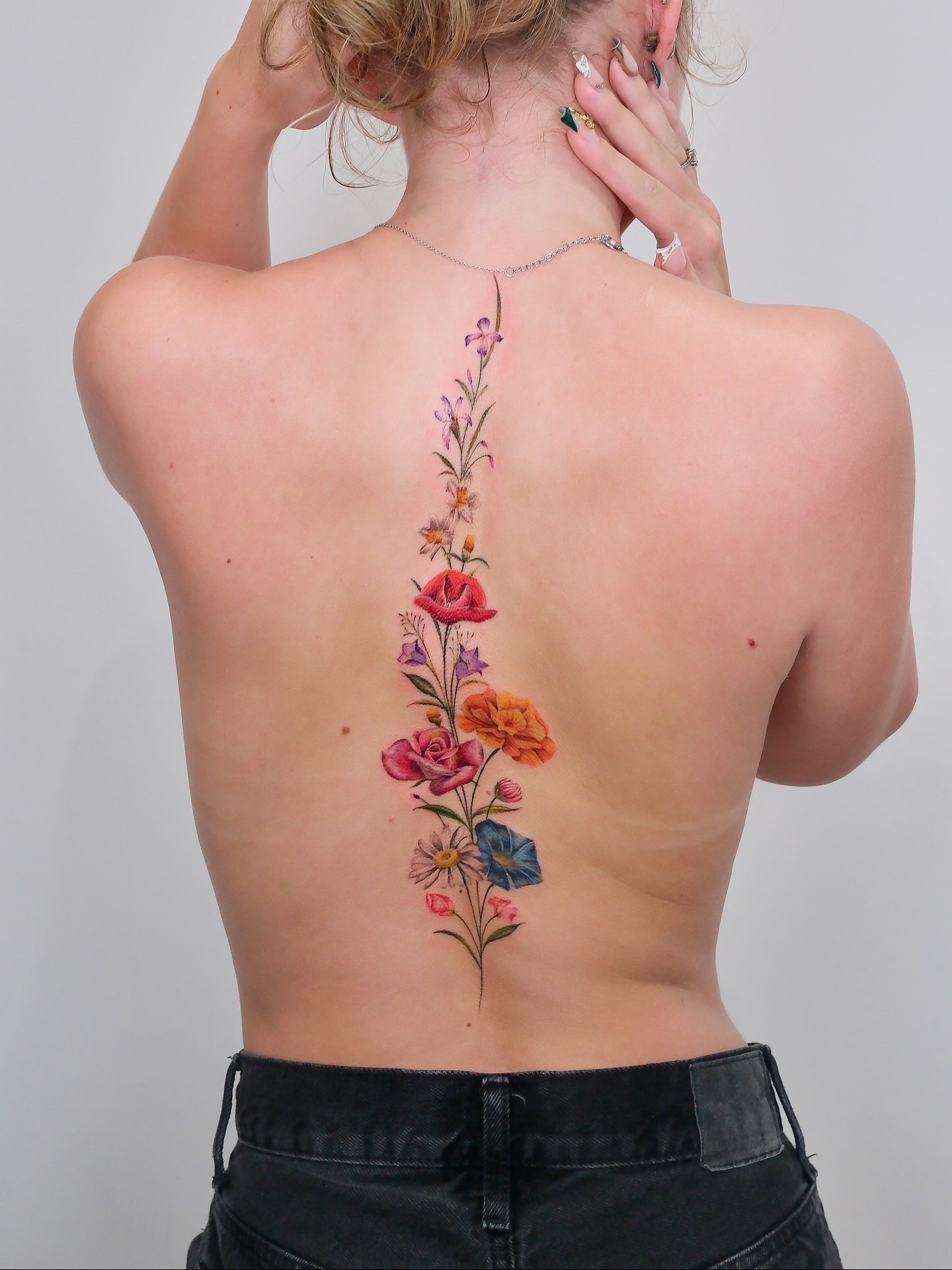
2. Birth Flower Botanical
Every month has an associated flower, and the tradition gives you a design brief without you having to invent one.
The version I like best groups several blooms together — your own, plus your children’s or partner’s — into one composition rather than scattering separate small flowers. Artists can build a genuinely beautiful arrangement that way, and it stays personal even though the motif is common.
There is a whole range of birth flower tattoo designs if you want to see how different months translate into linework.
3. Coordinates of the Most Important Place
Latitude and longitude for somewhere that actually shaped you: the hospital, the house, the coastline you return to.
Visually it reads as an abstract run of numbers to everyone else, which is exactly why it works. Bring the coordinates already verified to the appointment — do not let anyone transcribe them from memory at the studio.
If you like the concept but want it less literal, coordinate tattoo ideas include map-line and silhouette variations that carry the same idea.
4. Watercolour Landscape
A place rendered in soft washes rather than hard outline — mountains, a shoreline, a particular horizon.
I will be honest about the trade-off: watercolour is the style most likely to need attention down the line, because it relies on pigment gradients rather than structure. Every artist I have asked about it says the same thing, which is to insist on some black or grey underpinning so the image still reads once the softer tones settle.
5. Fine Line Portrait of Someone Loved
A parent, a child, a grandmother — rendered in single-needle linework rather than full realism.
This is the least forgiving idea on the list. Portrait work lives or dies on the artist, not the reference photo, so this is the one where you travel and wait rather than book locally and soon.
Ask to see healed portrait work in their portfolio, not fresh photos. Fresh work always looks good.
Personal Symbols and Quiet Statements
Smaller, more private designs that carry a lot without announcing themselves.
6. A Single Word That Defines You
One word. Not a phrase, not an affirmation — a word you have already been living by.
The ones I have seen work best are slightly unexpected: anyway, still, enough. They read as design elements to strangers and as a whole argument to you.
Typeface choice does most of the work here. Spend real time on it, and ask for a printed mock-up at actual size before the stencil goes on.
7. Family Tree Element
Rather than an illustrated tree, a single branch with one leaf, bud or berry per family member.
The advantage is that it grows. New grandchild, new leaf — added years later by the same artist, in a composition that was designed from the start to accept additions.
Tell your artist at the first consultation that the piece needs to expand. It changes how they lay out the branch.
8. Symbol from Your Heritage
A motif from the tradition you actually come from — Celtic, Slavic, West African, South Asian, Nordic.
These carry a weight that borrowed imagery never manages. Do the reading first, and if the symbol belongs to a living tradition with rules about who may wear it, respect those rules rather than working around them.
A good artist will research alongside you. In my experience the consultation for a heritage piece runs twice as long as a standard one, and that is a good sign.
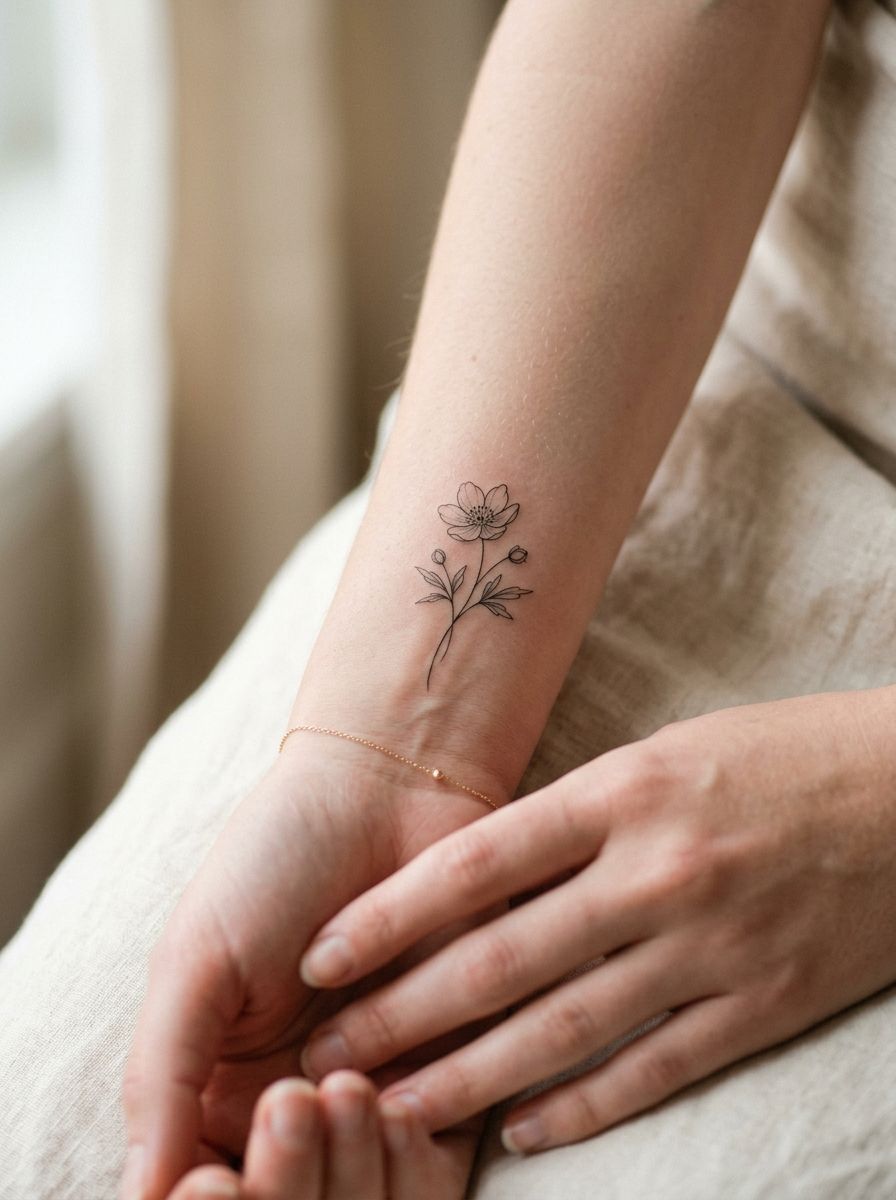
9. Minimalist Fine Line Floral Wrist
A single stem — lavender, olive, wild grass — tracing the inner wrist.
The inner wrist is one of the better placements for fine line work on mature skin, partly because it stays out of direct sun more than the outer arm. It is also easy to cover with a watch or sleeve on days you would rather not discuss it.
If you are weighing this placement, the fuller guide to wrist tattoo ideas for women covers pain, sizing and longevity in more detail.
10. Moon Phase Bracelet
A row of moon phases circling the wrist or ankle like jewellery.
You can make it specific — the phase on a birth date, an anniversary, the night something changed — and nobody will know unless you tell them. From two feet away it simply looks like an ornament.
Similar wrapped designs appear throughout bracelet tattoo ideas for women if the band format appeals more than the motif.
Designs That Mark Time and Place
Dates, skies and objects — the ideas that pin a specific moment to your skin without spelling it out.
11. Significant Date in Roman Numerals
A date rendered as numerals rather than digits, which reads as pattern rather than information.
Keep the numerals reasonably large and generously spaced. Roman numerals are unforgiving when cramped, because a blurred stroke turns a III into a II and the whole thing stops making sense.
I would also suggest a slim serif rather than a heavily stylised face. Serifs give the letterforms distinct shapes that survive as ink spreads.
12. Abstract Fine Line Composition
No representational subject at all — flowing lines, a single curve, a shape that simply pleases you.
This is the most underrated category on the list. Abstract work answers to nothing but your own eye, which is a genuine relief if you are tired of explaining what things mean.
Bring textures and shapes you like rather than finished tattoos. Good abstract artists prefer to design from raw material.
13. Constellation of a Significant Sky
The stars as they sat over a particular place on a particular night, mapped in small dots and connecting lines.
You can generate an accurate star chart for any date and location, and the resulting pattern is unique to that moment. Most artists will happily work from one.
Keep the dot sizes varied. A constellation rendered with identical dots loses the depth that makes it read as a sky rather than a diagram.
14. Heirloom Jewellery Translated to Ink
Your grandmother’s ring, a brooch, a locket — drawn as linework and placed where you would have worn it.
This is one of my favourite ideas on the whole list, and it comes up far less often than it should. Bring the object itself to the consultation if you still have it. Photographs flatten the detail an artist needs.
It also works when the object is lost. A clear description and one old photo is usually enough for a skilled illustrator.
15. A Scar Made Beautiful
Tattooing over or around a scar — surgical, accidental, from treatment — so that the eye goes to the design rather than the mark.
Two honest caveats. Scar tissue takes ink unpredictably, and it needs to be fully mature before anyone works on it, which generally means well over a year and confirmation from your own doctor rather than the studio.
Find an artist who has specifically done scar coverage and can show you healed examples. This is not general tattooing, and Mayo Clinic guidance on tattoos is clear that any broken or compromised skin should be treated with extra caution.
Placement-Led Ideas Worth Considering
Sometimes the placement is the idea, and the design follows from it.
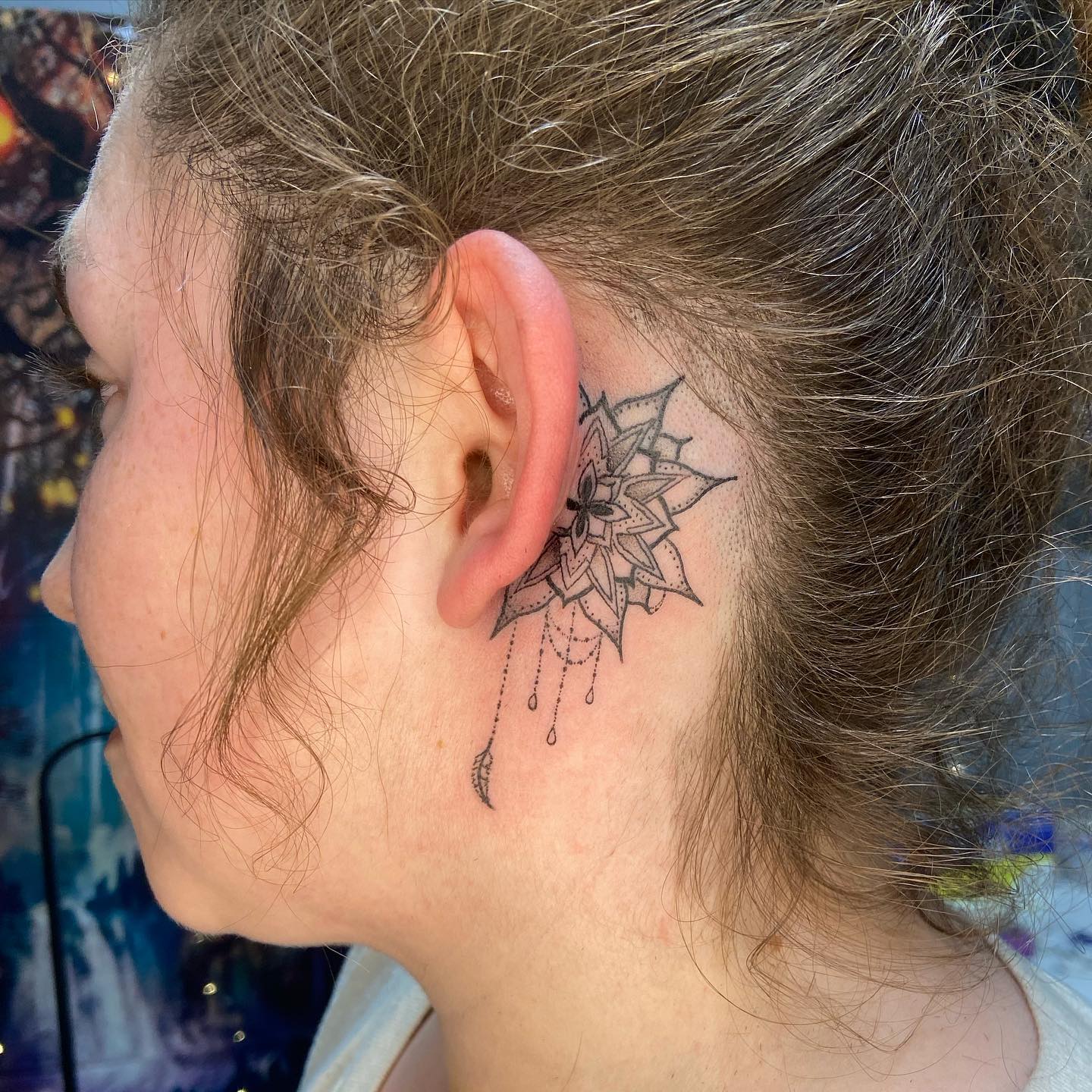
16. Fine Line Behind the Ear
Something tiny and precise tucked behind the ear — a small bloom, a symbol, two or three letters.
It is close to bone, so expect it to be sharper than a forearm session, though it is over quickly. It is also almost entirely concealable with hair down.
More options for this placement are collected in the guide to behind the ear tattoos for women.
17. Bold Statement Piece
The opposite instinct: something large, graphic and unapologetic on the upper arm, shoulder or forearm.
Plenty of women arrive at 50 having spent decades being tasteful and decide they are done with subtle. Bold black is also the single best-ageing approach on mature skin, so the aesthetic choice and the technical one point the same way here.
18. Handwriting of Someone Gone
A signature, a phrase from a card, a shopping-list note — reproduced exactly as they wrote it.
Bring the original paper, not a photo of a photo, and ask the artist to scan it at high resolution. The wobble and pressure variation in real handwriting is the entire point, and it is the first thing lost to a bad copy.
This is, in my experience, the idea people are most glad they got.
19. The Animal That Has Always Been Yours
Not the animal with the best symbolism online — the one you have circled back to your whole life.
Hares, herons, moths, horses, dogs you have actually owned. The personal connection is what stops it reading as generic, and it means you never have to justify the choice to anyone.
Fine black linework suits this better than heavy colour realism if you want it to stay clean for decades.
20. The Thing You Finally Became
A symbol of something you arrived at late: a degree finished at 48, a business started at 52, a language learned, a marathon run.
These are the tattoos I see people touch while they talk about them. Achievements reached after 40 tend to have cost more, and the ink reads as evidence rather than decoration.
Keep the symbol oblique rather than literal. A compass, a single character, a tool from the trade — it holds up better than a logo or a date and a word.
Variations if None of These Quite Fit
A few directions that work well later in life but do not fit neatly into a numbered list.
Ornamental Band Instead of an Image
Filigree, lace or geometric banding around an upper arm, wrist or ankle carries no subject matter at all — it is pure decoration, and it flatters the limb rather than sitting on it.
It is also extremely durable, because the pattern reads even after individual elements soften.
A Matching Piece With Someone
Not the identical design on both people, which dates quickly, but two halves of one idea — a plant and its flower, two stanzas of the same line.
I have seen this done with adult daughters more often than with partners, and it holds up well.
Vintage and Traditional Revival
Classic American traditional and mid-century designs age better than almost anything, because they were built around bold outline and flat colour from the start.
There is a strong case for this route if longevity is your main concern — vintage tattoo inspiration for women shows how the older styles read on modern placements.
Start Small and Build
Rather than committing to one large piece, get one small, well-placed tattoo and live with it for six months.
Most women I know who now have several started exactly this way. It is the lowest-risk way to find out whether you like being tattooed, as distinct from liking tattoos.
Practical Advice Before You Book
A handful of things that matter more after 40 than they did before.
Consult before you commit. A proper consultation is usually free, lasts twenty minutes to an hour, and tells you more about whether an artist is right for you than any amount of scrolling their feed.
Ask specifically to see healed work in the style you want, on skin roughly like yours. Fresh photographs flatter everyone; healed photographs are the real portfolio.
Tell the artist about any medication, skin condition or recent treatment that might affect healing, and clear it with your doctor first if you are on anything that affects clotting or immune response. The U.S. Food and Drug Administration notes that reactions and infections are the main risks worth taking seriously, and a reputable studio will want this information before starting.
Budget realistically. Good work is priced by time, and rushing an artist to fit a lower budget is the most reliable way to end up with something you do not love — the guide to small tattoo costs gives a sense of what small pieces typically run.
Finally: sunscreen, for the rest of the tattoo’s life. It is the cheapest thing you can do to keep the work looking like it did in week four.
Still Not Sure? Common Mistakes to Avoid
Choosing the artist by price or proximity rather than by portfolio. This is the mistake that causes almost every other one.
Going too small for the amount of detail. Detail needs room, and mature skin needs a little more room than young skin does.
Picking a design because it photographs well rather than because it means something. Trends move fast; skin does not.
Booking the week before a holiday. Fresh tattoos and sun, chlorine or seawater do not mix, and you will spend the trip covering it up.
If you are still circling, it often helps to narrow by placement instead of by subject — meaningful forearm tattoos for women and small meaningful tattoos are both good places to see how scale and position change the feel of an otherwise similar design.
Frequently Asked Questions
Is 40 or 50 too old to get your first tattoo?
No. There is no upper age limit on getting tattooed, and reputable studios see first-timers in their forties, fifties and sixties regularly. The main adjustments are technical rather than personal: slightly heavier line weight, a little more size, and placement chosen partly for sun protection. In my experience first-timers over 40 are among the most satisfied clients artists have, because they have already thought the decision through.
Do tattoos hurt more on older skin?
Pain varies far more by placement and individual tolerance than by age. Bony areas such as ribs, sternum, ankle and behind the ear are sharper at any age, while the outer forearm and upper arm are usually the gentlest. Some people do find thinner skin more sensitive, but plenty report the opposite. Tell your artist if you need breaks — every decent one will stop.
Which tattoo styles last longest on mature skin?
Bold black linework and well-contrasted black and grey hold their shape the longest, because they rely on structure rather than hairline detail. Ornamental and dotwork patterns also age well, since the overall pattern survives even as individual elements soften. Very fine single-needle work and watercolour are the most likely to need a touch-up over time. None of these are off-limits — they simply come with different maintenance expectations.
How long does a new tattoo take to heal after 40?
The surface usually closes within about two to three weeks, with the deeper layers settling over a couple of months, though healing can run slower if you take medication affecting circulation or immune response. Follow the aftercare your artist gives you rather than advice from the internet, keep it clean and out of the sun, and do not pick. If you see spreading redness, heat, swelling or discharge, contact a doctor promptly rather than waiting it out.
Can I tattoo over a scar or stretch marks?
Often yes, but it depends on the scar and the artist. The tissue needs to be fully mature — generally well over a year old — and it takes ink unpredictably, so results are less precise than on unscarred skin. Get clearance from your own doctor first, and find an artist who can show you healed examples of scar work specifically. This is a specialist job, not something to hand to a generalist.
Quick Summary
- There is no age limit on getting tattooed, and later decisions tend to be better ones.
- Mature skin takes ink slightly differently, so size up and weight lines a little heavier than your reference.
- Bold black and well-contrasted black and grey age the best; fine line and watercolour need more maintenance.
- Choose placements with some sun protection — inner wrist, inner forearm, upper arm, behind the ear.
- Judge artists on healed work in your chosen style, never on fresh photographs alone.
- Disclose medication and skin conditions to the artist, and check with your doctor if anything is unclear.
- Scar coverage is specialist work that needs mature tissue and medical clearance first.
- Sunscreen for life is the cheapest thing you can do to keep the tattoo looking new.