A back of ear tattoo is the only placement I own that works like a switch — hair down and it is completely gone, hair up and it is the most deliberate thing I am wearing.
I have sat for two pieces in this spot and watched a lot more go on while waiting my turn at the shop, and the same thing happens every time: the client underestimates how much the design has to shrink to fit, and the artist has to talk them down from something with too many lines in it.
That is the honest tension behind this placement. The area is beautiful and easy to hide, but it is small, curved, and sits over bone, which means the designs that survive five years are not always the ones that look best on the reference photo.
Below are the styles that hold up, the ones that do not, and what the healing actually feels like. If you are still deciding on scale in general, it is worth reading tiny tattoo ideas for women alongside this guide.
Which Back of Ear Tattoo Style Is Right for You?
This is the comparison I wish someone had handed me before my first appointment. Sitting times are the ranges I have been quoted and experienced, not a formal survey.
| Style | Typical Size | Usual Sitting Time | How Well It Ages | Best For |
|---|---|---|---|---|
| Fine-line botanical | 2-5 cm | 25-45 min | Softens; usually wants a touch-up in a few years | Delicate, feminine, easy to hide |
| Solid black silhouette | 1-4 cm | 20-35 min | The most forgiving option here | Butterflies, birds, moons, simple shapes |
| Micro-script or initials | 1-4 cm | 15-30 min | Risky below a certain size; letters can close up | Names, dates, one short word |
| Dotwork and stippling | 2-5 cm | 35-60 min | Blurs gently rather than patchily | Mandalas, moons, soft shading |
| Geometric and origami | 2-5 cm | 30-50 min | Good, as long as lines stay spaced | Clean, modern, unisex looks |
| Colour or micro-realism | 3-6 cm | 45-90 min | Hardest to keep sharp; needs sun care | Statement pieces you plan to maintain |
Why the Skin Behind Your Ear Behaves Differently
The area behind the ear is not one surface. It is a small flat patch over the mastoid bone, a curved shelf where the ear meets the head, and a soft hollow underneath, and each of those three takes ink slightly differently.
That is the single biggest reason designs need simplifying here. A line that crosses from the flat patch onto the curve will pull as the skin moves, so most artists I have watched will rotate a design rather than let it wrap.
The skin is also thin. In my experience the sting is manageable but the sound is not — the machine is running a couple of centimetres from your eardrum, and that buzzing bothers people far more than they expect.
If pain is the part you are worried about, it helps to see where this sits relative to everything else on the body, which is covered in more detail in this breakdown of the most painful tattoo spots.
One last practical thing: this spot gets more sun than people assume. Every time you wear your hair up, it is exposed, and sun is the main reason fine-line work behind the ear goes soft earlier than the same design on an inner arm.
Back of Ear Tattoo Ideas for Females That Actually Hold Up
These are grouped by how they behave over time, not just by how they look on day one.
1. Fine-Line Florals and Botanicals
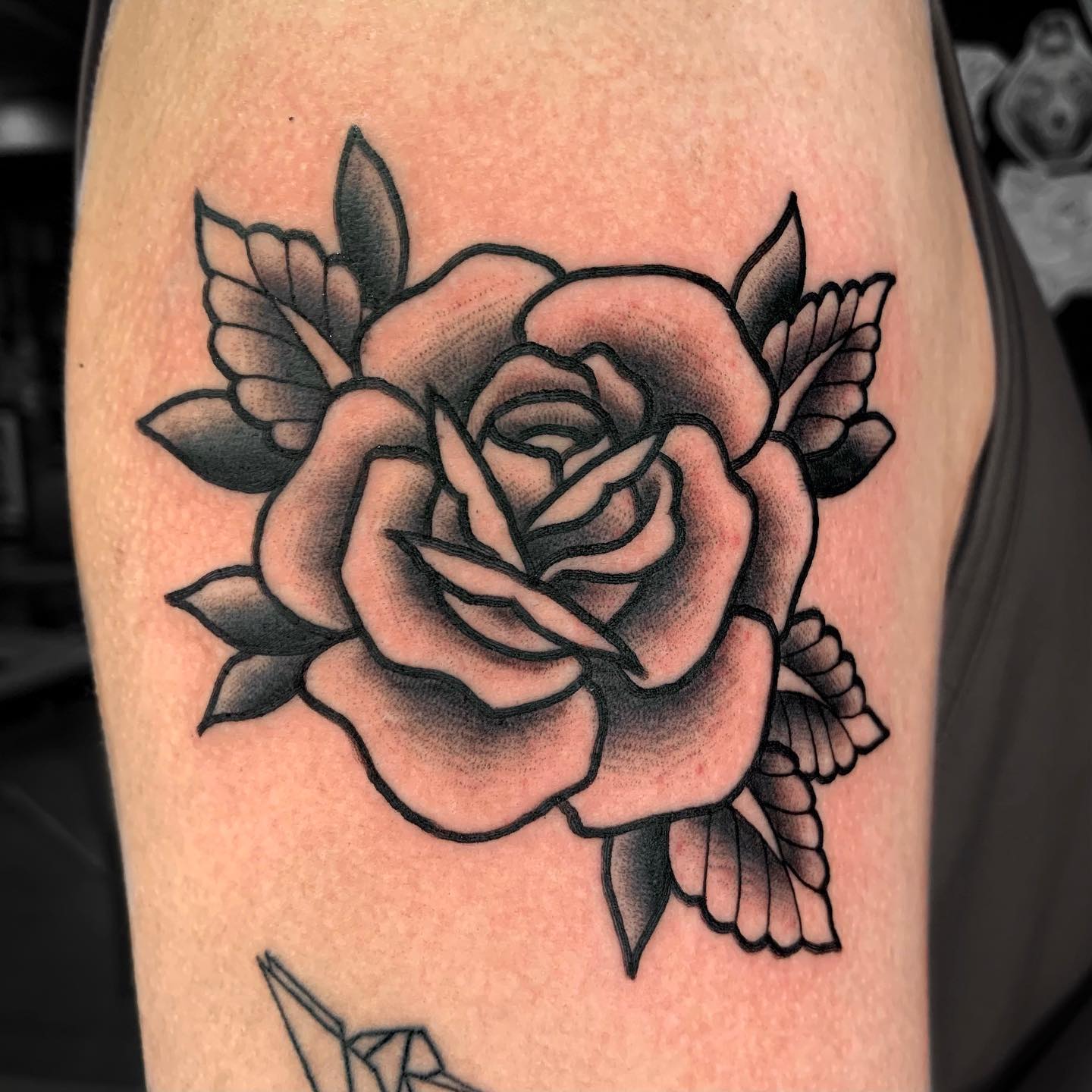
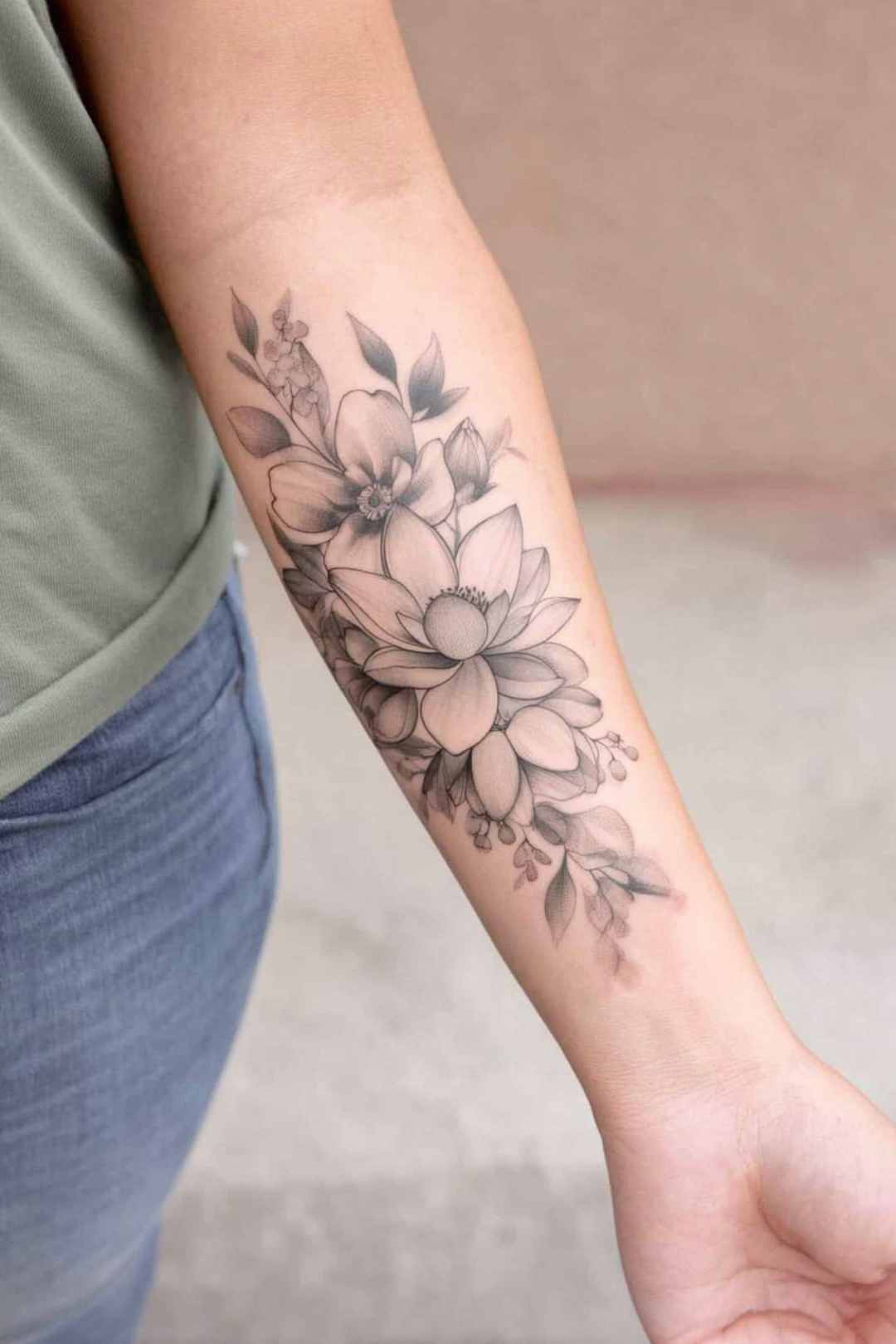
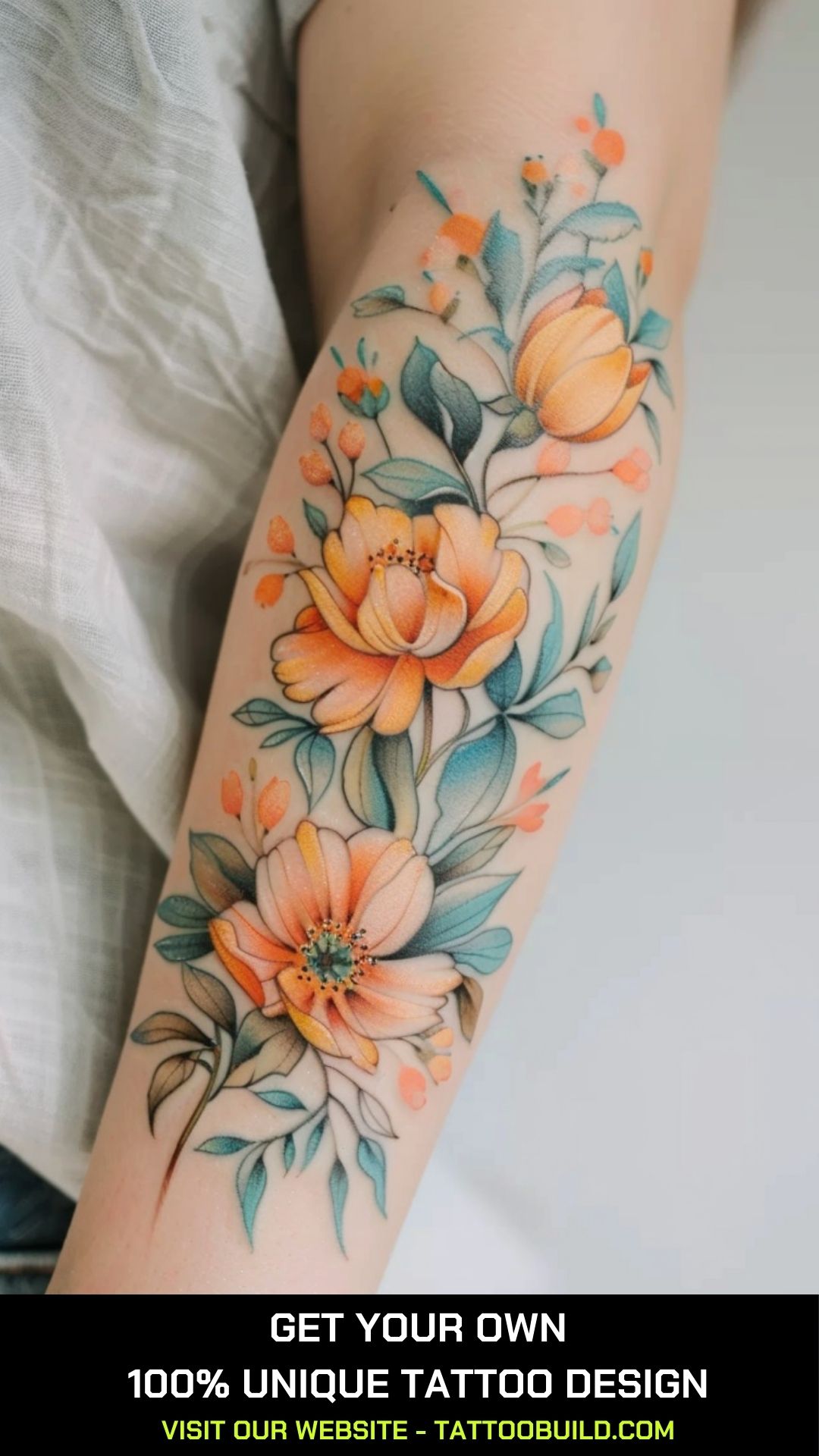
A single stem — lavender, a sprig of wildflower, one small rose — is the most requested thing behind the ear, and for good reason. The vertical shape of a stem matches the vertical shape of the space.
The trap is detail. A rose with fifteen petals at 3 cm becomes a dark blob within a few years because the gaps between lines close as ink spreads slightly under the skin.
What I have seen work is a stem with three or four leaves and one bloom, drawn with visible breathing room. Ask your artist to show you a healed photo of the same design at the same size, not a fresh one.
If the botanical look is what you are after but you want more room to play with, minimalist tattoo ideas covers the same style at a larger scale.
2. Butterflies, Birds and Winged Motifs
Butterflies behind the ear are close to a modern classic, and the small ones age better than almost anything else in this list when they are done as a simplified silhouette.
The version that fails is the detailed one — every vein in the wing rendered at 2 cm. Every artist I have asked about this gives the same answer: pick the outline or pick the detail, not both.
Birds are the quieter option. Two or three small birds in flight, staggered diagonally, use the space well and read clearly from a normal conversational distance, which is the only distance that matters.
A good test is to shrink the reference image on your phone until it is the real size and look at it from arm’s length. If you cannot tell what it is, neither will anyone else.
3. Celestial and Constellation Designs
Moons, stars, and constellations are a natural fit because they are made of dots and simple curves, which is exactly what small-scale skin handles well.
A crescent moon with two or three stars trailing behind it is probably the safest design in this entire guide. There is very little to blur.
Constellations are more personal — a birth sign or a date mapped to stars — and the dot-and-thin-line construction sits nicely on the flatter patch behind the lobe. If that is the direction you are leaning, these constellation tattoo ideas has more layouts worth stealing.
One honest caveat: very thin connecting lines between stars are usually the first element to fade. Ask for them slightly heavier than looks right on paper.
4. Origami and Geometric Shapes
Origami cranes, folded hearts, and simple polyhedra translate to this placement better than almost anything, because they are already built from straight lines and flat planes.
Straight lines are also the easiest thing to judge in a healed tattoo — if they are still straight, the work was good.
When I tested a geometric stencil on myself before committing, the thing that surprised me was how much the shape distorted when I turned my head. The artist rotated it about fifteen degrees and it sat correctly.
Always look at the stencil in a mirror with your head in three positions: neutral, turned, and tilted down. This spot is seen in motion far more than it is seen straight on.
5. Symbols With a Story
An open book, a tiny anchor, a key, a small octopus — these are the pieces people actually explain when someone asks about them.
A book works if the artist suggests pages with two or three lines instead of drawing a full stack. The same logic applies to an anchor: the silhouette carries it, the rope detail does not.
The octopus is an interesting one for this placement specifically, because the tentacles give the design somewhere to curl around the contour behind the ear rather than fighting it.
In my experience these read as more personal than florals, and they are the ones I have never heard anyone regret.
6. Script, Initials and Single Words
Short is the whole rule. One word, a set of initials, or a date. Anything longer and the letters start touching each other as the tattoo settles.
I have seen a four-word quote behind an ear at about 3 cm and it was already hard to read at the two-year mark. The client had it reworked into a single word.
Serif fonts with fine hairlines are the riskiest choice here. A simple handwritten script with even line weight survives much better.
If the word matters more than the aesthetic, size up or move the placement — behind the ear is not the spot to force text into.
7. Dotwork, Stippling and Micro-Mandalas
Dotwork is quietly the best-kept secret for this area. Instead of solid shading, the artist builds tone from individual dots, and when those dots spread slightly with age, the result softens evenly rather than going patchy.
A micro-mandala behind the ear is genuinely impressive when it is done by someone who works small every week. It is a disaster when it is not.
Sitting time is longer than people expect for the size — dotwork is slow, and I would budget close to an hour for anything with real symmetry in it.
Ask to see three healed dotwork pieces from that specific artist before booking. Not fresh, healed.
8. Soft Shading and Subtle Colour
Most behind-the-ear work is black and grey, but soft shading and a small hit of colour can lift a design out of the sticker category.
A little bit of shading behind a silhouette gives it depth without adding lines that can close up. This is my favourite compromise for people who want detail but should not have it.
Colour is the harder ask. Lighter pigments generally fade faster than black, and this spot sees real sun, so plan for maintenance if you go that route.
The American Academy of Dermatology advises protecting healed tattoos from sun exposure to keep them looking their best, and behind the ear is exactly the place people forget to apply sunscreen.
If Behind the Ear Feels Too Small, Consider These
Not every design belongs here, and a good artist will tell you so. These are the placements people move to most often after that conversation.
Extending Down Toward the Neck
Starting behind the ear and letting the design trail down the side of the neck buys you two or three extra centimetres of usable space.
It also changes the coverability, so be honest with yourself about your workplace. Back of neck tattoos for women covers what that placement looks like in practice.
The Wrist or Inner Forearm
If the appeal was the small, delicate scale rather than the hiding, the wrist gives you flatter skin and an easier heal for the same design.
It is also a far easier first tattoo. There is more room in female wrist tattoo ideas than most people expect.
The Ear Itself
Helix and inner-conch tattoos are having a moment, but they are a different proposition — cartilage, more discomfort, and a much shorter list of artists who will do them well.
I would not recommend it as a first piece, and I would only book it with someone whose portfolio is full of them.
Aftercare for a Behind-the-Ear Tattoo
This placement has a few quirks that generic aftercare advice misses, and they are all about hair.
Shampoo, conditioner, dry shampoo and hair dye will all end up on a healing tattoo behind your ear unless you actively work around it. For the first week I washed my hair leaning forward over the bath with the tattooed side raised, which felt ridiculous and worked perfectly.
Keep hair itself off the area too. A loose ponytail or a clip is better than letting hair sit against a healing surface, and I would skip a tight updo that pulls the skin for the first few days.
Otherwise, standard care applies: clean with unscented soap, pat dry, a thin layer of whatever your artist recommends, and no picking. Our tattoo aftercare guide walks through the full routine, and the tattoo healing stages guide explains what you should expect to see week by week.
One genuine safety note: because this area sits close to the ear and lymph nodes, any spreading redness, heat, swelling, pus or fever is a reason to contact a doctor rather than wait it out. The Mayo Clinic and the US FDA both document the infection and allergic-reaction risks that come with any tattoo, and neither this article nor your artist is a substitute for medical advice.
Still Not Sure? The Mistakes I See Most Often
The first is bringing in a design that was drawn for a forearm. Scale changes everything, and a design that is not redrawn for this placement will usually disappoint you.
The second is picking an artist by proximity rather than by portfolio. Small work is a specialism — plenty of excellent artists do not do it, and they will normally say so if you ask.
The third is assuming it will not hurt because it is small. It is a short sit, but it is a bony, noisy one, and going in expecting nothing sets you up badly.
The fourth is forgetting that hair has to be shaved. Most artists will clear a small patch behind the ear, and it grows back, but it surprises people mid-appointment.
If this is your first piece, our guide to first tattoo ideas for women is worth reading before you book, and the minimalist tattoo guide is a good sanity check on scale.
Frequently Asked Questions
Do back of ear tattoos hurt more than other placements?
The skin behind the ear is thin and sits close to bone, so most people describe it as sharper than a forearm but shorter. In my experience the sting was very manageable, and the harder part was the sound of the machine running a couple of centimetres from my eardrum. Because the pieces are small, the whole sit is usually under 45 minutes. If you are pain-sensitive, tell your artist and take a break partway through rather than trying to power through.
How long does a back of ear tattoo take to heal?
The surface generally looks settled within two weeks, while the deeper layers usually take a few weeks longer, which is true of tattoos anywhere on the body. This placement heals fine in most cases, but hair products and hair friction are the two things that most often irritate it. Keep shampoo, conditioner and dry shampoo away from the area and wear your hair off it for the first week. If anything looks infected rather than simply itchy, see a doctor.
Will a back of ear tattoo fade quickly?
It fades faster than a placement that stays covered, mainly because of sun exposure every time you wear your hair up. Fine-line work and light colours are the first things to soften; solid black silhouettes and dotwork hold up best. Applying sunscreen behind your ear once the tattoo is fully healed makes a real difference. Many people with fine-line work here plan on a touch-up every few years, and that is normal rather than a sign something went wrong.
How small can a back of ear tattoo be?
Around 1 to 2 cm is the practical floor for most designs, and below that you are relying entirely on the design having very few lines. Anything with letters, internal detail or lines closer together than roughly a millimetre will tend to close up over time. A good artist will tell you the minimum size for your specific design rather than quoting a general number. If they say it needs to be bigger, that advice is usually worth taking.
Do they shave your hair for a back of ear tattoo?
Usually yes, a small patch. Artists shave the area so the stencil sits cleanly and the skin stays sterile, and how much comes off depends on how close to the hairline the design sits. It grows back normally and is easy to cover with the surrounding hair in the meantime. Ask beforehand if you want to plan around it, especially if you have an event coming up.
Quick Summary
- Back of ear tattoos for females work best as simple, high-contrast designs — silhouettes, dotwork and short script beat dense detail.
- The area is three surfaces in one, so most designs need rotating or redrawing rather than shrinking.
- Expect a short but sharp sit, usually under 45 minutes, with the machine noise bothering people more than the pain.
- Fine-line and light colour fade fastest here because the spot gets real sun whenever your hair is up.
- Solid black silhouettes and stippled dotwork are the two most forgiving styles over five-plus years.
- Keep shampoo, conditioner, dry shampoo and hair friction off the area for the first week of healing.
- Choose an artist by their healed small-scale portfolio, not by convenience — and ask to see healed photos, not fresh ones.
- Any spreading redness, heat, pus or fever is a doctor visit, not something to wait out.