Forget bangles that slide off in the sink. A bracelet tattoo is the one piece of wrist jewellery you never have to take off, and after eight years of watching this style evolve, it is still the request I see clients change their minds about the most.
I have sat in on consultations where a woman walked in wanting a solid black band and walked out with a floral chain, and the reverse just as often.
The wrist is a small canvas with a lot of movement, so the design that photographs beautifully on a flat page does not always wrap the way you expect.
This guide covers the styles that actually hold up, what each one costs you in pain and healing, and how to choose between a closed band and an open one. If you are still weighing placement, my broader roundup of women’s wrist tattoo ideas is a good companion read.
Which Bracelet Tattoo Style Is Right for You?
Every style below sits differently on the wrist. This is the comparison I sketch out for people who cannot decide, based on what I have seen heal well and what I have seen need touch-ups.
| Style | Typical Sitting | Ages Best When | Best For |
|---|---|---|---|
| Fine line floral chain | 1–2 hours | Lines are kept above hair-thin and spaced apart | Softness, a design that reads as jewellery |
| Solid black band | 1–2 hours | Packed evenly by an artist who does blackwork often | Graphic impact, hiding older ink |
| Ornamental / mandala | 2–4 hours | Dotwork is spaced, not crowded | Detail lovers who want symmetry |
| Chain or rope | 2–3 hours | Links are drawn large enough to keep their gaps | A literal jewellery illusion |
| Micro symbols on a thread | Under 1 hour | Symbols stay simple, three or four shapes maximum | First tattoos and small budgets |
| Script or name band | 1–2 hours | Letters are sized up and not condensed | Memorial and meaning-first pieces |
What Actually Makes a Bracelet Tattoo Work
The wrist is not a cylinder, and that is the whole problem. It is an oval that flattens on the inside and bulges over the ulna bone on the outside.
A band that is drawn as a perfectly straight line on paper will look like it slopes downhill once it is wrapped. Good artists compensate by stencilling the design directly on the arm and adjusting it while you hold your hand in a relaxed position, not flat on the table.
Skin over the inner wrist is also thinner and more elastic than the back of the forearm, which means very tight detail there tends to spread over the years.
In my experience the pieces that still look sharp after five years share one trait: negative space. Designs with breathing room between elements age far better than anything packed edge to edge.
The other factor is sun. The wrist gets a lot of incidental UV exposure, especially on the steering-wheel hand, and that is the single biggest cause of the faded, greyed-out band look.
Women’s Bracelet Tattoo Ideas by Style
These are the six directions almost every bracelet tattoo falls into. I have grouped them by how they behave on skin rather than by trend, because trends move and healing does not.
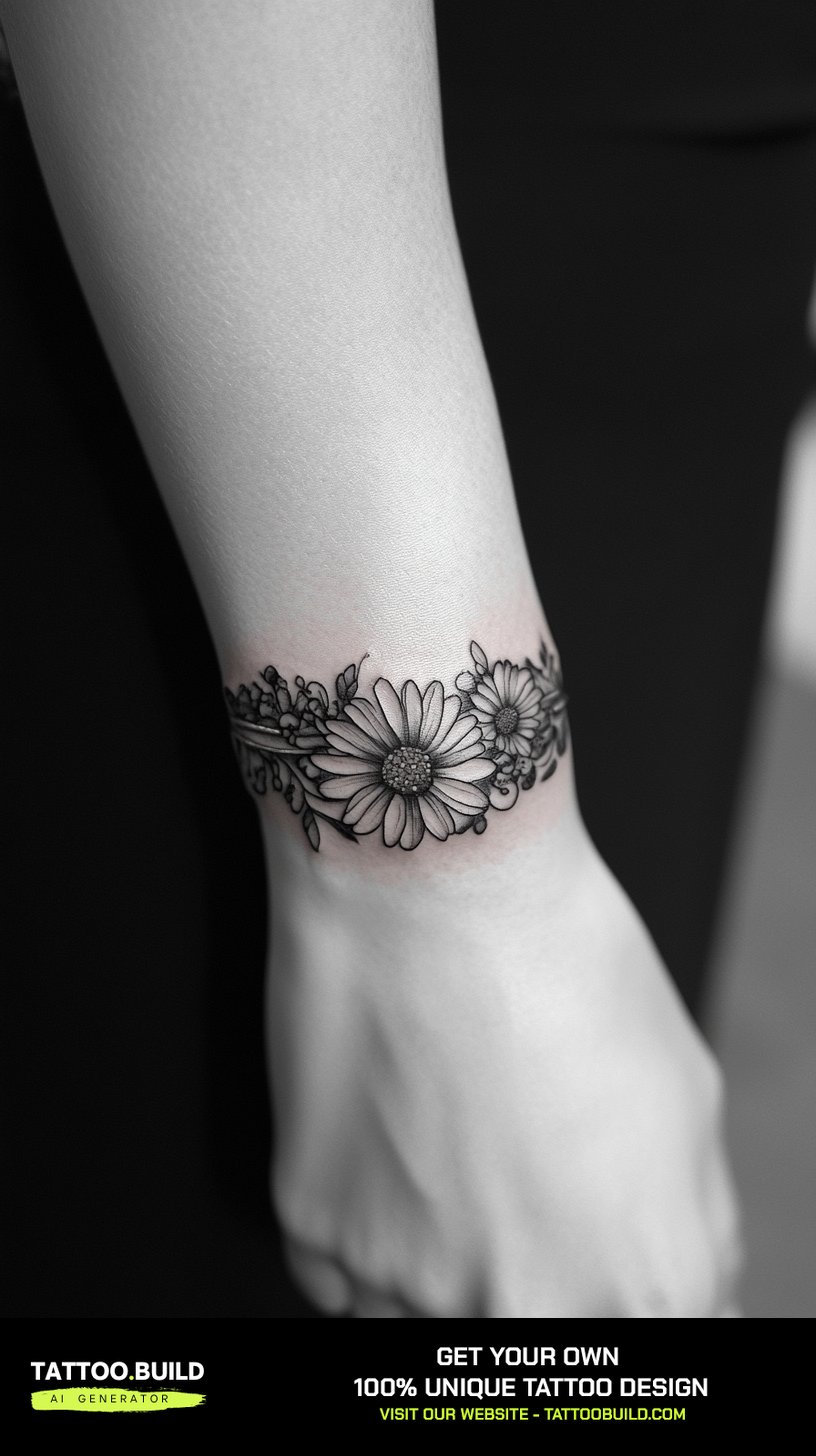
1. The Fine Line Floral Chain
This is the most requested version I see, and for good reason: a continuous vine of small blossoms wraps the wrist without ever needing to line up perfectly at the back.
The trick is that flowers hide the join. Where a solid band has to meet itself exactly, a floral chain can simply trail off into a leaf and nobody notices.
Ask for blossoms no smaller than about a centimetre across. Anything tinier tends to fill in and lose its centre within a few years, which is the most common regret I hear about fine line tattoos.
If you want the flowers to mean something rather than just decorate, birth flower tattoo ideas are an easy way in — one bloom per person, spaced around the band.
2. The Solid Black Band
A single packed black band is the boldest thing you can put on a wrist, and it is also the least forgiving.
Solid black needs even saturation. If the artist pushes too hard the ink can heal patchy, so this is a design where the portfolio matters more than the price.
Widths between roughly one and three centimetres are the sweet spot. Narrower than that and the band reads as a smudge from a distance; much wider and it starts to look like a cuff rather than a bracelet.
Every artist I have asked about blackwork bands says the same thing about touch-ups: expect one. It is normal, not a sign the work was bad.
3. Ornamental and Mandala Bands
Ornamental bracelet tattoos borrow from henna, mehndi and Southeast Asian textile patterns, usually layering a patterned stripe with dotwork and small hanging shapes.
These are the most visually rich option and the most time-intensive, often running three to four hours because the symmetry has to be exact.
If you are drawn to a design rooted in a living cultural practice, it is worth reading about its origins and choosing an artist who works in that tradition respectfully.
Practically, I would ask for the dotwork to be spaced more generously than the reference photo. Dots migrate slightly as skin ages, and crowded stippling turns into a grey smear.
4. Chain, Rope and Pearl Illusions
A well-drawn chain tattoo genuinely fools people at arm’s length, which is either the whole appeal or the whole problem depending on your taste.
The illusion lives in the shading. Each link needs a highlight and a cast shadow, so this style does not work in flat linework.
Scale it up. Links smaller than about eight millimetres lose their internal gaps as the ink settles and the chain turns into a rope.
Pearl strands are the softer cousin, and they suit the inner wrist particularly well because the round highlights sit nicely on flatter skin.
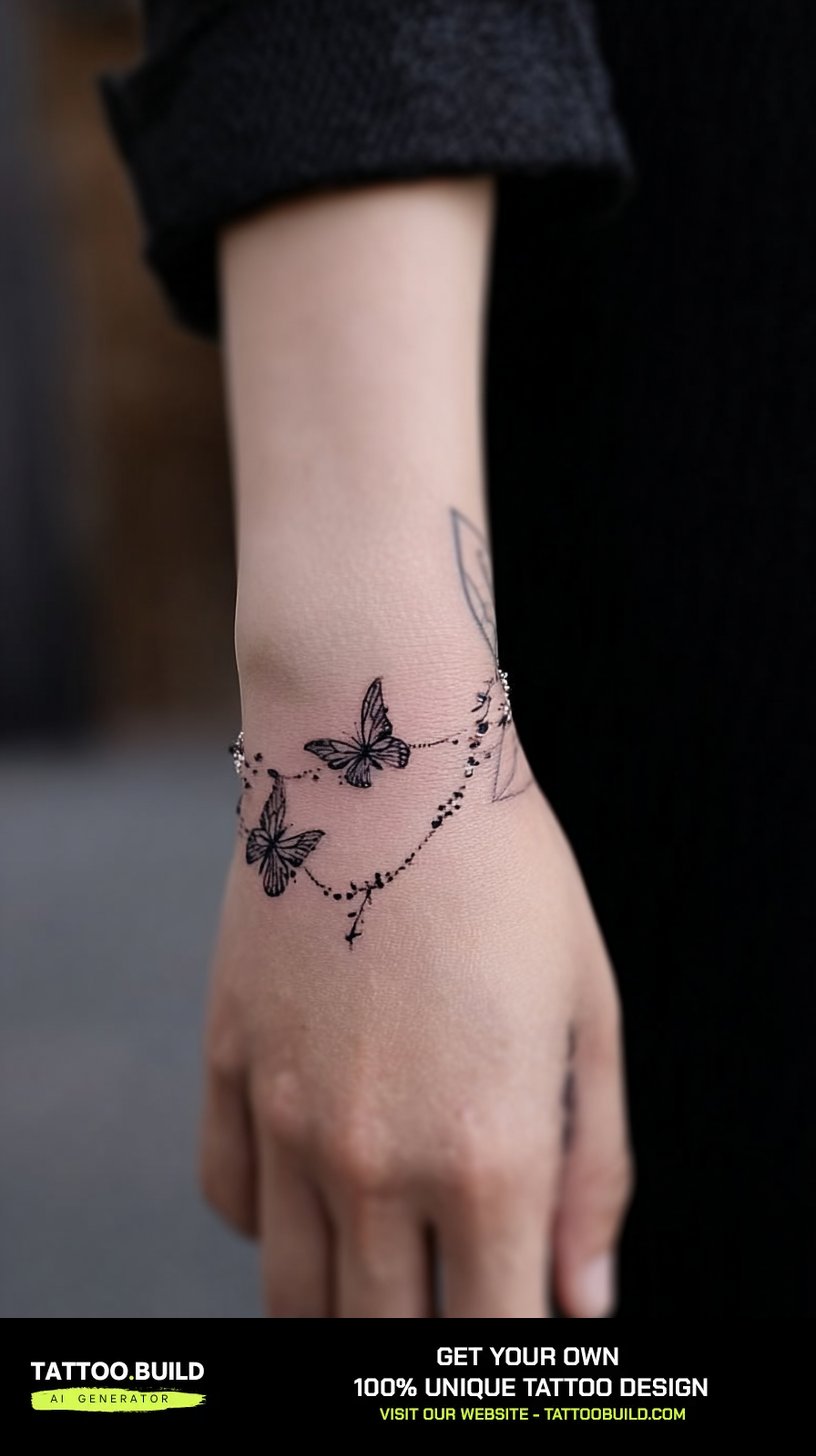
5. Micro Symbols on a Thread
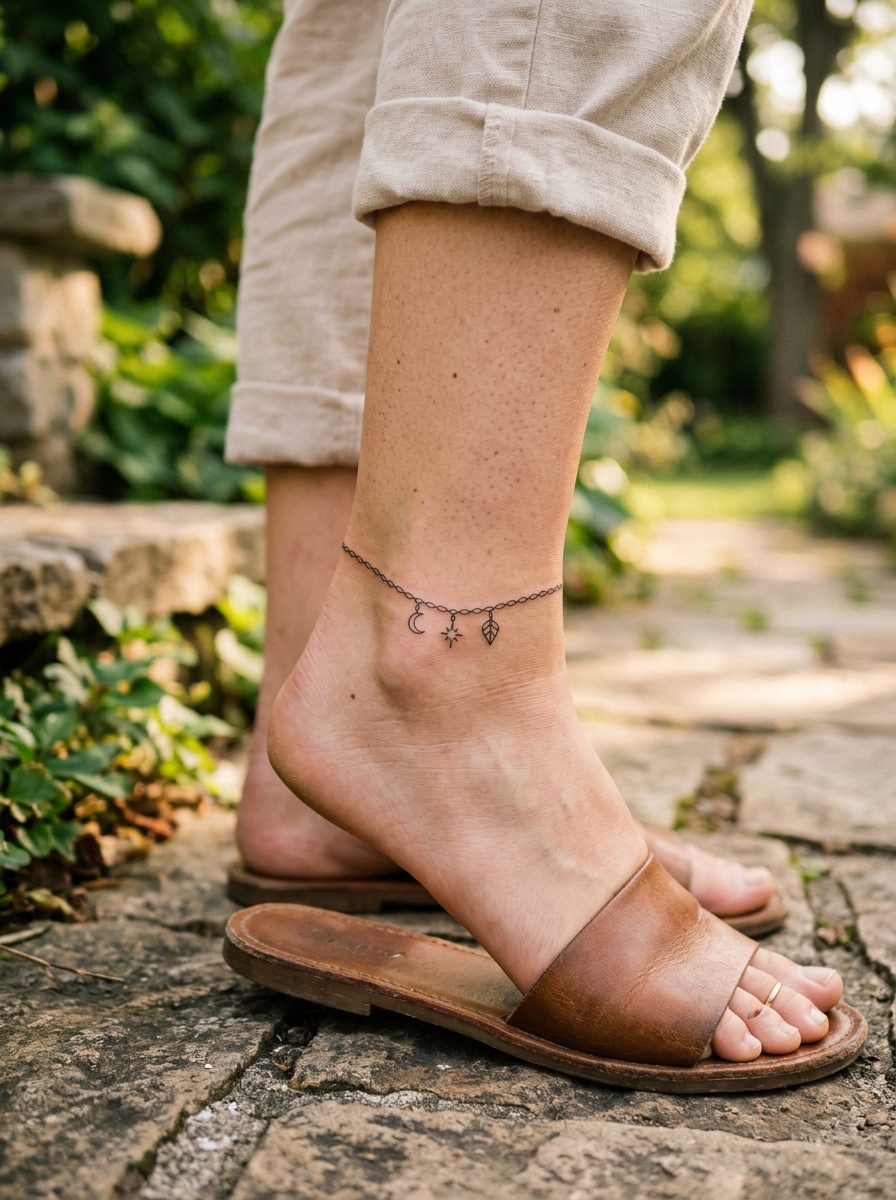
This is the version I recommend most often to people getting their first tattoo: a single hairline thread around the wrist with three or four tiny symbols hanging from it like charms.
A star, a heart, an initial, a small moon. It costs less, hurts less because the sitting is short, and it can be added to later.
Keep the charm count low. I have watched people add one symbol per year until the thread was cluttered, and there is no elegant way back from that.
If you like the miniature scale, classy finger tattoos follow the same design logic on an even smaller canvas.
6. Script, Names and Dates
A word or a date wrapped around the wrist is the most personal bracelet option, and the one that most often needs redoing.
Script fails when it is sized down. Letters need enough space between strokes that ink spread does not close the gaps in an e or an a.
I would push for a slightly larger, simpler typeface than your first instinct. Heavy calligraphic flourishes are the first thing to blur.
For memorial pieces, consider putting the script on the inner wrist and keeping the outer wrist plain — it stays private until you turn your hand.
Variations Worth Considering Before You Commit
Not every bracelet tattoo has to be a full circle. These are the alternatives I bring up when someone is hesitant.
The Open Band
An open band leaves a gap of two or three centimetres on the inner wrist, so the design stops rather than closes.
It is a good compromise if you are nervous about commitment, and the gap gives you somewhere to extend later. Some people also find a closed circle around a limb uncomfortable symbolically, which is a perfectly valid reason to leave it open.
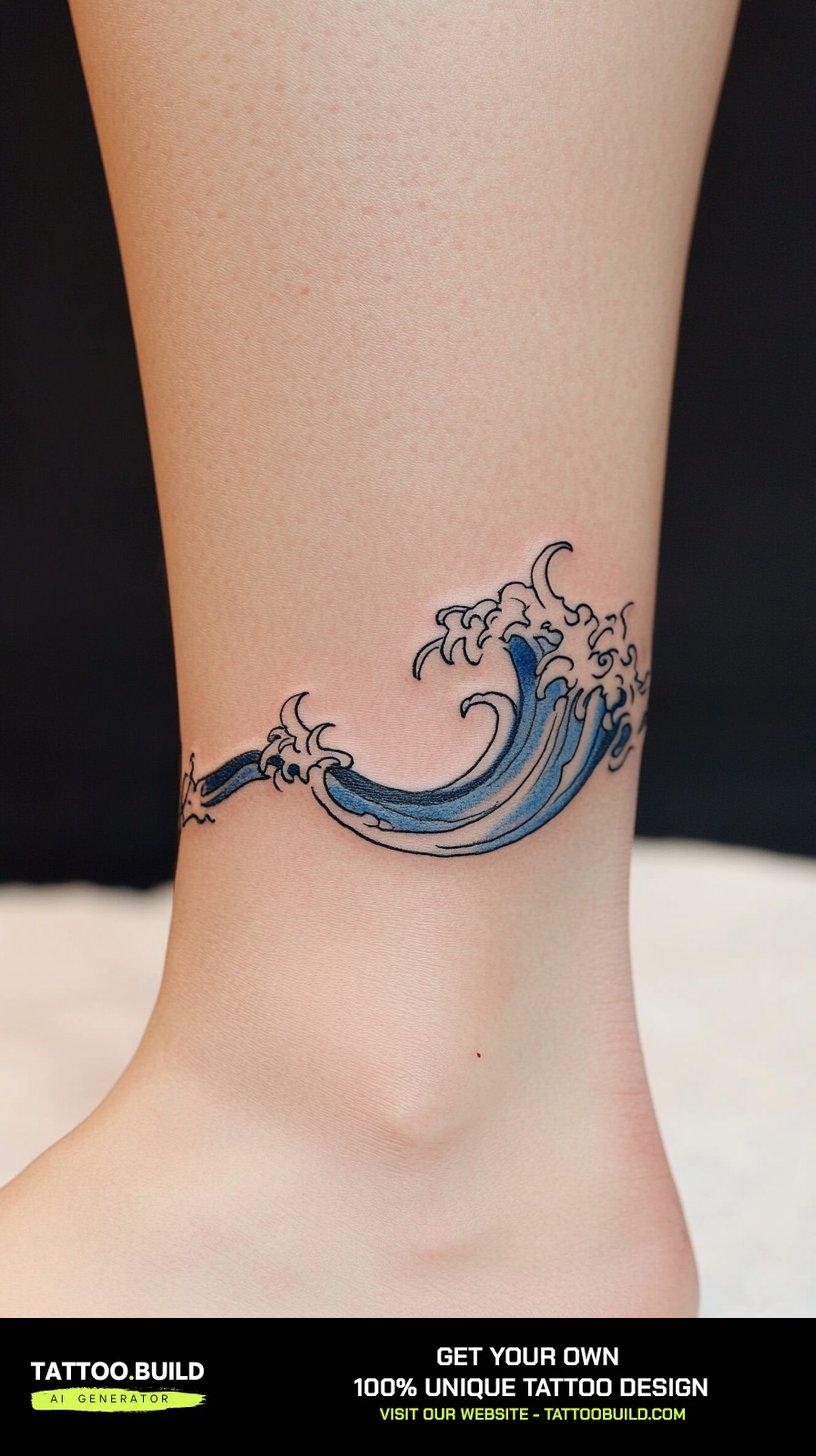
Moving It Down to the Ankle
The same designs translate almost directly to the ankle, where the skin gets less sun and the piece stays more private.
Healing is fussier because socks and shoes rub, but the long-term fade is usually slower. My guide to ankle bracelet tattoos for ladies covers the placement differences in detail.
Going Wider Than a Bracelet
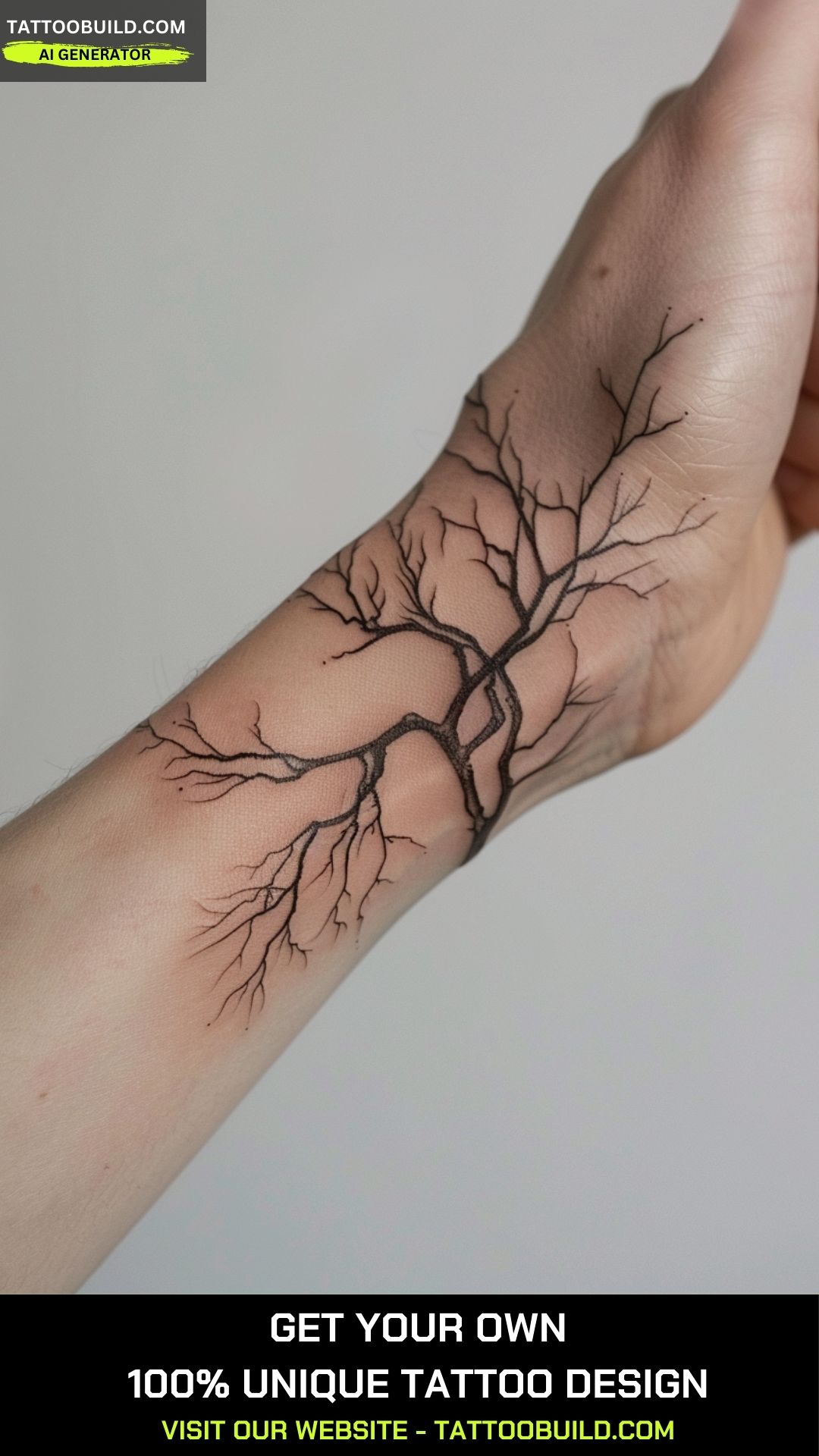
If you find yourself adding more and more detail, what you actually want may be a cuff rather than a bracelet.
A cuff covers roughly the lower third of the forearm and gives the artist room for proper composition. The wrap-around wrist tattoo roundup shows how these read at larger scale.
Placement, Pain and Aftercare
The inner wrist is the tender part. Nerve endings are dense there and the skin is thin, so most people rate it noticeably sharper than the outer forearm.
The spot directly over the ulna bone — the knob on the pinky side — is the other place people flinch. A full wrap crosses both, which is why bracelet tattoos feel harder than their size suggests. For a broader comparison, see the tattoo pain chart.
Wrists are among the hardest tattoos to heal well simply because you use your hands constantly. Bending, washing, sleeves catching on the fresh work — all of it disturbs a healing wrap more than a shoulder piece would.
Follow your artist’s written aftercare instructions rather than advice from the internet, and use a fragrance-free product. The American Academy of Dermatology’s guidance is a reliable general reference for tattooed-skin care.
If you see spreading redness, swelling that worsens after the first few days, pus, or a fever, contact a doctor rather than your artist. Infections and allergic reactions to pigment are uncommon but real, and the Mayo Clinic’s overview of tattoo risks outlines the risks worth knowing before you sit down.
Sunscreen once healed is the single highest-return habit. It is the difference between a band that still looks black at year ten and one that has gone soft grey.
Still Not Sure? The Mistakes I See Most Often
Choosing on a screen instead of on skin. Ask for the stencil to be applied and then walk around with it for ten minutes before anyone starts.
Sizing everything down to be discreet. Shrinking a design does not make it more tasteful, it just guarantees it will blur — browse feminine bracelet tattoo designs for examples that stay small without going too fine.
Booking with an artist whose portfolio has no wraps in it. Wrapping is a specific skill, and a brilliant flat-panel artist is not automatically good at it.
Ignoring what is already on your wrist. Scars, moles and older tattoos all change how a band can be routed, and a good artist will tell you so at consultation.
Skipping the conversation about ink. Coloured pigments and their long-term behaviour are still an area of active regulatory attention, and the FDA’s consumer page on tattoo safety is worth a skim if you are considering colour.
Frequently Asked Questions
Do bracelet tattoos hurt more than other wrist tattoos?
Usually a little, yes, because a full wrap crosses both the thin inner wrist and the bone on the outside. The inner wrist is the part most people describe as sharp and stinging rather than dull. The sitting is short though, often under two hours, so the discomfort is brief compared with larger work. If pain is your main worry, an open band that skips the inner wrist is a reasonable compromise.
How much does a bracelet tattoo cost?
Most studios charge a shop minimum for anything under an hour, and bracelet tattoos frequently sit just above that. A simple thread with a few symbols is at the low end, while a detailed ornamental wrap can run several hours at an hourly rate. Prices vary enormously by city and by artist demand, so the only honest answer is to ask two or three studios directly. Do not choose on price alone for a wrap — the execution matters more here than on most placements.
Will a fine line bracelet tattoo blur over time?
Some softening is normal for any tattoo, and fine line work shows it earliest because the lines have less ink to lose. In my experience designs with spacing between elements hold up far better than tightly packed ones. Sun exposure accelerates it more than anything else, and the wrist gets plenty. Expect to consider a touch-up somewhere between year five and year ten.
Can I cover an old wrist tattoo with a bracelet design?
Often yes, and a solid or heavily patterned band is one of the better cover-up shapes because it gives the artist a lot of dark area to work with. Fine line and delicate floral styles generally cannot cover anything, since there is not enough ink density to hide what is underneath. Bring the existing tattoo to a consultation rather than sending a photo. A cover-up specialist will tell you quickly whether it is realistic.
Is the inner wrist a bad idea because of visibility at work?
It depends entirely on your field, and workplace norms have shifted a lot in the last decade. The practical advantage of a wrist band is that a watch or a long sleeve conceals it easily when needed. If you are unsure, the outer wrist and forearm side is marginally easier to hide than the inner. Some people also start with an open band and close it later once they know how they feel about the visibility.
Quick Summary
- Bracelet tattoos wrap the wrist, so the design must be stencilled and adjusted on your actual arm, not chosen flat on a screen.
- Fine line floral chains are the most popular option and the most forgiving, because flowers hide the point where the band joins.
- Solid black bands look the boldest and need an artist who packs black evenly — budget for one touch-up.
- Ornamental and mandala wraps take the longest and age best when the dotwork is spaced generously.
- Chain and pearl illusions rely on shading, so they need to be drawn larger than most people expect.
- Micro symbols on a thread are the easiest first tattoo, but keep the charm count to three or four.
- The inner wrist is the tender part, and wrists are harder to heal than most placements because you use your hands constantly.
- Sunscreen after healing is the single biggest factor in whether the band still looks sharp a decade from now.