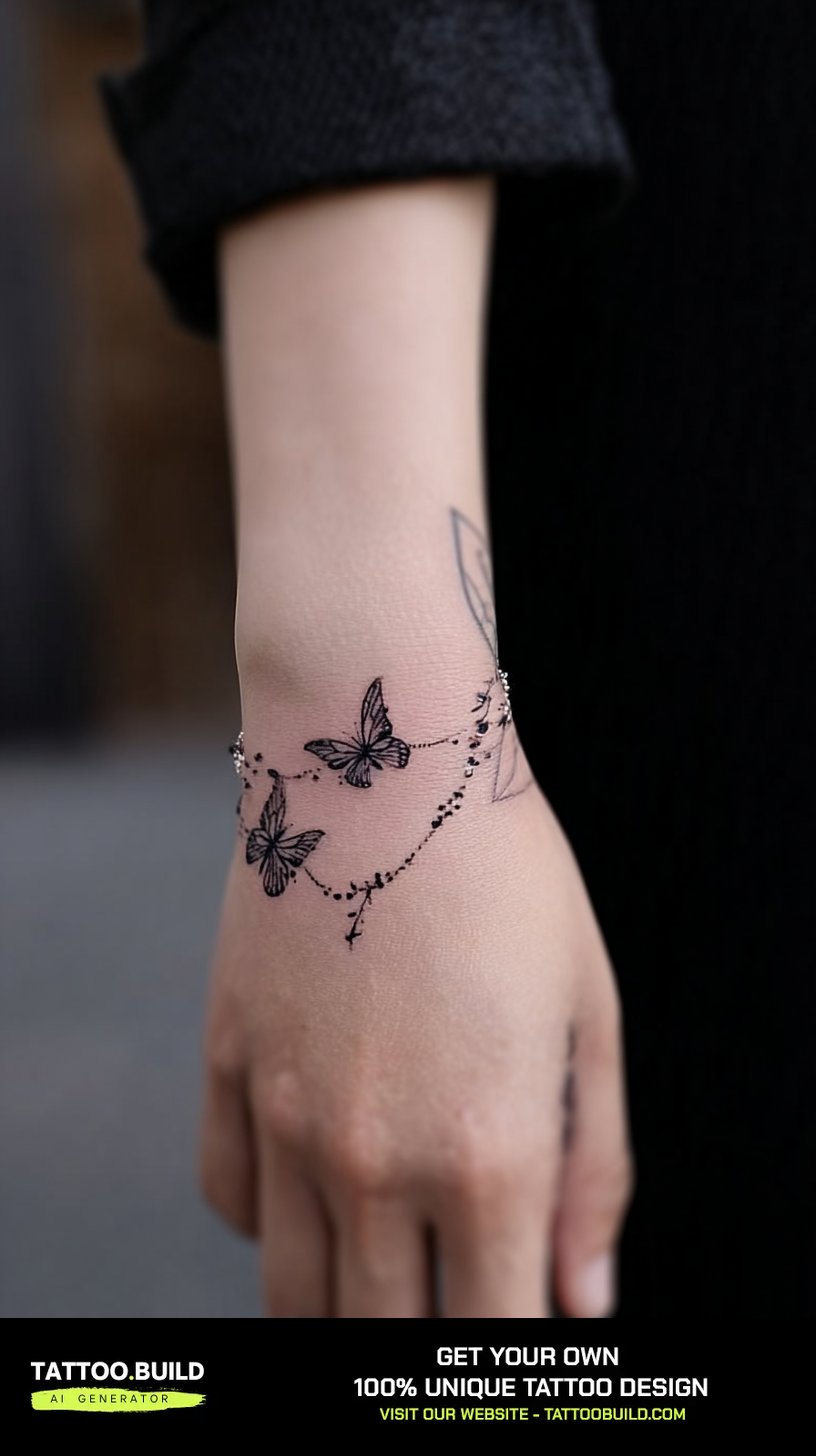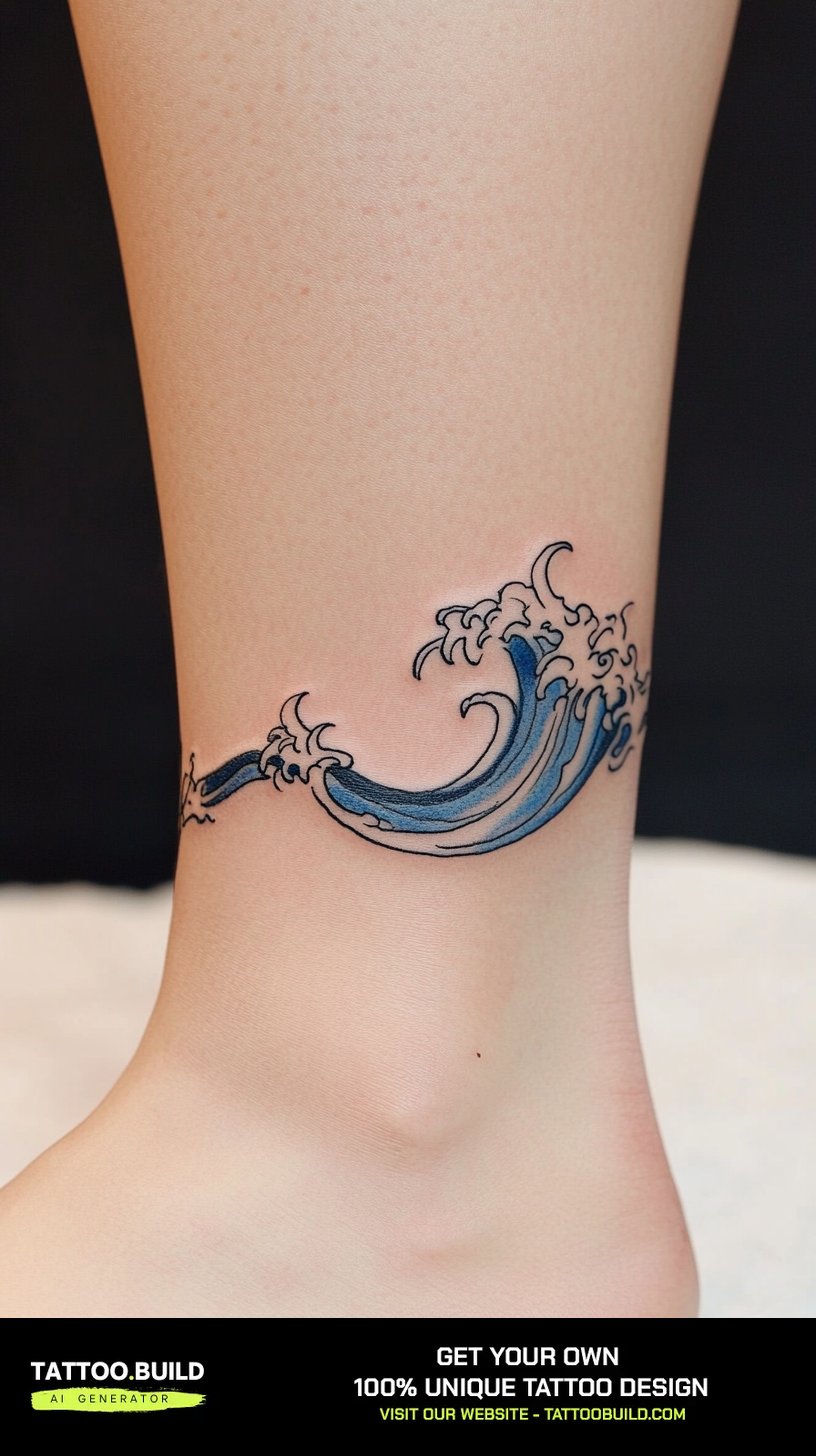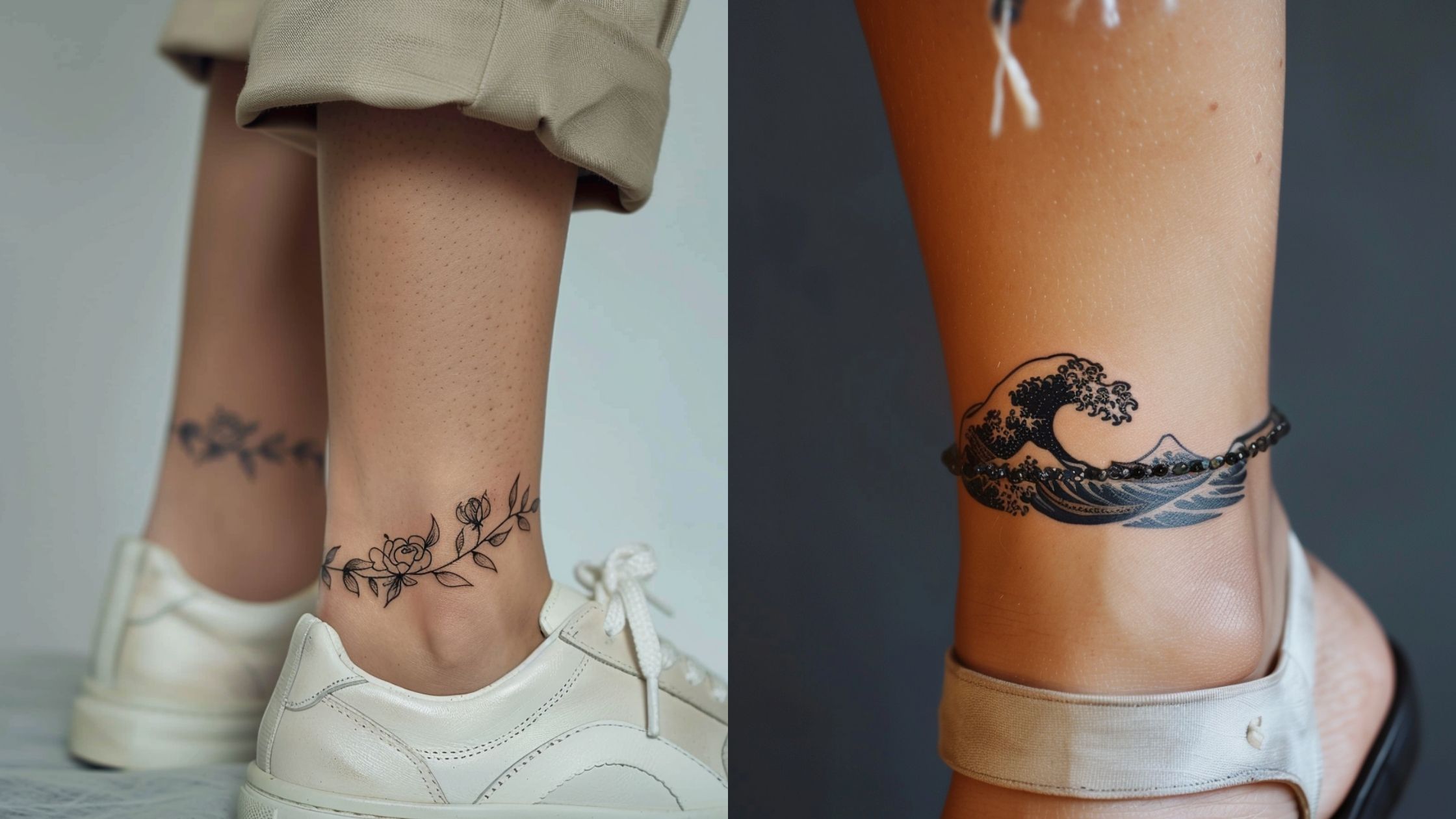
An ankle bracelet tattoo is the closest thing in tattooing to jewelry you never take off. It wraps the narrowest part of the leg, reads as elegant from across a room, and disappears completely under a sock and a boot.
I have watched this placement go from a quiet request to one of the most common things women ask for at the shops I visit.
Part of that is aesthetics. Part of it is practical — an anklet band is small, comparatively affordable, and easy to hide when a job or a family event calls for it.
What follows is everything I have learned about designing one that still looks sharp years later, including the mistakes I see most often. If you are still deciding on placement, it is worth comparing against broader ankle tattoo ideas for women first.
Which Ankle Bracelet Style Is Right for You?
Style choice drives almost everything else — cost, session length, and how the piece ages.
This is the rough comparison I walk friends through before they book anything.
| Style | Typical Session | How It Ages | Best For |
|---|---|---|---|
| Fine-line chain | 45–90 minutes | Softens noticeably; may need a touch-up in a few years | Subtle, jewelry-like looks |
| Floral vine | 2–3 hours | Holds well if leaves and petals are not crowded | Romantic, organic designs |
| Dotwork / beaded | 1–2 hours | Dots can blur together if spaced too tightly | Texture without heavy black |
| Lace / ornamental | 3–4 hours | Detail-dependent; open lace outlasts dense lace | Statement pieces |
| Solid blackwork band | 1–2 hours | The most durable option by a wide margin | Bold, low-maintenance ink |
| Charm / pendant anklet | 2–3 hours | Good, provided each charm is legible on its own | Personal symbolism |
Why the Ankle Behaves Differently From Other Placements
The ankle is thin skin stretched over bone, tendon, and very little fat. That combination changes both how it feels and how it heals.
Directly over the ankle bone is the sharpest part of the whole session, and every artist I have asked confirms it — the vibration travels straight into bone with nothing to absorb it.
The good news is that the painful stretch is short. A band crosses that bone for maybe fifteen seconds of actual needle time per pass.
Healing is the part people underestimate. The ankle swells, socks rub it, shoes press on it, and gravity keeps fluid pooling there all day.
In my experience, ankle pieces stay tender a few days longer than the same design on a forearm. Plan for a week of loose shoes rather than assuming you will be fine by day three.
Sun exposure matters here too, since ankles are uncovered every summer. Faded fine-line work is almost always sun damage rather than bad tattooing.
Ankle Bracelet Tattoo Designs That Actually Hold Up
These are the design families I keep coming back to, roughly in order of how often I see them requested.
1. The Fine-Line Chain
This is the default ankle bracelet tattoo, and for good reason. A single row of small links wrapping the leg reads instantly as jewelry.
The detail that separates a good chain from a flat one is the shading inside each link. Without a touch of grey, the chain looks like a row of ovals.
I always suggest making the links slightly larger than feels natural on the stencil. Fine lines spread under the skin over the years, and links drawn too small will merge into a solid grey band.
Chains also work beautifully as a partial wrap that stops short of a full circle, which gives the illusion of a clasp. If you like this level of restraint, the same logic applies to fine-line tattoo work anywhere on the body.
2. The Floral Vine Anklet
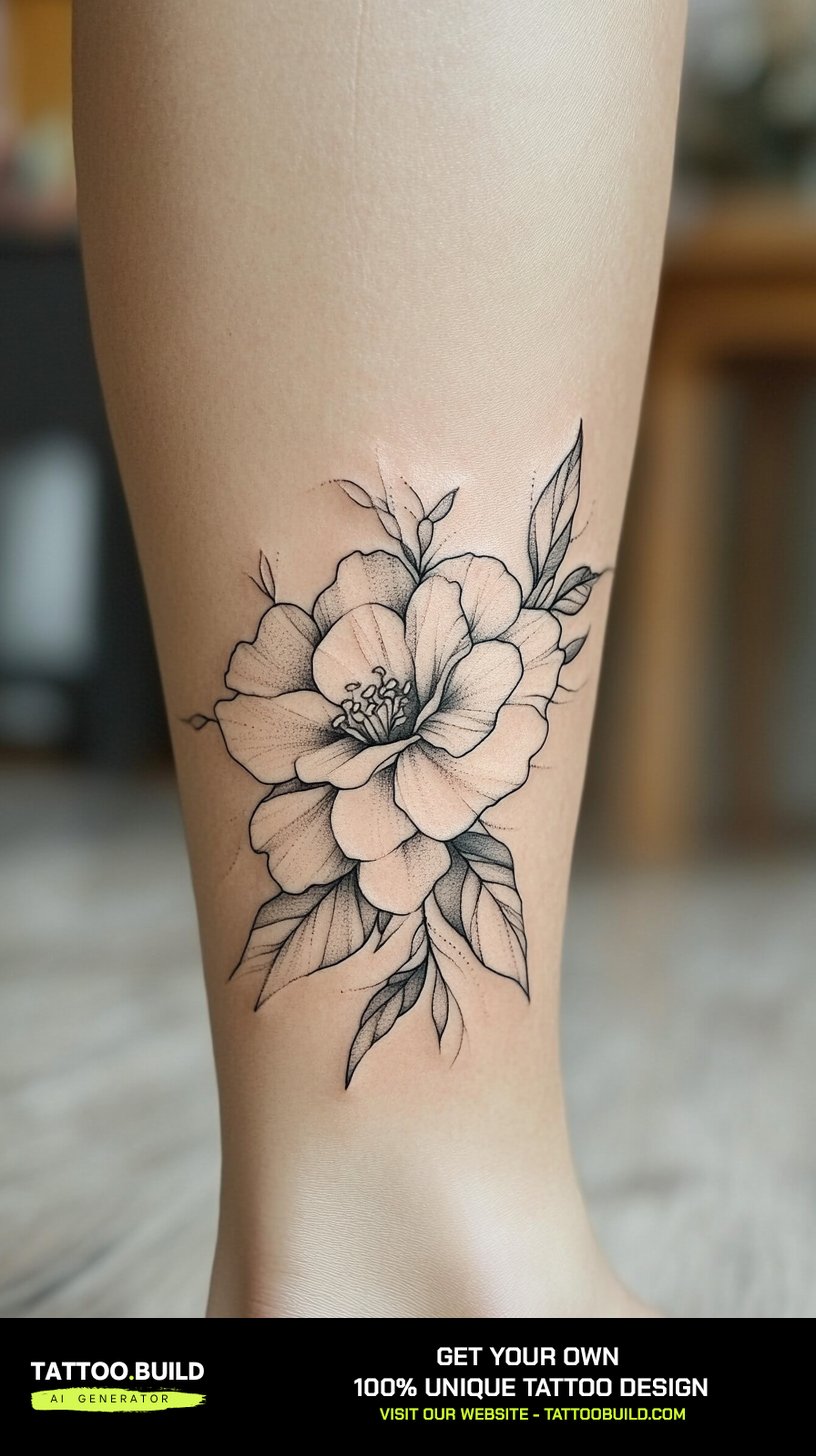
A vine that spirals around the ankle is the most forgiving design in this whole list, because organic shapes hide any imperfection in the wrap.
A perfectly straight band has to be geometrically exact, and any wobble is obvious. A vine can wander and still look intentional.
The rule I have seen work best is to leave real skin between the elements. Flowers packed edge to edge turn into a dark mass after five or six years.
Small blooms suit this scale better than large ones — forget-me-nots, baby’s breath, tiny daisies, sprigs of lavender. Birth flowers are a natural fit if you want built-in meaning, and there are plenty more floral ankle tattoo ideas worth browsing before you commit.
3. Beaded and Dotwork Bands
A ring of evenly spaced dots mimics a beaded anklet, and it is the gentlest-looking option of the lot.
Dotwork also gives an artist a way to build tone without solid black, which suits people who want something soft rather than graphic.
Spacing is the entire game here. Dots placed too close will bleed into one another and the beaded effect disappears within a couple of years.
I would ask for slightly fewer, slightly larger beads than the reference photo shows. It looks marginally chunkier on day one and considerably better on year five.
4. Charm and Pendant Anklets
This is where an ankle bracelet tattoo stops being decoration and starts carrying meaning.
A plain band circles the ankle and one small charm hangs from it — a key, a heart, a moon, a tiny star, an initial.
Restraint is what makes these work. One charm looks like jewelry; five charms look like clutter and each one shrinks past the point of legibility.
Place the charm on the outer ankle rather than the front. It sits better with shoes and it is the angle other people actually see when you walk past.
5. Lace and Ornamental Bands
Lace anklets are the most decorative option here, borrowing from mandala and filigree work.
Done well, they look like an heirloom piece of jewelry rather than a tattoo.
This is the one style where I would not compromise on the artist. Ornamental work depends on symmetry, and symmetry on a curved, tapering surface is genuinely hard.
Look specifically for a portfolio with healed ornamental photos, not just fresh ones. Fresh lace always looks crisp; healed lace tells you whether the spacing was right.
6. Symbolic and Script Bands
Instead of links or flowers, the band itself is made of something meaningful — a repeated symbol, a short phrase, a date, a line of script.
Script wrapping the ankle is striking, but it comes with a real caveat.
Small lettering is the single most common regret I hear about at this placement. Thin script on thin skin softens faster than almost anything else.
If you want words, keep them short and let them be bigger than feels comfortable. A four-word phrase in a legible font will outlast a full sentence in a delicate one. Symbolic bands with religious meaning are their own category — the cross on the ankle tattoo meaning guide covers that ground properly.
7. Solid Blackwork Bands
The opposite end of the spectrum: one or more solid black bands circling the ankle, sometimes with a thin gap between them.
It is not delicate, and it is not trying to be. It is graphic and confident.
It is also, by a wide margin, the most durable design in this article. Solid black does not have fine detail to lose, so it looks close to the same in year ten as in year one.
Worth knowing before you book: solid black is harder to cover or remove later than fine-line work. It is a decision worth being sure about.
Variations Worth Considering
Not every ankle bracelet tattoo has to be a complete circle. These variations solve specific problems.
The Partial Wrap
The design covers roughly three-quarters of the ankle and stops, leaving a gap at the back.
It is cheaper, shorter, and it dodges the hardest technical problem in the whole category — making the two ends of a band meet cleanly at the back where neither you nor the artist can see them easily.
The Asymmetric Drop
The band sits level around most of the ankle, then dips lower on one side, the way a real anklet hangs under gravity.
It reads as more convincingly like jewelry than a perfectly level ring does, because real anklets never sit perfectly level.
Matching and Complementary Sets
Ankle bands work well as matching tattoos with a sister or a close friend, partly because the small scale keeps the commitment low.
The same wrapping logic transfers upward too, which is why wrap-around wrist tattoos and feminine bracelet tattoo designs share so much visual language with anklets.
Aftercare That Actually Matters at the Ankle
Standard aftercare applies, but the ankle adds three complications worth planning for.
Friction is the first. Socks and shoe collars sit exactly where the tattoo is, and constant rubbing during the peeling stage can pull ink out of the skin. Loose, low-cut shoes for the first week or so are the simplest fix.
Swelling is the second. Fluid pools at the ankle by the end of any day spent upright, so keeping the foot elevated in the evenings for the first few days genuinely helps.
Sun is the third and the most damaging over time. Once fully healed, sunscreen on an exposed ankle is the single biggest factor in whether fine lines still look sharp in five years — the American Academy of Dermatology covers tattoo skin care in more detail.
On the medical side, take your artist’s written aftercare instructions as the primary guide. If you see spreading redness, increasing pain after the first few days, discharge, or a rash that keeps appearing at the tattoo, that is a doctor’s call rather than an internet one — both the FDA and the Mayo Clinic outline the risks worth knowing about. Nothing in this article is medical advice.
Common Mistakes and How to Avoid Them
Most disappointing ankle bracelet tattoos fail for one of a handful of predictable reasons.
Designing too small is by far the most common. A design that looks perfect on paper is being applied to a curved surface that will soften every line over time.
Second is ignoring the join. Ask your artist directly how the two ends will meet at the back, because a poorly planned seam is the first thing you will notice in photos.
Third is choosing an artist by price rather than by portfolio. Fine-line and ornamental work are specialties, and general shops do not always excel at them.
Fourth is booking during a summer week full of beach days. Fresh tattoos and direct sun are a bad combination, and healing takes priority.
Still weighing it up? It is worth scanning minimalist tattoo ideas, browsing foot tattoo ideas for ladies as a nearby alternative, and reading up on what a small tattoo typically costs before you book a consultation.
Frequently Asked Questions
How much does an ankle bracelet tattoo hurt?
It is one of the sharper placements, mainly because the skin sits directly over bone with very little padding. The section crossing the ankle bone is the most intense part, and the softer areas above it are noticeably easier. In my experience most people describe it as very manageable precisely because the hardest stretch is so short. Pain tolerance varies a lot, so treat this as a general guide rather than a promise.
Do ankle bracelet tattoos fade faster than other tattoos?
They can, though the reasons are usually environmental rather than anything to do with the placement itself. Ankles get more sun than almost any other body part in warm months, and shoe friction adds wear over years. Fine-line designs show that softening earliest because they have the least ink to lose. Consistent sunscreen and a touch-up every few years keep them looking sharp.
What should I expect to pay?
Most shops have a minimum charge that a simple band will fall close to, and anything more detailed is usually priced by the hour. A plain fine-line chain often lands near that minimum, while ornamental lace covering the full circumference can run several hours of shop time. Prices vary enormously by city and by artist demand, so ask for a quote at consultation rather than relying on any figure you read online.
How long does an ankle tattoo take to heal?
The surface usually closes over within two to three weeks, and the deeper layers settle over a few months. Ankles tend to run at the slower end of that range because of swelling and constant movement. Expect the peeling stage to be itchier here than on an arm, and resist scratching it. Follow the written aftercare your artist gives you, and contact them or a doctor if anything looks infected.
Will it look odd if I wear a real anklet over it?
Not usually, and plenty of people deliberately layer the two. The trick is contrast — a delicate metal anklet over a bolder tattoo band, or a chunkier chain over fine-line work. Wearing two near-identical designs stacked on top of each other is where it starts to look confused. Once the tattoo is fully healed, jewelry over it causes no problem.
Quick Summary
- Ankle bracelet tattoos wrap the ankle like jewelry and hide easily under socks and shoes.
- Fine-line chains are the most requested style; solid blackwork bands are the most durable.
- Floral vines are the most forgiving design because organic shapes hide an imperfect wrap.
- Size every element slightly larger than feels necessary — lines spread as they age.
- Ask your artist how the band will join at the back before the stencil goes on.
- Partial wraps and asymmetric drops both look more like real jewelry than a perfect ring.
- Expect a longer, itchier heal than an arm tattoo, and wear loose shoes for the first week.
- Sunscreen once healed is the single biggest factor in how sharp it looks in five years.