I have lost count of the number of times a client has sat down in a studio chair, opened her phone and shown me a phoenix. It is one of the few designs people bring in already knowing exactly what it means to them.
A phoenix tattoo for women works because it carries a story you do not have to explain to anyone — the bird that burns down and comes back is a shape everyone already understands.
What most people have not decided yet is the part that actually matters: how big it needs to be, where it will sit, and whether it should be colour or black and grey. Those three choices decide whether the tattoo still looks good in ten years.
This guide walks through the placements I see most often, the styles that hold up over time, and the practical questions — pain, sessions, aftercare — that come up once the excitement wears off. If you are still weighing placement generally, the shoulder options for women are a useful comparison point.
Which Phoenix Tattoo Style Is Right for You?
Style matters more than size here. A phoenix is a busy shape — wings, tail, flame — and some styles handle that density far better than others as the ink settles.
| Style | Best Size | How It Ages | Who It Suits |
|---|---|---|---|
| Fine line | Small to medium | Softens noticeably; may need a touch-up in a few years | Anyone wanting something quiet and delicate |
| Black and grey illustrative | Medium to large | Very well — contrast holds when shading is layered properly | First large piece; anyone unsure about colour |
| Watercolour | Medium | Fades faster without a black anchor line underneath | People who want softness and movement over hard edges |
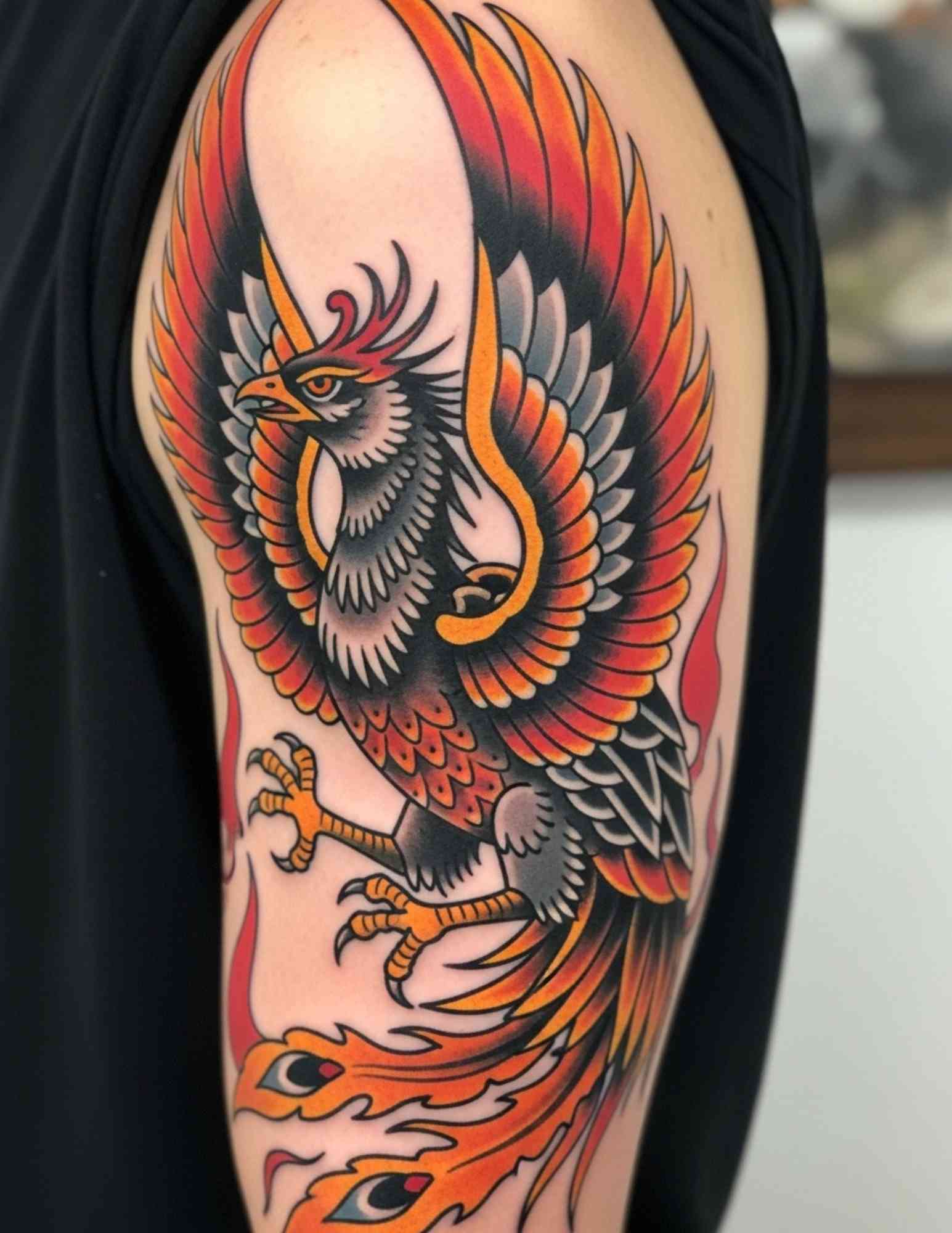
| Neo-traditional | Medium to large | Excellent — bold outlines keep the shape readable | Anyone who wants colour that still reads from across a room |
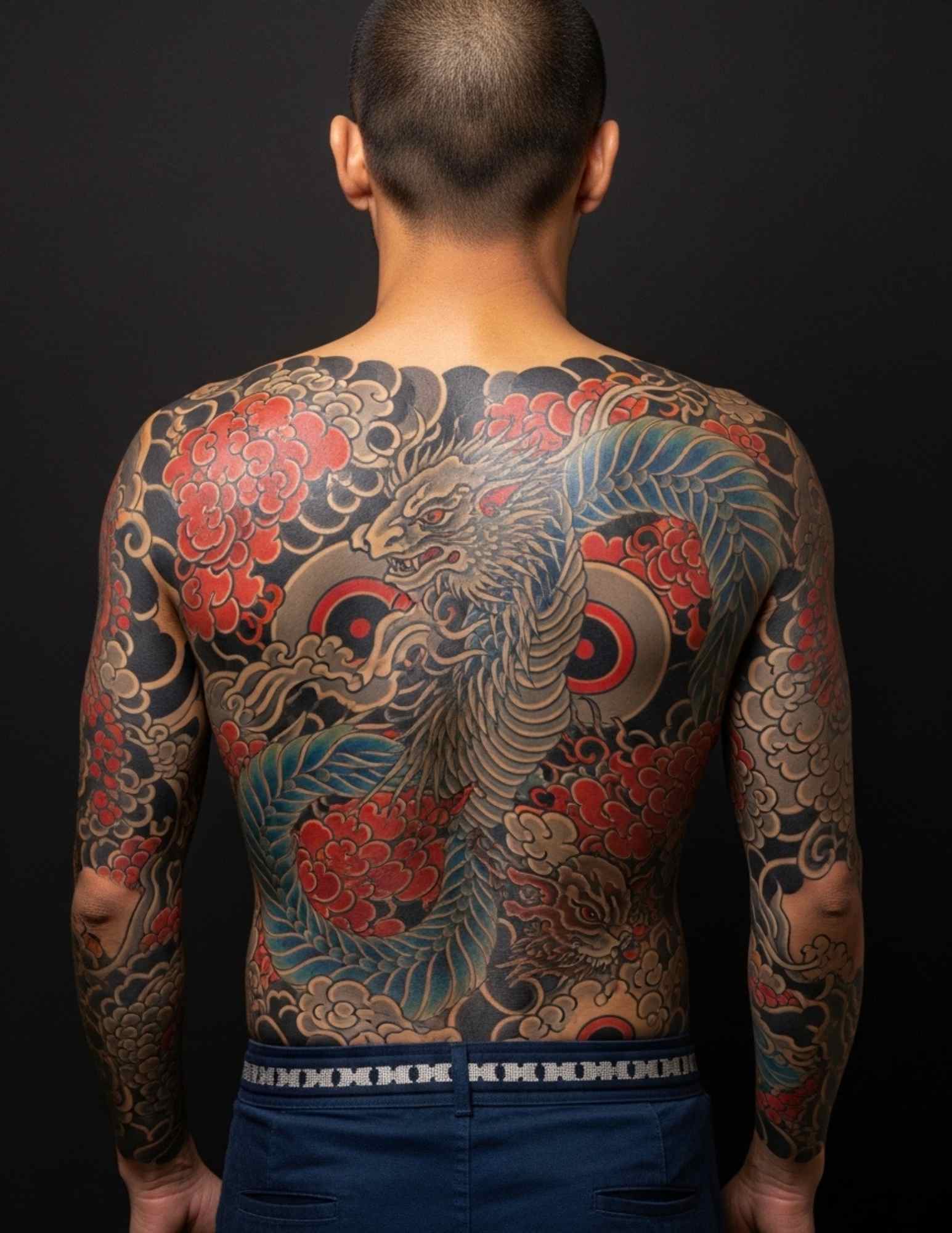
| Japanese-influenced | Large | Built for longevity; designed around the body | Back, thigh or full-sleeve commitments |
If you are drawn to the soft, bleeding-colour look, it is worth reading up on how watercolour tattoos actually behave before committing — the style is beautiful and it is also the least forgiving over a decade.
What the Phoenix Actually Symbolises
The phoenix is old. Versions of the story turn up in Greek, Egyptian, Roman, Persian and Chinese sources, and they do not all agree on the details — Britannica’s entry on the phoenix is a good short overview if you want the actual history.
The common thread is a bird that dies in fire and returns from its own ashes. That is it. Everything else — the five-hundred-year lifespan, the nest of spices, the sun association — varies by culture.
In practice, almost nobody gets a phoenix for the mythology. They get it for what it stands in for: coming out the other side of something that should have finished them.
I have tattooed phoenixes for people marking the end of an illness, a divorce, years of sobriety, and one woman who simply said she had spent her thirties being someone else. None of them needed the design to be literal about it.
That is worth knowing before you design one. A phoenix does not have to be on fire to mean rebirth. Some of the strongest ones I have seen are almost calm — a bird rising, no flames at all.
Phoenix Tattoo Placements for Women
Placement is the decision people rush and regret. A phoenix has a long tail and a wide wingspan, so it wants a canvas with length or width — squeezing one into a small square is where most disappointing versions come from.
The Upper Arm and Wrap-Around
The upper arm is the placement I recommend most often for a first phoenix. It gives you a curved surface the tail can wrap around, and the arm is one of the easier areas to sit through.
The trick is designing for the curve rather than fighting it. A phoenix drawn flat and then applied to a bicep will look distorted from at least one angle.
Wrap-around designs solve this by letting the tail spiral. In my experience these read well from every direction, which is not true of most arm pieces.
Expect a medium arm phoenix to take one long session or two shorter ones, depending on colour. Anyone building toward more work later should have the whole sleeve composition planned before the first line goes down.
Chest and Collarbone
A chest phoenix is the most symmetrical option, because the body gives you a centre line to build on.
The wings sweep out along the collarbones and the body sits over the sternum. Done well, it frames the neckline rather than competing with it.
Be honest with yourself about pain here. The sternum and the area directly over the collarbone are among the sharper spots on the body, and there is very little padding to soften the needle.
Chest pieces also change how you dress. That is not a warning, just something to sit with — it is a placement you will see in the mirror every single day.
Ribcage and Side Body
The ribs suit a phoenix better than almost any other narrow placement, because the vertical run gives the tail somewhere to go.
The design should follow the natural line of the ribs downward rather than sitting across them. Across the ribs, the shape distorts every time you breathe deeply or bend.
Rib work is genuinely painful for most people — thin skin over bone, and the constant movement of breathing does not help. Long sessions here are rare for good reason.
If you like the look but are unsure about the sitting, browse rib tattoo ideas for women to see what sizes people realistically commit to.
Full Back and Shoulder Blades
The back is where a phoenix stops being a tattoo and becomes a piece. It is the only placement that gives you a genuine, uninterrupted wingspan.
Most full-back phoenixes are built across several sessions spaced weeks apart, with outlining done first and colour or shading layered in afterwards.
The upside of the back is that it ages beautifully — the skin there moves less than almost anywhere else, so fine detail survives longer.
The downside is that you will rarely see it yourself. Every client I have asked about this says the same thing: it stops mattering within a month. If you want something between an arm and a full back, the shoulder blade placement is the natural middle ground.
Black and Grey Versus Colour
This is the choice I get asked about most, and my answer has not changed in years: black and grey is the safer long-term bet, and colour is the bigger payoff when it works.
Black and grey holds its contrast. A well-shaded grey phoenix will still read clearly a decade later because the structure is built from value, not hue.
Colour phoenixes are spectacular fresh and require more maintenance. Reds and oranges — exactly the colours a phoenix wants — tend to be among the first to soften, especially on skin that sees a lot of sun.
A middle path works well: black and grey bird, with colour reserved only for the flame or the tail tips. You get the impact without betting the whole design on pigment longevity.
Working From a Drawing
Do not skip the drawing stage. The single biggest difference between a phoenix that looks custom and one that looks generic is whether it was drawn for your body.
Bring reference images by all means, but bring them as a mood board rather than a template. Artists work far better from three images that show the feeling you want than one image you want copied.
Ask to see the stencil placed on your skin before any needle starts, and stand up. A design that looks right while you are lying down can sit oddly once you are upright.
If the linework style appeals to you on its own, fine line designs are worth a look — though on a shape as dense as a phoenix, very fine lines need careful spacing to avoid blurring together.
Spine and Thigh Alternatives
The spine gives you a long vertical run, which suits a phoenix with a dramatic tail. It is also one of the more demanding placements to sit through.
The thigh is the opposite: plenty of surface area, more padding, and easy to keep covered while it heals. For a first large piece I often steer people here.
Thigh phoenixes also let you go big without the commitment of a back piece, and the shape of the leg suits a downward-sweeping tail naturally.
Both are worth comparing directly — browsing thigh tattoo designs for women will give you a realistic sense of the scale involved.
Phoenix Variations Worth Considering
Not every rebirth tattoo has to be a literal phoenix. Several variations carry the same meaning with a different feel.
The Minimal Phoenix
A simple silhouette, often no larger than a palm, placed on the forearm or behind the shoulder. It reads as a bird in flight to strangers and as a phoenix to you.
These heal fast and cost far less, which makes them a reasonable way to test whether you actually want the imagery on your body permanently.
Phoenix and Florals
Pairing the bird with peonies, chrysanthemums or roses softens the design considerably and fills negative space that would otherwise look empty as the piece ages.
This combination works particularly well on thighs and shoulders, where there is room for the flowers to sit underneath the wings rather than crowding them.
Phoenix With Ashes or Smoke
Instead of flames, some designs build the lower half of the bird out of drifting smoke or ash. In my experience this ages better than fire, because smoke is shaded rather than coloured.
Paired Creatures
A phoenix opposite a dragon is a traditional pairing in Chinese imagery, usually read as balance rather than conflict. If that direction appeals, dragon designs for women will give you a sense of how the two shapes sit together.
Practical Advice, Pain and Aftercare
Book a consultation before you book the tattoo. Any artist worth their rate will want to talk through placement and sizing before they quote you, and that conversation usually changes the design for the better.
Eat properly beforehand and do not drink the night before. Alcohol thins the blood, which makes a long session messier and more uncomfortable than it needs to be. If pain is your main worry, the tattoo pain chart gives a realistic placement-by-placement picture.
For healing, follow the aftercare instructions your artist gives you over anything you read online, including this article. General guidance from the American Academy of Dermatology is a sensible baseline: keep it clean, keep it moisturised, keep it out of the sun, and do not pick at it.
See a doctor, not a forum, if something looks wrong. Spreading redness, heat, pus, or a fever after a tattoo needs medical attention rather than waiting it out. Allergic reactions to pigment — most often red — are uncommon but real, and the FDA’s guidance on tattoo safety is worth reading before a large colour piece. Never attempt to remove or alter a tattoo yourself; that is a job for a licensed professional.
Expect a large phoenix to be a multi-session project with several weeks between sittings so each area can heal. The normal healing stages are useful to know so you can tell ordinary peeling and itching apart from something that actually needs attention.
Still Not Sure? Common Phoenix Tattoo Mistakes
The most common mistake is going too small. A phoenix has more internal detail than almost any other popular design, and detail packed into a small area will blur as the ink spreads over the years.
The second is choosing an artist by price rather than portfolio. Look specifically for birds, feathers and flame in their previous work — not just tattoos you like in general.
The third is designing around a moment rather than a lifetime. Tattoos marking a specific hard year are meaningful, but the design still has to be something you want to look at long after that year stops defining you.
And the fourth is skipping aftercare in the first two weeks. More phoenixes are ruined by sun exposure and picking than by bad tattooing — the aftercare basics are not optional.
Frequently Asked Questions
How much does a phoenix tattoo for women usually cost?
It depends almost entirely on size, style and your artist’s hourly rate, which varies enormously by city and by reputation. A small silhouette is typically a single short sitting, while a full back piece is a multi-session project priced accordingly. The most reliable answer is to ask two or three studios you already like for a quote on the same brief. Be wary of a quote far below the others — it usually reflects experience, not generosity.
Where does a phoenix tattoo hurt the least?
The outer thigh, the outer upper arm and the forearm are generally among the more tolerable placements, because there is more muscle and fat between the needle and the bone. Ribs, sternum, spine and the area over the collarbone are consistently reported as sharper. Pain is individual, though, and some people find the reverse true for them. If you are unsure, a small piece in your chosen area first will tell you more than any chart.
Should my phoenix tattoo be in colour or black and grey?
Black and grey is the more durable choice and it ages with less maintenance, because contrast comes from shading rather than pigment. Colour has more immediate impact but reds and oranges usually soften first, particularly on sun-exposed skin. A common compromise is a black and grey bird with colour used only in the flame or tail. Your artist can advise based on how your skin holds ink.
How long does a phoenix tattoo take to heal?
The surface usually looks settled within two to three weeks, but the deeper layers continue to heal for a good deal longer, often a couple of months. During that time it will peel and itch, which is normal, and it should not be picked or scratched. Larger pieces spread across multiple sessions heal area by area. Follow your artist’s specific instructions, and contact a doctor if you see spreading redness, swelling or discharge.
Does a phoenix tattoo mean something specific?
The core meaning is consistent across most cultures that tell the story: death and return, or renewal after destruction. Beyond that the details differ widely between Greek, Egyptian, Chinese and Persian traditions, so there is no single correct interpretation. Most people choose it as a personal marker of having come through something difficult. That personal meaning is the one that matters on your own skin.
Quick Summary
- A phoenix tattoo reads as rebirth and survival in almost every culture that tells the story.
- Give the design room — the long tail and wide wingspan need length or width to work.
- Upper arm and thigh are the friendliest placements for a first large piece.
- Ribs, sternum and spine look striking but sit among the sharper areas to tattoo.
- Black and grey ages more reliably; colour hits harder but needs more upkeep.
- Insist on a custom drawing and check the stencil while standing up.
- Book a consultation, choose the artist by portfolio, and treat aftercare as part of the tattoo.
- Anything that looks infected is a question for a doctor, not the internet.