A hand tattoo is the most visible piece of body art you will ever get, and it is also the one that ages fastest. Both of those things are true at once, and I think that is exactly why women keep asking about them.
I have spent a lot of time in consultations listening to artists talk women through this placement, and the conversation almost never starts with the design. It starts with the hands themselves.
What I want to do here is give you the honest version: which modern styles actually suit the back of the hand, how the skin there behaves over the years, and how to choose a design that still looks intentional in five years. If you are still deciding between placements, the wrist sits right next door and behaves very differently.
Every photo below is a real hand piece, and I have noted what each one gets right — and where it will need maintenance.
Which Hand Tattoo Style Is Right for You?
Style choice on the hand is not just an aesthetic decision. It changes how often you will be back in the chair.
| Style | Best For | How It Ages | Typical Sitting |
|---|---|---|---|
| Fine-line florals | A soft, jewellery-like look that flows from the wrist | Thin lines soften and can blur; expect touch-ups | 2–4 hours |
| Bold blackwork | Anyone who wants the design to stay readable long-term | The most forgiving choice on hands | 3–6 hours |
| Micro / single symbol | A first hand tattoo, or a discreet piece | Small details can close up; keep gaps generous | 30–60 minutes |
| Ornamental / mandala | Full coverage across hand and fingers | Dense patterning hides fading well | Often multiple sessions |
| Traditional (dagger, rose) | Bold, high-contrast statement pieces | Built for it — heavy outlines were designed to last | 2–4 hours |
| Grey wash / soft shading | Wings, feathers, gentle gradients | Fades first of everything on this list | 2–3 hours |
If you take one thing from that table: the boldest version of a design you like will almost always be the version you are happiest with in a decade.
Why Hands Age Ink Differently
Hands are a hard placement for reasons that have nothing to do with taste. The skin on the back of the hand is thin, it sits directly over bone and tendon, and it moves constantly.
On top of that, your hands wash more than any other part of your body and get more sun than almost anywhere except your face. Both of those speed up fading.
Every artist I have asked about hands says some version of the same thing: the ink does not always settle evenly the first time, and patchy spots are normal rather than a sign the artist did something wrong.
That is why most reputable shops build a touch-up into the plan for hand work, usually a few months after the first session. It is also why hands sit near the top of most tattoo pain charts — there is very little padding between needle and bone.
None of this is a reason not to get one. It is a reason to walk in knowing that a hand tattoo is a piece of maintenance, not a one-off purchase.
Modern Women’s Hand Tattoo Designs That Actually Work
These are the directions I see most often right now, grouped by how they behave on the hand rather than by trend.
Fine-Line Florals and Botanical Sprays
Florals are the most requested hand design for women, and for good reason — a branch or spray follows the natural taper of the hand toward the fingers.
The strongest versions I have seen start at the wrist and flow outward, so the piece reads as one continuous design rather than a sticker dropped on the knuckles.
The trade-off is line weight. Hair-thin fine-line work looks beautiful on day one, but on a hand it is the first thing to soften. Ask your artist to run the lines slightly heavier than they would on a forearm.
Negative space matters more than detail here. Leaving skin between petals is what keeps a floral hand piece from turning into a grey smudge over time.
Minimal Line Work: Waves, Bolts and Single Strokes
If you want a hand tattoo but are not ready to commit visually, this is where I would start.
A single-line wave or a small bolt takes under an hour, costs the least of anything here, and can be covered by nothing more than a ring or a sleeve pulled down.
In my experience these are also the easiest to build on later. A small motif near the thumb leaves the whole back of the hand open, which is not true of a centred design. The same logic applies to finger tattoos.
The honest caveat: the smaller and finer the line, the more likely you are back for a touch-up within the first year or two.
Bees, Wings and Small Creature Motifs
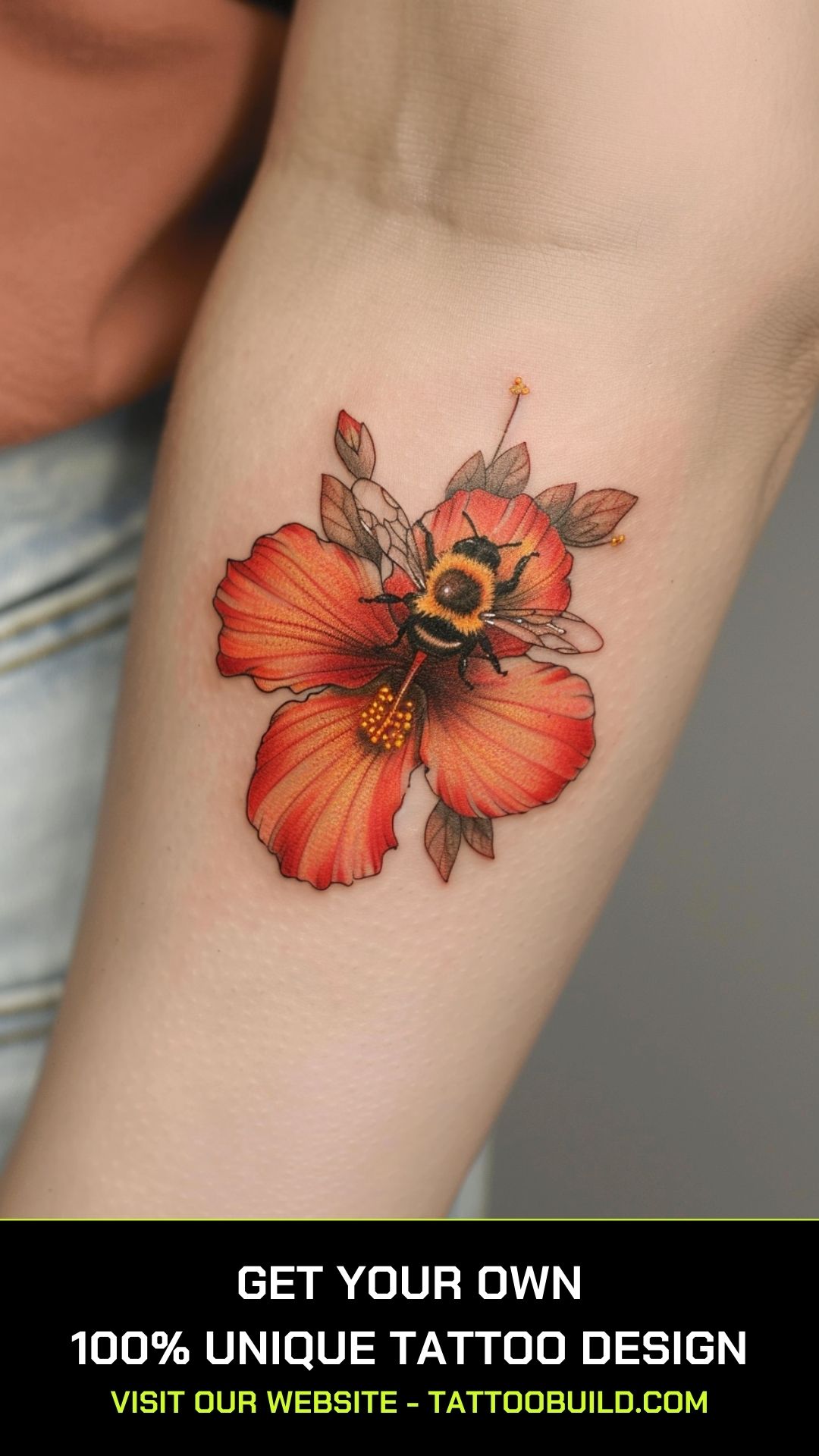
A bee or a moth sits beautifully in the flat panel between the knuckles and the wrist, because that shape is naturally wider than it is tall.
When I tested where different motifs read best, symmetrical designs consistently looked better centred on the back of the hand than off to one side.
Wings are a common request, and they are the one motif I would push people to render in solid black rather than soft grey. Grey wash on a hand is lovely for about two years.
Choose a subject with a strong silhouette. If the design still reads at arm’s length as a shape, it will survive fading.
Traditional Daggers and Bold Statement Pieces
American traditional was, in a very literal sense, designed for this problem. Heavy outlines and simple shapes hold their form for decades.
A dagger works particularly well on the hand because its vertical form follows the tendons, which makes the piece look like it belongs to the anatomy rather than sitting on top of it.
These pieces are unapologetically visible. If you work somewhere with a conservative dress code, this is the style least likely to be mistaken for a small personal marking.
Every traditional artist I have spoken to about hands says the same thing about line weight: go one step bolder than you think you want.
Sun, Moon and Celestial Symbols
Celestial motifs have been popular for years and they suit hands unusually well, because a sun or moon is essentially a circle — a shape that stays readable no matter how it softens.
The version with a face is the more demanding of the two. Small facial features on a hand can close up over time, so give them space.
An ornamental sun with long rays uses the full width of the hand and is one of the few designs that genuinely benefits from that scale.
Dotwork shading holds up better here than smooth gradients, in my experience, because scattered dots read as texture even when they blur slightly.
Crowns, Paw Prints and Personal Symbols
This is the category people get for a reason rather than for a look, and I think it deserves the most care in placement.
Paw prints for a pet, a crown for someone you have lost, initials — these are usually small, which on a hand means they need generous internal spacing to survive.
Placement between the knuckles is the single fastest-fading spot on the hand. If a symbol matters to you, put it on the flatter panel closer to the wrist instead.
I have watched people regret the knuckle placement specifically, and while laser removal exists, it is slower and pricier than most expect.
Ornamental and Henna-Inspired Coverage
Full-coverage ornamental work is the most committed option on this page, and also the one that ages best.
Dense repeating pattern is forgiving in a way isolated designs are not: when one section softens, the eye reads the whole rather than the flaw. Mandala work uses exactly this principle.
Expect multiple sessions. A hand-and-finger ornamental piece is not usually a single sitting, and any artist who promises it in one go is worth a second question.
Ask to see healed photos, not fresh ones. Healed hand work is the only honest portfolio evidence for this style.
Micro Tattoos as a First Hand Piece
If you are unsure whether you will like living with a visible tattoo, a micro piece is the low-stakes way to find out.
A bolt, a tiny star, a single dot — small enough that most people will not notice it, but you will, every single day.
That daily visibility is the actual test. Several people I know discovered they loved it and went bigger within the year; a couple discovered the opposite, which is useful information to buy cheaply. If it is your first tattoo anywhere, this guide covers the basics.
Keep micro designs to a single clean shape. Tiny script and tiny detail are the two things that reliably disappoint on hands.
If the Hand Feels Like Too Much
There is no shame in deciding the visibility is not for you. These placements give a similar effect with more control.
The Wrist and Inner Wrist
The wrist carries almost the same designs, heals more predictably, and disappears under a watch or a sleeve when you need it to.
The Side of the Finger
Fine-line work on the outer edge of a finger is nearly invisible with your hands at rest, and it fades roughly as fast as knuckle work — so treat it as semi-permanent.
A Bracelet Wrap
A band around the wrist gives you the ornamental, jewellery-like feel of hand work without putting anything on the hand itself.
Starting Higher on the Forearm
If you eventually want a full hand piece, many artists will suggest starting at the forearm and working down over time, so the hand becomes the finish rather than the opening move.
Aftercare That Actually Matters on Hands
Hand aftercare is harder than anywhere else for one simple reason: you cannot stop using your hands, and you cannot stop washing them.
Expect the surface to heal over roughly two to three weeks, with the deeper layers settling for a couple of months after that. The general aftercare rules all apply, just with more discipline.
Sun is the other half of the equation. Once the tattoo is fully healed, daily sunscreen on the back of the hand does more to preserve it than anything else — the American Academy of Dermatology makes the same point about protecting healed tattoos generally.
On safety: hands are exposed to more bacteria than most placements, so watch for spreading redness, swelling that worsens after a few days, or discharge. Those are signs to call a doctor, not to wait it out. The Mayo Clinic has a plain-language overview of tattoo risks, and the FDA covers ink reactions. Nothing here is medical advice — your artist and your doctor are the people to ask.
Still Not Sure? Common Hand Tattoo Mistakes
Choosing a design that is too small and too detailed. This is the most common one by a distance, and it is the hardest to fix later.
Putting meaningful symbols directly on the knuckles, where movement and washing wear them fastest.
Booking the hand as a first tattoo without knowing how you handle the sensation — hands are genuinely sharp.
Skipping the touch-up appointment because the tattoo looks fine at week three. It usually is not settled yet.
Not thinking through work. Some fields still treat visible hand ink differently, and that is worth an honest conversation with yourself first. If you want to browse gentler options, our simple tattoo ideas and tiny wrist designs are good places to start.
Frequently Asked Questions
Do hand tattoos hurt more than other placements?
For most people, yes. The skin on the back of the hand is thin and sits directly over bone and tendon, so there is very little cushioning. Sessions are usually short, which helps, and the pain tends to be sharp rather than dull. If you are worried, a small first piece will tell you far more than any pain chart will.
How long do hand tattoos actually last before they need touching up?
It varies a lot by design and by how much sun and washing your hands get. Bold blackwork can hold its shape for many years, while fine-line and grey-wash work often needs attention much sooner. Most artists I have spoken to plan for at least one touch-up in the first year. Treat it as ongoing upkeep rather than a one-time cost.
Will an artist refuse to tattoo my hand?
Some will, and it is usually not personal. Plenty of artists have a rule about not doing hands, necks or faces on people without existing visible work, because they have watched clients regret it. Others simply do not enjoy the placement. If you get a no, ask why — the reasoning is often worth hearing.
What designs age best on the hand?
Bold outlines, simple silhouettes, and dense ornamental pattern. Anything that relies on hair-thin lines, tiny lettering or smooth grey gradients will soften first. A useful test is whether the design still reads as a recognisable shape from across a room.
Can hand tattoos be removed if I change my mind?
Laser removal works on hands, but it generally takes multiple sessions spaced weeks apart and is rarely as complete or as quick as people hope. Cost adds up well beyond the price of the original tattoo. Cover-ups on hands are also harder than elsewhere because there is limited space to work with. Talk to a qualified practitioner before assuming removal is a simple safety net.
Quick Summary
- Hand tattoos are the most visible placement and the fastest to fade — plan for touch-ups from the start.
- Bold outlines and dense ornamental pattern age far better than fine lines and soft grey shading.
- Designs that flow from the wrist onto the hand look more intentional than isolated motifs.
- Keep generous negative space; detail packed tightly will close up over time.
- Avoid putting meaningful symbols directly on the knuckles, the fastest-wearing spot.
- A micro piece is the cheapest honest test of whether you enjoy visible ink.
- Daily sunscreen on healed hand work is the single best preservation habit.
- Ask any prospective artist for healed hand photos, never just fresh ones.