Finger tattoos are the boldest small tattoo a man can get, and also the hardest one to keep looking sharp. That tension is the whole story of this placement.
I have watched friends walk out of a studio with a crisp black arrow on the side of a finger, then send me a photo four months later where half the line has gone patchy.
That is not bad work. It is what finger skin does. Once you understand why, choosing the right design becomes much easier, and this guide is built around that reality rather than around pretty pictures alone.
Below you will find style-by-style finger tattoo ideas for men, what each one costs you in longevity, and how the placement compares with a full hand tattoo if you are still deciding.
Which Finger Tattoo Style Is Right for You?
Every style on this list can work on a finger. They just age very differently, and the honest comparison is worth more than a gallery.
| Style | Best Placement | How It Ages | Good For |
|---|---|---|---|
| Bold symbol | Top of finger, near knuckle | Strong – thick lines survive fading | First finger tattoo |
| Fine-line geometric | Side of finger | Weakest – thin lines blur first | Detail lovers who accept touch-ups |
| Solid band | Base of finger | Very strong, but edges soften | Ring replacements |
| Lettering | Across the knuckles | Mixed – depends on font weight | Short words, initials |
| Tribal / blackwork | Full length of finger | Strong, needs solid packing | High-contrast statements |
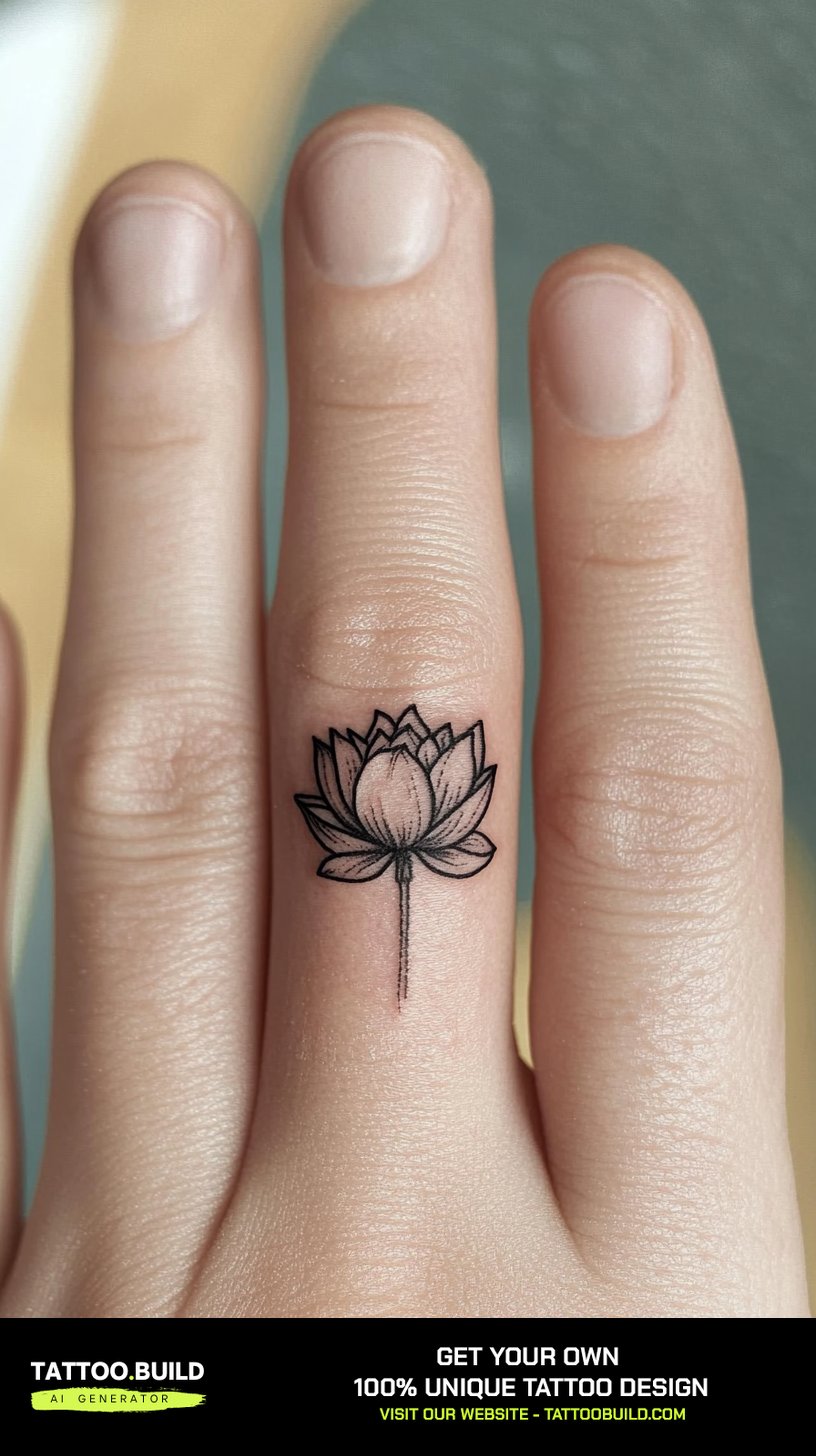
| Micro animal or botanical | Inner or side of finger | Fair – simplify the detail | Subtle, personal pieces |
If you want something meaningful without the maintenance, a small meaningful tattoo on the forearm or inner arm gives you the same idea on skin that holds ink far better.
Why Finger Tattoos Fade Faster Than Anywhere Else
The skin on your fingers is thin, and it sits over joints that bend hundreds of times a day. Ink deposited there is under constant mechanical stress.
Hands also shed skin cells faster than most of the body, and every wash, every wipe, every pair of work gloves speeds that turnover along.
The result is that finger tattoos commonly need a touch-up within the first year, and many artists build one free touch-up into the price because they expect it.
Every artist I have asked about this says the same thing in different words: they will do it, but they want you to know what you are signing up for first.
Some studios decline finger work entirely, or refuse to guarantee it. That is a sign of a careful artist, not an unhelpful one.
Finger Tattoo Ideas for Men, Style by Style
1. Symbols and Icons
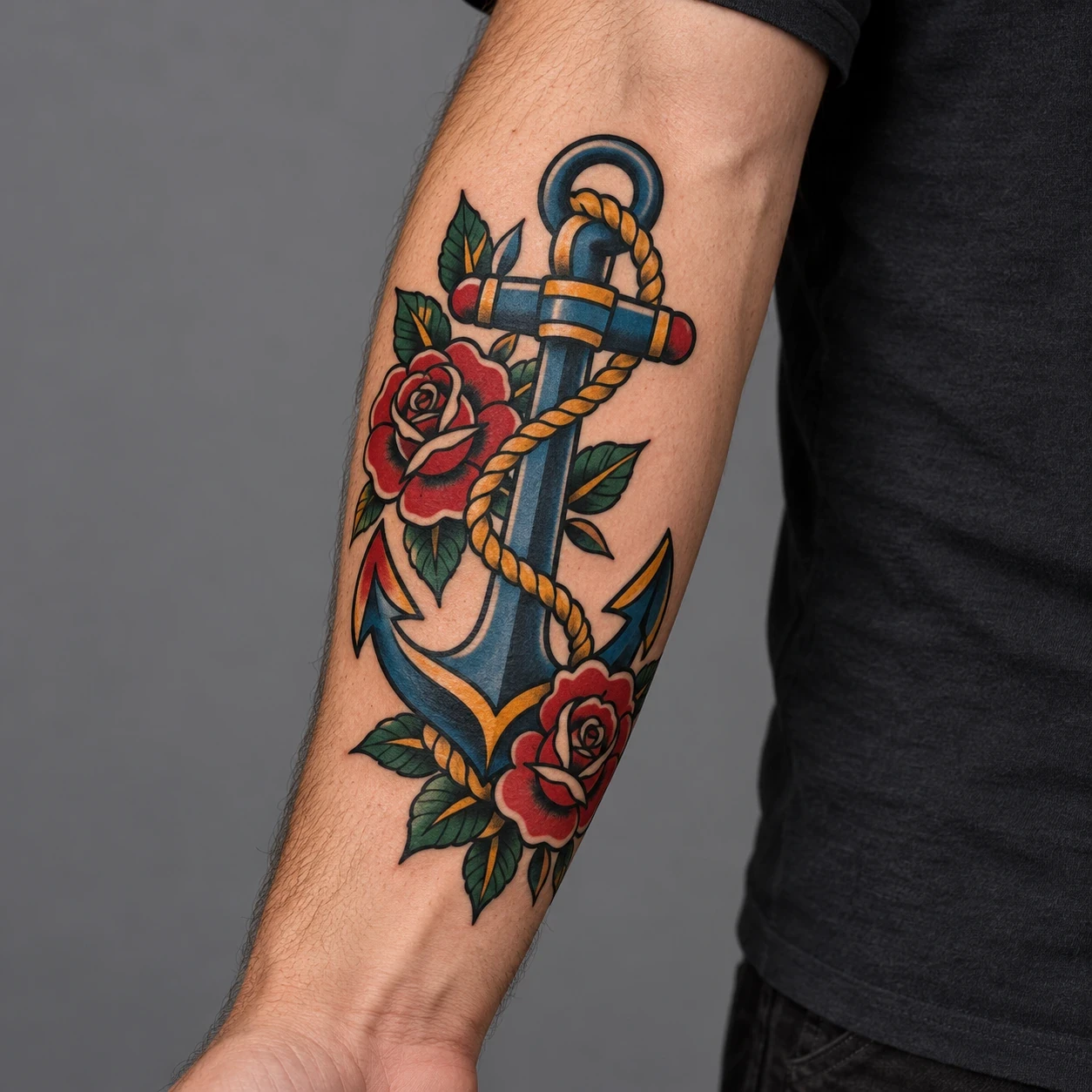
Symbols are the default finger tattoo for a reason. A cross, an anchor, a small arrow, a lightning bolt – each reads instantly at a size smaller than a fingernail.
The rule I would give anyone is to pick a shape that still works when the lines soften. A cross with three-millimetre-wide strokes will look like a cross in ten years. A cross rendered in hairlines may not.
When I tested different reference sizes with an artist, anything under about a centimetre with internal detail lost that detail on the stencil before the needle ever touched skin.
Popular choices that hold up well include the infinity loop, a filled heart, a solid triangle, a small crescent moon, and a single bold initial. If you like this stripped-back approach, browse more simple tattoo ideas for men before you commit.
2. Geometric and Line Work
Geometric finger tattoos look outstanding on day one. Stacked triangles, dot rows, chevrons wrapping the side of a finger – the precision is the appeal.
They are also the style most likely to disappoint you at the twelve-month mark, because thin parallel lines can blur together as ink spreads slightly under thin skin.
My honest advice is to space geometric elements further apart than the reference image suggests. Give lines room to soften without touching.
Sacred geometry and mandala fragments are better suited to the back of the hand or the wrist. If that direction appeals, the wider geometric tattoo ideas for men collection scales the same language up to a size that survives.
3. Lettering, Initials and Short Words
Knuckle lettering is one of the oldest traditions in tattooing, and four letters across four fingers is still the classic layout.
Font weight decides everything here. A heavy blackletter or bold sans-serif keeps its shape; a delicate script on a finger tends to lose the thin connecting strokes first.
Keep it to a single short word or a set of initials. In my experience, anything that needs more than one finger per word ends up cramped.
Dates in Roman numerals work well because the characters are simple vertical strokes. If you want something longer, a line of text reads far better on the forearm – the quote tattoo ideas for men guide covers that placement properly.
4. Tribal and Cultural Patterns
Solid blackwork patterns are among the most durable finger tattoos you can get, because there is no fine detail to lose.
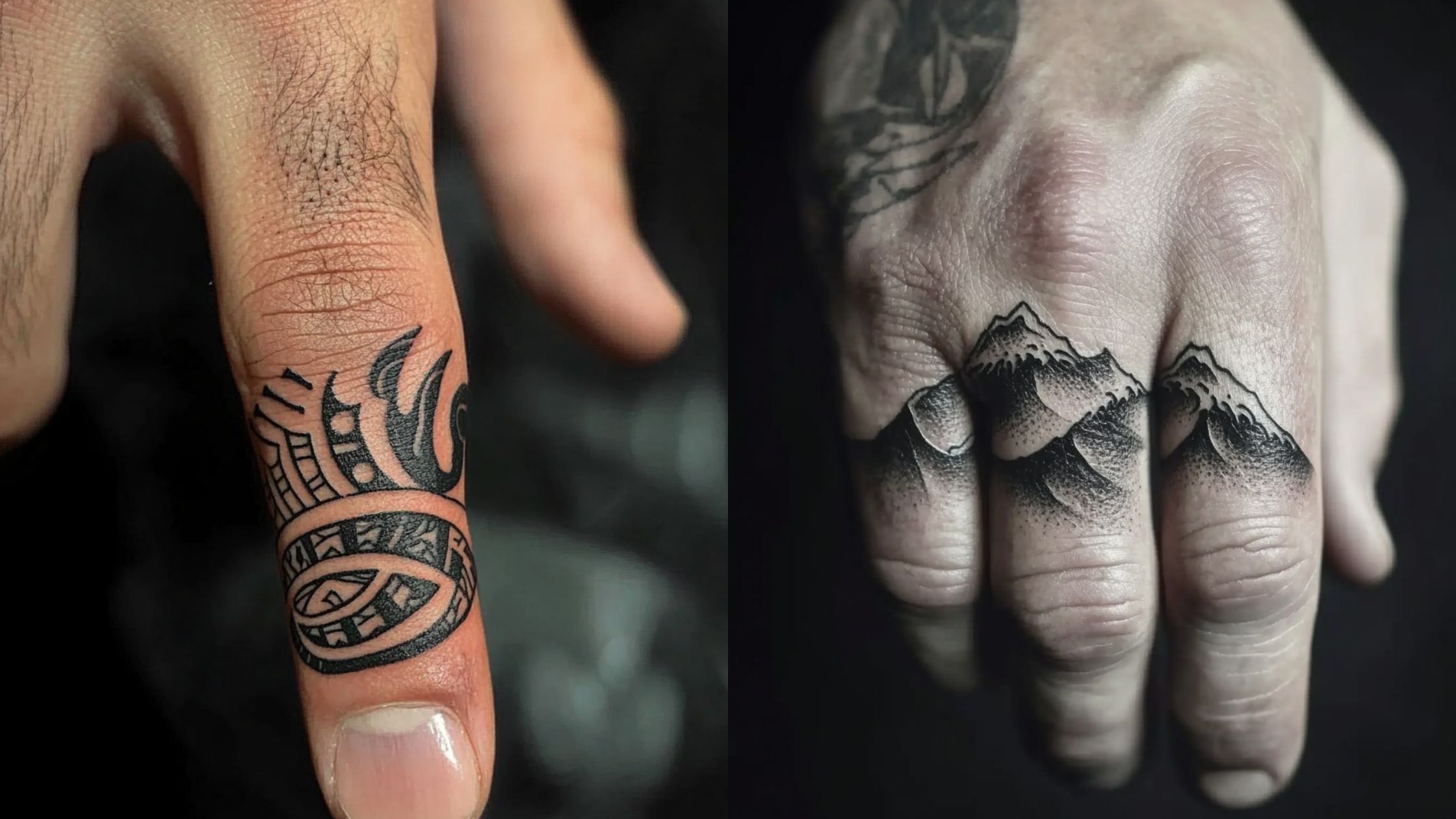
Celtic knotwork, Polynesian-inspired banding and Maori-style motifs all translate to a finger if the artist simplifies the pattern rather than shrinking it.
Shrinking a pattern is not the same as adapting it – a reduced Polynesian panel with the negative space closed up will read as a black smudge within a couple of years.
If the design carries genuine cultural meaning, it is worth asking an artist who works within that tradition. The broader tribal tattoo ideas gallery is a good starting point for finding that reference.
5. Bands, Rings and Knuckle Wraps
A solid band at the base of the ring finger is the single most requested finger tattoo I come across, usually as a wedding ring alternative.
It ages better than almost anything else on the hand because the base of the finger flexes less than the knuckles and sees less abrasion.
Two thin bands stacked with a gap between them look more considered than one thick block, and they leave you room to add to the design later.
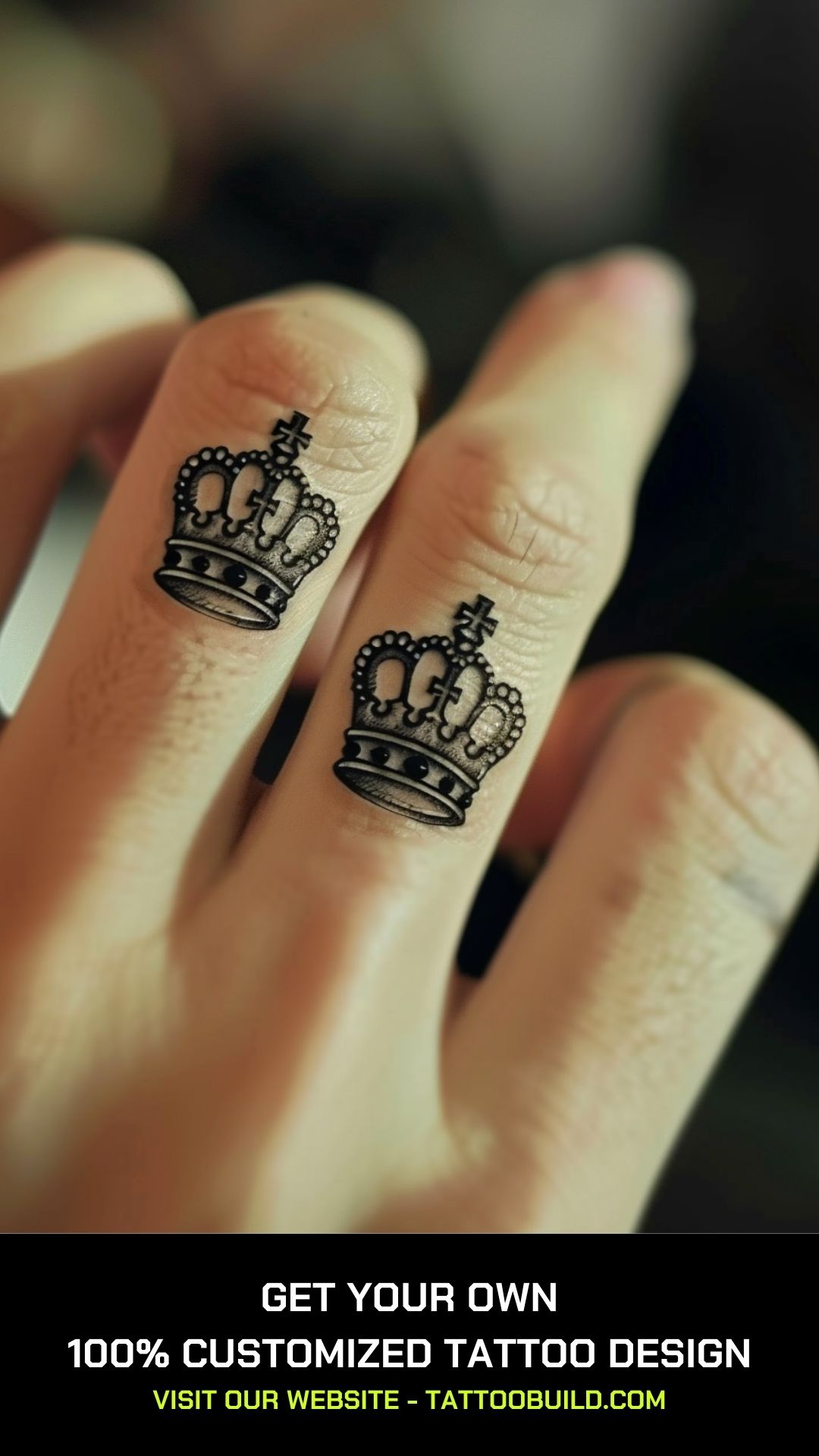
Couples often add a matching micro-detail – a dot, a notch, a single initial inside the band. There are more variations in the wedding ring tattoo ideas collection if that is the direction you are heading.
6. Animal Motifs
Animals carry meaning without needing words, which is exactly what you want in a space this small.
A wolf for loyalty, a lion for nerve, a snake coiled down the length of the finger, a swallow for the traveller – all of them work if reduced to a silhouette rather than a portrait.
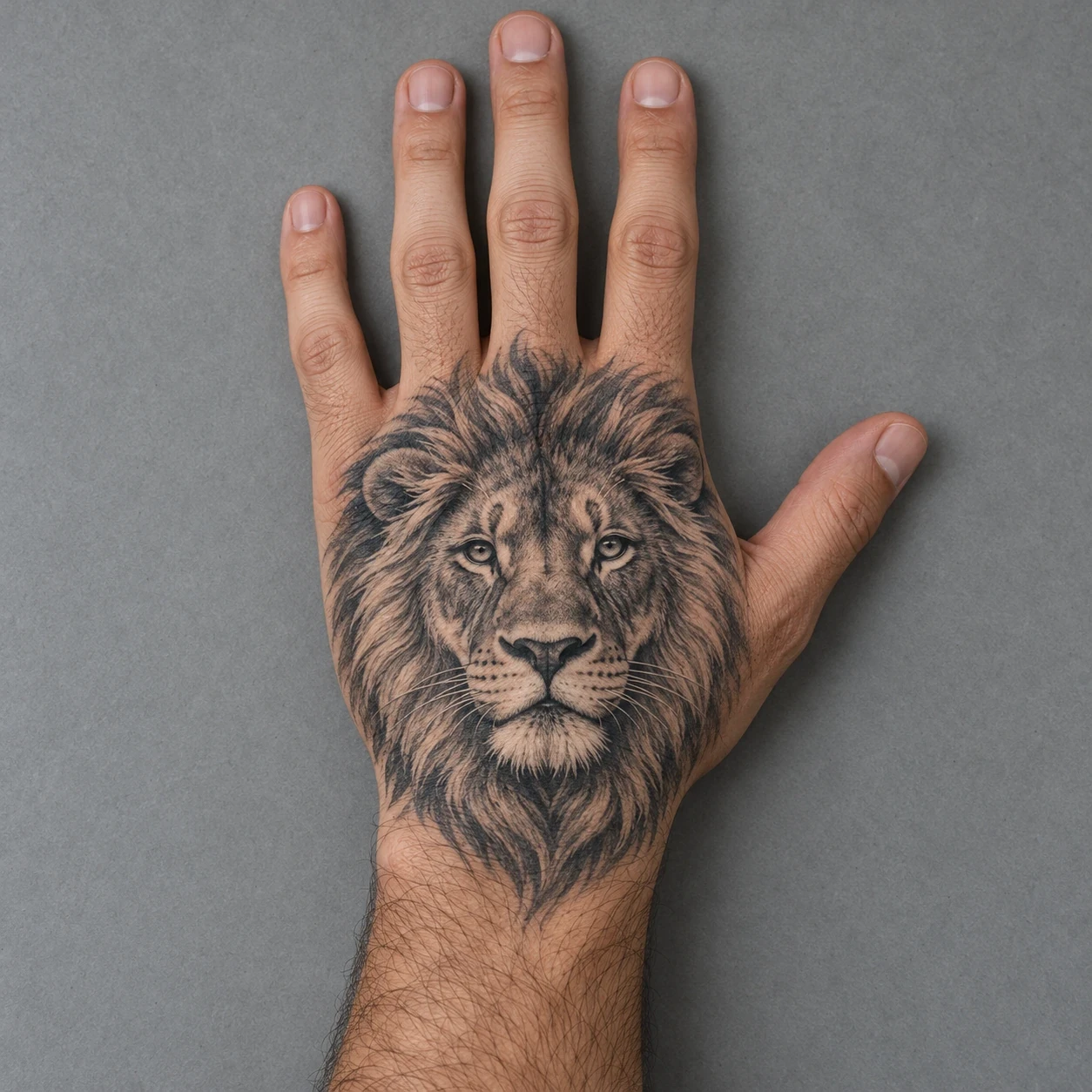
Portraits do not belong on fingers. A realistic wolf head needs shading gradients that finger skin will not hold cleanly.
Ask your artist for the silhouette version first and compare it against the detailed one at actual size. If you want the full-detail version somewhere it will last, the wolf tattoo ideas guide shows how much room that style really needs.
7. Nature and Botanical Designs
A single sprig, a small mountain outline, a wave, a pine tree – nature motifs suit the vertical shape of a finger better than most subjects.
The length of a finger segment is roughly the proportion of a stem or a peak, so the design fits the space instead of fighting it.
Leave out the leaf veins and the texture lines. When I tested a leafy design at finger scale, the internal detail closed up before the stencil even transferred.
Mountains with a solid black fill on one face read particularly well, because the contrast does the work that fine lines cannot.
8. Heavy Blackwork and Negative Space
If longevity is your priority above all else, solid black is the answer. Blocks, wedges and half-fills survive on fingers when nothing else does.
Negative space is the trick that keeps it from looking like a blot – a thin unfilled stripe through a black wedge gives the design a shape you can still read years later.
Solid black also demands the most from the artist. Patchy packing on a finger is very visible, and it is the most common reason these need a second sitting.
Be realistic about coverage too – heavy black on the fingers is difficult to cover or remove later, so it is a decision worth sitting on for a few weeks.
Placement Variations Worth Considering
Side of the Finger
The side of the finger sees less direct abrasion than the top, so ink tends to hold slightly better there.
It is also discreet – visible when you turn your hand, invisible when you shake someone’s.
Inner Finger and Palm Side
This is the least reliable spot on the whole hand. Palm-side skin regenerates quickly and pushes ink out faster than anywhere else.
Plenty of artists will refuse it outright, and in my experience the ones who agree will tell you upfront that they cannot guarantee the result.
The Thumb
The thumb offers more surface area than any other digit, which makes it the best finger for a design with any real detail.
It moves in more directions than the other fingers though, so the base of the thumb still stretches a lot.
Moving Up to the Hand
If you find yourself asking your artist to shrink a design repeatedly, that is the design telling you it belongs on the back of the hand instead.
For designs that use the wider back of the hand, compare our hand tattoo designs for men before deciding how far to extend your finger piece.
The back of the hand holds ink noticeably better, and the extra room means the piece will still read in a decade.
Aftercare That Actually Matters for Fingers
Finger tattoos usually surface-heal in about two to three weeks, though the deeper skin takes longer to settle. The first fortnight is where most of the damage gets done.
Hand washing is the hardest part. You cannot stop washing your hands, so the compromise is to wash gently with unscented soap, pat dry rather than rub, and re-apply a thin layer of the ointment your artist recommends afterwards.
Keep the tattoo out of dishwater, cleaning products and gym equipment while it heals, and wear gloves for manual work once the surface has closed over. Follow your artist’s specific instructions first – general aftercare guidance from the American Academy of Dermatology is a useful cross-check, not a replacement.
Signs of infection – spreading redness, heat, swelling that worsens after the first few days, pus, or fever – are a reason to contact a doctor, not to wait it out. Allergic reactions to tattoo ink are also possible, and the AAD lists the skin reactions worth watching for. Nothing in this article is medical advice.
Common Mistakes and Still Not Sure?
The most common mistake is choosing a design based on a fresh photo. Fresh finger tattoos always look crisp – ask your artist to show you healed work that is at least a year old.
The second is treating a finger tattoo as a cheap first tattoo. It is small, but it is technically demanding, and price should reflect the artist’s skill rather than the surface area.
The third is ignoring your job. Hand and finger tattoos are still visible in workplaces where a sleeve is not, and that is worth a clear-eyed think before you book.
Never attempt a finger tattoo at home or with a stick-and-poke kit. The hand is dense with tendons and joint spaces, and an infection there is a genuinely serious problem – the Mayo Clinic outlines the risks and precautions clearly.
If none of these styles has landed yet, work through the minimalist tattoo ideas for the pared-back approach, or the blackwork tattoo ideas for men if high contrast is what you are after.
Frequently Asked Questions
Do finger tattoos hurt more than other placements?
Most people find them sharper than a forearm or a bicep, because the skin is thin and the bone sits close underneath. The upside is that the session is short – a small symbol is often done in under half an hour. Pain is genuinely individual, so treat other people’s ratings as a rough guide only. If you have sat through a rib or elbow piece, a finger will not surprise you.
How long do finger tattoos last before they need a touch-up?
Many need their first touch-up inside the first year, and some settle unevenly within a few months. Solid black and thick-lined designs go longest; fine-line and micro-detail work goes soonest. Ask your artist whether a touch-up is included before you book, since many build one into the price for this placement. Plan on maintenance being part of owning a finger tattoo rather than a sign something went wrong.
Will an artist refuse to tattoo my fingers?
Some will, and it is usually a good sign. Artists who decline finger work often do so because they do not want to put their name on something that may not heal well. Others will do it but ask you to sign an acknowledgement that touch-ups are your responsibility. If it is your first tattoo entirely, expect a few studios to steer you towards a different placement first.
Can finger tattoos be covered up or removed?
Cover-ups are harder here than almost anywhere, because there is so little space to work with – usually the only option is going darker or heavier. Laser removal on fingers is possible but generally takes multiple sessions, and results vary with ink type and skin tone. Speak to a qualified laser practitioner rather than assuming it can be undone easily. Never attempt at-home removal creams or salt abrasion on the hand.
What is the best first finger tattoo for a man?
A single bold symbol or a solid band at the base of a finger is the safest starting point. Both are quick to sit through, both age well, and both leave room to expand later if you like the result. Avoid starting with knuckle lettering across all four fingers, which commits a lot of visible space at once. If you are unsure, get one finger done and live with it for a season before adding more.
Quick Summary
- Finger skin is thin and constantly in motion, so every design here fades faster than the same design elsewhere.
- Bold symbols, solid bands and blackwork age best; fine-line geometry and micro-detail age worst.
- The side of the finger and the base of the finger hold ink better than the knuckles or the palm side.
- Simplify rather than shrink – a reduced silhouette beats a miniature version of a detailed piece.
- Ask to see healed work at least a year old before you commit to an artist or a design.
- Budget for a touch-up within the first year, and check whether yours is included.
- Keep it out of dishwater, cleaning products and gloves while it heals, and see a doctor for any sign of infection.
- If a design keeps needing to be shrunk, move it to the back of the hand instead.