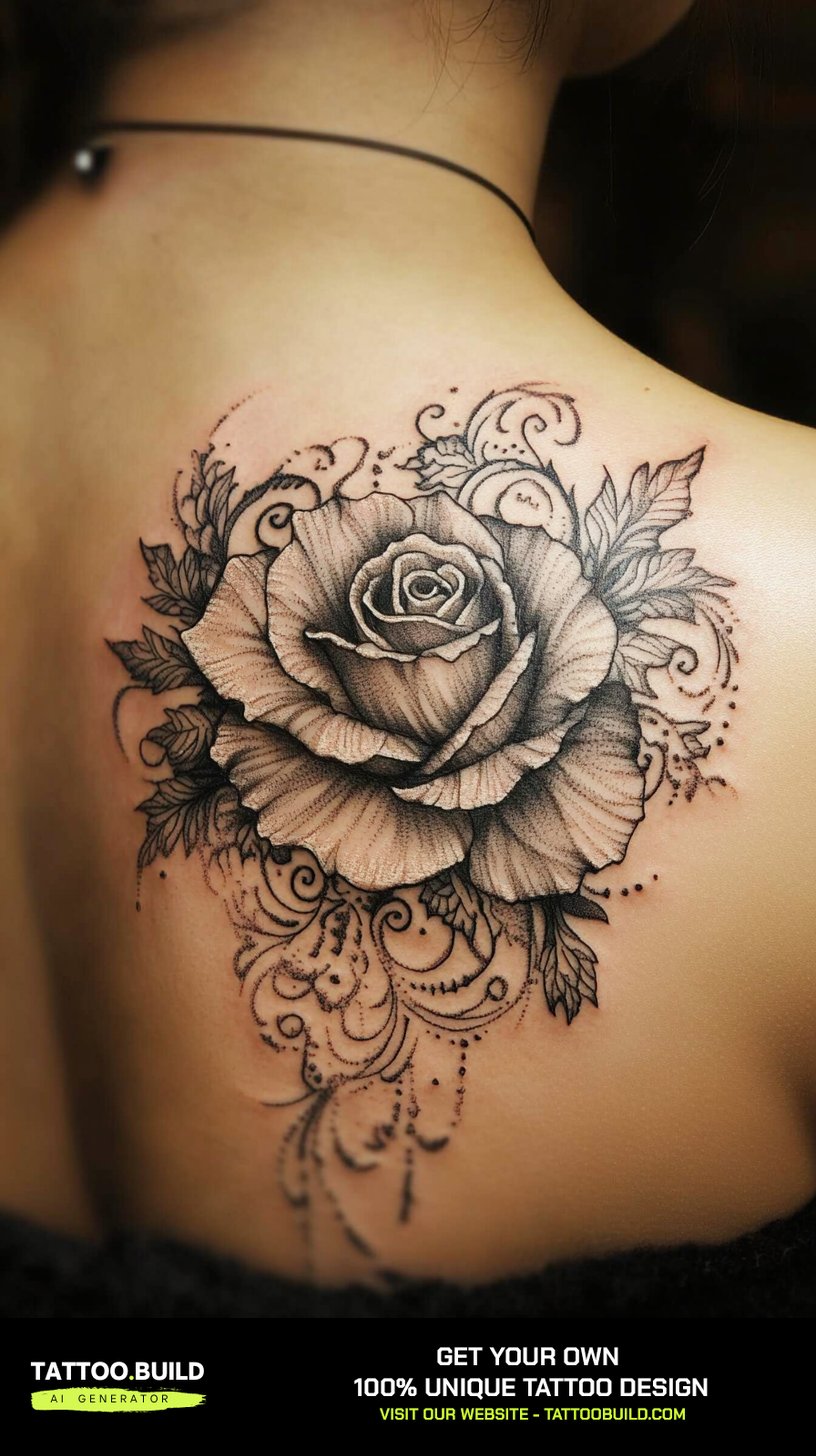
The back shoulder is the most forgiving place on the body to put a rose — it is flat enough to hold detail, curved enough to give the flower motion, and covered by almost every shirt you own.
I have spent a long time looking at floral shoulder tattoos for women, and the back shoulder keeps coming up as the placement people are happiest with a year later.
It sits on the edge of visible. A tank top shows it, a work blouse hides it, and you get to decide which happens on any given morning.
Below are ten rose designs I generated and studied for this guide, plus what I have learned about size, style, healing and cost so you can walk into a shop knowing what to ask for.
Which Rose Style Is Right for You?
Every rose tattoo decision comes down to three things: how much it will cost, how well it will hold up, and how often you want to see it in the mirror.
Here is how the main styles compare, based on what artists I have spoken with typically quote and what I have watched happen to these pieces over time.
| Style | Typical size | Sitting time | How it ages | Best for |
|---|---|---|---|---|
| Fine line / minimalist | 2–4 in | 1–2 hours | Softens fastest; thin lines widen | A first tattoo, or a private one |
| Black and gray realism | 4–7 in | 3–5 hours | Holds shape best long term | People who want it to still read at 20 years |
| Full colour realism | 5–8 in | 4–8 hours, often two sessions | Reds and pinks fade first without sun care | A statement piece you plan to show |
| Traditional / American traditional | 3–6 in | 2–4 hours | Extremely well — bold lines are built for it | Low maintenance and high legibility |
| Watercolour | 4–6 in | 2–4 hours | Softest edges; often needs a touch up | A painterly look, if you accept upkeep |
If you are torn, the safest bet is the middle row. A well shaded black shaded rose tattoo is the design I see hold up best across skin tones and across decades.
What Actually Affects How a Back Shoulder Rose Turns Out
Placement is only half of it. The other half is how the design is drawn for the specific shape of your shoulder.
Skin over the shoulder blade moves a lot. When you reach forward, that whole plane stretches, which is why a rose drawn perfectly flat on paper can look slightly pinched once it is on you.
Good artists solve this by angling the stem along the deltoid line and letting the bloom sit over the softer tissue above the blade. That single decision does more for the final look than any amount of shading.
Size matters more than people expect too. A rose under about two inches loses its inner petal detail as the ink settles, because those tiny gaps between lines close up over the years.
Sun exposure is the third factor. The back shoulder catches direct sun in a way the inner arm never does, and colour roses on shoulders fade noticeably faster than the same design on a forearm.
10 Rose Tattoo on Back Shoulder Ideas Worth Copying
These designs came out of our AI Tattoo Generator, and each one solves a slightly different problem.
Take any of them to an artist as a reference rather than a template — the good ones will redraw it to fit your body.
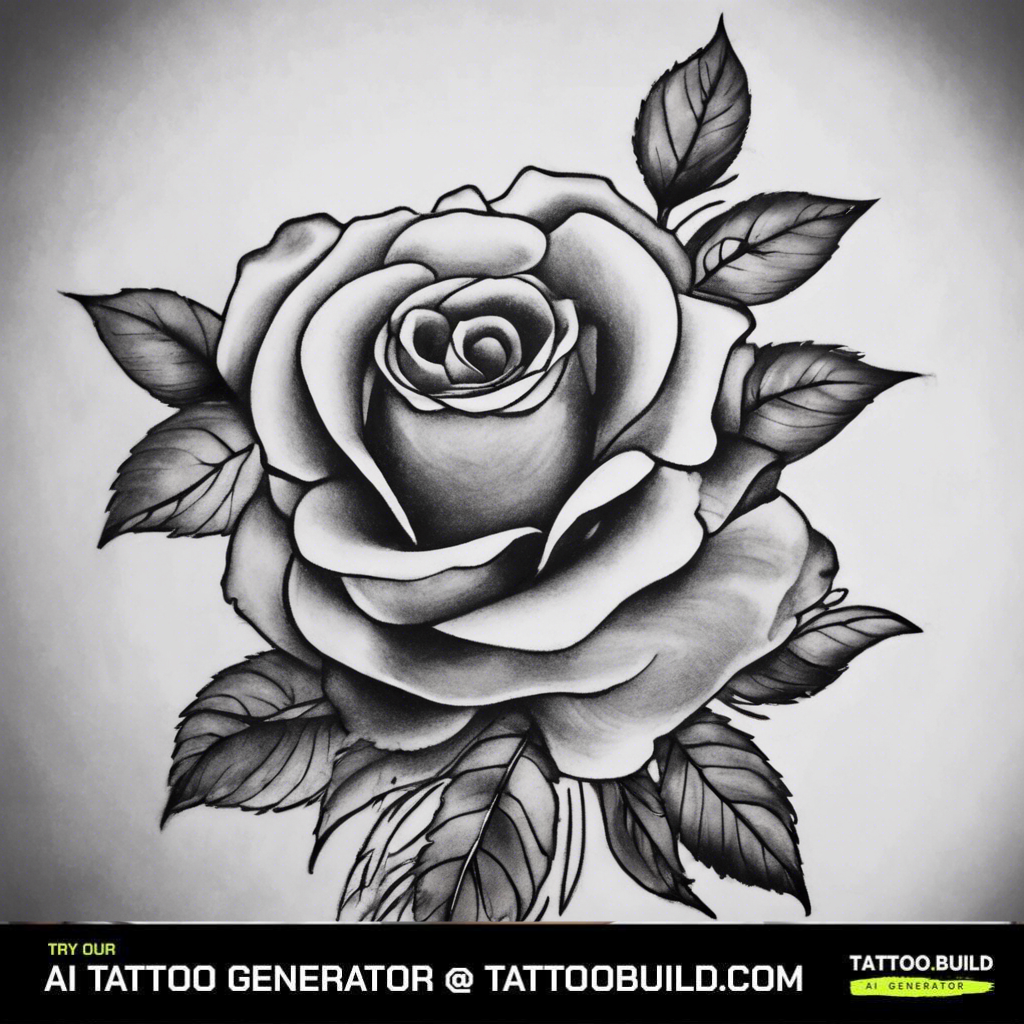
1. Classic Black and Gray Full Bloom
This is the design I recommend most often, and it is the one I would get myself.
A single open rose, four to five inches, rendered entirely in black and gray with no outline carrying the shape.
The petals get their form from gradient wash rather than hard lines, which is why it looks velvety rather than drawn. That technique also means it will not turn muddy — there is no dense black to spread.
In my experience this is the version people stop regretting fastest. It reads as intentional at every size, sits well under a strap, and pairs with anything you add later.
Ask your artist for smooth gray wash rather than stipple if you want the soft look in the photo below.
2. Minimalist Rose With Delicate Line Work
At the other end of the scale is the rose you can cover with your palm.
These are usually two to three inches, built from a continuous line with only a hint of shading inside the petals.
They are cheap, they heal in about a week, and they hurt the least of anything on this list. Every artist I have asked says the same thing about them: keep the lines slightly thicker than the drawing suggests.
That is because thin lines spread. A hairline that looks crisp on day one usually widens over five to ten years, and a rose drawn at hairline weight can lose its interior definition.
If a small piece is what you want, look at black rose tattoos for women for scale references before you book.
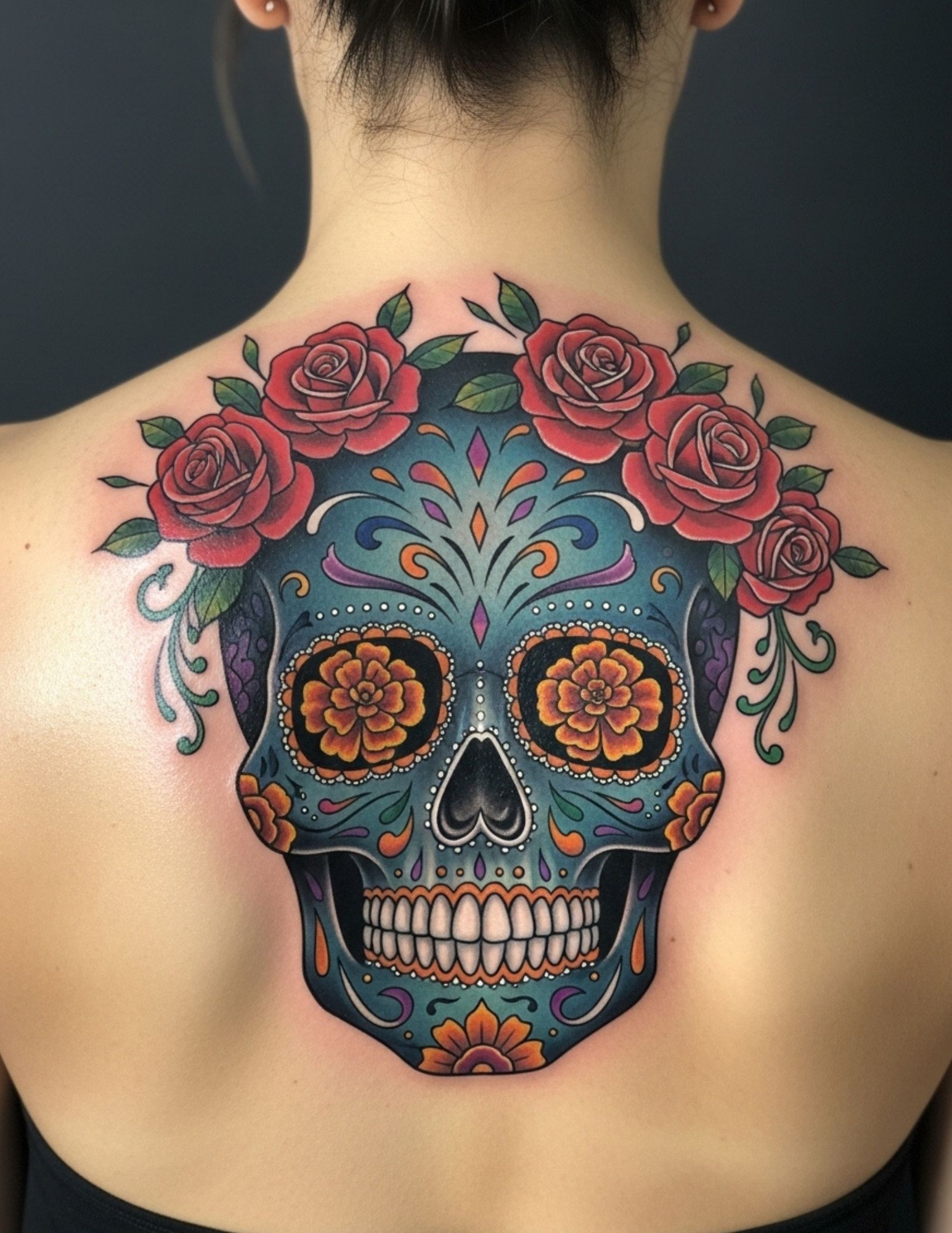
3. Vibrant Full Colour Rose
Colour is the highest impact choice and the highest maintenance one.
A saturated red rose with green leaves on a back shoulder is genuinely striking, especially against the dark background some artists pack in behind the bloom.
The honest trade off: red and pink pigments are usually the first to lose intensity, and the shoulder gets more sun than almost any other common placement.
When I have asked artists about this, the advice is consistent — expect a touch up somewhere in the five to ten year range if you wear tank tops and do not use sunscreen on it.
That is not a reason to skip colour. It is a reason to budget for the upkeep before you commit.
Rose designs and the prompts behind them
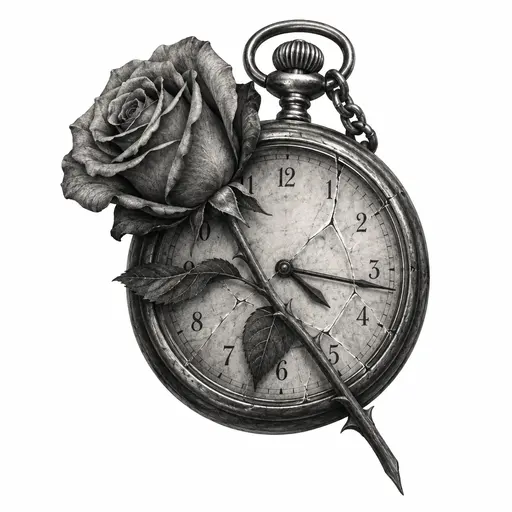
An old pocket watch stopped at 4:17, its glass cracked, a single rose lying across the face
Use this idea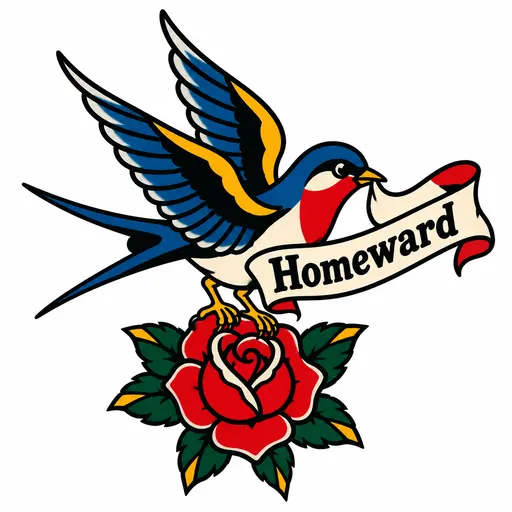
A swallow carrying a banner that reads "Homeward", with a red rose beneath its feet
Use this idea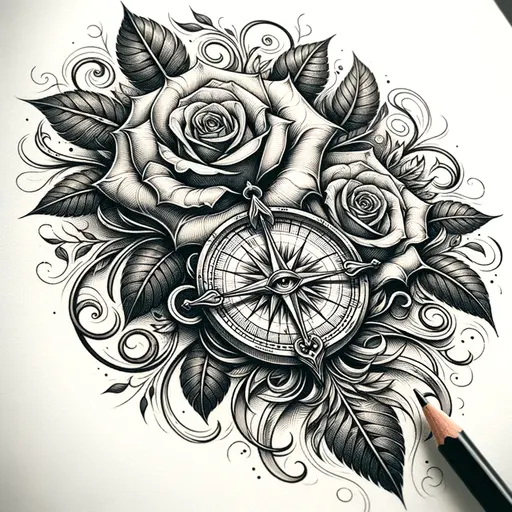
2 roses, stems with thorns, leaves compass eye of providnce
Use this idea
4. Elegant Rose Trio in Three Stages of Bloom
A bud, a half open rose, and a full bloom running down the shoulder.
This is the design people choose when the tattoo has to mean something specific — three children, three stages of a recovery, three people gone.
Compositionally it also works better than a single rose on a taller, narrower shoulder, because the vertical run follows the body instead of fighting it.
The risk is crowding. Three blooms in six inches of space means each one gets two inches, which is right at the edge of where interior detail starts closing up.
Go larger or go to two flowers. I have not seen a cramped trio age well.
5. Red Rose Flowing Into an Arm Sleeve
Some back shoulder roses are not finished pieces — they are the anchor for something bigger.
A rose placed at the top of the deltoid, wrapping slightly forward, becomes the natural starting point for a half sleeve later on.
If there is any chance you will extend it, tell your artist at the consultation. It changes where they put the stem and how much clean skin they leave around the bloom.
Retrofitting a sleeve around a tattoo that was designed as an island is the most common regret I hear about. A ten minute conversation up front prevents it.
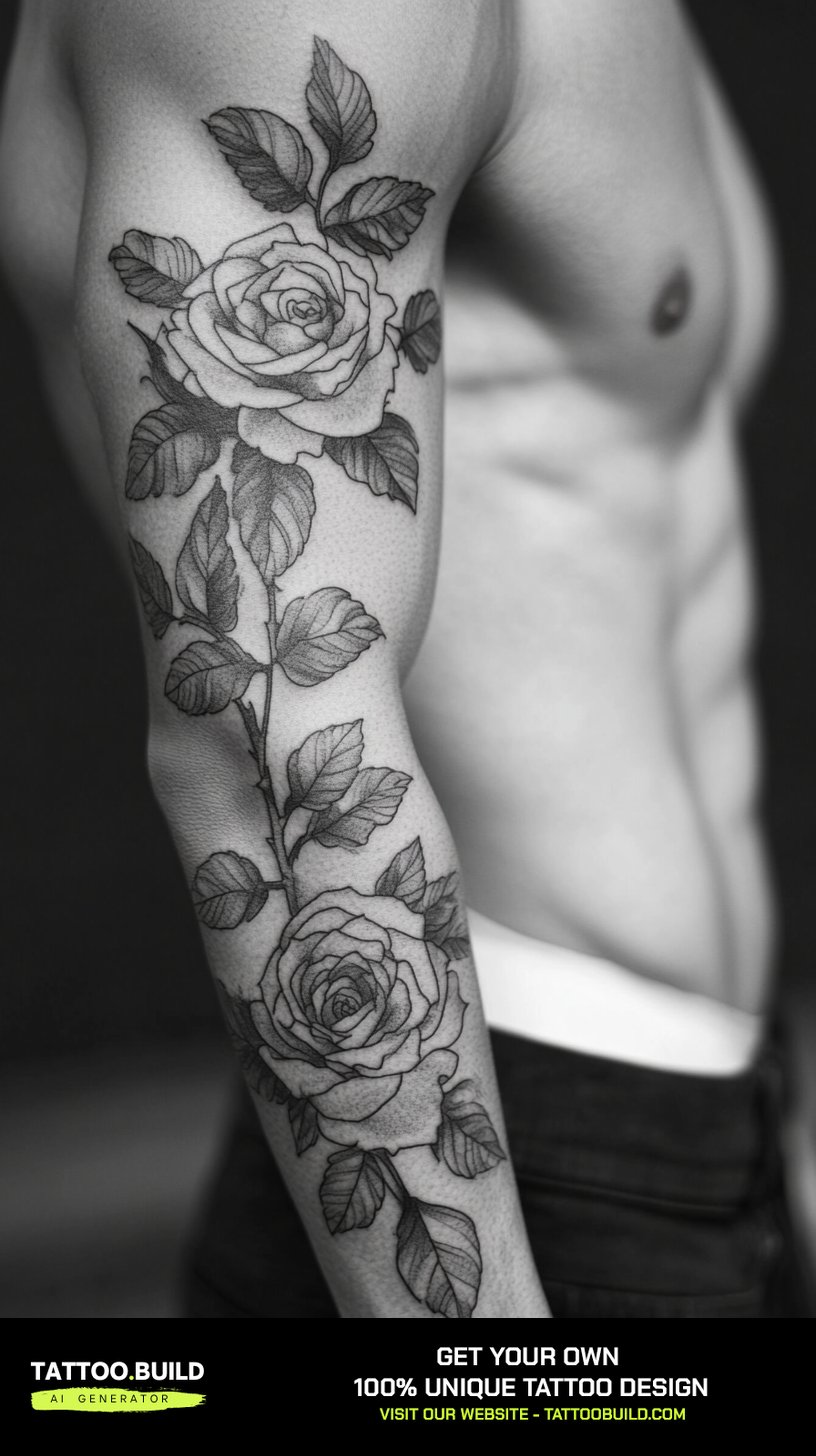
6. Monochrome Rose With Textured Petals
A close cousin of the first design, but built from stippling rather than smooth wash.
Stipple shading gives the petals a slightly grainy, etched quality — closer to an old botanical engraving than a photograph.
It takes longer to tattoo and costs more for the same size, because the artist is placing thousands of individual points instead of pulling gray.
In return you get something that looks handmade rather than printed, and it holds detail beautifully on fair to medium skin tones. On deeper skin, ask your artist how much contrast is realistically achievable before you commit to the style.
7. Detailed Single Rose With High Contrast
This one is about legibility from across a room.
Dark leaves behind a lighter bloom create separation, so the rose shape reads instantly even at a glance.
It is a useful trick for anyone worried their tattoo will turn into a gray blob in twenty years. Contrast is what survives when everything softens slightly.
I would pick this over pure realism if you want something that still looks deliberate in a photo taken from six feet away.
8. Rose Paired With Script
A name, a date, or a single word under the bloom.
Script is where I see the most avoidable mistakes. People pick a font that is too small and too thin, and five years later the letters have merged.
The fix is boring and effective: go one size larger than feels necessary, and keep the lettering physically separate from the flower so neither element bleeds into the other.
Also — read the words out loud, spelled letter by letter, at the consultation and again on the stencil. It is worth the awkward thirty seconds.
9. Sculpted Rose With Deep Contouring
The most technically demanding piece on this list.
Sculpted roses use light and shadow to make the flower look like it is sitting slightly above the skin, with cast shadow under the outer petals.
This only works if the artist genuinely understands where the light source is, and it falls apart quickly if they do not. Ask to see healed photos, not fresh ones — healed work is where technique shows.
Expect four to six hours and a price to match. It is a piece worth travelling for if the right artist is not local.
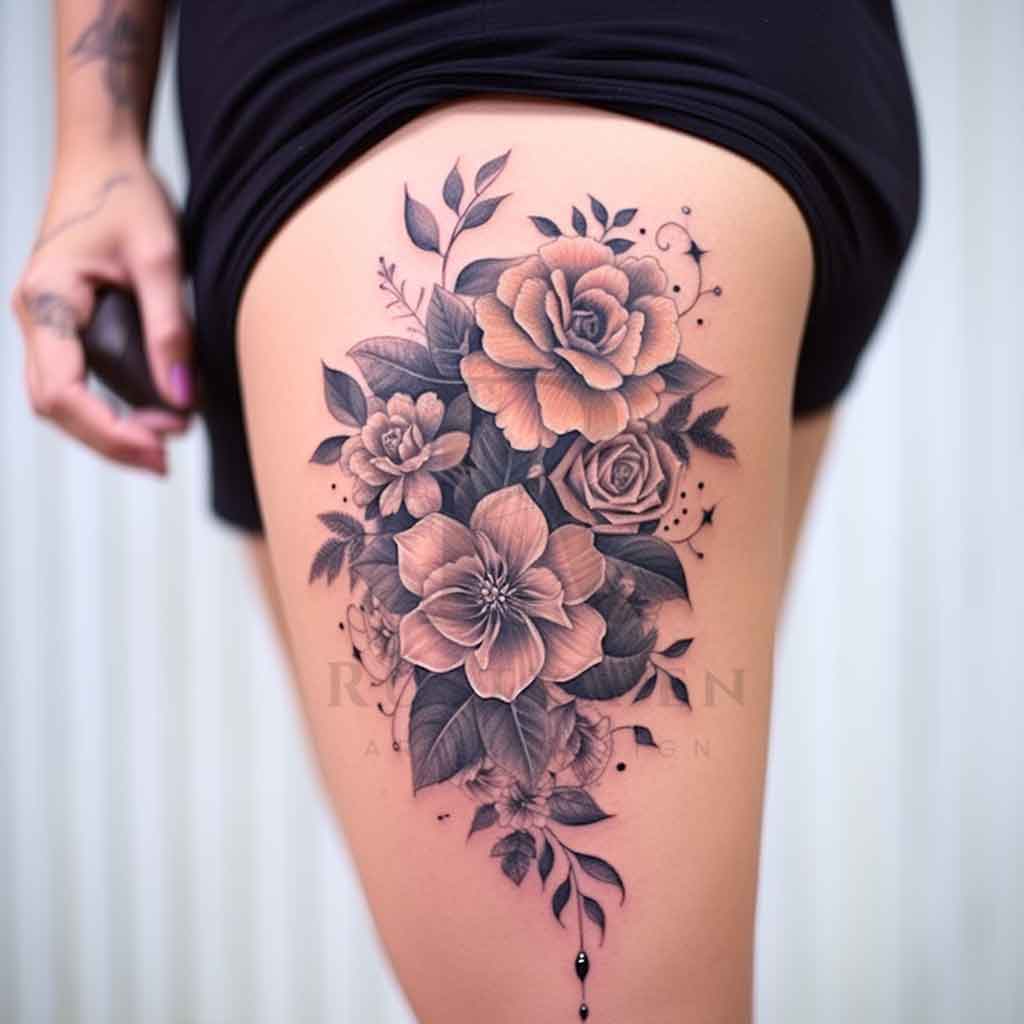
10. Dual Tone Rose With Unopened Buds
A two colour bloom with closed buds tucked alongside it.
The buds do real work here. They fill the awkward negative space around a single flower and give the composition somewhere to go.
Symbolically it is the gentlest option on the list — something open, something still becoming — without needing a caption to explain itself.
For more takes in this direction, our roundup of rose tattoo ideas for women covers similar compositions at different sizes.
Variations Worth Considering Before You Book
If none of the ten above are quite right, these adjustments usually get people there.
Move it slightly — blade, cap or spine side
Directly over the shoulder blade is flattest and holds detail best. Over the shoulder cap is more visible in a tank top but stretches more.
Closer to the spine reads as a back piece rather than a shoulder piece, and it hurts noticeably more.
Change the flower, keep the placement
Peonies, magnolias and poppies all sit well in the same spot and carry different associations.
A general flower tattoo on the back shoulder guide is worth a look if you are not married to roses specifically.
Add a subtle second element
A moth, a small bird, a length of ribbon, or a few loose petals falling away from the bloom.
One extra element adds story. Three turns it into a collage, and collages are much harder to place well.
Mirror it on both shoulders
A matched pair either side of the spine looks intentional and photographs well.
Book both in one sitting if you can — matching a healed tattoo months later is harder than it sounds.
Pain, Healing and Aftercare for a Back Shoulder Rose
The back shoulder is one of the more comfortable spots to get tattooed. There is muscle underneath, and the areas near bone are limited to the ridge of the blade itself.
Most people describe it as a manageable burn rather than sharp pain, though everyone is different — our tattoo pain chart breaks the body down region by region if you want a fuller picture.
The awkward part of this placement is not the tattooing, it is the healing. You cannot see it, you cannot easily reach it, and you sleep on it.
Plan for that. Keep it clean and lightly moisturised, wear loose tops for the first week, and get someone to check on it or use a mirror rather than guessing. Our tattoo aftercare guide covers the day by day detail.
Follow the aftercare your artist gives you, and once it is healed, use sunscreen on it — the American Academy of Dermatology notes that sun protection is part of keeping tattooed skin healthy.
If you see spreading redness, swelling that increases after the first few days, pus, or you run a fever, see a doctor rather than asking the internet. The CDC guidance on tattoos and piercings treats these as signs of infection that need medical attention, and this article is not a substitute for that.
Never attempt to tattoo or remove a tattoo yourself. Both belong with a licensed professional, and the FDA tattoo ink fact sheet is a reasonable starting point on what is and is not regulated in tattoo inks.
Common Mistakes — and What to Do If You Are Still Not Sure
The mistake I see most often is going too small. A rose is a complicated shape, and it needs room.
The second is choosing an artist by price rather than portfolio. Rose tattoos are common enough that any artist worth booking will have several healed ones to show you.
The third is deciding on colour without thinking about sun exposure, which is the one thing on this list you cannot fix later without more ink.
Still undecided? Browse our wider collection of rose tattoo ideas, and look at symbolic back tattoo for placement ideas beyond the shoulder.
Then sit with your top two for two weeks. If one still feels right at the end of that, that is your answer.
Frequently Asked Questions
How painful is a rose tattoo on the back shoulder?
Most people find it one of the easier placements, because there is muscle and fat under the skin and very little bone directly beneath the needle. The area right over the ridge of the shoulder blade is the sharpest part, and it is usually brief. Longer sessions get uncomfortable through fatigue rather than intensity. Pain tolerance varies a lot between individuals, so treat any comparison as a rough guide rather than a promise.
How long does a back shoulder rose take to heal?
The surface usually looks settled within two to three weeks, while the deeper layers keep repairing for a couple of months. The awkward part of this placement is that you sleep on it and cannot easily see it, so healing problems get noticed late. Use a mirror or ask someone to check it every couple of days for the first week. Follow the aftercare instructions your artist gives you, and contact them or a doctor if something looks wrong.
Should I get black and gray or full colour?
Black and gray holds its shape best over decades and needs less upkeep, which is why it is the safer default. Full colour is more striking but the warm pigments generally fade first, and the back shoulder gets a lot of sun. If you want colour, plan on sunscreen and accept that a touch up may be needed eventually. Neither choice is wrong — they just have different maintenance costs.
How big should a rose tattoo on the back shoulder be?
Anything under about two inches will lose its interior petal detail as the ink settles and lines soften. Three to five inches is the range where a single rose looks balanced on most shoulders without dominating the space. Larger pieces work well if you plan to extend into a sleeve or a back piece later. Your artist will size the stencil to your actual frame, which is more reliable than any number here.
Can I extend a back shoulder rose into a sleeve later?
Yes, and it is one of the more common ways sleeves start. The key is telling your artist at the first consultation that you may extend it, so they position the stem and leave clean skin where a future design would connect. Retrofitting around a tattoo designed as a standalone piece is possible but constrains the artist. A short conversation up front saves a lot of compromise later.
Quick Summary
- The back shoulder is flat enough to hold detail and easy to cover — the best all round placement for a rose.
- Black and gray realism ages the most reliably; full colour is more striking but fades faster in the sun.
- Keep a single rose in the three to five inch range — anything under two inches loses interior detail over time.
- Ask your artist to angle the stem along the shoulder line so the design moves with your body.
- If you might extend into a sleeve later, say so at the consultation, not afterwards.
- Script under a rose should be one size larger than feels necessary, and kept separate from the flower.
- Healing is the awkward part of this placement — use a mirror, wear loose tops, and follow your artist’s aftercare.
- Signs of infection mean a doctor, not a forum thread.