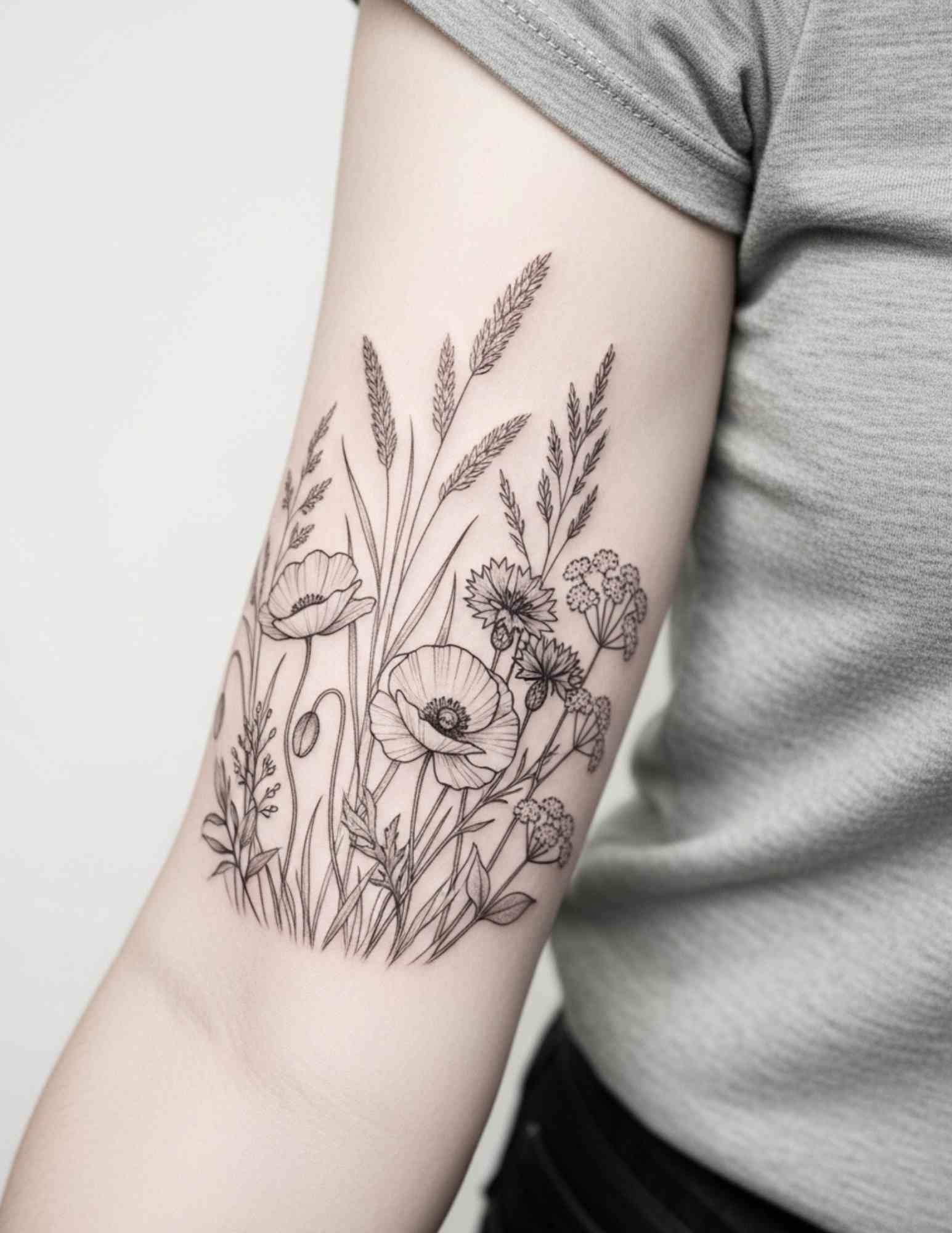
A flower tattoo on the back shoulder is one of the few placements that flatters almost every design, every body type and every level of commitment. That is not marketing copy — it is the reason artists keep recommending it.
I have spent years looking at floral work across placements, and the back shoulder keeps coming up as the spot people are happiest with a decade later. It is flat enough for detail, curved enough for movement, and hidden the moment you put on a t-shirt.
It is also forgiving in a way the ribs and forearm are not. The skin there stretches less, sees less sun, and does not fold, which means fine lines stay fine for longer. If you are weighing this against other upper-back options, the shoulder blade tattoo ideas guide covers the neighbouring placement in more detail.
Below you will find 40+ real back shoulder flower tattoos, grouped by style, plus what I have learned about which ones actually hold up.
Which Flower Style Is Right for You?
Style matters more than flower choice here. A badly chosen style will blur in eight years regardless of whether you picked a rose or a ranunculus.
This is the comparison I walk people through before they book. If you lean toward the first row, the fine line tattoo ideas roundup is a useful next stop.
| Style | Best For | Typical Session | How It Ages |
|---|---|---|---|
| Fine line botanical | Subtle, first tattoos, small budgets | 1–2 hours | Softens fastest; usually needs a touch-up within 5–8 years |
| Black and grey realism | Roses, peonies, dramatic contrast | 4–8 hours, often split | Excellent, provided the artist kept real black in the darks |
| Traditional / neo-traditional | Bold colour that must stay readable | 3–5 hours | The most reliable colour option, thanks to heavy outlines |
| Watercolour | Soft, painterly, no hard edges | 3–5 hours | Least predictable; ask to see the artist’s healed work first |
| Illustrative botanical | Wildflowers, stems, scientific-plate looks | 2–4 hours | Good, as long as the stems are not hair-thin |
What Actually Affects How a Back Shoulder Flower Tattoo Ages
Three things decide how your tattoo looks in ten years, and only one of them is the design.
The first is line weight. Lines under about a millimetre spread as they heal, and on a large flower that spreading is what turns crisp petals into a soft grey shape.
The second is sun. The back shoulder is covered most of the year, which is a genuine advantage, but it is also the first place that burns on a beach day. Every artist I have asked names sun exposure as the main cause of premature fading.
The third is the artist’s healed portfolio, not their fresh one. Fresh tattoos all look sharp. Ask specifically for photos taken a year or more after the session.
Pain is worth mentioning too. The back shoulder sits in the easier half of most charts because there is muscle underneath and the collarbone and spine are some distance away — though it gets sharper as you move inward. The most painful tattoo spots guide has a fuller breakdown.
40+ Back Shoulder Flower Tattoo Ideas by Style
These are grouped by what the design is doing, not just by which flower it happens to be. In my experience that is the more useful way to browse.
1. Single-Bloom Designs That Sit Above the Blade
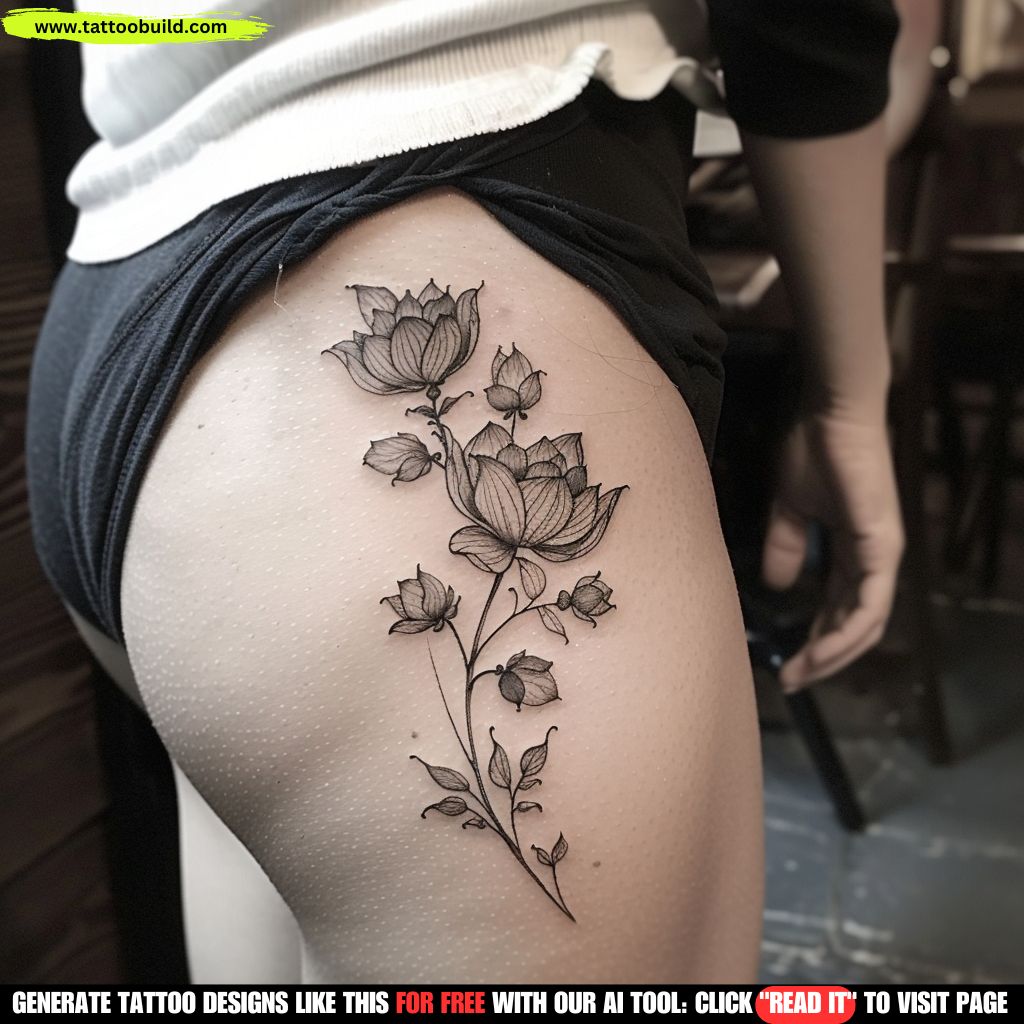
A single flower, well drawn, beats a crowded arrangement almost every time on this placement.
The reason is negative space. The shoulder blade already has a shape, and one bloom lets that shape do half the work of the composition.
These are also the cheapest pieces on this page. Most sit in the one-to-two hour range, which puts them within reach as a first tattoo without committing to a multi-session project.
If you are undecided about scale, start here. A single bloom can always be built out into a larger arrangement later; a full back piece cannot be made smaller.
2. Lotus and Mandala-Style Florals
Lotus designs suit this placement because they are naturally symmetrical, and the flat of the shoulder blade is one of the few areas of the body that can carry symmetry without distortion.
When I have seen mandala-adjacent floral work go wrong, it is almost always because it was placed too close to the arm, where the curve pulls the geometry out of true.
Dotwork shading is common here and it is worth asking about. It builds depth with less solid ink, which usually means a gentler heal.
For the flower on its own, the lotus flower tattoo designs collection covers the symbolism and the variations in more depth.
3. Peony, Chrysanthemum and Other Full-Petal Flowers
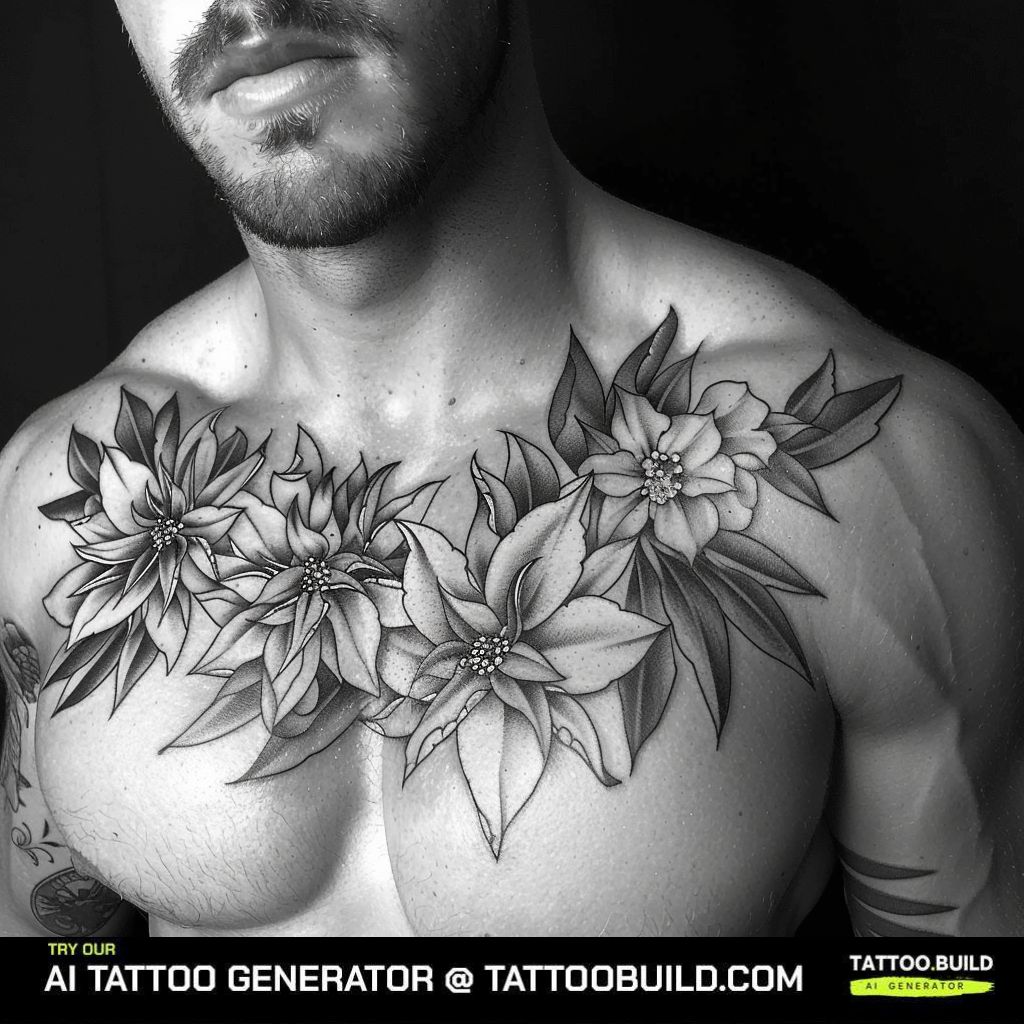
Full-petal flowers are the ones that benefit most from the back shoulder, because they need surface area that does not fold.
A peony crammed onto a wrist becomes a grey blob. The same peony at shoulder scale keeps every petal edge separate.
Chrysanthemums are the harder of the two to execute. The petal count is high and the artist has to keep clear separation between layers or the whole flower flattens out.
Expect these to be multi-hour pieces. Black and grey versions age particularly well when the artist has committed to real blacks in the deepest shadows. The peony tattoo ideas guide is worth a look if this is the direction you are leaning.
Flower designs and the prompts behind them
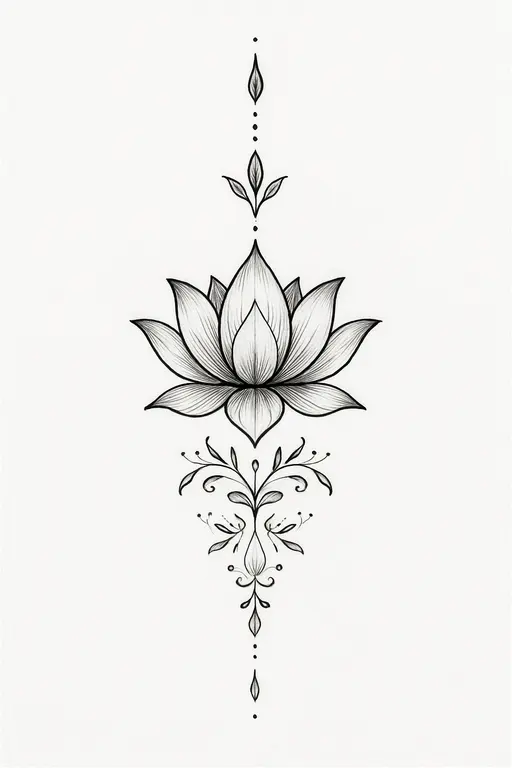
Elegant black and gray linework tattoo of a lotus flower centered on the spine, with ornamental details extending vertically up the nape of the neck and down the upper back. Symmetrical fine lines, soft shading, delicate mandala-inspired accents with dots and leaves. Minimal yet intricate, graceful and feminine style.
Use this idea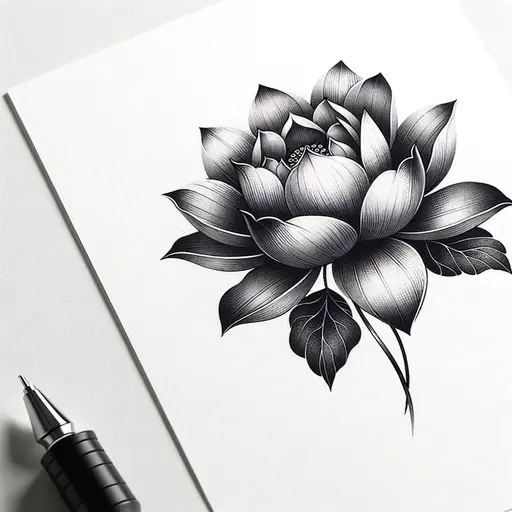
lotus flower tattoo design
Use this idea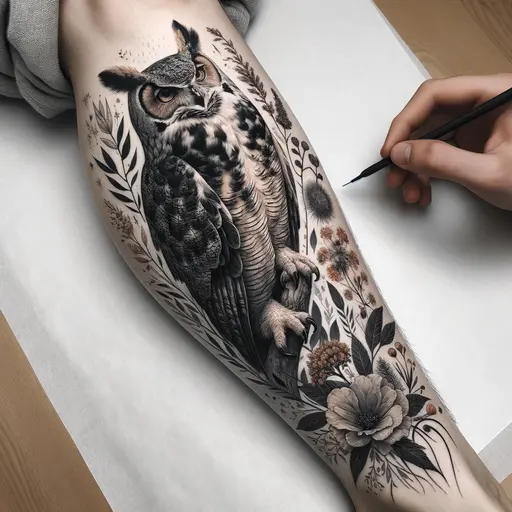
Nature shin tattoo with great horned owl on the calf surrounded by flowers and nature in black and grey and some color
Use this idea
4. Lilies and Long-Stem Designs
Long-stem flowers are the best argument for this placement, because they can follow the natural line of the shoulder down the back.
When the stem tracks that line, the tattoo moves with you. When it fights it, the piece looks pasted on — and that is a compositional decision your artist makes at the stencil stage, not something that can be fixed afterwards.
Ask to see the stencil on your body, standing up, in a mirror. I have watched several people ask for a small rotation at that moment and end up far happier for it.
Lilies in particular reward restraint. Two or three blooms with clean stems usually reads better than a dense cluster.
5. Sunflowers and Warm Colour Work
Sunflowers hold up unusually well in colour, and the reason is structural: the petals are separated by design, so even as the yellow softens the shape stays readable.
Compare that to a dense watercolour wash, where fading removes the only thing defining the edges.
Yellows and oranges do fade faster than blacks and blues — that is a pigment reality, not an artist failing. Plan on a touch-up somewhere in the first decade if you want it to stay vivid.
If sunflowers are the whole reason you are here, the dedicated sunflower tattoo ideas roundup has considerably more variety than I can fit in one section.
6. Roses and Classic Black and Grey Shading
Roses remain the most requested flower tattoo, and on the back shoulder they are close to a safe bet.
The reason is that the rose has been tattooed for over a century, which means there are settled conventions for how to build one that survives. Most experienced artists can draw one well.
Black and grey is the version I would point most people toward. It sidesteps the pigment-fading question entirely and the contrast keeps petal separation visible as the tattoo softens.
Watch out for mid-tone-only shading. A rose built entirely from light greys with no true blacks tends to lose definition faster than one with a proper tonal range.
7. Tropical and Hibiscus Florals
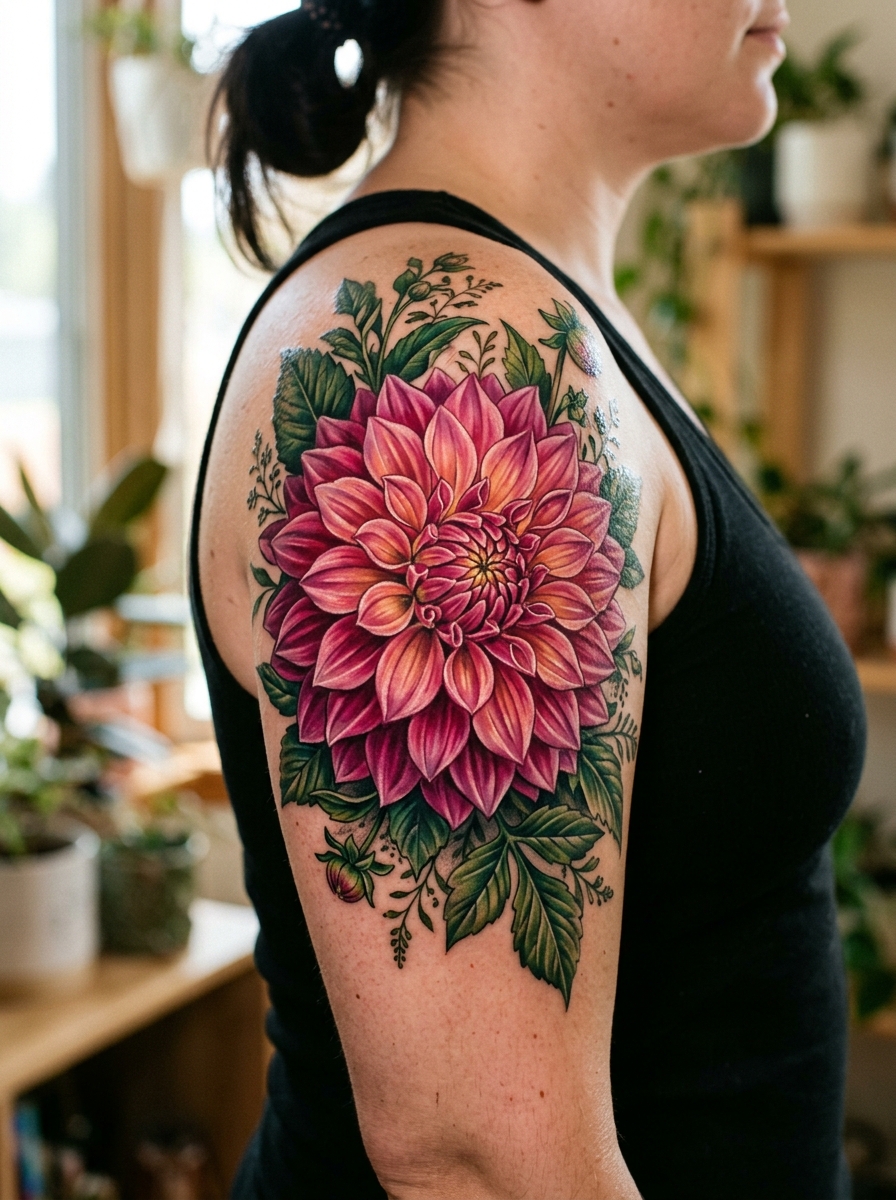
Tropical florals are the most colour-forward option on this page and they depend almost entirely on outline strength.
Bold outlines act as walls. They keep colour where it was put, which is exactly what stops a bright hibiscus from turning muddy after a few years.
Leaves matter more than people expect. Foliage gives the flowers somewhere to sit rather than floating on bare skin, and it fills space without adding another focal point.
These are also the pieces most punished by sun. If you spend summers outdoors, factor in sunscreen as a permanent habit rather than an aftercare step.
8. Wildflower Sprays and Fine-Line Botanicals
Wildflower designs have been the fastest-growing request I have noticed in floral work over the past few years.
They suit people who want movement rather than symmetry — a loose spray of stems reads as organic in a way a centred bloom does not.
The honest caveat: hair-thin stems are the first lines to soften. If you want a wildflower spray to still read as separate flowers in fifteen years, ask your artist to vary the line weight rather than drawing everything at the thinnest possible setting.
The wildflower tattoo ideas collection is worth browsing if you want to see how much range there is inside this one idea.
Placement Variations Worth Considering
The back shoulder is not a single spot. Where exactly you put the design changes how visible it is, how much it hurts, and how easy it is to extend later.
Wrapping Onto the Upper Arm
Bringing the design over the deltoid makes it visible in a t-shirt, which is either the point or the problem depending on your job.
It also changes how the piece reads in motion, since the arm rotates and the back does not. Artists usually compensate by keeping the strongest element on the flat and letting the softer edges do the wrapping.
Extending Toward the Spine
Moving inward opens the door to a larger back piece later, which is the main reason to consider it.
It is a more painful sitting, though. The closer you get to the spine, the less muscle sits between the needle and bone.
If a full back piece is even a distant possibility, tell your artist now. Composition planned from the start is far easier than retrofitting. The floral back tattoo ideas guide shows how these expand.
Small Placements Just Below the Blade
This is the easiest version to hide and the cheapest way to find out how you actually feel about having a tattoo there.
It is also the placement I most often see people add to. A small flower below the blade is a natural anchor point for something larger down the line.
Practical Advice Before and After You Book
Book a consultation before the session, not on the same day. Fifteen minutes of drawing discussion usually saves an hour of regret.
Bring reference images, but bring them as a mood rather than a template. Asking an artist to copy another artist’s piece exactly is both a professional discourtesy and a reliable way to get a worse tattoo.
On aftercare, follow the instructions your artist gives you over anything you read online, including this page — they know what ink and technique they used. The tattoo aftercare guidelines of the American Academy of Dermatology are a solid general reference, and the tattoo pain management tips guide covers the sitting itself.
If anything looks wrong while healing — spreading redness, heat, pus, fever, or a rash that appears weeks later — see a doctor rather than asking the internet. Infections and ink allergies are uncommon but real, and both are treatable when caught early. The US Food and Drug Administration maintains a plain-language overview of tattoo risks worth reading before you book.
Common Mistakes — and What to Do If You Are Still Not Sure
The most common mistake is choosing the flower before the style. The style decides how the tattoo ages; the flower mostly decides what it means to you.
The second is going too small for the level of detail requested. If an artist tells you a design will not hold at the size you want, that is expertise, not upselling.
The third is booking on price. The gap between a good floral tattoo and a mediocre one is usually a few hundred dollars, spread across a permanent decision.
If you are still choosing which flower, the birth flower tattoo ideas guide is a genuinely useful starting point — picking the bloom tied to your birth month gives the piece a built-in reason to exist.
Try Our AI Tattoo Generator
If you want to see a rough version of your idea before you sit down with an artist, our generator will sketch one out from a text description.
It is a starting point for the consultation, not a substitute for a designer — take the output to your artist and let them redraw it properly for your body.
Frequently Asked Questions
How much does a back shoulder flower tattoo cost?
It depends far more on time than on size. A simple single bloom is usually a one-to-two hour sitting, while a detailed black and grey peony can run four to eight hours and is often split across sessions. Most artists charge either an hourly rate or a flat piece price quoted at consultation. Ask for the quote in writing before you book so there are no surprises on the day.
Does a tattoo on the back shoulder hurt?
It sits in the easier half of most pain charts because there is muscle underneath and no bone directly beneath the needle. That said, it gets noticeably sharper as the design moves inward toward the spine or upward toward the top of the shoulder. Most people describe it as a persistent scratching rather than a sharp pain. Everyone’s tolerance is different, so treat any chart as a rough guide.
Which flower tattoo style lasts the longest?
In my experience black and grey work with genuine solid blacks holds up best, followed by traditional colour with heavy outlines. Fine line and watercolour are the two that most often need a touch-up within the first decade. None of this makes the softer styles a bad choice — it just means budgeting for maintenance is part of the decision.
How long does a back shoulder tattoo take to heal?
The surface usually looks settled in two to three weeks, but the deeper layers typically take a few months to fully settle. During that time, keep it out of direct sun and follow whatever aftercare instructions your artist gave you. Avoid soaking it — baths, pools and hot tubs — until it has fully closed. If anything looks infected, see a doctor rather than waiting it out.
Can I get a flower tattoo on my back shoulder if I already have one there?
Often yes, depending on the existing piece. Adding to a back shoulder tattoo is common precisely because the area gives an artist room to expand a composition outward. Bring clear photos of the existing work to your consultation and be open to the new design being adjusted to sit with it. A cover-up is a different conversation and needs an artist who specialises in them.
Quick Summary
- The back shoulder is one of the most forgiving placements for floral work — flat, low-stretch and easy to cover.
- Choose the style before the flower; style determines how the tattoo ages.
- Black and grey and traditional colour age most predictably; fine line and watercolour need earlier touch-ups.
- Full-petal flowers like peonies and chrysanthemums need shoulder-scale space to stay readable.
- Long-stem designs should follow the natural line of the shoulder, not fight it.
- Ask to see healed portfolio work, not just fresh photos.
- Sun exposure is the main cause of premature fading — sunscreen is a permanent habit, not an aftercare step.
- Start small if you are unsure; a single bloom can always be expanded, a back piece cannot be shrunk.